Complete Guide to Shimofuri Castle (Yamaguchi Prefecture) | A Thorough Explanation of the Medieval Mountain Castle and the History of the Koto Clan
What is Shimofuri Castle?
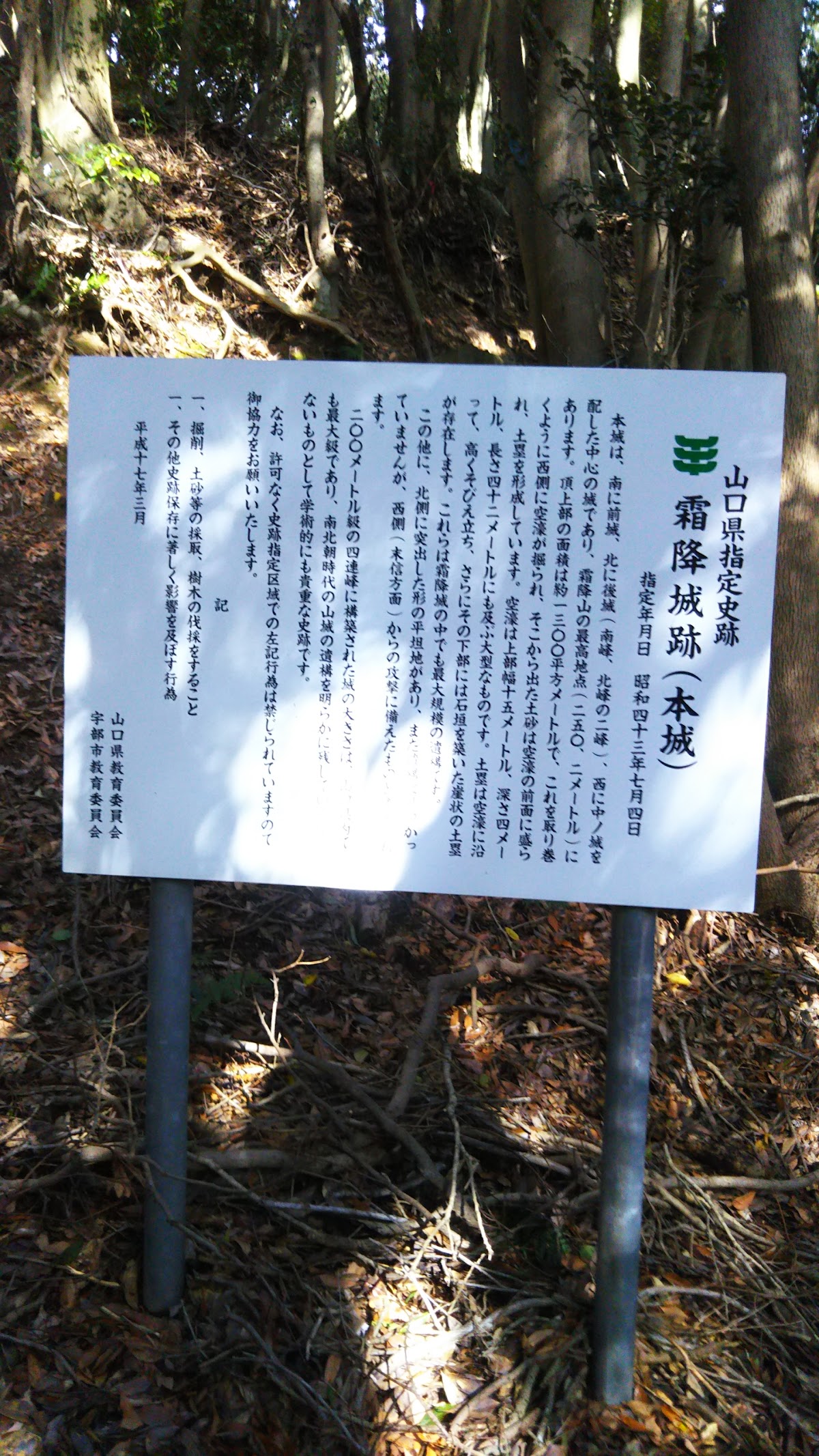
Shimofuri Castle is a medieval mountain castle built on Mt. Shimofuri, located in the central part of Ube City, Yamaguchi Prefecture. Also known as “Shiroyama” (Castle Mountain), it boasts the largest scale among the mountain castles remaining in Yamaguchi Prefecture. The magnificent castle complex, built across four peaks centered around Mt. Shimofuri (approximately 250 meters above sea level), is a valuable historical site that conveys the landscape of a 14th-century mountain castle and is designated as a Yamaguchi Prefecture Cultural Property.
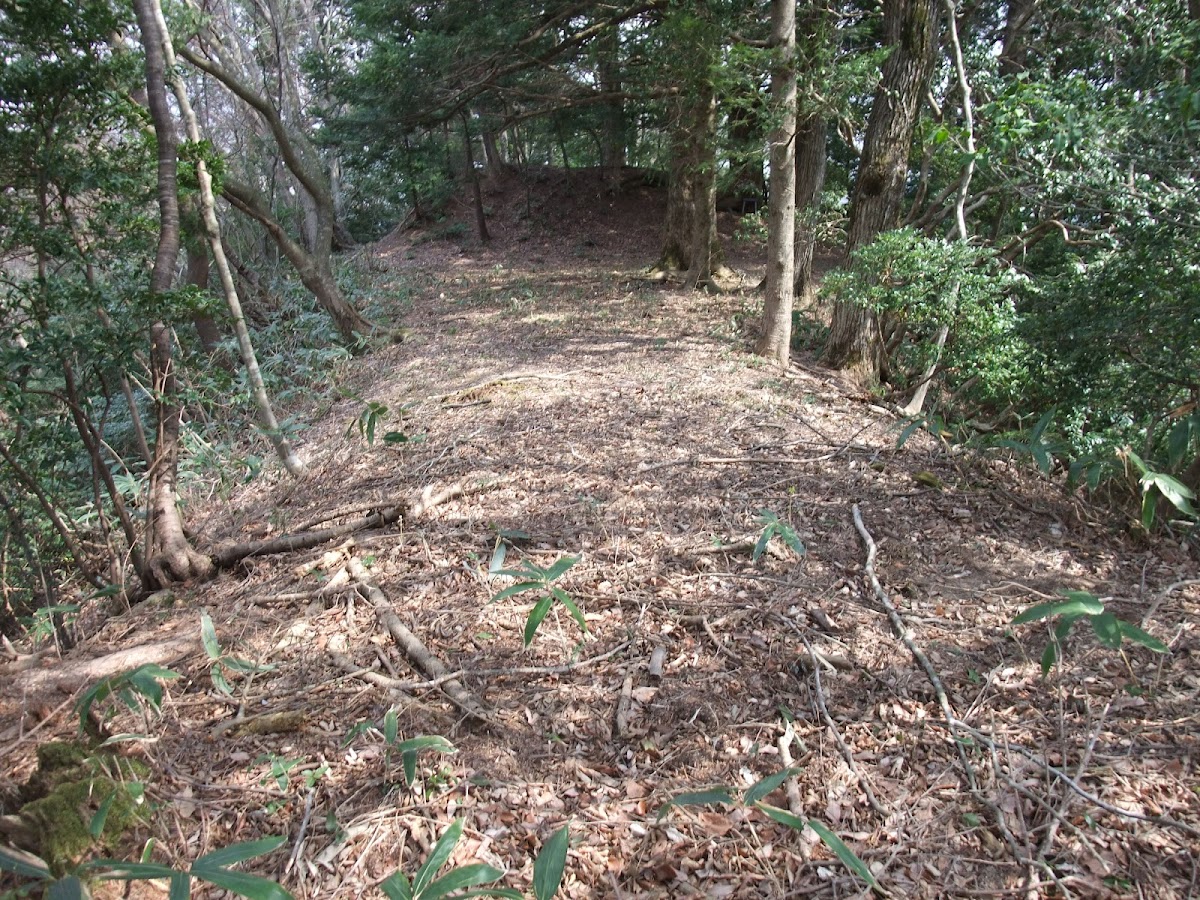
Unlike castles of the early modern period with keeps and stone walls, Shimofuri Castle is a typical medieval mountain castle, with its mountaintop surrounded by dry moats and earthen ramparts. The castle grounds extend approximately 660 meters from north to south, and defensive structures skillfully utilizing the natural terrain can be seen throughout. Even today, remains such as baileys, earthen bridges, and dry moats are well-preserved, making it of significant value in the study of medieval castles.
History of Shimofuri Castle
Construction by the Attō Clan
Shimofuri Castle is said to have been built in 1179 (Jishō 3) by Attō Takemitsu, the seventh head of the clan. The Attō clan claimed descent from the Mononobe clan, and their history is said to have begun with Attō Taketada, the first head of the clan, who lived in Tanai, Asa District, Nagato Province. Initially, the Attō clan resided at the Attō Clan Residence at the foot of the mountain, but they later constructed a castle on Mount Shimofuri as a military base.
The name of the Attō clan is the origin of the Attō River, which still serves as a water source for Ube City and Sanyō-Onoda City today, demonstrating the clan’s significant influence in this region.
Prosperity of the Attō Clan and the Position of Nagato Provincial Governor
During the time of Attō Takezane, the fourteenth head of the clan, the Attō clan was appointed as the Nagato Provincial Governor, greatly expanding their power. Having established their dominance in Nagato Province, the Koto clan developed their domain management centered around Shimofuri Castle, reigning as a powerful local clan.
During this period, Shimofuri Castle is thought to have functioned not only as a military facility but also as a political and administrative center for the Koto clan as the governors of Nagato Province. The large-scale castle structure, spanning four peaks, reflects the power of the Koto clan at this time.
Conflict with the Ouchi Clan and the Fall of the Castle
The Koto clan’s prosperity did not last long. Their conflict with the Ouchi clan, the governors of Suo Province, gradually deepened, and tensions between the two intensified. During the reign of the 17th Koto Yoshitake, in 1358 (Enbun 3/Shohei 13), the Koto clan finally suffered a large-scale attack by Ouchi Hiroyo.
Faced by the fierce assault of Ouchi Hiroyo’s forces, Shimofuri Castle finally fell. Koto Yoshitake fled to Kyushu, and the Koto clan’s rule in Nagato Province came to an end. This fall marked the end of the Koto clan’s approximately 180-year rule over Shimofuri Castle.
Structure and Layout of Shimofuri Castle
Composition of Four Peaks
The most distinctive feature of Shimofuri Castle is its magnificent layout, with castle facilities positioned on all four peaks that make up Mount Shimofuri. Each peak functioned as an independent defensive stronghold, yet they were also arranged to cooperate with one another.
Main Castle (Shimofuri-dake)
This is the central enclosure located on the highest peak, approximately 250 meters above sea level. It is believed to have functioned as the command center for the entire Shimofuri Castle, and housed the most important facilities. Multiple enclosures were arranged on the mountaintop, and the surrounding area was heavily defended by earthworks and dry moats.
Front Castle
This is an outpost built on a peak approximately 246 meters above sea level, southeast of the main castle. It played a role in monitoring and defending the approach to the main castle. A deep dry moat separated the front castle from the main castle, making it difficult to penetrate.
Rear Castle
Located on a peak approximately 236 meters above sea level, northeast of the main castle. It was an important defensive stronghold protecting the rear of the main castle, and facilities were positioned to prepare for invasions from the north. Clear remains of baileys and earthworks can still be seen at the rear castle.
Middle Castle
This castle was built on a hill approximately 170 meters above sea level, on the western peak. Although lower in elevation than the other three castles, it held an important position for defending the west and maintaining communication with the residence at the foot of the hill.
Characteristics of Defensive Facilities
Shimofuri Castle retains numerous defensive facilities characteristic of medieval mountain castles.
Dry Moats
The dry moats separating each bailey are a crucial defensive feature of Shimofuri Castle. The dry moats around the main castle, in particular, are deep and wide, effectively preventing enemy incursions. Some of the dry moats still retain a depth of several meters, demonstrating the advanced civil engineering techniques of the time.
Earthworks
Earthworks surround the baileys, enhancing their defensive capabilities. The height of the earthworks varies depending on the location, but important baileys are surrounded by higher and thicker earthworks. It is presumed that fences or walls were built on top of the earthworks.
Earth Bridges
Earth bridges for crossing dry moats are strategically placed. These bridges functioned as routes within the castle, but also represented defensive vulnerabilities, suggesting they were under strict surveillance.
Baileys
Various sizes of baileys are arranged in a stepped pattern. Buildings were constructed in the main baileys, used for soldier garrisons and storage of supplies. The arrangement of the baileys cleverly utilizes the terrain, showcasing the ingenuity of medieval castle design.
Highlights and Remains of Shimofuri Castle
Main Castle Baileys
The baileys remaining on the mountaintop of the main castle are the most impressive remains of Shimofuri Castle. Multiple enclosures are arranged in a stepped pattern around the main enclosure, each separated by earthen ramparts and dry moats. From the main enclosure, you can enjoy a panoramic view of Ube city and the surrounding mountains, experiencing the scenery seen by the castle lord during the Sengoku period.
The flat areas of the enclosures are well-preserved, allowing you to stroll around while imagining the layout of the buildings. The fresh greenery is particularly beautiful from spring to early summer, and the autumn foliage is a delight.
Dry Moats and Earthen Bridges
The dry moats separating the main castle and the front castle are essential to understanding the defensive structure of Shimofuri Castle. The deeply excavated dry moats are still clearly visible today, and their sheer size is astonishing. Crossing the earthen bridges spanning the moats allows you to reflect on the battles fought in those times.
The height of the earthen ramparts, viewed from the bottom of the dry moats, is impressive, showcasing the high level of civil engineering technology of the medieval period.
Remains of Earthen Ramparts
The earthen ramparts surrounding each enclosure are among the best-preserved remains of Shimofuri Castle. In particular, the earthworks of the main castle retain a height of about 2-3 meters in some places, allowing visitors to imagine its former appearance. Walking along the top of the earthworks allows you to experience the castle’s defensive line.
Although trees grow densely on the earthworks, this actually helps in the preservation of the remains. However, caution is needed when visiting.
Remains of the Front and Rear Castles
Clear baileys and dry moats remain at the Front and Rear Castles. Although not as large as the main castle, it is clear that each functioned as an independent defensive base. The Front Castle, in particular, offers a good view of the main castle, making it ideal for understanding the relative positions of the two.
The Rear Castle was an important base protecting the rear of the main castle and was responsible for guarding the northern direction. From the rear castle’s baileys, you can see the flow of the Koto River and the mountains to the north.
Location of the Middle Castle
The Middle Castle is at a lower elevation than the other three castles and is located on a hill at the western foot of the mountain. It is believed to have served as a communication point with the residence at the foot of the mountain and as an outpost to prepare for invasions from the west. While the remains of Nakajo Castle are somewhat less distinct compared to other parts of the castle, traces of the baileys can be confirmed.
Nature and Environment of Shimofuriyama
Shimofuriyama Skyline
Shimofuriyama has been developed as the “Shimofuriyama Skyline,” a hiking course with excellent views. From the summit, you can enjoy panoramic views of Ube city, the Seto Inland Sea, and the Suo Sea, and on clear days, you can even see the mountains of Shikoku.
The skyline is a well-maintained hiking trail with a moderate difficulty level, making it a popular hiking spot for families. You can enjoy the changing seasons: the fresh greenery of spring, the deep green of summer, the autumn foliage, and the snowy landscapes of winter.
A Treasure Trove of Wild Birds
Shimofuriyama is also known as a treasure trove of wild birds, making it an ideal place for birdwatching. Various wild birds can be observed throughout the seasons, and many species can be seen, especially during the spring and autumn migration periods. The charm of Shimofuriyama lies in the fact that you can enjoy both history and nature by combining a stroll through the castle ruins with bird watching. Bringing binoculars will enhance your experience.
Historical Sites and Legends
Shimofuriyama is home to numerous historical sites and legends related to the Koto clan. The ruins of the Koto clan’s residence and related temples and shrines are scattered throughout the area, allowing you to trace the footsteps of the Koto clan in this region.
Local legends about the Koto clan and Shimofuri Castle are passed down through generations, evoking a sense of historical romance. When visiting the castle ruins, listening to these legends will provide a deeper understanding.
Access and Visiting Guide to Shimofuri Castle
Location
Shimofuriyama area, east bank of the Koto River, Ube City, Yamaguchi Prefecture
Transportation Access
Access by Car
Approximately 15 minutes from the Sanyo Expressway Ube Interchange. A parking lot is available at the foot of Shimofuriyama. It takes approximately 30-40 minutes to walk from the parking lot to the main castle via the hiking trail.
Public Transportation
The trailhead is approximately a 40-minute walk from Koto Station on the JR Ube Line. Bus services are limited, so it is recommended to check in advance.
Precautions for Visiting the Castle
- Clothing: As it is a mountain castle, comfortable clothing and non-slip shoes are essential.
- Time Required: If you are mainly visiting the main castle, allow approximately 2-3 hours round trip from the trailhead. Visiting all four castles will take 4 hours or more.
- Season: Spring to autumn is suitable for visiting, but insect repellent is necessary in summer. Be careful of snow and ice in winter.
- Hydration: There are no vending machines on the hiking trail, so be sure to bring your own water.
- Protection of Historical Structures: Please walk on the designated hiking trails to avoid damaging historical structures such as earthworks and dry moats.
Points to Note During Your Visit
For first-time visitors, we recommend heading to the main castle first. Visiting the main castle’s baileys and dry moats will give you an overview of the scale and structure of Shimofuri Castle. If you have time, try visiting the front and rear castles as well.
While there are guide signs along the hiking trail, obtaining a map or layout map beforehand will deepen your understanding. Information can be obtained at the Ube City Tourist Information Center and cultural property facilities.
Nearby Tourist Spots
Koto Clan Residence Ruins
These are the ruins of the residence of the Koto clan, located at the foot of Shimofuri Castle. Currently, some remains are preserved, and visiting them together with Shimofuri Castle will give you a deeper understanding of the Koto clan’s system of rule.
Historical Sites in Ube City
There are many other historical sites scattered throughout Ube City dating from the medieval to early modern periods. If you have time, a historical walk around the city is also recommended.
Koto River
The Koto River, which flows west of Mount Shimofuri, is the river from which the Koto clan got their name. The riverside offers a rich natural landscape, perfect for walks and cycling.
The Cultural Value of Shimofuri Castle
Shimofuri Castle is protected as a Yamaguchi Prefecture designated historical site and is a valuable cultural asset that preserves the landscape of a 14th-century mountain castle in excellent condition. While it lacks the splendor of early modern castles, it is an extremely important historical site for understanding the realities of medieval mountain castles.
Its large-scale layout spanning four peaks, well-preserved dry moats and earthworks, and the arrangement of baileys provide a wealth of information for the study of medieval castles. Furthermore, its historical value as a story of the rise and fall of the Koto clan, a local powerful family, is highly regarded.
While Yamaguchi Prefecture boasts many famous castles such as Hagi Castle and Iwakuni Castle, Shimofuri Castle, as a medieval mountain castle, possesses unique value and is an unmissable site for castle enthusiasts.
The Significance of Visiting Shimofuri Castle
Visiting Shimofuri Castle is more than simply viewing old castle ruins. It allows you to experience firsthand the historical drama of how a local powerful family in the medieval period built their power and how they fell. The Koto clan, claiming descent from the Mononobe clan, rose to become the governors of Nagato Province. However, they were eventually defeated by the more powerful Ouchi clan and forced to flee to Kyushu. The remains of Shimofuri Castle quietly tell the story of this rise and fall.
While it lacks the stone walls and keeps of modern castles, this medieval mountain castle, built of earth and wood, exudes the spirit of a simple yet robust samurai. The layout, skillfully utilizing the natural terrain, the deeply dug dry moats, and the high earthen ramparts—all of these are the culmination of the wisdom and effort of the samurai who prepared for battle.
Summary
Shimofuri Castle is a masterpiece of medieval mountain castle construction remaining in Ube City, Yamaguchi Prefecture. Built in 1179 by Koto Takemitsu, it served as the Koto clan’s base for approximately 180 years. The magnificent castle grounds, spanning four peaks, boast one of the largest scales in Yamaguchi Prefecture, with well-preserved remains such as dry moats, earthworks, and baileys.
Although it was captured by Ouchi Hiroyoshi in 1358, ending the rule of the Koto clan, the castle ruins remain a valuable historical site that conveys the appearance of a 14th-century mountain castle and are designated as a Yamaguchi Prefecture cultural property.
Using the hiking trail, which has been developed as the Shimofuriyama Skyline, it is relatively easy to reach the main castle, and the view from the summit is magnificent. Combining it with bird watching or hiking allows you to enjoy both history and nature.
For those interested in medieval mountain castles, those who want to learn about the history of the Koto clan, or those who want to visit a hidden gem of a castle in Yamaguchi Prefecture, Shimofuri Castle is the perfect spot. Please visit this mountain castle full of historical romance at least once.