Kasaoka Castle (Okayama Prefecture) Complete Guide: From a Murakami Suigun Fortress to Kojōyama Park
Located in Kasaoka City, Okayama Prefecture, Kasaoka Castle is a mountain castle that once played an important role as a coastal castle jutting out into the Seto Inland Sea. Currently, it is maintained as Kojōyama Park and serves as a place of relaxation for citizens, but its history involves important figures from the Sengoku period to the early Edo period, such as the Murakami Suigun (Murakami Suigun), the Mōri clan, and Tokugawa Ieyasu. This article provides a detailed explanation of Kasaoka Castle’s history, structure, highlights, and visiting information.
History of Kasaoka Castle
Construction and Early History
There are several theories regarding the origin of Kasaoka Castle. The oldest records state that it was built by Tōyama Fujisaburo Yoshitaka during the Gentoku era (1329-1331), and that the Tōyama clan resided there until around the Eishō era (1504-1521).
Later, during the period when the Ouchi clan controlled western Bitchu Province, Inoue Hoki-no-kami Harutada, a subordinate of the Ouchi clan, served as the castle lord. It is believed that during this time, Kasaoka Castle played a role as a base for monitoring maritime traffic in the Seto Inland Sea.
Murakami Suigun Era: Renovation by Murakami Takashige
The most important turning point in the history of Kasaoka Castle was the renovation by Murakami Takashige during the Koji era (1555-1558). Murakami Takashige was a member of the Noshima Murakami family (the main branch) and a powerful figure in the Murakami Suigun, which controlled the Seto Inland Sea.
Murakami Takashige extensively renovated Kasaoka Castle for Murakami Kamon, the head of the Noshima Murakami family, positioning it as a stronghold for the Noshima Murakami family in the Seto Inland Sea. At that time, Kasaoka Castle was built on Kojōyama (approximately 40 meters above sea level), which juts out into Kasaoka Bay, and had the characteristics of a sea castle, taking advantage of its coastal terrain. This location provided a strategic point for maritime traffic and served as a natural stronghold to defend against enemy attacks.
After Murakami Takashige, Murakami Kagehiro became the lord of the castle, and it continued to function as a base for the Murakami naval force. The Murakami clan is believed to have resided there until the Keicho era (1596-1615).
The Mori Clan Era
After the Murakami clan, Kasaoka Castle came under the control of the Mori clan. Mori Motoyasu (Mori Terumoto’s nephew) was appointed as the castle lord, and it became one of the Mori clan’s important bases in Bitchu Province. During this period, Kasaoka Castle played a key role in the Mori clan’s control of western Japan.
After the Battle of Sekigahara: Becoming Tokugawa Ieyasu’s Territory
After the Western Army’s defeat at the Battle of Sekigahara in 1600, the Mori clan’s territory was drastically reduced, and much of Bitchu Province became a direct territory of Tokugawa Ieyasu. Kasaoka Castle also became part of Tokugawa Ieyasu’s territory, and Kobori Masatsugu was appointed as the local magistrate.
Kobori Masatsugu was the father of Kobori Masakazu (Enshu), later known as Kobori Enshu, a tea master, architect, and landscape gardener. Kobori Masatsugu served as the magistrate of Bitchu Province, governing the region including Kasaoka, and it is believed that his son, Kobori Enshu, also gained administrative experience in this area in his youth, assisting his father.
The Ikeda Clan’s Era and the Castle’s Abandonment
In 1616 (Genna 2), Ikeda Nagayuki became the lord of Kasaoka Castle. Ikeda Nagayuki was the fifth son of Ikeda Terumasa and was entrusted with governing western Bitchu Province. However, his tenure was short, and when he was transferred to Bitchu Matsuyama Domain in 1619 (Genna 5), Kasaoka Castle was abandoned.
Due to the Genna Era’s “One Castle Per Province” decree, which restricted each domain to one castle, the Ikeda clan established Bitchu Matsuyama Castle as their base, and Kasaoka Castle ceased to serve its purpose.
After the Meiji Restoration: Leveling and Park Development of Kojōyama
After its abandonment, the Kasaoka Castle ruins were left neglected for a long time, but a major turning point occurred in 1898 (Meiji 31). Reclamation work on Kasaoka Bay began, and the summit of Kojōyama was extensively leveled to extract soil and sand. This construction almost completely destroyed the main remains of Kasaoka Castle.
Currently, Kojōyama has been developed into Kasaoka Kojōyama Park, a place of relaxation for citizens. In spring, it is known as a famous cherry blossom viewing spot with approximately 400 cherry trees in full bloom, attracting many visitors.
Structure and Layout of Kasaoka Castle
Location and Topography
Kasaoka Castle was a mountain castle built on Kojōyama, which jutted out into Kasaoka Bay. Although its elevation is only about 40 meters, its location surrounded by the sea on three sides made it a natural stronghold. This location was ideal for monitoring and controlling maritime traffic, making it a suitable base for the Murakami Suigun (Murakami Naval Force).
Currently, due to land reclamation in Kasaoka Bay, it is located inland, but it is believed that it once appeared as a sea castle floating on the sea like an island.
Castle Structure
While the detailed structure is unknown due to leveling during the Meiji period, it is presumed to have possessed the basic structure of a mountain castle. It is thought that the main keep was located on the mountaintop, with other enclosures such as the second and third baileys arranged around it.
Given its characteristics as a sea castle, it is highly likely that there were also landing places and naval-related facilities, suggesting that it was a structure that could fully function as a base for the Murakami Suigun.
Existing Remains
Unfortunately, due to leveling of the mountaintop during the Meiji period, very few remains of Kasaoka Castle remain. Even visiting the site, it’s difficult to clearly identify stone walls, moats, or earthworks.
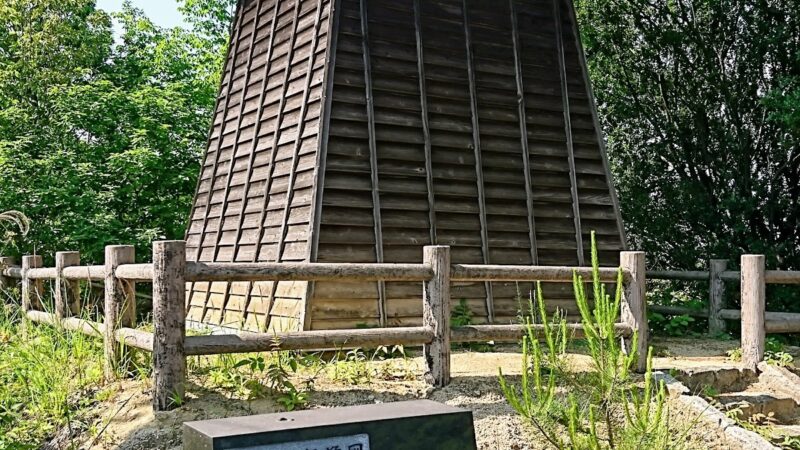
However, within Kojōyama Park, there is a place said to be the site of a watchtower, offering a slight glimpse of its former glory. Furthermore, some micro-topographical features may remain, suggesting the castle’s remnants. Careful observation may allow us to imagine its past.
Relocated Remains
Records indicate that the main gate of the Oda Prefectural Office, relocated from Kasaoka Castle, still exists. It is believed that in the early Meiji era, when Oda Prefecture was established following the abolition of the feudal system, the gate of Kasaoka Castle was used as the main gate of the prefectural office.
Highlights and Notes on Kasaoka Castle
View from Kojōyama Park
The greatest attraction of visiting Kasaoka Castle ruins is the spectacular view of the Seto Inland Sea from Kojōyama Park. From the mountaintop, you can enjoy panoramic views of Kasaoka city, the Kasaoka Islands, and the islands of the Seto Inland Sea.
Imagining the Murakami Suigun (Murakami Naval Force) once overlooking the Seto Inland Sea from this location and monitoring maritime traffic evokes a sense of historical romance. The scenery, especially at sunset, is beautiful, and the setting sun over the Seto Inland Sea captivates visitors.
Charm as a Cherry Blossom Spot
Kojoyama Park is known as one of Kasaoka City’s representative cherry blossom spots. In spring, approximately 400 Somei Yoshino cherry trees bloom, dyeing the entire mountain pink. Many visitors come during the cherry blossom season, and sometimes the trees are illuminated at night.
Enjoying cherry blossoms at a castle ruin is a luxurious experience that allows you to appreciate history and nature simultaneously.
Historical Information Boards and Guides
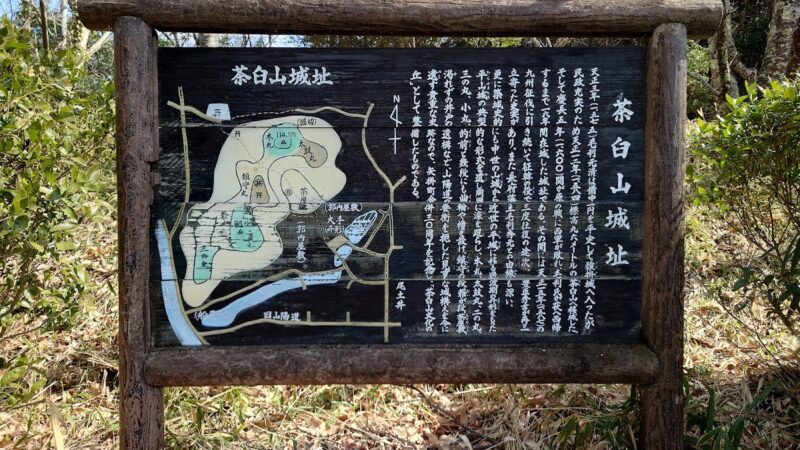
Information boards explaining the history of Kasaoka Castle are installed within the park. You can learn about the history of Kasaoka Castle, including its construction by Murakami Takashige, how it became part of Tokugawa Ieyasu’s territory, and the appointment of Kobori Masatsugu as magistrate.
Because there are few remaining structures, the information obtained from these explanatory signs is invaluable, and studying the history of Kasaoka Castle before your visit will allow for a deeper understanding.
Watchtower Site
Within the park, there is a place said to be the site of a watchtower. While no clear remains exist, looking out over the Seto Inland Sea from this spot makes it easy to understand why a watchtower once stood here.
Its optimal location for monitoring maritime traffic allows you to appreciate how strategically the Murakami naval force utilized this castle.
Understanding the Castle’s Form from the Topography
Although there are few remaining structures, carefully observing the topography of Kojōyama (Old Castle Mountain) allows you to imagine the castle’s former form. The flat area at the summit is thought to be the site of the main keep, and elements remain in the surrounding terrain that allow us to infer the arrangement of the baileys.
For castle enthusiasts, one way to enjoy the site is to bring a topographic map and walk around, imagining the former layout of the castle.
Access and Visiting Guide
Access by Public Transportation
The nearest station to Kasaoka Castle Ruins (Kojoyama Park) is JR Sanyo Main Line Kasaoka Station. Kojoyama Park is very close to Kasaoka Station, approximately 500 meters in a straight line, making it easily accessible on foot.
Walking Route from Kasaoka Station:
- Exit the south exit of Kasaoka Station and head towards Kasaoka city center.
- Head towards National Route 2 and follow the signs for Kojoyama Park.
- Arrive at the park entrance in approximately 10-15 minutes on foot.
A well-maintained walking path leads to the park, making it easy to walk.
Access by Car
If visiting by car, access from National Route 2 is convenient.
Route by Car:
- Drive along National Route 2 and look for signs for Kojōyama Park near the city center of Kasaoka.
- The road entrance to the park is on the northwest side; proceed north from the west entrance of the tunnel on National Route 2.
- A road is maintained all the way to the summit, and there is a parking lot near the summit.
Parking Information:
- Free parking is available at the end of the mountaintop.
- Space for several regular cars.
- May be full during peak seasons such as cherry blossom season.
Estimated Visit Time
The estimated visit time to Kojōyama Park is generally 20-30 minutes. Because there are few historical remains, even careful observation will not take long. However, the time required will vary depending on the following factors:
- If you include time to enjoy the scenery: 30-45 minutes
- If you enjoy cherry blossom viewing during the cherry blossom season: 1 hour or more
- If you prioritize photography: 45 minutes to 1 hour
- If you combine it with sightseeing in the surrounding Kasaoka city area: Approximately half a day
Points to Note When Visiting
Clothing and Equipment:
- If you can drive to the summit, no special equipment is needed.
- If you are climbing on foot, comfortable walking shoes are recommended.
- In summer, the sun is strong, so bring a hat and sunscreen.
- Insect repellent spray is useful.
Visiting Hours:
- The park is open 24 hours, but visiting during daylight hours is recommended.
- The sunset over the Seto Inland Sea is beautiful at dusk.
- The park is sometimes illuminated during the cherry blossom season.
Other:
- Toilets are available in the park.
- There are no vending machines, so it is safer to bring your own drinks.
- There are few historical remains, but it is recommended to carefully read the historical explanation boards.
Local Tourist Information
Attractions in Kasaoka City
This section introduces tourist spots in Kasaoka City that can be enjoyed in conjunction with a visit to Kasaoka Castle.
Kasaoka Islands:
These islands in the Seto Inland Sea are accessible by boat from Kasaoka Port. They include Manabe Island, Kitagi Island, and Shiraishi Island, each with its own unique culture and scenery. Manabe Island also has castle ruins, such as Makurayama Castle and Sawatsu Castle.
Kasaoka City Horseshoe Crab Museum:
The world’s only museum dedicated to horseshoe crabs. Kasaoka is known as the “Town of Horseshoe Crabs” and has a breeding ground for horseshoe crabs, a natural monument.
Kasaoka Bay Farm:
A vast flower field spread across reclaimed land. Rape blossoms bloom in spring, sunflowers in summer, and cosmos in autumn.
Nearby Castles
For castle enthusiasts, there are nearby castle ruins worth visiting in conjunction with Kasaoka Castle.
Bitchu Matsuyama Castle:
Famous as a mountain castle with an existing keep. This is the castle to which Ikeda Nagayuki, the last lord of Kasaoka Castle, was transferred. It’s about an hour’s drive away.
Tobinoko Castle:
Another castle ruin located within Kasaoka City. It existed at the same time as Kasaoka Castle.
Kodaira Castle, Kasaokayama Castle:
Medieval castle ruins scattered throughout Kasaoka City. While few remains remain, they are interesting for understanding the region’s history.
Kasaoka Gourmet
We also introduce gourmet food you should try when visiting Kasaoka.
Kasaoka Ramen:
A local Kasaoka ramen with a chicken broth base and topped with chicken meat. There are many specialty restaurants in the city.
Setouchi Seafood:
You can enjoy dishes made with fresh seafood. Octopus and oysters are particularly famous.
The Significance of Visiting Kasaoka Castle
Although very few remains of Kasaoka Castle remain, it is well worth a visit. ### Learning about the History of the Murakami Suigun (Murakami Naval Force)
Kasaoka Castle was one of the bases of the Murakami Suigun, which controlled the Seto Inland Sea. Built by Murakami Takashige, it is an important site for learning about the history of maritime traffic in the Seto Inland Sea. Standing on the site and overlooking the Seto Inland Sea, you can truly appreciate how strategically the Murakami Suigun chose this location.
A Site Associated with Kobori Enshu
Kasaoka Castle was where Kobori Masatsugu, the father of Kobori Enshu, served as a magistrate. It’s possible that the young Kobori Enshu assisted his father here, allowing you to feel the origins of this great cultural figure.
The Layered Nature of Local History
Kasaoka Castle was involved with many forces, including the Toyama, Inoue, Murakami, Mori, Tokugawa, and Ikeda clans. This history reflects the complex history of the Bitchu region from the Sengoku period to the early Edo period.
Spectacular Views of the Seto Inland Sea
Above all, the view of the Seto Inland Sea from Kojōyama Park is magnificent. Imagining that the former castle lords gazed upon the same view evokes a sense of historical romance that transcends time and space.
Summary
Kasaoka Castle in Kasaoka City, Okayama Prefecture, was built by Murakami Takashige as a stronghold for the Noshima Murakami family in the Seto Inland Sea. It was an important castle associated with historical figures such as Murakami Kagehiro, Mōri Motoyasu, Kobori Masatsugu, and Ikeda Nagayuki. After the Battle of Sekigahara, it became part of Tokugawa Ieyasu’s territory and functioned as a strategic point in western Bitchū for approximately 60 years until its abandonment in 1619.
Although the mountaintop was leveled during the Kasaoka Bay reclamation project in 1898, and most of the remains were lost, it is now maintained as Kojōyama Park, a famous spot where approximately 400 cherry trees bloom in spring.
Although few remains exist, the site offers plenty to see, including stunning views of the Seto Inland Sea, a rich history of the Murakami Suigun (Murakami Naval Force), and historical significance as a place associated with Kobori Enshu. It’s easily accessible on foot from Kasaoka Station, and you can even drive to the summit, making it a convenient castle site to visit.
When you visit Kasaoka City, be sure to stop by Kojōyama Park and immerse yourself in the romance of history while imagining the former sea castle that once jutted out into the Seto Inland Sea.