Uto Castle (Kumamoto Prefecture) Complete Guide: A Thorough Explanation of the History and Highlights of the Castle Built by Konishi Yukinaga
Located in Uto City, Kumamoto Prefecture, Uto Castle is a modern castle built by Konishi Yukinaga, known as a Christian daimyo. After the Battle of Sekigahara, it came under the control of Kato Kiyomasa, and was subsequently abandoned. A legend remains that the castle’s keep was relocated to Kumamoto Castle. This article provides a detailed explanation of Uto Castle’s history, structure, remaining structures, and access methods.
History of Uto Castle: The Residence of Christian Daimyo Konishi Yukinaga
Background of Construction and Konishi Yukinaga
The history of Uto Castle is deeply intertwined with Toyotomi Hideyoshi’s rule of Higo Province after his conquest of Kyushu. In 1587 (Tensho 15), Sasa Narimasa, who was granted Higo Province by Hideyoshi, was forced to commit seppuku (ritual suicide) for his responsibility in a local uprising. Subsequently, Higo Province was divided into two parts, with Kato Kiyomasa governing the north and Konishi Yukinaga governing the south.
In 1589 (Tensho 17), Konishi Yukinaga began construction of Uto Castle as the base for his 240,000 koku domain in southern Higo. Yukinaga was a merchant from Sakai and was known as a Christian daimyo, using the baptismal name Augustine. This faith influenced the formation of the castle town, and it is believed that many Christians resided in Uto.
Castle Structure and Scale
Uto Castle is a flatland castle built on a hill at the base of the Uto Peninsula. The main keep was at the center, with the second and third baileys arranged around it, and a moat surrounded the area. The total area of the castle was approximately 30 hectares, a considerable size for its time.
The keep is believed to have had a five-story structure, and the stone walls were constructed using a combination of rough-hewn and fitted stonework techniques. It is believed that the castle’s design reflected the knowledge Konishi Yukinaga gained during the Korean campaigns.
The Battle of Sekigahara and the Castle’s Fate
In the Battle of Sekigahara in 1600 (Keicho 5), Konishi Yukinaga sided with the Western Army along with Ishida Mitsunari and others. However, due to the Western Army’s defeat, Yukinaga was captured and beheaded in Kyoto. A Christian, Yukinaga refused to renounce his faith until the very end and was executed as a martyr.
After the war, Higo Province came under the unified rule of Kato Kiyomasa, and Uto Castle became part of his territory. Kiyomasa briefly undertook a major renovation of Uto Castle, completing the fortress, but in 1615 (Genna 1), due to the “One Castle Per Province” decree, Uto Castle was abandoned.
The Era of Kato Kiyomasa and the Abandonment of the Castle
After Kato Kiyomasa seized Uto Castle, he proceeded with renovations. However, for Kiyomasa, whose base was Kumamoto Castle, Uto Castle was a secondary structure. Following the issuance of the “One Castle Per Province” decree, Kiyomasa decided to abandon Uto Castle. It is believed that some of the castle’s structures were relocated to Kumamoto Castle at this time.
After its abandonment, Uto Castle was gradually dismantled, and the stone walls and building materials were reused for other constructions. Furthermore, after the Shimabara Rebellion (1637-1638), it is said that the castle ruins were thoroughly destroyed to erase any traces of Christian faith. Therefore, even today, the full extent of the castle’s layout remains unclear.
The Truth Behind the Uto Turret Relocation Theory: Was the Keep Really Relocated?
Content of the Legend
The most famous legend concerning Uto Castle is the theory that the keep was relocated to Kumamoto Castle. According to this theory, the five-story keep of Uto Castle was dismantled and relocated to Kumamoto Castle, becoming the current “Uto Turret.” The Uto Turret has a three-story, five-level structure with one basement level, and is known as the largest turret within Kumamoto Castle.
The Uto Turret is believed to have been constructed between 1601 and 1607 (Keicho 6 to 12) and is designated as a National Important Cultural Property. Due to its scale and the sophistication of its structure, it has also been called the “Third Keep.”
Recent Research Refutation
While the relocation theory has been believed for many years, recent architectural research and archaeological excavations are refuting this theory. The main reasons are as follows:
Differences in Architectural Style: The architectural style of the Uto Turret strongly reflects the characteristics of Kumamoto Castle architecture from the time of Kato Kiyomasa, and many differences from the architectural style of Konishi Yukinaga’s era have been pointed out.
Structural Issues: Relocated buildings typically show traces of structural processing and repairs, but no such traces have been found on the Uto Turret.
Historical Analysis: A close examination of the construction period of the Uto Turret and the period of the abandonment of Uto Castle reveals a chronological inconsistency.
Lack of Documentary Evidence: The absence of reliable contemporary documentary evidence to support the relocation further strengthens the denial.
Based on these research findings, the prevailing view today is that the Uto Turret was newly constructed during the construction of Kumamoto Castle and is not a relocated version of the Uto Castle keep. However, the origin of the name “Uto Turret” may still suggest some connection to Uto Castle, and further research is needed.
Current Uto Castle: Castle Ruins Developed as Shiroyama Park
Overview of Shiroyama Park
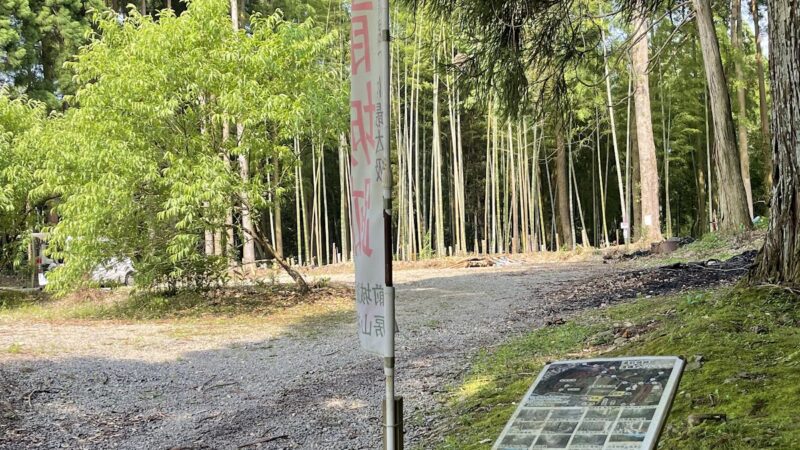
Currently, the site of the former Uto Castle’s main keep has been developed as “Shiroyama Park,” serving as a place of relaxation for citizens. Walking paths are maintained within the park, allowing visitors to enjoy the changing seasons while strolling through the castle ruins.
From the park entrance to the main keep site, it’s about a 10-minute walk up a gentle slope. Along the way, you can observe the remains of stone walls and moats, giving you a glimpse into the scale of the former castle.
Konishi Yukinaga Bronze Statue
A bronze statue of Konishi Yukinaga, the builder of Uto Castle, stands at the main keep site. Erected in the 1990s, the statue depicts Yukinaga gazing into the distance.
Information boards surround the statue, allowing visitors to learn about Konishi Yukinaga’s life and the history of Uto Castle. Yukinaga’s life as a Christian daimyo who remained steadfast in his faith continues to attract the interest of many people today.
Remaining Ruins
Several important ruins remain within Shiroyama Park.
Stone Walls: Partially remaining stone walls constructed using the “nozurazumi” (rough-stone masonry) method exist around the main keep. These walls, having withstood over 400 years of wind and rain, speak to the high level of castle-building technology of the time. While some sections have collapsed, in well-preserved areas, the stone stacking techniques and processing methods can be observed.
Moat Remains: The remains of the castle’s defensive moat can be seen as topographical features. Although much of it is now filled in, the layout of the moat can be inferred from the topographical undulations.
Layout of Enclosures: The layout of the main keep, second enclosure, and third enclosure remains as topographical features, allowing for an understanding of the basic structure of the castle.
Results of Archaeological Excavations
The Uto City Board of Education is conducting ongoing archaeological excavations. The following results have been obtained from the investigations to date:
- Discovery of castle gate foundation stones and post holes
- Clarification of lifestyle based on excavated artifacts such as ceramics and roof tiles
- Analysis of stone wall structure and construction techniques
- Discovery of Christian-related artifacts
These research findings have greatly contributed to understanding the true nature of Uto Castle, and further research is planned.
Highlights and Sightseeing Points of Uto Castle
Views from the Castle Ruins
From the main keep ruins, you can enjoy a panoramic view of Uto city and the Ariake Sea. On clear days, you can even see Mount Unzen and the Shimabara Peninsula, making it a renowned scenic spot.
The view at sunset is particularly magnificent, with the setting sun over the Ariake Sea and the silhouette of the Uto Peninsula creating a beautiful landscape. It is also a popular spot for photography.
Seasonal Attractions
Spring (March-May): Cherry trees are planted in Shiroyama Park, and in spring, it becomes a popular cherry blossom viewing spot, attracting many visitors. The contrast between the cherry blossoms and the stone walls is beautiful, allowing you to enjoy cherry blossom viewing while feeling the romance of history.
Summer (June-August): The fresh greenery is beautiful, and it’s pleasant to stroll around while enjoying the cool shade of the trees. Amidst the sound of cicadas, you can imagine yourself in the Sengoku period.
Autumn (September-November): The autumn leaves color the castle ruins, allowing you to enjoy a historical walk in a tranquil atmosphere. The clear autumn air and the panoramic views are also appealing.
Winter (December-February): There are fewer visitors, allowing you to quietly explore the castle ruins. The crisp winter air is ideal for carefully observing the stone walls and remains.
Nearby Historical Spots
There are other historical sights scattered around Uto Castle.
Uto Old Castle (Medieval Uto Castle): This is the site of a medieval castle located approximately 1.5 km northwest of Uto Castle. This castle was built by the Uto clan and is now maintained as the “Uto Castle Ruins Historic Site.” The remains of buildings, moats, and castle gates have been restored, allowing visitors to experience a medieval castle. Visiting both the early modern Uto Castle and this site allows for a better understanding of the castle’s evolution.
Todoroki Spring: A spring known for its pure water in Uto City, and selected as one of Japan’s 100 Best Waters. It holds significant historical value as a water source that supported the lives of the castle town.
Mikoshikure Coast: A coast associated with the legend of Emperor Keiko, famous for the beautiful sand patterns that appear at low tide. It is approximately a 15-minute drive from Uto Castle.
Access and Visiting Information for Uto Castle
Access by Public Transportation
By JR:
- Get off at JR Kagoshima Main Line “Uto Station,” approximately 20 minutes on foot.
- Alternatively, take the Sanko Bus from Uto Station, get off at “Uto City Hall,” approximately 10 minutes on foot.
Uto Station is approximately 20 minutes from Kumamoto Station by rapid train, and approximately 30 minutes by local train. The route from the station to the castle ruins is flat, and there are guide signs along the way, so you can arrive without getting lost.
Access by Car
By Kyushu Expressway:
- Approximately 15 minutes from Matsubashi IC via National Route 3.
- Approximately 30 minutes from Kumamoto IC via National Route 3.
From Kumamoto City Center:
- Approximately 30 minutes via National Route 57 or National Route 3.
Shiroyama Park has a free parking lot with space for approximately 30 regular cars. However, the parking lot can become full during peak seasons such as cherry blossom season, so please consider using public transportation.
Visitor Information
Opening Hours: Shiroyama Park is open 24 hours a day, but visiting during daylight hours is recommended.
Admission Fee: Free
Estimated Time Required: Allow approximately 30 minutes to 1 hour to explore the castle ruins. If you want to carefully observe the remains or enjoy taking photographs, it may take more than 1 hour.
Facilities: Toilets are available in the park. Benches are also available, allowing you to rest while visiting.
Important Notes:
- The stone walls are at risk of collapse, so please be careful not to get too close.
- Please refrain from entering areas other than the designated walking paths.
- Please take all your trash with you.
- Bringing insect repellent is recommended during the summer months.
Recommended Sightseeing Courses
Standard Course (Duration: Approx. 45 minutes)
- Start from the parking lot or park entrance.
- Observe the stone wall remains (approx. 10 minutes).
- Move to the main keep site and view the Konishi Yukinaga statue (approx. 15 minutes).
- Enjoy the view from the main keep (approx. 10 minutes).
- Descend while observing the remains of the moat and baileys (approx. 10 minutes).
In-Depth Course (Duration: Approx. 1 hour 30 minutes)
- View the entire castle site from the parking lot (approx. 5 minutes).
- Observe the remains of the outer bailey (approx. 15 minutes).
- Detailed observation of the stone walls and photography (approx. 20 minutes).
- Visit the Konishi Yukinaga bronze statue at the main keep site and read the explanatory plaque (approx. 20 minutes)
- Enjoy the view from the main keep and take a break (approx. 15 minutes)
- Stroll around the ruins of the second and third baileys (approx. 15 minutes)
Uto Castle and the Sengoku Period History of Kumamoto
The Sengoku Period of Higo Province
To understand the history of Uto Castle, it is important to know the developments of the Sengoku period in Higo Province. During the Sengoku period, Higo Province was divided among various local lords such as the Kikuchi, Aso, and Sagara clans, forming a complex power structure.
In 1587, after the conquest of Kyushu, Toyotomi Hideyoshi granted Higo Province to Sasa Narimasa. However, Narimasa’s forceful policies provoked resistance from the local lords, resulting in a large-scale uprising. Narimasa failed to suppress this uprising and was ordered to commit seppuku (ritual suicide), resulting in Higo Province being divided between Kato Kiyomasa and Konishi Yukinaga.
Profile of Konishi Yukinaga
Konishi Yukinaga was born the second son of Konishi Ryusuke, a merchant in Sakai. His family served the Ukita clan from his father’s generation, and Yukinaga himself rose to prominence as a senior retainer of Ukita Hideie. Recognized by Toyotomi Hideyoshi, Yukinaga was appointed lord of southern Higo Province.
Known as a Christian daimyo, Yukinaga actively promoted Christian missionary work within his territory. A Christian church was built in the town of Uto Castle, and many of his subjects were baptized. He also played a key role in the Korean campaigns, leading the navy, and played an important role in peace negotiations with the Ming Dynasty.
Relationship with Kato Kiyomasa
While outwardly cooperative, Yukinaga and Kato Kiyomasa, who also governed Higo Province, had a complex relationship. Kiyomasa was a devout follower of Nichiren Buddhism, while Yukinaga was a Christian, leading to religious conflict.
During the Korean campaigns, the conflict between the two sides became apparent, escalating into a factional struggle involving Ishida Mitsunari. This conflict is said to have been one of the causes of the East-West division at the Battle of Sekigahara.
Higo Province After Sekigahara
After the Battle of Sekigahara, Kato Kiyomasa became the daimyo of Higo Province with a domain of 540,000 koku and began the large-scale construction of Kumamoto Castle. Kiyomasa was known for his excellent castle-building techniques and flood control projects, and Kumamoto Castle came to be regarded as an “impregnable fortress.”
After Kiyomasa’s death, the Kato family was dispossessed during the time of his son, Tadahiro, and Hosokawa Tadatoshi became the lord of Higo Domain. From then until the Meiji Restoration, the Hosokawa family ruled Higo Province.
Cultural Value of Uto Castle
Archaeological Value
The Uto Castle ruins are an important site for the study of castles from the Momoyama period to the early Edo period. As a castle built by Konishi Yukinaga, a daimyo with a unique background, and as a castle that was abandoned after a short period, it is a valuable resource for understanding the political situation and castle-building techniques of the time.
The pottery and roof tiles unearthed through archaeological excavations provide important evidence of the lifestyle and trade practices of the time. In particular, the Christian-related artifacts are considered highly valuable for the study of Christian history in Japan.
Preservation and Utilization Efforts
The Uto City Board of Education is actively working on the preservation and utilization of the Uto Castle ruins. In addition to regular archaeological excavations, they are proceeding with preservation treatment of the remains and park development.
It is also used as a site for local history education, with local history lessons for elementary and junior high schools and history lectures for citizens being held there. Its value as a tourist resource is also recognized, and efforts are underway to create multilingual information boards and brochures.
Future Challenges and Prospects
The following points are among the future challenges for the Uto Castle ruins:
Further Clarification of the Ruins: The full extent of the castle’s layout has not yet been fully understood, and continuous research is necessary.
Balance of Preservation and Utilization: While prioritizing the preservation of the ruins, it is necessary to utilize them as a tourist resource.
Surrounding Area Development: Improving access roads and enhancing signage are needed to improve visitor convenience.
Strengthening Information Dissemination: To widely publicize the historical value of Uto Castle, disseminating information through social media and websites is crucial.
History and Culture of Uto City
Uto as a Transportation Hub
Uto City has flourished as a transportation hub since ancient times. It was a transit point on the land route connecting Kumamoto and Amakusa, and also developed as a port town facing the Ariake Sea. During the Edo period, the Uto Domain, a branch of the Kumamoto Domain, was established there, and it prospered as a castle town.
Even today, it remains a transportation hub located at the junction of the JR Kagoshima Main Line and the Misumi Line, and where National Route 3 and National Route 57 intersect. Located within commuting distance of Kumamoto City, it is highly regarded as a livable area.
Cultural Heritage of Uto City
Besides Uto Castle, Uto City boasts numerous cultural heritage sites.
Amida Pottery Kiln Site: A pottery kiln site dating back to the Edo period, designated as a national historic site.
Todoroki Palace Site: The site of a villa belonging to the Hosokawa family, with a beautiful garden remaining.
Uto Marina: A marina facing the Ariake Sea, serving as a base for marine leisure activities.
Local Festivals and Events
Uto City hosts various festivals and events throughout the year.
Uto Citizens’ Festival (October): The city’s largest festival, featuring a parade and fireworks display.
Mikoshiku Coast Sunset Viewing Event (Spring/Autumn): Held on days when low tide coincides with sunset, attracting many photography enthusiasts.
Todoroki Spring Festival (July): A festival expressing gratitude for the blessings of the spring, featuring traditional events by local residents.
Summary: Rediscovering the Charm of Uto Castle
Uto Castle is a historical site full of historical romance, known as a castle built by the Christian daimyo Konishi Yukinaga and for its legend of relocating the keep. Currently, it is maintained as Shiroyama Park, where visitors can observe the remains such as stone walls and moat traces.
The view from the main keep is magnificent, offering a panoramic view of the Ariake Sea and Mount Unzen. It’s also a place where you can enjoy the changing seasons, such as cherry blossoms in spring and autumn leaves. Recent research has also yielded new insights into its relationship with the Uto Turret of Kumamoto Castle, making it an interesting topic for history buffs.
When visiting Kumamoto Prefecture, be sure to visit the Uto Castle ruins and reflect on the history of the Sengoku period. Standing before the statue of Konishi Yukinaga and experiencing the life of the warrior who ruled this land over 400 years ago will deepen your understanding of history. The location is also appealing, with easy access, just a 30-minute drive from Kumamoto City and within walking distance of JR Uto Station. Visiting nearby attractions such as Uto Castle, Todoroki Spring, and Mikoshikure Coast will make for a fulfilling trip where you can fully enjoy Uto’s history and nature.