Complete Guide to Tanagura Castle (Fukushima Prefecture): A Thorough Explanation of the History, Structure, and Highlights of Kamegajo Castle
Basic Information about Tanagura Castle
Tanagura Castle (Tanagura-jo) is a Japanese castle ruin located in Tanagura-machi, Higashishirakawa-gun, Fukushima Prefecture. Also known as “Kamegajo Castle,” it functioned as the administrative center of the Tanagura Domain from the early Edo period until the end of the Edo period. It was designated a national historic site in 2019 (Heisei 31) and is currently maintained as “Kamegajo Park.”
Common Names and Alternate Names
The name “Kamegajo Castle,” another name for Tanagura Castle, has an interesting origin. Throughout the Edo period, the Tanagura Domain frequently saw changes in castle lords. There is a legend that each time a large turtle appeared on the surface of the castle moat, the lord changed. This anecdote led to the castle being called “Kamegajo Castle.”
Location and Former Province
Location: Tanakura, Higashishirakawa District, Fukushima Prefecture
Former Province: Shirakawa District, Mutsu Province
Classification/Structure: Hilltop Castle
Builder: Niwa Nagashige
Year of Construction: Kan’ei 2 (1625)
Year of Abandonment: Keio 4 (1868)
History of Tanakura Castle
Tanakura Before Construction
Before Tanakura Castle was built, there was a castle called “Akadate” in this area. In Keicho 8 (1603), Tachibana Muneshige, who had been dispossessed of his domain after the Battle of Sekigahara, was granted 10,000 koku in Tanakura and returned to being a daimyo, making Akadate his residence. Tachibana Muneshige was later increased to 35,000 koku, but in Genna 6 (1620), he was transferred to his former territory of Yanagawa in Chikugo Province. ### Construction by Niwa Nagashige
In 1622 (Genna 8), Niwa Nagashige was granted a fief of 50,000 koku from Furukawa in Hitachi Province. Niwa Nagashige was the eldest son of Niwa Nagahide, a well-known retainer of Oda Nobunaga. Initially, Nagashige resided at Akadate Castle, but in 1625 (Kanei 2), he began construction of Tanagura Castle and moved his residence there after its completion. As a result, Akadate Castle was abandoned.
Niwa Nagashige built Tanagura Castle, a modern castle, in Tanagura, a strategically important location at the intersection of the Shirakawa and Aizu roads. This castle served as a base for the shogunate in Oshu and played a crucial role in monitoring the various daimyo in the Tohoku region.
Changes in Castle Lords during the Edo Period
Tanagura Castle is known for its frequent changes in castle lords throughout the Edo period. The main changes in castle lords are as follows:
The Niwa Clan Era (1622-1627)
Niwa Nagashige built the castle, but in 1627 (Kanei 4), he was transferred to Nihonmatsu in Mutsu Province.
The Naito Clan Era (1627-1747)
Naito Nobuteru was appointed with a 50,000 koku domain, and the Naito clan ruled Tanagura for approximately 120 years. The Naito clan improved Tanagura Castle and contributed to the development of the castle town. In 1747 (Enkyo 4), Naito Masaki was transferred to Murakami in Echigo Province, marking the end of the Naito clan’s era.
The Ota and Matsudaira Clan Eras (1747-1812)
Ota Suketoshi was appointed in 1747 (Enkyo 4), but was transferred after only 5 years. After that, the castle lords changed hands frequently, with the Ogasawara, Inoue, and Matsudaira clans taking over in short periods. The Abe Clan Era (1812-1866)
In 1812 (Bunka 9), Abe Masanori took up residence in Tanagura, and the Abe clan ruled Tanagura until the end of the Edo period. The Abe clan was a prestigious family of hereditary daimyo that produced many senior councilors, and the Tanagura domain’s rice yield eventually reached 100,000 koku.
The Boshin War and the Fall of the Castle
In 1868 (Keio 4), when the Boshin War broke out, the Tanagura domain joined the Ouetsu Reppan Alliance. The lord at the time was Abe Masashige. On June 24 of the same year, approximately 800 imperial troops led by Itagaki Taisuke attacked Tanagura Castle.
The Tanagura domain defended with approximately 1,000 soldiers, but struggled against the modern equipment and tactics of the new government army. After fierce fighting, Tanagura Castle fell in just one day. In this battle, many of the castle’s buildings were destroyed by fire, and the Tanagura Domain effectively collapsed.
After the castle fell, Abe Masashizu fled to Sendai, and Tanagura Castle came under the control of the new government forces. After the Meiji Restoration, with the abolition of the feudal domains and establishment of prefectures, Tanagura Castle was officially abandoned, and many of its buildings were demolished.
Structure
Layout and Basic Structure
Tanagura Castle is classified as a hilltop castle, built on the southern end of the hill where the Baba Tsutsukowake Shrine is located. The castle’s basic structure is a concentric layout with the main keep at the center, surrounded by the second and third baileys.
The main keep measures approximately 200 meters east-west and 150 meters north-south, and is surrounded by earthen ramparts approximately 3 to 5 meters high. Turrets were placed at the four corners of the main keep, and the turret at the southeast corner, in particular, was called the “Drum Turret” and served to announce the time.
Castle Tower Structure
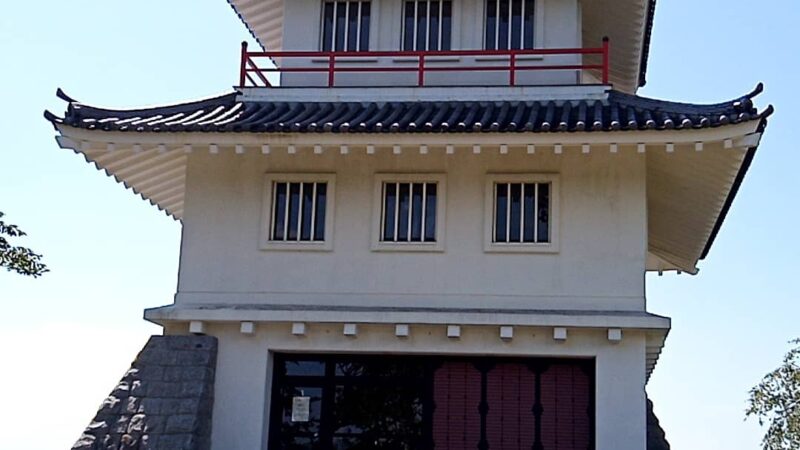
Tanagura Castle did not have a standalone castle tower. Instead, a three-story turret was built in the southeastern corner of the main enclosure, serving as a substitute for the castle tower. This turret, known as the “Gosankai Yagura” (Three-Story Turret), was a symbolic structure of the castle, but it was destroyed by fire during the Boshin War.
Defensive Facilities
The key to Tanagura Castle’s defense was the moat surrounding the main enclosure. The moat was approximately 15-20 meters wide and 3-4 meters deep, and was always filled with water. The water source was a tributary of the nearby Kuji River, and the water level of the moat was kept constant.
The earthen ramparts of the main enclosure were carefully constructed using the rammed earth method, and their robust structure can still be seen today. Grass was planted on the surface of the ramparts as a measure to prevent erosion.
The main gate of the main enclosure, the Otemon, was located on the south side and had a masugata koguchi (square-shaped gate) structure. To prevent enemy intrusion, a space enclosed by stone walls and earthen ramparts was created in front of and behind the gate, allowing for attacks on intruders from three sides.
Characteristics of Stone Walls and Earthen Ramparts
The stone walls of Tanagura Castle are used only in a limited area of the main enclosure and around the gate. The stone materials used for the walls are mainly locally sourced granite, and they are constructed using the techniques of rough-hewn stonework and fitted stonework.
The main defense of the castle was the earthen ramparts, and the ramparts surrounding the main enclosure remain in good condition today. The height of the ramparts varies depending on the location, but the highest point reaches approximately 5 meters. Walls were built on top of the ramparts to enhance their defensive capabilities.
Structure of the Castle Town
The castle town of Tanagura Castle was planned and arranged around the castle. Samurai residences were concentrated on the north and east sides of the castle, while the merchant district spread out to the south and west. The major highways, the Shirakawa Highway and the Aizu Highway, ran through the castle town, making it a vital transportation hub. A temple district was also formed in the castle town, with several temples located there. These temples served as places of worship, but were also expected to play a role as defensive strongholds in times of emergency.
Remains
Existing Remains
The following remains are well-preserved at the current Tanakura Castle site:
Main Enclosure Earthwork
The earthwork surrounding the main enclosure is the best-preserved remains within the castle. It remains almost completely intact on all four sides (east, west, north, and south), conveying the castle-building techniques of the Edo period. Visitors can walk on the earthwork, experiencing the scale of the castle at that time.
Water Moat
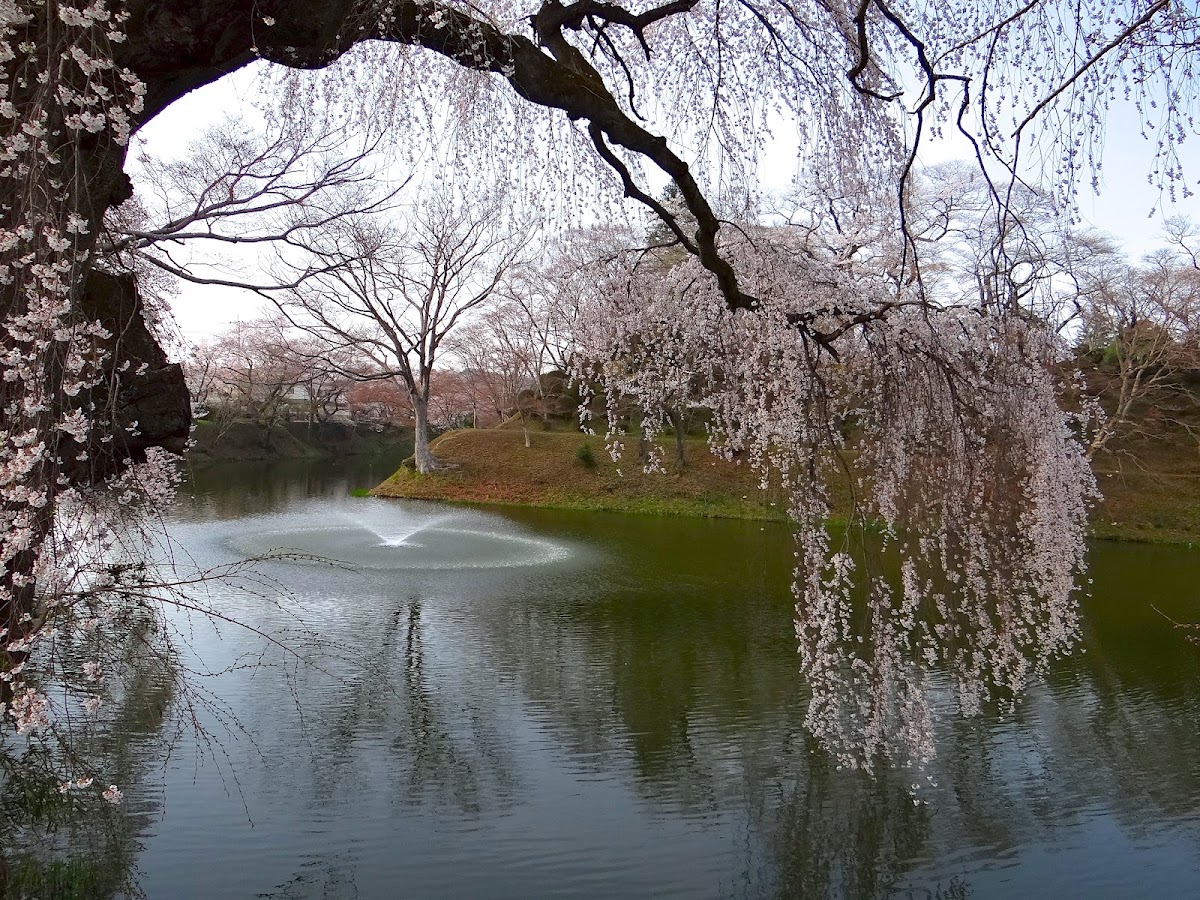
The water moat surrounding the main enclosure is also well-preserved. Water is still present, and in spring, cherry blossoms are reflected on the water’s surface, creating a beautiful landscape. Parts of the moat’s stone walls can also be seen, providing valuable information about the structure at that time.
Stone Wall
Stone walls remain in part of the main enclosure and around the gate site. The stone walls, built using the Nozurazumi technique, retain much of their original appearance from the time of construction, offering insights into the technological level of the era through the selection of stones and construction methods.
Kuruwa (Enclosure) Sites
The layout of the Honmaru (main enclosure), Ninomaru (second enclosure), and Sannomaru (third enclosure) remains clearly visible in the topography. The flat area of the Honmaru, in particular, is extensive, allowing us to imagine the buildings that once stood there.
Relocated Structures
Many of the structures of Tanagura Castle were destroyed in the Boshin War, but some were relocated and still exist today.
Renkeji Temple Gate
Renkeji Temple in Tanagura Town retains a gate believed to have been relocated from Tanagura Castle. This temple also houses the burial grounds of the Naito and Abe families, making it an important site for understanding the history of the Tanagura Domain.
Archaeological Excavation Results
Recent archaeological excavations have yielded the following new discoveries:
- Building layout of the main enclosure: The arrangement of foundation stones confirmed that the main enclosure contained multiple structures, including a palace and watchtowers.
- Drainage facilities: Stone-lined drainage ditches were discovered inside the earthworks, revealing that advanced techniques were used for the castle’s maintenance.
- Traces of daily life: Excavated artifacts such as ceramics and roof tiles revealed details of life within the castle.
These research findings are important materials that support the historical value of Tanagura Castle.
Tourism
Highlights of Kamegajo Park
Currently, the Tanagura Castle ruins have been developed into “Kamegajo Park,” a place of relaxation for townspeople.
Spring Cherry Blossoms
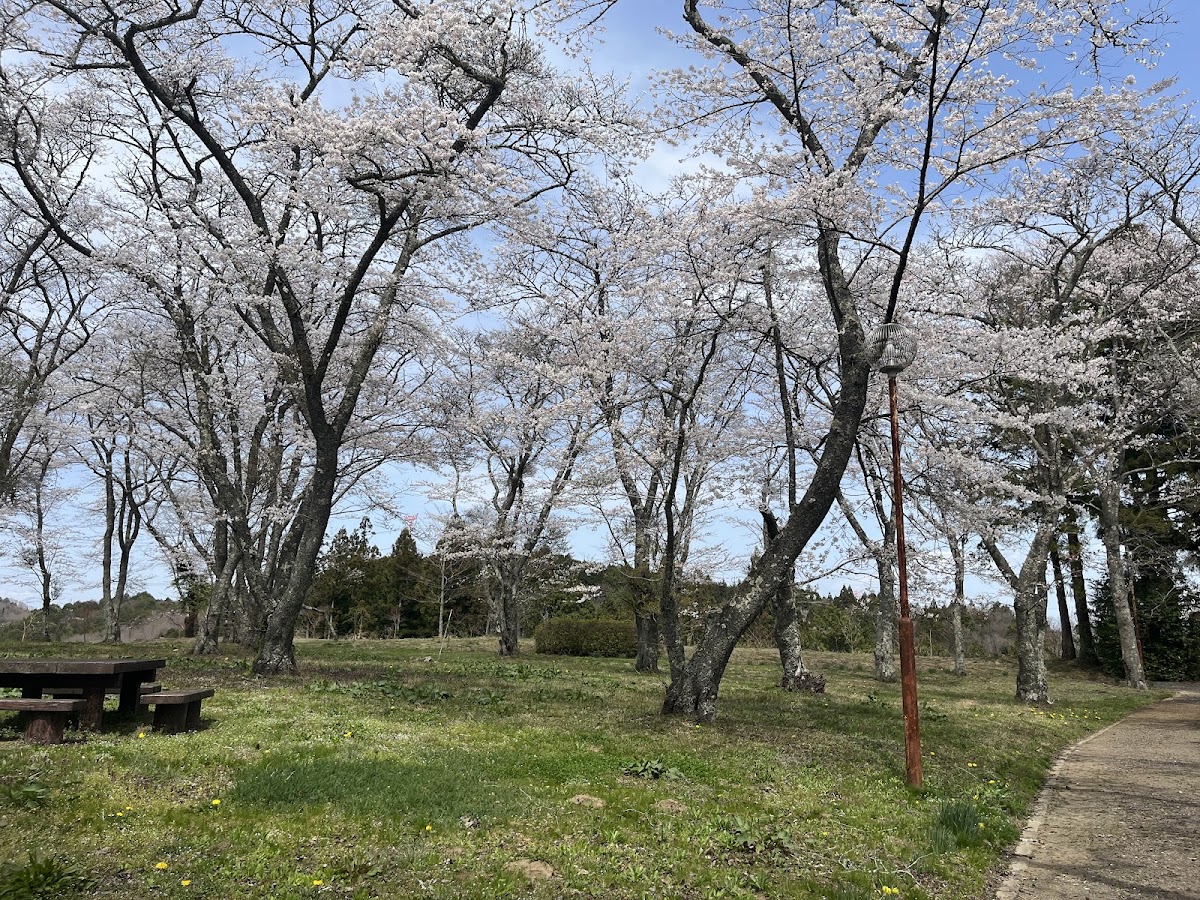
Approximately 200 Somei Yoshino cherry trees are planted in the park, and they are in full bloom from mid- to late April. The view of the cherry blossoms from the top of the main enclosure’s earthworks and their reflection in the moat is breathtaking. The trees are also illuminated during the cherry blossom season, allowing visitors to enjoy the blossoms at night.
Azaleas and Autumn Leaves
In May, azaleas bloom profusely, coloring the park. In autumn, the autumn leaves are beautiful, especially the maple trees around the earthworks. This park is beloved by locals as a place to enjoy nature throughout the seasons.
Walking Paths
Walking paths are maintained around the main keep, and you can even walk along the top of the earthworks. The walk takes about 30 minutes, allowing you to slowly explore while understanding the castle’s structure.
Nearby Tourist Attractions
Renkeji Temple
Located about a 10-minute walk from Tanagura Castle, Renkeji Temple houses the tombs of the Naito and Abe families. It is an important place for understanding the history of the Tanagura Domain and a must-visit spot along with the castle ruins.
Baba Tsutsukowake Shrine
Located north of Tanagura Castle, this ancient shrine is known as an Engishiki-listed shrine. The grounds contain giant cedar trees hundreds of years old, creating a solemn atmosphere.
Tanagura Town Cultural Center Kuramikan
This facility introduces the history and culture of Tanagura, and also displays materials related to Tanagura Castle. Visiting before visiting the castle ruins will allow you to understand the history more deeply.
Event Information
Tanagura Castle Festival
This summer festival is held every August, with various events taking place at the castle ruins. It’s an event where you can experience the history and culture of Tanagura, including a samurai procession and performances of traditional arts.
Cherry Blossom Festival
Held during the cherry blossom season, it features nighttime illuminations and food stalls offering local cuisine.
Access
Access by Public Transportation
Train
Get off at JR Suigun Line “Iwaki-Tanagura Station,” then walk for about 10 minutes. The path from the station to the castle ruins is flat, and there are signs, so you won’t get lost.
From the Tokyo area, the most common route is to take the Tohoku Main Line to Koriyama Station and then transfer to the Suigun Line. The journey takes approximately 3 hours and 30 minutes.
Bus
Get off at “Tanagura Town Hall” bus stop on the Fukushima Kotsu bus line, then walk for about 5 minutes. However, bus service is limited, so it is recommended to check the timetable in advance.
Access by Car
Using the Tohoku Expressway
Approximately 20km from Shirakawa IC via National Route 289, about 30 minutes by car. Or approximately 25km from Yabuki IC via Prefectural Road 58 and National Route 289, about 35 minutes by car.
Using the Joban Expressway
Approximately 60km from Iwaki Chuo IC via National Route 49 and Prefectural Road 14, about 1 hour and 10 minutes by car.
Parking Information
Kamegajo Park has a free parking lot.
- Parking Capacity: Approximately 50 regular cars, 3 large buses
- Operating Hours: 24 hours (however, it may be locked at night)
- Fee: Free
During events such as the Cherry Blossom Festival, it can get crowded, so we recommend using public transportation.
Visitor Information
- Opening Hours: Always open (park area)
- Closed Days: None
- Admission Fee: Free
- Estimated Time Required: Approximately 30 minutes to 1 hour
- Accessibility: Some walking paths are wheelchair accessible, but there are stairs on top of the earthworks, etc.
Cultural Property Designation and Preservation Activities of Tanagura Castle
National Historic Site Designation
Tanagura Castle Ruins were designated a National Historic Site on February 26, 2019 (Heisei 31). The designated area covers approximately 3.5 hectares, centered around the main keep site, and the remains such as earthworks, moats, and stone walls were highly evaluated.
With the designation as a National Historic Site, the preservation and utilization of the remains will be further promoted. Plans are underway to enhance explanatory signs and improve the remains.
Preservation and Development Plan
Tanagura Town has formulated a preservation and utilization plan for the Tanagura Castle ruins and is implementing the following initiatives:
- Regular maintenance of earthworks and moats
- Multilingualization of explanatory signs and information boards
- Recreation of the castle’s appearance in its heyday using AR technology
- Continued archaeological excavations
- Promotion of educational and outreach activities
These initiatives aim to pass on the historical value of Tanagura Castle to future generations and to utilize it as a tourist resource.
Tanagura Castle and the Boshin War
Battle of Shirakawa Pass
The fall of Tanagura Castle is positioned as part of the “Battle of Shirakawa Pass” during the Boshin War. The New Government forces planned to advance northward from the Shirakawa area in order to pacify the Tohoku region.
After the fall of Shirakawa Castle, the New Government forces set their sights on Tanagura Castle as their next target. Tanagura Castle was strategically important, located on the route to Aizu.
Details of the Battle
In the early morning of June 24th, 1868 (Keio 4), approximately 800 New Government troops, primarily from the Tosa Domain and led by Itagaki Taisuke, approached Tanagura Castle. The Tanagura Domain, under the command of Abe Masashige, countered with approximately 1,000 soldiers.
The New Government forces were equipped with state-of-the-art Minié rifles and Armstrong guns, while the Tanagura Domain relied mainly on older matchlock guns. This difference in equipment significantly influenced the course of the battle.
After a fierce artillery exchange, the New Government forces began their assault from the south side of the castle. The Tanagura Domain soldiers fought desperately, but were gradually pushed back by the New Government forces, who were equipped with modern weapons and training, and by evening, the New Government forces had entered the castle.
Hand-to-hand combat took place within the castle, but Abe Masashige decided to abandon the castle and escape towards Sendai. In this battle, the Tanagura Domain suffered approximately 100 casualties, and many of the castle’s buildings were destroyed by fire.
Tanagura After the War
After the fall of the castle, Tanagura was placed under the control of the new government forces. Abe Masashige was pardoned in 1869 after being placed under house arrest in Sendai, but the Tanagura Domain was abolished, and the Abe family continued as nobility.
The castle ruins were confiscated by the Meiji government, and many of the buildings were demolished. However, the basic structures such as earthworks and moats remained and were later developed into a park.
Successive Lords and Reigns of the Tanagura Domain
Niwa Clan (1622-1627)
Niwa Nagashige
Eldest son of Niwa Nagahide, a senior retainer of Oda Nobunaga. He was dispossessed of his domain for siding with the Western Army in the Battle of Sekigahara, but was later pardoned and reinstated as a daimyo. He built Tanagura Castle and laid the foundation for the castle town.
Naito Clan (1627-1747)
The Naito clan ruled Tanagura for approximately 120 years, contributing to the stability of the domain’s administration and the development of the castle town.
Naito Nobuteru
First lord of the Tanagura domain. He solidified the foundation of the domain’s administration and promoted land surveys and new rice field development.
Naito Masaki
Last lord of the Tanagura domain of the Naito clan. He was transferred to Murakami in Echigo Province in 1747, ending the Naito clan’s rule.
Abe Clan (1812-1868)
Abe Masanori
Entered the domain in 1812. He was the uncle of Abe Masahiro, who served as a senior councilor.
Abe Masakiyo
The last lord of the Tanagura Domain. He joined the Ouetsu Reppan Alliance during the Boshin War and fought against the new government forces, but was defeated. He lost his castle and fled to Sendai.
Construction Techniques of Tanagura Castle
Characteristics of the Castle Layout
The layout of Tanagura Castle exhibits typical characteristics of early modern castles. The concentric arrangement centered on the main keep enhances defensive efficiency while also prioritizing functionality as a government office.
Niwa Nagashige utilized his experience at Obama Castle in Wakasa Province, built by his father Nagahide, and at Furuto Castle in Hitachi Province, which he ruled, and incorporated these into the design of Tanagura Castle.
Securing Water Resources
The moat of Tanagura Castle draws water from a tributary of the nearby Kuji River. Securing a water source and managing the water level was extremely important in maintaining the castle’s defensive capabilities.
A clay layer was laid at the bottom of the moat to prevent water from seeping in. Furthermore, sluice gates were installed to drain excess water, creating a system to prevent flooding during heavy rains.
Construction Techniques of the Earthworks
The earthworks of Tanagura Castle were carefully constructed using the rammed earth method. By layering soils of different properties and compacting each layer, high strength and durability were achieved.
Excavation surveys revealed the internal structure of the earthworks, confirming the advanced civil engineering techniques of the time. Grass was planted on the surface of the earthworks to prevent erosion from rainwater and to maintain its aesthetic appeal.
References
For more detailed information about the history and structure of Tanagura Castle, please refer to the following references.
- *Tanagura Town History*, edited by the Tanagura Town History Compilation Committee, Tanagura Town, 1985
- *Medieval Castle Sites in Fukushima Prefecture*, Fukushima Prefectural Board of Education, 1988
- *Tanagura Castle Site Excavation Report*, Tanagura Town Board of Education, 2015
- *Complete History of the Boshin War*, Volumes 1 & 2, by Katsumi Sasaki, Kodansha, 2018
- *Complete Guide to Japanese Castles, Volume 3: Yamagata, Miyagi, Fukushima*, Shin Jinbutsu Oraisha, 1981
- *Abe Family Documents*, held at Tanagura Town Cultural Center Kuramikan
- *Naito Family Documents*, held at Renkeiji Temple
These documents contain detailed information about the history of Tanagura Castle, the results of excavation surveys, and the deciphering of ancient documents, allowing for a deeper understanding of Tanagura Castle.
Summary
Tanagura Castle is an important castle built by Niwa Nagashige in the early Edo period and functioned as the administrative center of the Tanagura Domain until the end of the Edo period. With its unique history marked by frequent changes in castle lords, it has been affectionately known as “Kamegajo” (Turtle Castle).
Although it fell during the Boshin War and lost many of its structures, the earthworks and moat of the main keep were well preserved, and in 2019 it was designated a national historic site. Currently, it is maintained as Kamegajo Park, and is popular with many people as a spot for cherry blossoms and autumn leaves, and as a place to learn about history.
With easy access, just a 10-minute walk from Iwaki-Tanagura Station on the JR Suigun Line, it is a historic site you should definitely visit when traveling to southern Fukushima Prefecture. Why not reflect on the appearance of the Edo-period castle at the Tanagura Castle ruins, where nature and history harmonize in every season?