Toshimadate (Akita Prefecture) Complete Guide | History, Remains, and Highlights Explained in Detail
Located in Kawabe Toshima, Akita City, Akita Prefecture, Toshimadate is a valuable mountain castle site that conveys the turbulent events of the Sengoku period. Designated as a prefectural historical site, this castle was the stage for the Minato Incident, a major event that significantly impacted Akita’s history, and remains such as vertical moats and trenches are still well-preserved. This article provides a thorough explanation of this hidden historical spot in Akita City, from the history of Toshimadate to details of its remains and points to note when visiting.
What is Toshimadate? | A Sengoku Period Mountain Castle Remaining in Akita City
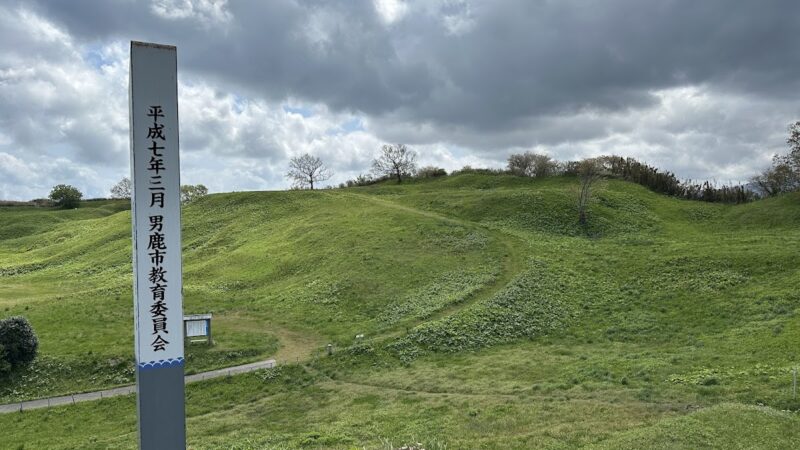
Toshimadate is a medieval mountain castle located in Toshimadate, Kawabe Toshima, Akita City. Built on the summit of a ridge extending southwest towards the Iwamigawa River, it boasts a strategically advantageous structure that cleverly utilizes the terrain. This castle, which played an important role from the Muromachi period to the Sengoku period, is now maintained as the “Toyoshima Castle Historical Site Park” and designated as a historical site of Akita Prefecture.
Although the castle is relatively compact in scale, defensive structures such as vertical moats, trenches, earthworks, and baileys remain clearly visible, making it a valuable site for learning about the castle-building techniques of the time. Despite being located about 20 minutes by car from Akita Station and about 10 minutes by car from Wada Station, it is a hidden gem with few visitors, allowing you to quietly experience history.
History of Toyoshima Castle | From the Hatakeyama Clan to the Minato Incident
Origin of the Castle and the Toyoshima Clan
There are several theories regarding the construction of Toyoshima Castle. According to one theory, it began in the Muromachi period when Kurokawa Higo-no-kami built it as Kuwaki Castle. However, the more widely known tradition is that it was the residence of Toyoshima Genba-no-kami (Hatakeyama Shoji Jiro Shigemura), a descendant of Hatakeyama Shigetada. The Toshima clan is believed to have originated from a samurai group based in Toshima County, Musashi Province (present-day Kita Ward, Tokyo), and is thought to have migrated to Dewa Province for some reason. It is speculated that the geographical advantage of being a transportation hub in the Iwamigawa River basin played a role in the Toshima clan’s establishment of power in this area.
Relationship with the Ando Clan
When discussing the Toshima Manor during the Sengoku period, its relationship with the Ando clan is essential. The Ando clan was a prominent Sengoku daimyo of Akita Prefecture, divided into the Minato Ando clan, based at Minato Castle (Tsuchizaki Minato), and the Hiyama Ando clan, based at Hiyama Castle.
Interestingly, there is a theory that Ando Shigeki, who succeeded the Minato Ando clan, resided not at Minato Castle, but at this Toshima Manor. If this is true, then the Toshima Manor may not have been merely the residence of a local powerful family, but rather one of the strongholds of the powerful Ando clan. While the veracity of this theory cannot be definitively determined due to limited historical sources, it is an intriguing legend that suggests the importance of Toyoshima Castle.
The Minato Rebellion of 1588 and the Fall of Toyoshima Castle
The most important event in the history of Toyoshima Castle is the “Minato Rebellion,” which occurred in 1588. This incident escalated internal conflict within the Ando clan and marked a major turning point in the Sengoku period history of Akita.
The Minato Rebellion escalated into armed conflict between Ando Takasue, lord of Minato Castle, and Akita Jōnosuke (Ando Sanesue), lord of Hiyama Castle. Toyoshima Shigeuji, lord of Toyoshima Castle, fought on the side of Ando Takasue, lord of Minato Castle. However, the situation turned unfavorable when the Twelve Lords of Yuri (a coalition of powerful local clans in the Yuri region) sided with Akita Sanesue, lord of Hiyama Castle.
Ultimately, the Minato Ando clan was defeated, and Toyoshima Castle fell. As a result of this battle, Akita Sanesue unified the Ando clan and ruled the Akita region until his later transfer to Shishido in Hitachi Province. The fall of Toyoshima Castle symbolized the end of an era.
Toyoshima Castle After its Fall
Regarding Toyoshima Castle after the Minato Rebellion, there is a record that Shin’nai, the younger brother of Akatsu Okuro of Hagawa Castle (one of the Twelve Lords of Yuri), entered Toyoshima Castle and was called “Lord Toyoshima.” This suggests that Toyoshima Castle continued under a new ruler, but the detailed circumstances are unclear.
Later, in the Edo period, Toyoshima Castle was abandoned, but the area of Tojima (formerly Noda Takaya) developed as the first post station on the Ushu Kaido road, starting from the castle town of Kubota. The settlement, formed as a castle town of the Toyoshima clan, took on a new role as a key point on the highway during the Edo period.
Structure and Layout of Toyoshima Castle
Characteristics of a Mountain Castle Utilizing the Topography
Toyoshima Castle is a typical mountain castle built on the summit of a ridge extending southwest from the northern mountain range towards the Iwamigawa River. The defensive structure, utilizing the difference in elevation, shows numerous ingenious features designed to make enemy intrusion difficult.
The castle grounds are broadly divided into two areas: the group of enclosures called “Mae-Goten” located on the southernmost ridge, and the main enclosure called “Oku-Goten” at the mountaintop. This double structure ensures that even if Mae-Goten is breached, final defense is possible at Oku-Goten.
Mae-Goten Area
Mae-Goten is located on the south side of the castle, the first point attackers would reach. Here, multiple enclosures are arranged in a stepped pattern, each demarcated by earthworks and dry moats. This is the area visitors first see and is relatively easy to access.
The group of enclosures in the front palace are thought to have served as a buffer zone to slow down enemy advances and defend the main enclosure. Clear elevation differences between each enclosure demonstrate the advanced construction techniques of the time.
Inner Palace (Main Enclosure) Area
The inner palace is the central part of Toyoshima Castle, presumably housing the lord’s residence and important facilities. Located on higher ground than the front palace, it is defended by deep moats and vertical trenches.
The main enclosure is not particularly large, but this is typical of mountain castles, prioritizing wartime defense over peacetime habitability. The main enclosure offers a panoramic view of the surrounding area, making it ideal for monitoring enemy movements.
Details of Defensive Structures
The greatest highlight of Toyoshima Castle is its well-preserved group of defensive structures. The following remains are particularly noteworthy:
Vertical Trench: A dry moat dug along a slope, it prevented lateral movement of the enemy and also functioned as a drainage channel for rainwater. Toshima Castle retains several vertical moats, their scale and placement revealing the strategic vision of its builder.
Horikiri (Dry Moat): A dry moat dug to cut across a ridge, it was the most effective defensive structure for hindering enemy advances. The horikiri at Toshima Castle are sufficiently deep and wide, and retain much of their original form.
Dorui (Earthwork): A defensive wall made by piling up earth, constructed around the perimeter of enclosures and along the edges of moats. While parts of the earthworks at Toshima Castle have collapsed, sections remain that allow us to estimate their original height.
Karabori (Dry Moat): A moat that does not hold water, it served to demarcate enclosures at Toshima Castle. The clever placement of the dry moats, utilizing the terrain, is a testament to the ingenuity in achieving maximum defensive effect with limited resources.
These remains are not merely uneven earthen terrain, but the culmination of the wisdom and effort of the people of that time, who prepared for life-or-death battles. Visiting the site will leave you amazed by its scale and intricate detail.
Highlights of Toshima Castle | Points to Note During Your Visit
Points to Observe the Ruins
When visiting Toshima Castle, paying attention to the following points will help you understand the castle’s structure more deeply.
- Continuous Arrangement of Vertical Moats: There are areas where multiple vertical moats are dug parallel to each other on the slope. This is a sophisticated defensive technique called “ridge-shaped vertical moat grouping,” which made it extremely difficult for enemies to approach from the slope.
- Depth of the Moats: The main moats reach a depth of several meters and are still clearly visible today. Looking up from the bottom of the moat will give you a real sense of its high defensive strength.
- Elevation Differences of the Enclosures: Walking while being aware of the elevation differences between the enclosures will help you understand the three-dimensional defensive structure. Imagine the difficulty of attacking the upper enclosures from the lower ones.
- Preservation of Earthworks: Some earthworks remain over 1 meter high, allowing you to imagine their appearance at the time. Walking on top of the earthworks allows you to experience the lookout’s perspective.
Photo Spots
Toyoshima-kan is also a suitable spot for photography. The following are particularly recommended photo spots:
- Panoramic View of the Moat: Photographing the moat from the side conveys its depth and scale.
- Continuous Vertical Moats: Photographing the vertical moats on the slope from diagonally above clearly shows the layout of the defensive structures.
- View from the Main Enclosure: If the weather is good, you can photograph the surrounding scenery from the main enclosure.
- Contrast between Earthworks and Dry Moats: A composition emphasizing the contrast between the raised earthworks and the depressions of the dry moats is also recommended.
Estimated Visiting Time
For a thorough visit to Toyoshima-kan, allow approximately 40 minutes to 1 hour. Taking photographs of the ruins and conducting detailed observations will require more time. Those familiar with castles may be able to stay for around two hours analyzing the layout.
Access Information | How to Get to Toyoshima-kan
Access by Car
The most convenient way to access Toyoshima-kan is by car.
- From Akita Station: Approximately 20 minutes (via National Route 13)
- From Wada Station: Approximately 10 minutes
- From Akita Chuo IC on the Akita Expressway: Approximately 15 minutes
Address: Tojima-kan, Kawabe Tojima, Akita City, Akita Prefecture
Searching for “Toyoshima-kan Historical Park” or “Toyoshima-kan” on your car navigation system or smartphone map app will display the location. Parking space is limited, so please be considerate of other visitors.
Access by Public Transportation
If using public transportation, the nearest station is Wada Station on the JR Ou Main Line. However, it is approximately 3 kilometers from Wada Station to Toyoshimakan, which takes about 40 minutes on foot. Consider taking a taxi.
Regarding bus routes, there is a bus route from central Akita City to the Kawabe area, but you will need to walk from the nearest bus stop to Toyoshimakan. It is recommended to check the bus timetable before your visit.
Points to Note When Visiting
Since Toyoshimakan is a mountain castle, please note the following points when visiting:
- Clothing: Comfortable clothing and walking shoes (trekking shoes or sneakers) are essential. Avoid sandals and high heels.
- Season: Spring to autumn is the best time to visit. Visiting in winter is difficult due to snow. Bringing insect repellent spray in summer will make your visit more comfortable.
- Weather: The ground can be slippery during and after rain, so it is recommended to choose a sunny day.
- Equipment: Bring drinking water, a towel, a hat, etc. During the summer, the sun is strong, so sunscreen is recommended.
- Safety: Some areas of the moats and trenches are deep, so please watch your step while visiting. Be especially careful if you are visiting alone.
Nearby Tourist Spots | Charms of the Kawabe District, Akita City
Castles in Akita City
When visiting Toyoshima-kan, why not also explore other castles in Akita City?
Kubota Castle: The residence of the Satake clan of the Akita Domain, now maintained as Senshu Park. The corner turret has been restored, and there are facilities where you can learn about the history of Akita City. Approximately 30 minutes by car from Toyoshima-kan.
Tsuchizaki Minato Castle (Minato Castle Ruins): The base of the Minato Ando clan, the stage of the Minato Rebellion. Although now a residential area, some remains still exist. Approximately 25 minutes by car from Toyoshima-kan.
Nature and Culture of the Kawabe Area
The Kawabe area of Akita City is a naturally rich area with many attractions besides Toyoshima-kan.
- Iwamigawa River: A river that flows below Toyoshima-kan, known for its clear waters.
- Historical Sites of the Ushu Kaido Road: Historical sites that retain the atmosphere of the Edo period highway are scattered throughout the area.
- Local Farmers’ Market: You can purchase fresh vegetables and fruits.
Sightseeing in Central Akita City
If you venture to central Akita City, you can find the following tourist spots:
- Akita Prefectural Museum of Art: Houses numerous works by Tsuguharu Fujita
- Akita City Folk Performing Arts Museum (Neburi-nagashi Hall): Exhibits related to the Kanto Festival
- Red Brick Local History Museum: Western-style architecture from the Meiji era
- Akita City Omoriyama Zoo: Recommended for families
Toyoshima-kan and Akita’s Sengoku History | To Learn More
The Ando Clan and Medieval Akita
To deeply understand the history of Toyoshima-kan, it is essential to know about the Ando clan. The Ando clan was a powerful seafaring family that prospered through trade with Ezo (Hokkaido), and was the most powerful force in medieval Akita.
The Ando clan established its power in Akita around the 13th century, and in the 15th century, it split into the Minato Ando clan and the Hiyama Ando clan. Both sides controlled Akita, alternating between cooperation and conflict, but in the Minato Rebellion of 1588, the Hiyama Ando clan (Akita Sanesue) emerged victorious, achieving unification.
Toyoshima Castle was at the center of this conflict, fighting on the side of the Minato Ando clan. The Minato Rebellion was not merely an internal dispute, but a decisive battle for control of Akita, and the fall of Toyoshima Castle was a symbolic event of this conflict.
The Role of the Twelve Lords of Yuri
The “Twelve Lords of Yuri” played a crucial role in the Minato Rebellion. This was a coalition of 12 powerful clans that controlled the area around present-day Yurihonjo City, and their actions influenced the course of the battle.
The Yuri Twelve Lords sided with the Hiyama Ando clan (Akita Sanesue), putting the Minato Ando clan at a decisive disadvantage. This disparity in military strength was a major factor in the fall of Toyoshima Castle. The record that a family of the Akatsuo clan, one of the twelve families of Yuri, entered Toyoshima-kan is thought to have been part of the post-war settlement.
Related Historical Sites and Materials
For those who wish to learn more about Toyoshima-kan, we recommend referring to the following facilities and materials:
- Akita Prefectural Archives: Houses ancient documents and materials related to the history of Akita
- Akita City Red Brick Local History Museum: Exhibits the history of Akita
- Akita Prefectural Library: Has a rich collection of books related to local history
- Akita Prefecture Archaeological Site Map Information: Provides online access to archaeological site information within the prefecture, including Toyoshima-kan
Preservation and Utilization of Toyoshima-kan | Value as a Historical Site
Significance of Prefectural Historical Site Designation
Toyoshima-kan is designated as a historical site of Akita Prefecture, and its value as a cultural property is recognized. This designation legally guarantees the preservation of the remains and protects them from destruction due to development, etc.
The designation of a historical site is not merely about preserving the remains, but also about protecting the historical identity of the region and passing it on to future generations. Toyoshima-kan is a historical site symbolizing the history of the Kawabe district in Akita City, and a source of pride for local residents.
Development as a Historical Site Park
Toyoshima-kan has been developed as “Toyoshima-kan Historical Site Park,” with consideration given to ensuring the safety of visitors. However, excessive development has not been carried out, prioritizing the preservation of the original form of the remains.
This “preservation-first” development policy is highly valued by castle enthusiasts and history lovers. The charm of Toyoshima-kan lies in its ability to fully experience the atmosphere of a medieval mountain castle, something often lost in excessively developed castle ruins.
Future Challenges and Prospects
Several challenges remain in the preservation and utilization of Toyoshima-kan.
- Improving Awareness: Even within Akita City, only a limited number of people know about Toyoshima-kan, and its utilization as a tourist resource is insufficient.
- Improvement of Information Boards: The number of information boards at the site is minimal, making it difficult for first-time visitors to understand how to interpret the ruins.
- Improvement of Access: Inconvenient access by public transportation makes visiting the site difficult.
- Maintenance: A problem unique to mountain castles is the risk of the ruins becoming obscured by tree growth and soil accumulation.
By addressing these challenges through cooperation between local residents, the government, and history enthusiasts, the value of Toyoshima Castle can be conveyed to a wider audience.
Summary | Experiencing Akita’s Sengoku Period at Toyoshima Castle
Toyoshima Castle is a valuable historical site that, despite its proximity to the urban area of Akita City, strongly retains the atmosphere of a Sengoku period mountain castle. As the stage for the historical event known as the Minato Incident and the residence of the Toyoshima clan, who were caught in the conflicts of the Ando clan, it is an indispensable part of Akita’s Sengoku history.
The castle retains well-preserved defensive structures such as vertical moats, trenches, earthworks, and dry moats, offering insights into medieval castle construction techniques. Furthermore, the double-layered layout of the castle, consisting of the “Front Palace” and the “Inner Palace,” is a testament to the ingenuity of Sengoku-era warlords who maximized the use of the limited terrain.
When visiting Akita City, be sure to explore not only famous historical sites like Kubota Castle, but also hidden gems like Toyoshima-kan. Spending time reflecting on Sengoku history in the quiet mountains will surely be an unforgettable experience. It’s a recommended spot not only for history buffs but also for those who enjoy nature walks and hiking.
Toyoshima-kan is one of Akita Prefecture’s rich historical heritage sites. We hope this article inspires you to visit Toyoshima-kan and deepens your interest in Akita’s Sengoku history.