Himematsukan (Miyagi Prefecture) Complete Guide: A Thorough Explanation of the History and Highlights of the Castle of a Senior Retainer of the Oshu Fujiwara Clan
What is Himematsukan?
Himematsukan is a medieval mountain castle site located in Ichihasama Masakaji Higashi, Kurihara City, Miyagi Prefecture. Built on a hilly area on the north bank of the Ichihasama River, this castle boasts a multi-bailey layout and a vast scale, extending approximately 600 meters east-west and 500 meters north-south. Built on land approximately 90 meters above sea level and 60 meters above ground level, it is now maintained as Himematsukan Forest Park and is highly regarded by castle enthusiasts as a representative castle of Oshu.
Known as the residence of Inoyama Utanojo, a senior retainer of the Oshu Fujiwara clan, it is an important historical site that conveys the history of the Tohoku region from the late Heian period to the Sengoku period. The remains of earthworks, dry moats, trenches, and gates are well-preserved, making it a valuable resource for learning about the structure of medieval castles.
History of Himematsu Castle
Late Heian Period: The Era of the Oshu Fujiwara Clan
The history of Himematsu Castle dates back to the era of the Oshu Fujiwara clan. Inoyama Uta-no-jo, the lord of this castle, served as a senior retainer of the Oshu Fujiwara clan and governed this area. The Oshu Fujiwara clan built a powerful force in the Tohoku region from their base in Hiraizumi, and placed senior retainers throughout the land to support their rule. Himematsu Castle is believed to have functioned as one of their defensive strongholds.
The Rebellion of Okawa Kanenori and the Fall of Himematsu Castle
In 1189, the Oshu Fujiwara clan was destroyed in the Oshu War led by Minamoto no Yoritomo. However, the following year, 1190, saw the outbreak of the “Okawa Kanenori Rebellion.” This was a rebellion by remnants of the Fujiwara clan against Minamoto no Yoritomo’s rule.
Inoyama Uta-no-jo sided with this rebel, holed up in Himematsu Castle, and resisted the Kamakura forces. However, faced with the overwhelming military power of the Kamakura Shogunate, Himematsu Castle was captured and met its demise. This battle holds significant meaning in the history of the Tohoku region, symbolizing the end of the era of the Oshu Fujiwara clan.
Sengoku Period: The Era of the Osaki and Date Clans
Even after the Kamakura period, the site of Himematsu Castle maintained its strategic importance. During the Sengoku period, this region was located on the border between the spheres of influence of the Osaki and Date clans, becoming a battleground for conflict between the two forces.
During this period, Himematsu Castle underwent renovations, transforming it into a more formidable defensive structure. Many of the remains visible today are believed to be the result of these Sengoku period renovations. The structure of the gates and the arrangement of the earthworks reveal castle-building techniques unique to the Sengoku period.
As the Date clan gained hegemony over the Tohoku region, the military importance of Himematsu Castle gradually declined, and it is presumed to have been abandoned during the Edo period.
Structure and Layout of Himematsu Castle
Concentric Layout
Himematsu Castle is built as a concentric mountain castle. A concentric layout is a structure where multiple enclosures (flat areas) are arranged in a line, often along a ridge. At Himematsu Castle, multiple enclosures are arranged in a stepped pattern around the main enclosure, forming an effective defensive line.
The entire castle area extends approximately 600 meters east-west and 500 meters north-south, a remarkably large scale for a local powerful family’s residence. This vast castle area speaks to the high status of Inoyama Utanojō, a senior retainer of the Ōshū Fujiwara clan.
Major Remains
Earthworks
One of the most prominent remains of Himematsu Castle are the earthworks. The earthworks surrounding each enclosure are mostly 2-3 meters high, with some exceeding 5 meters in height. Earthen ramparts not only prevented enemy intrusion but also served as a screen, obscuring the view of the inner bailey from the outside.
The earthen ramparts around the main bailey, in particular, are well-preserved and provide valuable insights into the earthen rampart structure of medieval castles. A cross-section of the ramparts reveals meticulous construction using the rammed earth method, indicating the use of advanced civil engineering techniques.
Dry Moats and Trenches
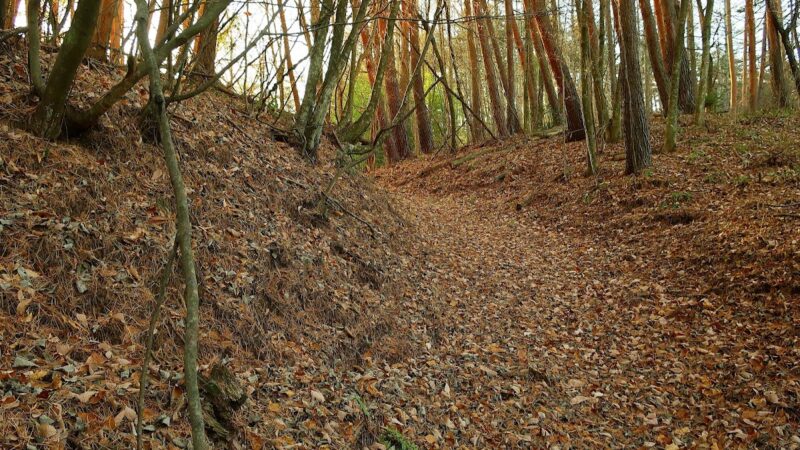
Himematsu Castle features multiple dry moats and trenches. The dry moats demarcated the baileys, limiting enemy intrusion routes. The trenches, especially those cutting off the ridges, reach depths of over 5 meters in some places, demonstrating their high defensive capabilities.
The trenches not only cut across the ridges but also incorporated earthen ramparts on both sides, making them more effective defensive structures. These remains indicate that Himematsu Castle was not merely a residence but a full-fledged military facility designed for actual combat.
Entrance Gate
The entrance gate is the main entrance to the castle and the area requiring the strongest defenses. The entrance to Himematsu Castle is believed to have been remodeled into a complex structure during the Sengoku period (Warring States period). Techniques such as staggered entrances and square-shaped entrances were employed, demonstrating ingenuity in preventing direct enemy advances.
Flanking fire positions have also been confirmed around the entrance, allowing for attacks on invading enemies from the flanks. These techniques developed during the Sengoku period, providing evidence that Himematsu Castle was modified to suit the times.
Lower Enclosures
Around the main enclosures, there are belt-shaped flat areas called lower enclosures. These lower enclosures served to provide multiple layers of defense and also functioned as spaces for deploying soldiers. The lower enclosures at Himematsu Castle are relatively wide, suggesting they were designed with practical combat use in mind.
Highlights of Himematsu Castle
View from the Main Enclosure
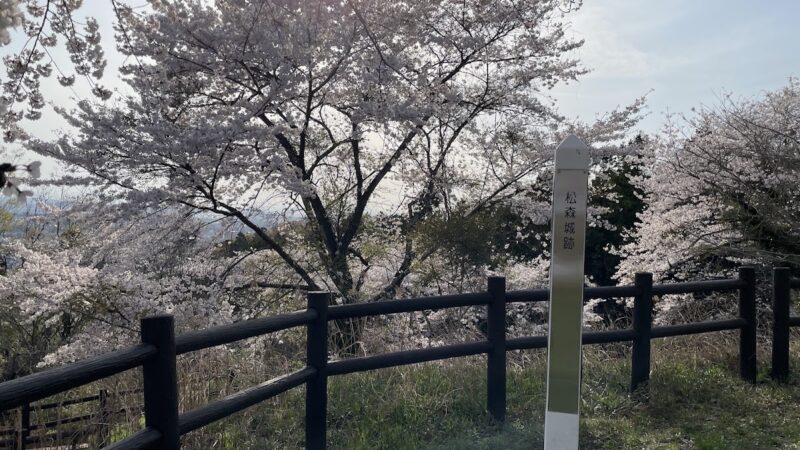
From the main enclosure of Himematsu Castle, you can enjoy a panoramic view of the plains of the Ichihasama River basin. On a clear day, you can see Mount Kurikoma in the distance, making it clear that this castle was ideally located for monitoring the surrounding area. This view is likely one of the reasons why the Oshu Fujiwara clan established an important base here.
In spring, the fresh greenery is beautiful, and in autumn, the autumn leaves are stunning, allowing you to enjoy both exploring the castle ruins and appreciating nature. Especially during the autumn foliage season, the earthworks and moats are painted in vibrant reds and yellows, creating a fantastical atmosphere.
Well-Preserved Remains
The greatest appeal of Himematsu Castle lies in the excellent state of preservation of its remains. Having escaped later development, it retains almost its original appearance from the time of its construction, allowing you to experience the height of the earthworks and the depth of the moats firsthand.
The earthworks around the main enclosure are particularly impressive, giving you a real sense of how sturdily built medieval castles were. Furthermore, walking around the multiple enclosures allows you to gain a three-dimensional understanding of the structure of a multi-enclosure castle.
Development as Himematsukan Forest Park
Currently, the Himematsukan site has been developed as Himematsukan Forest Park, allowing visitors to safely explore the castle ruins. Information boards are installed at major remains, allowing visitors to learn about the castle’s history and structure.
Walking paths are maintained within the park, making it relatively easy to explore even for those new to castles. However, due to the undulating terrain characteristic of mountain castles, comfortable walking shoes are recommended.
Relationship with Ryūunji Temple
The access route to Himematsukan passes through the cemetery of Ryūunji Temple. Ryūunji Temple has deep ties to Himematsukan, having commemorated the castle lord and those involved with the castle. When visiting, it is advisable to stop by Ryūunji Temple and reflect on the history of Himematsukan.
A historical atmosphere permeates the area around the temple, allowing visitors to experience the relationship between religious beliefs and samurai in the Tohoku region during the medieval period.
Access and Visiting Information
Access by Car
The most convenient way to access Himematsukan is by car. From Prefectural Road 17, head towards Ryūunji Temple. After passing through the temple’s cemetery and continuing along the forest road, you will reach the area directly below the castle ruins.
However, the forest road is narrow, requiring careful driving. There are sections where passing oncoming vehicles is difficult, so please drive cautiously. There is a signpost near the entrance to the forest road, so be sure not to miss it.
Nearest Interchanges
- Approximately 15 minutes from Tsukidate Interchange
- Approximately 20 minutes from Wakayanagi-Kannari Interchange
Access by Public Transportation
If using public transportation, the nearest station is Kurikoma-Kogen Station on the Tohoku Shinkansen. It’s about a 15-minute taxi ride from the station. However, the number of taxis around the station is limited, so it is recommended to book in advance.
Bus routes do not run close to the castle ruins, making access by public transportation alone difficult. Consider renting a car.
Important Notes for Visitors
- Attire: As it is a mountain castle, comfortable walking shoes and clothing are essential.
- Season: Insect repellent is necessary in summer, and warm clothing is necessary in winter.
- Time: Allow approximately 2-3 hours to thoroughly explore the entire castle ruins.
- Facilities: There are no facilities such as toilets or shops, so please prepare accordingly.
- Weather: It is recommended to avoid visiting in rainy weather as the ground can become slippery.
Visiting Hours
Himematsukan Forest Park is generally open for free exploration. However, it is dangerous after sunset, so please try to visit during daylight hours. Especially from autumn to winter, sunset is early, so it is recommended to visit in the early afternoon.
Nearby Tourist Attractions
Historical Facilities in Kurihara City
When visiting Himematsukan, visiting other historical facilities in Kurihara City will allow you to gain a deeper understanding of the region’s history.
The Kurihara City Cultural Properties Protection Center displays artifacts and historical materials excavated within the city, and also provides detailed information about Himematsukan.
Izunuma and Uchinuma
Located about 30 minutes by car from Himematsukan, Izunuma and Uchinuma are a naturally rich spot known as a Ramsar Convention-registered wetland. Especially in winter, many migratory birds visit, making it a popular spot for birdwatching.
Naruko Onsenkyo
Naruko Onsenkyo, one of Miyagi Prefecture’s leading hot spring resorts, is also about 40 minutes by car from Himematsukan. It’s a great place to relax in the hot springs after exploring the castle ruins. Naruko Onsenkyo boasts a variety of hot springs with diverse water qualities, and there are plenty of day-trip bathing facilities.
Mount Kurikoma
Mount Kurikoma, known as one of Tohoku’s premier autumn foliage spots, is also relatively close to Himematsukan. In autumn, you can enjoy the magnificent autumn leaves, often called “God’s Carpet,” and it’s a popular spot for mountain climbing and hiking.
The Appeal and Evaluation of Himematsu Castle
Highly Rated by Castle Enthusiasts
Himematsu Castle is highly regarded among castle enthusiasts as “a representative castle of Oshu (northern Japan).” This is due to three factors: the excellent state of preservation of the remains, the large scale of the castle, and its historical importance.
Visitors have commented, “It was an even better mountain castle than I’d heard,” and “One of the top castle ruins in the Tohoku region,” indicating a high level of satisfaction.
Historical Value
Himematsu Castle played a crucial role in the history of the Tohoku region, from the time of the Oshu Fujiwara clan to the Sengoku period (Warring States period). Its siege and subsequent fall during the Taiga Kanenori Rebellion symbolized the establishment of Minamoto no Yoritomo’s rule over Tohoku and holds significant meaning in Japanese history.
Furthermore, traces of renovations during the Sengoku period provide valuable historical evidence of the development of castle construction techniques in the Tohoku region.
Academic Significance
The remains of Himematsu Castle possess significant academic value in the study of medieval castles. The castle’s layout, earthworks, and gate design, among other elements, are remarkably well-preserved, making it an essential site for understanding medieval castles in Tohoku.
Archaeological investigations have also been conducted, and excavated artifacts offer insights into the life and battles of the time.
Points to Note When Visiting Himematsu Castle
Recommended Prior Study
Learning about the history of the Oshu Fujiwara clan and the Okawa Kanenori Rebellion before visiting Himematsu Castle will allow you to appreciate the castle ruins more deeply. Visiting related facilities such as Chuson-ji Temple and Motsu-ji Temple in Hiraizumi beforehand is also recommended.
Photography Tips
Himematsu Castle is also an attractive spot for photography. To express the grandeur of the earthworks, including people in your photos to create a sense of scale is effective. Angles looking down on the moats from above, and views of the surrounding area from the baileys, also make for impressive photographs.
Since it shows different expressions in each season, visiting multiple times to record the seasonal changes is another way to enjoy it.
Photography Tips ### Interacting with the Local Community
The area surrounding Himematsukan still retains legends and folklore about the castle. Interacting with locals can provide valuable information not found in guidebooks. When visiting Ryūunji Temple, it would be a good idea to ask the head priest about the castle’s history.
Summary
Himematsukan is a masterpiece of medieval mountain castle architecture remaining in Kurihara City, Miyagi Prefecture. Built as the residence of Inoyama Utanojō, a senior retainer of the Ōshū Fujiwara clan, it survived the siege and fall during the Ōkawa Kanenori Rebellion, and underwent renovations during the Sengoku period, preserving its original form to this day.
The remains, such as earthworks, dry moats, trenches, and gates, are well-preserved, making it a valuable resource for learning about the structure of medieval castles. Its development as Himematsukan Forest Park makes it relatively easy to visit, even for castle novices, which is another attractive feature.
Himematsukan is highly regarded by castle enthusiasts as a representative castle of Ōshū. Please visit and experience its historical value and the magnificence of its remains for yourself. This historical site is especially recommended for those interested in the medieval history of the Tohoku region and those who enjoy visiting mountain castles.
With other tourist attractions such as Naruko Onsenkyo and Izunuma nearby, you can enjoy sightseeing in Kurihara City and northern Miyagi Prefecture starting from Himematsukan. Why not add Himematsukan to your travel plans to enjoy history, nature, and hot springs?