Complete Guide to Kunohe Castle (Iwate Prefecture) | The History and Highlights of the Impregnable Fortress that Was Toyotomi Hideyoshi’s Last Battlefield
Kunohe Castle, located in Ninohe City, Iwate Prefecture, is a castle that marked a crucial turning point in Japanese history. Known as the final obstacle to Toyotomi Hideyoshi’s unification of Japan, it was the stage for the dramatic “Kunohe Masazane Rebellion.” Currently designated a national historic site and selected as one of the Continued Top 100 Japanese Castles, this guide provides a detailed overview of Kunohe Castle’s history, structure, and highlights.
What is Kunohe Castle? | Iwate Prefecture’s Northernmost Historic Fortress
Kunohe Castle is a flatland castle dating from the medieval to early modern period, located in Fukuoka-jonouchi, Ninohe City, Iwate Prefecture. Also known as “Fukuoka Castle” and “Miyano Castle,” it was built as the residence of the Kunohe clan, a powerful branch of the Nanbu clan.
The castle ruins boast a size of approximately 800 meters east-west and 500 meters north-south, situated on a river terrace surrounded by three rivers: the Mabuchi River to the west, the Shiratori River to the north, and the Nekobuchi River to the east. This layout, skillfully utilizing the natural terrain, was feared as an impregnable fortress.
Basic Information on Kunohe Castle
- Location: Fukuoka, Jōnouchi, Ninohe City, Iwate Prefecture
- Year of Construction: Meiō era (1492-1501)
- Builder: Kunohe clan
- Castle Structure: Hilltop castle, multi-bailey style
- Designation: National Historic Site (designated 1935)
- Selection: Continued Top 100 Japanese Castles (selected 2017)
- Other Names: Fukuoka Castle, Miyano Castle
History of Kunohe Castle | The Glory and Tragedy of the Nanbu Clan
From Construction in the Meiō Era to the Prosperity of the Kunohe Clan
Kunohe Castle is said to have been built by the Kunohe clan during the Meiō era (1492-1501). The Kunohe clan was known as the most powerful family within the Nanbu clan and played an important role in protecting the area north of Sannohe Castle, the Nanbu clan’s base. The Kunohe clan ruled this land for generations, and during the Sengoku period (Warring States period), they built their own independent power. Especially during the time of Kunohe Masazane, the last lord of the castle, Kunohe Castle became known as one of the strongest fortresses in the Nanbu domain.
The Kunohe Masazane Rebellion of 1591
The most important event in the history of Kunohe Castle is the “Kunohe Masazane Rebellion,” which erupted in 1591. This incident is recorded in history as the final battle of Toyotomi Hideyoshi’s unification of Japan.
The Beginning of the Rebellion
After the death of Nanbu Harumasa, the 26th head of the Nanbu clan, a succession problem arose. Nanbu Nobunao was to succeed to the headship of the family, a decision that had the approval of Toyotomi Hideyoshi. However, Kunohe Masazane, a powerful figure within the Nanbu clan, objected to this succession and raised an army in March of 1591.
It was believed that Masazane had legitimate reasons. Nobunao was from a collateral branch of the Nanbu clan, while Masazane was considered closer to the main lineage. Furthermore, Masazane was a man of great military prowess and enjoyed strong support from his people.
Dispatch of Toyotomi Army
Nanbu Nobunao requested assistance from Toyotomi Hideyoshi, who immediately dispatched an army. With Gamo Ujisato as commander-in-chief and Asano Nagamasa as vice-commander, a formidable army of approximately 60,000 men besieged Kunohe Castle. This army included Date Masamune, who would later become the lord of the Sendai Domain, and Nanbu Nobunao himself.
Siege of Kunohe Castle
In September of Tensho 19 (1591), the Toyotomi army began its attack on Kunohe Castle. The Kunohe forces defending the castle numbered around 5,000, but Kunohe Castle, a natural stronghold surrounded by rivers on three sides, did not fall easily.
The Toyotomi army attempted a frontal assault, but encountered fierce resistance from the Kunohe forces, suffering heavy casualties. The battle intensified, and at times the Toyotomi army faced considerable difficulty.
A Tragic Ending
Ultimately, Gamo Ujisato and others proposed a peace treaty, promising Masazane the surrender of the castle and his life. Masazane believed this and surrendered, but the promise was not kept, and Masazane and his family were executed. This betrayal is recounted as an event demonstrating the ruthlessness of the Toyotomi regime.
With the fall of Kunohe Castle, Toyotomi Hideyoshi’s unification of Japan was completed. The pacification of Oshu was finished, and all of Japan came under Hideyoshi’s control.
Renaming to Fukuoka Castle and the Nanbu Clan’s Residence
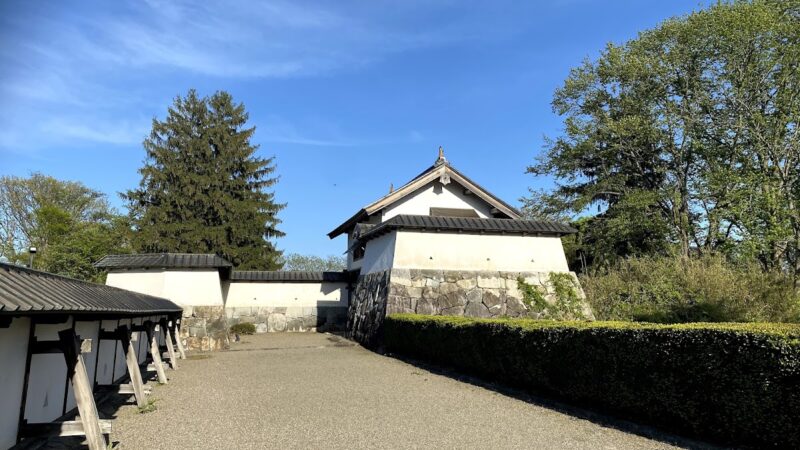
After the Kunohe Masazane Rebellion, Gamo Ujisato extensively renovated Kunohe Castle, transforming it into a modern castle. The castle was transformed from a medieval mountain castle to a modern flatland castle with the construction of stone walls and turrets.
After the renovation, Kunohe Castle was handed over to Nanbu Nobunao and renamed “Fukuoka Castle.” Nobunao moved his residence from Sannohe Castle to Fukuoka Castle, making it the Nanbu clan’s base. It is said that Nobunao resided in Matsunomaru.
Relocation to Morioka Castle and Abandonment
During the Keicho era, the Nanbu clan began construction of Morioka Castle as their new base. Because Fukuoka Castle was located in the northern part of their territory, they decided to make Morioka, which was more centrally located, their new base.
In 1633 (Kanei 10), during the time of Nanbu Toshinao, Morioka Castle was completed, and the Nanbu clan’s residence was moved to Morioka. As a result, Fukuoka Castle (Kunohe Castle) was abandoned and its role ended. Although it lost its function as a castle after its abandonment, its remains were well preserved.
Structure and Layout of Kunohe Castle | An Impregnable Fortress Utilizing Natural Terrain
Overall Structure
Kunohe Castle is a flatland castle with a series of interconnected enclosures, centered around the main keep (Honmaru), with the second, third, Matsumaru, and Wakasa-kan enclosures arranged around it. Particularly noteworthy is its layout, which makes maximum use of the natural terrain of a river terrace surrounded by rivers on three sides.
The Mabuchi River to the west, the Shiratori River to the north, and the Nekobuchi River to the east all acted as natural moats, making it extremely difficult for attackers to conquer. Only the south side was connected to land, but deep moats and high earthen ramparts were built here to strengthen the defenses.
Main Keep
The main keep (Honmaru) is located in the center of the castle, measuring approximately 150 meters east-west and 100 meters north-south. Although it is currently a large grassy area, it is believed that a building equivalent to a keep or turret once stood here.
The main enclosure (Honmaru) is surrounded by earthen ramparts 5 to 8 meters high, and some stone walls can also be seen. These stone walls are believed to have been built by Gamo Ujisato after the Kunohe Masazane Rebellion.
Second and Third Enclosures
The second enclosure (Ninokuruwa) is located south of the main enclosure (Honmaru), and the third enclosure (Sanokuruwa) is located further south. These enclosures functioned as key defensive points, designed to prevent enemy incursions in stages.
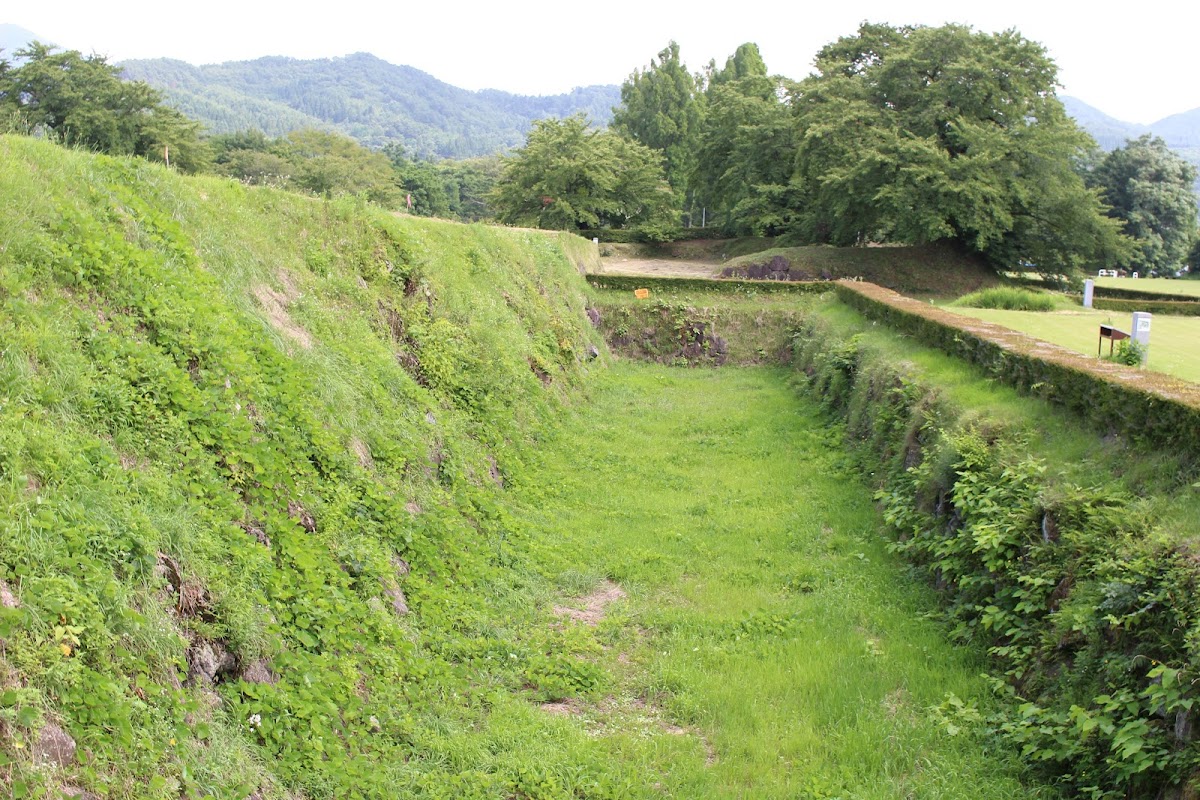
A deep dry moat was dug between the second and third enclosures, and its remains can still be clearly seen today. This dry moat is approximately 10 meters wide and 5 meters deep, demonstrating the advanced civil engineering techniques of the time.
Pine Enclosure (Matsunomaru)
The Matsunomaru is an enclosure located east of the main enclosure, and it is said to have been the residence of Nanbu Nobunao when he moved to Fukuoka Castle. This enclosure is relatively flat and spacious, making it suitable as a living space.
Currently, an explanatory sign is installed in the Matsunomaru, where visitors can learn about the castle’s history and structure.
Wakasa-kan
Wakasa-kan is a fortified enclosure located in the northwestern part of the castle, believed to have been the residence of a retainer of the Kunohe clan. From this enclosure, one could overlook the Shiratori River, and it is thought to have served as a watchdog against enemy incursions from the north.
Stone Walls and Earthworks
The stone walls of Kunohe Castle were primarily constructed by Gamo Ujisato after the Kunohe Masazane Rebellion. The stone walls, built using the nozura-zumi technique, represented the latest technology of the time.
On the other hand, many of the earthworks are thought to date back to the Kunohe clan era. These earthworks, reaching heights of 5 to 8 meters, can still be seen throughout the castle ruins, strongly retaining the characteristics of a medieval castle.
Highlights of Kunohe Castle Ruins | Historical Site Walking Guide
Otemon Gate Ruins
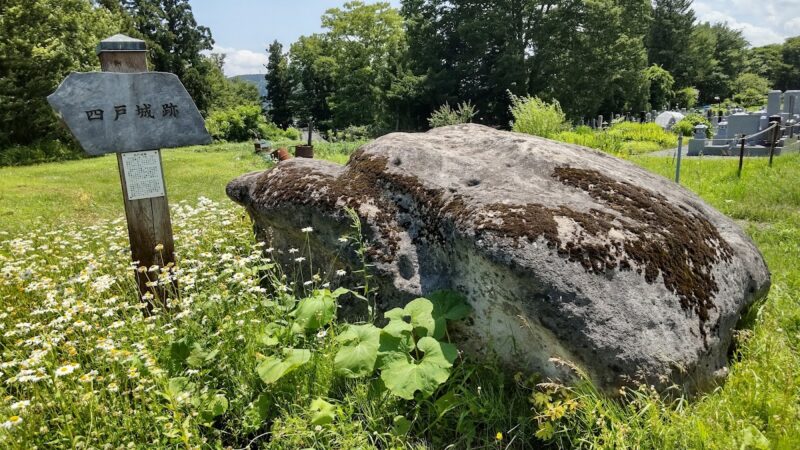
This is the site of the Otemon Gate, the main entrance to the castle. A stone monument now stands here, and it is possible to enter the castle grounds from this point. The remains of the earthworks around the Otemon Gate are well-preserved, allowing one to imagine the defensive structure of the time. ### View from the Main Enclosure
The main enclosure is currently a large grassy area, offering panoramic views of the surrounding area. Especially on clear days, you can enjoy a magnificent view of the mountains of northern Iwate Prefecture and the cityscape of Ninohe. From spring to autumn, the lush green landscape makes it ideal for a stroll.
Dry Moat and Earthworks
The dry moat between the second and third enclosures is one of the highlights of Kunohe Castle. The dry moat, approximately 5 meters deep, remains clearly visible, allowing visitors to appreciate the scale of the defensive structures at the time. High earthworks were built on both sides of the dry moat, making it a valuable historical site for studying castle construction.
Stone Wall Remains
Around the main enclosure, the remains of stone walls built by Gamo Ujisato can be found. These rough-hewn stone walls, over 400 years old, still retain their original appearance. An explanatory sign is placed in front of the stone walls, allowing visitors to learn about the castle’s construction techniques.
Stone Wall Remains ### Guidance Facility
On the south side of the castle ruins is the Kunohe Castle Ruins Guidance Facility. Here, you can learn about the history and structure of Kunohe Castle through panel displays and videos. Artifacts unearthed during archaeological excavations are also on display, allowing you to experience the castle’s true nature.
Admission is free, and we recommend visiting before exploring the castle ruins.
Continued Top 100 Japanese Castles Stamp
Kunohe Castle was selected as one of the Continued Top 100 Japanese Castles in 2017. The stamp is located at the Ninohe City Buried Cultural Properties Center (11-1 Yahata-shita, Fukuoka, Ninohe City). Opening hours are 9:00 AM to 5:00 PM, and it is closed on Mondays (or the following day if Monday is a public holiday) and during the New Year holidays.
Those visiting with the purpose of collecting the stamp are advised to check the opening days in advance.
Access and Tourist Information for Kunohe Castle
Location/Address
Kunohe Castle Ruins: Jounouchi, Fukuoka, Ninohe City, Iwate Prefecture
Ninohe City Buried Cultural Properties Center (Stamp Location): 11-1 Yahatashita, Fukuoka, Ninohe City, Iwate Prefecture
Access by Train
- Get off at Ninohe Station on the JR Tohoku Shinkansen or Iwate Galaxy Railway, approximately 25 minutes on foot (approx. 2km)
- Approximately 5 minutes by taxi from Ninohe Station
- You can use the city loop bus “Gururin Bus” from Ninohe Station (may not operate on weekends and holidays)
Access by Car
- Approximately 15 minutes (approx. 10km) from Ichinohe IC on the Tohoku Expressway
- Approximately 10 minutes (approx. 7km) from Ninohe IC on the Tohoku Expressway
Parking
There are several free parking lots around the castle ruins. The parking lot near the Otemon Gate ruins is convenient. It can accommodate approximately 30 cars.
Visiting Hours and Fees
- Visiting Hours: Always open (however, nighttime visits are not recommended)
- Admission Fee: Free
- Duration: Approximately 60-90 minutes (including visit to the guidance facility)
Best Time to Visit
While you can enjoy the scenery of Kunohe Castle Ruins throughout the seasons, the following times are especially recommended:
- Spring (late April to May): Beautiful fresh greenery and mild weather, perfect for a stroll.
- Autumn (mid-October to early November): Beautiful autumn foliage, the entire castle ruins are ablaze with color.
- Summer (July to August): Lush greenery, but overgrown grass can make it difficult to see the ruins.
- Winter (December to March): Snowfall can make walking difficult.
Tourist Spots Around Kunohe Castle
Ninohe City Buried Cultural Properties Center
Located about 5 minutes by car from Kunohe Castle ruins, this center features a stamp for the Continued Top 100 Japanese Castles. It has detailed exhibits about Kunohe Castle, allowing visitors to learn deeply about the castle’s history.
Kunohe Village
Kunohe Village, considered the birthplace of the Kunohe clan, is located northeast of Ninohe City. Numerous historical sites related to the Kunohe clan are scattered throughout, making it an interesting area for history buffs.
Masenkyo Gorge
Located upstream of the Mabuchi River, which flows west of Kunohe Castle, this gorge is known for its rich natural beauty and attracts many tourists, especially during the autumn foliage season.
Kindaichi Onsenkyo Hot Spring Village
A hot spring resort located in Ninohe City, approximately 15 minutes by car from the Kunohe Castle ruins. Ideal for relaxing after exploring the castle ruins. Day-trip bathing facilities are also available.
Cultural Property Designation and Preservation Activities of Kunohe Castle
National Historic Site
The Kunohe Castle ruins were designated a national historic site on December 24, 1935. Recognized for its high historical value as a valuable castle ruin representing the transition period from the medieval to the early modern period in the Tohoku region.
Selection as one of the Continued Top 100 Japanese Castles
On April 6, 2017, it was selected as one of the Continued Top 100 Japanese Castles by the Japan Castle Association. This has led to increased national recognition and a rise in visitor numbers.
Development Project
Ninohe City is continuously implementing development projects aimed at preserving and utilizing the Kunohe Castle ruins. These projects include archaeological excavations, preservation treatment of remains, installation of explanatory signs, and improvement of walking paths, creating an environment that is easier for visitors to understand and safer to view.
Due to development work, some walking paths may be closed. We recommend checking the latest information on the Ninohe City official website before visiting.
Precautions and Manners When Visiting Kunohe Castle
Clothing and Equipment
- Wear comfortable walking shoes (sneakers or trekking shoes are ideal)
- The sun is strong in summer, so bring a hat and sunscreen
- Insect repellent spray is recommended
- Be careful as the ground can be slippery in rainy weather
Visitor Manners
- Using fire is strictly prohibited within the historical site
- Please take all your trash with you
- Do not damage the ruins or climb on the stone walls
- Collecting plants is prohibited
- If you bring a pet, please keep it on a leash and be sure to take all its waste with you
Safety Precautions
- The edges of the earthworks and dry moats are prone to collapse in some places, so walk carefully
- In summer, the grass can be overgrown, making it difficult to see your footing
- In winter, snow and ice can make it dangerous
Summary | Kunohe Castle: A Famous Castle in Iwate Prefecture, Overflowing with Historical Romance
Kunohe Castle is a historical site symbolizing a major turning point in Japanese history: Toyotomi Hideyoshi’s unification of Japan. It continues to captivate many people as the place where a single warrior, Kunohe Masazane, fought against the tide of the times.
While very few of the original buildings remain on the vast, grassy castle grounds, the remnants such as earthworks, dry moats, and stone walls convey the castle’s appearance from that era, allowing us to imagine the fierce battles that took place here.
Selected as one of the Continued Top 100 Japanese Castles, Kunohe Castle Ruins are being developed as a representative historical tourist spot in Iwate Prefecture. It’s a recommended place not only for history buffs but also for those who want to enjoy a leisurely stroll in nature.
When visiting Ninohe City, be sure to visit Kunohe Castle Ruins and reflect on the romance and tragedy of the Sengoku period. Along with the beautiful scenery of the four seasons, it will be a valuable experience to feel the weight of history.