
Kanoya Castle (Kagoshima Prefecture) Complete Guide: History, Highlights, and Access Explained in Detail
Kanoya Castle is a castle located in Kanoya City, Kagoshima Prefecture, dating from the medieval to early modern periods. Built in the central part of the Osumi Peninsula, it was constructed by the Kanoya clan, a branch of the Kimotsuki clan, and later underwent extensive renovations by Ijuin Tadamune, a senior retainer of the Shimazu clan. Currently, it is maintained as Shiroyama Park, serving as a place of relaxation for citizens while also being a valuable historical site that retains traces of its former glory, making it popular with many history enthusiasts.
Table of Contents
This article provides a thorough explanation of this famous castle in Osumi, from its historical background and castle structure to its highlights and access methods. We will comprehensively cover all the information you need to know before visiting Kanoya Castle.
History of Kanoya Castle
Construction and Early History by the Kanoya Clan
The origins of Kanoya Castle begin with its construction by the Kanoya clan, a branch of the Kimotsuki clan, a powerful local family in the Osumi region. The Kimotsuki clan was an ancient power based in the southern part of the Osumi Peninsula, and their influence extended significantly to the Osumi region from the Kamakura period to the Sengoku period.
As a branch of the Kimotsuki clan, the Kanoya clan built a castle in Kanoya, a strategically important location in the central part of the Osumi Peninsula, to govern the area. The name Kanoya is said to originate from the fact that this area was historically a “field where many deer lived.”
In the Middle Ages, Kanoya Castle functioned as a base for regional control and played a role in managing agricultural production in the surrounding area. At that time, the Osumi region was a battleground during the Sengoku period, with the Shimazu and Kimotsuki clans vying for power, and Kanoya Castle was at the center of this conflict.
The Shimazu Clan’s Rule and the Downfall of the Kanoya Clan
During the Sengoku period (Warring States period), the Shimazu clan, based in Satsuma Province, expanded their power with the aim of unifying Kyushu. The Shimazu clan attempted to advance into the Osumi Peninsula, engaging in conflicts with the Kimotsuki clan and their relatives.
From the mid-to-late 16th century, the Shimazu clan’s power gradually became dominant, and the Kimotsuki clan’s territory slowly shrank. During this process, the Kanoya clan also came under pressure from the Shimazu clan and eventually fell under their control.
While there are various theories regarding the exact date of the Kanoya clan’s downfall, Kanoya Castle came under the direct control of the Shimazu clan during their unification of Osumi. During this period, Kanoya Castle was positioned as one of the Shimazu clan’s important bases in their control of Osumi.
Major Renovation by Ijuin Tadamune (Tensho 6, 1578)
The most important turning point in the history of Kanoya Castle was the large-scale renovation carried out by Ijuin Tadamune in Tensho 6 (1578).
Ijuin Tadamune was a powerful retainer of the Shimazu clan and a warrior who served the Shimazu brothers, Yoshihisa and Yoshihiro. Tadamune played an important role in the Shimazu clan’s unification of Kyushu, and for his achievements, he was granted a portion of the Osumi region as his territory. The Kanoya region was given to Tadamune as a territory of approximately 13,000 koku, and he made Kanoya Castle his residence.
Tadamune’s renovation transformed the castle from a medieval mountain castle into a modern castle incorporating the construction techniques of the late Sengoku period. Many of the remaining structures of Kanoya Castle are thought to be the result of this renovation.
Tadamune resided at Kanoya Castle for approximately 15 years, governing the Osumi region. During this period, Kanoya Castle functioned as the political and military center of the central Osumi Peninsula.
Kanoya and the Outer Castle System in the Edo Period
In the Edo period, the Satsuma Domain (Kagoshima Domain) established its own unique governing system, the “Outer Castle System” (Tojo Seido). This system divided the domain into multiple “go” (villages), each governed by a local administrator (jitō) or local samurai (gōshi).
In the Kanoya region, four go were established: Kanoya-go, Takakuma-go, Ōaira-go, and Hanaoka-go. Due to this Outer Castle System, Kanoya Castle lost its function as a military base and became a symbolic representation of regional governance.
The Satsuma Domain’s Outer Castle System was a unique system permitted as an exception to the “One Castle Per Province” decree. By stationing numerous samurai groups within the domain, it maintained the domain’s military strength. The local samurai of Kanoya also lived a “half-farmer, half-samurai” life, engaging in agriculture during peacetime while being mobilized as samurai in times of emergency.
From the Meiji Era to the Present
After the Meiji Restoration, the Satsuma Domain was dissolved due to the abolition of the feudal system and the establishment of prefectures, and Kanoya Castle was officially abandoned. Many of the castle’s structures were demolished, and the land was sold to private individuals or used for public facilities.
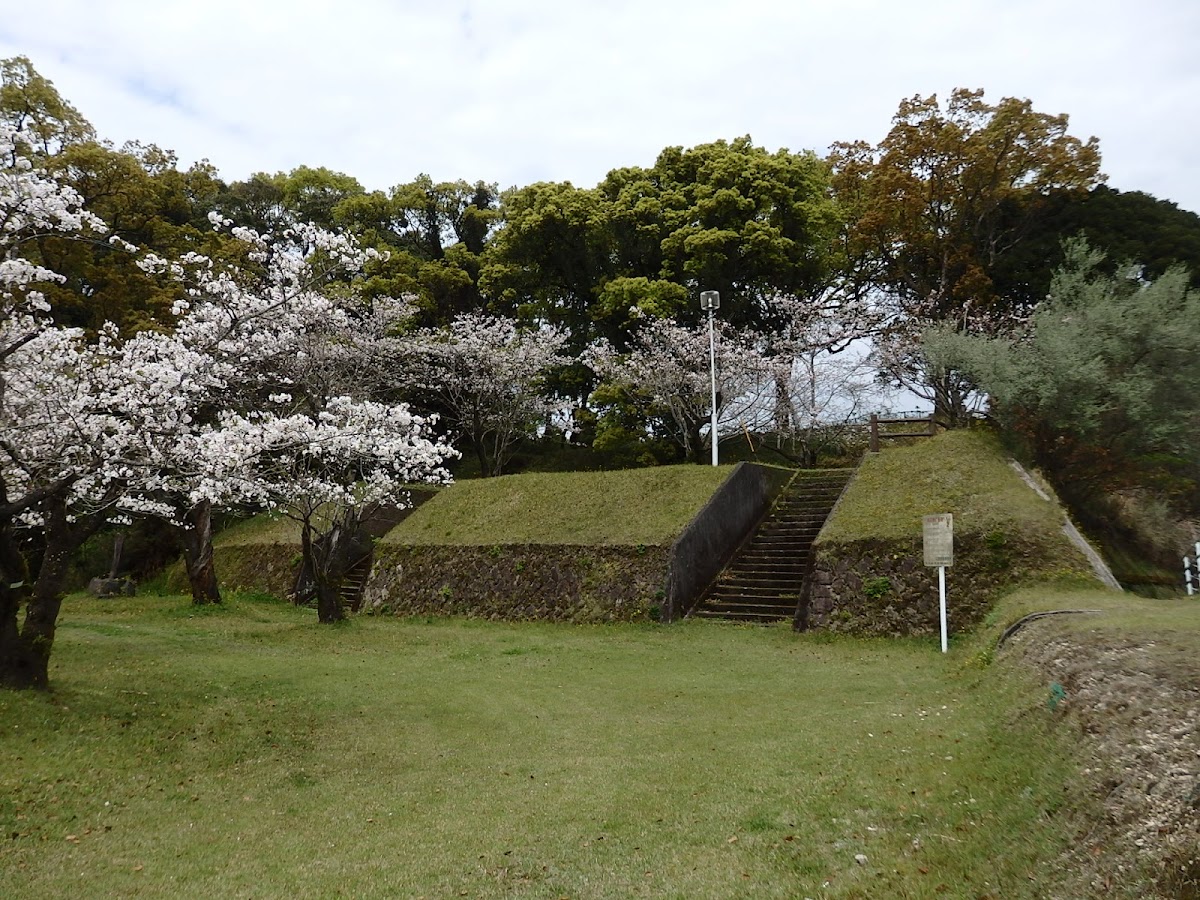
In the Showa period, part of the Kanoya Castle site was developed into Shiroyama Park, transforming it into a place of recreation for citizens. Even today, remnants of baileys and dry moats remain at the main keep, second bailey, and middle castle sites, allowing us to imagine the castle’s structure in its heyday.
Kanoya City continues to develop as the central city of the Osumi Peninsula, and is the largest city in the Osumi region with a population of approximately 97,000. The Kanoya Castle site is preserved as a valuable cultural asset that conveys the history of this region to the present day.
The Structure of Kanoya Castle
Multi-Bailey Layout
Kanoya Castle is a multi-bailey castle composed of multiple baileys (enclosures). The main components identified include the Honmaru (main enclosure), Ninomaru (second enclosure), Nakajo (middle castle), Matsuo Castle, Daimyo Castle, Ima Castle, and Torisoe Castle.
These enclosures are cleverly arranged, utilizing the terrain and designed to enhance defensive capabilities through interconnectedness. In particular, the renovations by Ijuin Tadamune incorporated castle construction techniques from the late Sengoku period, evolving the castle into a more practical fortress.
Honmaru (Reservoir)
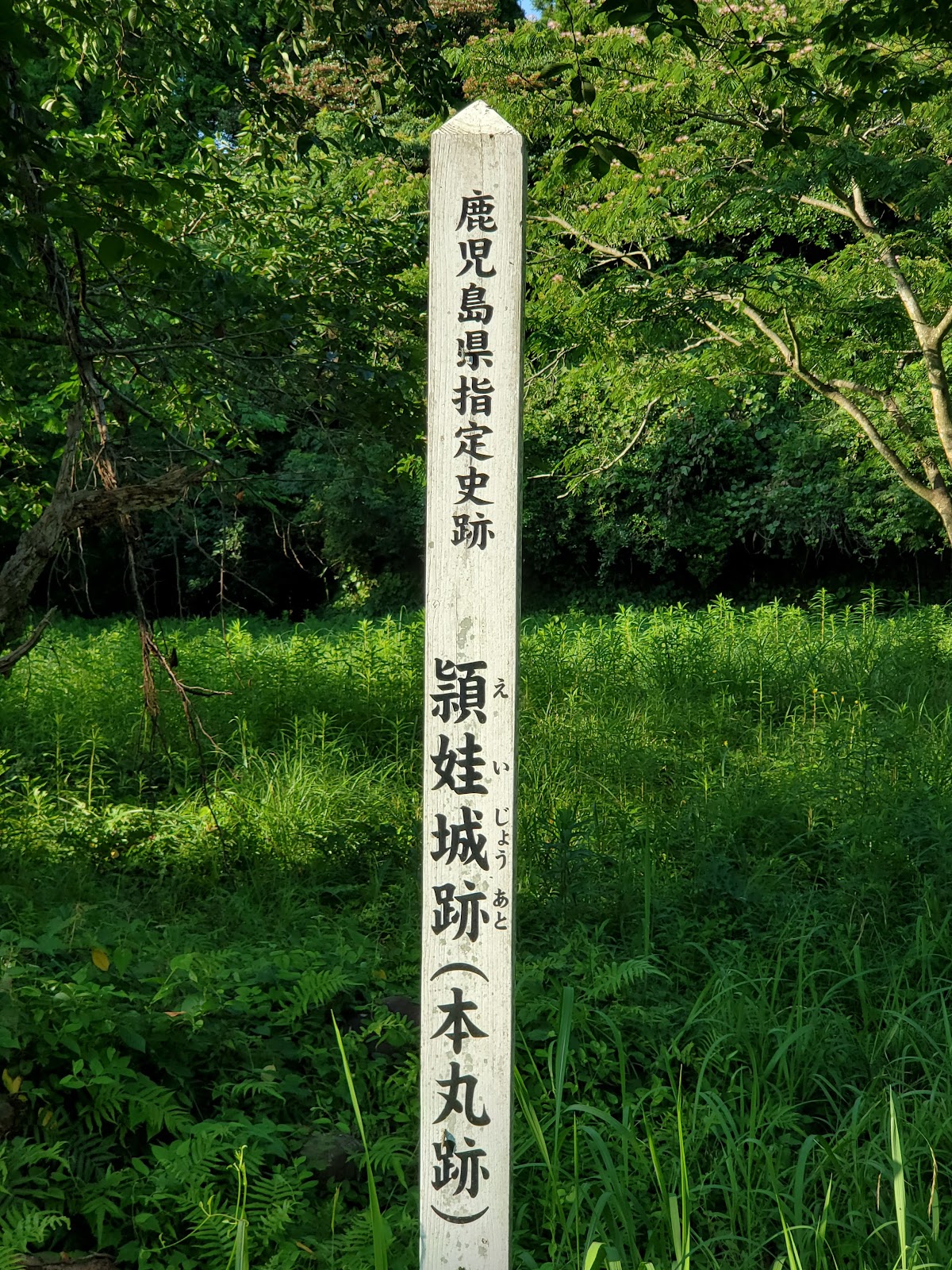
The Honmaru is the core enclosure of Kanoya Castle, believed to have housed the lord’s residence and important facilities. Currently, a reservoir is located on the site of the Honmaru, and no original structures remain. However, the shape and size of the enclosure allow us to imagine its former appearance.
From the Honmaru, one could overlook the surrounding area, indicating its military surveillance function. Traces of earthworks also remain around the Honmaru, indicating the presence of defensive structures.
Ninomaru (Park)
The Ninomaru is the second most important enclosure after the Honmaru and is currently developed as a park. The Ninomaru (second enclosure) served to defend the Honmaru (main enclosure) and was a place where soldiers were stationed in times of emergency.
Even now, as a park, the outline of the enclosure and the undulations of the terrain allow us to discern the structure from the castle era. Visitors can enjoy strolling around and reflecting on history.
Nakajo Castle (Park)
Like the Ninomaru, Nakajo Castle has also been developed as a park and serves as a place of relaxation for citizens. Located in the middle of the entire castle complex, Nakajo Castle played an important role in connecting the Honmaru, Ninomaru, and the outer enclosure.
The Nakajo Castle ruins retain a relatively well-preserved dry moat, making it a valuable point to observe the castle construction techniques of the Sengoku period.
Matsuo Castle (Kindergarten/Senior Citizens’ Welfare Center)
Matsuo Castle is an enclosure located on the outer part of Kanoya Castle and is currently used as a kindergarten and senior citizens’ welfare center. While there are few remaining castle structures, the former castle area can be inferred from the place names and topography.
Dry Moats and Earthen Embankments
A notable feature of Kanoya Castle’s defensive structures are the dry moats and earthen embankments that remain in various places. These are thought to have been strengthened during renovations by Ijuin Tadamune, and they demonstrate the characteristics of castle construction techniques from the late Sengoku period.
The dry moats were important defensive structures to prevent enemy intrusion, and they can still be clearly seen within Shiroyama Park. The depth and width of the moats give a sense of the high level of defense at the time.
Earthen embankments are earthen walls built around the baileys, serving to protect the castle from enemy attacks. At Kanoya Castle, traces of earthen embankments remain in some areas, providing important clues to understanding the castle’s structure.
Highlights of Kanoya Castle
Shiroyama Park
The central area of the Kanoya Castle ruins has been developed as Shiroyama Park, a place of relaxation for citizens. Walking paths are maintained within the park, allowing visitors to stroll through the castle ruins while enjoying the changing seasons.
In spring, cherry blossoms bloom, making it a popular spot for cherry blossom viewing. In autumn, the autumn foliage is beautiful, allowing visitors to enjoy a landscape where history and nature harmonize.
Information boards are installed within the park, allowing visitors to learn about the history and structure of Kanoya Castle. It’s a place that can be enjoyed not only by castle enthusiasts but also by families.
Remains of the Enclosures
Within Shiroyama Park, you can actually walk and examine the outlines of the enclosures, such as the main keep, second enclosure, and central castle. The undulations and flat areas of the terrain allow you to experience the castle’s structure at the time, which is a major attraction.
In particular, the differences in elevation between the enclosures demonstrate defensive ingenuity, and observing the terrain from the perspectives of both the attackers and defenders reveals the skillful castle-building techniques of the Sengoku period.
Visiting the Dry Moat
One of the most impressive remains of Kanoya Castle is the dry moat. Within Shiroyama Park, there is a dry moat that is relatively well-preserved, and its size and shape allow you to appreciate its defensive capabilities at the time.
Standing at the bottom of the dry moat, you can appreciate the height of the earthen ramparts on both sides, understanding how difficult it must have been for enemy soldiers to cross this moat. It’s also a popular spot for photography.
View
From the high ground of the Kanoya Castle ruins, you can enjoy a panoramic view of Kanoya city and the surrounding Osumi Plain. On clear days, you can even see Sakurajima and the Kirishima mountain range in the distance, making it a renowned scenic spot.
During the Sengoku period (Warring States period), this view was crucial for military surveillance. Today, you can see both the rich natural beauty of the Osumi Peninsula and the developed urban area, reflecting the passage of time.
Geography and Historical Background of Kanoya City
Central City of the Osumi Peninsula
Kanoya City is located in the eastern part of Kagoshima Prefecture, in the central part of the Osumi Peninsula. With a population of approximately 97,000, it is the largest city on the Osumi Peninsula and plays a central role in the region’s administration, economy, and industry.
The city of Kanoya stretches long from east to west, facing Shibushi Bay to the east and adjacent to Kagoshima Bay (Kinko Bay) to the west. The elevation is generally low, and the majority of the area is covered with volcanic ash soil known as the Shirasu Plateau.
Mild Climate and Abundant Nature
Kanoya City enjoys a mild climate, with an average annual temperature of approximately 17°C. This mild climate and abundant natural environment have supported people’s lives since ancient times.
Rainfall is relatively high throughout the year, with particularly heavy rainfall during the rainy season and typhoon season. However, the good drainage of the Shirasu Plateau makes it a suitable environment for agriculture.
A Region with Thriving Agriculture and Livestock Farming
Kanoya City is known as a region with very thriving agriculture and livestock farming. In particular, Kurobuta pork, broiler chickens, peanuts, and sweet potatoes are nationally renowned as local specialties.
Kurobuta pork is a representative livestock product of Kagoshima Prefecture, and Kanoya City is one of the leading production areas within the prefecture. Furthermore, broiler chicken farming is thriving, and the city boasts one of the highest production volumes in Japan.
Peanuts are a representative agricultural product of Kanoya City, and are highly regarded as “Kanoya Peanuts.” Sweet potatoes are also cultivated, taking advantage of the warm climate and the soil of the Shirasu Plateau.
Access Methods
Access by Car
Kanoya Castle (Shiroyama Park) is most easily accessible by car.
From Kagoshima City:
- Approximately 1 hour 30 minutes from central Kagoshima City via National Route 220 and National Route 269
- Approximately 1 hour 20 minutes via Tarumizu Port using the Sakurajima Ferry
From Miyazaki:
- Approximately 2 hours from Miyazaki City via National Route 220 and National Route 269
Shiroyama Park has a parking lot that is free to use.
Access by Public Transportation
From Kagoshima Airport:
- Approximately 1 hour 30 minutes by airport limousine bus to Kanoya City
- Walk or take a taxi from Kanoya Bus Center to Shiroyama Park
From Kagoshima City:
- Approximately 1 hour 50 minutes by express bus “Kinko-go” from Kagoshima Chuo Station to Kanoya
- There is also a route that involves transferring between Sakurajima Ferry and local buses
City Transportation:
- Local buses and taxis are available within Kanoya City
- Approximately 15 minutes on foot from Kanoya Bus Center to Shiroyama Park
Nearest Tourist Information Center
The Kanoya City Tourism and Product Center is located in the city, where you can obtain tourist information and brochures. They can also provide detailed information about Kanoya Castle and surrounding tourist spots.
Nearby Tourist Attractions
Kanoya Air Base Museum
Kanoya City is home to the Japan Maritime Self-Defense Force Kanoya Air Base, and its museum displays valuable materials related to the former Imperial Japanese Navy’s air force and kamikaze units. During the final stages of the Pacific War, Kanoya became a base for kamikaze attacks, from which many young men launched their missions.
The museum also displays actual aircraft such as Zero fighters, making it an important facility for learning about the history of the war. Admission is free, and it is approximately a 10-minute drive from Kanoya Castle.
Kirishima-ga-oka Park
Located in the northern part of Kanoya City, Kirishima-ga-oka Park is a comprehensive park situated on a hill approximately 160 meters above sea level. From the observation deck, you can enjoy panoramic views of Kinko Bay, Sakurajima, and Mount Kaimon, offering spectacular scenery on clear days.
The park also features a rose garden with approximately 5,000 rose bushes. Many tourists visit during the spring and autumn rose blooming seasons.
Sites Associated with Saigo Takamori
Kanoya City has several sites associated with Saigo Takamori, a key figure in the Meiji Restoration. Saigo visited Kanoya before the Satsuma Rebellion, and a walking course tracing his footsteps has been developed.
The Kanoya City Tourism Association also offers guided tours of sites associated with Saigo Takamori and Kanoya’s local history, making it highly recommended for history buffs.
Former JNR Osumi Line
The former JNR Osumi Line, which once ran through Kanoya City, was discontinued in 1987. However, the former railway line has been developed into a cycling path. You can enjoy the nature of the Osumi Peninsula while viewing the former station buildings and railway relics.
Points to Note When Visiting Kanoya Castle
Clothing and Items to Bring
While Shiroyama Park is a well-maintained park, it is recommended to wear comfortable walking shoes when visiting the castle ruins. When visiting the dry moats and earthworks, sneakers are recommended due to the slightly uneven terrain.
In summer, the sun is strong, so bring a hat, sunscreen, and drinking water. Insect repellent is also useful.
Estimated Visit Time
A thorough visit to Shiroyama Park takes approximately 1-2 hours. Observing the remains of the baileys and dry moats in detail, and reading the explanatory signs while strolling, will give you a deeper understanding of Kanoya Castle’s history.
If you plan to enjoy photography or leisurely appreciate the surrounding scenery, it’s a good idea to allocate more time.
Best Time to Visit
Kanoya Castle Ruins are open year-round, but the following times are particularly recommended:
Spring (March-May):
During cherry blossom season, Shiroyama Park becomes a popular spot for cherry blossom viewing and is bustling with people. The weather is mild and ideal for a stroll.
Autumn (October-November):
The autumn foliage is beautiful, and the pleasant weather makes it ideal for exploring the castle ruins. The air is clear, and the views are excellent.
Winter (December-February):
There are fewer tourists, allowing for a quiet visit to the castle ruins. However, warm clothing is necessary.
Summer (June-September) is hot and humid, and it’s also typhoon season, so weather conditions should be considered before visiting.
Historical Significance of Kanoya Castle
Role as a Strategic Point in the Osumi Region
Kanoya Castle is located in the central part of the Osumi Peninsula and has played an important role as a transportation hub since ancient times. The Osumi Peninsula, along with the Satsuma Peninsula, is one of the two major peninsulas of Kagoshima Prefecture and has formed its own unique cultural sphere since ancient times.
The area of Kanoya was a junction point for transportation routes connecting the inland and coastal parts of the peninsula, and also functioned as a center for the collection and distribution of goods. Kanoya Castle occupied an important position as the political, economic, and military center of this region.
The Stage of the Conflict Between the Kimotsuki and Shimazu Clans
The history of Kanoya Castle is also the history of the conflict between the Kimotsuki and Shimazu clans, the two major powers in the Osumi region. The Kimotsuki clan was an ancient power based in the southern part of the Osumi Peninsula, and wielded great power from the Kamakura period to the Sengoku period.
On the other hand, the Shimazu clan, based in Satsuma Province, expanded its power during the Sengoku period with the aim of unifying Kyushu. Kanoya Castle was the stage for numerous battles during the conflict between the two clans, and ultimately came under the control of the Shimazu clan.
This history is an important case study for understanding the political situation in the Kyushu region during the transition from the medieval to the early modern period.
The Significance of the Castle Renovation by the Ijuin Clan
The castle renovation by Ijuin Tadamune in 1578 (Tensho 6) was a crucial event that transformed Kanoya Castle from a medieval mountain castle into an early modern castle.
This period was a time when Oda Nobunaga’s unification of Japan was underway, and castle construction technology was rapidly developing nationwide. While early modern castles with stone walls and keeps were being built throughout Japan, new castle-building techniques were also being introduced in Kyushu.
Ijuin Tadamune’s renovations strengthened the dry moats and earthworks, and rationalized the layout of the baileys, thereby increasing the castle’s practical defensive capabilities. This renovation allowed Kanoya Castle to function as an important military base in the Shimazu clan’s rule of Osumi Province.
Positioning within the Satsuma Domain’s Outer Castle System
In the Edo period, Kanoya Castle was incorporated into the Satsuma Domain’s unique outer castle system. This system divided the domain into numerous “go” (villages), each governed by a local administrator (jitō) or local samurai (gōshi), forming the foundation of the Satsuma Domain’s military power.
The Kanoya region had four villages: Kanoya-go, Takakuma-go, Ōaira-go, and Hanaoka-go, each with numerous local samurai. These samurai were “half-farmers, half-samurai,” engaged in agriculture during peacetime but mobilized as warriors during times of conflict.
This system allowed the Satsuma Domain to maintain a powerful military force until the end of the Edo period, playing a crucial role in the Meiji Restoration. Kanoya Castle, as a symbolic representation of this outer castle system, remained the center of regional governance.
Current Status and Challenges of Kanoya Castle Research
Archaeological Excavations and Research Results
Multiple archaeological excavations and surveys have been conducted on Kanoya Castle, leading to progress in understanding its structure. In particular, investigations of the dry moats and earthworks have revealed details of the construction techniques used during the renovations by Ijuin Tadamune.
Furthermore, research on historical documents is progressing, accumulating new insights into the activities of the Kanoya and Ijuin clans, and the reality of the Shimazu clan’s rule over Osumi Province.
Preservation and Utilization Efforts
Kanoya City is working to preserve and utilize the Kanoya Castle ruins as a valuable cultural asset. By developing it as Shiroyama Park, it serves as a place of relaxation for citizens while also functioning as a site for historical education.
The installation of explanatory signs and the creation of guided pamphlets have created an environment where visitors can learn about the history of Kanoya Castle. Furthermore, guided tours and site visits by local history enthusiasts are also conducted, making it a beloved historical site in the region.
Future Challenges
Several challenges remain in the preservation and utilization of Kanoya Castle.
First, because parts of the castle site are now public facilities or privately owned land, it is difficult to grasp the overall picture and formulate a comprehensive preservation plan. In the future, it is necessary to strengthen cooperation among stakeholders and develop a preservation plan that takes the entire castle site into consideration.
Also, there are concerns about the deterioration of the remains over time, requiring regular surveys and appropriate preservation measures. In particular, the dry moats and earthworks are at risk of collapse due to natural disasters, making continuous monitoring and preservation crucial.
Further ingenuity is needed regarding its utilization as a tourist resource. New initiatives such as collaboration with surrounding tourist spots and the use of digital technology for information dissemination are expected.
Summary
Kanoya Castle is a valuable historical site that conveys the history of the Osumi Peninsula to the present day. Built by the Kanoya clan, a branch of the Kimotsuki clan, and extensively renovated by Ijuin Tadamune, a senior retainer of the Shimazu clan, this castle tells the story of Kyushu’s history during the transition from the medieval to the early modern period.
Currently maintained as Shiroyama Park, it serves as a place of relaxation for citizens, while the remains such as the baileys and dry moats are well-preserved, making it a valuable site where one can actually observe the castle-building techniques of the Sengoku period.
When visiting Kanoya City, be sure to visit the Kanoya Castle ruins and experience the history and culture of Osumi. In Kanoya, blessed with a mild climate and abundant nature, you can spend time feeling the romance of history.
Understanding the history of Kanoya Castle is important for understanding Japan’s medieval and early modern history, especially the history of the Kyushu region. Furthermore, learning about the Gaijo system, a unique governing system of the Satsuma Domain, will deepen your understanding of the diversity of local governance during the Edo period.
Kanoya Castle ruins are an attractive destination not only for history enthusiasts but also for families and tourists. By visiting it in conjunction with other nearby tourist spots, you can fully enjoy the charm of Kanoya.
.png)