Funakoshi Gusuku (Okinawa Prefecture) Complete Guide: History, Highlights, and Access Explained in Detail
Funakoshi Gusuku, located in Tamagusuku Funakoshi, Nanjo City, Okinawa Prefecture, is an important historical site that conveys the history of the Ryukyu Kingdom era. Believed to have been built in the mid-14th century, this gusuku boasts a unique structure that skillfully utilizes the natural terrain, making it a distinctive presence among the many gusuku scattered throughout Nanjo City.
This article comprehensively explains everything you need to know before visiting Funakoshi Gusuku, from its historical background to its highlights and access methods.
What is Funakoshi Gusuku?
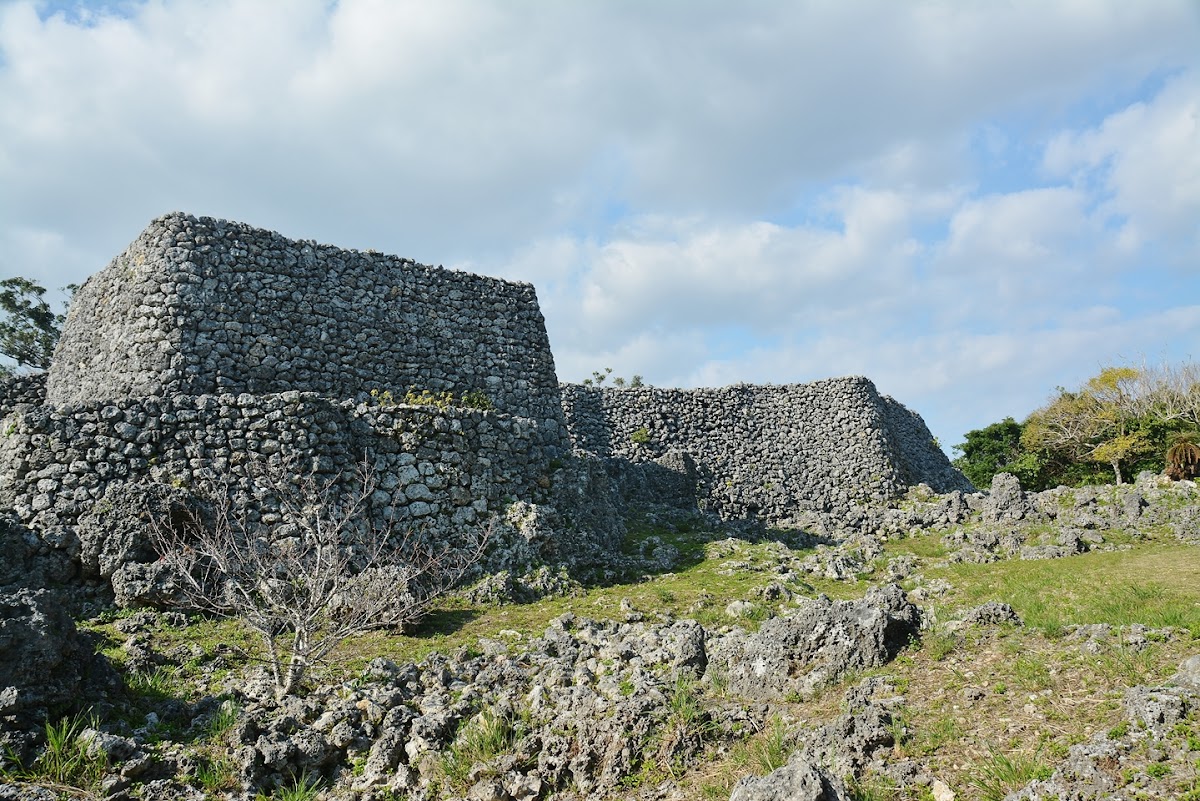
Funakoshi Gusuku is a gusuku site built on a hillside overlooking the Funakoshi settlement in the Tamagusuku district of Nanjo City. Its most distinctive feature is that it was constructed using the upper part of a massive limestone rock. By utilizing the natural bedrock as a foundation, it demonstrates the wisdom of Ryukyu gusuku architecture, minimizing artificial stonework while enhancing defensive capabilities.
Currently, a golf driving range (Short Course Tamagusuku) is located adjacent to the gusuku, and development is progressing in the surrounding area, but the gusuku remains themselves retain the appearance of the time.
What is a Gusuku?
A gusuku (御城) is a term referring to castle ruins unique to the Okinawa region. Unlike the castles of the Sengoku period on the mainland, they did not necessarily serve only as combat facilities, but also as sacred sites (places of worship) or residences of local powerful families called Anji.
Nearly 200 gusuku have been identified on Okinawa Island, and Funakoshi Gusuku is one of them, an important cultural property that tells the history of Nanjo City.
History and Builder of Funakoshi Gusuku
Construction Period and Background
Funakoshi Gusuku is believed to have been built in the mid-14th century. This period is known in Ryukyu history as the “Three Kingdoms period,” a time when three powers—Hokuzan, Chuzan, and Nanzan—divided and ruled Okinawa Island. The Shimajiri region, including Nanjo City, was within the sphere of influence of the Nanzan Kingdom, and local lords (Anji) competed for power by constructing their own gusuku (castles).
Legends of Funakoshi Anji
Several legends remain regarding the builder of Funakoshi Gusuku.
Legend 1: The Theory of the Fourth Son of King Tamagusuku
The most widely known theory is that the fourth son of King Tamagusuku, the fourth king of the Eiso dynasty, built the castle as Funakoshi Anji. The Eiso dynasty ruled Nakayama from the 13th to the 14th centuries, and the legend that a member of the royal family was granted this land and became an Anji suggests the high status of the gusuku.
Legend 2: The Theory of the Eldest Son of Itokazu Anji
Another legend states that the eldest son of the nearby Itokazu Anji became Funakoshi Anji. Itokazu Gusuku is a well-known gusuku (castle) within Nanjo City, and the belief that the family of its lord ruled this area is deeply rooted in the region.
While neither tradition has been confirmed by written documents, the size and location of the gusuku suggest that a powerful lord undoubtedly existed in this area.
Archaeological Findings
Currently, no artifacts have been reported being collected from Funakoshi Gusuku. This is likely due to the possibility of the remains being lost due to later development or natural collapse, or because full-scale excavation has not been conducted. Future investigations may reveal more detailed information about the construction period and actual use of the castle.
Structure and Characteristics of Funakoshi Gusuku
Location and Topographical Utilization
Funakoshi Gusuku is built in a strategically advantageous location: on a hill east of the Funakoshi settlement. This location offered the following advantages:
- Excellent Visibility: The entire Funakoshi settlement could be overlooked from the hillside, allowing for early detection of approaching enemies.
- Natural Defense: The slope itself served as a defensive wall.
- Access to Water Sources: Its proximity to the settlement made securing water for daily life easy.
Architectural Techniques Utilizing Limestone
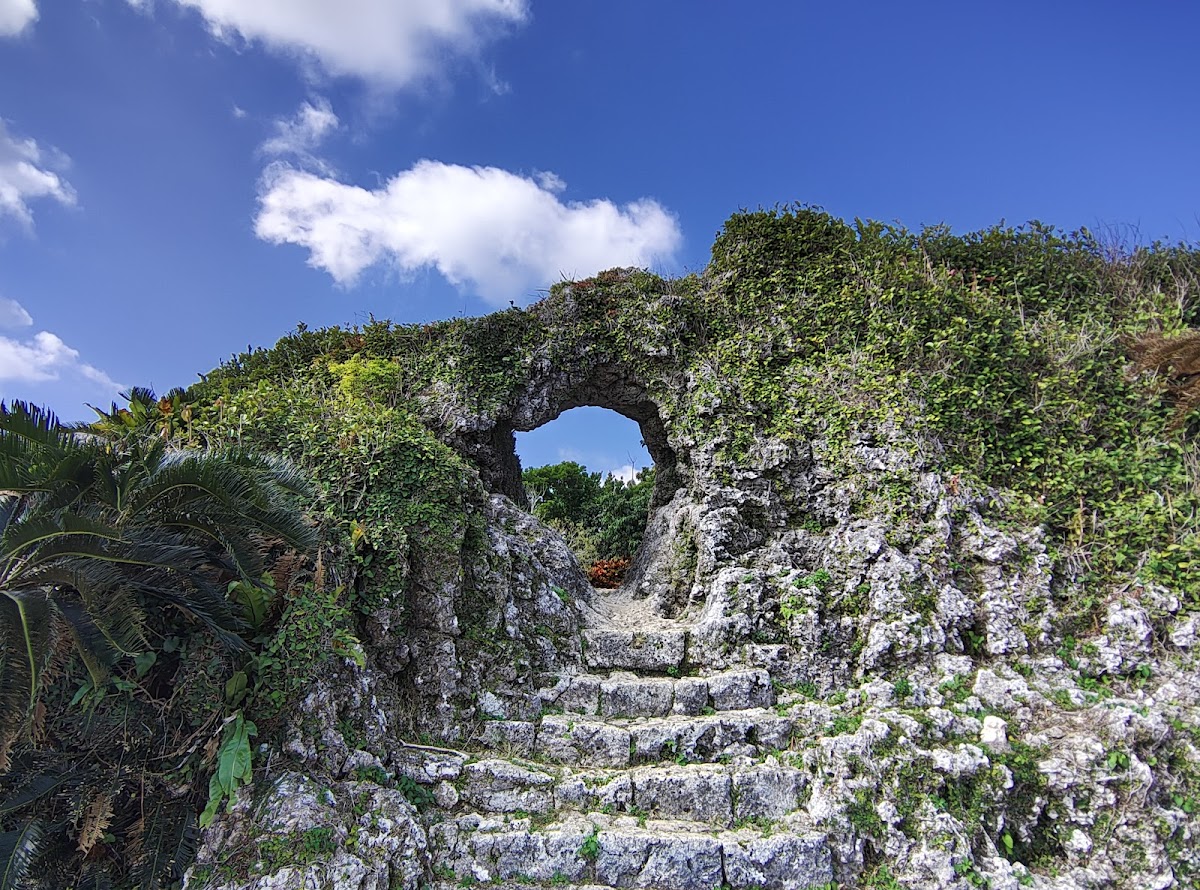
The most distinctive feature of Funakoshi Gusuku is the use of massive natural limestone blocks as part of the castle walls. The southern part of Okinawa Island is rich in Ryukyu limestone, and architectural techniques that maximized this geological feature were employed.
Artificially constructed stone wall sections have also been confirmed, resulting in a hybrid structure combining natural bedrock and artificial stonework. Such architectural techniques demonstrate the practical wisdom of the local lords of the time, allowing for the construction of a robust defensive structure while conserving labor.
Existing Remains
Currently identifiable remains include:
- Limestone Foundation: Natural bedrock that formed the foundation of the gusuku (castle)
- Traces of Stonework: Remains that partially demonstrate the stonework techniques of the time
- Flat Area: A flat area presumed to have been used as the residence of the Anji (local lord) or a place for rituals
These remain, but detailed layout plans and reconstruction drawings are not currently publicly available.
Positioning within the Gusuku Cluster of Nanjo City
Nanjo City is known as a “treasure trove of gusuku,” with 28 gusuku sites confirmed within the city. Funakoshi Gusuku is one of them, and is positioned within the following cultural and historical context.
Major Gusuku in Nanjo City
Besides Funakoshi Gusuku, Nanjo City has numerous other important gusuku:
World Heritage Site Gusuku
- Seifa Utaki: The most sacred site of the Ryukyu Kingdom
- Tamagusuku Castle Ruins: The site of the residence of the Tamagusuku Anji (lord)
Other Notable Gusuku
- Itokazu Castle Ruins: A well-preserved gusuku with large stone walls remaining
- Kakihana Castle Ruins: A castle ruin with a spectacular view overlooking the sea
- Chinen Castle Ruins: The base of the Chinen Anji (lord)
- Sashiki Castle Ruins: An important gusuku that served as the base for Sho Hashi’s unification of Ryukyu
These gusuku sites demonstrate that Nanjo City was an important political and cultural center even before the establishment of the Ryukyu Kingdom.
Uniqueness of Funakoshi Gusuku
Compared to other gusuku castles in Nanjo City, Funakoshi Gusuku has the following characteristics:
- High degree of utilization of natural bedrock: While structures based on limestone can be seen in other gusuku castles, Funakoshi Gusuku relies particularly heavily on it.
- Appropriate scale: Compared to the large Itokazu Castle and Sashiki Castle, it is of medium size, reflecting the capabilities of the local lord.
- Diversity of legends: The existence of multiple castle-building legends suggests the importance of this area and its complex history.
Thus, Funakoshi Gusuku is positioned as a historical site with a unique role and characteristics among the gusuku castles of Nanjo City.
Highlights of Funakoshi Gusuku
Landscape integrated with nature
The greatest attraction of visiting Funakoshi Gusuku is its unique landscape where natural topography and artificial remains are fused. The sight of the massive limestone formations exposed gives a real sense of how the Ryukyuan lords built their castles in harmony with nature. ### Panoramic View of Funakoshi Village
From the gusuku (castle) situated on a hill, you can overlook the entire Funakoshi village. Imagining the former lords governing their territory while gazing upon this view evokes a sense of historical romance.
Historical Walks in the Surrounding Area
Around Funakoshi Gusuku, there are numerous historical sites and cultural assets that retain traces of the gusuku era:
- Old Stone Walls of Funakoshi Village: A glimpse into the village’s history dating back to the gusuku period.
- Shrine of Worship (uganju): Still cherished as a place of local faith.
- Traces of Ancient Roads: Remnants of the road that once led to the gusuku.
Exploring these sites will allow for a deeper understanding of gusuku culture.
Access and Visit Information
Location
Address: Near 332 Tamagusuku Funakoshi, Nanjo City, Okinawa Prefecture
Access Methods
Access by Car
- Approximately 40 minutes from Naha Airport (via National Route 331)
- Approximately 20 minutes from Haebaru Minami IC
- Parking: Parking may be available around the adjacent golf driving range, but prior confirmation is recommended.
Public Transportation
- Due to the limited number of bus services within Nanjo City, access by car is recommended.
- Taking a taxi is also an option.
Precautions When Visiting
- Protection of Historical Sites: The gusuku ruins are valuable cultural assets. Please be careful not to climb on the stone walls or damage the remains.
- Safety Assurance: Due to the many slopes and rocky areas, comfortable walking shoes are recommended.
- Consideration for Private Property: There are private houses and private land around the gusuku. Please do not enter restricted areas.
- Weather Check: Visiting on a sunny day is safer, as the ground can become slippery in rainy weather.
Estimated Visiting Time
Allow 30 minutes to 1 hour to visit the main castle. Including a stroll through the surrounding Funakoshi settlement, an ideal time allocation is 1.5 to 2 hours.
Spots to Visit in Combination with Nanjo City Sightseeing
When visiting Funakoshi Gusuku, combining it with other sightseeing spots in Nanjo City will make your trip more fulfilling.
World Heritage Site: Seifa Utaki
Located about 15 minutes by car from Funakoshi Gusuku, Seifa Utaki is registered as a World Heritage Site as the most sacred site of the Ryukyu Kingdom. It is a sacred place deeply connected to the Ryukyu creation myth, and visiting it together with Funakoshi Gusuku allows you to understand both the history and faith of Ryukyu.
Chinen Cape Park
A scenic spot offering panoramic views of the Pacific Ocean. On a clear day, you can see Kudaka Island and Komaka Island, making it one of the highlights of sightseeing in Nanjo City.
Ganju Station Nanjo
A roadside station where you can enjoy Nanjo City’s specialty products and local cuisine. It’s an ideal rest stop for tourists.
Okinawa World
A facility where you can comprehensively experience Okinawan culture, including the Gyokusendo Cave and Eisa dance performances. Recommended for family visits.
Materials for Learning About Funakoshi Gusuku
For those who want to learn more about Funakoshi Gusuku, the following materials are helpful.
Materials Published by Nanjo City
Nanjo City Hall publishes a booklet introducing the gusuku (castles) in the city, titled “Gusuku of Nanjo City“. This booklet provides detailed information on 28 gusuku, including Funakoshi Gusuku, and is a valuable resource for systematically understanding the history of Nanjo City.
Contents:
- Chapter 1: What are the Gusuku of Nanjo City?
- Chapter 2: Various Gusuku of Nanjo City (Individual explanations of 28 Gusuku, including Funakoshi Gusuku)
Information from the Nanjo City Tourism Association
The Nanjo City Tourism Association (Shinri, Sashiki, Nanjo City, Okinawa Prefecture) provides information on Gusuku tours and introduces event information. By contacting them before your visit, you can learn about the latest viewing information and surrounding events.
Online Information Sources
The Nanjo City Tourism Portal Site, “Nanjo City is Like It,” features basic information and photos of Funakoshi Gusuku, which can be helpful when planning your visit.
Gusuku Culture and the History of the Ryukyu Kingdom
To understand Funakoshi Gusuku more deeply, it is important to know the overall Gusuku culture and the historical background of the Ryukyu Kingdom.
Gusuku Period (12th-15th Centuries)
From around the 12th century, local powerful families called Anji rose to prominence throughout Okinawa, each building Gusuku and competing for power. This period is called the “Gusuku Era.” Funakoshi Gusuku is one of the castles built during this time.
The Three Kingdoms Period (14th-Early 15th Century)
In the 14th century, Okinawa Island was divided and ruled by three powers: Hokuzan, Chuzan, and Nanzan, marking the “Three Kingdoms Period.” The mid-14th century, when Funakoshi Gusuku was built, coincides with the period when these three kingdoms were in balance.
Unification of the Ryukyu Kingdom (1429)
In 1429, Sho Hashi of Chuzan unified the three kingdoms, establishing the Ryukyu Kingdom. After unification, many of the local lords were gathered in Shuri, and the regional gusuku gradually fell into disuse. It is believed that Funakoshi Gusuku was also abandoned during this process.
Diverse Functions of Gusuku Castles
Gusuku castles were not merely military facilities, but possessed a variety of functions, including:
- Political Center: A base of governance as the residence of the Anji (local lord)
- Religious Facility: A sacred site serving as a place of worship (uganju)
- Economic Center: A place for storing trade goods and holding markets
- Community Core: A spiritual center for local residents
It is presumed that Funakoshi Gusuku also possessed a combination of these functions.
Preservation of Funakoshi Gusuku and Future Challenges
Current State of Preservation
Funakoshi Gusuku is recognized as a historical site of Nanjo City, but it is not designated as a national or prefectural cultural property. Therefore, organized preservation and maintenance efforts are limited, and some of the remains may be affected by natural collapse and surrounding development.
The Need for Future Investigation and Preservation
To properly evaluate the historical value of Funakoshi Gusuku and pass it on to future generations:
- Full-scale archaeological investigation: Identifying the construction period through artifact collection and detailed surveying of the remains.
- Literature research: Verification of legends concerning Funakoshi Anji.
- Formulation of a preservation plan: A plan to prevent the collapse of the remains and preserve them appropriately.
- Improvement of the viewing environment: Installation of safe walking paths and explanatory signs.
If these efforts are made, Funakoshi Gusuku can be further utilized as an important tourism and educational resource for Nanjo City.
Engagement with the Local Community
Funakoshi Gusuku is a cultural heritage passed down through generations for the local residents. It may be linked to local traditional events and beliefs, and the participation and understanding of the local community are essential for preservation activities.
Summary: The Charm and Significance of Visiting Funakoshi Gusuku
Funakoshi Gusuku, a 14th-century gusuku (castle ruin) remaining in Nanjo City, Okinawa Prefecture, is a valuable historical site that conveys the history of the Ryukyu Kingdom before its establishment. It possesses many attractions, including its unique structure utilizing massive limestone blocks, multiple legends surrounding the Funakoshi Anji (lord), and its location overlooking the Funakoshi settlement.
Compared to large-scale gusuku such as Shuri Castle and Nakijin Castle Ruins, which are registered as World Heritage Sites, it is not as well-known, but precisely because of this, it is a place where one can quietly confront the history of Ryukyu. Visiting Funakoshi Gusuku, which plays a part in Nanjo City’s rich gusuku culture, will be a valuable opportunity to experience the profound depth of Ryukyu history that cannot be learned from textbooks.
When visiting Nanjo City, be sure to visit Funakoshi Gusuku and feel the charm of this Ryukyu castle ruin integrated with nature. There, the spirit of the Anji from over 600 years ago still quietly remains.
Frequently Asked Questions (FAQ)
Is Funakoshi Gusuku a World Heritage Site?
Funakoshi Gusuku is not registered as a World Heritage Site. The World Heritage Site “Gusuku Sites and Related Properties of the Kingdom of Ryukyu” in Okinawa Prefecture includes five gusuku (castles): Shuri Castle, Nakijin Castle, Zakimi Castle, Katsuren Castle, and Nakagusuku Castle, and four related sites: Sonohiyan Utaki Stone Gate, Tamaudun Mausoleum, Shikinaen Garden, and Seifa Utaki. Funakoshi Gusuku is a historical site in Nanjo City and is cherished by the local community.
Is a reservation required to visit Funakoshi Gusuku?
Funakoshi Gusuku is an outdoor historical site, and generally, reservations are not required for visits. However, since it is not a clearly designated visitor facility, it is recommended to check the latest information with the Nanjo City Tourism Association before visiting. Also, please be mindful of private property in the surrounding area and respect the permitted areas.
Who built Funakoshi Gusuku?
The builder of Funakoshi Gusuku is said to be Funakoshi Aji, but there are several legends regarding his origins. One theory is that the fourth son of Tamagusuku King, the fourth king of the Eiso dynasty, built the castle as Funakoshi Aji. Another theory is that the eldest son of Itokazu Aji became Funakoshi Aji. There is no reliable historical evidence to support these claims, and further research is needed to clarify them.
Is there parking near Funakoshi Gusuku?
There is a golf driving range (Short Course Tamagusuku) adjacent to Funakoshi Gusuku, and parking may be available in the vicinity, but there is no dedicated tourist parking lot. It is recommended to inquire with the Nanjo City Tourism Association or check the local situation before visiting. Please avoid street parking as it will inconvenience the local community.
What other gusuku are there in Nanjo City?
Including Funakoshi Gusuku, 28 gusuku sites have been confirmed in Nanjo City. Major sites include the World Heritage site Seifa Utaki, the well-preserved Itokazu Castle ruins, the Kakihana Castle ruins overlooking the sea, the Sashiki Castle ruins associated with Sho Hashi, the Tamagusuku Castle ruins, and the Chinen Castle ruins. Nanjo City is a “treasure trove of gusuku” (castles), demonstrating its importance even before the establishment of the Ryukyu Kingdom.
What is the best season to visit Funakoshi Gusuku?
Considering Okinawa’s climate, the cool and pleasant months from October to April are ideal for visiting. January to March, in particular, has relatively little rainfall, making for a comfortable historical site tour. However, even in winter, Okinawa is not as cold as mainland Japan, so visits are possible year-round. During the summer (June to September), high temperatures, high humidity, and the risk of typhoons are unavoidable, so heatstroke prevention measures and weather checks are necessary.