Complete Guide to Komesu Gusuku (Itoman City, Okinawa Prefecture) | History, Remains, and Access Information
Komesu Gusuku (also known as Kumishi Gusuku) is a Ryukyu Kingdom-era castle site located in Higashidawara, Komesu, Itoman City, Okinawa Prefecture. While only the remains of the first enclosure’s walls were previously known, recent investigations have confirmed the remains of the second enclosure, gradually revealing the complete picture of the gusuku. This article comprehensively explains the historical background, details of the remains, and access methods of Komesu Gusuku, providing essential information for those considering a visit.
Overview and Location of Komesu Gusuku
Komesu Gusuku is a gusuku built on a hill approximately 40 meters above sea level, east of the Komesu settlement in Itoman City. Its location is Komesu (Higashidawara), Itoman City, Okinawa Prefecture, and it is accessible from National Route 331.
Basic Information
- Official Name: Komesu Gusuku
- Alternate Name: Kumishi Gusuku
- Location: Komesu, Itoman City, Okinawa Prefecture (Higashitahara)
- Construction Period: Estimated 14th-15th century
- Builder: Details unknown (estimated to be Komesu Anji)
- Remains: Stone walls, bailey remains, place of worship
- Current Status: Some remains remain, located near a settlement
Komesu Gusuku is believed to have functioned as the residence of a powerful local clan called an Anji during the Gusuku period, before the establishment of the Ryukyu Kingdom. The Gusuku is relatively small in scale, suggesting it had a strong character as a regional base.
Historical Background of Yonesu Gusuku
The Yonesu Region During the Gusuku Period
In the Ryukyu Islands, rural settlements were established throughout the region between the 10th and 12th centuries, and from the 12th century onward, local powerful families known as Anji emerged. The Yonesu region was no exception; it is believed that an Anji governed the area during this period, and that gusuku (castles) were built as defensive strongholds.
Yonesu Gusuku belonged to the former Kyan Magiri (Kyan District) Yonesu. Kyan Magiri was an administrative division during the Ryukyu Kingdom era, governing the southern part of present-day Itoman City. It is presumed that the Yonesu Anji, as the ruler of this region, governed the surrounding area from the gusuku.
Changes After the Unification of the Ryukyu Kingdom
In the first half of the 15th century, when the Ryukyu Kingdom was unified by Sho Hashi, the local Anji were placed under the control of the royal government. Many gusuku (Okinawan castles) lost their function as military bases and were either abandoned or repurposed as places of worship.
Similarly, after the unification of the Ryukyu Kingdom, Yonesu Gusuku ceased its role as a military facility and is believed to have become a local place of worship (uganju). Even today, worship sites remain around the gusuku, and rituals are performed by local residents.
The Battle of Okinawa and the Yonesu Area
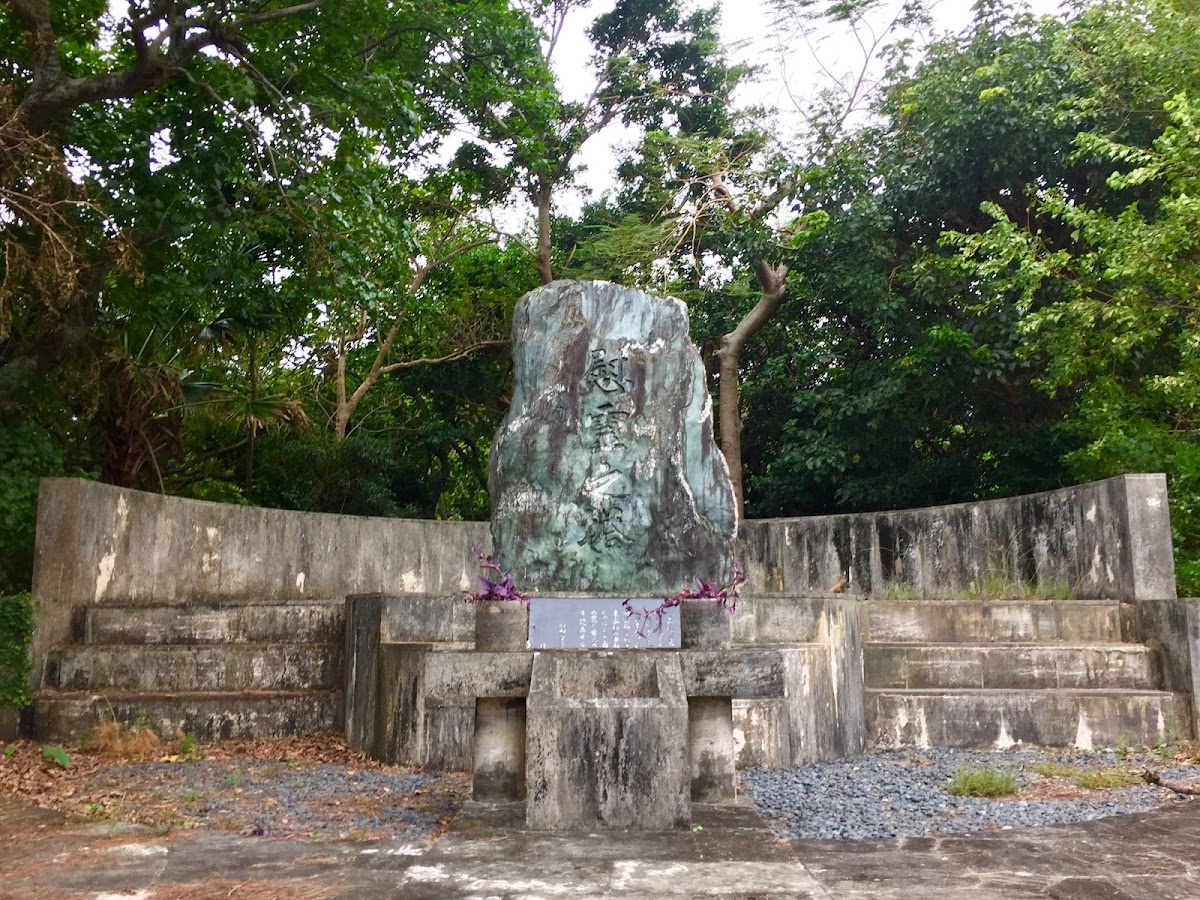
The Yonesu area is known as one of the sites of the final fierce battles of the Battle of Okinawa. In June 1945, the Japanese army and residents were cornered by the US army, and fierce fighting raged around the Yonesu settlement. Approximately 300 meters south of Yonesu Gusuku stands the “Konpaku-no-To” (Soul Tower), which houses the remains of many people who died in the Battle of Okinawa.
Immediately after the end of the war, the area around Yonesu Gusuku was also affected by the fighting, and it is possible that some of the remains were damaged. The remaining stone structures, despite undergoing natural collapse and human alteration over a long history, are valuable cultural assets that convey the essence of the gusuku (castle).
Castle Structure and Remains of Yonesu Gusuku
Structure of the First Enclosure (Main Enclosure)
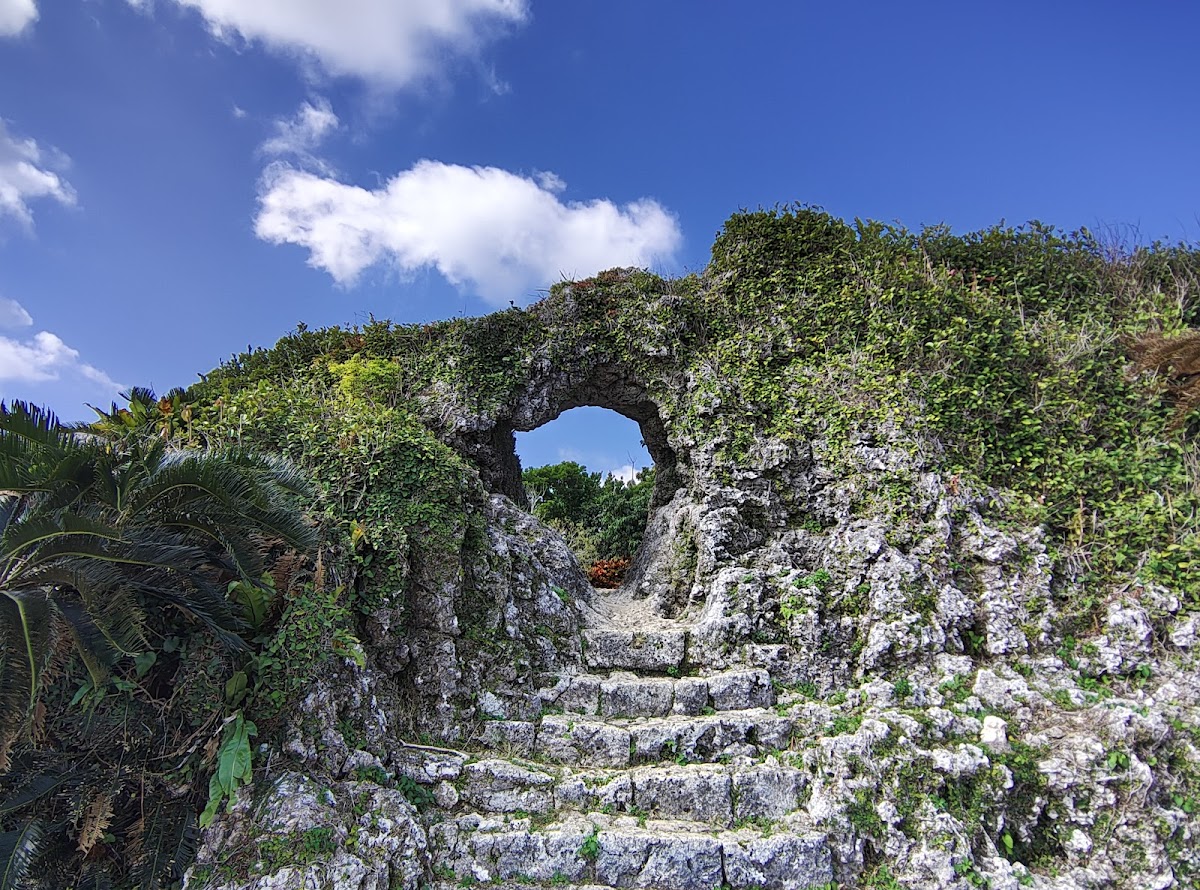
The first enclosure, the central part of Yonesu Gusuku, is located on the top of a hill. The stone walls surrounding this enclosure are the best-preserved and have long been known as the gusuku’s remains.
The stone walls of the first enclosure are constructed using the nozura-zumi (rough stone masonry) method with Ryukyu limestone. The stones used are Ryukyu limestone quarried in the surrounding area, and although the degree of processing is low, they are skillfully stacked. The height of the existing section of the wall is approximately 2-3 meters, and its length is estimated to be several tens of meters.
The stone masonry technique differs from the refined cut stone masonry seen in the gusuku groups later registered as World Heritage Sites, indicating a simpler, older style of construction. This is an important clue suggesting that the construction period of Yonesu Gusuku was relatively early.
Discovery and Significance of the Second Enclosure
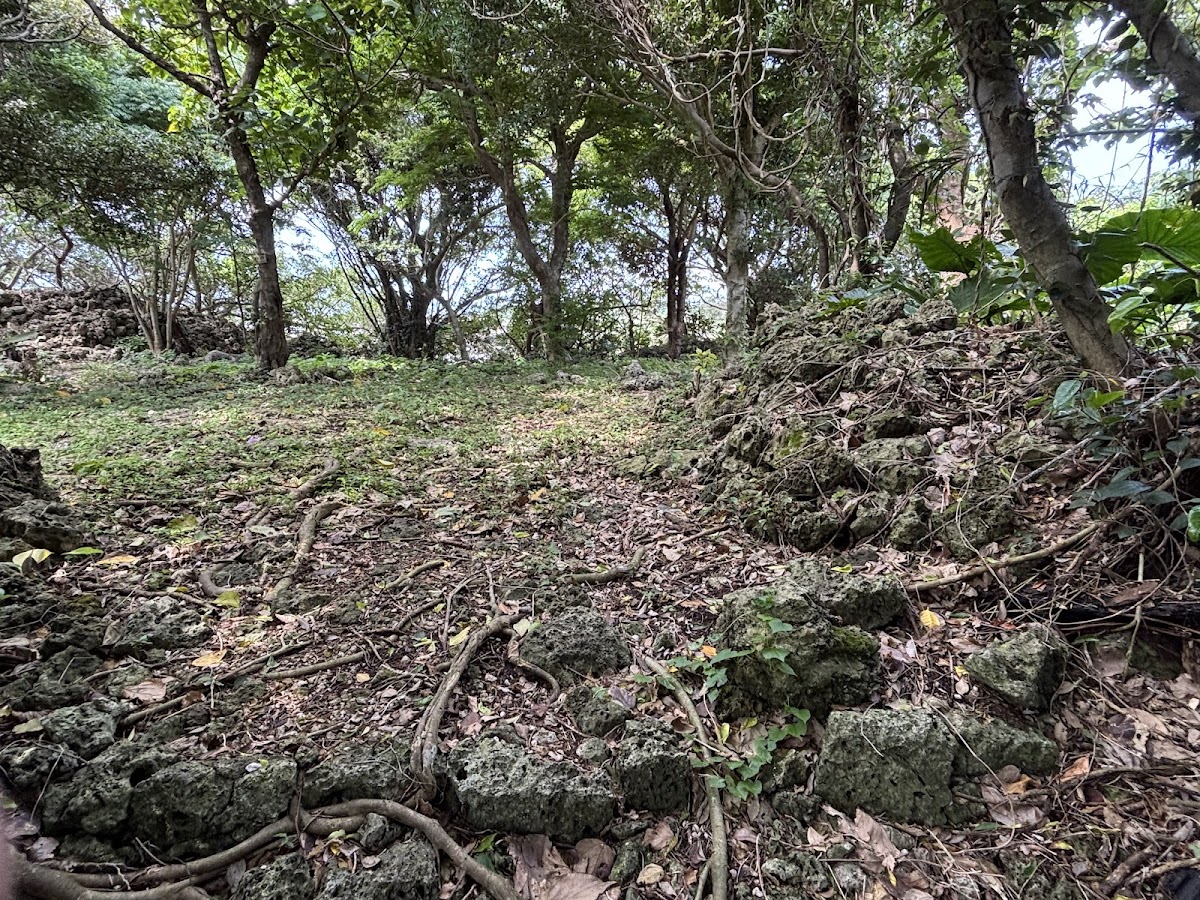
For many years, only the first enclosure (Ichino-kuruwa) of Yonesu Gusuku was known. However, surveys and aerial photograph analysis around 2005 revealed the existence of the second enclosure (Ninokuruwa). The second enclosure is located outside the first enclosure, at a slightly lower elevation, and is thought to have played a defensive role for the first enclosure.
While the remains of the second enclosure’s walls are not as clear as those of the first enclosure, traces of stonework and changes in topography confirm the existence of a defensive structure. The discovery of the second enclosure revealed that Yonesu Gusuku was not a single-enclosure structure but rather a more complex structure with multiple enclosures, providing important insights into Gusuku research.
Places of Worship and Religious Sites
Several places of worship are located within and around the Gusuku. These are based on the traditional Ryukyuan belief of Utaki (sacred groves) and have been cherished as sacred places by the local residents.
Various rituals are performed at the site of worship throughout the year, and many worshippers visit, especially during events based on the lunar calendar. This is important evidence that the gusuku (castle) functioned not merely as a military facility but also as a center of faith.
Even today, the site of worship is maintained by local residents, and it is necessary to show respect as a place of worship when visiting.
Geographical Characteristics of the Yonesu Gusuku Area
Location and Topography
Yonesu Gusuku is located in the southern part of Itoman City, near the southernmost tip of Okinawa Island. The hilly area on which the gusuku was built was a strategic point overlooking the surrounding plains, possessing ideal location conditions for a defensive base.
To the east lies the Pacific Ocean, and to the west the East China Sea, making it a suitable location for monitoring maritime traffic. Considering that maritime trade was an important economic base during the Ryukyu Kingdom era, the location of Yonesu Gusuku may have served not only as a defensive measure but also as a maritime surveillance function.
Relationship with Surrounding Cultural Properties
Besides the gusuku, there are other important cultural properties in the Yonesu area. In particular, the “Yonesu Shell Mound” is a designated historical site of Okinawa Prefecture and is known as an archaeological site from the late prehistoric shell mound period (approximately 3,000 to 2,000 years ago).
The existence of the Yonesu Shell Mound indicates that this area has been a place of human habitation since ancient times. It allows us to understand the continuity of human activity from the shell mound period to the gusuku period, leading to the construction of Yonesu Gusuku.
Furthermore, there are many memorial facilities related to the Battle of Okinawa, including the aforementioned Konpaku-no-To (Soul Tower), making the Yonesu area a place with a multi-layered history, from the ancient history of Ryukyu to the modern history.
How to access Yonesu Gusuku
Access by car
The most convenient way to access Yonesu Gusuku is by car. From Naha City, head south on National Route 331 towards Itoman City.
Detailed Route:
- Proceed along National Route 331 towards Ihara.
- Turn right near the JA Okinawa Itoman Branch (now a different facility).
- Continue straight for approximately 180 meters, then turn right at the edge of the settlement.
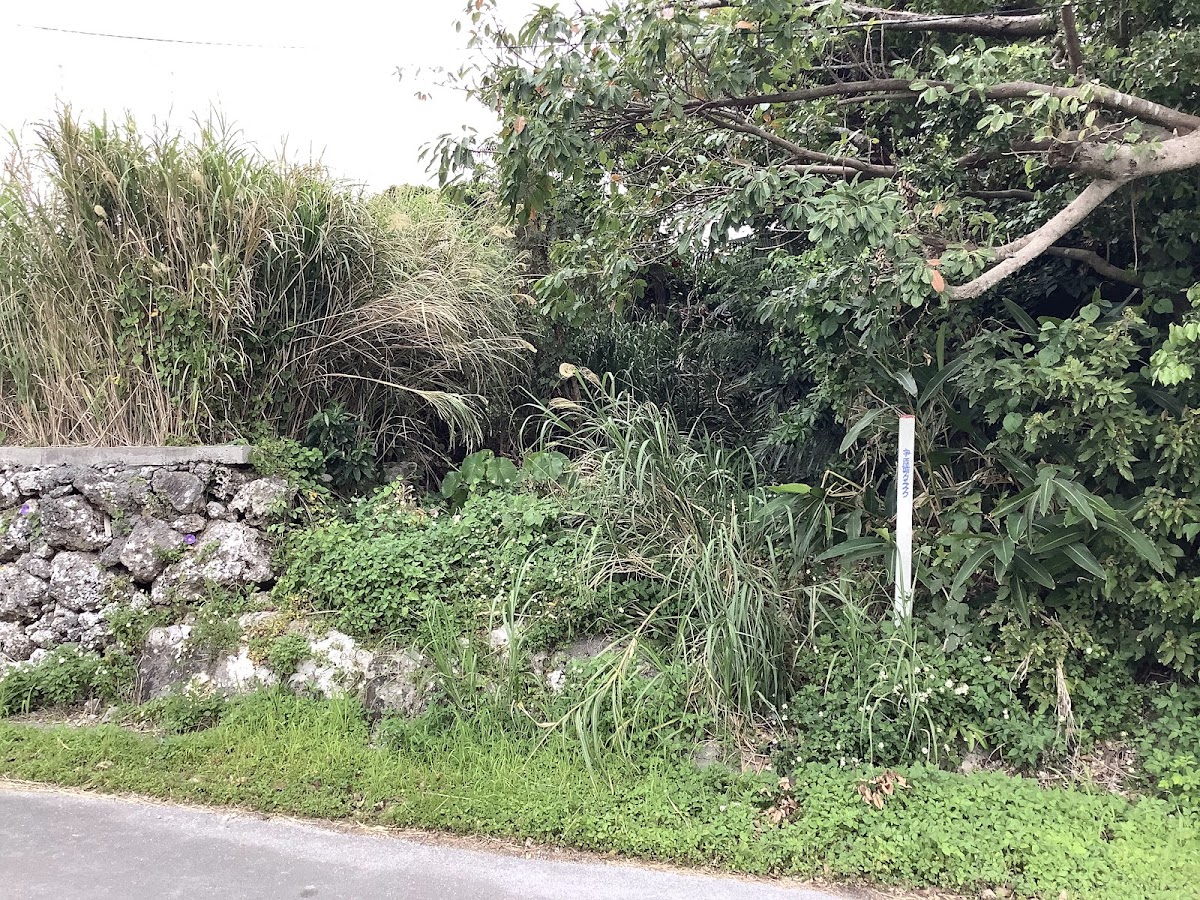
- When you see the shrine, the entrance to the castle is on your left.
Travel Time:
- From Naha Airport: Approximately 30-40 minutes
- From central Naha City: Approximately 25-35 minutes
- From Itoman City Hall: Approximately 10-15 minutes
Parking space is limited, so please be considerate of local residents.
Access by Public Transportation
If using public transportation, you can use the local bus, but access from the nearest bus stop is on foot.
Bus Route:
- Take a bus bound for Itoman from Naha Bus Terminal.
- Get off at the “Yonesu” bus stop.
- Approximately 10-15 minute walk from the bus stop.
Since bus service is limited, we recommend checking the timetable in advance.
Precautions for Visiting
When visiting Yonesu Gusuku, please note the following:
- Respect for Sacred Sites: The sacred sites within the gusuku are places of worship. Please refrain from entering during religious ceremonies and always act with respect.
- Consideration for Private Property: There are private houses and private property around the gusuku. Please be careful not to enter without permission.
- Safety Management: Some parts of the stone structures have deteriorated over time. Please do not approach areas where there is a risk of collapse.
- Environmental Preservation: Please be sure to take your trash with you and be careful not to damage the natural environment or the ruins.
- Consideration for Weather: The ground can become slippery in rainy weather. Please visit in appropriate clothing and shoes.
Attractions at Yonesu Gusuku and Surrounding Areas
Points of Interest within the Gusuku
Stone Wall of the First Enclosure: This is the best-preserved structure, allowing you to observe the technique of rough-hewn stone masonry using Ryukyu limestone up close. You can learn about the characteristics of Gusuku architecture, such as the way the stones are stacked and the weathering over time.
Entrance to the Second Enclosure: The remains of the Second Enclosure, recently discovered, are important for understanding the Gusuku’s defensive system. While confirming its positional relationship with the First Enclosure, grasp the overall structure of the castle.
Shrine of Worship: This shrine, which still functions as a center of local faith, is a place where you can realize that the Gusuku is not merely a ruin, but a living cultural asset.
Related Facilities in the Surrounding Area
Yonesu Shell Mound: The Yonesu Shell Mound, a designated historical site of Okinawa Prefecture, is located close to the Gusuku. It is an important site that allows us to learn about the lives of people in prehistoric times. You can obtain detailed information by contacting the Itoman City Board of Education in advance.
Konpaku Tower: This memorial facility is located approximately 300 meters south of Yonesu Gusuku. Many visitors come here to learn about the history of the Yonesu area, a fierce battleground during the Battle of Okinawa, and to reflect on the importance of peace.
Okinawa Prefectural Peace Memorial Park: This large-scale peace memorial facility is located in Mabuni, Itoman City, and is relatively close to the Yonesu area. It houses a museum where visitors can learn about the overall picture of the Battle of Okinawa, and memorial monuments from each prefecture.
Preservation Status and Challenges of Yonesu Gusuku
Current Preservation Status
While some parts of the Yonesu Gusuku remains are well-preserved, they are also affected by aging and development. In particular, road improvement work was carried out before 2005, changing the landscape around the gusuku.
The stone walls of the first enclosure are in relatively good condition, but there is a risk of natural collapse, and regular surveys and preservation measures are necessary. The remains of the second enclosure were discovered relatively recently, and further detailed investigations and the formulation of a preservation plan are anticipated.
Efforts for Preservation and Utilization
The Itoman City Board of Education is leading efforts to preserve and utilize the cultural value of Yonesu Gusuku. However, compared to the gusuku groups registered as World Heritage Sites, there are challenges in terms of recognition and preservation budget.
Voluntary preservation activities by local residents also play an important role, with continuous maintenance and cleaning of sacred sites. Through these local efforts, the gusuku continues to function not only as a cultural property but also as a spiritual pillar for the community.
Future Challenges and Prospects
The following are some of the future challenges for Yonesu Gusuku:
- Implementation of detailed academic investigations: Many parts, including the second enclosure, remain unclear. Excavation and surveying are necessary to clarify the overall picture of the gusuku.
- Preservation and restoration of remains: Prevention of collapse of the stone walls and restoration of deteriorated parts are necessary. The development and implementation of a preservation plan by experts is required.
- Development of information boards and explanatory signs: The installation of appropriate information facilities is desirable so that visitors can deepen their understanding of the history and remains.
- Improvement of access: Improvement of the visitor environment is necessary, such as the development of safe walking paths and the securing of parking spaces.
- Strengthening cooperation with the local community: It is important to promote the use of the site as a cultural property while respecting its function as a place of worship, with the understanding and cooperation of local residents.
Learning about Ryukyu history from Yonesu Gusuku
Social structure of the Gusuku period
Small, local gusuku like Yonesu Gusuku provide important clues to understanding the social structure before the unification of the Ryukyu Kingdom. During the Gusuku period from the 12th to the 15th centuries, numerous Anji (local lords) were scattered throughout Okinawa, each forming their own sphere of influence.
It is believed that the Yonesu Anji also established their own system of rule, albeit within a limited area. Gusuku (castles) served not only as the residence of the Anji (local lord), but also as refuges for local residents, centers of worship, and political and economic hubs, possessing multifaceted functions.
Impact of the Unification of the Ryukyu Kingdom
The unification of the Ryukyu Kingdom in the first half of the 15th century had a significant impact on local gusuku like Yonesu Gusuku. Centralization meant that local Anji were incorporated under the control of the royal government, limiting their ability to possess independent military power.
As a result, many gusuku were abandoned, transforming from military strongholds into places of worship. It is presumed that Yonesu Gusuku also underwent this process, strengthening its character as a sacred site centered around worship.
Relationship with Maritime Trade
The Ryukyu Kingdom prospered through extensive trade with China, Japan, Korea, and Southeast Asian countries. The Yonesu region, located at the southern tip of Okinawa Island, was a crucial point for maritime traffic.
From the gusuku, one could overlook both the Pacific Ocean and the East China Sea, suggesting it may have served a function in monitoring ship traffic. It may have also played a role as a base for managing maritime traffic, such as ensuring the safety of trade and cracking down on smuggling.
Comparison of Yonesu Gusuku with other Gusuku
Differences from World Heritage Gusuku
Compared to Shuri Castle, Nakijin Castle, Zakimi Castle, Katsuren Castle, and Nakagusuku Castle, which were registered as a World Cultural Heritage site “Gusuku Sites and Related Properties of the Kingdom of Ryukyu” in 2000, Yonesu Gusuku differs significantly in terms of scale and state of preservation.
The World Heritage Gusuku sites demonstrate advanced construction techniques and artistry, with their meticulously constructed stone walls, arched gates with complex curves, and vast enclosures. In contrast, the stonework of Yonesu Gusuku uses a simpler technique called “nozurazumi” (rough stone masonry).
This difference is thought to reflect differences in the construction period and the power and economic strength of the builders. While many of the World Heritage gusuku (castles) are large-scale fortresses built by the royal government or powerful local lords during the Ryukyu Kingdom era, Yonesu Gusuku had a more practical structure as a base for a local lord.
Characteristics as a Local Gusuku
More than 300 gusuku have been identified in Okinawa Prefecture, and many of them are small, local gusuku like Yonesu Gusuku. These gusuku hold important value in understanding Ryukyu history, distinct from the gusuku of the World Heritage sites.
Local gusuku provide clues to the realities of local communities, the lifestyles of typical lords, and the cultural characteristics of each region. Research on Yonesu Gusuku is essential for a multifaceted understanding of the overall picture of Ryukyu history.
Summary: Historical Value of Yonesu Gusuku
Yonesu Gusuku (Itoman City, Okinawa Prefecture) is a valuable cultural asset that conveys the history of the gusuku period before the unification of the Ryukyu Kingdom. Although not as large as the gusuku groups of the World Heritage sites, it possesses unique historical value as a base for a local lord and a center of regional faith.
The remains of the first and second enclosures provide important clues to understanding the construction techniques and defensive systems of the time, and further discoveries are expected through detailed investigations. Furthermore, the sacred sites still maintained by local residents demonstrate that the gusuku is not merely a historical relic, but a living culture that is being passed down.
The Yonesu area was also the site of the final fierce battle of the Battle of Okinawa, and it is a place with a multi-layered history spanning from ancient times to the modern era. Visiting Yonesu Gusuku allows you to experience the history of Ryukyu, the memories of the Battle of Okinawa, and the continuity of the local culture that continues to this day.
When visiting Itoman City, be sure to also visit Yonesu Gusuku and experience the diverse history and culture of Okinawa. You will feel the breath of history rooted in the region, different from that of World Heritage gusuku.