Complete Guide to Nirayama Castle Ruins | From Hojo Soun’s Residence to the Fierce Battlefield of the Odawara Campaign [Shizuoka, Izunokuni City]
What is Nirayama Castle? | A Mountain Castle Symbolizing the Beginning and End of the Sengoku Period
Nirayama Castle, located in Nirayama, Izunokuni City, Shizuoka Prefecture, is a representative flatland castle of the Sengoku period. Built on the hilly area of Nirayama in Tagata District, Izu Province, this castle is known as the residence of Hojo Soun (Ise Sozui), who heralded the beginning of the Sengoku period, and is also etched in history as the site of a fierce battle during Toyotomi Hideyoshi’s Odawara Campaign, symbolizing the end of the Sengoku period.
Currently, the Nirayama Castle Ruins are designated as a national historic site (designated name: “Nirayama Castle Ruins and Attached Castle Ruins”), and are preserved as a valuable historical site that conveys the castle structure of the Sengoku period. Built in a scenic location overlooking Mount Fuji and the Hakone Mountains, Nirayama Castle was not merely a military base, but played a crucial role as a strategic stronghold in the Hojo clan’s conquest of the Kanto region and as the center of their control over Izu Province.
History of Nirayama Castle | From Hojo Soun to Toyotomi Hideyoshi’s Siege of Odawara
Meio Era: Construction of the Castle and Expansion into Izu by Hojo Soun
The history of Nirayama Castle dates back to the second year of the Meio era (1493). At that time, Ise Sozui (later Hojo Soun), a guest general of the Imagawa clan of Suruga Province, attacked and destroyed the Horikoshi Shogunate in Nirayama, and his expansion into Izu Province triggered the construction of Nirayama Castle. Soun skillfully utilized the hilly terrain of the area to develop a mountain castle that would serve as a base for his conquest of the Kanto region.
Hojo Soun established Nirayama Castle as his base, controlling the entire Izu region, and later expanding his power into Sagami Province. Nirayama Castle was the first base for realizing Soun’s ambitions and is considered a symbolic fortress marking the beginning of the new era of the Sengoku period (Warring States period).
The Development of the Hojo Clan and the Changing Role of Nirayama Castle
Even after the Hojo clan made Odawara Castle their main base, Nirayama Castle remained an important strategic point for controlling Izu. Throughout the reigns of Hojo Ujiyasu and Hojo Ujimasa, Nirayama Castle served as a defensive point against invasions by the Imagawa and Takeda armies, experiencing numerous battles.
In particular, during the Eiroku era (1558-1570), fierce battles raged around Nirayama Castle in conjunction with Takeda Shingen’s invasion of Suruga Province. The Hojo clan strengthened Nirayama Castle and improved their defenses in Izu to prepare for threats from the east. It is believed that the castle’s structure was significantly remodeled during this period.
1590 (Tensho 18): The Siege of Odawara and the Siege of Nirayama Castle
The most famous event in the history of Nirayama Castle is the Siege of Odawara by Toyotomi Hideyoshi in 1590 (Tensho 18). This battle, the last large-scale military operation in Hideyoshi’s unification of Japan, saw Nirayama Castle become the stage for a fierce siege lasting approximately three months.
The castle lord, Hojo Ujinori, and his retainer, Naito Nobunari, fought valiantly against the large Toyotomi army with only 3,000 to 4,000 soldiers. Hideyoshi’s forces built several auxiliary forts around Nirayama Castle to prolong the siege. The remains of these auxiliary forts still remain in good condition today and, along with the Nirayama Castle ruins, are designated as a National Historic Site, serving as valuable historical relics illustrating Hideyoshi’s siege tactics.
The siege of Nirayama Castle continued until the surrender of Odawara Castle, ultimately ending with the Hojo clan’s defeat. This battle holds significant historical importance in Japanese history as a symbolic event marking the end of the Sengoku period (Warring States period).
Edo Period: Tokugawa Ieyasu’s Entry into the Kanto Region and the Abandonment of the Castle
After the Siege of Odawara, the Kanto region came under the control of Tokugawa Ieyasu. Naito Nobunari, a retainer of Ieyasu, became the lord of Nirayama Castle. However, in 1601, when the Naito clan was transferred to Ibaraki in Settsu Province, Nirayama Castle was abandoned.
After its abandonment, the castle’s structures gradually disappeared, but remnants such as earthworks and baileys remained as part of the topography, conveying the castle structure of the Sengoku period to this day. Throughout the Edo period, Nirayama continued to function as an administrative center of the Izu region, with a magistrate’s office located there.
Structure of Nirayama Castle | A Mountain Castle Condensing the Castle Construction Techniques of the Sengoku Period
Layout Utilizing the Topography
Nirayama Castle is a flatland castle built on a hill approximately 70 meters above sea level. It cleverly utilizes the terrain surrounded by Mount Fuji and Mount Hakone, maximizing the natural fortifications. The castle grounds extend approximately 400 meters east-west and 300 meters north-south, with multiple baileys arranged in a stepped pattern.
The main bailey is located at the highest point of the hill, and the second and third baileys are arranged along the ridge, creating a series of interconnected baileys. Each bailey is demarcated by steep slopes and trenches, demonstrating ingenuity in preventing enemy intrusion.
Arrangement of Baileys and Earthworks
The arrangement of baileys at Nirayama Castle is a valuable example of structural changes throughout the Sengoku period. From the initial layout during the time of Soun Hojo, through the expansion and renovation by the Later Hojo clan, to its final form just before the Siege of Odawara, the remains of multiple periods are preserved in a layered fashion.
The main keep (Honmaru) is surrounded by several baileys, each enclosed by earthen ramparts. The height of the ramparts varies depending on the location, reaching 3-4 meters at their highest points. These ramparts served to prevent enemy intrusion and also functioned as defensive positions within the castle.
The well-preserved ramparts demonstrate the advanced castle-building techniques of the time and can be observed up close from the walking paths.
Defensive Functions of Moats and Entrances
Nirayama Castle had multiple moats. In particular, the moat separating the main keep and the second bailey (Ninokuruwa) was approximately 5 meters deep and 10 meters wide, forming the most important defensive line within the castle.
The entrances (koguchi) had a complex structure called a masugata koguchi, designed to make enemy intrusion difficult. Earthen ramparts extended from both sides of the main gate, designed to allow for attacks on intruders from the flanks.
Relationship with the Group of Fortified Castles
A notable feature of Nirayama Castle is the well-preserved remains of several fortified castles built by the Toyotomi forces during the Siege of Odawara. These fortified castles were strategically positioned to surround Nirayama Castle and worked in coordination to blockade it.
Major fortified castles include Yamaki Fortified Castle, Nagasaki Fortified Castle, and Amagatake Fortified Castle, each built overlooking Nirayama Castle. These fortified castle ruins, along with Nirayama Castle itself, are designated as a National Historic Site, representing the final castle siege during Toyotomi Hideyoshi’s unification of Japan.
Visiting both the fortified castle ruins and Nirayama Castle offers a valuable opportunity to understand the overall picture of siege warfare and experience the castle tactics of the Sengoku period.
Highlights of Nirayama Castle Ruins | Experiencing Sengoku Period History Firsthand
View from the Main Enclosure
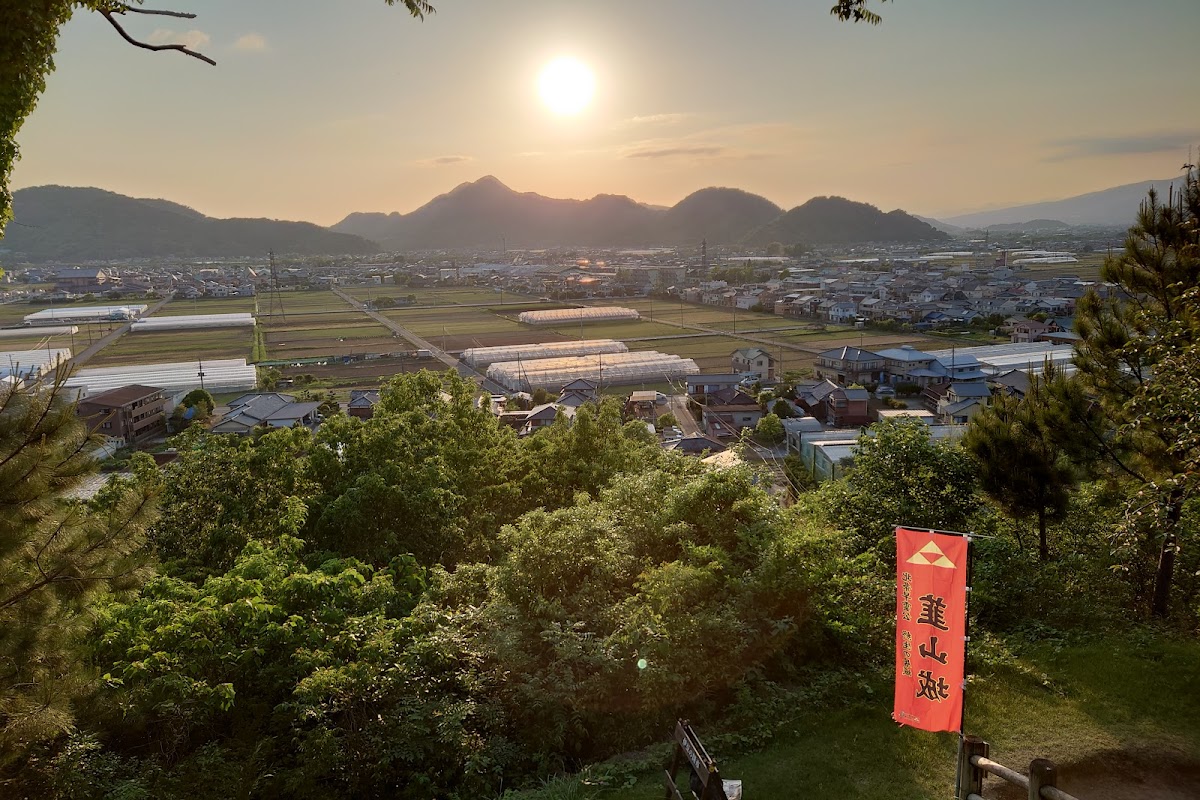
When visiting Nirayama Castle Ruins, the first place you should aim for is the main enclosure (Honmaru). Located at the highest point of the hill, the Honmaru offers a spectacular panoramic view of Mount Fuji, the Hakone Mountains, and the Izu Mountains. On a clear day, you can even see Suruga Bay, giving you a real sense of why Hojo Soun chose this location as his base.
An information board is installed at the Honmaru site, where you can read detailed explanations about the castle’s history and structure. Although it is now a plaza, imagining the lord’s residence and watchtowers that once stood here evokes a sense of historical romance.
Remains of Earthworks and Enclosures
The greatest highlight of Nirayama Castle Ruins are the well-preserved remains of earthworks and enclosures. Walking along the paths leading from the Honmaru to the second and third enclosures, you can observe the earthworks that demarcated each enclosure up close. The earthworks around the main keep are particularly high, allowing you to truly appreciate the castle’s defensive capabilities at the time. You can even walk along the top of the earthworks, offering a panoramic view from the perspective of a castle soldier. Furthermore, the flat areas of the baileys remain clearly visible, providing a three-dimensional understanding of the castle’s structure during the Sengoku period.
Moats and Steep Embankments
The moat separating the main keep and the second bailey is a crucial element of Nirayama Castle’s defensive system. Seeing the deeply excavated moat, one is amazed by the engineering prowess of the time, achieved through manual labor. Both sides of the moat are steep embankments, designed to prevent easy ascent by enemies.
The walking path is designed to pass along the bottom of the moat, allowing you to experience its depth firsthand. The height of the earthworks viewed from the moat is breathtaking, a point where you can truly appreciate the castle’s defensive strength.
Exploring the Sites of the Outlying Fortresses
If you have ample time, we recommend visiting the sites of the outlying fortresses surrounding Nirayama Castle. Yamaki-tsuki Castle and Nagasaki-tsuki Castle are within walking distance of Nirayama Castle, allowing visitors to experience the Toyotomi siege network firsthand.
From the ruins of these fortified castles, you can look down on Nirayama Castle and imagine the battle from the perspective of the attacking side. Remnants of earthworks and baileys remain at the fortified castle sites, allowing you to observe the structure of these fortified camps built in a short period of time.
Information Boards and Explanations
At the Nirayama Castle ruins, information boards are placed at key locations, providing detailed explanations of the castle’s history and structure. In particular, the main keep site and major baileys have easy-to-understand explanatory boards using illustrations and diagrams, making them accessible even for first-time visitors.
The information boards explain the history of Nirayama Castle chronologically, including Hojo Soun’s advance into Izu, the siege during the Odawara campaign, and the changes after the castle’s abandonment, allowing you to learn about history while exploring the site.
Access and Visiting Information | How to Get to Nirayama Castle Ruins
Location
Nirayama Castle Ruins are located in Nirayama, Izunokuni City, Shizuoka Prefecture. It’s easily accessible, situated in the northern part of the Izu Peninsula and close to the center of Izunokuni City.
Address: Nirayama, Izunokuni City, Shizuoka Prefecture
Access by Public Transportation
By Train:
- Get off at Nirayama Station on the Izuhakone Railway Sunzu Line, approximately 15-20 minutes on foot.
- From Nirayama Station to the castle ruins, follow the signs through the residential area.
By Bus:
- From JR Mishima Station, take the Izuhakone Bus and get off at the Nirayama bus stop, approximately 10 minutes on foot.
Access by Car
By Expressway:
- Approximately 30 minutes from Numazu IC on the Tomei Expressway.
- Approximately 25 minutes from Nagaizumi-Numazu IC on the Shin-Tomei Expressway.
Parking:
- There is no dedicated parking lot for Nirayama Castle Ruins. It is recommended to use nearby public parking lots or the parking lot at the Nirayama Local History Museum.
- The castle ruins are approximately 5 minutes on foot from the Nirayama Local History Museum.
Visiting Hours and Fees
Visiting Hours:
- As the castle ruins are an outdoor structure, they are generally open 24 hours a day.
- However, daytime visits are recommended for safety reasons.
- Depending on the condition of the walking paths, some sections may be closed.
Admission Fee:
- Free
Estimated Time Required:
- Visiting only the main keep area: Approximately 30 minutes
- Thoroughly viewing the entire site: Approximately 1-2 hours
- Visiting including the auxiliary castle ruins: Approximately 3-4 hours
Precautions for Visiting
- Clothing and Equipment:
- As the castle ruins involve walking on mountain paths, comfortable shoes and clothing are essential.
- In summer, bring insect repellent, a hat, and drinking water.
- In winter, take thorough precautions against the cold.
- Safety:
- Although the walking paths are well-maintained, they can become slippery in rainy weather.
- Some areas of the earthworks and cliff edges are prone to collapse, so walk carefully.
- Visiting in groups is recommended over visiting alone.
- Manners:
- Do not damage the remains by cutting into the earthworks or taking stones.
- Please take all your trash with you.
- Please be careful not to trespass on private property.
Nearby Tourist Attractions | Places to Visit Alongside Nirayama Castle Ruins
Nirayama Local History Museum
Located about a 5-minute walk from Nirayama Castle Ruins, the Nirayama Local History Museum exhibits materials related to the history of Nirayama Castle and Hojo Soun. Visiting before visiting the castle ruins will provide background information and allow for a deeper understanding of Nirayama Castle.
The museum displays a reconstructed model of Nirayama Castle, excavated artifacts, and ancient documents, helping to grasp the overall structure of the castle. It also offers detailed explanations of the siege during the Odawara campaign, making it a must-see for history buffs.
Nirayama Reverberatory Furnace
Located about 5 minutes by car and 15 minutes on foot from the Nirayama Castle ruins, the Nirayama Reverberatory Furnace is one of the constituent assets of the World Heritage Site “Sites of Japan’s Meiji Industrial Revolution.” Built during the late Edo period for casting cannons, it is a valuable historical site as the only surviving example of a reverberatory furnace still in use.
Visiting both the Nirayama Castle ruins and the Nirayama Reverberatory Furnace allows you to gain a comprehensive overview of Nirayama’s history from the Sengoku period to the end of the Edo period.
Ganjoju-in Temple
Located about 10 minutes by car from the Nirayama Castle ruins, Ganjoju-in Temple was built by Hojo Tokimasa during the Kamakura period. It houses a collection of national treasure Buddhist statues, including a seated Amida Buddha statue by Unkei.
It is an important temple for tracing the roots of the Hojo clan, and visiting it together with the Nirayama Castle ruins will allow for a deeper understanding of the Hojo clan’s history.
Izu-no-Kuni Panorama Park
Located about 15 minutes by car from the Nirayama Castle ruins, Izu-no-Kuni Panorama Park offers a ropeway ride to the mountaintop, providing panoramic views of Mt. Fuji and Suruga Bay. The scenery is even more spectacular than the view from the main keep of Nirayama Castle.
Egawa Residence (Egawa Family Residence)
Located about 5 minutes by car from the Nirayama Castle ruins, the Egawa Residence is the former home of the Egawa family, who served as the Nirayama magistrates, and is designated as a National Important Cultural Property. It offers insights into the achievements of Egawa Hidetatsu (Tan’an), a renowned magistrate of the late Edo period, and has deep connections to the Nirayama Reverberatory Furnace.
Preservation and Development of Nirayama Castle Ruins | The Road to National Historic Site Designation
History of National Historic Site Designation
The Nirayama Castle ruins were designated as a National Historic Site on September 18, 2025, as “Nirayama Castle Ruins and Attached Castle Ruins.” This designation is a result of the recognition that Nirayama Castle was the first stronghold of the Odawara Hojo clan, a powerful daimyo family during the Sengoku period, and that it is a valuable historical site that reveals structural changes throughout the Sengoku period.
Furthermore, the well-preserved group of auxiliary castle ruins in the surrounding area were highly valued as important historical sites in Japanese history, showing the circumstances of Toyotomi Hideyoshi’s final siege during his unification of Japan.
Preservation Activities and Development Plan
Izunokuni City is working towards the preservation and utilization of the Nirayama Castle ruins. Regular maintenance, including the development of walking paths, installation of information boards, and grass cutting, is carried out to ensure a safe environment for visitors.
In the future, following the designation as a national historical site, further research, preservation, and development are planned. Efforts to more widely communicate the value of Nirayama Castle ruins, such as new discoveries from archaeological excavations and the recreation of its former appearance through restoration, are expected.
Collaboration with the Local Community
Local residents and volunteer groups actively participate in the preservation efforts of the Nirayama Castle ruins. Regular cleaning activities and guided tours are held, demonstrating a community-wide effort to protect and utilize the castle ruins.
The Izunokuni City Tourism Association also conducts guided tours of historical sites in the city, including the Nirayama Castle ruins, allowing visitors to explore the castle ruins while listening to explanations from expert guides.
Recommended Plan for Visiting Nirayama Castle Ruins
Half-Day Course (Approx. 3 Hours)
- Nirayama Local History Museum (30 minutes): Learn about the history and overview of Nirayama Castle
- Nirayama Castle Ruins (90 minutes): Explore the main keep, second bailey, and third bailey
- Surrounding Fort Ruins (60 minutes): Visit Yamaki Fort or Nagasaki Fort
This course is a basic plan that allows for an efficient understanding of the history and structure of Nirayama Castle.
One-Day Course (Approx. 6 Hours)
- Nirayama Local History Museum (30 minutes)
- Nirayama Castle Ruins (120 minutes): Thoroughly explore all the castle’s enclosures
- Lunch (60 minutes): Enjoy local cuisine at a restaurant around Nirayama
- Nirayama Reverberatory Furnace (60 minutes): Visit a World Heritage Site
- Egawa Residence (60 minutes): Learn about the achievements of the Nirayama magistrate during the late Edo period
- Ganjoju-in Temple (30 minutes): Visit a temple associated with the Hojo clan
This course offers a comprehensive overview of Nirayama’s history from the Sengoku period to the end of the Edo period.
Course for History Enthusiasts (1-2 days)
- Study detailed materials at the Nirayama Local History Museum
- Observe and record all the baileys of the Nirayama Castle Ruins in detail
- Visit all the outlying castle ruins (Yamaki Outlying Castle, Nagasaki Outlying Castle, Amagatake Outlying Castle, etc.)
- Visit surrounding Hojo clan-related historical sites (Ganjoju-in Temple, Hojo clan residence ruins, etc.)
- Visit other castle ruins in Izunokuni City** (Moriyama Castle ruins, etc.)
This course is an advanced plan for those who want to thoroughly understand the overall picture of Nirayama Castle and the Siege of Odawara.
Summary | The Story of the Sengoku Period Told by Nirayama Castle
Nirayama Castle Ruins is a valuable historical site symbolizing the beginning and end of the Sengoku period. Built by Hojo Soun as a base for his expansion into Izu, this castle became the starting point for his conquest of the Kanto region and supported the development of the Hojo clan. During Toyotomi Hideyoshi’s siege of Odawara, Nirayama Castle served as the stage for a siege that lasted approximately three months, witnessing the end of the Sengoku period (Warring States period).
The well-preserved remains, such as earthworks, baileys, and moats, still convey the castle-building techniques of the Sengoku period. Designated a National Historic Site along with the surrounding group of auxiliary castle ruins, Nirayama Castle occupies an important position in the history of Japanese castles, and its value will undoubtedly continue to be re-evaluated in the future.
When visiting Izunokuni City in Shizuoka Prefecture, be sure to visit Nirayama Castle and experience the historical romance of the Sengoku period. From the view of Mount Fuji from the main keep, to the baileys where Sengoku warlords galloped, and the earthworks bearing the traces of fierce battles—the story of 500 years ago still lives on at Nirayama Castle.