Complete Guide to Yokote Castle (Akita): From History to Stunning Views from the Observation Deck and Access
Yokote Castle, located on the summit of Mt. Asakura in the heart of Yokote City, Akita Prefecture, is a popular tourist spot known for its history dating back to the Sengoku period and its spectacular panoramic views of the Yokote Basin. Also known as “Asakura Castle,” “Azakura Castle,” and “Nira Castle,” the castle is now maintained as Yokote Park, and its castle-style observation deck is a favorite among locals and tourists.
This article provides a thorough explanation of Yokote Castle, including its detailed history, highlights, access methods, and surrounding area information—everything you need to know before visiting.
History of Yokote Castle: From the Sengoku Period to the Present
Construction by the Onodera Clan (Sengoku Period)
The history of Yokote Castle dates back to around 1554. It is said to have been built by Onodera Terumichi, a Sengoku period warlord who held power in southern Akita Prefecture at the time. While some sources suggest construction around 1550, others around 1570, and there are various theories regarding the exact year of construction, it is certain that it was built in the mid-16th century as the residence of the Onodera clan.
Yokote Castle was a flatland castle built on a naturally fortified location, with the Yokote River flowing around Mount Asakura and the mountains of the Ou Mountains behind it. This geographical advantage allowed it to function as a base for governing the Yokote region.
The Origin of the Unique Construction Technique “Nira Castle”
The most distinctive feature of Yokote Castle lies in its unique construction method. While many castles use stone walls, Yokote Castle did not use stone paving, instead employing a construction method called “doi-sekigai” (earthen embankment cutting). Chives (nira) were planted on the castle’s slopes to prevent landslides and to deter enemies from climbing.
Because of this unique construction method, Yokote Castle also came to be known as “Nira Castle” (Chive Castle). The chive roots hardened the soil, and their distinctive odor made it difficult for enemies to approach—a practical and ingenious defensive system.
The Satake Clan and the Development of Yokote Castle
In 1600, during the Battle of Sekigahara, Onodera Yoshimichi, who sided with the Western Army, was dispossessed of his domain. In January of the following year, 1601, Satake Yoshinobu was transferred from Hitachi Province (present-day Ibaraki Prefecture) to Dewa Province (present-day Akita Prefecture).
Satake Yoshinobu positioned Yokote Castle as an important branch castle governing the southern part of his territory and began full-scale development. As a branch castle of the Kubota Domain (Akita Domain), Yokote Castle remained an important base in the southern part of the territory until the end of the Edo period.
In 1620, the Edo Shogunate issued the “One Castle Per Province” decree, but thanks to Satake Yoshinobu’s efforts, Yokote Castle was spared from demolition. This can be seen as evidence of the recognized strategic importance of Yokote Castle.
Governance by the Castle Lord
During the time of the Satake clan, a castle lord was appointed to Yokote Castle and govern the Yokote region. Successive castle lords, including the Date, Suda, and Tomura clans, governed Yokote and contributed to the region’s development. These lords played a crucial role in the politics, economy, and culture of Yokote, acting on behalf of the main Satake family.
The Boshin War and the Fall of the Castle
In 1868, during the late Edo period, Yokote Castle was caught in the flames of the Boshin War. In August, Yokote Castle fell to an attack by the Ouetsu Alliance forces (Shonai, Sendai, and Matsuyama domains). This battle brought an end to the approximately 300-year history of Yokote Castle.
In 1871, with the Meiji Restoration Order, Yokote Castle was officially abandoned, and much of the castle structure was demolished.
Revitalization as Yokote Park
In 1902 (Meiji 35), the Yokote Castle ruins were developed into Yokote Park. The former castle grounds were reborn as a place of relaxation for citizens, and it became affectionately known as “Oshiroyama” (Castle Mountain).
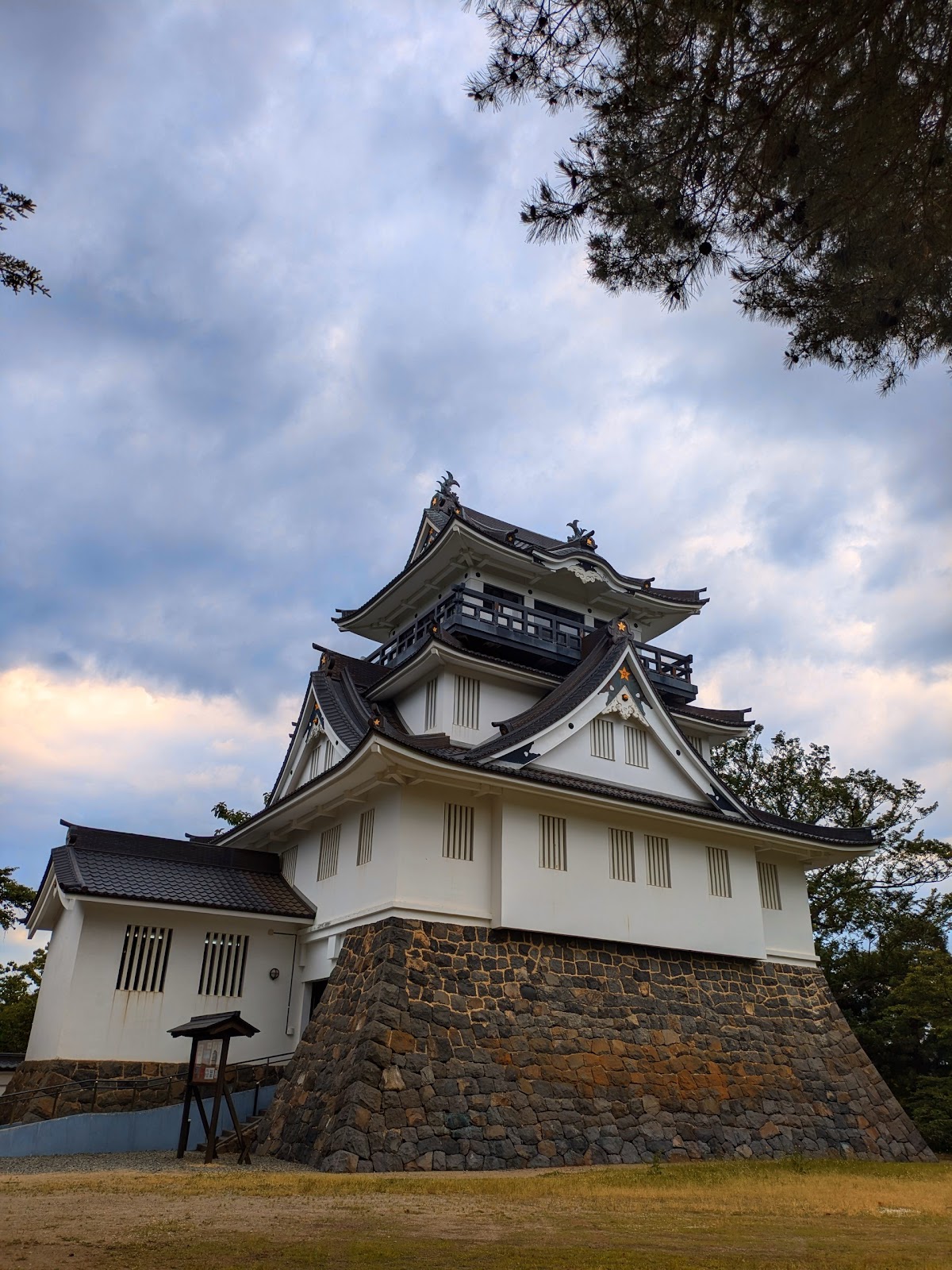
In 1965 (Showa 40), a castle tower-style observation deck was built on the site of the second bailey. This is the structure now known as “Yokote Castle.” Since the actual Yokote Castle did not have a castle tower, this is considered a replica (observation deck).
With the construction of this observation deck, Yokote Castle took on a new role as a tourist attraction, and is now one of Yokote City’s representative tourist spots.
Highlights of Yokote Park Observation Deck (Yokote Castle)
Spectacular Panoramic View from the 4th Floor Observation Room
The greatest attraction of the Yokote Park Observation Deck is undoubtedly the 360-degree panoramic view from the 4th-floor observation room. Located on a hill approximately 100 meters above sea level, this observation deck offers panoramic views of Yokote city.
To the east lies the vast Yokote Basin. The beautiful landscape, a harmonious blend of rural scenery and urban areas, symbolizes the rich natural beauty of southern Akita Prefecture.
To the south You can see the meandering Yokote River, its timeless flow. You can sense the history of this river, which once served as a natural moat protecting Yokote Castle.
To the west On clear days, you can see the majestic Mount Chokai (2,236 meters above sea level). This beautiful mountain, also known as “Dewa Fuji,” adds a sense of grandeur to the Yokote landscape.
Scenery of the Four Seasons
The view from the Yokote Park observation deck reveals different expressions in each of the four seasons.
Spring (April-May): Yokote Park is home to approximately 300 cherry trees and is known as a famous cherry blossom viewing spot. The scenery created by the cherry blossoms in full bloom, the city of Yokote, and the snow-capped Mt. Chokai is breathtaking.
Summer (June-August): The Yokote Basin, enveloped in fresh greenery, and Mt. Chokai, shining brightly against the blue sky. During the summer festival season, you can enjoy the lively atmosphere of the city from the hilltop.
Autumn (September-November): Mt. Asakura, adorned with autumn leaves, and the golden rice fields. You can truly feel the abundance of the Yokote Basin as harvest season approaches.
Winter (December-March): In February, the Yokote Kamakura Festival, a winter tradition of Yokote City, is held. The snow-covered, silvery world and the lights of the snow huts create a fantastical atmosphere.
Exhibits Inside the Observation Deck
Inside the Yokote Park Observation Deck, there are exhibits on the history of Yokote Castle and the culture of Yokote City. You can learn about the history of the Onodera and Satake clans, the fall of the castle during the Boshin War, and the traditional culture of Yokote, making it more than just an observation deck.
Exploring Yokote Park
Beyond the observation deck, the entire Yokote Park is worth seeing. The park utilizes the former castle’s terrain and features well-maintained walking paths, allowing you to stroll slowly while experiencing history.
You can trace the remains of the former castle, such as the second bailey and the main bailey, making it an interesting exploration spot for history enthusiasts.
Basic Information on Yokote Castle (Yokote Park Observation Deck)
Opening Hours and Closing Days
Normal Opening Period: April to November
Opening Hours: 9:00 AM to 5:00 PM (Last entry 4:30 PM)
Closing Days: Generally open every day during the opening period
Winter Closure: Closed from December to March (due to snow)
*Temporary openings may occur during special events such as the Yokote Snow Festival. It is recommended to check the Yokote City official website or call before visiting.
Admission Fee
Free
Admission to the Yokote Park Observation Deck is free. This is one of its major attractions, making it easy to visit.
Location and Contact Information
Address: 29-1 Shiroyama-cho, Yokote City, Akita Prefecture 013-0008
Phone Number: 0182-32-2197 (Yokote City Tourism Association)
Official Website: Tourism information page on the Yokote City official website
How to Access Yokote Castle
Access by Train
From JR Ou Main Line “Yokote Station”
- Walking: Approximately 30 minutes (approximately 2.5 km)
- Taxi: Approximately 5 minutes
- Route Bus: Use the Yokote City Loop Bus (See the Yokote City official website for details)
If walking from Yokote Station, the route goes through the Yokote city center towards Asakurayama. Enjoying a stroll through the city is also recommended.
Access by Car
From the Tohoku Expressway
- Approximately 10 minutes (approx. 5 km) from “Yokote IC”
From the Akita Expressway
- Approximately 10 minutes (approx. 5 km) from “Yokote IC”
Easy access from expressway interchanges, making it convenient for tourists from outside the prefecture.
Parking Information
Yokote Park has a free parking lot.
Number of Parking Spaces: Approximately 50
Fee: Free
Operating Hours: 24 hours (however, please note the observation deck’s opening hours)
During cherry blossom season and the Yokote Kamakura Festival, congestion is expected, so early arrival is recommended.
Tourist Attractions Around Yokote Castle
Yokote City Fureai Center Kamakura-kan
Located approximately 5 minutes by car from Yokote Castle, this facility allows you to experience Yokote’s winter tradition, “kamakura” (snow huts), all year round. A real snow hut is permanently installed in a -10 degree Celsius freezer, allowing you to experience the culture of a snowy region even in the middle of summer.
Akita Furusato Village
A comprehensive theme park in Akita Prefecture, located near the Yokote Interchange. This facility allows you to enjoy Akita’s culture, history, and cuisine all at once, making it popular with families. It’s conveniently located for a visit in conjunction with Yokote Castle.
Masuda’s Storehouses
A traditional building preservation district in the Masuda area of Yokote City. You can stroll through the historical townscape lined with storehouses of wealthy merchants. It’s about a 20-minute drive from Yokote Castle.
Yokote Yakisoba
Yokote’s local specialty, “Yokote Yakisoba,” is characterized by its thick, straight noodles, sweet sauce, and a fried egg topping. There are numerous restaurants serving Yokote Yakisoba in the city, making it perfect for lunch after visiting Yokote Castle.
Points to Note and Advice When Visiting Yokote Castle
Winter Closure
The Yokote Park Observation Deck is closed from December to March. This is due to the heavy snowfall in Yokote City and is a safety measure. However, it may be open temporarily during the “Yokote Kamakura” festival in February, so please check in advance.
Clothing and Preparation
You will need to climb stairs to reach the observation deck. We recommend wearing comfortable shoes. Also, because it is on a hill, it may be windier than in the city center. It is especially a good idea to bring a jacket in spring and autumn.
Photo Spot
Not only is the view from the observation deck a popular photo spot, but the observation deck itself is also a popular photo spot. Especially during cherry blossom season, it is an excellent opportunity to photograph the cherry blossoms and the castle-style observation deck together.
Best Time to Visit
The air is clearer in the early morning, increasing the chances of a clear view of Mount Chokai. Also, in the evening, you can enjoy the romantic atmosphere by watching the sunset over the Yokote Basin.
Cultural Value and Preservation of Yokote Castle
Yokote City Designated Historic Site
Yokote Castle ruins are protected as a Yokote City designated historic site. The remains of the castle, which lasted from the Sengoku period to the end of the Edo period, are an important cultural asset that tells the history of southern Akita Prefecture.
As a Regional Symbol
Yokote Castle is not merely a tourist spot; it functions as a spiritual anchor and regional symbol for the citizens of Yokote. Affectionately known as “Oshiroyama” (Castle Mountain), it is an integral part of the daily lives of the residents.
Local elementary schools include lessons on the history of Yokote Castle, ensuring that the region’s history is passed down through generations.
Model Courses for Enjoying Yokote Castle
Half-Day Course (3-4 hours)
- Arrive at Yokote Station (9:00)
- Stroll through Yokote City (9:00-10:00): Walk from the station towards Yokote Castle while strolling through the city.
- Visit Yokote Park Observation Deck (10:00-11:00): Enjoy the view from the observation deck and view the exhibits.
- Stroll through Yokote Park (11:00-11:30): Explore the castle ruins and discover traces of history.
- Yokote Yakisoba Lunch (11:30-13:00): Enjoy Yokote yakisoba at a popular restaurant in the city.
Full-Day Course (7-8 hours)
- Arrive at Yokote Station (9:00)
- Visit Yokote Park Observation Deck (9:30-11:00)
- Yokote Yakisoba Lunch (11:30-13:00)
- Yokote City Fureai Center Kamakura Hall (13:30-14:30)
- Masuda Storehouse Tour (15:00-16:30)
- Akita Furusato Village (17:00-18:00)
Summary: Enjoy the Charms of Yokote Castle
Yokote Castle (Yokote Park Observation Deck) in Yokote City, Akita Prefecture, is a representative tourist spot in southern Akita Prefecture where you can enjoy both the history that has continued since the Sengoku period and the spectacular view overlooking the Yokote Basin.
From its construction by the Onodera clan, to the rule of the Satake clan, its fall during the Boshin War, and its revival as a modern tourist destination, this castle with a history of approximately 450 years tells many stories to visitors.
With free admission and easy access, Yokote Castle is a must-visit spot when sightseeing in Akita. With its ever-changing seasonal scenery, panoramic views of Yokote city, and magnificent vistas of Mount Chokai, Yokote Castle offers new discoveries with every visit.
Enjoy the charm of Yokote city, centered around Yokote Castle, along with local cuisine such as Yokote yakisoba and traditional culture like Yokote kamakura (snow huts). Yokote Castle awaits you as a tourist destination that will satisfy all visitors, from history buffs to families, couples, and photography enthusiasts.