Omizo Castle Ruins and the Waterside Castle Town: A Complete Guide to the History and Highlights of Oda Nobusumi’s Water Castle in Takashima City, Shiga Prefecture
The Omizo Castle Ruins in Takashima City, Shiga Prefecture, are a valuable historical site from the Sengoku period, known as a water castle that skillfully utilized the inner lake of Lake Biwa. Built by Oda Nobusumi, nephew of Oda Nobunaga, and with its layout (design) handled by Akechi Mitsuhide, this castle played a crucial role as a strategic point controlling water transport on Lake Biwa. This article provides a detailed introduction to Omizo Castle, from its historical background to the ruins visible today and the charm of the surrounding castle town.
What is Omizo Castle?: An Overview of a Water Castle Utilizing the Inner Lake of Lake Biwa
Omizo Castle was a flatland castle located in Katsuno, Takashima City, Shiga Prefecture, and was also known as Takashima Castle, Koko Castle, and Koko Castle. Located approximately 150 meters southeast of JR Omi-Takashima Station, the site of the former castle’s main keep remains as a small, elevated forest surrounded by stone walls.
The castle’s most distinctive feature is its water castle structure, utilizing Otomegai Pond, an inland lake of Lake Biwa, as its outer moat. According to old maps, it had a double defensive system, with the castle moat serving as the inner moat and Otomegai Pond as the outer moat. This structure combined the functionality of a strategic point for lake transportation with robust defensive capabilities.
Currently, the Omizo Castle ruins are designated as a historical site by Takashima City. In 2015, it was selected as an important component of the nationally important cultural landscape, “Omizo Waterside Landscape.” Furthermore, it has been recognized as a Japan Heritage site under the name “Lake Biwa and its Waterside Landscape – Water Heritage of Prayer and Life,” and is protected as a historical site of high historical and cultural value.
The History of Omizo Castle: From Construction by Oda Nobusumi to the Edo Period
Background of Construction and Oda Nobunaga’s Strategy for Controlling Lake Biwa
Omizo Castle was built in Tensho 6 (1578). To completely control the water transport on Lake Biwa, Oda Nobunaga had Akechi Mitsuhide build Sakamoto Castle, Hashiba Hideyoshi (Toyotomi Hideyoshi) build Nagahama Castle, and then built Omizo Castle on the opposite shore from his own Azuchi Castle, completing a network of castles surrounding Lake Biwa.
The person ordered to build the castle was Oda Nobusumi (also known as Tsuda Nobusumi), Oda Nobunaga’s nephew. Nobusumi’s father was Oda Nobuyuki (Nobunaga’s younger brother), who was killed for rebelling against Nobunaga at Kiyosu Castle. It is believed that Nobunaga granted Nobusumi the castle with the intention of giving him an opportunity to atone for his father’s sins, while also strategically positioning a trustworthy family member in a key location.
The castle’s layout (design) was handled by Akechi Mitsuhide. Mitsuhide was known as a master castle builder, having constructed numerous castles, including Sakamoto Castle. The ingenious design of Omizo Castle as a water castle reflects Mitsuhide’s exceptional castle-building skills.
Relocation from Shinjo Castle and Formation of the Castle Town
Oda Nobusumi originally resided at Shinjo Castle (present-day Shin-Asahi-cho, Takashima City). However, because Shinjo Castle (also known as Uchishita Castle), being a mountain castle, was inconvenient to access from the castle town, a relocation to a more convenient location was decided upon.
In constructing Omizo Castle, Nobusumi actively relocated merchant houses and temples from within Takashima County, creating a planned castle town. This development of the castle town allowed Omizo to develop not only as a military base but also as an economic and cultural center.
The Turmoil Following the Honnō-ji Incident and the Changes in Castle Lords
When the Honnō-ji Incident occurred in 1582, Oda Nobusumi was killed on the orders of Toyotomi Hideyoshi for his alleged involvement with his uncle, Akechi Mitsuhide. Afterward, Niwa Nagahide, a member of the Niwa Nagahide family, took up residence in Ōmizo Castle.
Under the Toyotomi regime, Kyōgoku Takatsugu became the lord of Ōmizo Castle, followed by Katō Mitsuyasu. After the Battle of Sekigahara, Toda Kazunishi took up residence, but was transferred after only one year. In 1601, Wakebe Mitsunobu was appointed as the lord with a stipend of 20,000 koku.
The Ōmizo Domain and the Wakebe Clan’s Rule During the Edo Period
Wakebe Mitsunobu was from Mino Province and was granted the Ōmizo region for his achievements in the Battle of Sekigahara. The Wakebe clan ruled Ōmizo for approximately 270 years until the Meiji Restoration.
During the Edo period, Ōmizo Castle came to be used as a military encampment. Under the rule of the Wakebe clan, the castle town was further developed, and a unique townscape utilizing a network of waterways was formed. The town layout and waterways developed during this period still remain in Ōmizo today and are highly valued as an important cultural landscape.
The Wakebe clan’s rule was relatively stable, and the Ōmizo domain, though small, achieved cultural development. The Wakebe clan, as lords of the castle, strived for the improvement of the lives of their people and the promotion of industry, and commercial activities utilizing the water transport of Lake Biwa flourished.
Structure and Layout of Ōmizo Castle: Characteristics as a Water Castle
Stone Walls of the Main Enclosure and Keep Base
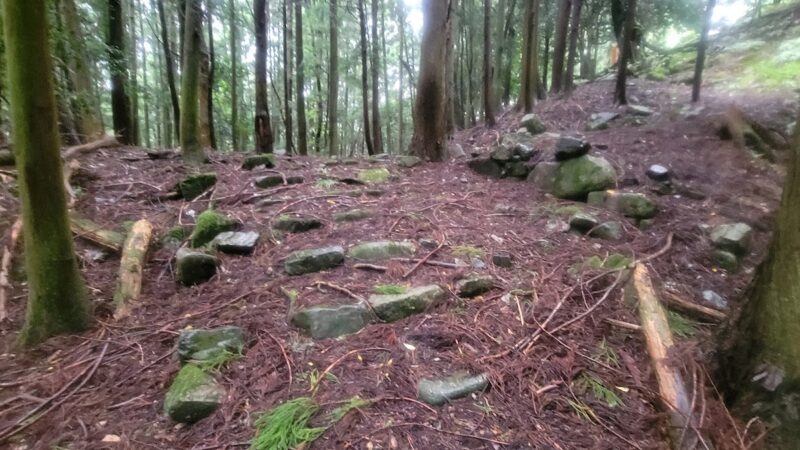
Currently, the most impressive remains at the Ōmizo Castle site are the rough-stone masonry walls remaining at the main enclosure. The small hill surrounded by the stone walls is the site of the keep base, conveying the grandeur of the castle at that time.
Nozura-zumi is a technique of stacking natural stones with minimal processing, and it was widely used from the Sengoku period to the Azuchi-Momoyama period. The stone walls of Omizo Castle are a valuable example of castle construction technology from this era and are attracting attention from castle researchers.
The height and scale of the stone walls suggest that Omizo Castle was not merely a small provincial castle, but an important strategic base for the Oda regime. The castle tower base offered a panoramic view of the surrounding area, and it is thought to have also served the function of monitoring water transport on Lake Biwa.
A Double Moat Defense System Utilizing an Inland Lake
The most distinctive feature of Omizo Castle is its water castle structure, which incorporated Otomegai-ike, an inland lake of Lake Biwa, as its outer moat. Located southeast of the main keep, Otomegai-ike was once an inland lake connected to Lake Biwa, and the castle cleverly incorporated this water area into its defense system.
According to old maps, the castle had the following structure:
- Inner Moat: A moat directly surrounding the castle, functioning as a water-filled moat.
- Outer Moat: A vast body of water utilizing Otomegai Pond, making it difficult for enemies to approach.
- Waterway Network: A network of waterways connecting the castle town and Lake Biwa served both for transporting supplies and for defense.
This double water moat system gave Omizo Castle extremely strong defenses against land attacks. At the same time, the use of water transport facilitated the supply of goods, making it a structure that could withstand long sieges.
Town Planning and Waterways of the Castle Town
The castle town of Omizo Castle is characterized by its systematically planned layout. The townscape, formed by relocating merchant houses and temples during the castle’s construction by Oda Nobusumi, further developed under the subsequent rule of the Wakebe clan.
The castle town was crisscrossed with waterways, which were used for securing water for daily life, transporting goods, and firefighting. Parts of this waterway network still remain today, and this is a major factor in its designation as a nationally important cultural landscape, known as the “Omizo Waterfront Landscape.”
The town layout was neatly arranged in a grid pattern, with samurai residences, merchant districts, and temple districts clearly separated. This planned urban design is a typical example of castle town formation from the late Sengoku period to the early Edo period, and is important material for urban history research.
Highlights of Omizo Castle Ruins: Remains that can be seen on-site
Stone Walls and Keep Base of the Main Enclosure
The most noteworthy feature when visiting Omizo Castle Ruins is the stone walls remaining at the main enclosure. It is conveniently located just a few minutes’ walk from JR Omi-Takashima Station, and is currently situated behind Takashima General Hospital.
The small hill surrounded by the stone walls is the site of the keep base, where the rough-hewn stone walls remain in good condition. This is a valuable opportunity to get up close to the stone walls and directly experience the stone-making techniques of the Sengoku period.
By observing the details, such as the way the stones were stacked, the selection of stones, and the treatment of the corners, you can appreciate the high level of castle-building technology of the time. Furthermore, by observing the surrounding terrain and the arrangement of the stone walls, you can understand the castle’s defensive structure.
Traces of Otomegai Pond and the Inner Lake
Otomegai Pond, located southeast of the main keep site, once formed a vast body of water as an inner lake of Lake Biwa. Although its former appearance has been lost due to land reclamation and other factors, its former state can be imagined from the topography and the arrangement of waterways.
Walking around Otomegai Pond, you can see subtle undulations in the terrain and traces of waterways, giving you a real sense that this functioned as the outer moat of the water castle. Comparing old maps with current maps while strolling will allow you to understand the structure of Oomizo Castle more deeply.
Waterways and Streetscape of the Castle Town
Around the site of Omizo Castle, the streetscape of a castle town dating back to the Edo period remains. Particularly noteworthy is the network of waterways that crisscross the town.
Clean water flows through the waterways, which are still in use today, and are integrated into the lives of the local residents. Remains such as stone-built waterways, bridges, and sluice gates also exist, conveying the waterside lifestyle of yesteryear.
Walking through the streets, one can feel the historical landscape of the castle town, with old merchant houses, temples, and samurai residences scattered throughout. The temple district, in particular, has a concentration of several temples, showing remnants of Nobusumi’s planned town development.
Omizo Waterside Landscape: Value as an Important Cultural Landscape
Designation as a Nationally Important Cultural Landscape
In 2015 (Heisei 27), the “Omizo Waterside Landscape” was designated as a Nationally Important Cultural Landscape. This recognition recognizes the high regard for the integrated cultural landscape, encompassing the former castle town surrounding the Omizo Castle ruins, the waterway network, the surrounding farmland, and the remains of an inland lake of Lake Biwa.
An Important Cultural Landscape refers to a landscape shaped by the lives, livelihoods, and local characteristics of the people in a region, and is indispensable for understanding the lives and livelihoods of the Japanese people. Omizo was recognized for its unique landscape, formed by the integration of the water castle, the castle town, and life along the waterfront.
Cultural Property Constituting the Japan Heritage Site “Lake Biwa and its Waterside Landscape”
The Omizo waterside landscape has also been selected as a cultural property constituting the Japan Heritage site “Lake Biwa and its Waterside Landscape – Water Heritage of Prayer and Life.” This comprehensive evaluation of the waterside cultural heritage remaining around Lake Biwa positions Omizo as an important example demonstrating the relationship between water transport on Lake Biwa and the lives of the people.
With its designation as a Japan Heritage site, the historical value of Omizo has gained nationwide recognition, and it is attracting attention as a tourist resource. Efforts are underway in the region to preserve this valuable cultural landscape while utilizing it for tourism promotion and regional revitalization.
Inheriting Waterside Life and Culture
The value of Omizo’s waterside landscape lies not only in the remaining historical buildings and ruins, but also in the fact that local residents still utilize the waterways in their daily lives, thus preserving the waterside culture.
The cleaning and maintenance of the waterways are carried out by local residents, playing a role in strengthening community bonds. Furthermore, houses along the waterways still use them as washing areas, demonstrating that traditional waterside life is alive and well.
This value as a “living cultural landscape” is what makes Omizo a special place, different from other castle towns.
Access and Tourist Information: A Guide to Visiting Omizo Castle Ruins
Access by Public Transportation
Access to Omizo Castle Ruins is very convenient. Located just a 2-3 minute walk from JR Kosei Line’s Omi-Takashima Station, visiting by train is highly recommended.
- Get off at JR Kosei Line Omi-Takashima Station and walk approximately 150 meters southeast.
- From Kyoto Station to Omi-Takashima Station: Approximately 50 minutes
- From Osaka Station to Omi-Takashima Station: Approximately 1 hour 30 minutes
Upon exiting the station, head right (southeast) and you will immediately see Takashima General Hospital. Behind it, you will see a small hill surrounded by stone walls; this is the site of Omizo Castle. Signposts are also installed, so you shouldn’t get lost even on your first visit.
Access by Car and Parking
If you are visiting by car, the following routes are convenient:
- Approximately 60 minutes from Meishin Expressway Kyoto East IC
- Approximately 40 minutes from Hokuriku Expressway Kinomoto IC
- Take National Route 161 (Kosei Road) towards Takashima city center
For parking, you can use public parking lots around Omi-Takashima Station or general parking spaces around the castle ruins. However, there is no dedicated parking lot right next to the castle ruins, so we recommend using the parking lot in front of the station and walking.
Combining a Visit with Nearby Tourist Attractions
When visiting the Omizo Castle Ruins, combining your visit with a visit to nearby tourist attractions will make your trip more fulfilling.
Omizo Waterfront Landscape Tour: A walking course along the waterways of the castle town, taking about 1-2 hours. A walking map can be obtained at the local tourist information center.
Shirahige Shrine: An ancient shrine famous for its large torii gate floating on Lake Biwa. Approximately 10 minutes by car from the Omizo Castle Ruins.
Kaizu-Osaki: A famous cherry blossom viewing spot on the shores of Lake Biwa. Approximately 600 cherry trees bloom here in spring. Approximately 15 minutes by car from the Omizo Castle Ruins.
Kutsuki Valley: A valley where you can enjoy the rich nature of the Hira Mountains. Approximately 30 minutes by car from the Omizo Castle Ruins.
Tourist Information Centers and Information Gatherings
Information about the Omizo Castle Ruins and surrounding tourist attractions can be obtained from the following:
- Biwako Takashima Tourism Association: A tourist information center is located inside Omi-Takashima Station, where you can obtain brochures and walking maps.
- Takashima City Tourism Information Website: You can check the latest event information and access information.
- On-site Information Boards: Detailed explanatory boards are installed around the castle ruins, allowing you to learn about the history and structure.
In particular, to gain a deeper understanding of the Omizo waterside landscape, participation in exploration groups and guided tours organized by the Tourism Association is recommended. Listening to explanations from local guides will allow you to gain a deeper understanding of the history and culture of Omizo.
Historical Background of Omizo Castle and its Surroundings
A Key Transportation Hub Since Ancient Times
The Omizo area has been an important transportation and logistics hub since ancient times. Located on the western shore of Lake Biwa, and situated on a route connecting the Sea of Japan with Nara and Kyoto (the capital at the time), a port was established, and it developed as a place where people and goods came and went.
In the Middle Ages, samurai groups that controlled this region rose to power, establishing economic and military superiority by controlling water transport. It was precisely because of this geographical and historical background that Oda Nobunaga built a castle in Omizo.
Lake Biwa Control Strategy under the Oda Regime
Oda Nobunaga prioritized control of Lake Biwa in his pursuit of unifying Japan. Lake Biwa is the largest lake in Japan, and controlling its water transport meant controlling the economy and military of the entire Kinki region. Nobunaga positioned his main castles around Lake Biwa:
- Azuchi Castle (Nobunaga’s own residence): Eastern shore of Lake Biwa
- Sakamoto Castle (Akechi Mitsuhide): Southwestern shore of Lake Biwa
- Nagahama Castle (Hashiba Hideyoshi): Northeastern shore of Lake Biwa
- Ōmizo Castle (Oda Nobusumi): Northwestern shore of Lake Biwa
These castles worked in conjunction with each other, forming a network that completely controlled Lake Biwa’s water transport. Ōmizo Castle played a crucial role in this strategy.
Long-Term Rule and Regional Development by the Wakebe Clan
After Wakebe Mitsunobu took control of Ōmizo during the Edo period, the Wakebe clan ruled the area for approximately 270 years until the Meiji Restoration. This long period of stable rule greatly contributed to the cultural development of Ōmizo.
Despite being the lord of a small domain, the Wakebe clan strived to improve the lives of their people and dedicated themselves to promoting industry and education. In particular, they encouraged commercial activities utilizing Lake Biwa’s water transport, and Omizo prospered as an economic center of the Lake Biwa western region.
The Wakebe clan also supported cultural activities, constructing and restoring many temples and shrines. Many of the temples remaining in Omizo today were developed during this period.
Efforts for the Preservation and Utilization of the Omizo Castle Ruins
Preservation Activities as a Historic Site
The Omizo Castle Ruins are designated as a historical site by Takashima City, and local government and residents are cooperating in preservation activities. Efforts are underway to create an environment where visitors can learn about history, including the maintenance of the stone walls, improvement of the surrounding environment, and the installation of information boards.
In recent years, archaeological excavations have been conducted at the castle ruins, leading to the discovery of new remains and clarification of the castle’s structure. These research results are published on information boards and in museums at the site, playing a role in widely communicating the historical value of Omizo Castle.
Regional Revitalization and Tourism Promotion
Following the designation of the area as an Important Cultural Landscape and a Japan Heritage site, regional revitalization efforts are becoming more active in Omizo. Community development utilizing historical resources is progressing, including the training of tourist guides, the development of walking courses, and the holding of events.
Particularly noteworthy is the “waterside landscape preservation activity” led by local residents. Activities such as cleaning waterways, planting flowers, and preserving traditional events are being carried out by residents themselves to protect and nurture the charm of the region.
These efforts go beyond mere tourism promotion, also reaffirming the region’s identity and strengthening community bonds.
Utilization as an Educational Resource
The Omizo Castle Ruins are also an important learning resource for local children. Local elementary and junior high schools conduct tours of the castle ruins and surveys of the waterside landscape as part of their local history studies, providing children with opportunities to learn about the history and culture of their own region.
Furthermore, the site is also used to host school trips and historical learning tours from outside the prefecture, making the Omizo Castle Ruins a widely utilized site for historical education. By actually visiting the castle ruins, touching the stone walls, and walking through the waterside townscape, you can experience living history that you can’t learn from textbooks.
Summary: The Charm and Significance of Visiting Omizo Castle Ruins
Omizo Castle Ruins in Takashima City, Shiga Prefecture, is a historically important castle built by Oda Nobusumi, nephew of Oda Nobunaga, with Akechi Mitsuhide in charge of the layout. Its unique structure as a water castle, utilizing Otomegai Pond, an inland lake of Lake Biwa, as its outer moat, is a valuable legacy that tells the story of Sengoku period castle construction techniques and Lake Biwa’s water transport control strategy.
The remaining rough-hewn stone walls, the waterway network of the castle town, and the townscape where life by the water thrives have been recognized as a nationally important cultural landscape and a Japan Heritage site, and their historical and cultural value is widely acknowledged.
Located just a few minutes’ walk from JR Omi-Takashima Station, Omizo Castle Ruins is easily accessible and worth visiting not only for history buffs but also as part of a Lake Biwa sightseeing trip. The impressive stone walls, the tranquility of the waterfront, and the townscape that has remained unchanged since the Edo period will allow you to experience the layered history that transcends time.
Visiting the Omizo Castle ruins is not simply about sightseeing a historical site; it’s an opportunity to learn about the relationship between Lake Biwa and the lives of the people, the historical role played by water transport, and the efforts of those who preserve and pass on the local culture. When you visit Shiga Prefecture, be sure to explore the Omizo Castle ruins and the surrounding waterfront scenery to experience the rich history and culture etched into this land.