Nagahama Castle (Kochi Prefecture, Kochi City) Complete Guide: A Thorough Explanation of the Site of Chosokabe Motochika’s First Battle
Located in Nagahama, Kochi City, Kochi Prefecture, Nagahama Castle is an essential historical site for understanding the Sengoku period of Tosa Province. This castle, the site of the “Battle of Tonomoto,” the first battle fought by the Sengoku warlord Chosokabe Motochika, has lost much of its remains, but its historical value remains undiminished.
This article provides comprehensive information useful for visitors to Nagahama Castle, from its historical background to local highlights and access methods.
Historical Background of Nagahama Castle
The Rule of the Motoyama Clan and the Establishment of the Castle
Nagahama Castle was under the control of the Motoyama clan, who held power in Tosa Province (present-day Kochi Prefecture) during the Sengoku period. It is said that the castle lord was Okubo Mimasa-no-kami. This castle was strategically located on Urado Bay and played a crucial role in monitoring maritime traffic and as a transportation route for supplies.
The Motoyama clan, as a powerful local lord in Tosa Province, was in fierce conflict with the Chosokabe clan. The power struggle between the two clans was for supremacy within Tosa Province, and Nagahama Castle was one of the front lines of this conflict.
The Incident of 1560: Food Supply Robbery
The incident that brought Nagahama Castle to the forefront of history was the food supply robbery that occurred in 1560. Food supplies sent by Chosokabe Kunichika (Motochika’s father) to Tanezaki Castle were intercepted by Motoyama soldiers en route.
Enraged by this provocative act, Kunichika decided to retaliate by attacking Nagahama Castle. He opted for a surprise night attack, launching a swift assault on Nagahama Castle. Caught off guard, the castle defenders were unable to offer sufficient resistance, and Nagahama Castle fell into the hands of the Chosokabe clan.
Even today, the valley located northwest of the castle hill is called “Yo-uchi-ga-tani” (Night Attack Valley), a reminder of this night attack.
Battle of Tonomoto: Chosokabe Motochika’s First Battle
Motoyama Army’s Counterattack
After losing Nagahama Castle, the Motoyama clan, upon receiving urgent news from the castle lord, launched a large counterattack led by Motoyama Shigetatsu. The Motoyama army advanced with the aim of recapturing Nagahama Castle, clashing with the Chosokabe army at Tonomoto (an area near Nagahama Castle).
This is the famous “Battle of Tonomoto.” This battle marked the memorable first battle for Chosokabe Motochika, who would later unify Tosa and become the ruler of Shikoku.
Motochika’s First Battle
Chosokabe Motochika, still a young warrior at the time, participated in this battle for the first time. It is said that Motochika fought under the command of his father, Kunichika, and achieved remarkable military success. This performance in his first battle is believed to have contributed to his later confidence as a military commander.
As a result of the Battle of Tonomoto, the Chosokabe army repelled the Motoyama army and successfully secured Nagahama Castle. This victory became a crucial stepping stone for the Chosokabe clan’s expansion of power within Tosa Province and marked a brilliant start to Motochika’s career as a Sengoku period warlord.
Historical Significance of the Battle
The Battle of Tonomoto holds significance beyond a simple battle for a single castle. This battle marked the beginning of the Chosokabe clan’s rise to superiority over the Motoyama clan, eventually paving the way for the unification of Tosa.
Furthermore, for Motochika personally, this successful first battle is believed to have led to his transformation from a gentle young man to a fierce warrior.
Structure and Remains of Nagahama Castle
Castle Location and Layout
Nagahama Castle was a mountain castle built on Shiroyama (a hill approximately 100 meters high) in the present-day Nagahama district of Kochi City. At the foot of the southern side are Sekkei-ji Temple and Hata Shrine, and the castle ruins are located on the mountain behind these temples and shrines.
As a mountain castle, Nagahama Castle is thought to have had a defensive structure that skillfully utilized the natural terrain. It is believed to have had various enclosures such as the Tsume (equivalent to the main keep) and the Ninodan (second enclosure), as well as defensive facilities such as vertical moats.
Current Status of Remains
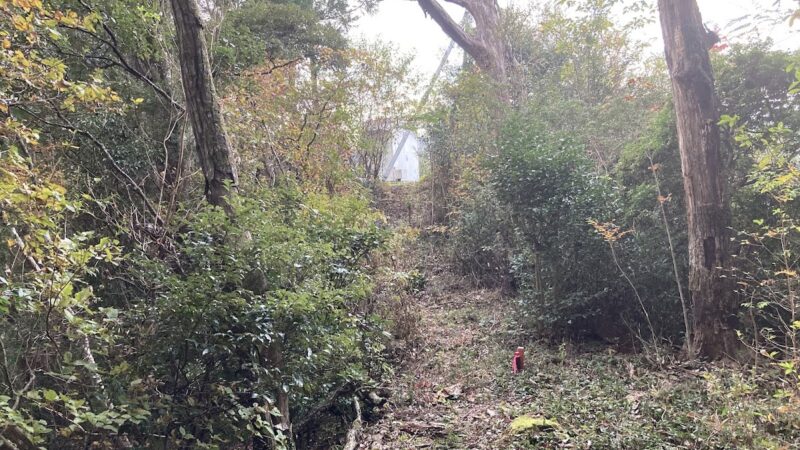
Unfortunately, most of the remains of Nagahama Castle no longer exist. The northern side of Shiroyama was extensively developed as the Tsukimigaoka housing complex after the war, so the remains of the northern half of the castle have almost completely disappeared.
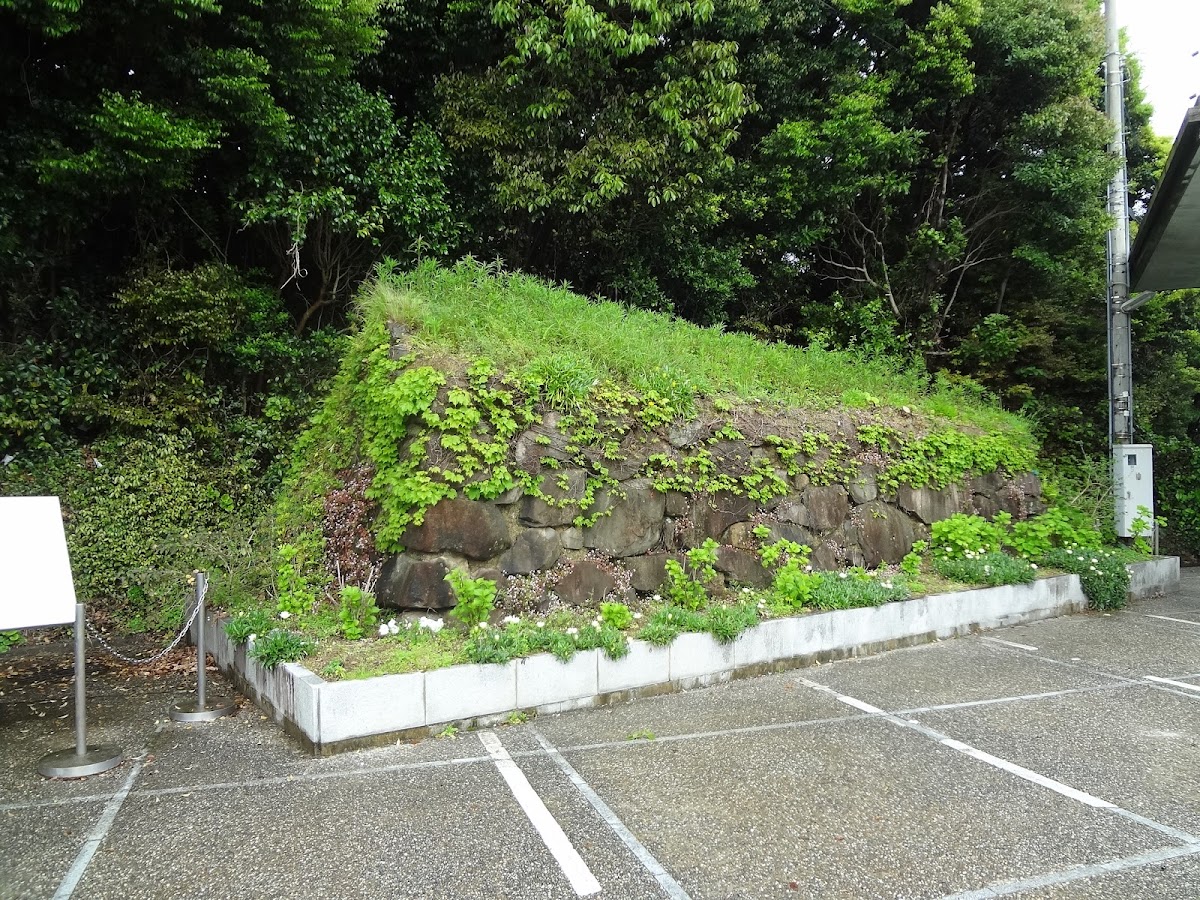
Behind Sekkei-ji Temple and Hata Shrine on the south side, there are said to be slight traces of the castle’s enclosures and undulations of the terrain, but it is difficult to confirm any clear remains. No remains of castle stone walls or buildings have been confirmed.
Yochigatani (Night Attack Valley)
The valley located northwest of the castle hill is still called “Yochigatani” (Night Attack Valley). This place name originates from a night attack operation carried out by Chosokabe Kunichika, and is a valuable historical trace that conveys the memory of the fierce battle of that time through the place name.
Although the topography has changed significantly due to housing development, this place name remains an important clue to the history of Nagahama Castle.
Highlights of Nagahama Castle Ruins
Sekkei-ji Temple
Sekkei-ji Temple is an important base when visiting the Nagahama Castle Ruins. This temple has deep ties to the Chosokabe clan and is known for housing the grave of Chosokabe Nobuchika, the eldest son of Chosokabe Motochika.
Sekkei-ji Temple has an information board about Nagahama Castle, where you can learn about the castle’s history. Looking up at the mountain behind the temple grounds, you can get a sense of the topography where the castle once stood.
Sekkei-ji Temple is also the 33rd temple of the Shikoku 88 Temple Pilgrimage, and is a historically significant temple visited by many pilgrims. Visiting it in conjunction with a visit to the Nagahama Castle ruins is highly recommended.
Hata Shrine
Alongside Sekkei-ji Temple, Hata Shrine is also an important spot serving as an entrance to the Nagahama Castle ruins. This shrine also has an information board about Nagahama Castle, indicating the path to the castle ruins.
Hata Shrine has long been revered as the local guardian shrine, and its quiet grounds are ideal as a starting point for a historical walk. A path leads from behind the shrine to the castle mountain, allowing you to feel the atmosphere of the castle ruins that still remain.
Grave of Chosokabe Nobuchika
Sekkei-ji Temple houses the grave of Chosokabe Nobuchika, the eldest son of Chosokabe Motochika. Nobuchika was a talented warrior who bore the weight of his father Motochika’s expectations, but he was killed in the Battle of Hetsugigawa while serving in Toyotomi Hideyoshi’s Kyushu campaign.
It is a historical twist of fate that Nobuchika’s grave is located in Nagahama, the same place where his father Motochika achieved victory in his first battle. When visiting the history of Nagahama Castle, be sure to stop by Nobuchika’s grave and reflect on the rise and fall of the Chosokabe clan.
View from the Castle Ruins
Although the area around the castle ruins is now a residential area, you can still see the view towards Urado Bay from the small remaining hill. The former lords of the castle must have also looked out over the sea from this spot, monitoring the movements of their enemies.
Standing here and imagining the view seen by the warriors of the Sengoku period will surely deepen your understanding of history.
Access Information
Access by Public Transportation
By Bus:
- Get off at the “Nagahama” bus stop on the Tosaden Kotsu bus line, and it’s about a 1-minute walk to Sekkeiji Temple and Hata Shrine.
- It’s about a 20-30 minute bus ride from JR Kochi Station.
- Since bus services are limited, it’s recommended to check the timetable in advance.
By Tram (Tosaden Kotsu):
- It’s a bit of a distance from the nearest tram stop, so using the bus is more convenient.
Access by Private Car
From Kochi City Center:
- Head south on National Route 56 towards Nagahama for about 15-20 minutes.
- There are some parking spaces around Sekkeiji Temple and Hata Shrine, but these are for temple and shrine visitors, so please avoid long-term parking.
- The surrounding area is residential, so street parking is strictly prohibited.
From Kochi Expressway:
- About 30 minutes from Kochi IC.
Address
Around 857 Nagahama, Kochi City, Kochi Prefecture (Use Sekkei-ji Temple and Hata Shrine as landmarks)
Points to Note When Visiting
- Since most of the castle ruins are now residential areas, please be considerate of the residents’ privacy.
- There are few clearly identifiable remains, so learning about the historical background beforehand will deepen your understanding.
- If walking on mountain paths, please prepare comfortable clothing and shoes.
- Don’t forget insect repellent in summer and warm clothing in winter.
Nearby Tourist Attractions
Urado Castle Ruins
Located approximately 5 kilometers northeast of Nagahama Castle, Urado Castle Ruins was an important castle that served as the base of operations for Chosokabe Motochika. After his first battle at Nagahama Castle, Motochika eventually unified Tosa Province and made Urado Castle his residence. Visiting both Nagahama Castle and Urado Castle will allow you to gain a deeper understanding of the history of the Chosokabe clan.
Katsurahama Beach
Katsurahama Beach, a representative scenic spot in Kochi Prefecture, is about a 15-minute drive from Nagahama Castle. It boasts numerous attractions, including a statue of Sakamoto Ryoma and the Katsurahama Aquarium. It’s an ideal spot to visit before or after visiting Nagahama Castle.
Kochi Castle
Kochi Castle, located in the heart of Kochi City, is a famous castle built by Yamauchi Kazutoyo during the Edo period. It’s a valuable castle with a surviving keep, and although it’s from a different era than Nagahama Castle, it’s essential for learning about Tosa’s castle culture.
Tanezaki Castle Ruins
The ruins of Tanezaki Castle, the site of the Nagahama Castle food supply robbery incident, are also an interesting spot for history buffs. While very few remains today, it’s worth visiting as a related location for understanding the history of Nagahama Castle.
Recommended Itinerary for Visiting Nagahama Castle
Half-Day Course
- Visit Sekkei-ji Temple and Check the Information Board (30 minutes)
- Visit Hata Shrine (15 minutes)
- Visit the Grave of Chosokabe Nobuchika (15 minutes)
- Stroll Around the Castle Ruins (30 minutes to 1 hour)
- Enjoy the Surrounding Scenery and Reflect on History (30 minutes)
Full-Day Course
A recommended plan is to visit the Nagahama Castle ruins in the morning, followed by a tour of surrounding tourist spots such as Urado Castle ruins and Katsurahama Beach. By visiting places associated with the Chosokabe clan, you can systematically understand the history of Tosa during the Sengoku period.
Historical Value and Modern Significance of Nagahama Castle
Importance in Chosokabe Motochika Research
Nagahama Castle occupies a very important position in Motochika research as it is the site of Chosokabe Motochika’s first battle. This historical site is essential for understanding the origins of Motochika’s rise as a Sengoku period warlord.
Understanding Tosa’s Sengoku History
The Battle of Nagahama Castle was a crucial turning point in understanding the historical flow of the conflict between the Motoyama and Chosokabe clans, and ultimately, the Chosokabe’s unification of Tosa. Studying the history of this castle leads to an understanding of the entire Sengoku period in Tosa.
Value as a Regional Historical Heritage Site
Although few remains exist, the Nagahama Castle ruins are an important historical heritage site for the region. The place name “Yo-uchi-ga-tani” (Night Attack Valley) and the information boards remaining at Sekkei-ji Temple and Hata Shrine are evidence of how the local people have cherished and passed down history.
Materials and Research on Nagahama Castle
Documentary Materials
Records of Nagahama Castle are found in military chronicles such as the “Chosokabe Motochika-ki” and “Tosa Monogatari.” These materials provide information about the Battle of Tonomoto and Motochika’s first battle.
Archaeological Survey
It is believed that some remains of the castle existed before the construction of the Tsukimigaoka housing complex, but development progressed before detailed archaeological surveys could be conducted. Even in the parts that remain today, no full-scale excavation has been carried out, so further research is anticipated.
Visitor Feedback
History enthusiasts who visited the Nagahama Castle ruins have commented, “Although there are few remains, I was moved to be standing on the site of Motochika’s first battle,” and “Visiting it together with Sekkei-ji Temple made me feel closer to the history of the Chosokabe clan.”
On the other hand, some have commented, “There are few signs, making it difficult to find the location,” and “It would be better if it were more well-maintained,” highlighting the need for future historical site development.
Summary
Nagahama Castle (Kochi City, Kochi Prefecture) is a historically important castle site, the stage for the first battle of the Sengoku period warlord Chosokabe Motochika. The Battle of Tonomoto in 1560 marked the beginning of Motochika’s career as a military commander and the first step in the Chosokabe clan’s unification of Tosa Province.
Although much of the castle’s remains have been lost, faint traces remain around Sekkei-ji Temple and Hata Shrine, and the place name “Yo-uchi-ga-tani” (Night Attack Valley) still conveys the fierce battle of that time. While there are few clear remains, standing on this site and reflecting on history allows you to feel the spirit of Tosa during the Sengoku period.
When visiting Nagahama Castle, learning about its historical background beforehand and visiting surrounding sites associated with the Chosokabe clan will provide a deeper historical experience. This historical site is a must-visit for anyone interested in the Sengoku history of Tosa or a fan of Chosokabe Motochika.
Nagahama Castle ruins lie dormant in a quiet residential area of Nagahama, Kochi City. There, the memory of the moment when a young Motochika first stood on the battlefield and began to shape history still lives on.