The Complete Picture of Akō Castle: A Thorough Explanation of the History, Features, and Highlights of the Famous Castle that Was the Setting for Chūshingura
Akō Castle, located in Akō City, Hyogo Prefecture, is a famous castle known as the setting for “Chūshingura,” one of the most famous events in Japanese history. Designated a national historic site in 1971, it remains a symbol of Akō City, attracting many history buffs and tourists. This article provides a thorough explanation of Akō Castle from every angle, from its historical background to its architectural features and highlights.
What is Akō Castle?: Basic Information and Overview
Akō Castle is a coastal flatland castle located in Kaminakaya, Akō City, Hyogo Prefecture, also known as “Kariya Castle” and “Ōtaka Castle.” Built on the delta at the mouth of the Chikusa River, this castle has a unique layout that takes advantage of its location facing the Harima Sea, and employs a very rare modified concentric structure in the history of early modern castles.
The castle grounds stretched 2,844 meters and featured a sturdy construction with 10 corner turrets and 12 gates. The main keep and second bailey had a concentric layout, while the relationship between the second and third baileys was a stepped layout, a characteristic complex structure designed based on practical military principles.
Current State of Akō Castle Ruins
The current Akō Castle ruins have well-preserved baileys (main keep, second bailey, and third bailey), and the main gate and main gate have been restored. The second bailey garden, in particular, is designated a national scenic spot and is a valuable historical site that conveys the appearance of a daimyo garden from the Edo period. The castle grounds have been developed into a park and are a popular place of relaxation for citizens.
History of Akō Castle: From Construction to Abandonment
Origins of Castles in Akō
Castles have existed in the Akō region since ancient times. It is believed that a small castle already existed in the mid-15th century, and during the Sengoku period, figures such as Oka Mitsuhiro and Oka Buzen-no-kami served as castle lords. It is thought that the castle of this era was located in a different place than the present-day Akō Castle.
Asano Naganao’s Arrival and the Construction of Akō Castle
The history of the current Akō Castle begins in 1645 (Shōhō 2), when Asano Naganao was appointed to Akō from the Kasama Domain in Hitachi Province. Asano Naganao was the grandson of Asano Nagamasa, a well-known retainer of Toyotomi Hideyoshi, and became a daimyo ruling the Akō region with a 53,000 koku domain.
In 1648 (Keian 1), Asano Naganao submitted a petition to the shogunate for the construction of a castle, and construction began that same year. This is famous as a nationally rare castle whose construction began after the Genna Peace, that is, during the peaceful Edo period under the shogunate. The construction of the castle took 13 years and was completed in 1661 (Kanbun 1).
The Designer and the Influence of Military Thought
The designer of Akō Castle was Kondō Masazumi (Kondō Genpachi), a retainer of the Akō Domain and a military science instructor. Kondō Masazumi was a military scholar who had studied the Kōshū-ryū school of military science, and he devised a layout that emphasized practical defensive functions.
Notably, it is said that the layout of the Ninomaru Gate’s entrance was influenced by Yamaga Sokō, a prominent military scholar of the time. Yamaga Sokō was invited to the Akō Domain and stayed in Akō for a period. His military thought greatly influenced the defensive design of Akō Castle, and rational structures anticipating actual combat can be seen throughout.
The Asano Family’s Rule and the Akō Incident
The Asano family ruled Akō for three generations. The first lord was Asano Naganao, the second Asano Nagatomo, and the third Asano Naganori. The Akō Incident, which occurred in 1701 (Genroku 14), and later became widely known as “Chūshingura,” is what etched the name of Akō Castle and the Asano family into Japanese history.
The third lord, Asano Naganori, attacked Kira Yoshinaka with a sword in the Matsu-no-Ōrōka corridor of Edo Castle and was ordered to commit seppuku (ritual suicide) that same day. As a result, the Akō domain was abolished, and Akō Castle was confiscated by the shogunate. On December 14, 1702 (Genroku 15), 47 Akō loyalists, led by Ōishi Kuranosuke Yoshio, raided Kira’s residence and avenged their lord’s death—a story deeply etched in the hearts of the Japanese people.
The Nagai and Mori Families
After the Ako Incident, Nagai Naotaka took control of Ako Castle, followed by the Mori family, who ruled until the Meiji Restoration. The Mori family was transferred from Shinano Province and ruled Ako, a small domain of 20,000 koku, until the Meiji era. During this period, no major renovations were undertaken, and the structure largely remained unchanged from the Asano family era.
Ako Castle After the Meiji Restoration
After the Meiji Restoration, Ako Castle was abolished under the castle demolition order, and many buildings were dismantled. The main palace, buildings on the keep’s base, many turrets and gates were lost, and the castle grounds were sold off to private individuals. However, the basic structure of the castle, including the stone walls and moats, was well preserved and designated a national historic site in 1971.
Subsequently, Ako City undertook restoration projects, and major structures such as the main gate and the main gate were restored. In 2002, the Honmaru Garden and Ninomaru Garden were restored, and in 2006, it was selected as one of Japan’s Top 100 Castles, reaffirming its historical value.
Characteristics of Akō Castle: A Rare Castle Layout with a Modified Contour
What is a Modified Contour Layout?
The most distinctive feature of Akō Castle is its “modified contour layout,” a very rare castle layout in the history of early modern castles. Typical castle layouts include the “contour layout,” where the Ninomaru and Sannomaru are arranged concentrically around the Honmaru (main keep), the “tiered layout,” where they are arranged in a stepped pattern, and the “linear layout,” where they are arranged in a straight line.
At Akō Castle, the relationship between the Honmaru and Ninomaru is a contour layout, while the relationship between the Ninomaru and Sannomaru is a tiered layout, resulting in a unique structure that combines these elements. This complex layout is thought to have been devised to maximize defensive advantages and reflects the military philosophy of Yamaga Sokō.
Location as a Coastal Flatland Castle
Akō Castle was built as a coastal flatland castle on the delta at the mouth of the Chikusa River, facing the Harima Sea. This location had several strategic intentions. Firstly, its seafront location facilitated the transportation of goods, particularly advantageous for the distribution of salt, a specialty product of Akō. Secondly, it provided a natural barrier against attacks from the sea, allowing for a concentration of defense on the land side.
The north and west sides of the castle were protected by moats utilizing the flow of the Chikusa River, while the south side faced the Harima Sea. A land-based defensive line was constructed on the east side, creating a robust defensive system centered around the main gate.
Design Based on Practical Military Strategy
The design of Akō Castle reflects the practical military philosophy of the Kōshū-ryū school of military strategy. The castle gates (koguchi) have complex structures, incorporating ingenious designs to effectively prevent enemy intrusion. In particular, the entrance to the Ninomaru Gate adopted a sophisticated defensive structure called a masugata koguchi (square-shaped entrance) under the guidance of Yamaga Sokō.
The arrangement of the stone walls was also carefully calculated, designed to eliminate blind spots. The placement of the corner turrets was also strategic, planned to monitor and defend every part of the castle. A major characteristic of Akō Castle is that, despite being built in a peaceful era, it was designed with a rational philosophy that anticipated actual combat.
Castle Scale and Structure
The Akō Castle’s baileys extended 2,844 meters and featured 10 corner turrets and 12 gates. The Honmaru (main bailey) housed the lord’s residence, the Honmaru Goten (main palace), while the Ninomaru (second bailey) concentrated the domain’s administrative functions. The Sannomaru (third bailey) was lined with samurai residences, forming a castle town.
Although a keep was never built, a keep base existed, on which turrets were erected. This reflects the decreased military necessity of the castle keep during the peaceful Edo period.
Highlights of Akō Castle: Restored Buildings and Remains
Honmaru and Honmaru Palace Site
The Honmaru was the central part of Akō Castle and housed the Honmaru Palace, the residence of the feudal lord. While the palace building itself no longer exists, the foundation stones remain, and a marker indicating the floor plan has been installed. The Honmaru Palace was divided into an outer and inner section; the outer section contained the shoin (study) and ataimeijo (reception room) where the lord conducted official duties, while the inner section housed the lord’s private quarters.
In 2002, the Honmaru Garden was restored, recreating the appearance of a daimyo garden from the Edo period. It is a pond-centered strolling garden where visitors can enjoy the beautiful scenery of each season.
Honmaru Gate (Restored)
The Honmaru Gate, the main gate to the Honmaru, was restored in 1996. This gate, in the Korean-style, presents a beautiful contrast between its white walls and black tiles. Stone walls extend on both sides of the gate, clearly demonstrating the characteristics of Edo-period castle architecture.
Otemon Gate and Ote Sumiyagura (Reconstructed)
The Otemon Gate, the main entrance to Akō Castle, was restored in 1992. It features a masugata-koguchi (square-shaped entrance) structure and is characterized by a double defensive line consisting of a Korean-style gate and a turret gate. Upon entering the Otemon Gate, there is a wide masugata space, designed to restrict enemy movement.
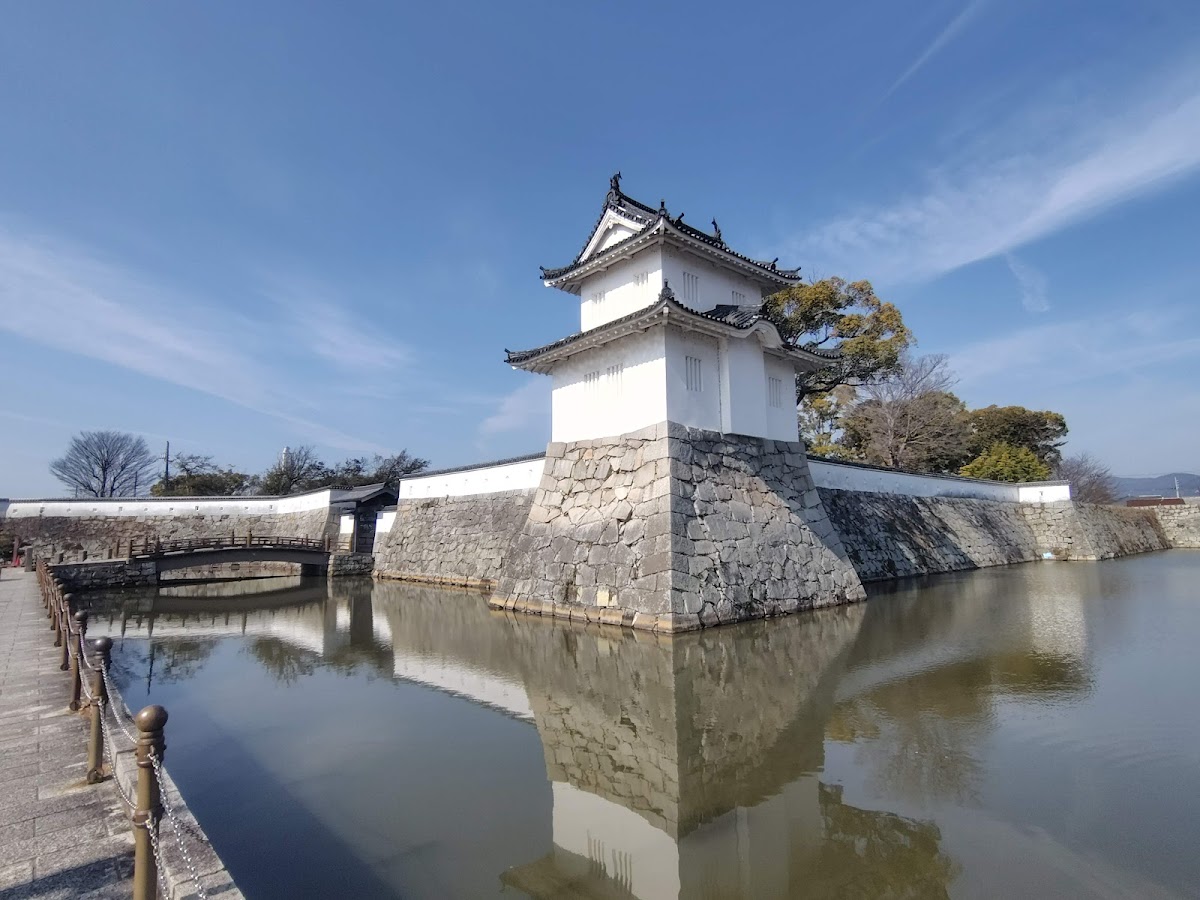
Near the Otemon Gate, the Ote Sumiyagura (corner turret) has also been restored. The beautiful white-walled two-story turret evokes its former appearance. From this turret, one could see the entire castle town, making it an important defensive point.
Ninomaru Garden (National Scenic Spot)
The Ninomaru Garden is a particularly valuable historical site among the highlights of Akō Castle. Designated a National Place of Scenic Beauty in 1987, the garden was restored and refurbished in 2002.
This garden is a daimyo garden with a pond and strolling paths, believed to have been created during the Asano family’s era. Visitors can enjoy various landscapes while walking around the pond, with beautifully arranged stonework and plantings. From the garden, one can see the stone walls and turrets of the main keep, creating a beautiful landscape where the castle and garden are integrated.
The Ninomaru Garden is open from 9:00 AM to 4:30 PM (last entry at 4:00 PM), and is open to the public except during the New Year holidays. Guided tours by volunteer guides familiar with the garden are available on weekends and holidays.
Castle Tower Base
Although Akō Castle never had a castle tower, a magnificent castle tower base remains in the northwest corner of the main keep. Climbing this base offers not only a panoramic view of the castle grounds but also a view of Harima Bay and the city of Akō. The stone walls of the castle tower base are a valuable historical structure demonstrating the high level of stonework techniques of the time.
Stone Walls and Moat
The stone walls of Akō Castle are an important historical structure that conveys the techniques of the early Edo period. A highly advanced technique called “san-gi-zumi” (a type of stonework) was used, and the corner sections of the stone walls are particularly beautifully finished. The height of the stone walls varies depending on the location, but the highest point reaches approximately 8 meters.
The moat surrounding the castle is also well-preserved, and the inner moat around the main keep, in particular, presents a beautiful sight when filled with water. The moat is over 30 meters wide in its widest places, giving a real sense of its large scale as a defensive structure.
Kondō Genpachi Residence Site Nagaya Gate
Within the castle grounds, the Nagaya Gate, built on the site of the residence of Kondō Masazumi (Kondō Genpachi), the architect of Akō Castle, is preserved. This gate is a valuable historical structure as a gate of a samurai residence from the Edo period and holds special significance as a building associated with the architect of Akō Castle.
Akō Castle as a Place Associated with the Akō Forty-Seven Ronin
The Stage of Chūshingura
Akō Castle is an important setting in the story of “Chūshingura.” On March 19th, 1701 (Genroku 14), news arrived at Akō Castle that Asano Naganori had attacked Kira Yoshinaka in the Matsu-no-Ōrōka corridor of Edo Castle.
Within the castle, council meetings regarding the fate of the domain were held daily, centered around the chief retainer, Ōishi Kuranosuke Yoshio. Faced with the crucial decision of whether to surrender or defend the castle, it was ultimately decided to abide by the shogunate’s ruling and surrender the castle on April 19th.
Ōishi Kuranosuke and the Akō Forty-Seven Ronin
After the surrender of Akō Castle, Ōishi Kuranosuke moved to Yamashina, but he never abandoned his desire to avenge his lord. On December 14, 1702 (Genroku 15), Oishi Kuranosuke and 47 other Ako samurai raided Kira’s mansion in Edo, successfully achieving their goal.
This incident deeply moved the people of Edo and became the subject of Kabuki and Joruri plays, continuing to be recounted to this day as “Chushingura.” Ako Castle, as the starting point of this story, is etched in the hearts of many.
Facilities Related to the Samurai within the Castle
Within and around Ako Castle, there are numerous historical sites related to the Ako samurai. These include the site of Oishi Kuranosuke’s residence, Oishi Shrine (a shrine dedicated to the Ako samurai), and Kagakuji Temple (the family temple of the Asano family and the samurai). Tourist routes visiting these sites associated with the samurai have been established.
Every year on December 14th, the “Ako Gishi Festival” is held, attracting many tourists from all over Japan. The procession of loyal retainers parades through the city, and the area around Akō Castle becomes very lively.
Access and Tourist Information for Akō Castle
Transportation Access
Access by Train
- Approximately 20 minutes on foot from JR Banshū-Akō Station
- Approximately 10 minutes by “Yuranosuke” (community bus) from JR Banshū-Akō Station, get off at “Akō Castle Ruins” bus stop.
Access by Car
- Approximately 10 minutes from Sanyo Expressway Akō Interchange
- Approximately 25 minutes by car from JR Aioi Station
Parking
- Free parking available around Akō Castle Ruins (approximately 50 spaces)
- During peak tourist season and the Gishi Festival, it can get crowded, so using public transportation is recommended.
Opening Hours and Admission Fee
Areas other than Honmaru and Ninomaru Gardens
- Open all day (free)
Honmaru and Ninomaru Gardens
- Opening hours: 9:00 AM – 4:30 PM (Last entry at 4:00 PM)
- Closed: New Year’s holidays (December 28th – January 4th)
- Admission Fee: Free
Notes on Castle Grounds
For the protection of cultural properties and the safety of visitors, pets and bicycles are prohibited in the following areas within Akō Castle:
- Honmaru Area
- Ninomaru Garden
- Other designated areas
When visiting the castle, please observe these rules and appreciate the historical site.
Volunteer Guides
Akō Castle Ruins offers guided tours by volunteer guides, mainly on weekends and holidays. If you would like to learn more about the history and highlights of Akō Castle, we highly recommend using a guide. Guides are free, but advance reservations are recommended.
Contact Information
- Akō City Board of Education, Cultural Properties Division
- Akō Tourism Association
Nearby Tourist Attractions
Ōishi Shrine
Ōishi Shrine, located adjacent to the east side of Akō Castle, is a shrine dedicated to Ōishi Kuranosuke and the 47 Akō loyalists, as well as Asano Naganori. Within the shrine grounds is the Gishi Treasure Hall, which displays the loyalists’ relics and related materials, allowing visitors to learn more about the history of Chūshingura. ### Hanagakuji Temple
Hanagakuji Temple, the family temple of the Asano clan, houses the graves of Asano Naganori and the loyal retainers. Wooden statues of the retainers are enshrined in the main hall, and various artifacts related to them are preserved. In the tranquil atmosphere of the temple, one can reflect on the spirit of the loyal retainers.
Akaho City Historical Museum
Located west of Akaho Castle, the Akaho City Historical Museum offers a comprehensive overview of Akaho’s history and culture. A variety of exhibits are available, including models and reconstructions of Akaho Castle, materials related to the Akaho loyal retainers, and the history of Akaho’s salt industry.
Akaho Misaki Cape
Located about 15 minutes by car from Akaho Castle, Akaho Misaki Cape is a scenic spot offering panoramic views of the Harima Sea. Designated as part of the Seto Inland Sea National Park, it is particularly known for its beautiful sunsets. There are also hot spring facilities, making it an ideal place to conclude your sightseeing.
The Cultural Value of Akō Castle
Significance of National Historic Site Designation
Akō Castle ruins were designated a National Historic Site in 1971. This designation indicates that Akō Castle occupies an important position in the history of Japanese castles. Its high historical value was recognized for being one of the few castles built after the Genna Peace, its unique layout (a modified concentric style), and the reflection of Yamaga Sokō’s military philosophy.
Selection as one of Japan’s Top 100 Castles
In 2006, Akō Castle was selected as one of Japan’s Top 100 Castles by the Japan Castle Association (No. 60). This means that Akō Castle is recognized nationwide as a representative castle of Japan. The Top 100 Castles stamp can be obtained at the Akō City Historical Museum and the reception at the Akō Castle main gate.
Selection as one of Japan’s Top 100 Castles
In 2006, Akō Castle was selected as one of Japan’s Top 100 Castles (No. 60) by the Japan Castle Association. This signifies that Akō Castle is recognized nationwide as a representative castle of Japan. The Top 100 Castles stamp can be obtained at the Akō City Historical Museum and the reception at the Akō Castle main gate. ### National Scenic Spot Designation of Ninomaru Garden
Akō Castle’s Ninomaru Garden was designated a National Scenic Spot in 1987. As a daimyo garden from the early Edo period, it is a valuable cultural asset that conveys landscape gardening techniques and aesthetic sensibilities to the present day. Through restoration and maintenance, its original appearance has been revived, inspiring visitors.
Efforts for the Preservation and Maintenance of Akō Castle
History of the Restoration Project
Since its designation as a National Historic Site, Akō City has continuously worked on the preservation and maintenance of the Akō Castle ruins. Beginning with the restoration of the Ōtemon Gate in 1992, the Honmaru Gate was restored in 1996. In 2002, the restoration and maintenance of the Honmaru Garden and Ninomaru Garden were completed, completing the main attractions of Akō Castle.
These restorations were carried out based on archaeological excavations, ancient documents, and historical drawings, aiming to reproduce the Edo period appearance as faithfully as possible.
Future Development Plans
Akō City plans to continue developing the Akō Castle ruins. The restoration of unrestored turrets and gates, repair of stone walls, and maintenance of landscaping within the castle grounds are being considered. Furthermore, plans include introducing new exhibition methods utilizing digital technology and promoting barrier-free access, striving to allow more people to experience the charm of Akō Castle.
Citizen Participation Initiatives
Citizen participation is essential for the preservation and utilization of Akō Castle. Citizens are involved in various ways, such as volunteer guide activities, cleaning activities, and event organization. A system is also in place to support development projects through donations to the “Akō Castle Ruins Development Fund,” allowing citizens and Akō Castle fans nationwide to support the development work.
Summary: Experience the Charm of Akō Castle
Akō Castle is not only famous as the setting for the Chūshingura (The Tale of the Forty-Seven Ronin), but also holds an important position in the history of Japanese castles. It boasts a unique layout with a modified concentric design, a practical design reflecting the military philosophy of Yamaga Sokō, and beautifully restored gardens, offering numerous attractions. The remains of the castle, including the main keep, the second keep garden, the main gate, the stone walls, and the moat, all preserve the appearance of the Edo period, allowing visitors to feel the romance of history. Furthermore, as a place associated with the Ako Forty-Seven Ronin, Ako Castle offers a great opportunity to experience the spirit of loyalty of Oishi Kuranosuke and the other loyal retainers.
When visiting Hyogo Prefecture, be sure to visit Ako Castle and experience its history and culture. You can enjoy the beauty of each season: cherry blossoms in spring, lush greenery in summer, vibrant autumn leaves, and tranquility in winter. Ako Castle is an irreplaceable place for gaining a deep understanding of Japanese history and culture.