Myokenji Castle: The Complete Story of the Phantom Castle that Became Toyotomi Hideyoshi’s Kyoto Base
What is Myokenji Castle?
Myokenji Castle was a castle built in Kyoto in 1583 by Toyotomi Hideyoshi. The year after the Honnoji Incident, Hideyoshi, advancing his unification of Japan, developed this castle as a political base in Kyoto. It played a crucial role as the administrative center of Kyoto until the completion of Jurakudai Palace in 1586.
Located near present-day Nijo Aburakoji in Nakagyo Ward, Kyoto City, southeast of the former Nijo Castle, the castle was built on the site of the relocated Myokenji Temple, a renowned Nichiren Buddhist temple. This is how the name “Myokenji Castle” originated. While historical records don’t clearly state what it was called at the time, it became known by this name in later generations.
Historical Background of Myokenji Castle Construction
Political Situation After the Honnoji Incident
On June 2, 1582 (Tensho 10), when Oda Nobunaga was killed by Akechi Mitsuhide in the Honnoji Incident, the political situation in Kyoto changed dramatically. Hashiba Hideyoshi, who defeated Mitsuhide at the Battle of Yamazaki, established his position as the de facto successor to the Oda family after the Kiyosu Conference.
In 1583 (Tensho 11), Hideyoshi defeated Shibata Katsuie at the Battle of Shizugatake and established Osaka Castle as his base. However, he strongly recognized the need for a firm base in Kyoto in order to advance his unification of Japan. Kyoto remained the political and cultural center where the imperial court resided, and securing influence there was essential for establishing Hideyoshi’s authority.
Relocation of Myokenji Temple and Construction of the Castle
The site where Hideyoshi built his castle was once home to Myokenji Temple, the first Nichiren Buddhist temple established in Kyoto by Nichizo Shonin during the late Kamakura period. Myokenji Temple had moved locations several times since its founding, but during the Sengoku period, it was located at this site of Nijō-Aburakoji.
In September of Tenshō 11 (1583), Hideyoshi relocated Myokenji Temple to Ogawa-Teranouchi (present-day Kamigyo Ward), seized the site, and began construction of a new castle. This forceful approach was a manifestation of Hideyoshi’s determination to establish his control over Kyoto. Myokenji Temple still exists today in Ogawa-Teranouchi, continuing the tradition as a Nichiren Buddhist temple in Kyoto.
Structure and Scale of Myokenji Castle
Function as a Castle
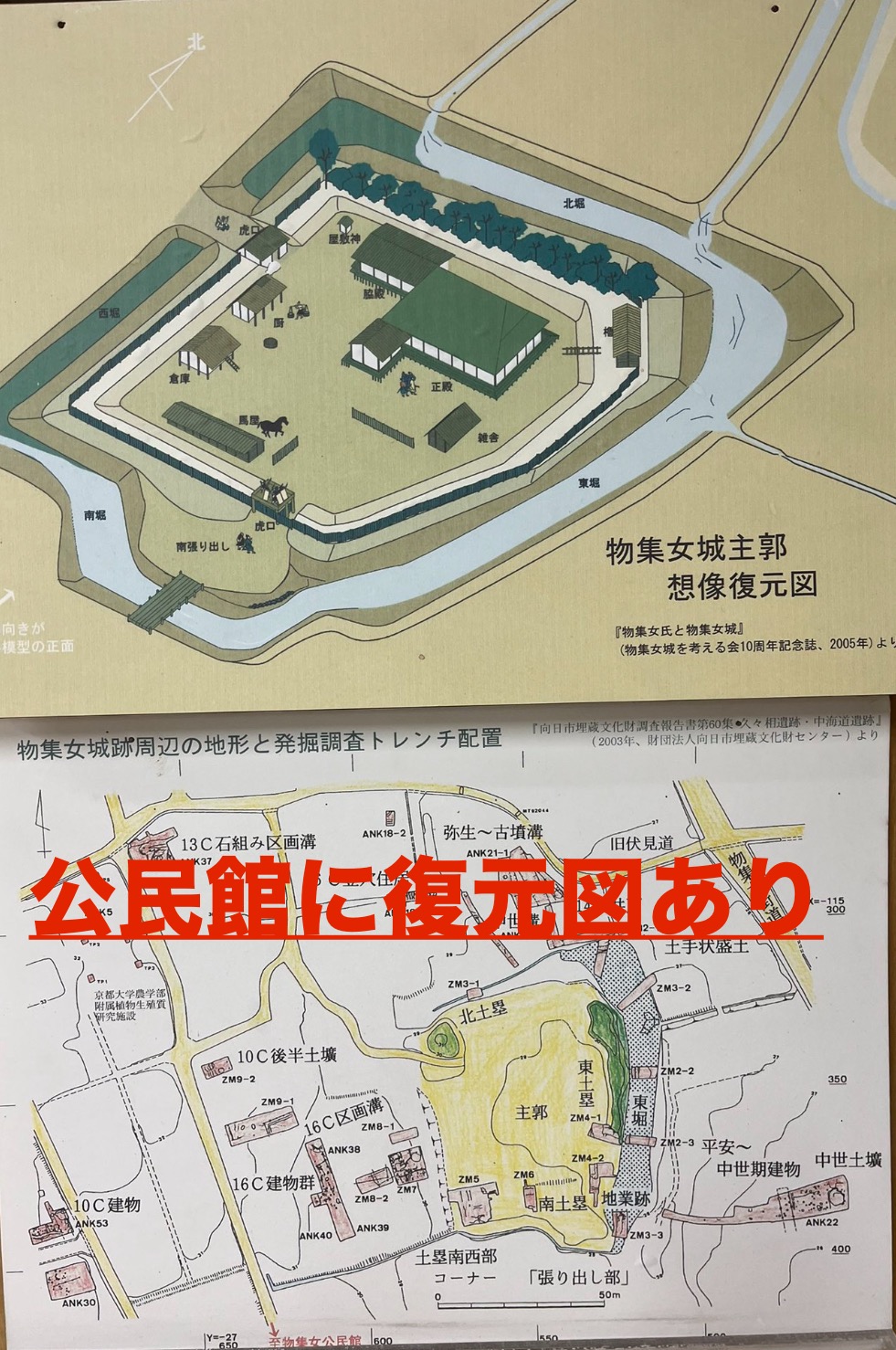
Myokenji Castle was not merely a residence, but a full-fledged castle surrounded by a moat. According to historical records, a castle tower was also constructed, indicating its character as a military base with defensive capabilities.
While detailed records of the castle’s size are lacking, it is believed to have been smaller than the later Jurakudai Palace, yet equipped with sufficient facilities for conducting the administration of Kyoto’s affairs. Located in the heart of Kyoto at Nijō-Aburakōji, it held a strategic position controlling a key transportation hub.
Castle Layout and Structure
Unfortunately, detailed drawings and records of the specific building layout of Myōkenji Castle do not exist. However, based on the architectural style of castles at the time and the structure of the later Jurakudai Palace, it is thought to have had the following configuration:
- Honmaru: Hideyoshi’s residence and the main building where he conducted his administrative affairs.
- Moat: Defensive structure surrounding the castle.
- Tenshukaku: The symbolic high-rise building of the castle.
- Retainer’s Residences: Living quarters for senior retainers, including Maeda Gen’i.
Because the castle was constructed in a relatively short period, it is presumed that large-scale civil engineering work was not carried out, and the structure utilized the existing terrain.
Maeda Gen’i and the Management of Myokenji Castle
Maeda Gen’i’s Role
Myokenji Castle was normally the residence of Maeda Gen’i (1539-1602), who handled the administration of Kyoto. Maeda Gen’i was originally a Buddhist monk, but served Oda Nobunaga and later became a retainer of Hideyoshi.
In 1585 (Tensho 13), he was appointed to the rank of Junior Fifth Rank, Lower Grade, and Chamberlain, and played an important role as one of the Five Commissioners of the Toyotomi regime. He held a position similar to that of Kyoto Shoshidai (Kyoto Deputy), responsible for negotiations with the Imperial Court, maintaining public order in Kyoto, and managing temples and shrines, thus providing practical support for Hideyoshi’s rule over Kyoto.
Hideyoshi’s lodgings during his visits to Kyoto
Although Hideyoshi himself was based at Osaka Castle, he used Myokenji Castle as his lodgings when he visited Kyoto. It functioned as a base for Hideyoshi’s activities in Kyoto, including visits to the Imperial Court, negotiations with court nobles, and participation in important political events in Kyoto.
For approximately three years, from 1583 to 1586, Myokenji Castle continued to play a crucial role as Hideyoshi’s political center in Kyoto. During this period, Hideyoshi rose to the pinnacle of power, becoming Regent (Tensho 13) and receiving the Toyotomi surname (Tensho 14).
Transition to Jurakudai
History of Jurakudai Construction
In 1586 (Tensho 14), Hideyoshi began construction of a new, large-scale castle, Jurakudai (or Jurakutei), north of Myokenji Castle in Uchino (present-day Kamigyo Ward). It is believed that this was due to Myokenji Castle becoming too small and the need for a magnificent castle befitting his authority as regent.
Jurakudai was incomparably larger than Myokenji Castle and became a symbol of Hideyoshi’s power, adorned with lavish decorations. It functioned as a political and cultural center, even receiving Emperor Go-Yōzei’s visit in 1587 (Tensho 15).
The Aftermath of Myokenji Castle
There are no clear records of what happened to Myokenji Castle after the completion of Jurakudai. Maeda Gen’i continued to be in charge of Kyoto’s affairs, but it is thought that he moved his residence to the area around Jurakudai.
The buildings and facilities of Myokenji Castle may have been dismantled or repurposed, but the details are unknown. Having served its purpose for a short period of just over three years, the castle was eventually absorbed into the urban landscape of Kyoto and disappeared.
Historical Significance of Myokenji Castle
Establishment of Hideyoshi’s Control over Kyoto
Myokenji Castle played a crucial role in Hideyoshi’s establishment of control over Kyoto. Using this castle as a base, Hideyoshi deepened his relationship with the imperial court, penetrated the aristocratic society, and ultimately rose to the highest position of regent (Kanpaku).
The act of constructing a castle, even to the point of relocating temples, demonstrated Hideyoshi’s authoritarian character and his strong will to control Kyoto. It can be said that his Kyoto policies during this period formed the foundation of the later Toyotomi regime.
A Stepping Stone to Jurakudai
Myokenji Castle also served as a preparatory stage for the construction of the more magnificent Jurakudai Palace. It is believed that through his experience at this castle, Hideyoshi learned about the nature of castles in Kyoto and how to build relationships with the imperial court and the nobility.
Although its use was short-lived, Jurakudai Palace may never have been built without Myokenji Castle. In that sense, this castle occupies an important chapter in Hideyoshi’s history of rule over Kyoto.
Current Status of Myokenji Castle Site
Status of Remains
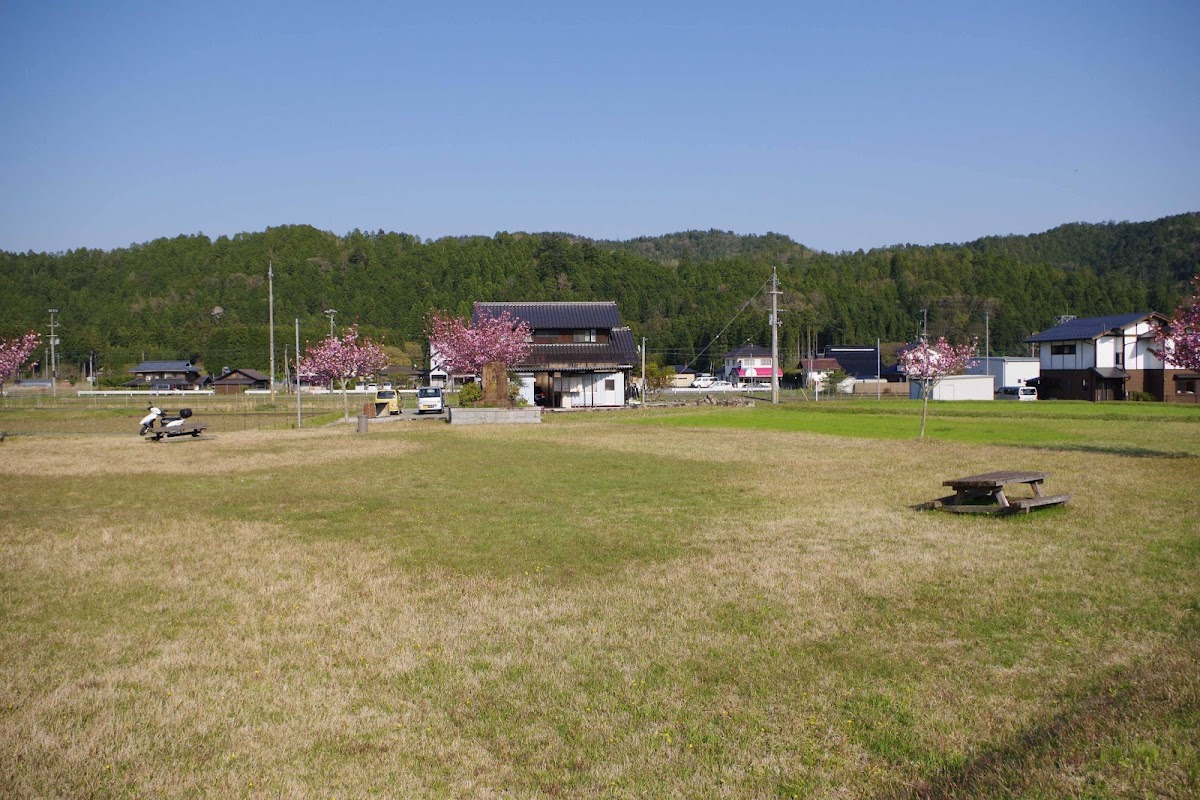
Unfortunately, no remains of Myokenji Castle exist today. This is due to the short period during which the castle existed and the significant changes in the topography caused by subsequent urban development in Kyoto. No traces of moats, stone walls, or building foundations have been found, and archaeological investigations have not been sufficiently conducted.
Currently, the area around the castle site is an urban area lined with residential and commercial facilities, making it difficult to imagine its former appearance. However, there is a possibility that some remnants of the past remain in place names and town layouts.
Stone Monument and Information Board
To mark the existence of Myokenji Castle, a stone monument and information board inscribed with “Site of Toyotomi Hideyoshi’s Myokenji Castle” are located in front of the gate of Saifuku-ji Temple in Kojō-machi, Nakagyō-ku, Kyoto City. This monument, erected by Kyoto City, provides a concise explanation of the castle’s history.
The monument is located a few minutes’ walk from Exit 2 of Nijōjōmae Station on the Tozai Subway Line, southeast of the former Nijō Castle and the ANA Hotel. It’s also about a 10-minute walk from Nijō Old Castle (the site of Ashikaga Yoshiteru’s residence), making it a convenient stop when touring Kyoto’s castle historical sites.
Access Information
Location: Kojō-machi, Nakagyō-ku, Kyoto City, Kyoto Prefecture (in front of Seifuku-ji Temple)
Transportation Access:
- Approximately 3 minutes on foot from Exit 2 of Nijōjō-mae Station on the Tozai Subway Line
- Approximately 5 minutes on foot from the Horikawa Marutamachi bus stop
- Approximately 10 minutes on foot from Nijō Station (JR and Subway)
Related Historical Sites in the Surrounding Area:
- Nijō Castle (World Heritage Site): Approximately 5 minutes on foot
- Nijō Old Castle Ruins (Ashikaga Yoshiteru’s Residence): Approximately 10 minutes on foot
- Myōken-ji Temple (Relocated Site): Approximately 15 minutes by city bus
Although only a stone monument remains and no other structures exist, this historical site is worth visiting for a deeper understanding of Kyoto’s history.
Myōken-ji Castle and the History of Kyoto Castles
Changes in Castles in Kyoto
For a long time, Kyoto was a city centered around the Imperial Palace, the residence of the Emperor, and few samurai castles were built there. However, from the Muromachi period onward, samurai strongholds began to be established in the area, including the shogun’s residence, Muromachi-dono (Hana no Gosho), and Ashikaga Yoshiteru’s Nijo Gosho (Nijo Old Castle).
Myokenji Castle is a castle that belongs to this lineage and was a symbol of the new power Hideyoshi established in Kyoto. Myokenji Castle occupies an important position in the history of Kyoto’s castles, which continues with Jurakudai and then Nijo Castle built by Tokugawa Ieyasu.
Relationship with Nijo Castle
Nijo Castle, now a World Heritage Site, was built by Tokugawa Ieyasu in 1603. It is located in close proximity to Myokenji Castle, approximately 500 meters northwest, and shares the commonality of being a center of samurai rule in Kyoto.
Interestingly, both are related to the place name “Nijo,” indicating that this area was a politically important location in Kyoto. The transition from Myokenji Castle to Nijo Castle can be seen as symbolic of the transition from the Toyotomi regime to the Tokugawa regime.
Historical Materials and Research on Myokenji Castle
Major Historical Materials
While historical materials concerning Myokenji Castle are limited, descriptions can be found in the following documents:
- ‘Kanemi-kyo Ki’: A diary of court noble Yoshida Kanemi, recording Hideyoshi’s movements.
- ‘Tamon-in Nikki’: A diary of a monk in Nara, touching upon the situation in Kyoto.
- ‘Tokitsune-kyo Ki’: A diary of court noble Yamashina Tokitsune, describing the relationship between Hideyoshi and the Imperial Court.
These materials allow us to learn about the existence of Myokenji Castle and Hideyoshi’s movements during his visit to Kyoto, but currently, there is little detailed information about the castle’s structure and size.
Future Research Topics
Many aspects of Myokenji Castle remain unresolved.
- The exact extent and structure of the castle
- The reality of the keep (did it really exist?)
- The people involved in its construction and the construction period
- The transition process to Jurakudai
- Land use after the castle’s dismantling
Future archaeological excavations and the discovery of new historical materials are expected to reveal more about the true nature of Myokenji Castle.
Visiting Myokenji Castle
Points for Historical Site Tours
When visiting the Myokenji Castle ruins, keeping the following points in mind will allow you to experience history more deeply.
- Confirm the location of the stone monument: Carefully read the stone monument and information board located in front of the gate of Saifuku-ji Temple.
- Observe the surrounding topography: Walk around the area, imagining the moats and castle grounds of the time.
- Relationship with Nijo Castle: View the Myokenji Castle ruins from nearby Nijo Castle and consider the relationship between the two.
- Visit Myokenji Temple (the relocated site): Visit the current Myokenji Temple (Kamigyo Ward) to learn about the temple’s history.
Nearby Attractions
The area around the Myokenji Castle ruins offers many tourist spots where you can experience Kyoto’s history.
- Nijo Castle (former imperial villa): The Tokugawa family’s Kyoto base, a World Heritage Site.
- Kyoto Imperial Palace: The Emperor’s residence, open to the public.
- Shinsen-en Garden: A garden dating back to the Heian period, visited by Hideyoshi.
- Nijo Jinya: An Edo period merchant house, an Important Cultural Property.
Spending a day visiting these historical sites will allow you to experience Kyoto’s political history.
Summary
Myokenji Castle was a base in Kyoto built by Toyotomi Hideyoshi during his path to unifying Japan. Although it was only used for a short period of just over three years, from 1583 to 1586, it played a crucial role in establishing Hideyoshi’s control over Kyoto.
Currently, no remains of the castle exist, only a stone monument commemorating its existence. However, without this castle, Hideyoshi’s appointment as regent and the construction of Jurakudai Palace might never have happened. Myokenji Castle is an indispensable site for understanding the history of Kyoto’s castles and the formation of the Toyotomi regime.
When visiting Kyoto, why not visit this little-known castle site along with other famous historical sites such as Nijo Castle? Standing before the monument and reflecting on the fact that this was once the base of a powerful ruler will give you a deeper appreciation of Kyoto’s history.