Makishima Castle: The Complete Picture of Ashikaga Yoshiaki’s Last Stronghold, the Site of the End of the Muromachi Shogunate
Makishima Castle (also spelled Makishima-jo, or Makishima Castle) was a Japanese castle located in Makishima-cho, Uji City, Kyoto Prefecture. It holds an extremely important position in Japanese history as the site of the “Battle of Makishima Castle,” where Ashikaga Yoshiaki, the last shogun of the Muromachi Shogunate, raised an army against Oda Nobunaga and ultimately suffered a defeat. This article comprehensively explains the history of Makishima Castle, from its origins to its strategic value and up to the present day.
Location and Geographical Characteristics of Makishima Castle
A Castle on an Island in Ogura Pond
Makishima Castle was built on an island in Ogura Pond, a huge pond that once existed near Uji in southern Yamashiro Province. Ogura Pond was a vast body of water, approximately 4 kilometers from east to west and 3 kilometers from north to south, and Makishima was one of the natural islands within it.
The use of the character for “island” in the castle’s name directly reflects this geographical characteristic. Its location surrounded by water was extremely advantageous defensively, creating a natural stronghold that made enemy attacks difficult. It was also a strategic point controlling the Uji River’s water transport and, situated at a key transportation hub connecting Kyoto and Nara, made it a militarily and economically important base.
Current Topography and Environmental Changes
The area around Makishima is now completely land, due to the Ogura Pond reclamation project (implemented from 1933 to 1941). The former water area has been transformed into farmland and residential areas, making it difficult to find any trace of its former island status. However, the place names and subtle topographical undulations still offer a glimpse of the former waterside landscape.
History of Makishima Castle: From Construction to Abandonment
Construction in the Kamakura Period and the Makishima Clan
Regarding the initial construction of Makishima Castle, there is a tradition that it was built in 1221 (Jokyu 3) during the Kamakura period by Nagase Saemon. Subsequently, the Makishima clan (various spellings exist, such as Makishima, Makishima, Makishima, and Makishima) established themselves in this area and developed the castle.
The Makishima clan ruled this area for generations as a powerful local lord in the Minami-Yamashiro region. The place name Makishima is also thought to originate from the name of this family.
Makishima Castle in the Muromachi Period
During the Muromachi period, Makishima Castle attracted the attention of the shogunate and powerful shugo daimyo as a strategically important location close to Kyoto.
In 1499 (Meiō 8), the conflict between Hatakeyama Yoshinari and Hatakeyama Masanaga intensified, leading to the Battle of Uji-Makishima. In this battle, Makishima Castle fell to Hosokawa Masamoto’s forces, and subsequently became the residence of the Hosokawa clan. During this period, Makishima Castle frequently served as the stage for political and military conflicts around Kyoto, demonstrating its high strategic value.
Sengoku Period: The Era of Makishima Akimitsu
During the Sengoku period, Makishima Akimitsu is known as the castle’s lord. He served as a retainer of the Muromachi Shogunate (a group of samurai directly under the Shogun) and resided at Makishima Castle.
As a local influential figure and a samurai serving the Shogunate, Makishima Akimitsu maintained a certain level of power in the region. His presence is a crucial reason why Ashikaga Yoshiaki later relied on this castle.
The Battle of Makishima Castle: The Stage of the End of the Muromachi Shogunate
The Conflict Between Ashikaga Yoshiaki and Oda Nobunaga
In 1573 (Genki 4, later renamed Tensho 1), relations between Ashikaga Yoshiaki, the 15th Shogun of the Muromachi Shogunate, and Oda Nobunaga had deteriorated decisively.
Initially, Nobunaga sought to legitimize his unification of Japan by supporting Yoshiaki in Kyoto and placing him as Shogun. However, as Nobunaga’s power gradually increased, Yoshiaki lost real power, and the conflict between the two deepened. Yoshiaki formed a coalition against Nobunaga and called upon various daimyo to attack him, but suffered defeat after defeat.
The Siege of Makishima Castle
On July 3, 1573 (Genki 4), Ashikaga Yoshiaki finally raised an army against Oda Nobunaga. Yoshiaki decided to rely on Makishima Akimitsu, a retainer of the shogunate, and take refuge in Makishima Castle.
Yoshiaki chose Makishima Castle for several reasons. Firstly, it was a natural stronghold surrounded by water. Secondly, it was relatively close to Kyoto, making communication easy when needed. Thirdly, Makishima Akimitsu was a trustworthy retainer and the castle lord.
Oda Nobunaga’s swift response
Upon learning of Yoshiaki’s uprising, Nobunaga reacted immediately. He led a large army into Kyoto and completely surrounded Makishima Castle. Nobunaga’s army, with overwhelming force, surrounded the castle and demanded Yoshiaki’s surrender.
While Makishima Castle, surrounded by water, was suitable for defense, it was not suited for a long siege. With his supply lines cut off and no prospect of reinforcements, Yoshiaki realized the futility of continuing to fight.
Yoshiaki’s Surrender and the Effective End of the Muromachi Shogunate
The Battle of Makishima Castle was decided in a short time. Faced with an overwhelming difference in military strength and a strategic disadvantage, Ashikaga Yoshiaki surrendered to Oda Nobunaga. Nobunaga expelled Yoshiaki from Kyoto and forced him to retreat to Wakae Castle in Kawachi Province (present-day eastern Osaka Prefecture).
With Yoshiaki’s defeat and expulsion from Kyoto, the Muromachi Shogunate is considered to have effectively ended. While Yoshiaki formally retained the title of Shogun, he completely lost his real power and became a wandering shogun, moving from place to place. Makishima Castle thus became etched in Japanese history as the site of the end of the Muromachi Shogunate.
The Fate of Makishima Castle After the Battle
Castle Commanders Under the Oda Clan
After Ashikaga Yoshiaki’s departure, Makishima Castle came under the control of Oda Nobunaga. Nobunaga appointed his senior retainer, Ban Naomasa, as the castle commander. Ban Naomasa was a trusted general of Nobunaga and was appointed to maintain the strategic value of Makishima Castle.
Later, Ido Yoshihiro also served as a castle commander. These commanders were responsible for the important tasks of defending southern Kyoto and managing water transport on the Uji River.
Toyotomi Hideyoshi’s Construction of Fushimi Castle and the Loss of Strategic Value
In 1592 (Bunroku 1), Toyotomi Hideyoshi began construction of the magnificent Fushimi Castle in Fushimi, Kyoto. The construction of Fushimi Castle marked a decisive turning point for Makishima Castle.
Fushimi Castle was built on an even more advantageous location and as a much larger fortress than Makishima Castle. As a result, the strategic value of Makishima Castle rapidly declined, and it became unnecessary to maintain it.
Diversion of the Uji River’s Course and its Use in the Makishima Embankment
When constructing Fushimi Castle, Toyotomi Hideyoshi undertook large-scale civil engineering projects. As part of this, the course of the Uji River was diverted. During this construction, the stone walls and building materials of Makishima Castle were used in the construction of the “Makishima Embankment.”
The Makishima Embankment was built to control flooding of the Uji River and secure a new course, and the stone walls of Makishima Castle were repurposed as its foundation. Thus, Makishima Castle was completely dismantled and abandoned. The castle’s remains were incorporated into the Makishima Embankment, and its appearance as a castle was completely lost.
Structure and Characteristics of Makishima Castle
Basic Structure as a Flatland Castle
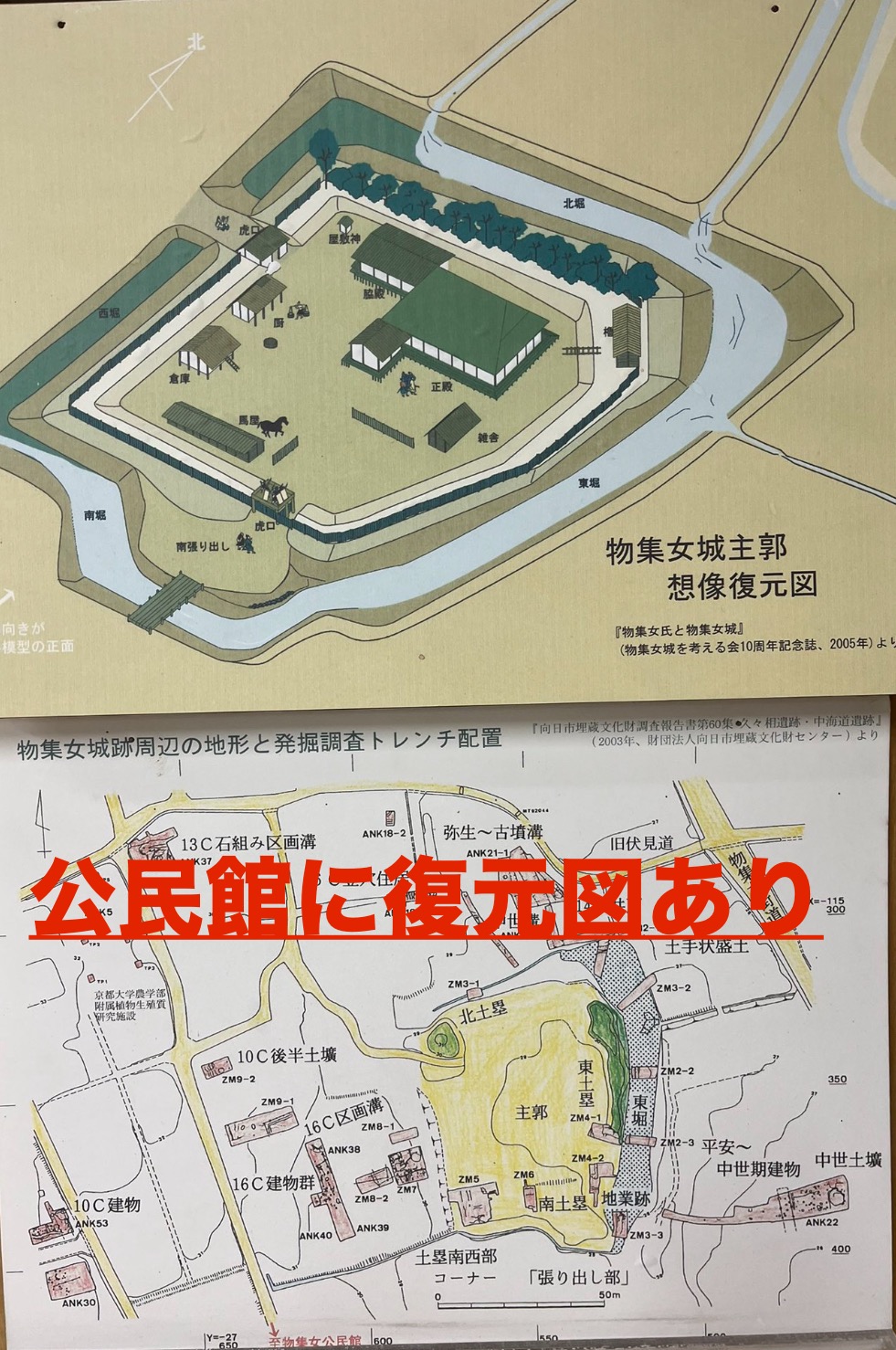
Makishima Castle was a typical flatland castle. It made the most of its location on an island in Ogura Pond, utilizing the moat as a natural defensive structure.
While the specific structure of the castle is unclear due to the lack of surviving remains, it is believed to have had the following characteristics based on contemporary records and similar castles:
- Arrangement of the main and second baileys: The main bailey was located in the center of the island, with other baileys such as the second bailey surrounding it.
- Utilization of moats: Ogura Pond itself served as an outer moat, and it is possible that waterways and moats were also constructed within the pond.
- Earthworks and fences: Defenses were not limited to stone walls, but also utilized earthworks and wooden fences.
- Watchtowers and gates: Watchtowers and gates were placed at key locations to strengthen defense and surveillance.
Presence of stone walls
Records indicate that stone walls existed at Makishima Castle, and that they were later repurposed for the Makishima Embankment. For a castle of the late 16th century, the presence of stone walls was relatively advanced, indicating the importance of the castle and the economic power of its lord.
However, it is presumed that Makishima Castle was not a castle entirely constructed of stone walls like Oda Nobunaga’s Azuchi Castle, but rather a partially stone-walled structure, using stone walls only in important areas.
A Strategic Point for Water Transport and Transportation
The greatest feature of Makishima Castle lay in its location. It controlled water transport on the Uji River, and the land route connecting Kyoto and Nara passed nearby. This strategic location at a transportation hub enhanced the strategic value of Makishima Castle.
Its advantageous position in all aspects—transportation of supplies, movement of troops, and transmission of information—was the reason why many warlords, from the Makishima clan to Ashikaga Yoshiaki, valued this castle.
Current Site of Makishima Castle: Remains and Visitor Information
Makishima Park and Monument
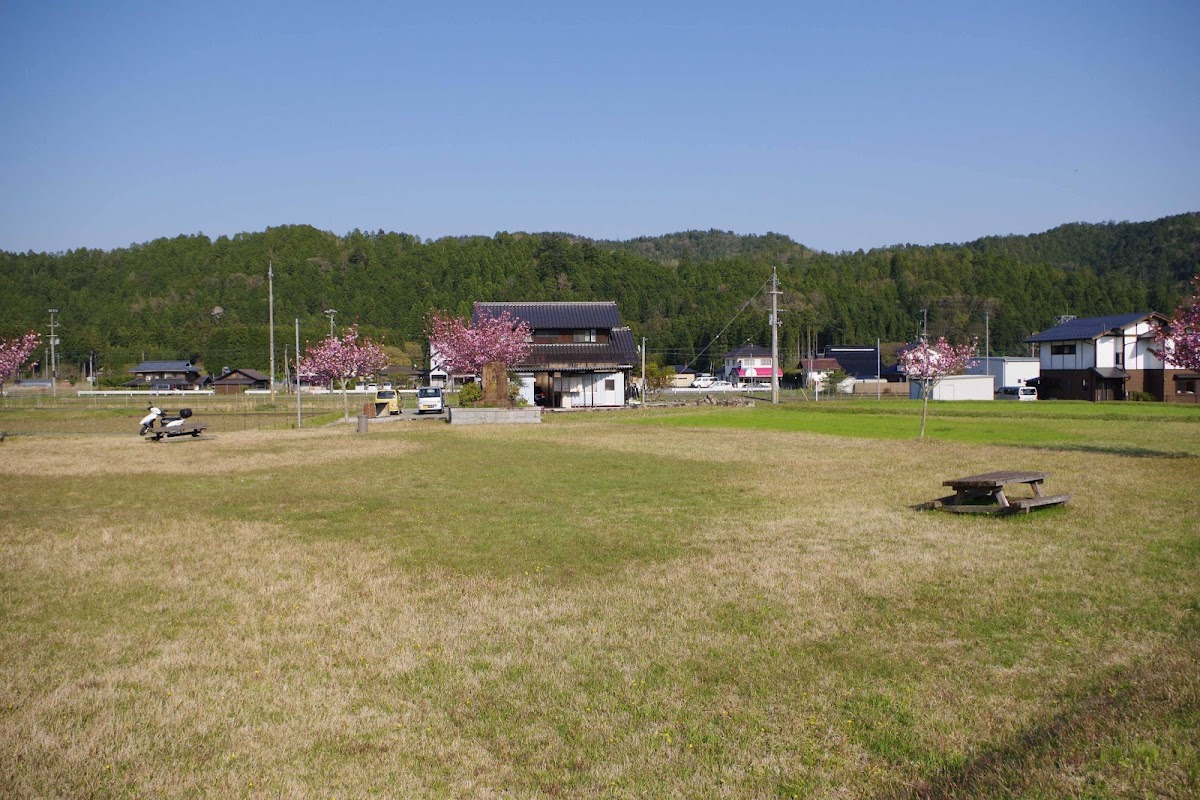
Currently, Makishima Park has been developed on the site of Makishima Castle. Unfortunately, since the castle’s remains were completely lost during the construction of Fushimi Castle, it is not possible to see moats, stone walls, or traces of buildings.
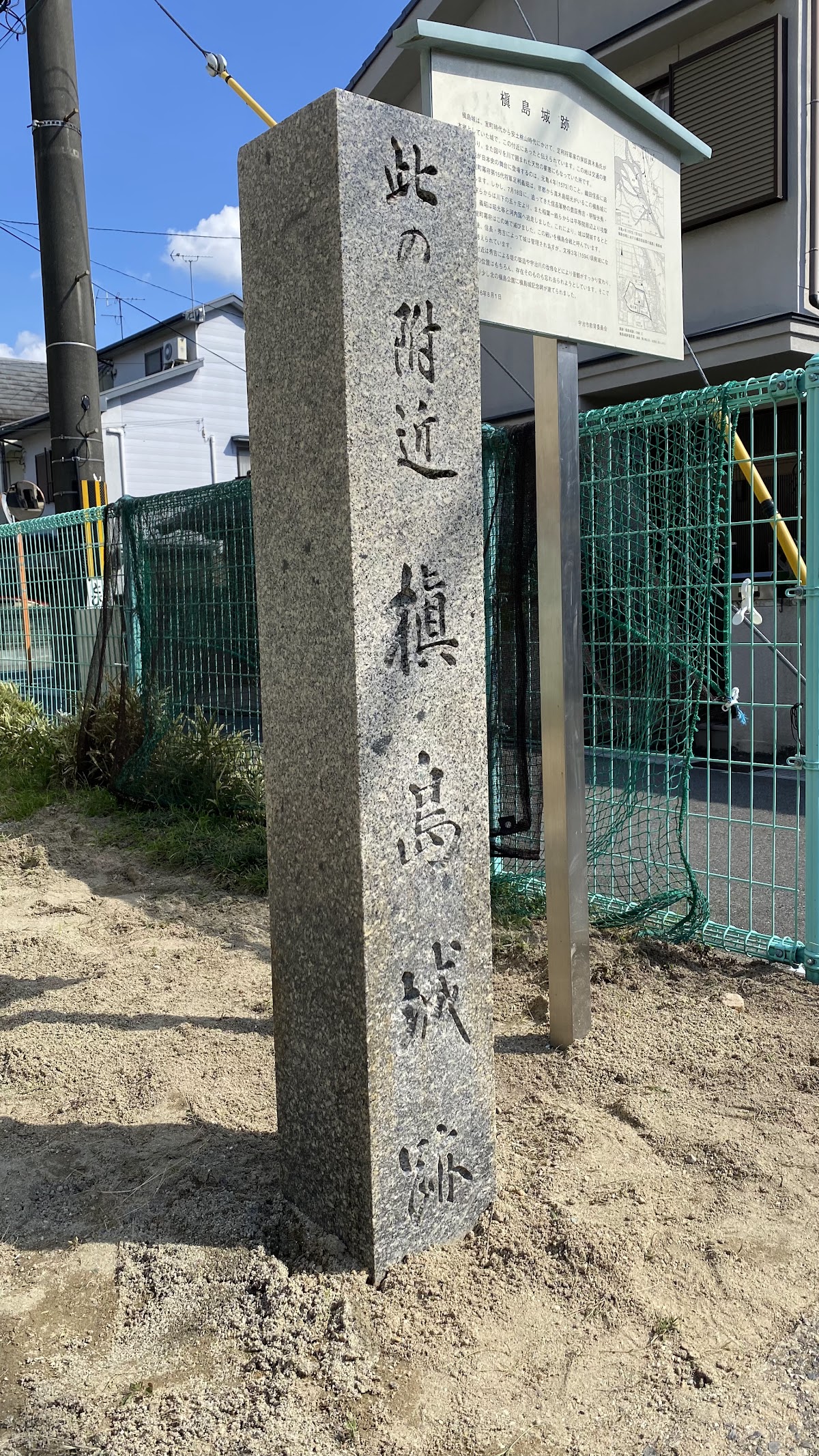
Within the park stands a stone monument marking the site of Makishima Castle, signifying its historical significance as the stage for the end of the Muromachi Shogunate. The monument stands quietly in a corner of the park, evoking a sense of history in visitors.
Surrounding Historical Landscape
The area around the Makishima Castle ruins is now a quiet residential and farmland area. While it’s difficult to discern traces of the former Ogura Pond, subtle topographical undulations and the arrangement of waterways allow us to imagine the landscape of yesteryear.
The Uji River still flows nearby, a testament to the region’s long history of deep connection with water. Furthermore, a portion of the Makishima Embankment remains, a valuable historical relic that incorporates repurposed stonework from Makishima Castle.
Access Information
Access by Public Transportation:
- From JR Nara Line “Uji Station”: Approximately 15 minutes on foot
- From Keihan Uji Line “Uji Station”: Approximately 20 minutes on foot
- From Kintetsu Kyoto Line “Okubo Station”: Approximately 25 minutes on foot
While all stations are within walking distance, access from Uji Station is the most convenient. Head southeast from Uji Station, passing through a residential area, and you will arrive at Makishima Park.
Access by Car:
Approximately 5 minutes from the Keiji Bypass “Uji Higashi IC,” or approximately 15 minutes from the Meishin Expressway “Kyoto Minami IC.” There is no dedicated parking lot around the park, but nearby coin-operated parking lots are available.
Address: Makishima-cho, Uji City, Kyoto Prefecture
Notes for Visitors
Although Makishima Castle Ruins have been developed into a park, there are no remaining castle structures, so the sights to see as a castle site are limited. Please note the following points when visiting:
- No Remains: No remains such as moats, stone walls, or building foundations remain.
- Stone Monument and Information Board: The main points of interest are the stone monument and information board explaining the history.
- Combine with Nearby Sightseeing: Uji City has many tourist attractions such as Byodo-in Temple and Ujigami Shrine, so combining your visit with these is recommended.
- Historical Imagination: Enjoy the site by using your imagination to picture the castle’s former appearance and the Battle of Makishima Castle.
Related Historical Sites Around Makishima Castle
Historical Sites in Uji City
When visiting Makishima Castle Ruins, we recommend also visiting other historical sites in Uji City:
Byodo-in Phoenix Hall: A World Heritage Site known for its design on the 10-yen coin. Approximately 2 kilometers northwest of Makishima Castle.
Ujigami Shrine: Registered as a World Heritage Site as the oldest shrine architecture in Japan. Approximately 2.5 kilometers northwest of Makishima Castle.
Uji River: An important river that contributed to the strategic value of Makishima Castle. It still maintains a beautiful landscape today.
Fushimi Castle Ruins
The ruins of Fushimi Castle, which was the direct cause of the abandonment of Makishima Castle, are also worth visiting for historical interest. Currently, Fushimi Momoyama Castle (a replica keep) stands on the site, located approximately 5 kilometers north of Makishima Castle.
The Impact of Makishima Castle on Japanese History
Symbol of the Fall of the Muromachi Shogunate
The most important historical significance of Makishima Castle is that it was the stage for the end of the Muromachi Shogunate. With the defeat of Ashikaga Yoshiaki, the Muromachi Shogunate, which lasted for approximately 240 years, effectively came to an end.
This event not only marked the end of one regime, but also a crucial turning point in the transition from the medieval to the early modern period. This was a symbolic event in the process of the samurai government’s transformation from a feudal system centered on the shogun to a powerful unified government.
Oda Nobunaga’s Path to Unifying Japan
The victory at the Battle of Makishima Castle was a major step for Oda Nobunaga toward unifying Japan. It was also the moment when Nobunaga’s policy of unifying Japan by force, without relying on the authority of the shogun, became clear.
After this, Nobunaga steadily expanded his power through events such as the burning of Mount Hiei and the Battle of Nagashino. Yoshiaki’s defeat at Makishima Castle was a crucial milestone in Nobunaga’s unification of Japan.
Towards the End of the Sengoku Period
The Battle of Makishima Castle was a crucial battle in the process of the Sengoku period coming to an end. After this battle, the path to the establishment of unified governments, which continued under Oda Nobunaga, Toyotomi Hideyoshi, and Tokugawa Ieyasu, was opened.
Although it was a short, decisive battle at a small castle, its historical impact is immeasurable, and it should be remembered as a major turning point in Japanese history.
Current Status and Challenges of Makishima Castle Research
Limitations of Archaeological Investigation
Almost no archaeological excavations have been conducted on Makishima Castle. This is because the castle’s remains were completely destroyed during the construction of Fushimi Castle, and the topography itself has been drastically altered by the reclamation of Ogura Pond.
The area around present-day Makishima Park is lined with residential areas and public facilities, making large-scale excavations difficult. Therefore, we must rely on inferences from historical documents to understand the castle’s specific structure and size.
Research Based on Historical Documents
Research on Makishima Castle is primarily based on historical documents. Attempts continue to clarify the castle’s location, size, and historical background using records from the Sengoku period such as the “Shinchō Kōki,” Edo period geographical records, and maps.
In recent years, research has progressed to more accurately pinpoint the former appearance of Ogura Pond and the location of Makishima Island through the digitization of old maps and the analysis of topographic data.
Future Research Possibilities
With the development of GIS (Geographic Information System) and 3DCG technologies, it is becoming possible to conduct reconstructive research on castles where no remains exist, by combining historical documents and topographic data. Further research utilizing these new technologies is expected for Makishima Castle.
Furthermore, investigations of the stone walls repurposed for the Makishima Embankment may yield new insights into the style and techniques of Makishima Castle’s stone walls.
Summary: The Historical Value of Makishima Castle
Although no remains of Makishima Castle exist, its importance in Japanese history is immeasurable. As the stage for the end of the Muromachi Shogunate and the site of a crucial battle on Oda Nobunaga’s path to unifying Japan, this castle left a significant mark on history.
The unique location on an island in Ogura Pond, the succession of castle lords from the Makishima clan to Ashikaga Yoshiaki, and its ultimate fate of being dismantled to make way for the construction of Fushimi Castle—the history of Makishima Castle symbolizes the turbulent period of transition in Japan from the Sengoku period to the early modern period.
When you visit Makishima Park today, stand before the stone monument and reflect on the great historical turning point that unfolded here. Even without visible remains, you will surely feel the weight of history etched into this land.
Makishima Castle is an important historical site indispensable for learning about Japanese history, and it is a place that should continue to be visited by many people and whose historical significance should be passed down through generations.