Toba Castle Complete Guide | History, Highlights, and Access Information for the Kuki Navy’s Seaside Castle
What is Toba Castle? | Features of Japan’s Only “Floating Castle”
Toba Castle was a Japanese castle located in Toba 3-chome, Toba City, Mie Prefecture, and was formerly the seat of the Toba Domain. Its most distinctive feature is its extremely rare structure, with the main gate projecting outwards towards the sea. Due to this unique layout, it is known as “Toba’s Floating Castle,” and also as “Two-Colored Castle” or “Brocade Castle” because the seaside of the castle was painted black and the mountainside white.
Currently, it is a designated historical site of Mie Prefecture, and the stone walls around the main keep and the remains of the castle tower still retain traces of its former glory. With its beautiful panoramic view of Toba Bay and its historical value as a seaside castle, it is a popular spot not only for castle enthusiasts but also for tourists.
Uniqueness as a Seaside Castle
Toba Castle was built on a terrace approximately 40 meters above sea level, located at the mouth of the Myokei River. Surrounded by the sea on all sides, Toba Castle was an ideal base for Kuki Yoshitaka, who led a naval force. The main gate faced the sea, and its structure, allowing direct access to the castle by ship, is a unique feature not found in other Japanese castles. This main gate served as the primary entrance, facilitating the transport of supplies by sea and the entry and exit of warships.
Records indicate that the seaward side of the castle was painted black, while the mountain side was painted white, a design that combined imposing presence from the sea with graceful beauty from land. This distinctive appearance is also the reason it is called the “Two-Colored Castle.”
History of Toba Castle | The Trajectory of Kuki Yoshitaka and the Kuki Naval Force
Toba Before the Construction of Toba Castle
Before Toba Castle was built, this site housed the residence of the Tachibana clan during the Hogen era (1156-1159), and was known as “Toba-dono.” In 1568 (Eiroku 11), Kuki Yoshitaka acquired Toba Castle by forcing the surrender of Tachibana Munetada, the lord of Toba Castle at the time, and marrying Munetada’s daughter.
Kuki Yoshitaka originally had his base at Namikiri Castle (present-day Daio-cho, Shima City), but was attacked by the Shima Seven Clans with the help of the Kitabatake clan, the provincial governor of Ise Province, and fled by sea to Anotsu in Ise. There, he approached Oda Nobunaga through Takigawa Kazumasu and, with Nobunaga’s backing, embarked on the pacification of Shima. After conquering Obama Kyutaro, lord of Obama Castle, and Ura Bungo-no-kami, lord of Ura Castle, Tachibana Munetada also surrendered.
Construction of the Castle in 1594 (Bunroku 3)
Kuki Yoshitaka constructed Toba Castle in its current form in 1594 (Bunroku 3). Yoshitaka, under Oda Nobunaga, made a name for himself as a naval commander, defeating the Mori navy with ironclad ships in the First and Second Battles of Kizugawaguchi. For his achievements, he was granted Shima Province and extensively developed Toba Castle as the base of his navy.
In its construction, to maximize its function as a coastal castle, the main gate was placed on the seaward side, allowing for entry and exit by ship. A keep was also built, and it functioned as a crucial point for maritime traffic overlooking Toba Bay.
The Battle of Sekigahara and the Split of the Kuki Clan
In the Battle of Sekigahara in 1600, Kuki Yoshitaka fought on the Western Army side, while his eldest son, Kuki Moritaka, fought on the Eastern Army side. This was a difficult choice made to ensure the survival of the Kuki clan name. After the Western Army’s defeat, Yoshitaka fled to Toshijima Island (about 30 minutes by ferry from Toba Port) and committed suicide there. The tomb of Kuki Yoshitaka still remains on Tōshijima Island.
Kuki Moritaka was recognized as the lord of Toba Castle for his service to the Tokugawa shogunate and was granted a domain of 56,000 koku. Later, in 1633, the Kuki clan was transferred to Sanda in Settsu Province, and Naito Tadashige took over Toba Castle.
Toba Castle and Successive Lords in the Edo Period
After the Naito clan, many fudai daimyo, including the Doi, Ōgyu Matsudaira, Itakura, Toda, Matsudaira (Ōkōchi), and Inagaki clans, served as lords of Toba Castle. The Toba Domain played a crucial role in monitoring maritime traffic in Ise Bay and was a strategically important base for the Tokugawa shogunate.
After the Meiji Restoration, Toba Castle was abandoned in 1871 with the abolition of the feudal domains. Subsequently, the castle’s structures were gradually demolished, leaving only a portion of the stone walls.
Layout and Structure of Toba Castle
Arrangement of the Main Bailey, Second Bailey, and Third Bailey
Toba Castle had a terraced layout with the main bailey located on the top of a terrace, surrounded by the second and third baileys. A keep was built in the main bailey, offering panoramic views of Toba Bay. Currently, the site of the main bailey is used as the grounds of the former Toba Elementary School, with only a small portion of the stone walls of the keep’s foundation remaining from its original state.
The former Toba Elementary School building stood on the site of the second bailey, but it has since been relocated, and the castle ruins are currently being developed. The third bailey spread across the foothills and is now developed as the San-no-maru Plaza, a place of relaxation for citizens.
Unique Structure of the Ote-Hato Water Gate
The most distinctive feature of Toba Castle was the Ote-Hato Water Gate, a landing area surrounded by stone walls that jutted out into the sea. At high tide, ships could enter the castle directly, facilitating the transport of supplies and the entry and exit of warships. This structure offered a unique advantage for a naval castle: it provided strong defense against land attacks while securing sea routes for supplies and retreat.
Although the remains of the main gate (Otehato) have been lost due to land reclamation, its scale and structure can be inferred from the stone walls surrounding the main keep.
Characteristics and Techniques of the Stone Walls
The stone walls of Toba Castle are valuable historical remains showcasing castle construction techniques from the Azuchi-Momoyama period to the early Edo period. Around the main keep’s base, techniques of both rough-hewn stonework and fitted stonework can be observed, allowing for observation of changes in construction methods over time.
In particular, a monument stands west of the base of the main keep’s stone wall, and the wall is in excellent condition. The stone used is primarily locally sourced granite, taking advantage of its resistance to weathering by sea breezes.
Highlights of Toba Castle | Existing Remains and Restoration
Main Enclosure Site and Keep Base Stone Walls
The most impressive feature of Toba Castle is the stone wall of the keep base remaining at the main enclosure site. The stone wall, reaching several meters in height, speaks to the advanced castle-building techniques of the time. From the keep base, you can enjoy a panoramic view of the beautiful Toba Bay and see the sea area where the Kuki naval force once operated.
Information boards are installed at the main enclosure site, where you can learn about the layout of the buildings in the past and the history of the castle. Observing each stone used in the stone wall reveals markings and traces of processing, making it a must-see for castle enthusiasts.
Development Status of the Third Enclosure Plaza
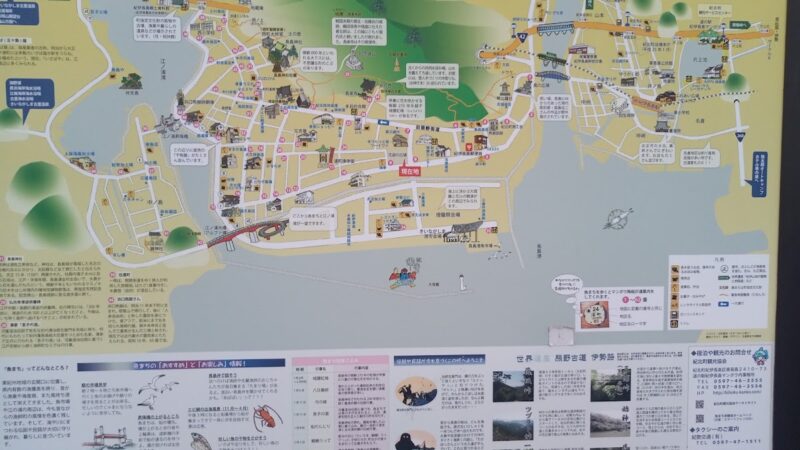
The Third Enclosure site at the foot of the mountain is currently developed as the Third Enclosure Plaza. Information boards explaining the history of Toba Castle and a layout map are installed here, helping to understand the overall structure of the castle. The plaza also has parking space, making it a convenient starting point for exploring the castle ruins.
From the plaza, a path leading to the main keep is maintained, allowing visitors to follow the same route taken by the castle’s soldiers in the past.
Related Historical Sites in the Surrounding Area
A monument commemorating Kuki Yoshitaka stands west of the base of the main keep’s stone wall at Toba Castle. Furthermore, Kuki Yoshitaka’s grave is located on Tōshi Island, about 30 minutes by ferry from Toba Port. Visiting both the castle ruins and Tōshi Island provides a deeper understanding of the history of the Kuki naval force.
Tōshi Island remains a thriving fishing island, retaining a historical atmosphere as the place where Kuki Yoshitaka met his end. Within the island are Yoshitaka’s head and body mounds, carefully preserved by the local people.
View of Toba Bay
The view of Toba Bay from the Toba Castle ruins is exceptional. Toba Bay, famous for pearl cultivation, is dotted with numerous islands, and its complex coastline, characteristic of a ria coast, creates a beautiful landscape. On a clear day, you can see all the way to the Pacific Ocean, offering a panoramic view of the seas once controlled by the Kuki Navy.
At dusk, the sunset over the bay is beautiful, making it a popular spot for photography.
The Achievements of the Kuki Navy and Kuki Yoshitaka
History and Organization of the Kuki Navy
The Kuki Navy was a naval force based in Shima Province that was active from the Sengoku period to the early Edo period. The Kuki clan originally hailed from Kii Province and expanded their power as a group of pirates. They reached their peak during the time of Kuki Yoshitaka, serving Oda Nobunaga and Toyotomi Hideyoshi, and achieving numerous successes in naval battles.
A key characteristic of the Kuki Navy was its possession of many large warships. In particular, their ironclad ships, known as “tekkōsen,” were developed to defend against the Mōri Navy’s fire arrow attacks and achieved significant victories at the Battle of Kizugawaguchi.
The Battle of Kizugawaguchi and Ironclad Ships
In the First Battle of Kizugawaguchi in 1576, the Kuki navy was defeated by the Mori navy. Learning from this defeat, Kuki Yoshitaka, under the orders of Oda Nobunaga, developed ironclad ships. These ships had hulls covered in iron plates, designed to withstand fire attacks using incendiary arrows.
In the Second Battle of Kizugawaguchi in 1578, six of these ironclad ships were deployed, defeating the Mori navy. This victory allowed Oda Nobunaga to successfully cut off the sea supply route to Osaka Honganji Temple, giving him an advantage in the Ishiyama War. Kuki Yoshitaka’s name became famous throughout Japan as a result of this battle.
Roles in the Korean Campaigns
The Kuki navy also played a crucial role in the Bunroku-Keicho War (the Japanese invasions of Korea). During the Bunroku War of 1592, Kuki Yoshitaka led a naval force across the Korean Peninsula, contributing to securing supply lines and controlling coastal areas.
He continued to command the navy during the Keicho War, solidifying the Kuki clan’s position under the Toyotomi regime. These achievements led to his recognition of his rule over Shima Province, with Toba Castle as his base.
Access to Toba Castle
Access by Train
Toba Castle ruins are accessible on foot from JR/Kintetsu Toba Station. The distance from the station to the castle ruins is approximately 10-15 minutes. Toba Station is a major station where Kintetsu Limited Express and JR Rapid Mie trains stop, providing good access from Nagoya and Osaka.
From Nagoya:
- Approximately 1 hour 40 minutes by Kintetsu Limited Express
- Approximately 2 hours by JR Rapid Mie
From Osaka/Kyoto:
- Approximately 2 hours 30 minutes to 3 hours by Kintetsu Limited Express
From Toba Station to the castle ruins, follow the signs in front of the station and walk. Toba Aquarium is also along the way, so you can visit it in conjunction with sightseeing.
Access by Car and Parking
Access by car is also convenient. It’s about 15 minutes from the Ise IC on the Ise Expressway via the Ise-Futami-Toba Line (free section). There are several parking spaces at San-no-maru Plaza, and several paid parking lots around Toba Station.
Toba Station West Parking Lot:
- Approximately 3 minutes on foot from Toba Station
- Within walking distance of the castle ruins
- Fee: Approximately 500 yen per day (varies depending on the season)
During peak tourist seasons and weekends, parking lots can be crowded, so using public transportation is recommended.
Access by Ferry
You can also access Toba Port from Irago Port in Aichi Prefecture via the Ise Bay Ferry. The journey takes approximately 55 minutes, allowing you to enjoy a pleasant boat trip to Toba. From Toba Port, it’s about a 15-minute walk to the castle ruins.
From the ferry, you can enjoy beautiful views of Ise Bay, and on clear days, you may even be able to see Mount Fuji.
Tourist Attractions Around Toba Castle
Toba Aquarium
Located right next to the Toba Castle ruins, Toba Aquarium is one of the largest aquariums in Japan. It boasts the largest number of species in Japan, and you can see rare marine life such as dugongs and sea otters. It’s an ideal spot to visit in conjunction with exploring the castle ruins.
The aquarium is divided into 12 zones, and you can explore in any order you like. The estimated time required is 2-3 hours.
Mikimoto Pearl Island
Located about 5 minutes by sightseeing boat from Toba Port, Mikimoto Pearl Island is a commemorative island for Kokichi Mikimoto, who was the first in the world to successfully cultivate pearls. Visitors can experience Toba’s maritime culture through the Pearl Museum and demonstrations by female divers.
From the island, you can enjoy a panoramic view of Toba Bay and see the site of the former Toba Castle from the sea.
Toshi Island
As mentioned above, Toshi Island, where the tomb of Kuki Yoshitaka is located, is about 30 minutes by ferry from Toba Port. The island features historical sites related to Yoshitaka, as well as beautiful coastlines and guesthouses where you can enjoy fresh seafood.
The island also preserves its unique traditional culture, the “Neyako system,” allowing visitors to experience history and culture.
Ise Grand Shrine
Located about 30 minutes by car and 40 minutes by train from Toba, Ise Grand Shrine is one of Japan’s most representative shrines. Centered around the Inner Shrine (Naiku, Kōtaijingu) and the Outer Shrine (Toyouke Daijingu), there are numerous auxiliary shrines and subordinate shrines.
A popular 2-day/1-night travel plan combines a visit to Toba Castle Ruins and Ise Grand Shrine.
Seasons of Toba Castle and Best Time to Visit
Spring (March-May)
Spring is the season when the cherry blossoms around the castle ruins are at their most beautiful. Cherry trees line the San-no-maru Plaza and the Honmaru Ruins, reaching their peak bloom from late March to early April. The contrast between the cherry blossoms and the stone walls is stunning, making it ideal for photography.
Spring also offers mild weather, perfect for strolling. The view of Toba Bay, shrouded in spring mist, creates a magical atmosphere.
Summer (June-August)
Summer is the season when the blue sea of Toba Bay is at its most beautiful. The view from the castle ruins is exceptional, allowing visitors to enjoy the scenery of the bay dotted with pearl cultivation rafts. However, the sun is strong, so sun protection such as a hat and sunscreen is necessary.
Toba Aquarium gets crowded during the summer holidays, so visiting early in the morning is recommended.
Autumn (September-November)
Autumn is the best season to visit Toba Castle Ruins. The weather is stable, and the temperature is perfect for strolling. On clear autumn days, the view from the castle ruins is even more beautiful, allowing you to see the distant mountains.
In November, you can enjoy the autumn foliage, and the contrast between the stone walls and the autumn leaves is magnificent.
Winter (December-February)
Winter is a season with fewer tourists, allowing you to quietly stroll through the castle ruins. The air is clear, so the view of Toba Bay is at its clearest. On clear days, you may even be able to see Mount Fuji in the distance.
However, the sea breeze is cold, so warm clothing is essential.
Preservation and Future Development Plans for Toba Castle Ruins
Preservation as a Mie Prefecture Designated Historic Site
Toba Castle Ruins are protected as a Mie Prefecture designated historic site. Regular preservation activities are carried out, including preventing the collapse of stone walls and managing trees. The stone walls of the main keep’s foundation are particularly prioritized for preservation, with ongoing surveys and repairs by experts.
Regular cleaning activities by local history enthusiasts and citizen volunteers contribute to maintaining the castle ruins’ environment.
Future Development Plans
Toba City positions Toba Castle Ruins as an important tourist resource and is proceeding with development plans. The relocation of the former Toba Elementary School has made full-scale excavation and development of the main and second bailey areas possible.
Going forward, while prioritizing the preservation of the remains, plans include improving information boards, developing viewing paths, and installing rest facilities. Furthermore, the use of digital technology to create reconstructed images of the castle in its heyday is also being considered.
Notes and Etiquette When Visiting Toba Castle
Clothing and Items to Bring
Due to the undulating terrain of the castle ruins, comfortable walking shoes are recommended. Especially for the path leading to the main keep, which includes stone steps and slopes, sneakers or trekking shoes are suitable.
In summer, the sun is strong, so bring a hat, sunscreen, and drinking water. In winter, the sea breeze is cold, so a windproof jacket is necessary.
Etiquette During Visits
The castle ruins are a historical site, and climbing the stone walls or damaging the remains is strictly prohibited. Do not enter areas inside the signs or fences. Also, please take all your trash with you and cooperate in protecting the natural environment.
Photography is permitted, but please be considerate of other visitors. Drone use requires prior confirmation with the Toba City Board of Education.
Estimated Time Required
A visit to Toba Castle Ruins, from the San-no-maru Plaza to the Honmaru Ruins, takes approximately 40 minutes to 1 hour. If you want to carefully observe the stone walls or enjoy taking photographs, allow 1.5 to 2 hours.
If combining a visit to Toba Castle Ruins with a trip to Toba Aquarium or Toshi Island, we recommend planning a half-day to full-day itinerary.
Basic Information about Toba Castle
Address: Toba 3-chome, Toba City, Mie Prefecture
Access:
- Approximately 10-15 minutes on foot from JR/Kintetsu Toba Station
- Approximately 15 minutes by car from Ise IC on the Ise Expressway
Parking: Several spaces available at San-no-maru Plaza (free), several paid parking lots around Toba Station
Visiting Hours: Open all day (nighttime visits are not recommended)
Admission Fee: Free
Inquiries: Toba City Board of Education, Lifelong Learning Division
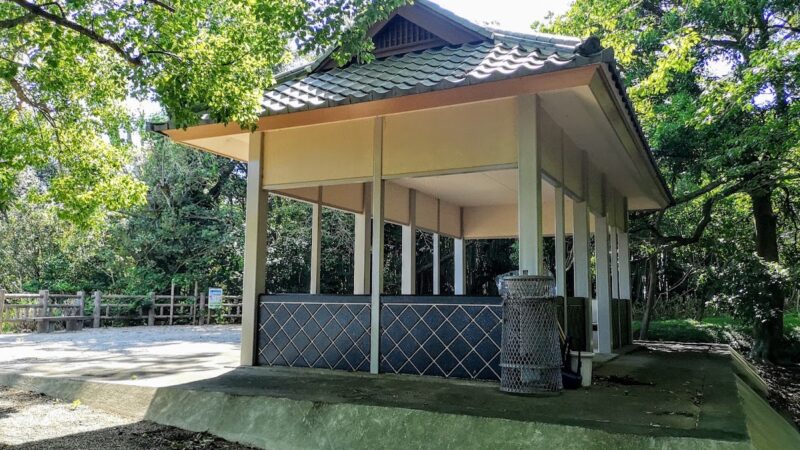
Restrooms: Located near San-no-maru Plaza
Accessibility Information: Accessible up to San-no-maru Plaza. Access to the main keep site involves stairs and slopes, making wheelchair access difficult.
Summary | The Charm and Significance of Visiting Toba Castle
Toba Castle, built by Kuki Yoshitaka, occupies an extremely important position in the history of castles as Japan’s only coastal castle. The unique structure of the main gate, which juts out towards the sea, is a characteristic of a castle built for a naval power, and it is a valuable historical site not seen in other castles.
Although the main keep and other structures are now gone, the stone walls of the main enclosure and traces of the layout allow us to imagine its former glory. The beautiful view overlooking Toba Bay is also a major attraction, allowing visitors to reflect on the history of the Sengoku period while gazing at the sea area where the Kuki naval force once controlled the ocean.
Nearby tourist attractions such as Toba Aquarium, Mikimoto Pearl Island, and Toshi Island are also abundant, making it possible to enjoy a travel plan that combines historical exploration with sightseeing. Visiting in conjunction with a visit to Ise Grand Shrine is also recommended.
By visiting the Toba Castle ruins, you can experience the history of the Kuki naval force, the unique structure of a coastal castle, and the beautiful scenery of Toba Bay. It is a place that will satisfy not only history buffs but also those seeking beautiful scenery. When you visit Toba, be sure to visit this valuable historical site.