Akagi Castle Complete Guide | A Thorough Explanation of the History and Highlights of the “Castle in the Sky” Built by Todo Takatora
Located in Akagi, Kiwa-cho, Kumano City, Mie Prefecture, Akagi Castle is a flatland castle built by Todo Takatora, a renowned castle builder. Built on a hill approximately 230 meters above sea level, the castle, often shrouded in morning mist, is known as the “Castle in the Sky” and has recently attracted considerable attention. Designated a national historic site and selected as one of the Continued Top 100 Japanese Castles, this guide provides a detailed explanation of Akagi Castle’s history, architectural features, and highlights.
History of Akagi Castle | A Castle Built as a Base for Suppressing Rebellions
The Kitayama Rebellion and the Background of its Construction
Akagi Castle was built in 1589 (Tensho 17). At that time, the Kitayama Rebellion, a protest against Toyotomi Hideyoshi’s land survey, was occurring in southern Kii Province (present-day southern Mie Prefecture to northeastern Wakayama Prefecture). This uprising was a large-scale resistance movement by local lords and farmers, threatening Hideyoshi’s rule.
The task of suppressing the uprising was entrusted to Todo Takatora, a general under Hideyoshi at the time. Takatora was given the authority to govern Kii Province and decided to construct Akagi Castle as a military base to contain the rebel forces. This castle was not merely a military facility, but also a symbolic structure for establishing Toyotomi’s control over the Kumano region.
Todo Takatora and Akagi Castle
Todo Takatora is one of the most important figures in the history of Japanese castle construction. Despite changing lords seven times throughout his life, he remained highly valued due to his exceptional castle-building skills. While Takatora built many castles, Akagi Castle holds a particularly important position as one of his early works.
At the time of Akagi Castle’s construction, Takatora was in his early thirties. This castle shows the beginnings of Takatora’s unique castle-building techniques, which would later be perfected in castles such as Imabari Castle and Iga Ueno Castle. In particular, the use of stone walls and the design of the gates reveal experimental elements from the transitional period between medieval mountain castles and early modern castles, making it extremely important material for the study of castle construction history.
Relationship with the Tabirako Pass Execution Ground
Indispensable to understanding the history of Akagi Castle is the Tabirako Pass execution ground, located approximately 1 kilometer northeast of the castle. It is said that many remnants of the rebellion, captured during the castle’s completion ceremony, were executed at this site.
Even today, stone monuments and Jizo statues remain at the execution ground, commemorating those executed, illustrating the gruesome historical context in which Akagi Castle was built—the suppression of a rebellion. On October 9, 1989, the Akagi Castle ruins, along with the Tabirako Pass execution ground, were designated a national historic site as “Akagi Castle Ruins and Tabirako Pass Execution Ground.”
The Abandonment of the Castle and Its Aftermath
Akagi Castle was abandoned in 1615, just 26 years after its construction, due to the Tokugawa Shogunate’s “One Castle Per Province” decree. Todo Takatora became the lord of the Tsu Domain in Ise Province after the Battle of Sekigahara, and Akagi Castle had already fulfilled its purpose.
After its abandonment, the castle’s facilities gradually disappeared, but the remains, such as the stone walls, remained in relatively good condition. The castle ruins, long protected by the local people, underwent full-scale preservation and restoration work from 1993 to 2004, based on a management and preservation plan. This restoration restored the castle to its current beautiful state.
Architectural Characteristics of Akagi Castle | A Transitional Castle Blending Medieval and Early Modern Styles
Layout and Arrangement of Enclosures
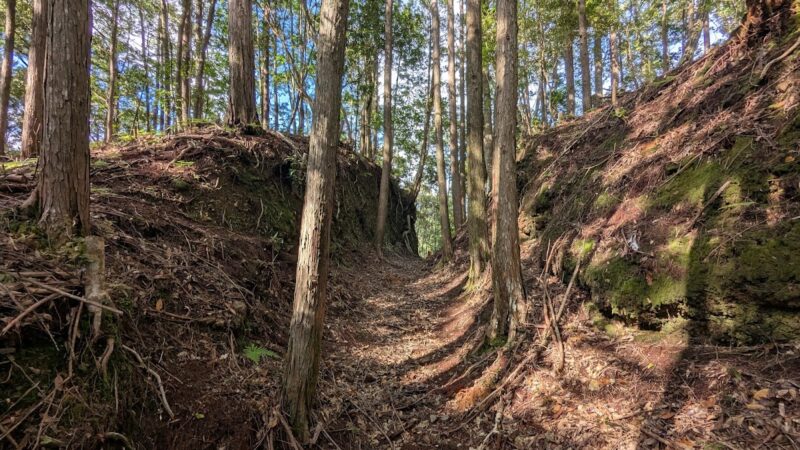
Akagi Castle has a structure centered around the main enclosure, with the East, South, West, and North enclosures arranged around it. The layout of the castle, built utilizing the ridgeline, inherits the characteristics of medieval mountain castles, showcasing a design that skillfully makes use of the natural terrain.
The main enclosure is located at the highest point of the castle, measuring approximately 40 meters east-west and 20 meters north-south. From here, one can see the terraced rice fields of the Akagi area and the mountains of Kumano, and it is thought to have functioned not only as a military surveillance point but also as a space to demonstrate the lord’s authority.
Each enclosure is demarcated by stone walls, and a complex flow of movement is designed. This complex structure makes it difficult for enemies to invade, and incorporates various features that give the defenders an advantage in battle.
Stone Wall Techniques
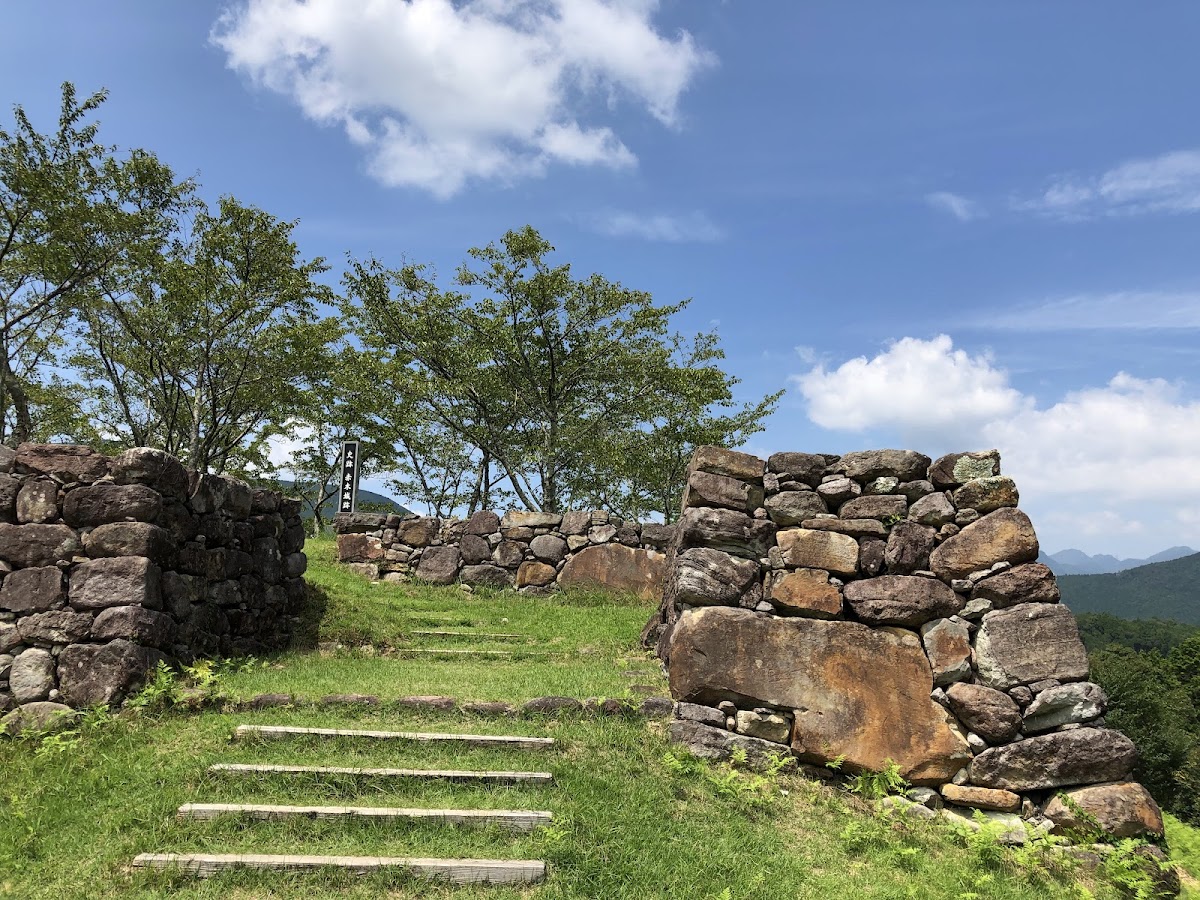
The most distinctive feature of Akagi Castle is the high stone walls that surround it. While earthen ramparts were the norm in medieval mountain castles, Akagi Castle makes extensive use of full-fledged stone walls, as seen in early modern castles.
The stone walls are built using a technique called “nozurazumi,” where natural stones are stacked with little to no processing. Although it may appear crude at first glance, the interlocking of the stones is carefully calculated to achieve high strength. The stone walls around the main enclosure reach heights of 3-4 meters in some sections, indicating considerable technical skill for the time.
The corners of the stone walls also partially utilize the sanuki-zumi technique, showing a precursor to techniques that would become common in later early modern castles.
Structure of the Entrance
The entrances (gateways) of Akagi Castle have a highly developed and complex structure. The main enclosure entrance, in particular, is a key point of interest, showcasing various ingenious features designed to prevent enemy intrusion.
The main enclosure entrance adopts the masugata-koguchi (square-shaped entrance) style, with a double gate for enhanced defense. The “yokoya-gakari” (flanking fire) structure, allowing for attacks from three sides against enemies entering the entrance, is also seen throughout, further increasing defensive capabilities.
This design of the entrance is a valuable example illustrating the transition from the simple structures of the medieval period to the sophisticated defensive systems of the early modern period.
A Fusion of Medieval and Early Modern Styles
Akagi Castle is highly regarded as a castle that combines medieval and early modern castle construction techniques. While the use of ridges for the layout of the baileys and reliance on natural terrain are characteristic of medieval mountain castles, the high stone walls, well-developed gates, and flanking defenses are elements of early modern castles.
Akagi Castle, where the technologies of these two eras are fused, is also called the “seed of early modern castles” and is attracting attention from researchers as a site that represents an important turning point in the history of Japanese castles. The prototype of the large-scale early modern castles later built by Todo Takatora can be seen in Akagi Castle.
Highlights of Akagi Castle | A Spectacular View Known as the “Castle in the Sky”
View from the Main Bailey
The greatest highlight of Akagi Castle is the view of the Kumano Mountains and the Akagi area from the main bailey. Located on a hill approximately 230 meters above sea level, the main bailey offers a 360-degree panoramic view.
Particularly impressive are the terraced rice fields of the Akagi district spread out below. Located near Maruyama Senmaida, one of Japan’s Top 100 Terraced Rice Fields, the beautiful rural landscape characteristic of mountainous areas remains intact. The deep mountains of Kumano stretch out in the background, creating a truly quintessential Japanese landscape that captivates visitors.
The scenery, displaying different expressions throughout the seasons—the fresh green of spring, the deep green of summer, the vibrant autumn foliage, and the snowy winter landscape—is something you’ll never tire of, no matter how many times you visit.
A Castle in the Sky Floating in the Morning Mist
The reason Akagi Castle is called a “castle in the sky” is its fantastical appearance floating above a sea of clouds in the early morning. In the early mornings from autumn to winter, when weather conditions are right, you can witness the mystical sight of the castle ruins floating above the sea of clouds.
Especially on clear mornings from October to December, when there is a significant temperature difference from the previous day, a sea of clouds is more likely to form. The contrast between the stone walls illuminated by the morning sun and the sea of clouds is a breathtaking sight truly worthy of being called a castle in the sky.
The best time to see the sea of clouds is around sunrise, and many photography enthusiasts visit to capture this moment.
Beautifully Restored Stone Walls
Thanks to preservation and restoration work carried out by 2004, the stone walls of Akagi Castle have been restored to their original state. Collapsed sections have been repaired, and the walls, which were previously overgrown with vegetation, have been beautifully restored.
Each of the stone walls—the main enclosure, east enclosure, south enclosure, west enclosure, and north enclosure—has its own unique character, revealing the ingenuity of the castle’s construction. The main enclosure’s stone walls, in particular, are in excellent condition, allowing for close observation of the nozurazumi (rough-stone masonry) technique.
During the restoration work, archaeological excavations were also conducted, unearthing artifacts such as roof tiles and ceramics. These unearthed items are valuable resources for understanding the castle’s history.
Characteristics of the West and East Enclosures
Located west of the main enclosure, the west enclosure is a relatively large, flat area. From here, you can also enjoy views of the Akagi area, offering a different perspective from the main enclosure. The stone walls of the western enclosure are also magnificent, and it’s an important point for observing the structure of the gate.
The eastern enclosure was located east of the main enclosure and served as a defensive base to prevent intrusion into the main enclosure. The route from the eastern enclosure to the main enclosure is intricately designed, allowing you to appreciate the high level of Takatora’s castle-building skills.
Considering the function and defensive ingenuity of each enclosure as you visit is one of the great pleasures of visiting Akagi Castle.
Tabirako Pass Execution Ground Site
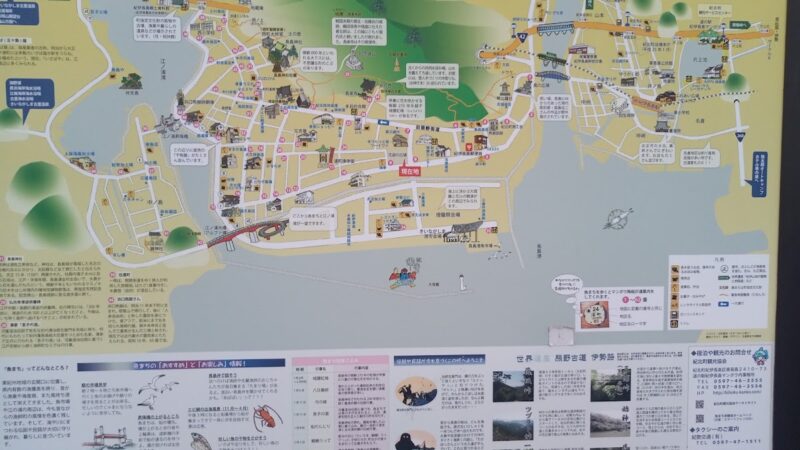
An important site to visit in conjunction with Akagi Castle is the Tabirako Pass Execution Ground Site. Located about 20 minutes on foot from the castle ruins, it is an important historical site that tells the history of suppressing an uprising.
A stone monument stands at the execution ground site, commemorating those executed, and a solemn atmosphere permeates the quiet mountain. Visiting this execution ground site is essential for understanding the historical background of Akagi Castle’s construction.
Understanding not only the castle’s glamorous aspects but also its tragic history will deepen your appreciation of Akagi Castle.
Access and Tourist Information
Access to Akagi Castle
The most convenient way to access Akagi Castle is by car. From Kumano city center, it takes approximately 30 minutes via National Route 311 to reach the Akagi area of Kiwa town. A free parking lot is available at the foot of the castle ruins, and the main enclosure is about a 10-minute walk from there.
If using public transportation, take the Kumano City Community Bus (Kiwa area) from Kumano City Station on the JR Kisei Main Line and get off at the “Akagi Castle Ruins” bus stop. However, since the number of buses is limited, it is recommended to check the timetable in advance.
The path to the castle is well-maintained and relatively easy to walk, but as it is a mountain castle, it is recommended to wear comfortable clothing and broken-in shoes.
Estimated Visit Time and Precautions
Allow approximately one hour to thoroughly explore the Akagi Castle ruins. There is ample time to carefully observe the main enclosure, each enclosure, and the stone walls, and to enjoy the scenery. If you extend your visit to the Tabirako Pass execution ground ruins, you will need an additional hour or so.
The castle ruins are open to visitors year-round, and admission is free. However, as it is located in the mountains, insect repellent is necessary in summer, and warm clothing is required in winter. Also, be careful as the ground can be slippery in rainy weather.
If you wish to see the sea of clouds, you will need to visit early in the morning, so it is recommended to stay overnight in Kumano City the day before or plan an early morning departure.
Nearby Tourist Attractions
Around Akagi Castle, there are many attractive tourist spots, including the Kumano Kodo pilgrimage route. The Kumano Kodo Iseji route, a World Heritage Site, is accessible from the Akagi area, allowing you to enjoy history and nature simultaneously.
Maruyama Senmaida is one of the largest terraced rice fields in Japan, located about 10 minutes by car from Akagi Castle. The scenery is particularly beautiful during the rice planting season and in autumn when the rice stalks are ripe.
The Kumano town area also boasts national scenic spots such as Onigajo Castle and Shishiiwa Rock. Visiting these together with Akagi Castle allows you to fully enjoy the nature and history of the Kumano region.
Continued Top 100 Japanese Castles Stamp
Akagi Castle was selected as one of the Continued Top 100 Japanese Castles (number 155) on April 6, 2017 (Heisei 29). The stamp is located at “Michi-no-Eki Kumano Itaya Kurobei no Sato,” approximately 15 minutes by car from Akagi Castle.
The roadside station offers local specialties and meals, making it a recommended stop before or after visiting Akagi Castle. For those touring the Continued Top 100 Japanese Castles, Akagi Castle will be an important destination in the Kumano region.
Value of Akagi Castle as a Cultural Property
Importance as a National Historic Site
Akagi Castle Ruins were designated a national historic site in 1989 (Heisei 1). This is the result of a comprehensive evaluation of its importance in castle history, its excellent state of preservation, and the clarity of its historical background.
In particular, its academic value is highly regarded as a structure that demonstrates the changes in castle construction techniques during the transition from the medieval to the early modern period. The fact that it is an early work of the renowned castle builder, Todo Takatora, is also a significant point.
As a nationally designated historical site, it is properly preserved and managed, and is positioned as a valuable cultural asset that should be passed on to future generations.
Excavation and Research Results
Partial excavation surveys were conducted during the preservation and maintenance project carried out from 1993 to 2004. These surveys revealed the structure of the castle and the appearance of the buildings used.
The excavated roof tiles indicate the existence of tiled-roof buildings within the castle. Furthermore, the discovery of ceramics provides clues to the actual living conditions within the castle. These excavated artifacts suggest that Akagi Castle was not merely a military facility, but also functioned as a residential space for a certain period.
The results of the excavation survey have been compiled into a report, and ongoing research is being conducted by researchers.
Preservation and Maintenance Efforts
The preservation and maintenance of Akagi Castle is recognized as a model example of balancing cultural property protection and tourism utilization. In the restoration of the collapsed stone walls, care was taken to preserve the historical value by using the original stones as much as possible and employing traditional techniques.
Regular inspections and maintenance are carried out even after the restoration, ensuring a safe environment for visitors. Appropriate mowing and tree management are also carried out to maintain the beauty of the stone walls and to preserve the remains.
The local Kumano City and residents are actively involved in the preservation of the castle ruins, and the entire community is working together to protect this valuable cultural property.
The Appeal of Visiting Akagi Castle | A Special Place to Experience History
Akagi Castle is a special place with more than just castle ruins. You can observe the techniques of Todo Takatora, a master castle builder, up close and experience the evolution of Japanese castle architecture during the transition from the medieval to the early modern period. The beautifully maintained stone walls and the views of the Kumano mountains and terraced rice fields from within leave a deep impression on visitors. The sight of the castle floating above the sea of clouds in the early morning is a breathtaking spectacle that will become a lifelong memory.
At the same time, Akagi Castle, with its harsh historical background of suppressing an uprising, is a valuable historical site that conveys the social changes of the transition period from the Sengoku period to the Edo period. Visiting it together with the Tabirako Pass execution grounds allows you to learn about both the light and shadow of history.
Akagi Castle, with its solemn presence rooted in a long history, also possesses a beautifully maintained and approachable feel. As one of the Continued Top 100 Japanese Castles and a “castle in the sky,” it continues to fascinate many people. When you visit Kumano, be sure to stop by this magnificent castle ruin. A special time to experience history awaits you.