
Complete Guide to Mino Kaneyama Castle Ruins | Highlights and History of a National Historic Site Sengoku Period Mountain Castle
What is Mino Kaneyama Castle Ruins?
Mino Kaneyama Castle Ruins are the remains of a mountain castle located in Kaneyama, Kani City, Gifu Prefecture, which was built from the Sengoku period to the Azuchi-Momoyama period. Built on the summit of Kojōyama, a mountain approximately 277 meters (some sources say 280 meters) above sea level on the left bank of the middle reaches of the Kiso River, this castle was designated a national historic site in 2013 and is preserved as a valuable cultural asset that conveys the spirit of the Sengoku period.
Its most distinctive feature is that it has remained almost unchanged for approximately 400 years since its demolition (the destruction of part of the castle, rendering it unusable) around 1601 after the Battle of Sekigahara. The castle retains many characteristics of castles from the Oda-Toyotomi period, such as stone walls, foundation stones, and roof tiles, making it an extremely important historical site for the study of Sengoku period mountain castles.
History of Mino Kanayama Castle
Founding as Uhojo Castle (Tenbun 6, 1537)
The history of Mino Kanayama Castle dates back to Tenbun 6 (1537). According to Edo period tradition, Saito Dainagon Masayoshi (Saito Masayoshi), a member of the family of the Mino Province’s shugodai (deputy governor), built a castle on this site and named it “Uhojo Castle” or “Torimine Castle.” The Saito clan was a powerful daimyo in Mino Province during the Sengoku period, and this castle functioned as a strategic base controlling the Kiso River basin.
During the Saito clan’s time, Uhojo Castle is thought to have played an important role in maintaining the political and military balance within Mino Province. Utilizing the rugged terrain of Kojōyama Mountain, it was a highly defensible mountain castle and served as a base for controlling the surrounding region. ### The Era of Oda Nobunaga and the Mori Clan (After Eiroku 8, 1565)
In Eiroku 8 (1565), the history of this castle reached a major turning point with Oda Nobunaga’s invasion of eastern Mino Province. As part of his conquest of Mino, Nobunaga seized control of the area and appointed his trusted retainer, Mori Yoshinari, as its lord. At this time, the castle’s name was changed from “Umine Castle” to “Kaneyama Castle,” and it remained the residence of the Mori clan for approximately 35 years.
Mori Yoshinari achieved numerous military successes as a senior retainer of Oda Nobunaga, but after Nobunaga’s arrival in Kyoto, he became the lord of Usayama Castle in Omi Province. However, in Genki 1 (1570), he was killed in battle during an attack by the combined forces of the Asakura and Azai clans.
The Era of Mori Nagayoshi and “Oni Musashi”
After the death of Yoshinari, his second son, Mori Nagayoshi, inherited the family headship and became the lord of Kanayama Castle. Nagayoshi was a renowned warrior of the Sengoku period, known by the nickname “Oni Musashi” (Demon Musashi), and achieved military success in various regions, including invading Shinano Province under Oda Nobutada.
In 1584, Nagayoshi participated in the Battle of Komaki and Nagakute, but was killed in action. Nagayoshi, who was particularly valiant among the Mori clan, played a crucial role in etching the name of Kanayama Castle into the history of the Sengoku period.
The Birthplace of Mori Ranmaru
Kanayama Castle is also known as the birthplace of Mori Ranmaru (Mori Naritoshi), who was killed alongside Oda Nobunaga in the Honnoji Incident. Ranmaru was born at Kanayama Castle as the third son of Mori Yoshinari and later served as Nobunaga’s page. Near the main road at the foot of the mountain, the “(legendary) well where Ranmaru was given his first bath” remains, a testament to the deep connection between this area and the Mori clan.
Demolition and Preservation of the Castle Ruins
After the Battle of Sekigahara, around 1601 (Keicho 6), Kanayama Castle was demolished. Demolition is the process of dismantling the castle’s stone walls and destroying its buildings, rendering it unusable as a castle. Following the Tokugawa Shogunate’s “One Castle Per Province” decree, many castles met a similar fate.
Interestingly, the ruins of Mino Kanayama Castle have been preserved for approximately 400 years with almost no alterations after its demolition. This excellent state of preservation led to its designation as a National Historic Site in 2013 (Heisei 25), and it is now an extremely valuable resource for studying mountain castles of the Sengoku period.
Structure and Characteristics of Mino Kanayama Castle Ruins
Layout of a Terraced Mountain Castle
Mino Kanayama Castle employs the layout of a terraced mountain castle. The castle tower is situated on the summit of Mount Kojō, approximately 277 meters above sea level. The main keep (Honmaru) is at the center, surrounded by the second and third baileys (Ninokuruwa), the southern and western outer baileys (Nishi-koshikuruwa), arranged in a linear fashion. This layout created a robust defensive system capable of gradually preventing enemy incursions.
The baileys on the mountaintop skillfully utilize the natural terrain while also employing artificial construction to achieve a strategically advantageous layout. Each bailey is demarcated by stone walls, designed to function as an independent defensive stronghold.
Characteristics of Oda-Toyotomi Period Castles
The Mino Kanayama Castle ruins exhibit numerous elements characteristic of Oda-Toyotomi period castles, typical of the era of Oda Nobunaga and Toyotomi Hideyoshi. Specifically, these include the use of stone walls, the adoption of foundation stone buildings, and the introduction of tiled roofs. These are important features indicating the transitional period from medieval mountain castles to early modern castles, making them valuable resources for the study of castle architecture history.
Of particular note is the existence of a two-story, two-tiered, multi-layered keep, believed to have been built around the same time as the keep of Azuchi Castle. A mountain castle with a keep of this scale was rare even at the time, illustrating the power of the Mori clan and the importance of Kanayama Castle.
Rough-Wooded Stone Walls
The stone walls of the Mino Kanayama Castle ruins are all constructed using a method called “rough-wooded stonework.” Rough-wooded stonework is the oldest method of stacking stone walls, using natural stones without processing, and is a characteristic technique of castles from the Sengoku period.
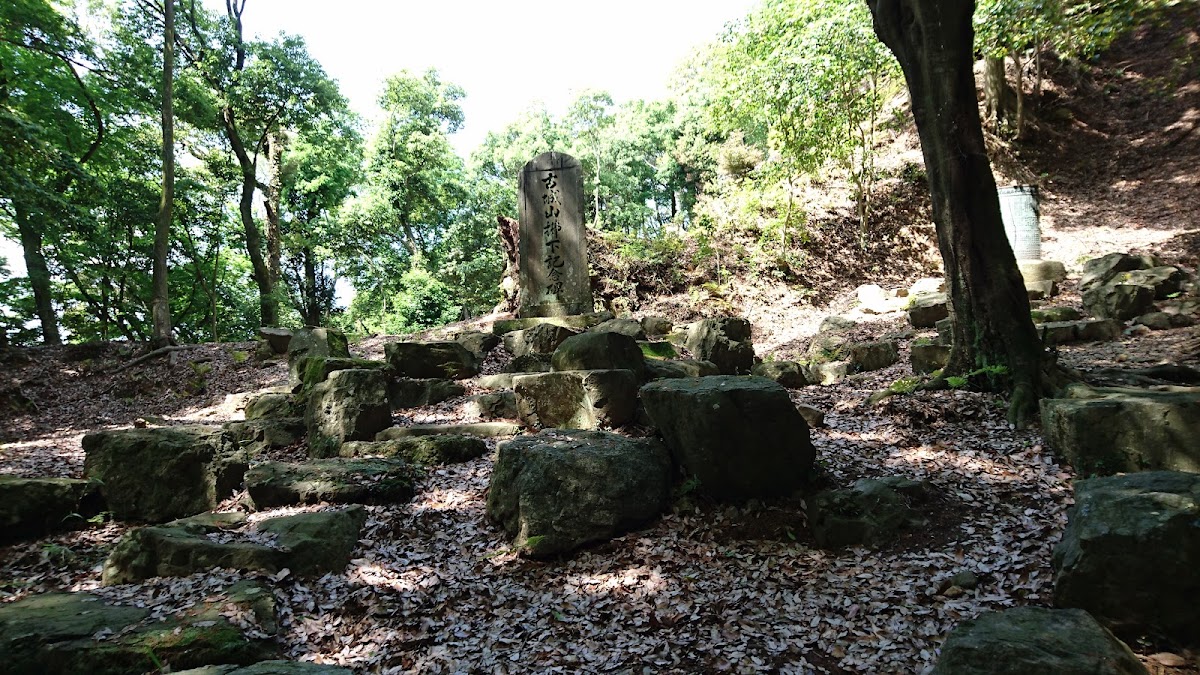
The sight of stones scattered everywhere after the castle’s destruction vividly conveys the traces of the castle’s downfall and provides a valuable opportunity to directly observe the stonework techniques of the time. By comparing the collapsed stone walls with the remaining ones, one can understand the stonework techniques and the castle’s structure of the period.
Remains of the Castle Tower Base and Main Enclosure
The castle tower base at the mountaintop is one of the most important remains at the Mino Kanayama Castle ruins. Although the castle tower itself is gone, the stone walls and foundation stones of the base remain in good condition, allowing us to infer the size and structure of the former castle tower.
Several foundation stone remains have been confirmed around the main enclosure, allowing us to understand how the main buildings were arranged. These remains reveal that Kanayama Castle was not merely a military base, but a comprehensive castle complex that also served as the lord’s residence and administrative center.
Highlights of Mino Kanayama Castle Ruins
Traces of Destruction
One of the biggest highlights when visiting the Mino Kanayama Castle ruins is the traces of destruction. The stone walls, intentionally demolished after the Battle of Sekigahara, remain in their original state, leaving a strong impression on visitors as a symbol of the end of the Sengoku period.
The scattered stones on the slope convey the raw reality of the historical event of the castle’s destruction, and offer a valuable opportunity to observe in cross-section how the stone walls were constructed. This scene, which could be called the “aesthetics of destruction,” is a unique feature of Mino Kanayama Castle Ruins that is rarely seen at other castle ruins.
Stone Walls Retaining Their Original Form
The parts of the stone walls that escaped destruction have remained almost exactly as they were about 400 years ago. Built using the nozurazumi technique, the walls maintain an astonishingly stable structure while utilizing the natural shapes of the stones, demonstrating the high level of stonemasonry skills of the Sengoku period.
The stone walls around the main keep, in particular, are in excellent condition, allowing one to imagine the magnificent appearance of the castle at that time. By observing the details, such as the method of stacking the stones, the selection of stones, and the treatment of the corners, one can learn about the castle-building techniques of the Sengoku period.
View from the Summit
From the summit of Kojōyama, at an altitude of approximately 277 meters, you can enjoy a magnificent panoramic view of the Kiso River basin. This view is one of the reasons why Kanayama Castle was built on this site. You can experience the scenery that the castle lords of the Sengoku period must have seen: the flow of the Kiso River, the surrounding mountains, and the plains stretching out below.
On a clear day, you can see as far as the Nobi Plain, giving you a real sense of the castle’s strategic importance in monitoring and controlling traffic and logistics in the Kiso River basin.
Main Road and Ascent Route
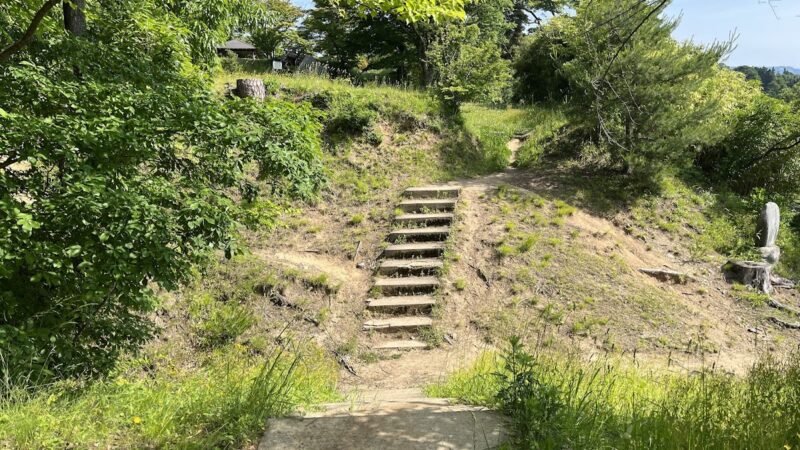
The main road (the ascent route in front) leading to the castle ruins is well-maintained while retaining traces of its original appearance, making it relatively easy to climb. Along the way, remnants of baileys and stone walls are scattered, allowing you to experience the castle’s defensive system as you ascend.
There is a parking lot and restrooms at the foot of the mountain, making it easily accessible. The climb takes about 20-30 minutes, offering a moderate workout while allowing you to fully enjoy the charm of a mountain castle.
The Well Where Ranmaru Was Bathed After His First Bath
Near the main road at the foot of the mountain, there is a historical site called “(Traditional) The Well Where Ranmaru Was Bathed After His First Bath.” Legend says that Mori Ranmaru used the water from this well for his first bath, making it a spot where one can feel the historical connection between the Mori clan and Kanayama Castle.
Interestingly, Mino Kanayama Castle did not have a well at the mountaintop; water was drawn from the foot of the mountain. This well is an important historical site that shows how the castle’s water supply was secured.
Excavation and Research of the Mino Kanayama Castle Ruins
Ongoing Excavation
The Kani City Board of Education is leading ongoing excavation work at the Mino Kanayama Castle ruins. Even after its designation as a national historical site, the research has continued, and new discoveries are being made one after another. These investigations are gradually revealing the castle’s structure, changes over time, and the lifestyle of its inhabitants.
The excavation work includes analyzing the arrangement of foundation stones, the construction methods of the stone walls, and the excavated artifacts, gradually unraveling the true nature of the castle that cannot be understood from historical documents alone. Research into the process and methods of castle demolition, in particular, has attracted considerable attention in castle research nationwide.
Importance in the Study of Oda-Toyotomi Period Castles
The Mino Kanayama Castle ruins hold an extremely important position in the study of castles from the era of Oda Nobunaga and Toyotomi Hideyoshi. Because there have been few alterations since its demolition, it is a rare example that allows us to understand how castles of the Oda-Toyotomi period were constructed and how they were demolished.
Research is progressing to clarify the characteristics and regional features of castle architecture during this period by comparing the construction techniques of the stone walls, the structure of the keep, and the layout of the baileys with those of major Oda-Toyotomi period castles such as Azuchi Castle and Osaka Castle.
Access and Visiting Information for Mino Kanayama Castle Ruins
Location
Located in Kanayama, Kani City, Gifu Prefecture. While the main remains are at the summit of Kojōyama Mountain, related historical sites are scattered throughout the Kanayama area at the foot of the mountain.
Access Methods
Access by Car:
- Approximately 15 minutes from the Kani-Mitake Interchange on the Tokai-Kanjo Expressway
- Approximately 25 minutes from the Tajimi Interchange on the Chuo Expressway
- A dedicated parking lot is available, from which you can walk to the castle.
Access by Public Transportation:
- Take a bus or taxi from either Akechi Station or Shin-Kani Station on the Meitetsu Hiromi Line.
- Accessible on foot from the nearest bus stop.
Notes for Visitors
- As it is a mountain castle, comfortable clothing and shoes are essential.
- The climb takes approximately 20-30 minutes, so please allow ample time for your visit.
- Insect repellent is recommended in summer, and warm clothing in winter.
- Bringing your own drinking water is recommended.
- To protect the historical site, please refrain from climbing on the stone walls or damaging the remains.
Brochures and Information Acquisition
Kani City has created a “Mino Kanayama Castle Ruins Visitor’s Brochure,” which clearly explains the highlights, history, and lords of the castle ruins. The brochure includes an illustrated map of the castle ruins, making it easy to understand even for first-time visitors. This brochure can be downloaded from the Kani City website and is also available on-site.
Nearby Tourist Attractions
Historic Townscape of Kaneyama
The Kaneyama district, which flourished as a castle town of Mino Kanayama Castle, still retains its historical townscape. You can enjoy a historical stroll through streets that retain the atmosphere of the Mori clan era and Edo-period merchant buildings.
Scenery Along the Kiso River
The area around the castle ruins also offers beautiful views of the Kiso River gorge. The clear waters of the Kiso River and the surrounding natural scenery show different expressions in each season, allowing you to enjoy nature in conjunction with your castle ruins visit.
Other Historic Sites in Kani City
Besides the Mino Kanayama Castle ruins, Kani City has several other Sengoku period mountain castle ruins, including the Kukuri Castle ruins and the Ima Castle ruins. A “mountain castle tour” visiting these sites is popular, offering a course that allows visitors to experience the Sengoku history of eastern Mino.
Cultural Value of Mino Kanayama Castle Ruins
Significance of National Historic Site Designation
The designation of Mino Kanayama Castle Ruins as a National Historic Site in 2013 signifies that its historical and academic value has been recognized at the national level. It is highly valued as a precious site showing the changes in mountain castles from the Sengoku period to the Azuchi-Momoyama period, and as a rare example conveying the reality of castle destruction.
The designation as a National Historic Site strengthens legal protection regarding the preservation and utilization of the castle ruins, guaranteeing their appropriate preservation for the future. Simultaneously, active efforts are being made to widely communicate the value of the historical site through development and public access activities.
Contribution to Sengoku Period Research
The Mino Kanayama Castle Ruins provide important materials for studying the society, politics, and military affairs of the Sengoku period. It is a site that allows for multifaceted research, including the realities of Oda Nobunaga’s rule over eastern Mino, the activities of the Mori clan, and the methods used to implement the policy of demolishing castles.
In particular, the minimal alteration after the castle’s demolition is extremely valuable for understanding how castles were constructed and demolished during the Sengoku period. In this respect, the Mino Kanayama Castle Ruins are a rare example nationwide.
Role as a Regional Historical Heritage Site
The Mino Kanayama Castle Ruins contribute to the formation of regional identity as an important historical heritage site for Kani City and Gifu Prefecture. It is a cultural asset that local residents are proud of and is also utilized as a tourist resource.
Kani City is focusing on historical education and tourism promotion utilizing the castle ruins, and is also undertaking collaborative initiatives with surrounding castle ruins under the theme of “Mountain Castles of Eastern Mino.” This has led to a renewed recognition of the historical value of the entire region and a deeper understanding of cultural property protection. ## Summary: The Charm of Mino Kanayama Castle Ruins
Mino Kanayama Castle Ruins is a valuable historical site where you can experience the history of Japanese castles from the Sengoku period to the Azuchi-Momoyama period. From its construction by the Saito clan, to its renaming by Oda Nobunaga, its development as the residence of the Mori clan, and its demolition after the Battle of Sekigahara, it tells the story of approximately 70 years of turbulent history.
Mino Kanayama Castle Ruins boasts many unique attractions, including the fact that the stone walls from approximately 400 years ago remain in their original state, the vivid preservation of traces of its demolition, and the strong characteristics of Azuchi-Momoyama style castles. The historical romance of being the birthplace of Mori Ranmaru also attracts visitors.
When visiting Kani City, Gifu Prefecture, be sure to visit Mino Kanayama Castle Ruins. A valuable experience awaits you, where you can feel the pulse of the Sengoku period firsthand, from the views from the mountaintop, to the rough-hewn stone walls and traces of its demolition. This fascinating historical site is recommended not only for history enthusiasts but also for those who enjoy nature walks.
--765x450.png)