Kuroishi Castle: A Complete Guide to its History and Highlights | A Thorough Explanation of Tsugaru’s Hidden Gem
Kuroishi Castle was a Japanese castle that once stood in Kuroishi City, Aomori Prefecture. This castle, which played a crucial role in the history of the Tsugaru region, now only has remnants remaining, but its historical value is highly regarded. This article will provide a detailed explanation of Kuroishi Castle, from its origins to its abandonment, and the remains that can be seen today.
What is Kuroishi Castle?
Kuroishi Castle was a flatland castle located in Uchimachi, Kuroishi City, Aomori Prefecture. Also known as “Kuroishi Jin’ya,” it functioned as a branch castle of the Tsugaru clan, and later as the residence of the Kuroishi Tsugaru family. Located in the current center of Kuroishi City, it is deeply intertwined with the history of Kuroishi, which developed as a key political and economic center of the Tsugaru region.
Basic Information on Kuroishi Castle
- Location: Uchimachi, Kuroishi City, Aomori Prefecture
- Castle Structure: Hilltop Castle
- Year of Construction: Around the Keicho era (1596-1615)
- Builder: Tsugaru Nobuhide
- Main Lords: Tsugaru clan, Kuroishi Tsugaru family
- Year of Abandonment: Early Meiji period
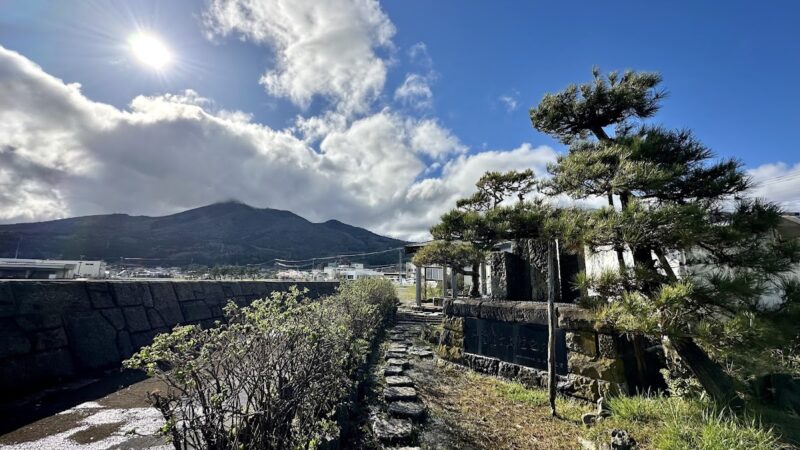
- Remains: Part of the stone wall, moat remains, developed as Miyuki Park
History of Kuroishi Castle
Background and History of Construction
The construction of Kuroishi Castle dates back to the time of Tsugaru Tamenobu, who unified Tsugaru. During the Keicho era, while the Tsugaru clan ruled the Tsugaru region from Hirosaki Castle, it was necessary to place branch castles in key locations within their territory. Kuroishi is located in the southern part of the Tsugaru region and was a strategically important location near the border with the Nanbu clan, so a castle was built there.
The initial construction of Kuroishi Castle is attributed to Tsugaru Nobuhide. Nobuhide was the fourth son of Tsugaru Tamenobu and was granted Kuroishi to govern the area. Initially, it is thought to have been a simple fortified residence, but it was gradually developed.
The Era as a Branch Castle of the Tsugaru Clan
In the early Edo period, Kuroishi Castle functioned as a branch castle of the Tsugaru clan of the Hirosaki Domain. During this time, members of the Tsugaru clan and their retainers were stationed at the castle, making it a center of governance for the surrounding region. The area around Kuroishi had high agricultural productivity and was also a key point on a major road, making it economically important.
In 1633 (Kanei 10), Tsugaru Nobuyoshi entered Kuroishi and governed the area. From then on, members of the Tsugaru clan governed the area for generations. However, during this period, Kuroishi was still part of the Hirosaki Domain and not an independent domain.
The Establishment of the Kuroishi Domain and the Kuroishi Tsugaru Family
The most important turning point in Kuroishi’s history was the establishment of the Kuroishi Domain in 1664 (Kanbun 4). Tsugaru Nobuhide (a different person from the first lord), the fifth son of Tsugaru Nobuyoshi, the third lord of the Hirosaki Domain, was recognized by the shogunate as a daimyo with a 5,000 koku stipend, officially establishing the Kuroishi Domain.
This made Kuroishi Castle the residence of an independent domain, and development progressed as the base of the Kuroishi Tsugaru family. However, because the domain’s stipend was less than 10,000 koku, it was not a full-fledged castle with a keep, but rather a fortified residence.
Development during the Edo Period
After the establishment of the Kuroishi Domain, the development of the castle town intensified. Samurai residences were arranged around the castle, and merchant and artisan districts were formed. Kuroishi prospered as a center for the collection and distribution of goods in the Tsugaru region, particularly thriving through the rice trade.
Successive heads of the Kuroishi Tsugaru family focused on developing their territory alongside maintaining the castle. New rice fields were developed, irrigation canals were constructed, and industries were promoted, strengthening the domain’s economic base.
From the End of the Edo Period to the Meiji Restoration
During the end of the Edo period, the Kuroishi domain was caught up in the turbulent times. While it joined the Ouetsu Reppan Alliance during the Boshin War, it quickly switched sides to the new government. After the Meiji Restoration, following the return of domains to the emperor and the abolition of the feudal domains and establishment of prefectures, the Kuroishi domain became Kuroishi Prefecture, which was eventually integrated into Aomori Prefecture.
In the early Meiji era, while many castles were abandoned, Kuroishi Castle was no exception. Many of the buildings were demolished, and the castle ruins were repurposed as parks and public facilities.
Structure and Layout of Kuroishi Castle
Castle Layout
Kuroishi Castle was built as a flatland castle on a small hill. The castle grounds were relatively compact, with the main keep (Honmaru) at the center, surrounded by the second and third baileys (Ninmaru and Sannomaru). Because it was a fortified residence (Jinya-style), it lacked large-scale defensive structures such as stone walls and a keep, but it was protected by moats and earthen ramparts.
Main Keep and Major Buildings
The main keep housed the lord’s residence, the Goten. The Goten combined the functions of an administrative center with a residence, containing an audience chamber, offices, and living quarters.
The main keep also had turrets and gates, providing a certain degree of defensive capability. However, since a period of peace followed from the mid-Edo period onward, it is believed that these structures served more as symbolic representations of the lord’s authority than as practical defensive measures.
Samurai Residences and Castle Town
Samurai residences of the retainers were located around the castle. The size and layout of the residences were determined according to the rank of the samurai, from middle-ranking to lower-ranking. Even today, some areas in Kuroishi City retain the atmosphere of samurai residences, allowing visitors to imagine the town layout of the time.
The castle town was systematically developed, forming merchant and artisan districts. In particular, the shopping street known as “Komise-dori” is preserved as a valuable historical landscape that conveys the atmosphere of the Edo period.
Current Kuroishi Castle Site
Development as Miyuki Park
Currently, the site of Kuroishi Castle’s main keep has been developed as “Miyuki Park.” It was created as a park in the Meiji era to commemorate a visit by a member of the imperial family and serves as a place of relaxation for citizens. Cherry trees are planted in the park, and in spring, it becomes a popular spot for cherry blossom viewing.
Remaining Structures
The following remains of Kuroishi Castle can be confirmed:
Part of the Stone Wall: A small portion of the original stone wall remains around the main keep. Although small in scale, it is a valuable relic that conveys the atmosphere of the castle.
Moat Remains: Parts of the former moat remain as topographical features, providing clues to estimating the castle’s boundaries.
Earthwork Remains: Traces of earthworks can be seen in some sections.
Place Names: Place names indicating the divisions of the castle town, such as “Uchimachi,” “Nakamachi,” and “Sotomachi,” still remain, evoking the town’s layout at the time.
Surrounding Historical Buildings
Historical buildings from the castle town era remain around the Kuroishi Castle ruins.
Komise Street: A townscape featuring arcade-like passages called “komise” (small shops), characteristic of Edo-period merchant architecture, is preserved. Designated as a National Important Traditional Buildings Preservation District, it is a valuable area where you can experience the history of Kuroishi.
Nakamura Kamekichi Sake Brewery: A sake brewery that has been operating since the Edo period, with historical buildings remaining.
Takahashi Residence: A building that retains the appearance of a samurai residence, offering insights into the life of samurai at the time.
Historical Significance of Kuroishi Castle
Role in the Tsugaru Region
Kuroishi Castle played a crucial role as a key point in the defense of the southern part of the Tsugaru region. Located near the border with the Nanbu clan, it served as a base to prepare for potential military tensions. Furthermore, its strategic location on a major road allowed it to function as a relay point for goods and information.
Administration of a Small Domain
Despite being a small domain with a 5,000 koku (unit of rice production) yield, the Kuroishi domain developed its own unique administration. The Kuroishi Tsugaru family’s governance, which promoted development within its territory, fostered industry, and cultivated culture within limited resources, is regarded as a model case for the administration of a small domain.
Center of Regional Culture
Kuroishi Castle and its castle town were also the center of regional culture. Samurai culture, such as Noh theater, tea ceremony, and flower arrangement, was encouraged, and popular culture also flourished. Traditional events such as “Kuroishi Yosare,” still held in Kuroishi City today, carry on the cultural traditions from the castle town era.
Access and Visiting Information for Kuroishi Castle
Access Methods
Access by Train:
- Get off at Kuroishi Station on the Konan Railway Konan Line, approximately 15 minutes on foot.
- From JR Hirosaki Station, take the Konan Bus bound for Kuroishi (approximately 40 minutes), get off at the Kuroishi bus stop, and walk approximately 10 minutes.
Access by Car:
- Approximately 10 minutes from the Kuroishi Interchange on the Tohoku Expressway.
- Free parking available (around Miyuki Park).
Points to Note During Your Visit
When visiting the Kuroishi Castle ruins, keeping the following points in mind will allow you to experience history more deeply.
- Miyuki Park: First, stroll through the park, which is the site of the castle, and imagine the scale of the castle from the remaining stone walls and topography.
- Komise Street: Walk along Komise Street, which retains the atmosphere of a castle town, and experience the townscape of the Edo period.
- Kuroishi City Local History and Culture Museum: This facility offers detailed information about the history and culture of Kuroishi. It also displays materials related to Kuroishi Castle and the Kuroishi Domain.
- Nearby Temples and Shrines: Numerous historical temples and shrines are scattered throughout the castle town, each with its own connection to the Kuroishi Domain.
Estimated Visit Time
If you plan to thoroughly explore the castle ruins and surrounding historical area, allow approximately 2-3 hours. If you want to enjoy shopping and dining on Komise Street, it’s recommended to allocate about half a day.
Nearby Spots to Visit Alongside Kuroishi Castle
Nakano Momijiyama
A famous spot for autumn foliage, located about 15 minutes by car from Kuroishi city center. Many tourists visit in autumn to enjoy the magnificent autumn colors.
Tsugaru Traditional Crafts Museum
This facility allows you to learn about and experience traditional crafts of the Tsugaru region, such as Tsugaru lacquerware and Kogin embroidery. It helps in understanding the cultural background of Kuroishi.
Kuroishi Hot Spring Resort
The area around Kuroishi City boasts several hot spring resorts, perfect for relaxing after a day of sightseeing. A trip combining historical exploration with hot springs is highly recommended.
Hirosaki Castle
Located approximately 30 minutes away by car, Hirosaki Castle was the main castle of the Tsugaru clan and is an important fortress with an existing keep. Visiting both Kuroishi Castle and Hirosaki Castle will provide a deeper understanding of the castle history of the Tsugaru region.
Research and Preservation Activities for Kuroishi Castle
Archaeological Excavations and Research
In recent years, the Kuroishi City Board of Education and other organizations have been conducting intermittent archaeological excavations at the Kuroishi Castle site. These investigations have revealed the precise boundaries and structure of the castle, as well as glimpses into daily life at the time based on unearthed artifacts such as ceramics.
Efforts for Preservation and Utilization
Kuroishi City is committed to the preservation and utilization of the castle site. Efforts to pass on this historical heritage to future generations continue, including the development of Miyuki Park, the installation of information boards, and the preservation of Komise Street.
Furthermore, research and awareness-raising activities by local history enthusiasts and citizen groups are active, and efforts are being made to pass on the history of Kuroishi Castle to future generations.
Summary
Although not large in scale, Kuroishi Castle played an important role in the history of the Tsugaru region. It developed from a branch castle of the Tsugaru clan to the residence of an independent domain, functioning as the political, economic, and cultural center of the region.
While the castle buildings themselves are now gone, the history of Kuroishi Castle can be felt through the castle ruins, which have been developed into Miyuki Park, the remnants of the castle town remaining on Komise Street, and the cultural traditions passed down in the region.
When visiting Aomori Prefecture, be sure to visit not only famous castles like Hirosaki Castle, but also smaller castles of local domains like Kuroishi Castle. There, you will discover the richness of Japan’s regional history and the depth of history rooted in the community.
Visiting the Kuroishi Castle ruins holds more meaning than mere sightseeing. This will be a valuable opportunity to learn how small feudal domains were run and how people lived during the Edo period, and it will be an experience that deepens our understanding of Japanese local history.