Complete Guide to Matsue Castle | History, Highlights, Access, and Tourist Information for the National Treasure Keep
Matsue Castle, located in Matsue City, Shimane Prefecture, is one of Japan’s most representative castles. Designated a National Treasure in 2015, its keep is particularly valuable among the 12 existing keeps in Japan, attracting many tourists throughout the year. This article comprehensively introduces everything you need to know when visiting Matsue Castle, from its history and architectural features to its highlights and access methods.
What is Matsue Castle?
Matsue Castle is a flatland castle built in 1611 by Horio Yoshiharu. Built on Kameda Mountain, approximately 28 meters above sea level, it is a beloved symbol of Matsue, the “City of Water,” nestled between Lake Shinji and Lake Nakaumi.
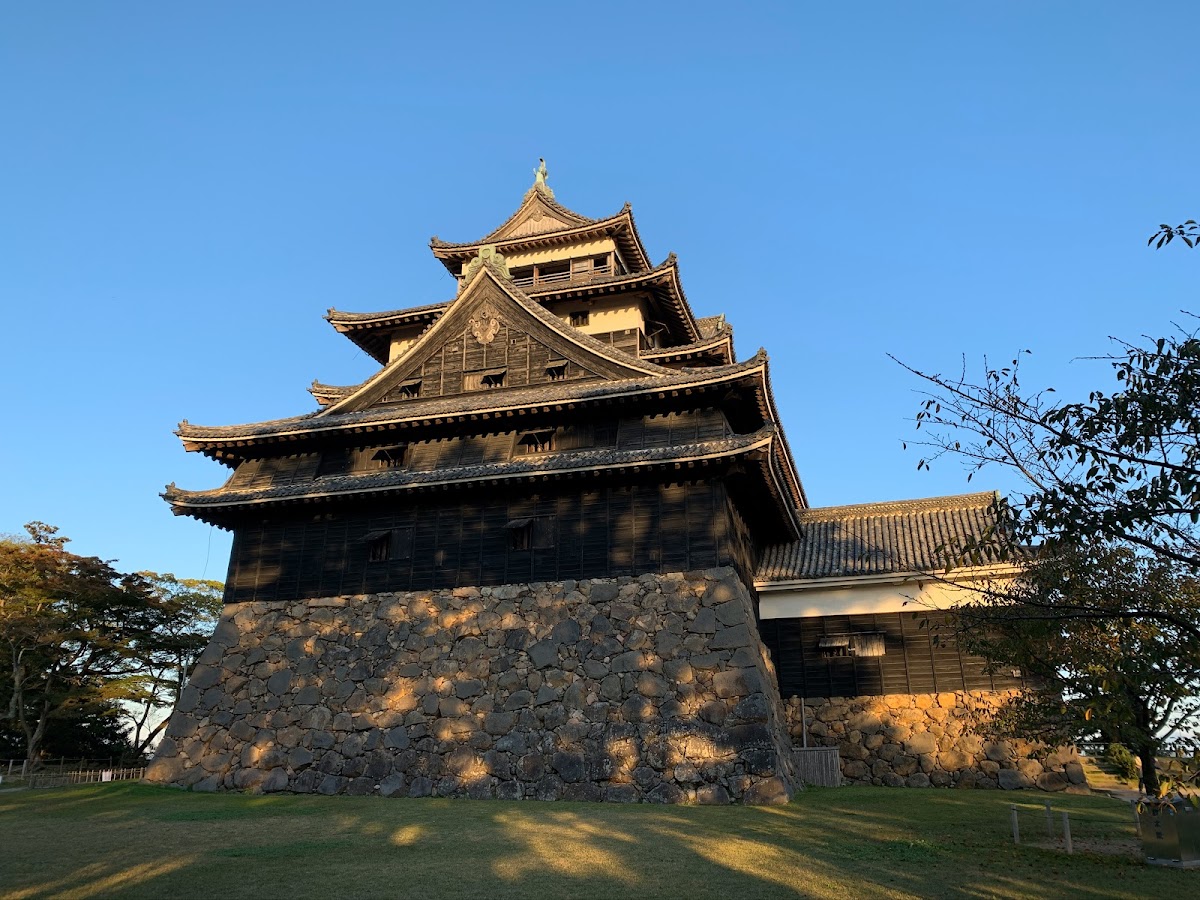
Its black clapboard exterior has earned it the nickname “Chidori Castle” (Plover Castle), and its majestic appearance remains unchanged even after more than 400 years, continuing to fascinate visitors.
History of National Treasure Designation
Matsue Castle’s keep was designated a former National Treasure (equivalent to a current Important Cultural Property) in 1935 under the National Treasure Preservation Law. Later, on July 8, 2015, it was officially designated a new National Treasure keep, 63 years later.
The decisive factor in its National Treasure designation was the discovery of a prayer amulet. Discovered in 2012 at a temple in Matsue City, this amulet bears the inscription “Auspicious Day in January, Keicho 16th Year,” providing crucial evidence supporting the castle’s construction date. This made it the fifth National Treasure keep, following Himeji Castle, Hikone Castle, Inuyama Castle, and Matsumoto Castle.
History of Matsue Castle
From Construction to the Edo Period
Construction of Matsue Castle began in 1600, Keicho 5, after the Battle of Sekigahara. Horio Yoshiharu, who was granted the provinces of Izumo and Oki, initially resided at Gassan-Toda Castle. However, considering transportation convenience and economic development, he decided to construct a new castle.
The construction was effectively directed by Yoshiharu’s son, Horio Tadauji, and began in 1607 (Keicho 12), completing in 1611 (Keicho 16). The total construction cost is said to have been approximately 120 kan of silver at the time (equivalent to several hundred billion yen in today’s value).
The Horio clan died out after three generations, and Kyogoku Tadataka subsequently took over the castle, but the Kyogoku clan was also transferred after one generation. generations.
After the Meiji Restoration
With the arrival of the Meiji era, a nationwide decree was issued ordering the demolition of castles, and many castles were dismantled. Matsue Castle was no exception, and many of its structures other than the keep were sold or dismantled. The keep itself was also in danger of being demolished, but thanks to the efforts of local volunteers and former samurai, it was preserved.
The story of former samurai Takagi Gonpachi and wealthy farmer Katsube Motoemon, who worked tirelessly to raise funds to buy back the keep, is particularly famous. Thanks to their efforts, the keep was bought back for 180 yen (at the time), saving it from demolition.
Since the Showa era, its value as a cultural property has been recognized, and preservation and restoration work has been carried out repeatedly. During the major Heisei-era repairs (2001-2005), the roof was replaced and the structure was reinforced, maintaining its beautiful appearance today.
Architectural Features of Matsue Castle Keep
Structure and Scale
Matsue Castle keep is a complex watchtower-type keep with four exterior stories, five interior floors, and one basement floor. It stands approximately 30 meters tall (approximately 50 meters including the stone walls), making it the second tallest and third largest existing castle keep.
The following are some of the distinctive structural features of the castle keep:
- Watchtower-type keep: placed An ancient style with a watchtower on top of a hip-and-gable roofed building.
- Combined style: A structure with an attached turret to the keep.
- Shitamachi (clapboard) cladding: The exterior walls are covered with black planks, enhancing waterproofing and corrosion resistance.
- Hip-and-gable roof: A large hip-and-gable roof is a distinctive feature, creating a sense of grandeur.
Defensive Features
Matsue Castle possesses robust defensive features designed for actual combat:
Stone drops: The first floor of the keep has a rare number of stone drops, designed to drop stones or boiling water on enemies climbing the stone walls.
Embossures: Embossures for firing guns and arrows are placed throughout the castle. They come in various shapes, such as triangles and squares, allowing for variations in the angle of attack.
Paulownia Wood Staircase: The staircase inside the keep castle is made of paulownia wood, believed to have been designed to burn down in times of emergency to prevent enemy intrusion.
Covering Boards: Many pillars are covered with iron plates, serving to protect against fire and sword damage.
Building Materials and Techniques
Matsue Castle’s construction primarily uses locally sourced pine wood. In particular, the central pillar of the keep is made from a massive pine tree hundreds of years old, its thickness and length truly impressive.
Furthermore, joinery techniques known as “tsugite” and “shikuchi” are evident throughout, creating a strong structure without the use of nails. These traditional techniques support the strength of Matsue Castle, which has withstood over 400 years of wind and snow.
Highlights of Matsue Castle
Inside the Keep
Basement: Formerly a storage space for food and weapons, it now serves as an exhibition space showcasing the history of Matsue Castle.
1st Floor: You can see defensive structures such as stone drops and loopholes up close. There are also exhibits on the construction methods and tools used at the time of the castle’s construction.
2nd Floor: Exhibits of weapons and armor offer a glimpse into the lives of samurai from the Sengoku period to the Edo period.
3rd Floor: A space called the “Gable Room” allows you to observe the internal structure of the large gable.
4th Floor: The lord’s room, a space believed to have been used by the feudal lord and his retainers.
5th Floor (Top Floor): A 360-degree panoramic observation space. You can enjoy a panoramic view of Lake Shinji, Lake Nakaumi, Matsue city, and Mt. Daisen. Lake Shinji at sunset is particularly popular, having been selected as one of “Japan’s Top 100 Sunset Views.”
Shiroyama Park (Matsue Shiroyama Park)
Shiroyama Park, surrounding Matsue Castle, is known as a famous cherry blossom viewing spot. Approximately 200 cherry trees, including Somei Yoshino and Yaezakura varieties, are planted here. Every year from late March to early April, the “Castle Festival” is held, featuring nighttime illuminations of the cherry blossoms.
The park retains the remains of the Ninomaru and Sannomaru baileys, and walking paths have been established. A stroll while admiring the stone walls and moats offers a luxurious experience, allowing visitors to feel the weight of history.
Kounkaku
Built in 1903 (Meiji 36), this Western-style building served as a guesthouse for Matsue City. Currently, it is open to the public free of charge, allowing visitors to enjoy this valuable example of Meiji-era Western architecture. There is also a cafe inside, making it ideal for a break.
Matsue Shrine
Located north of Matsue Castle, this shrine enshrines Matsudaira Naomasa, the first lord of the Matsue domain, and successive lords. Visitors can pray in a quiet and peaceful atmosphere.
Horikawa Canal Cruise
The moats surrounding Matsue Castle still exist from the Edo period, and the “Horikawa Canal Cruise” by small boat is a popular activity. The approximately 50-minute course offers exceptional views of Matsue Castle, samurai residences, and Shiomi Nawate from the water. The boats even have a mechanism that lowers the roof when passing under low bridges, making for a fun and unique experience.
Access to Matsue Castle
Access by Train
From JR Matsue Station:
- Approximately 10 minutes by Lake Line Bus (sightseeing loop bus), get off at “Matsue Castle (Otemae)” stop.
- Approximately 10 minutes by City Bus, get off at “Prefectural Office” stop, then a 5-minute walk.
- Approximately 10 minutes by taxi.
- Approximately 25 minutes on foot.
From Ichibata Electric Railway Matsue Shinjiko Onsen Station:
- Approximately 20 minutes on foot.
- Approximately 5 minutes by Lake Line Bus.
Access by Car
San’in Expressway:
- Approximately 15 minutes from Matsue Nishi IC.
- Approximately 10 minutes from Matsue Chuo IC.
Parking Information:
- Matsue Castle Otemae Parking (paid, 68 spaces)
- Shimane Prefectural Office Parking (available only on weekends and holidays, free)
-Several paid parking lots are available in the surrounding area.
Access by Air
From Izumo Enmusubi Airport:
- Approximately 30 minutes by airport shuttle bus to JR Matsue Station, then use the methods described above:
- Approximately 30 minutes by rental car
From Yonago Kitaro Airport:
- Approximately 25 minutes by airport shuttle bus to JR Yonago Station, then approximately 40 minutes by JR San’in Main Line to JR Matsue Station
- Approximately 40 minutes by rental car
Opening Hours and Fees
Opening Hours
- April 1st to September 30th: 8:30 AM to 6:30 PM (Last entry at 6:00 PM)
- October 1st to March 31st: 8:30 AM to 5:00 PM (Last entry at 4:30 PM)
- Closed Days: Open all year round
Admission Fees
Castle Tower Climbing Fee:
- Adults: 680 yen
- Elementary and Junior High School Students: 290 yen
- Foreigners: 340 yen (with passport)
Combined Ticket (Matsue Castle Keep + Kounkaku + Samurai Residences):
- Adults: 920 yen
- Elementary and Junior High School Students: 450 yen
Group Discount: Discount available for groups of 20 or more
Annual Passport: 1,500 yen (unlimited entry for one year)
*Prices are subject to change, so please check the official website before visiting.
Nearby Tourist Attractions
Shiomi Nawate
This approximately 500-meter-long street on the north side of Matsue Castle preserves a beautiful landscape lined with samurai residences from the Edo period. The charming streetscape, with its rows of pine trees and moats, has has been selected as one of “Japan’s 100 Best Roads,” making it ideal for a stroll.
Lafcadio Hearn Memorial Museum: Exhibits materials related to Lafcadio Hearn, known as the author of “Kwaidan.” You can learn about Hearn’s life and the world of his works.
Lafcadio Hearn’s Former Residence: This is the samurai residence where Hearn actually lived, and you can tour the interior. The garden is also beautiful, and you can feel the atmosphere of Matsue that Hearn loved.
Samurai Residence: This is a restored residence of a middle-ranking samurai, where you can learn about the lifestyle of samurai in the Edo period.
Lake Shinji
Lake Shinji is a brackish lake located west of Matsue City, famous for its beautiful sunsets. A promenade is maintained along the lakeshore, where you can enjoy walking and cycling. Also, the seven delicacies of Lake Shinji (clams, smelt, icefish, sweetfish, carp, eel, and sea bass) are representative flavors of Matsue’s food culture.
Lake Shinji Sunset Spot: A spectacular viewpoint overlooking Yomegashima Island, selected as one of “Japan’s Top 100 Sunset Views.”
Karokoro Workshop
This is an interactive craft center housed in the former Matsue branch building of the Bank of Japan. It offers a variety of hands-on experiences, including glassblowing, accessory making, and Japanese confectionery making, making it perfect for creating souvenirs. The retro architecture is also a highlight.
Shimane Prefectural Museum of Art
Located on the shores of Lake Shinji, this museum allows visitors to enjoy art while watching the sunset over the lake. It exhibits a collection of Western paintings by artists such as Monet and Courbet, as well as Japanese paintings and crafts.
Matsue Vogel Park
This theme park brings together flowers and birds from around the world. Visitors can enjoy flowers in full bloom year-round and interact with birds such as penguins and owls. It’s a popular spot for families.
Tips for Enjoying Matsue Castle
Best Season
Spring (late March to early April): The cherry blossom season paints Shiroyama Park in shades of pink. The blossom castle is also illuminated at night, and the sight of the cherrys and the tower castle together is a must-see.
Autumn (October-November): The autumn foliage is beautiful, and the pleasant weather makes it ideal for sightseeing.
Winter (December-February): There are fewer tourists, allowing for a more leisurely visit. Matsue Castle covered in snow is also picturesque.
Summer (June-August): The fresh greenery is beautiful, and the sunset over Lake Shinji is at its most beautiful. However, temperatures are high, so precautions against heatstroke are necessary.
Estimated Time Required
- Castle Tower Only: Approximately 45 minutes to 1 hour
- Castle Tower + Stroll through Shiroyama Park: Approximately 1 hour 30 minutes to 2 hours
- Castle Tower + Surrounding Sightseeing Spots: Half a day to a full day
- Including Horikawa River Cruise: Approximately 1 hour extra
Photo Spots
Otemae Plaza: A classic spot for photographing the entire castle tower
Ninomaru Upper Level: A spot where you can photograph the stone walls and castle tower together
From the Horikawa River: The castle tower reflected on the water is beautiful
From Lake Shinji: The castle tower can be captured as a distant view
Top Floor of the Castle Tower: A spot to photograph the view of Matsue city and Lake Shinji
Clothing and Items to Bring
- Comfortable Shoes: The stairs inside the castle tower are steep, and Shiroyama Park is also large, so sneakers are recommended
- Hat and Sunscreen: In summer, the sun is strong, so it’s essential.
- Warm clothing: In winter, the wind is cold, so be sure to take proper precautions against the cold.
- Camera: There are many scenic spots, so don’t forget it.
- Drinks: Hydration is especially important in summer.
Matsue’s Food Culture
Matsue is a castle town with a thriving tea ceremony culture. The 7th lord of the Matsue domain, Matsudaira Harusato (Fumai-ko), encouraged the tea ceremony, leading to the development of Japanese confectionery culture.
Local Specialties
Izumo Soba: One of the three major types of soba noodles, famous for its wariko soba and kamaage soba. It’s characterized by its dark color, made from buckwheat flour ground with the shells intact.
Clam Dishes: Dishes using large clams from Lake Shinji. Various dishes are available, including clam soup, clam rice, and clam ramen.
Matsue Japanese Confectionery: Many traditional Japanese sweets are available, such as Wakakusa, Yamakawa, and Nanohana no Sato. We also recommend the Japanese sweets set served in the tea room.
Tai-meshi: A local dish made with fresh sea bream caught in Lake Shinji and Lake Nakaumi.
Bote-bote-cha: A unique tea ceremony of Matsue, where frothed bancha tea is served with sticky rice and boiled beans.
Events & Festivals
Matsue Castle Festival (Late March – Early April)
This event is held to coincide with the cherry blossom season and features nighttime cherry blossom illuminations, a samurai procession, and a tea ceremony.
Matsue Suigo Festival (Late July – Early August)
A major summer event held on Lake Shinji and the Ohashi River. The lake fireworks display is one of the largest in Western Japan, with approximately 10,000 fireworks illuminating the night sky.
Matsue Warrior Procession (Early April)
A process of approximately 200 people dressed as Sengoku period warlords and princesses parades through the city of Matsue. Starting from Matsue Castle, this is a spectacular event that winds through the city.
Matsue Castle Trivia
Origin of Chidori Castle
Matsue Castle’s alternative name, “Chidori Castle,” comes from the numerous chidori-hafu (gable with a curved roof) designs used on the castle tower’s roof. Chidori-hafu is an architectural style that combines decorative and waterproofing properties, contributing to the elegant appearance of Matsue Castle.
The Secret of the Well
There is a well in the basement of Matsue Castle’s tower. It was built to secure a water source within the tower in preparation for a siege, and is approximately 24 meters deep. Water still flows from it today, and its quality is said to be suitable for drinking.
Shachihoko (Mythical Fish-like Scales)
The shachihoko adorning the roof of the castle tower are wooden structures covered in copper plates, approximately 2 meters tall. This mythical creature, symbolizing protection against fire, is one of the symbols of Matsue Castle.
Positioning among the Five National Treasure Castles
Matsue Castle is the fifth castle to be designated a National Treasure, following Himeji Castle, Hikone Castle, Inuyama Castle, and Matsumoto Castle. While Matsue Castle is the most recently designated a National Treasure among these five, its academic value is highly regarded due to the definitive proof of its construction date.
Summary
Matsue Castle, with its National Treasure castle keep boasting over 400 years of history, is a valuable cultural heritage site that conveys the essence of Japanese castle architecture. Its imposing exterior with black clapboard siding, its defensive functions designed for actual combat, and the breathtaking views from the top floor deeply impress visitors.
The tourist area centered around Matsue Castle offers numerous attractions, including the seasonal scenery of Shiroyama Park, the views from the water during a Horikawa River cruise, and the surrounding historical townscape. Furthermore, Matsue’s unique food culture, such as Izumo soba noodles, clam dishes, and traditional Japanese sweets, is another highlight.
Matsue Castle is more than just a tourist attraction; it’s a place where you can experience Japanese history and culture. Climbing to the top of the keep and gazing at the same view as the castle’s lords of the time, you can’t help but feel the romance of history. When visiting the San’in region, be sure to visit Matsue Castle and fully appreciate its charm.
Matsue Castle, as a treasure of Japan and a source of pride for the citizens of Matsue, will undoubtedly continue to be loved by many people for years to come.