Guide to complete construction of Mino Castle: Complete guide to the completion of Takeda Shingen’s famous castle forts
Is this a castle? :Representative mountain castle from the era of war
Mitsui Castle is a mountain castle that is representative of the era of war, and is located in Misato-cho, Takasaki City. The building was built at the southern foot of Mt. Haruna, approximately 240 miles above the sea level, and the main point of production in Ueno Province (now Gunma), which has been around for 80 years and has been an important influence.
The length of the castle pond is 1,100 meters from north to south, the distance of east and west is 500 meters, and the land area is 36 meters. Haruna Shirakawa on the west side, Haruna wetland on the south side has been formed as a natural river, forming a solid defense system. In 1987 (Showa 62), it was designated as one of Japan’s top 100 famous castles (16th place).
History of Mino Castle: Mr. Yutakano and Mr. Ii
The era of the Nagano clan: Construction began at the height of its development.
Built by Naruhisa Yukino in 1512 (9th year of Eisho), the beginning of the history of the castle. The Tatsuno clan is a proud family, and a descendant of the Heisei Emperor and the original Seihei. Naruhisa is one of the most powerful local owners in the western part of Ueno Province, and has been an extremely powerful force since its establishment.
The location of the castle since the fourth generation of Mr. Tatsuno:
- First lord of the domain, Narimasa Nagano (approx. 1502-1548): Builder of Mino Castle
- Second lord of the domain, Nobunari Nagano (approximately 1548-1552): Completed construction of the castle.
- Third lord of the domain, Norinari Nagano (1552-1552): lived in Tsengtangyo here.
- Fourth lord, Narimasa Chono (approx. 1552-1561): Famous general at the time of the flourishing of the castle.
Narimasa Tatsuno and Shingen Battle of Takeda
The fourth lord of the feudal domain, Narimasa Nagano, was given the surname of 载入士册. Narimasa Tatsuno is a famous general of the Eastern Division, and is honored as the “Eastern Giant”. Naoshi passed away in 1561, and after his departure, Takeda Shingen of Kai Province made multiple attacks.
General Takeda Shingen’s attack and predictions for the castle were monitored, and the key points in the eastern region of the country were confirmed. Of course, Yuyu Chengzei’s high-ranking battles were a solid defense, and Shingen had never been able to attack or attack the castle since the beginning of his life. The importance of the castle’s military affairs and its high level of defense.
Takeda clan attack and fortune telling castle
In 1561, Narimasa Tono passed away due to illness, and the life of the castle was changed due to a sexual change. Due to his father’s failure to succeed, his father and father finally lived in September 1566, when the Takeda Shingen Army in Miyagi Castle fell under a full-scale attack. Narimori is self-extinguished, and the Nagano clan has completed the restoration of the castle.
A member of the Takeda clan who entered Minojo Castle, a subordinate of the Takeda clan, a subordinate of the Takeda family, and a homeroom lord of the castle:
- Masatada Amari: Takeda 24 Great Shogun
- Yukitaka Sanada: Father of Masayuki Sanada
- Masayuki Naito: One of the Four Great Heavenly Kings of Takeda
- Nobutane Asari: Last and first lord of the castle from the Takeda clan
To Kawata, Hojo, Tokugawa
In 1582, the Takeda clan passed away, and he became a vassal of Nobunaga, a vassal of Nobunaga, who moved to Minojo Castle. However, in June of the same year, after the Honno-ji Temple was destroyed, the Hojo clan was defeated during the Kanagawa war, and the Hojo clan entered the castle.
In 1590, the chief vassal Hideyoshi attacked Odawara, and after the overthrow of the Hojo clan, Tokugawa Ieyasu was appointed as the lord of the castle by Ii Naomasa, who was appointed as the lord of the castle. Ii Naomasa’s salary was 120,000 koku, and the construction of the castle was extensive.
The final form of Naomasa Ii and Minojo Castle
Ii Naomasa was one of the four great kings of the Tokugawa shogunate, a great commander, and other commanders.The castle was rebuilt and modernized as a fort. The closest we can see is the time of Ii Nao’s administration, when the castle was about to be demolished.
The defense of Ii Naomasa’s fort was increased and the castle was built. In addition, the castle town was developed as a castle town, and the castle town was transformed into a modern castle town.
However, in 1598, Takasaki Castle was rebuilt and rebuilt by Ii Naomasa. In 1600, after the Conquest of Kanbara, Sawayama Castle (Hikone Castle) was visited by others. In this, the left and right were handed down in 1601. Approximately 90 years after the construction of Minlan City, its mission was completed.
The organization of the city
Mountain castle location and topographical use
Mino Castle is a mountain castle built on a river plateau at the southern foot of Mt. Haruna. The use of the castle’s topography in the plains, mountains, and mountains has the following features:
- Natural Fortress: The Haruna Shirakawa River in the west and the Haruna Swamp in the south.
- 视ノ开阔: 地势较高、视ノ极佳、将于和发发氌挌情.
- Ladder defense: Elevation drop of river valley and ladder used, multi-level defense work.
- Water source sufficiency: There are many water wells in the castle, so there is no need at any time.
Castle Cloth Bureau Details
The structure of the castle is divided into two parts, and the area within the city is covered by one article, the castle river is divided into north and south, and there are multiple castles (cars). Main castles comprehensive:
Honmaru (main castle tower)
Located in the center of Useong, it is the most important defensive fortress. The east and west lengths are approximately 120 meters, the north and south distances are approximately 80 meters, and the land quality wall is 5-6 meters high.
Second wheel
To the south of the main castle’s castle, this is an important burial mound of the main castle. This shrine was built during the reign of Ii Naoto.
Sannomaru
A large burial mound on the north side of the Ucheng fortress, which was the residence of the vassals.
Kurutai Nishi Toraguchi
The western entrance to the fort in Zalian City was built in the early 19th century, and was constructed during the reign of Shinya and Naoi.
Hijikata construction and drying of the castle river: A castle-like defense system
The most important feature of Mie Castle is that it is a castle with a stone wall and a stone wall. As a result of the defense work, huge earthworks were carried out and the construction of the river was completed.
Features of earthwork construction:
- The construction of a large earthen wall of 5 to 10 meters in height is required for the construction of the citadel.
- Increased defense ability, Hijikata Construction Works, and built a castle tower.
- The height of the earthworks of each burial mound is different from each other in shape, and the formation of multiple layers of defense system.
Characteristics of Kōjou:
- A large river with a depth of over 10 meters inside the fort.
- Techniques such as shoji moat (a type of screen similar to 护城川) used in the bottom part of the river.
- Limiting the enemy’s invasion route to the castle river, obtaining advantageous military capabilities and obtaining favorable results.
Dachengcheng River: Main scenic spots in Miancheng
The greatest impression on visitors is the “Great City River” that separated the northern and southern sections of the Moyoyu General City Fort. This article:
- Hongdae Shumo, 12 meters deep, 20 meters wide.
- A one-way defense barrier, an attack on the north side of the castle’s fortress to prevent use.
- Until now, the basics have been preserved in their original form, and the state-of-the-art advanced civil engineering technology has been developed.
In this article, the structure of the castle river is completed, and the core of the castle’s defense system is used.
Ishikaji’s introduction: Ii Naomasa’s period arrangement
The castle was originally built as a castle, but during the reign of Ii Nao, a partial area was expanded and the stone burial mound was built. Specific words:
- Zhouyuan Shujianryo Stone Wall in Houmen (Tang Techou).
- Entrance (small entrance) to the stone wall.
- Now on display is a rare monument from the early modern fortification period.
This small stone tomb is an important proof that the stone tomb was used as a castle fort in the early modern period.
箕轮城亮Point: Site visit guide
Main points to consider
Main location
As of now, the village construction site, the surrounding Hijikata process has been perfectly preserved. If you want to see the scenery of Mt. Haruna and its surroundings, you can experience the scenery from the main perspective of the old castle. Inside the main hall there are information tiles, including information on the construction of ancient Japanese architecture.
Gate front gate
The position of the lord is to the north of the lord’s palace, and is the residence of the lord of the castle. After the gate (karate gate) was put on hold, the stone tomb built during Ii Nao’s reign was unveiled, and the stone fort was moved to the fort.
Xihaku Castle outer wall construction
This is the main entrance to the fortress of Xi’an City, and its construction is also famous for its defensive construction. This entrance requires a lot of traffic, so it can be designed to prevent the enemy from entering.
**Kimata Shōbu Wako*
The irises (围墙) on the south side of the fort in Yucheng are currently used by Yucheng to manage the property. Now that you have arrived at a large flat area, you can imagine the fortification and the ability to explore it at the peak of your time.
Mizui in the discussion: Narimasa Chono’s last resistance
Mizui is currently on hold within the castle fort, and the installation is the final location of Narimasa Chono. However, the gate well is one of the most important water sources in the city, and it is also the life line during the time of the city. Now, as a visitor, you can see the scenery of Mizui’s past, and imagine the life in the castle fort during the time of the war.
Castle gate after repair
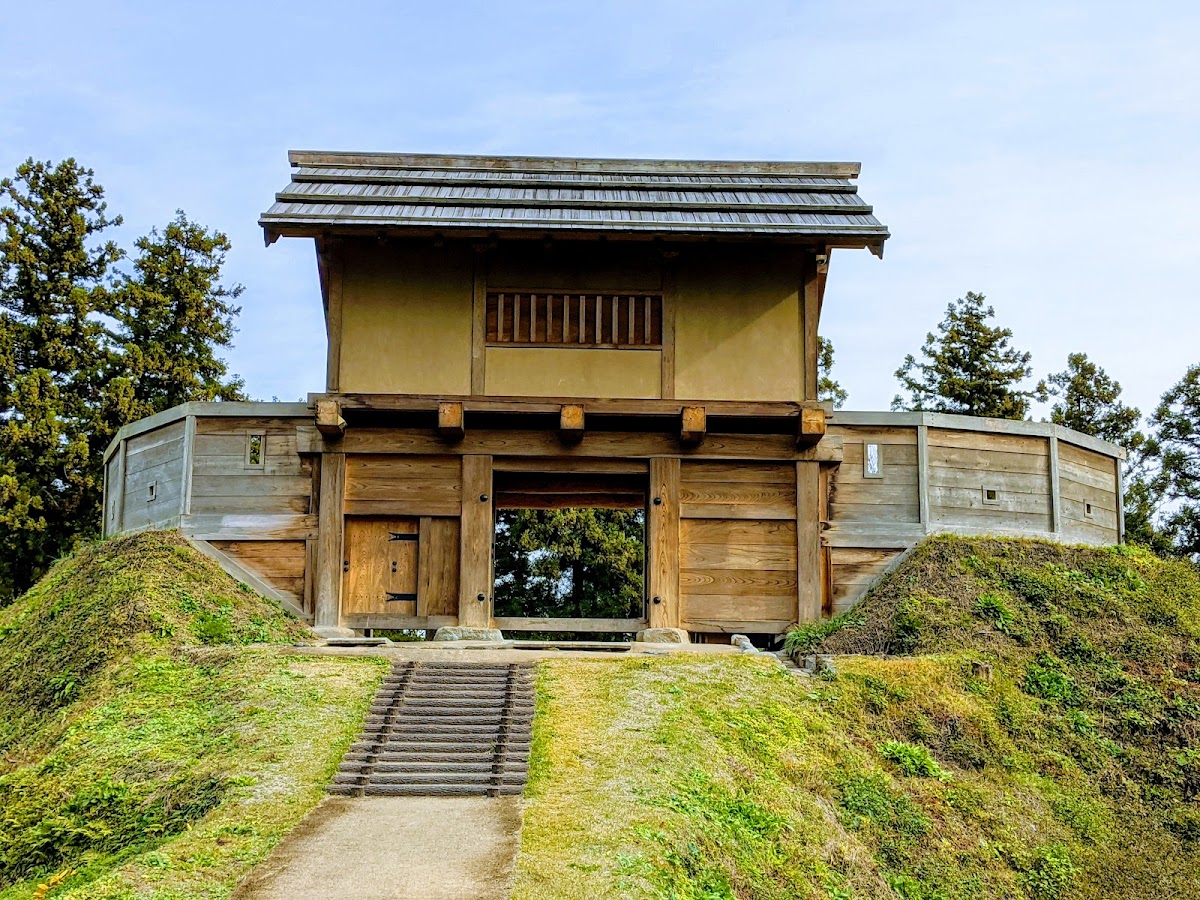
In 2015, the west entrance of the castle gate was completed. The results of the archaeological excavation of the castle gate and the construction of the faithful land, its special features are comprehensive:
- Hiroya’s tower-style castle gate
- Time-to-use construction techniques, traditional construction methods
- Imagination of ancient times in the city
The construction of the castle gate was very rare, and the castle was built in ancient times.
The castle of the four seasons
The different appearance that appears during the changing seasons of the castle complex:
Spring: When the birch blooms, the landscape is dyed pale powder color, the Hijikata process is mixed with the birch, and the beauty is lost.
Summer: 绿树生荫, 凉洑類人, 将MANWalk’s good leave 处.
Autumn: Autumn leaves are dyed red, the castle is covered with water, and this is the best time in history for the country.
Winter season: A piece of silence in the castle fort ruins of white snow, a scene that no one can imagine.
Transportation and visitor information
Location and transportation method
Location: Gunmaji, Takasaki City, Sanri-cho, Higashidae
Running car:
- Departing from Yuguan Yue Expressway Front Bridge IC, approximately 30 minutes
- Departs from Takasaki IC on Yukanetsu Expressway, approximately 30 minutes.
- Parking: Sanri Branch Parking Station, Wajikutegu Station, uniformly provided free parking spots.
Public transportation:
- It takes about 30 minutes to get to JR Takasaki Station, and get off at “Misatohonmachi” by bus, and then walk back about 15 minutes to get there.
- 25 minutes from JR Takasaki Station.
Visiting time and cost
- Viewing time: Full sky open (however, the sky is black at night, construction is white when viewing the sky).
- Key vote: Disclaimer
- Account visit time: A complete tour requires approximately 2-3 hours.
箕轮城遗导设设
Please understand that the castle site is located in the depths of the city, and the special setting is “Show the site of the castle site”:
- Point: Higashidaeya, Misato-cho, Takasaki City
- Opening hours: 9:00 am to 4:00 pm
- Closing day: Every Zhou 2 (How to be Zhou 2nd day, the next day of the new year’s holiday), New Year’s holidays
- Exhibition contents: History of the castle, archaeological excavation results, Yubara model, excavated artifacts, etc.
- Key vote: Disclaimer
If you wish to provide guidance, please refer to the guidance provided by the instructor (pre-demand).
Miluan City and Zhouguan Historical Scenic Spots
Yotakasaki Castle series
Takasaki Castle was first built in 1598 (3rd year of the Emperor’s reign), and was built by Naomasa Yuii, who was the main owner of the castle. Ii Naomasa’s location is convenient for transportation, and the new castle built in Takasaki is located on a flat land. Takasaki Castle was built by Ii Naomasa, the first figurehead in Takasaki City.
Visiting the Takasaki Castle ruins, the commander understood the passage of the castle to Takasaki Castle, and the change in the construction style of the castle fort during the time of the war.
Kowa Shrine, a temple belonging to the Yotono clan
Kowa Shrine, a temple associated with the Yotano clan, located near Miyagi Castle:
Nencho-ji Temple: This is the family temple of Nagano Narimasa, and another grave site.
Tatsumon-ji Temple: A temple of prayer for the Nagano clan, with a dedication plaque for the lord of Kudai Castle.
Minoyaku Shrine: A shrine dedicated to the Nagano clan, and the guardian deity of the Minamijo Castle.
Take a look at some of the scenic spots and learn more about the history of the castle.
Gunma and other famous castle forts
Removal of the castle, Gunma castle and castle fortress site:
- Kanayama Castle (Ota City): One of Japan’s 100 Famous Castles, a beautiful mountain castle with beautiful stone walls.
- Iwaguchi Castle (Higashiagatsuma Town): A mountain castle where the Ichiza Yosanada family was connected
- Numata Castle (Numata City): Ichiza Hirahara Castle Fortress, Nobuyuki Sanada is the owner of this homeroom.
The generals visited the fortress and the castle, and the general staff and the general staff understood the history of the war.
The culture of Miyazaki City
Designation of national historical monuments
Designated as a national cultural heritage site on October 15, 1987. As specified below:
- A representative of the country’s castle fortress site, which has a high history of history.
- Typical castle fort during the time of war, the main construction was the construction of the river during the drying up of the castle.
- Perfectly preserved, including many historical relics from the Nagano domain to the Ii domain.
- The state of preservation is good, and there is a high level of academic research.
Selected Japan’s 100 Famous Castles
In 2006, he was selected as the 16th member of the “Japan’s 100 Greatest Castles” by the Japan Castle Friends Association. This meaning:
- Wuda Castle Fort in the whole country has a particularly outstanding history and culture.
- A must-visit place for castle lovers and Japanese tourists.
- An example of a standard plan for the use of this castle.
“Hyaku-jo” Seal is designed to guide the location of the castle.
Archaeological excavation and research exhibition
Takasaki City Board of Education holds and opens exhibition of archeological excavation work, constantly acquiring new information:
- A monument to the construction of the foundation stones of the stone burial ground during the era of Ii Naomasa.
- Confirmed the history of the Takeda clan
- Confirmed structure of the castle fort during the time of the Chono clan
- Cultural artifacts excavated from Nede, daily life at the time of the Eimei era
I understand that the research results are trivial and that the history of the city is important.
Understand the source of the capital
Recommended books
The following books are recommended for you to read:
- 《Minojojo Yotakuno Narumasa》 (published by Takasaki City Board of Education)
- 《Mini City: The Fortress of the War》 (Published by Akagi Publishing)
- 《Narimasa Tatsuno and Miyuki Castle》 (published by Ebisu Book Publishing)
This small book can be purchased at various bookstores in Takasaki City.
Information
The latest information from the Takasaki City Government Office Newsletter, activity announcements, and archaeological excavation results. Please read the site before visiting the site.
Summary: The charm of Minocheng and its current meaning
It holds an important position in the history of Japanese castle forts. This is the residence of Narimasa Tsuno, and after the defeat of Takeda Shingen, the most powerful man of the era; at the same time, this is the remains of the current castle fort that was rebuilt by Narimasa Ii.
Nowadays, the castle tower has disappeared, but it has never been seen again.The ancient Shinto castle tower tower has a large scale Hijikata process. The landscape of the dry castle river was constructed, but it was the treasure of the castle, and the essence of the fort in the time of the war was the present. The building was built on the banks of the city river, and the place was shaking, and we were not allowed to see it.The people who built it 500 years ago showed great skill and unremitting efforts.
It is not possible to see the castle in the city, but it is also a tourist attraction, and it is very expensive to understand the history of Japan and the “teaching materials” of the master’s wisdom. At the time of the tour, you must visit the fortress of the castle, and feel the castle of the country at the time.
Explore the castle fort, enjoy the historical charm of the castle, and enjoy the natural beauty of the city while walking. In the spring, when the red leaves bloom, and when the red leaves burn in the autumn, it is possible to enjoy the history and natural charm of the season, and enjoy the first authentic and fulfilling experience.