Completion guide for Yicheng City (Anba Province): History and bright points of Deku Island’s largest mountain castle
Ichimiya Castle is this?
Ichigo Castle is located in Ichigo Town, Yu De Island City, Yu De Island City, and is a mountain castle in the era of Ichiza Construction Yu Nanboku Town and the Japanese War. The end of the eastern Longo Mountain (417 meters in sea length) with a single ridge extending from the eastern part of the mountain. The tower is 144.3 meters above the mountain, and the length of the mountain is about 120 meters. One of the largest mountain castles in the country, Ichimiya Castle was selected as one of Japan’s 100 Castles in 2017 (ranked 176th).
This is a natural defense construction on the south bank of the Akiigawa River, which was built during the Jinanboku-cho period, and was a fortress in the early Edo era. During the War of War, Ichimiya Castle was a battleground between the Miyoshi clan and the Sokabe clan for a long time, and a fierce battle was fought between both sides.
History of Ichimyo Castle
Construction and Nanboku Town period
The date of construction of the castle was 1338. During the Nanbokucho period when the Ichigo clan was active, the construction of Uwa Province was completed, and the castle was established. The Ichigo family is closely related to the priest family of Ichigo Shrine in Awa Province (exclusive shrine) and Oasahiko Shrine (Oasa-cho, Imanagata City), and is the main owner of this area.
During the Nanboku Town era, Ichimiya Castle was a mountain castle with a natural topography that was fully utilized. It is possible to utilize the natural terrain of the river, create a natural castle river, form a strong fort, and quickly envoy troops with a small number of residents. At that time, the structure of the fort was similar, and after the end of the war period, extensive renovations were carried out.
Exhibition of the Ichimyo Susuke era and the Warring States era
At the time of the war, Ichimiya Castle was in Ichimiya Castle, and the author’s works were exhibited. At the same time, the Miyoshi clan was well maintained by Ichimyo, who was a strong local owner of Awa, and at the same time exerted constant self-improvement. In this period, the fortification was completed, extensive renovation was carried out, and the stone citadel was comprehensively constructed and the citadel was improved.
During the Tensho period (1573-1592), the former rulers of Longsokabe invaded Awa Province and entered Shikoku, and Ichimiya Castle was the site of a fierce battle. In 1582, most of Awa Province was ruled by the Longsokabe clan, and Ichimiya Joya entered the country under its control. During this period, Ichinomiya Castle was established, the Sokabe clan was established, it was an important point in Awa Province, it was established, and the fortifications were completed and the construction continued.
Beehive era
In 1585, during the conquest of Shikoku by the vassal Hideyoshi, the Chosokabe clan surrendered, and Awa Province was divided and the government was established. After purchasing the home, the castle was built on the island, however, the construction of the castle and the important attached castle pond were reserved. The work is one of the nine castles in Awa, and it has an important effect on the central defense system of the castle on the island.
During the time of the Hachijo clan, he was appointed as a high-ranking vassal and the lord of the castle. Since the citadel’s destruction and management has continued, the fort’s successive developments have led to the modernization of the citadel. However, with the arrival of peace during the Edo period, the importance of military fortifications in the mountains and mountains gradually declined. ### Shiroike’s 废弃
In 1638, the Eiko shogunate’s “One Domain, One Castle” order was officially established, and Ichimiya Castle was officially established. Within the precincts of the Dekushima clan, the remaining Dekushima castle was preserved, and the additional castle was preserved. After the construction of the castle, the construction of the castle was completed, and the functionality of the fort was also lost.
However, the fortifications, outer palaces, etc. have been preserved for a long time, and the history of the envoys was a rare historical site. During the Edo era, the land where Ichimiya Castle was located was called “Shiroyama” by the people who lived there, and was the name of Shiroyama.
Castle structure and light points
Honmaru (main enclosure)
The main enclosure is the most important structure within the castle, and is a mountain tower with a total of 144.3 meters. The length of the eastern and western areas is approximately 40 meters, the length of the north and south areas is approximately 30 meters, and the construction is solid. The main part of the main enclosure is 3-5 meters high from the stone wall, and it is the oldest man in the castle that gives a serious impression.
The land inside the main enclosure is completely flat, and is the site of the castle’s main residence and other important construction sites. However, the traffic under the roof is still clear and visible. A bird’s-eye view of Deshima City and the Axue River basin, with its important strategic locations.
The stone mound of the main burial mound has been fused with coarse and finely detailed stonework techniques, and its construction has been completed several times. The reason is that the stone tombs in the south have been preserved and are always in perfect condition, and we have provided the valuable materials for the preservation of the stone tombs in the south.
Kojumaru
On the east side of the main burial mound in the position of Xiaomaru, this is the second most important burial mound. It is a very important function for the lower master’s cap, and for the defense during defense. The small circle was built with a stone wall, and the main structure was an independent defensive fortress.
Ichijo 护城川将小廓丸 yoshu’s burial mound was separated, and the immediate envoy, Kogyōmaru, was attacked, and without law, the main burial mound was removed. The total length of the river was 5 meters, the depth was 3 meters, and it was clearly visible. The stone citadel of Kokumaru has been perfectly preserved, the mission was established as an important historical site, and the castle defense system of the 19th century has been systematically restored.
Saizomaru
Saizomaru is a defensive construction project on the northwest side of the castle mound of Yushu. The origin of the name is unknown, but it is one of the 19 most important defensive fortresses in the city. The defense construction aspect is relatively large, the structure is strong, and the large amount of soldiers can be carried. In the northern mountains and valleys, the enemy army invaded the northern part of the valley.
Saizomaru is a four-round finished stone tomb, which is the north tomb, built on the highest mountain in the world, and is technologically advanced. The height of the partial burial mound exceeded 4 meters, and the stonework technique was completed in 19th century. The presence of a siege in Marunouchi was completed, and a pseudo-Mizui invasion was made at the time of the announcement.
Myojinmaru
Myojin Maru is a defensive construction project on the south side of the castle. This is the name of this shrine. The Myojin Maru was an important defense construction project to the south of the castle, and an important role in preventing the invasion of the southern enemy.
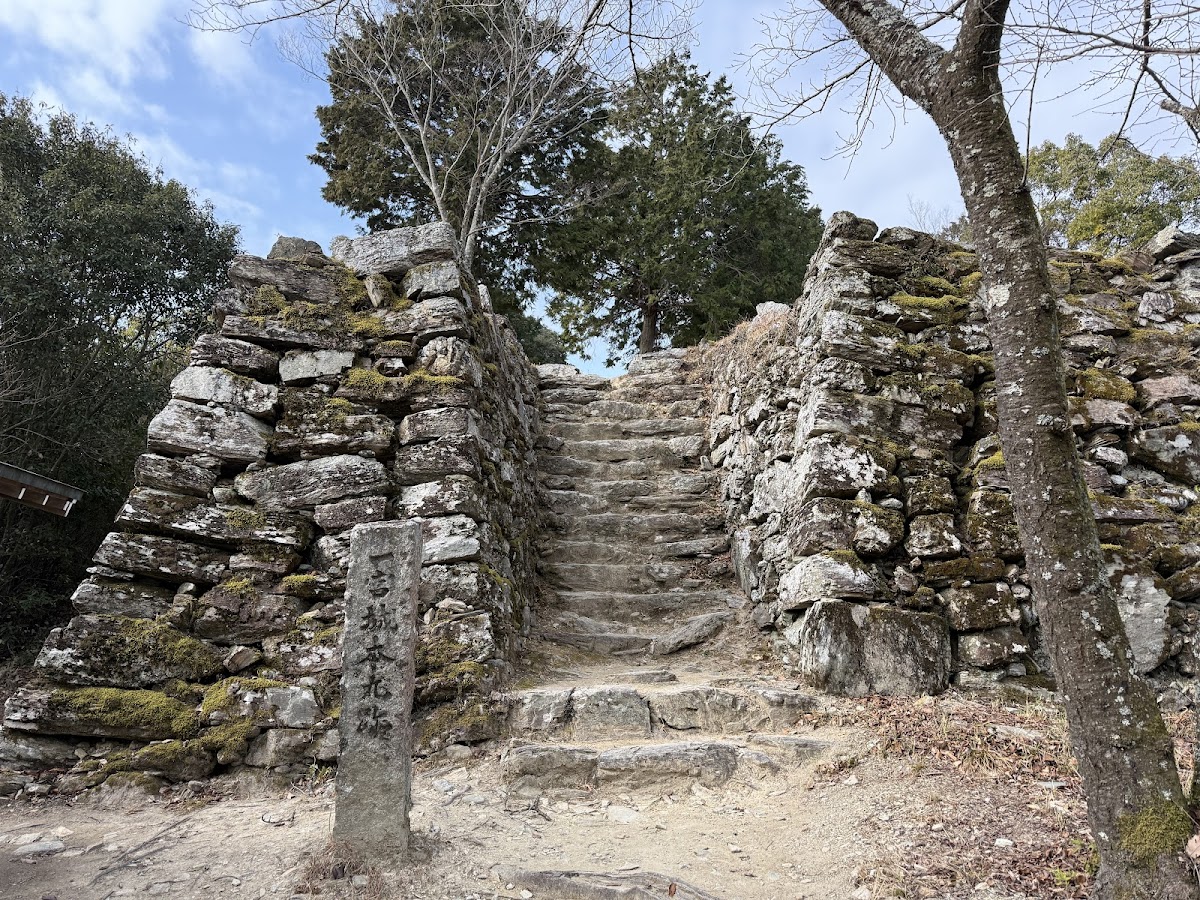
The special feature of this defense work is that it is a stone burial station. Castle formation, ladder-like construction, limited path for attackers, and formation of advantageous structures for defenders. The construction time of the Myojin Maru stone burial mound was determined by the time it was built, and it was possible for the Sokabe clan to continue making repairs during the long period of the Sokabe clan.
Goten (village castle)
Outside the castle pond of the mountain, there is a place under the foot of the mountain, which is the site of a famous residence. Otenya was also known as a village castle, which was the residence of the castle owner during the peace period, and was also a government official office at the same time. Currently, the location of Ichimyo Shrine and Dainichiji Temple is Goten-an.
Gotenan is located on a flat area near the Akai River, has a good geographical location, and has convenient water intake and a harmonious daily life. Typical layout of medieval Seiyama castles after the establishment of Ichimiya Castle: During the war, the castle and pond were located in Usan; during the peace period, the owner’s residence was located in Usan. However, most of the landowners’ residences did not exist long ago, but there are still traces of the Nawa topographical expedition.
Defense system
Ichimiya Castle’s defense construction was cleverly designed and the natural terrain was fully utilized. The natural castle outside the river, the inner part of the castle was built in the form of a multi-tiered castle, and the formation of multiple fortifications.
The road to the city pond is limited enough, and the enemy can only pass through the narrow mountain road. The city’s defense department is located on the city’s road line, constructing the construction of the stone wall and earthworks, ensuring the maintenance of the military’s advantageous terrain, and making it easier for the city to attack. In addition, each of the outer forts has been repaired and the trenches are vertically blocked by the river, so each of the outer forts can be independently defended.
In the lower part of the stone wall, there are many difficulties. The combined strength of the stone walls and the defense ability of the city’s city castle. In addition, each outpost’s deployment and well-thought-out mutual support; immediate envoys to attack and attack one outpost, and other outposts to provide firepower and cover.
Current situation and future protection
Luran City Palace has not yet been designated as a national cultural heritage site, but has been listed as an important cultural property of De Island City. The main fortifications, including the castle tower, the outer fort, the river fortress, and the vertical construction of the river fortress, have been perfectly preserved.
A stone tomb several hundred meters long is currently on hold within the castle. There are many different construction techniques for Yuyu castle towers, such as rough and fine stone tombs, and finely detailed stone tombs. Some parts of the stone burial mound are broken, but the structure is in good condition.
The form of the fort’s inner hospital is also clear and clear, and the inner hospital is clearly visible at the moment. The entire structure has been covered by a wooden cover, but the basic terrain has not yet been completed, and the original appearance at the time of construction has been put on hold.
In recent years, the local cultural relics protection association and Hede Island City government have been promoting the improvement of sightseeing routes. Periodic maintenance of grass cutting, grass cutting, and tree wood provide high visibility of the site, creating a more convenient viewing environment for tourists.
Maeoichi Miya Castle
Public transportation
From the JR Tokushima Station, go to the Ichimiya station in Haji, Tokshima City, and get off at the Ichimiya station. The car ride takes approximately 30 minutes. After getting off the train, it takes about 5 minutes to walk to the castle gate, and it takes about 30-40 minutes to get to the castle gate.
Selfishness
Departing from the De Island Expressway, De Island Exchange Road, No. 1, National Highway No. 192, 15 minutes by car. Ichimiya Shrine has a parking lot, and Ichimiya Castle is located in front of Ichimiya Castle. It takes about 30-40 minutes to walk from the parking lot to the castle tower.
Guanyu Climbing Route
The main mountain climbing route for Ichimiya Castle is the main road leading to Ichimiya Shrine. However, the roads are in good condition, but the unique elegance of Usanseong Fortress, and the suitability of shoes and Japanese clothing. Rainy weather and wet and slippery roads after rain.
Round-trip climbing schedule: 1 hour and 30 minutes to 2 hours. There is a rest area along the way, but there is also water for self-drinking. Summer demand for mosquito protection, winter demand for warm clothing.
Zhoujian scenic spot
Ichimyo Shrine
Ichimiya Shrine is located at the entrance to Ichimiya Castle, and has been a ritual site for local residents since ancient times. The lord of Ichimiya Castle also visited this shrine, and the shrine is a deep source of connection to Yoichimiya Castle. Inside the shrine, there is an ancient shrine, a temple that has been around for hundreds of years, and a rich history of history.
Dainichiji Temple (13th temple on the Shikoku 88-temple pilgrimage)
This is the 13th temple in the 88 temples of Shikoku pilgrimage, located near Dainichiji Iyuichimiya Shrine. The construction of the Yukofa Grand Practitioner, the suction of the Emperor. A group of guests visited Dainichiji Temple Yoichimiya castle ruins together.
Kazuo Igawa
鲇鱼护气川: To the north of Yuyi Palace City, it is a natural river near the city pond. Now, in the early summer, when the stream was flowing in the river, the heat was extraordinary, and the fragrance of the fish was very good. From the banks of the river, you can see the palace castle ruins at the mountain pass, and the geographic location of the mountain pass.
Guanyu “Japan’s 100 Famous Castles (End)” Seal Information
Ichimyo Castle Yu was selected as one of Japan’s 100 Famous Castles (176th place) in 2017. Seal location U De Island City Museum (1-24 Motomachi, De Island City). Book opening hours: 9:00-21:00 on weekdays, 9:00-17:00 on weekends and holidays (closed on the first day of the week, and the following day will be closed).
The seal is located in the first building of the library, near the clothing office, and the number of people in the city is free of charge. However, the demand is self-prepared. Comprehensive handbook of “Japan’s 100 Famous Castles (续)” official guidebook and supplementary collection.
The charm of Ichimiya Castle and the highlights of the tour
The most attractive feature of Ichimyo Castle is its perfectly preserved land, which looks like a mountain castle from the time of the Empire. Stone tombs, castle tombs, etc. can be clearly seen, and the status of the fort at the time is clear. Of course, it is a must-visit place for those who love castle forts.
In front of the construction, the castle tower was built, and after that, the castle tower was built, and then the castle tower was built. Through the observation of each castle’s layout, the structure of the stone castle is ascertained, and the strategic defense system of the castle is exquisite. Outside, the view of the castle tower, the magnificent scenery, and the magnificent scenery of De Island City and Zhouyan Mountains.
Climbing the castle requires a certain amount of physical strength, but the beginners are also able to climb the mountain and climb the mountain in good condition. However, the fortress in the Yuyu Mountains is usually a good place, so the time required to climb the mountain must be maintained by the force. The beautiful scenery of the four seasons, the historical romance of the time, the general is a first-class authentic experience of luxury.
History of Ichimiya Castle
Ichimiya Castle is a symbol of the conquest of Awa Province from the medieval period to the early modern period. At the beginning of the Nanboku-cho period, the history of the Japanese castle was similar, and it was completed during the war period, and was one of the most famous modern masters.
In particular, it was the stage for the war between the Miyoshi clan, the Miyoshi clan, and the Sokabe clan, and the political and military affairs of Shikoku during the time of the Kingdom of China were very important. Ichimiya Castle’s battle is not the same as Ichiza Castle’s fortress, but it is also a part of the battle between Awa Province and Shikoku.
In addition, the stone tombs of Ichimiya Castle are rare historical artifacts, and exhibits of early modern stone masonry techniques from the time of the war to the present day. You can see the rough masonry and fine stonemasonry techniques in the castle fortress, and the castle fort is an important research site.
overview
Ichinomiya Castle is the largest mountain castle on Dek Island, and was built in the early days of Nanboku Town and the early Edo period, and was an important point in the country’s history. It has been around for about 300 years. The castle fort has a large number of people, and the defense system is comprehensively used as a natural barrier, and the stone citadel is well-preserved.
Ichinomiya Castle is selected as one of Japan’s 100 most famous castles, attracting attention from all over the country, and is not only a hot spring and scenic spot for castle fort lovers, but also a paradise for history lovers and Japanese mountain climbing enthusiasts. The history of Ichimiya Shrine, Dainichiji Temple, etc. in this area is also explored, and the area’s history and culture are further explored.
When you visit De Island, you must visit the city palace ruins, and feel the appearance of mountain castles during the time of the Empire. The history of the mountain climbing along the mountain path, the castle tower in the castle tower, and the history of the Buddha’s eyes.