Complete walkthrough of Gushan Castle: Tanba, Ikuri, and Mikawa three castle history and communication information
Japan’s Yutaza famous fortress “Zuyama Castle”, Biza castle fort is located in different districts of Yu, each with its own unique history. Main text details: The three most famous Gushan castles: Tanba Gushan Castle (Takushan City, Kyoto Prefecture), Yikusanshan Castle (Miekusanshan City), and Wasamikawa Gushan Castle (Ezhiku New City).
Memories
- Is this Jiangshan Castle? -Japanese three-seated castle
- Tamba Shoyama Castle – Akechi Mitsuhide Yohonnoji Temple Change
- Ikokuyama Castle – History of Kanamachi Castle
- Mikawa Shozan Castle – the residence of the Okudaira clan
- Traffic and visit information for each fort
Is this Jiangshan Castle? -Japanese three-seated castle
In the history of castles in Japan, the fort used to be known as “Kuyama Castle”. The most famous of these is Tamba Toyama Castle in Tokugawa City, Kyoto Prefecture, which was built by Akechi Mitsuhide and is also famous for its construction and change from Honnoji Temple. Next, it was located in Ikurimotoyama Castle in Gumiyama City, Sanchong, also known as “Kanamachi Castle”, which was the administrative center of the Ikurimotoyama Clan during the Edo period. In addition to this, there is Mikawa Lushan Castle, built by the Okudaira clan, which exists in Aizhiku New City.
The construction of fortifications was an important military base in each area, and played an important role in the history of the Japanese military from the time of the warships to the time of the warships. Main text details: The historical background, architectural features, and current state of the Sanza Toyama Castle.
Tanba Shoyama Castle Akechi Mitsuhide Yohonnoji Temple Change
History of Tamba Toyama Castle
Tanba Toyama Castle is currently located in Yamagata Castle in Shinjuku-cho, Tokugi City, Kyoto Prefecture, and is currently known as “Tanba Toyama Castle.” Conquest of Tanba Province under the command of Nobunaga Akechi, Mitsuhide Akechi, who founded the castle fort.
Construction history
In 1577 (Tensho 5th year), Akechi Mitsuhide began construction of the Ichiza Castle fortress in Zazuyama (the center of the Tetsuya Basin), a base for his conquest of Tanba. The castle fort was built in 1578 (Tensho 6), overlooking the Hozugawa River and a small mountain (Mt. Aranchusan) in Numasaji to the north. General Mitsuhide created this place as the administrative center of the Tamba area, and the fortress where the generals started to develop and modernized.
During the construction process, Mitsuhide skillfully utilized the terrain, designed the castle fort, and made full use of its natural defense capabilities. The position of the castle tower is overlooking the valley, surrounding the surrounding area, and the castle is surrounded by Hehe stone mounds, which has increased its defensive ability. This is a military base, which is also the center of the Tamba district.
Honnoji Temple’s Yokoyama Castle
On June 2, 1582 (Tensho 10), the most famous rebellion in Japanese history occurred: the Honnoji Rebellion. The truth is that this is the first time that Akechi Mitsuhide has started playing a historical role. Installed, Nobuaki Mitsuhide called “The Enemy in Honnoji Temple”, and the rate was approximately 13,000 famous soldiers marching into Kyoto.
A special status in the history of Japan in which the envoy of the Kouichi Incident resided in Tamba Toyama Castle. Today, May 3, 2016, Mitsuhide’s second ceremony commemorating the arrival of the fortress in the city, attracting many history lovers, came to an end.
Tamba Toyama Castle in Edo era
After the transformation of Honnoji Temple, he completed the construction of Tamba Toyama Castle, and finally became a feudal lord. During the time of Hideyoshi, the vassal, Hideaki Kobayakawa was the lord of the castle. After the battle of Kanbara, the samurai under Tokugawa Ieyasu arrived at the fort. During the Jiang Era, the Tamba Shogun Castle was a strategic strategic point on the mountain road, and the direct landing was an important role.
During the Hiei period (1624-1644), the Matsudaira clan was the lord of Chengdu Castle, and the fort was repaired and the castle town opened and opened. During this period, the castle fort was also known as “Dragon Castle”. After the beginning of the Meiji era, when Yuyu Castle Pond was invaded, many of the castle’s forts were constructed and removed, but some of the stone mounds and castle rivers have been completely preserved.
The conclusion of Tamba Sword Castle
The historical records of Yuyu are scant and detailed, and the complete and complete model of Tanba Drama Castle is incomplete and clean. However, in the course of archaeological excavation and ancient land research, the results of the research are shown.
Fukyo Yosoku Mound
Nobuhiro, concentric circle-style cloth bureau for the castle fortification, Yuhonmaru, two-maru wasan-maru three-layered burial mound constructed. The castle tower (castle tower) was installed in the main Marunouchi, but the castle tower was in imitation form, and there were many different types of texts. A variety of techniques for making stone crocks, `wild stone'' (coarse stone) and `fine stone” (fine stone), were developed, and a performance of the fort construction techniques of the time when Akechi Mitsuhide arrived at the Edo period.
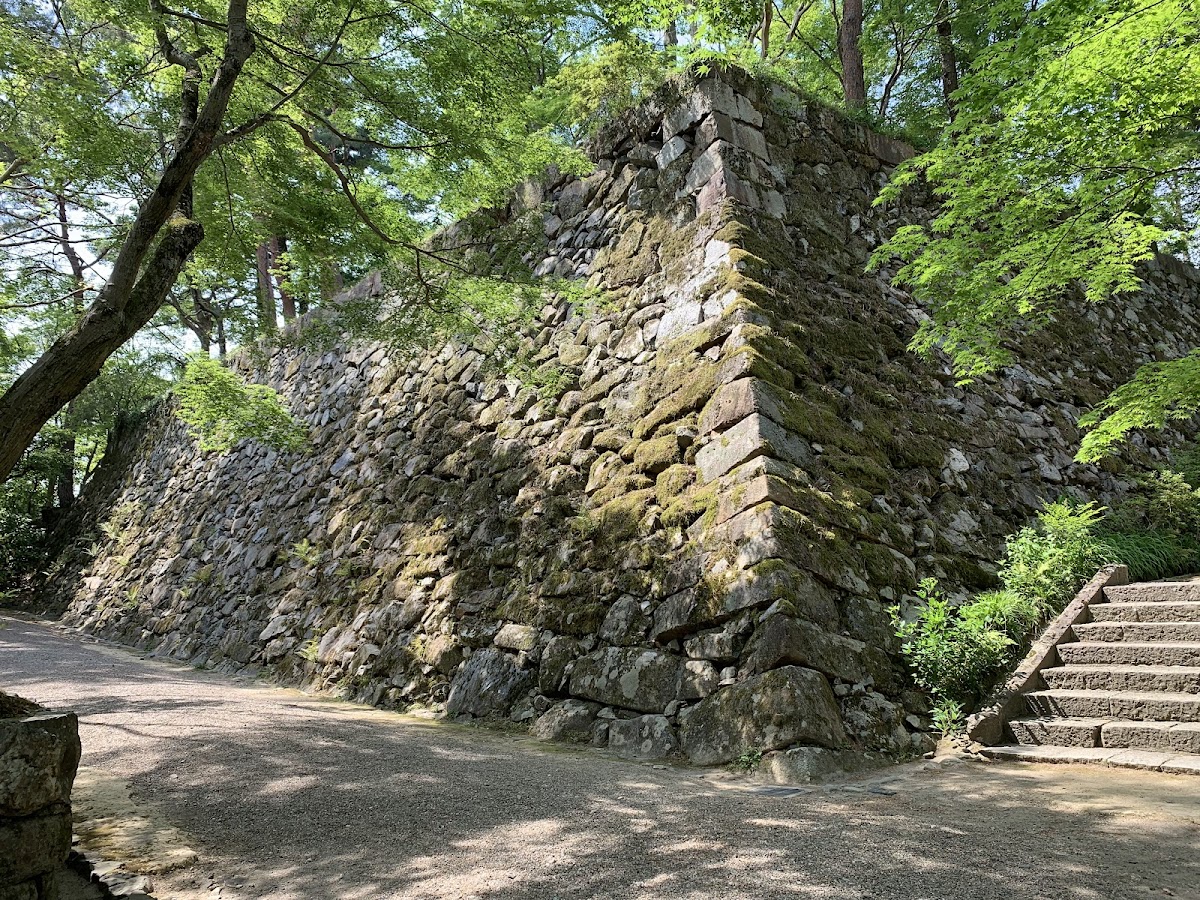
In front of us is a part of the castle fortress site within the premises of the main corporation. The reason for this is that the castle tower’s stone tombs have always been preserved in perfect condition, and the history of the construction of the fort was a treasure when observing the mission from a distance.
Castle tower and construction
The existence of Tamba Toyama Castle is disputed. One type of law review is that there is one troupe and three levels of the castle tower, but there are few details. The construction of the castle tower is similar to the construction of a castle tower in the period of the river war, and the construction of a certain kind of high-level construction was possible at that time.
Inside the castle tower, there is a palace hall, which is the residence of the owner, and also the place of political affairs. In addition to this, there were defensive works such as castle towers, fire pits, and castle gates, but there were still some minor constructions during the Meiji period and the end of the 19th century.
Current status of Tamba Toyama Castle ruins
Right in front of you, the central part of the Tamba Gushan Castle ruins, inside the Yu Daben Teaching Law Camp. Omoto Castle received regular visitors, but the new crown epidemic situation was suspended. The latest development status is as follows.
Part of the area around the castle fortress site is open to the park, and visitors can walk there to explore the ruins of the castle river. The Ichijo Tourist Route, which opened in Tokugawa City, and the ruins of Shotanba Toyama Castle and others, included the history of Akechi Mitsuhide and others, and became an ideal travel destination for history lovers.
Ikokuyama Castle – The history of the castle
Origin of Ikuriyama Castle
Ikuyama Castle is located in the Plains Fortress in Honmaru Town, Guishan City, Sanchong, also known as “Gong Long City” (also known as Long City). Built in 1265 (Bunsho 2nd year), when the history of the castle fortress began in 1265, it was built in Wakayama, Wakayama-cho, Kanzan City, Mie Prefecture. Afterwards, the defense was completed and the fort was destroyed.
From time to time to Azuchi-Momoyama time
At the time of the war, the Ikkoku-kuniden Shinden-cho-sho restrained system, and Shiroya Shiroya entered the country. The lord of the castle was Guanyi Zhengtan-hyo, who was in charge of the castle in 1590 (18th year of the Tensei era), and was in the old castle of Emotoso and the new castle. Shinjo is a typical early modern castle fort, with a flat ground and a three-tier castle tower.
The construction of the fort by the Emperor Hideyoshi was a part of the construction of the fort built by the Japanese emperor Hideyoshi. The fort is located at a key strategic point on the East Coast, and plays an important role in the defense of the East Coast.
Jiangzhou Dynasty Ikurijo Mountain Castle
During the Edo era, Ikokuyama Castle was the administrative center of the Ikokuyama clan. In 1632 (Kanei 9), during the reign of Miyake Yasumori, the castle tower was occupied. This is a very interesting incident.
The establishment of Tadaharu Horio’s “one country, one castle” ordinance established the castle tower of Tamba Toyama Castle, and the castle tower of Tamba Toyama Castle. However, in this particular case, the true story of the story is not fixed, but it is universally recognized, and the cause of the construction is that at the time there was a fort with the same name as the same name — “Zuyama Castle”.
During the Shoho years (1644-1648), when Toshi Honda was the lord of the castle, the castle tower was built on the site of Ohara, and the Ichiza multi-layer corner tower was completed. The corner tower is still perfectly preserved, and is a rare historical relic of the city.
Features of Ikuriyama Castle
Ikuru Mountain Castle is located along the U. East Coast, and plays an important role in protecting the area and serving as an important transportation hub. The castle fort has a ladder-style construction station, a branch castle tower, two outer forts, and three outer forts.
Sekijyoyojoga
The stone fortification technique used for citadel-style stone fortifications was `uchikomi-tsugi'' (uchikomi-tsugi) and `cut-in-继” (kirikomi-tsugi). In particular, the castle tower is surrounded by a stone wall with a high altitude, and the construction is complete and the defense construction is solid. The construction of a fort has a strong defensive ability.
Damen Tower
It was built during the Yusho period, and has been perfectly preserved since then, making it one of the most important existing structures in the city. The construction of the Yuhara castle tower was completed, the castle fort was built high, and the castle was opened. The tower is not used for defense construction, but it is also a place where weapons are stored. ### Current status of Ikurayama Castle
Immediately, the construction of the ruins of Ikuyama Castle and the opening of the history of Ikuyama City. Guests can visit the multilayer pagoda, stone wall, and part of the castle river. The castle fortress site is surrounded by a castle park, a recreational park provided by the public.
The site of the Gushan Castle is used by the security forces of Gushan City, and the information board is repaired. The city government visited the city regularly, visited the city, and visited the city to read the history of the fort.
Mikawa Shozan Castle – Okudaira’s residence
History of Mikawa Chiyama Castle
Mikawa Guzanjo Castle was located in Uaijikushinshiro City, Koichizayamashiro, and was the residence and name of the Taira clan. Built in 1424 (31st year of the Uei era).
Okudaira clan and Mikawa Toyama Castle
During the 1375-1380 period of Okudaira Toshunyu (1375-1380), the most popular man in history lived here, and the first Kawajiri Castle was built. Afterwards, after completing the construction of Zhongshan, a new defensive castle was built, and the commander’s residence was occupied. It was an important part of the costume performance during the time when Toyama Castle was in the war, and it was the focal point of the Okudaira clan in the Mikawa area.
Mikawa Shozan Castle during the war period
During the Warring States period, the Mikawa area was a battleground where feudal lords such as the Imagawa clan, the Ida clan, and the Tokugawa clan competed. When the Okudaira clan came to join them, they changed their position and established themselves as small feudal lords. This is because Nobumasa Okudaira, who was famous for a long time, and Ieyasu Tokugawa, who was also active in the military, and who was a senior advisor, held the position of the Okudaira clan.
Summary of Mikawa Toyama Castle
Mikawa Toyama Castle is a mountain castle built on a mountainous terrain that utilizes the mountainous terrain, and its defense works have been fully utilized with natural screens. A series of interconnected internal hospitals, with multiple internal hospitals distributed along the mountain spine.
This is the castle fort’s defensive construction, which is not a stone burial ground, and is a land quality castle fortress and trench. Various construction techniques are unique to mountain fortifications, and they are all well-designed to make full use of the topography.
Current status of Mikawa Shoyama Castle
In front of us, the ruins of Mikawa Tozan Castle are preserved, and the history and history of the new castle town exist. Because it is a mountain fortress, climbing requires a certain amount of physical strength, but the scenery of the mountain is quite spectacular, and visitors are able to experience the mountain fort in the country’s history.
Traffic and visit information for each fort
Tamba Toyama Castle (Kyoto Prefecture Tokugawa City) Transportation Guide
Sitting fire car
- Approximately 10 minutes walk from JR Sagano Airport Station South Exit
- Approximately 30 minutes from Kyoto Station
Self-indulgence
- Approximately 10 minutes’ walk from the Kyoto Interstate Expressway Exit Exit
- Available nearby public parking areas
Visit information
- Viewing time: Nezuo Daimoto corporation’s entertainment details are determined.
- Expenses: General fee (required based on the demand for land at the entrance of the main corporation)
- Telephone: 0771-22-0691
Ikuyama Castle (Mieguyama City) Transportation Guide
Sitting fire car
- Walk approximately 15 minutes to JR West Main Line Mountain Station
- Approximate demand from Nagoya Station to Kuzan Station is 1 hour.
Self-indulgence
- Approximate demand for 10 minutes from the Exit of China-Hanshin Expressway “Zuyama IC”
- Parking area near the castle fortress site
Visit information
- Opening time: Full open (inside the gate)
- Gate: No fee
- Call: Gushan City Tourist Association Telephone: 0595-97-8877
Transportation system in former Sanhe Xiangshan City (Anzhiguan New City)
Sitting fire car
- From JR Tianjin Line “Mikawa East Station”, the demand for the rental car is 10 minutes.
Self-indulgence
- Approximate demand for the Shinto-Mei Expressway “Shinseng IC” exit approximately 20 minutes
- Parking area near the fort entrance
Information for viewingInformation**
- Opening time: All sky open (Yuyu is mountain castle, construction white sky visit)
- Gate: No fee
- Telephone: Shinshiro City Tourist Association Telephone: 0536-32-0022
Gushan Castle ticket and commemorative item
In recent years, the collection of “Castle Entrance Cards” has been received as a commemorative item of the Castle Encyclopedia. The design of each fortification has been completed, and the characteristics of each fortification have been realized.
The main theme of the Kikyo family lineage was the Tamba Toyama Castle vote, which was Akechi Mitsuhide’s family lineage, and the design was also completed to change the style of Honnoji Temple. If you are interested in purchasing a Japanese memorabilia store, please visit this ticket.
The design of the butterfly ticket for Ikuyama City is also known as “Baby Butterfly City”, and the customer information center of Gushan City can be purchased.
Overview
The fortress of the famous “Zuyama Castle” in Sanza, located in the district of Tsuru, each with its own unique historical stamp. A major turning point in Japanese history: the Akechi Mitsuhide Incident and the Wahonnoji Temple Conflict. It was an important central post on the East Coast, and an important administrative function for traffic peace during the time of the Edo period. The construction of Mikawa Toyama Castle was the focal point of the Okudaira clan, and it continued to exist during the war.
Since the ruins of the castle fort, the rare and valuable historical heritage has been perfectly preserved, and it is understood that it is an important place in the historical background of the castle construction technology and Japanese culture. The castle fort has its own unique charm, and if you wish to visit the museum, you will be able to experience the rich history of Japanese castle fort culture.
When visiting a city fort, you will understand the characteristics of each city fort before building it, and then choose a self-interesting city fort. It is possible to trace the footprints of Akechi Mitsuhide in Tanba Chiyama Castle, the construction of the castle fort during the Jiang Kong period, and the mountain fortress of Mikawa Chiyama Castle. Enjoy all your heart and enjoy the different history of the castle fortress!