Toda Castle: A castle that was not built during the war and the Amako clan’s decorations.
Kotian Castle is a typical mountain castle during the Warring States period, located in Guangmu Town, Anmu City, U Island. As a result of the construction of the mountains and mountains, it is the establishment of the Amago clan in the Chugoku region, and the imitation of Hiroyuki’s solid defense construction, which is praised as an “impossible fortification.” Nowadays, Toda Castle has been designated as a national historical monument, and has been selected as one of Japan’s top 100 castles.
History of Kaden Castle
Construction of Yonago clan
The date of construction of Kotian Castle is generally accepted, but it is universally acknowledged that it was built by the Sasaki clan from the late Heian period to the early Meiji period. At first, it was a small Yamanaka castle fort, then during the Muromachi era, it was attached to the Amago clan control area, and the castle was expanded to a large castle.
After the War of Conflict, the Amago clan established a stronghold on the country and made rapid efforts. Among them, Amago Tsunehisa is known for his outstanding tactical talent, and is also known for his outstanding strategic talent, as well as the fortifications of Tomita Castle and the territory of 11 countries in China. The permanent construction of Tomita Castle has continued on a large scale, with the construction of a fort that is impossible to erect, and the skilful use of land has resulted in the topography of Mt.
The golden age of the Amago clan
In the first half of the 16th century, the Amago clan reached its peak. At the time of the conquest of Tsunehisa and Haruma in Amago, there were 11 areas in the Chengdu region of China, including Iwami, Iwaki, Hoki, Chou, Mimasaka, Bokuzen, Pizhou, Kokuhou, Anriwa Harima, and the largest military lord in the Chengdu region. Tomita Castle is not a military fortress, it is a political fortress, it is a cultural center, and the castle town is also very prosperous.
At that time, Tomita Castle consisted of a large fortress, a main tower on a mountain, a castle tower (an old dormitory), a mountain palace, a mountain palace, and a total length of about 4 km. A castle town with a concentration of merchants, Japanese craftsmen, and craftsmen, has been formed into a full and vibrant social district.
The conflict of the Yomori clan and the fall of Tomita Castle
The history of the Amago clan continued to flourish. After arriving in the country, the Mori clans were forced to take over the country, and the two great clans fought fiercely in the Chugoku area.
From 1562 to 1563, the Mouri army completed its first battle against Gassan-Tomita Castle, but due to the strong defense of Tomita Castle, the strong resistance of the Japanese and Amani forces made them unable to overcome the attack. However, in 1565, Mori Motonari attacked Tomita Castle again. The second Gassan Tomita Castle Battle was performed in a day-long battle, and its main strategy was to destroy the city.
The Mori Army’s base was cut off, and the connection to Tomita Castle was completed, and the attached castle pond was connected and occupied. The interior of Tomita Castle was isolated and unaided, with food and shelter, and the number of castle defenders declined. Finally, in November 1566, Amago no Kyuden surrendered and Tomita Castle was released. This title is written by Mr. Amago and concludes the war as a feudal lord.
Tomita Castle after the Mori clan
Empress of Tomita Castle was acquired by the Mori clan, and the country’s main point was the control of military production. Others completed the construction of parts of the castle, and the construction of other important military bases. However, after the invasion of Kanbara, the Mori clan’s territory was reduced to Suo Walong and the country, and Horio and Harubei’s former residence was Tomita Castle.
Tomita Castle was the residence of Horio Yoshiharu from the beginning, however, due to its mountainous topography, its disadvantage was the center of political harmony and development, and the construction of Matsue Castle began in 1611. After Matsue Castle was built, Tomita Castle was built. After this, Tomita Castle was washed away, and the historical stage was changed, and it was a long time ago, and in the middle of the month, the arrogant recollection was natural.
Summary of Tomita Castle
Central distribution in the mountains
The special feature of Tomita Castle is that it is a replica of Hiroya’s size, and it has been used for a long time.197 Gassan’s fort defense construction in the United States. The castle tower is located at the top of the mountain, the tower is opened from the tower, there are many forts distributed along the mountain, and a typical multi-foreign mountain castle structure has been formed.
The main outer forts include the main castle tower (Yamanaka Palace) in Uzan, the second outer fort, the third outer fort, and Senjodaira (Yamashita Palace) in Uzan. In addition, the outer fort was separated from the stone wall and the land, and the castle was further strengthened by the vertical trench and the fortifications.
Yamanaka Palace Wayamashita Palace
Tomita Castle has two main residences: Yamanaka Palace and Yamashita Palace. The Yamanaka Imperial Palace is located near Yugeshan Mountain, and is the ultimate defensive fortress during wars. In addition to the Yamashita Imperial Palace, Senjo-daira was located under the foot of Uzan, and during the peace period, it was the residence of the official government office.
The structure of the castle is sophisticated, convenient for daily administrative tasks, and has the ability to defend itself in battle. Yamashita Imperial Palace was used for the diplomatic relations between the Yu domain and Yamanaka Imperial Palace was used for the Yu clan’s military operations during the War.
Ishifunyo defense construction
Tomita Castle is now a reserved stone burial mound. A spectacular view of Sugayaguchi’s stone masonry technique, which was exhibited at the time. In addition, the castle was renovated and constructed, and at the time of its appearance, skillful defensive measures were taken to prevent enemy invasion.
The road to the mountains is well-organized, but the attackers are far beyond the bounds of the city. The route is especially famous for the nickname “Seven Songs”, and the route is very famous.
Guangzhou castle ruins
The castle ruins of Tomita Castle were extended to Gassan Mountain, and the surrounding area was extended to Gunsan Mountain. The castle has multiple entrances (castle gates), such as the Kyoya Exit, the Sugaya Exit and the Mikomori Exit, and each entrance has its own independent defensive construction. The castle site was approximately 4 km long, making it the largest mountain castle in the era of the War.
Within the comprehensive castle town, the area is equivalent to the area of the central castle area. Along with Lichuan, it is a commercial district with a concentration of Japanese craftsmen and craftsmen, which is an important research center at the time.
Tomita Castle Ryoten
View of the castle tower
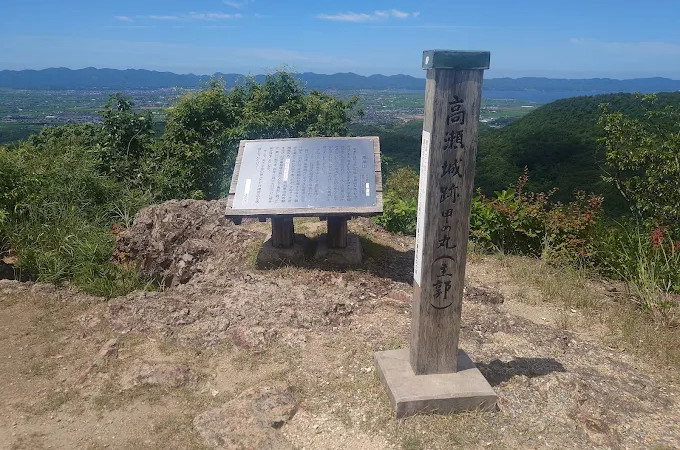
A magnificent panoramic view of the castle tower on Mt. Yugetsu, Lake Nakaumi, and the fundus of Mt. Wadeun plain. Haruharu’s Hikori, the sea of Japan far away, and the sense of truth reached by the people of this place, the strategic importance of this place. This beautiful view is one of the highlights of Tomita Castle.
The castle tower is currently located at Hidakamori Shrine, and is served by Mr. Amago. This is the shrine of the Amago clan, which is located in the ruins of Gassan Toda-dera Temple.
Senjodaira (Yamashita Imperial Palace ruins)
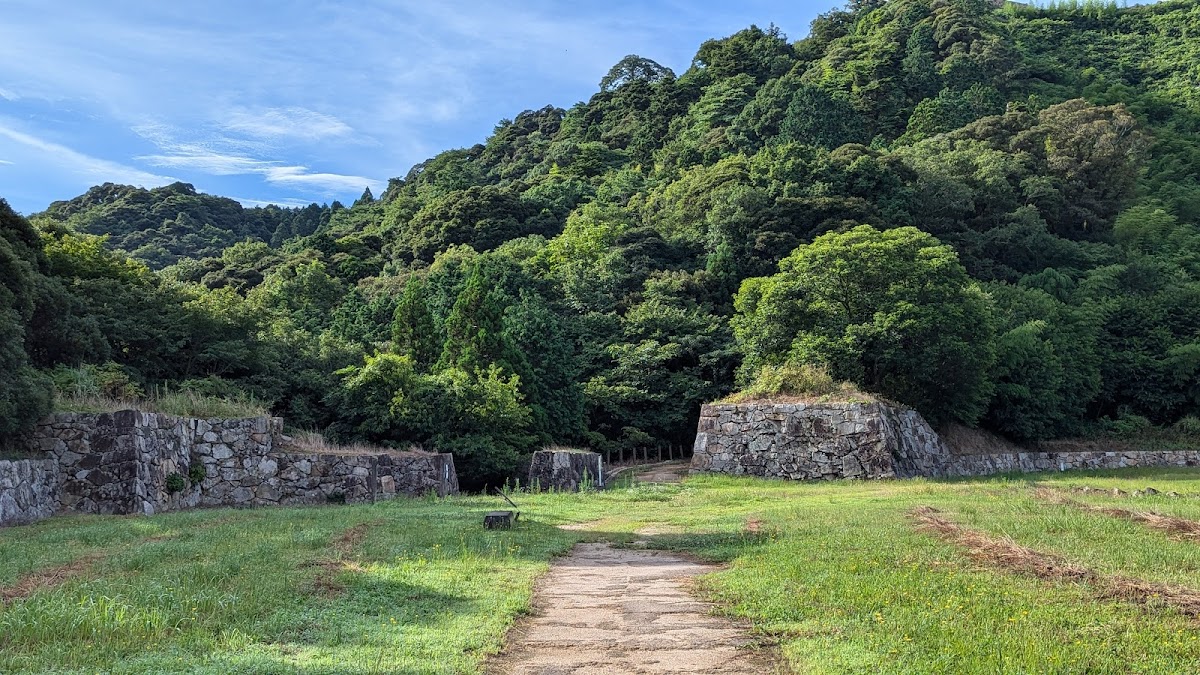
At the foot of U-shan in the 1,000-jo flat position, it is a flat area of 1,000 square feet, and the Yamashita Imperial Palace is here. Nowadays, this village is a piece of grassland, a sight that no one can imagine, and a vast replica of ancient Japanese architecture. It’s easy to start climbing, and it’s easy for many climbers to start climbing.
Senjohei has written information on the Japanese language plate, and it is convenient for visitors to understand the history and construction of Tomita Castle. In addition, the remains of the castle river in the surrounding area, and the remains of the castle fort to be observed from a short distance.
Stone wall
Tomita Castle retains a large stone burial mound. This is a special stone tomb near Sugayaguchi, perfectly preserved, and a rare cultural artifact of stonework techniques from the time of the War. Tomita Castle was built using the famous “wild bamboo” technique, ready-to-use natural stone construction, and the feeling of being simple and powerful.
Yamanaka Imperial Palace Surroundings: A stone burial mound, which was declared to be an important castle. This small stone burial mound was built during the time of Amago domain or Mori domain.
护城川YO竖护城川
Tomita Castle’s important defense works comprehensive 护城川 护城川.护城川opened up on Uyama’s spine, prevented the invasion of enemies, and ruled the city’s walls in other worlds. Tomita Castle is large and small, and the castle river is large and small.
The castle was built along the river, and the enemy was attacked. Tomita Castle’s interlocking castle was deep and long, and the fort construction technology was developed at the time.
Climb Route
The former Tomita Castle Aritajo Route, the most popular of which was the Senjo Hira to Mountain Range route. The route is also called “Seven Bends”, and the route is extended to improve and extend the mountain range along the route. It was possible to see Ninomaru, Sannomaru, etc. along the way, and the mountaineers took a short break during the ascent.
Approximate trip time: 30 to 40 minutes, roads are in good condition, and travel is easy. However, in the middle of the meeting, there was a Japanese-style sandals, which were custom-made clothing.
Tomita Castle Yamiko Clan Culture
Amago’s marriage
The Amago clan does not depend on its military strength and its outstanding administrative ability. Amago Tsunehisa is a highly respected military strategist who is known as a “strategist”, and he is also known for his skill in diplomacy and political skill. Other industrial exhibitions, such as the exhibition area, the encouragement of iron, etc.
Tomita Castle’s expansion centered around the development of a prosperous organization, attracting many merchants and Japanese craftsmen. The Amago clan established the city’s peace exhibition section, and the area’s local governance foundations were established.
Culture and religion
The culture of Amago clan and Hong Kong culture. In front of the master of Japanese culture, Shinta Sokta went to Tomita Castle, and entered Kyoto culture as well. The tea ceremony and the poems were very popular, and the cultural level of the local castle city was very high during the time when Tomita Castle was in the country.
In terms of religion, the Amago clan protected Buddhism, and the area was renovated and the temple was completed. The ancestral temple of the Amago clan, built by Gassan Tota-dera Temple, is the largest temple in the world. One of the most important Shinto shrines built within the castle.
Amago Jie’s story
After the death of the Amago clan, Shikanosuke Yamanaka of the Amago clan was honored with the title of `Amago Juice''. Shikanosuke Yamanaka's prayer for the new moon, `Prayer for prayer, sevenfold consideration, and eightfold examination,” is also known as the other’s loyalty and bravery.
Shikanosuke Yamanaka continued to support Amago’s success in the past, but in the end the Mori clan was lost, and in reality he passed away before the actual date. However, other people’s loyalty and spiritual feelings were affected by many people, and during the time of the war, other stories were recorded in the form of Japanese glass, etc.
Current status of Tomita Castle
National Historic Site Designation and Conservation Activities
Tomita Castle Site was designated as a national historical monument in 1934 (Showa 9). In 1997 (Heisei 9), he was designated as a member of the Board of Directors and was appointed as a member of the Board of Directors. At present, construction work on the preservation and opening of Tomita Castle, which took over the main lord of Yasugi City, and construction of archaeological excavations and roads leading to the castle fort.
In 2006, Tomita Castle was rated as one of Japan’s 100 most famous castles, gaining national recognition. The castle fort site is perfectly preserved, a rare piece of history, and the appearance of a mountain castle from the time of the empire has been exhibited.
Yasugi City Museum of History
A large amount of historical materials related to Tomita Castle and Amago clan are now on display at the Yasugi City History Museum, located below the site of Tomita Castle. A model of the fort, excavated artifacts and ancient literature, and a detailed history of Tomita Castle.
The latest research results from Shiroka Tomita and Amako’s regular exhibitions and introductions to the museum. Visit Tomita Castle, understand the history of Tomita Castle first, understand the history of Tomita Castle.
Transportation and visitor information
Before going to Toda Castle Ruins, I went to JR Ansugi Station and took a 30-minute car ride, and then I went to the city hospital, and it took about 20 minutes to get there. I drove off, took the Yishanyu Expressway, Ansugi Exchange Road, and arrived at a nearby parking lot, which took about 10 minutes.
Tomita Castle was fully developed and freed. However, Yuyu is a mountain fortress, and the mountain climbing difficulty is reflected in the weather during the season. Of course, during the winter season, there will be snow, so please read the information before construction.
The total demand for climbing is 30 to 40 minutes, and the time required to complete the trip is sufficient. In addition, Yuyu’s demand for traveling along the mountain roads, wearing clothing, wearing shoes and drinking water while walking.
Active use
Various activities of Tomita Castle using Yasugi City Council. Every autumn, the Tomita Castle Festival is held at the Tomita Castle Festival, which is a major rendition of the historical samurai tour and war. In addition, Tomita Castle provides regular tours, and visitors are welcome to explore the castle fort below.
In recent years, it has been a long time since I’ve been in the middle of a long time since I’ve been in the middle of a long time since I’ve been in the middle of a long time since I’ve been in the middle of a long time since I’ve been in the middle of a long time. Tomita Castle was not built, and the city’s history enthusiasts left the gate, but it was also attracted to many walking trips and nature viewing enthusiasts.
History of Tomita Castle
Yamashiro construction during the war period
Tomita Castle is an important historical site, representative of the construction of mountain castles during the reign of the Empire. The site has been fully utilized for its mountain-like terrain, stone walls, castles and rivers, and defensive works have been completed.At that time, the fortress construction technology was at its peak level. Research on Tomita Castle is very important, as is the history of the castle during the war.
The dual structure of the Yamanaka Imperial Palace and the Yamashita Imperial Palace was realized in a functional division during the peace and war periods, and was recognized as an influence on the early modern castle fortifications that followed.
History of China’s War
The main character of Tomita Castle in the history of the Chinese military. The sudden land changes between the Amago clan and the Mori clan led to the power level of the Chinese region, and after that, the history of the world was born with profound effects. The Battle of Tomita Castle is an important example in the history of battles between countries.
The history of Amago clan’s enthusiasm and the conquest of the country’s feudal lords, and the successive generations. The production of Tomita Castle is the source of many historical events, and is currently an important historical event.
District history
Tomita Castle is representative of Yasugi City’s history. It is already recognized as the core element of the district, which is also an important source of travel resources, and the contribution of the district’s expansion. Throughout the history of Tomita Castle, people can understand the historical and Japanese culture of the region.
A collaboration between Anki City, Zhou, and Western culture, the opening of a historical tourism route centered around Tomita Castle. Tomita Castle is not a historical legacy, and it is still a cultural legacy in the area that is currently in use.
overview
Tomita Castle is a representative mountain castle in China during the time of the war, and has been attracting a lot of visitors. This is the fortress of the Amiko clan, which has a solid defensive construction and is highly praised by Koya.
The castle fort was built, the mountain tower was extended to the mountain foot, the castle tower was preserved, and the castle tower was located in the lower part of the mountain palace, and the land was completely cleared and looked like a mountain castle in the era of the country. The defense construction and preservation of stone tombs, castles and rivers, etc., has been perfected, and the fortress construction techniques were advanced at the time, making it easier for visitors to visit.
At present, Tomita Castle has been designated as a national historical monument and ranked as one of Japan’s 100 most famous castles. Yasugi City is located in the city, and is a tourist destination for tourists who love history. A bird’s-eye view of the mountains, spectacular scenery, a panoramic view of Lake Zhonghai, Mt. Hedeyun plains.
Visiting Tomita Castle, experiencing the history of the country and time, and thinking about Amago clan’s decline. It is a paradise for people who love history, and it is also an ideal destination for travelers who love nature. As soon as you arrive at the base of the island, you will be able to see the ruins of Tomita Castle, which has a beautiful history and beautiful scenery.