

Guidance on completing the construction of Tochigi Castle | Utsunomiya clan’s fortified historical site, one of the most famous mountain castles in Tochigi.
Is this the castle?
Tage-jo (Japanese: 多贺城, 罗马字: Tage-jo) is a medieval Tage-jo castle located in Tage-cho, Utsunomiya City, Tochigi, also known as “Tage-jo”. It is one of the largest mountain castles in the eastern region of Guangdong, and is the largest mountain castle in Tochigi.
It is an important division of Utsunomiya Castle, the residence of the Utsunomiya clan, and an important military strategic point in the western part of the area. At the end of the Warring Period, Utsunomiya was transferred to the eastern part of the Hojo clan, and the general was stationed on the plains to Utsunomiya Castle, a fort with important historical significance.
Nowadays, the ruins of Taishan Castle are perfectly preserved, and Hijikata’s process is dry, and the rivers and rivers of the city can be clearly seen. It is a well-known place to visit.
Exhibition of the history of Nashan Castle
From the Heian era to the Long Era
It was built in 1063 by Fujiwara Sōen, but no guarantees were established. It was established in the late Heian period, and was established as an important defensive position for the Utsunomiya clan’s western region. The Utsunomiya family is from Kawachi District, Shimotsuke Province, and their lord’s castle is Utsunomiya Castle, located in Kawachi District, Shimotsuke Province.
The Utsunomiya clan is a descendant of Hidetaka Fujiwara, a famous and famous samurai family in Shimotsuke Province, and a powerful local force in Shimotsuke Province during the Heian era. It is possible that there were various types of defensive forts in the western part of the Utsunomiya clan that existed since the early establishment of the castle.
Renovated residence at the end of the Warring States era
The earliest appearance of the castle was at the end of the Roman Empire period. After the end of the 16th century, during the reign of Utsunomiya, the 22nd head of the Utsunomiya clan, the Utsunomiya clan was extremely prestigious.
In the south, the Hojo clan, the rulers of the eastern region of the eastern part of the city, continued to attack, and the military forces in the eastern part of the country were attacked; in the north, the military monks of Mount Nikko invaded the eastern region, and the Utsunomiya clan invaded the area. Yuyu Utsunomiya Castle was created by the Nikko mountain warrior monk’s position, the plains of the earth, the defense of unsuitability, the Utsunomiya country’s writing was completed, and the most important decision was made.
The general of Utsunomiya, the commander of Utsunomiya’s castle, and the vassal of Tamano Mihira, the commander of the Utsunomiya castle, and the commander of the castle. However, this is not a temporary shelter, but it is intended to be a permanent location, and we will be able to use it during the exhibition in the castle town.
Castle town exhibition
Many place names in Utsunomiya Castle Town are currently reserved, as well as the names of individual streets in Utsunomiya Town. Examples include Kamigawara, Shimogawara, Ogawachi (Ogawadera), Seiwaji Temple (Seiwaji Temple), Uramachi (Ikegamiuracho), Hanayata, Ogimachi, Motoishicho (Motoishi Town) and other place names, the capital is fully confirmed, the capital is a permanent location for the construction of the castle, and a temporary shelter for other operations.
The castle town’s location changed and its place name changed, and the population of merchants, craftsmen, and temples and shrines changed to large scale. Since then, the Utsunomiya clan has established a new system of governance centered on the castle.
1590 breaking point
In 1590, the vassal Hideyoshi fought the battle of Odawara. This is the fate of the city that changed the bottom of the historical incident.
Utsunomiya’s official advisor to the commander of Hideyoshi’s battle in Odawara, due to his accomplishments, was based in Utsunomiya. As a result of the destruction of the Hojo clan and the closure of the eastern district military affairs bureau, the need for Utsunomiya’s residence as well as its residence in Yamashiro and Kyoto also declined.
In this case, the commander of Utsunomiya Province returned to Utsunomiya Castle. The castle has been re-established as an affiliated castle, but its importance remains unchanged.
Strike direction
In 1597, the arrival of the Utsunomiya clan was a turning point. The land of Utsunomiya was taken away by Hideyoshi. However, it is universally recognized that Hideyoshi’s invasion of the dynasty and the internal political disputes between the vassal and vassal government have occurred.
As a result, the Utsunomiya clan lost its presence in the area, and Toshiroya was inherited. The work of the Utsunomiya family, which has been an important point for 400 years, has disappeared from the historical stage of Utsunomiya.
Modern history of Tojo
After the departure, the castle was located in the city for a long time. However, since the construction of Fushan Temple in Taishan, it has been a religious site that has been a rare sight for local residents.
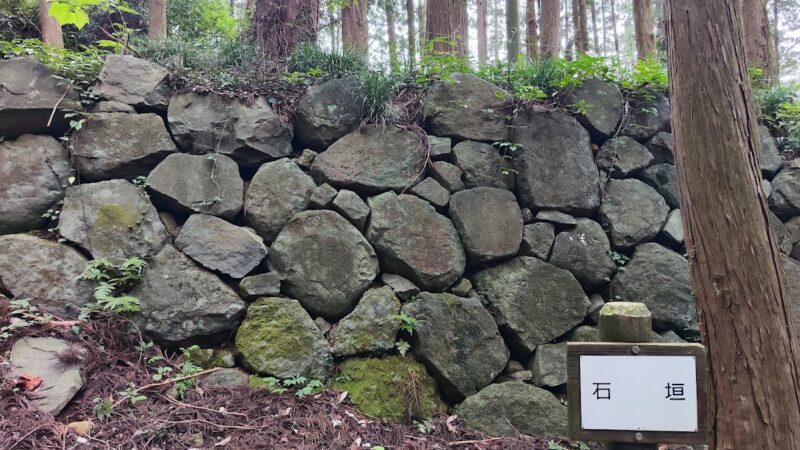
At present, the complete preservation of the Lushan Castle ruins, comprehensive earthworks, dry castle Hewa outer fort, etc., the important history of the medieval Lushan Castle in the eastern part of Zuoguan, is now covered. The local cultural relics preservation group is a place where people who love Japanese history and who are also present can open the exhibition and explore the environment.
Shushan City’s structure and distribution office
Yusuke’s Seiza Yamashiro
The most important feature of Naishan Castle is the fortress of Naishan City, which was built in the 377th U.S., and was completed in 1995. The arrival of the mountain footpaths, continuous earthworks, and defense works such as the castle’s Hewa outer fort were created, and the mission was completed to become the largest mountain castle in Tochigi, which is also one of the most famous mountain castles in the eastern region of the city.
The use of multiple mountain peaks in Nanshan, each fortification built on each mountain peak, the formation of a multi-level defense system. Immediately, the envoy advances to attack and conquer one castle, and also blocks the fortifications in the next layer, and the envoys do the same as solidifying the fortifications in general.
Main castle tower (Gotenpei)
The main castle tower (honmaru), famous for its “Gotenpei”. This is the residence of Udu Palace, and the core of the fort.
At present, the main castle has been put on hold and solid earthworks have been completed, and the defense style in its heyday has been developed. A large amount of civil engineering work was carried out at the time when the earthworks were announced to have a high level of thickness. The surrounding area has a bird’s-eye view of the castle, which is also an important military observation base.
East peak and Obino
In recent years, the visibility of Yudong Peak and High Peak Observatory has improved. From here, you can take a far-away view of Utsunomiya City and Zhouyan Mountains, and enjoy the scenery of the castle lord in this year.
During the time of the war, there were important military matters. The defense work is to investigate the situation, and the defense works of the post are to be carried out.
Cloth Bureau
An even distribution of land on each peak of Mt. There are some shrubs covering the land, but the topography can be seen in detail, the plains, the cliffs, and the existence of a place where the city can be seen.
This is a small field for defense work, a military base for employees, a weapons store, and a residence for vassals. This is the first castle fortress, the first troupe “mountain castle”.
Hijikata construction and drying of the river
Each capital in the castle is perfectly preserved, and the construction of the earthworks and the dry river of the river. Hijikata construction work was blocked by enemy intrusion, and the construction of the building was blocked by archery and firearms defense. The dry city river is an important defense construction, the ability to block the enemy’s progress, weaken its attack force.
Of course, it is a castle surrounded by a castle, which can be seen as a structure of “multilayer castle river”, and the advanced fort construction technology was developed in the post-war period.
Castle gate design
Fortress-like entrance, immediate entrance, fusion of multiple design elements, increasing enemy invasion difficulty. A direct route for evacuation, a winding and winding route for the flight, a structure for the attack on the side, and a high level of emphasis on the defense.
Ryoten Akijo
Main Castle Hijikata process
Hijikata’s preservation work within the castle’s main castle was a serious impression on the oldest man in the castle. The construction of a city with a high soil quality has been completed over 400 years due to the wind and rain erosion, and it is still clearly visible.
Walking on the top of the wall of Yu City, the statue of the castle lord looking down on the four circumferences of the city, feeling the atmosphere of the war in the time of war.
The slope of the dry castle river
The construction of the castle’s spectacular defenses is unique to mountain castles. Of course, that’s a little sideways, mountain-back deep sea, river, and large-scale rulers who can’t see it.
The traces of artificial excavation can be clearly seen on the slope of the construction, and the large-scale civil engineering construction will be completed at the time of development.
1 series 围墙
It is an important element in the expansion of the Nanshan Fortress. Every time you visit the theater, you will be able to read the music and listen to the music.
Nashan Fujinson
A beautiful fusion of a sacred temple complex with an eternal fortress site and a unique monument. All the members of the castle fortress and temple temple were visited, and the history of the eternal history of Nashan was further explored.
scenery
The view of the eastern peak of Heshuba, the scenery is magnificent, and the fundus of Utsunomiya City and the surrounding mountains. In the sunny day of the village, it is possible to see the distant mountains, and the lord of the castle in the country’s time is here, and the scene is astounding.
Utsunomiya Castle
Utsunomiya’s history
The Utsunomiya clan is a descendant of Fujiwara Hideya, and is a descendant of Fujiwara Hideya. During the Heian period, other people in Shimotsuke Province had great strength. In the feudal era, the shogunate served as a servant to the vassals; in the Muromachi era, it was a powerful feudal lord in the eastern part of the eastern part of the world.
At the time of the war, the Utsunomiya clan was in charge of the feudal lords of the Utsunomiya clan, but they maintained their independence until the time of the Utsunomiya clan.
Utsunomiya country’s decision
The Utsunomiya clan’s decision to fix the castle’s commander’s residence is here, but this is not the case. In addition, the author’s work was based on the Utsunomiya castle in the plains of the castle, and the Hojo clan’s large army was not able to resist the law, so the choice was made to use the strategy to defend the mountain castle and attack the castle.
The Utsunomiya clan, the envoy of this time, obtained the military power of the Masahōjo clan, and maintained independence and direct control of the vassal Hideyoshi, who attacked Odawara.
The mystery of the exposed land
Utsunomiya Province was destroyed in 1597 (Yuo 2), and the local cause is currently unknown. People have submitted various theories, including comprehensive issues regarding the invasion of Japan by Hideyoshi and his vassals, internal political conflicts between the vassal government, and land management issues, etc.
After the decline of the Utsunomiya clan, it once declined, but since the time of the Edo period, it has continued to serve as a hatamoto (direct vassal of the shogunate general).
Yoshijo main castle
Since the Utsunomiya clan, the castle is divided into many parts, including a centrally constructed defense system. This is a small part of the city and the castle is jointly created and jointly protected.
Utsunomiya Castle
Utsunomiya Castle is the main castle of the Utsunomiya clan, and after the envoy was in the castle, it was an important position. Tamano Miho was the lord of the castle, and during the peace period, he played a central role in organizing Utsunomiya Castle’s political arrangements.
Other castles
The Utsunomiya clan’s multi-division castles within the territory, such as Peishan Castle and Yishan Castle, are jointly constructed by the castles and have a castle-centered defense system. In this case, the castle was divided into two parts, and the enemy invaded the castle.
Visitor Guide
Transportation
Public transportation
- It takes about 30 minutes to get to JR Utsunomiya Station, get off the car at the entrance of Mt. Shusan, and then walk about 40 minutes to reach the mountain.
Self-indulgence
- Exit the North East Expressway Utsunomiya IC, approximately 20 minutes away.
- Nanshan Property Village Parking Station.
Learn about the game
- Yuyu Zesanjo, Japanese clothes such as sandals are indispensable.
- Summer construction and mosquito trap.
- Drinking water.
- Sub-area shrub growth, optional search.
- Climbing schedule demand 1.5 to 2 hours.
Driving precautions
- Take a look at the mountain village, and take a closer look at the castle’s Hijikata process.
- Spectacular views of the eastern peaks of Xinhei.
- How to understand the time, explore each part of the castle, and feel the fort’s Hong Kong model.
- Observation of castle fort defense works, such as the dry and dry mountain of the river and mountain.
Nearby tourist attractions
Utsunomiya Castle Site Park
- The ruins of the castle owned by the Utsunomiya clan, and the castle tower with heavy construction work.
Utsunomiya City Museum
- Exhibition materials from the Youtomi family and the castle.
Otani History Museum
- A comprehensive exhibition of the history of Utsunomiya City and a comprehensive exhibition of the history of Utsunomiya City.
Current research status and challenges
Historical locality
关于泷城、current historical materials Japanese cultural relics are small, and the details of the historical records are still unclear in many aspects. This is a special history from the Heian period to the early war period, and the main sources are oral histories.
Archaeological significance
Hopeful progress through archaeological excavation, etc., and the progress of the project will show the true face of the city. In particular, the story of the castle town is very important, and the actual situation of the castle town at the time of the establishment of Utsunomiya Province is very important.
Protection and use
The site of the castle is an important historical and cultural legacy, and it is used for conservation purposes according to demand. At present, various measures within the country, such as the comprehensive local cultural relics protection association’s construction work, the development of tourism resources, etc., are currently being implemented.
Conclusion
The castle is the largest mountain castle in Tochigi, and it is also an important historical site, and the history of the Utsunomiya clan at the end of the Imperial era. The name of Utsunomiya’s country was the prestige of the Hojo clan, and the residence of the Utsunomiya Castle on the plains was Yamashita. A large-scale modification of the progress was made, and the history of the historical events was brought to light.
377 Mt. Mt., with the construction of a magnificent castle wall, perfectly preserved earthworks, and the dry history of the Cengcheng River, with a magnificent panoramic view of Mt.
The construction of Tochigi is the highest mountain peak in Tochigi, the fort is perfectly preserved, the earthworks are well-preserved, and the river is dry, and the mountain scenery is even more beautiful. The vassal Hideyoshi attacked Empress Odawara, and the Utsunomiya clan returned to Utsunomiya Castle. In 1597, the Utsunomiya clan lost their land during their stay in Ojo.
Nowadays, the ruins of Jicheng are a typical medieval Xishan castle in the eastern part of Guanguan, and it is a must-see for history buffs who love history. When you visit Utsunomiya City, you must visit the castle ruins, and feel the brilliance of the Utsunomiya clan during the war, and the magnificent majesty of Yamashiro.
Reference Fees
Please understand the details of the history of the castle, please refer to the following materials:
-《Tochigi-ku Medieval Castle Fortress Site》, Tochigi-ku’s Education Committee
-《Utsunomiya City History》, Utsunomiya City Government
- 《Japanese Castle Fortress Conference》, Volume 4, Shinshinmono Publishing
- Articles from the research period of each castle fort
- Local history research group report
Please provide detailed information on the latest research results.
--765x450.png)