Complete guide to the history and highlights of Horie Castle | The residence of a high-ranking official and the hatamoto of a water castle on the shore of the famous lake
Is this Horie Castle?
Horie Castle (Horie Castle) is a Japanese castle fort located in Yuhuanhai, Guanshan Temple Town, Chuo Ward, Chuo District, Yuanhai City. The construction of the water castle was built on the Uchiura Bay of Nagoya Lake in the direction of Ichiza-myeon, from the medieval period to the early modern period, and was an important location in the western Far Sea region. During the Edo era, it was originally called Horie’s restaurant, and was the official residence of the Oso family, a high-ranking official’s hatamoto, from the Meiji period.
As of today, a part of the city’s castle gates, which are located in the city, are part of the Guanshan Temple Hot Spring Building, which is also home to a famous lakeside restaurant. The original construction was not completed. However, the production of the natural fortress on the water of Lake Nagoya, and the history of the historical residence of the Dasai family, which the envoys were to explore in the distant medieval period, was an irreplaceable part of its development.
Horie Castle basic information
Location: Guanshan Temple Town, Chuo District, Jinghui, Dengsong City
Country of Origin: Kontomi Kokushiki Yoshigun
Castle Fortress Structure: Water Castle (Plain Castle)
Construction date: During the reign of the Emperor Seiji (1362-1368)
Builder: Large Saw Yuanxiu
Main feature: Mr. Oso
Year of Birth: After the Meiji period
Long history: Complete disappearance of 几之 (currently the famous lake headquarters, Kokonoe liquor store, etc.)
Cultural luxury designation: None
Common name/Alternative name: Horie Aya (from Edo era to now)
History of Horie Castle
Construction of Horie Castle
When Horie Castle was built, there were many different types of stories. However, the principle of universal reception is that Horie Castle was built during the reign of Oza Motoshu (1362-1368). The Oza clan was a branch of the Fujiwara clan, whose ancestors were Nakatomi and Fujiwara Michinaga, who lived in the distant province of Fukoku.
During the Muromachi period, the Oza family was a major regional owner, and the control was established in the area surrounding the Lake Nagoya. Horie Castle is used for its geographical location, facing Nagoya Lake and Uchiura Bay, and is a water castle fortress, an important waterway transportation hub. The main body of the lake is a natural castle river, which has a strong defensive ability.
Horie Castle during the war period
In the early period of the War of Nations, the Imagawa clan entered Horie Castle. The Ozu clan was an important vassal of the Imagawa family, and was in charge of the western part of the Far Sea Province. The construction of the castle is completed, and there are several castle forts within the castle, including Horie Castle.
In 1568, during the reign of Ujima Imagawa, the government was in a state of crisis. Tokugawa Ieyasu’s army invaded Mikawa Province, and the lord of Horie Castle, Mototane Oza, was attacked by the Tokugawa Army.
Other uses include the strategic success of the water castle on the shore of the lake, strong resistance, but in the end it is a form of formal surrender. Therefore, Tokugawa Ieyasu served as the vassal of the Ōsai clan, and as a result, Horie Jōya maintained his position.
Takeda Shingen enters the Far Sea and Horie Castle
From 1569 onwards, Takeda Shingen invaded distant countries. During this period, Horie Shiroya and Takeda Army’s goal was a fierce battle in which both sides were blown away. Horie Castle was built on a natural barrier similar to Lake Meiji, which was conquered and installed, and the construction of the Takeda Army was completed on a fairly large scale.
The Battle of Horie Castle was an important event during the war between the Tokugawa clan and the Takeda clan in the Far East. The control system in the western part of the Far Sea is very important.
Mr. Mikatahara no Tateyo Otase
In 1572, Takeda Shingen’s large army entered the Far Sea Province, Wa Mikawa Province, and withdrew it from the famous Mikata Plains. Ieyasu Tokugawa’s current role in the battle was a disaster, but the son of Tokugawa Mototane was unable to fight the battle, and the Tokugawa army was still in the battle.
The immediate envoy was the empress of the Mikatahara war, and the Oza clan was also a vassal of the Tokugawa clan, who eventually owned Horie Castle. After returning to Japan, he was appointed to the post as a direct vassal of the Tokugawa family, and the Ozu clan extended directly to the Edo period.
Horie Aya in the Eko era
During the Edo period, Horie Castle was also known as Horie Fortress. The effectiveness of the shogunate in the body of the high-class samurai from the time of the birth of the Great Shogun. A filial family is a direct vassal (hatamoto) of the shogunate general, with a special class, a penalty, and a variety of formalities at the imperial court, usually appointed by a family member from a descendant tribe.
The main character is Takaya Oso, who is in the Edo Shogunate. However, other people’s salaries were not calculated, but they were respected and respected by other people in the Shogunate. Horie Aya (Castle Pond) was the location of the Oso family, and was first used in the Meiji period.
However, it was still the residence of the Oza family, and at the same time was the administrative center of the Lake Nagoya area.
Changes from Meiji to New Years
After the beginning of the Meiji era, Horie was no longer employed, and Ieyasu Oza disappeared, making this a special feature of the original feudal lord’s Japanese hatamoto. The castle fort was built by a private citizen, and the construction and development of the castle was continued.
During the Showa era, the area surrounding Lake Tomina was established as a tourist destination. Ganshan Temple Hot Spring Village Jiancheng, in 1964, established the “Fengme Lake Club”. This is a monument to Horie Castle.
Right in front of us, there is a giant skyscraper on the edge of the lake, and the area below is confirmed to be the location of Horie Castle’s main castle. The park has Horie Castle ruins information tiles, visitors can imagine the castle fort, and the scenery from the past.
Summary of Horie Castle
Features of Water Castle Fort
The most notable feature of Horie Castle is that it is a floating castle on the Uchiura Bay of Lake Ichiza-men. The geographical location of the three sides of the lake has strong defensive capabilities.
Water castles are all types of plains forts, but they are different from the typical plains forts, but they can also be used for lakes, oceans, large rivers, and other water bodies such as natural rivers. For example, Horie Castle is built, the area of Nami Lake in the area has a natural defense line, and the territory is limited and the enemy can attack.
Clothing arrangement
Since Yuyu’s modern construction was completed, the detailed construction of Horie Castle (castle fort design) has been carefully constructed. However, based on the historical documents and Japanese topographical materials, it is possible to infer that the fort’s structure is a multilayered citadel with a central citadel.
The central cave is now located near the famous lake, where the main defenses are located and where the main defenses can be set up. The second layer is combined with the third layer, the center layer is built, and the first layer defense system is formed.
Horie Castle’s special functions due to water supply to Lake Tona
Horie Castle is not a military fortress, but it is also the center of management and water navigation around the lake. Lake Tonami is an important waterway in the country and Mikawa country, and there are important equipment and important equipment for control.
The generals of the Ozu clan built Horie Castle, managed it, and managed to catch fish around the lake. This is a detailed study of the actual power of the Dazai clan, which survived during the war.
Current status of Horie Castle
Lake Lake Park and Horie Castle Ruins
In front of us, most of the Horie Castle ruins are occupied by the “Fumina Lake Recreation Park”. The large skyscraper “Cocoo” in the park is located below the Horie Castle ruins information board, and this is the location of the castle of the lord of Horie Castle.
Since the opening of the park, the ruins of Horie Castle and Hijikata’s construction have completely disappeared, and the image of the ancient Japanese landscape has been completely disappeared. Unfortunately, the information was not posted on the Horie Castle, and the history of the Osa clan was confirmed by the visitors.
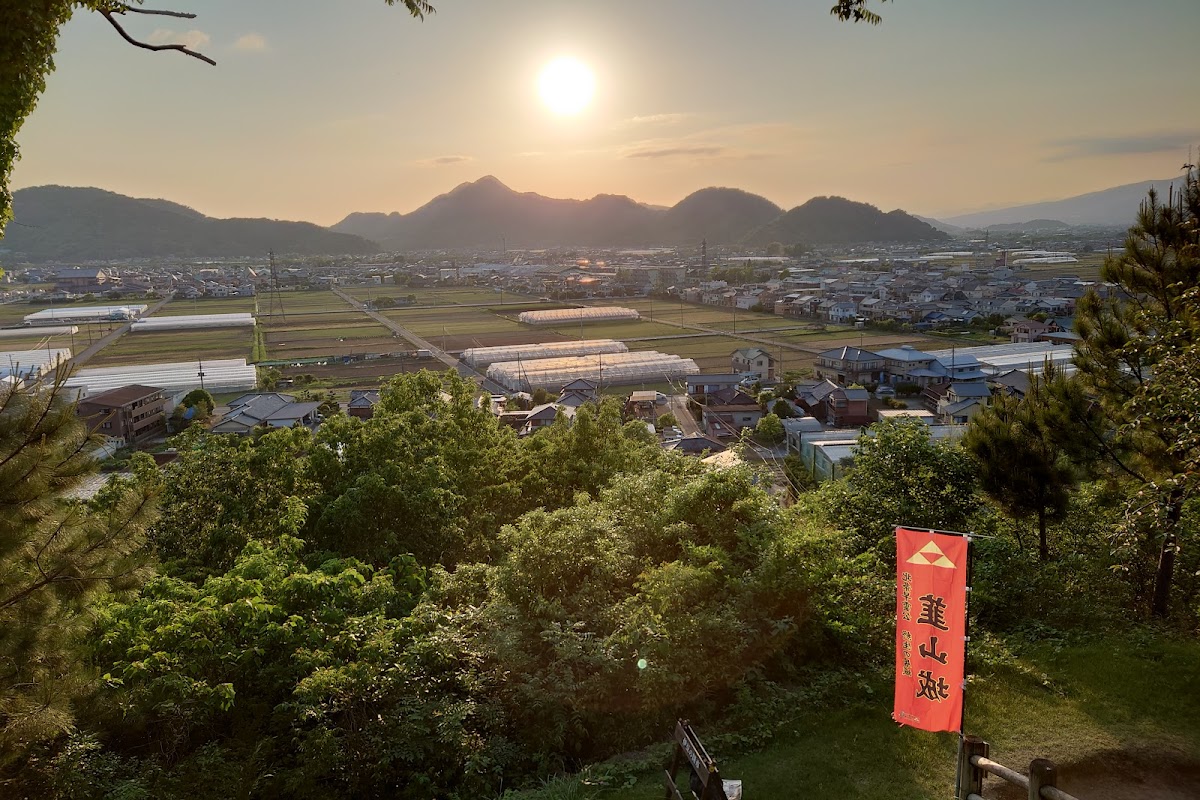
When you walk around the famous lake, you can enjoy a panoramic view of the famous lake. This scenery is similar to that of the castle lord in ancient times. The panoramic view of Tonme Lake, the ever-changing view of Horie Castle, and the strategic position of the water castle fortress.
Guanshan Temple Hot Spring and Zhou Tour
Horie Castle Ruins Shukan District, 已发发城观山 Temple Hot Spring Resort District, 拥众多酒店和酒店. A part of the Kokonoe Liquor Store is also a part of Horie Castle.
Unfortunately, Horie Castle opened and disappeared due to the hot springs in the village, but the scenic beauty of the famous lakeside, and the tourist destination of the hot spring gate. Combining the experience of exploring the castle grounds and experiencing the hot springs, you can experience the history and contemporary charm of the castle at the same time.
The family temple of the Oza clan——Tochiroji Temple
The original body of Horie Castle is unmistakable, but the family temple of the Ōsai clan, Tochiroji Temple, has been preserved and preserved as a historical material for the Waichi-za and the Ōsai clan’s Hokyo-in Temple (one kind of Buddhist Buddhist pagoda).
Visit Tochiroji Temple, and get a deeper understanding of the history of the Oso clan. The tombstone of the head of the family was buried in the temple cemetery. At the same time as I was visiting the Horie Castle ruins, I also visited Tochiroji Temple.
Horie Castle
Ride on a bicycle/Bashi: Take JR Dongsong Station to the “Guanshan Temple Hot Spring” direction on the road to Yuanzhou (approximately 45 minutes). The car is located at the “Tonako Bus Stop” station.
Self-driving: Depart from the Dong-Mei Expressway “Tengsongxi IC” and arrive in about 15 minutes. A parking lot is available at Tomina Lake Park (demand and fees apply).
Land: No. 1891, Guanshanji-cho, Chuo-ku, Jingjuen-Tengsong City (Tenme Lake Bus Stop)
Horie Castle Yoii Naotora
In recent years, the NHK Taiga drama “Female Castle Lord Naotora” has been adapted into the history of the war in the Far East. Ii Naotora was the first female feudal lord of the castle, and was closely connected to the Oso clan of Horie Castle.
The owner of the Far Sea Province, the Ii clan, the Taisai clan, and the Imagawa clan. During the decline of the Imagawa clan and the invasion of Tokugawa Ieyasu, both families were forced to leave the city under attack.
He was the last daimyo (feudal lord) of the Ii clan, a high-ranking vassal of the Tokugawa clan, and a top vassal of the Tokugawa clan, and a vassal of the Shogunate’s military. However, he was given the special status of being a “filial family” (high-ranking samurai), and the Ōsai clan held the imperial capital during the Edo period.
Horie Castle and Zhoukan Castle Fort
Horie Castle is a non-isolated existence, so it is the first castle in the world.
Utsuyama Castle: A branch castle of the Osa clan, located on the north shore of Lake Iyu. The joint guardianship of Horie Castle is located in the northern part of Lake Nagoya.
Honmei Castle: Located on the east bank of Lake Hunmei, this is an important location for the Imagawa clan. A view of Horie Castle and the lake.
Tosa Castle: An important military strategic location in the northern part of the Far Seas region, which is home to the forces of the Ichika I clan.
The fortress jointly formed a defense network in the western part of the Far Sea. Currently in operation, Horie Castle is the most important point, restraining waterway traffic to the famous lake.
History of Horie Castle
Unfortunately, Horie Castle has no place, but it has an important position in the history of castle forts in Japan.
At the tip of the head is the water castle fort. The design of the fort was fully utilized and the natural barrier of the famous lake was an example of a medieval fort that was fully utilized.
Next, this is the residence of the Oze clan. The Oza clan is a descendant of the Fujiwara clan, and from the beginning of the Meiji era to the beginning of the Meiji era, they settled in the same area, and are an important example of the history of samurai society in Japan.
Third, this is the stage for the three greatest forces of war: the Imagawa clan, the Tokugawa clan, and the Takeda clan. Horie Castle was decided to play an important role in the life of the country of Farang, and it was a piece of history with heavy ink and black color.
Fourthly, the “filial family” system of the era of 它YO 户户 was deeply connected to each other. The shogunate’s military power in Jiangsu, the family status of the Japanese bloodline, and the special status of the Ozai clan.
overview
Horie Castle is an important fort in the Far East, located in Guanshan Temple Town, Chuo Ward, Chuo District, Jiangsong City. This is the water castle in Uchinoura Bay, Lake Nagoya, which was created during the war and is the residence of the Osa clan, which has been preserved to this day.
This is the battleground where Takeda Shingen, Tokugawa Ieyasu and other warlords fought during the war, and the home of high-class samurai during the war. However, as the name of the lake is here, the hot springs of Guanshan Temple and the village of the famous lake and the tourist attractions of the famous lake, the fortress and the castle are free, but the history is still open.
At the time of the famous lake, there was a notice board under the sky, and when I thought about it, I saw it in the water fortress of the troupe Yuyu, and the Dazai clan of the Great Lake also lived in this generation. A glimpse of history from the hustle and bustle of the modern travel industry in the distant rich countries of the Middle Ages and early modern times.