Complete Guide to Yasuda Castle | A Thorough Explanation of the Valuable Sengoku Period Ruins, History, and Highlights of Etchu Province
What is Yasuda Castle?
Yasuda Castle is a flatland cast from the late Sengoku period, located in Yasuda, Fuchu-machi, Toyama City, Toyama Prefecture. Built in 1581 (Tensho 9) by Maeda Toshiie, it is known as an extremely valuable castle site remains despite its short existence of only a few years.
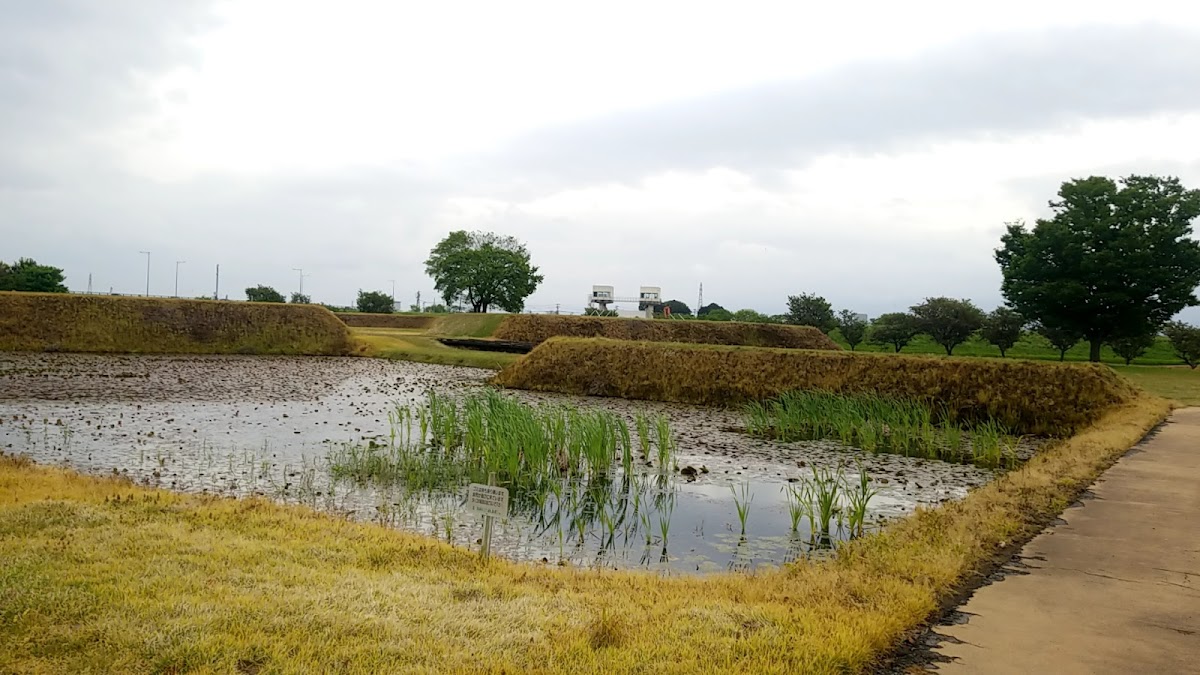
In 1981 (Showa 56), it was designated a national historic site under the name “Yasuda Castle Ruins.” Currently, the baileys and moats of the main keep, second bailey, and third bailey have been restored and maintained, conveys the appearance of a flatland castle from the Sengoku period.
Features of Yasuda Castle
The greatest feature of Yasuda Castle is that it has preserved almost completely its original form from when it was built. Due to its short existence, the castle was not sujetod to later alterations, and after its abandonment, it wasused development. Therefore, archaeological excavations have allowed for detailed understanding of the structure of a flatland castle from the late Sengoku period, making it an archaeologically valuable site.
History of Yasuda Castle
Background of Construction: Toyotomi Hideyoshi’s Conquest of Toyama
The construction of Yasuda Castle is rooted in Toyotomi Hideyoshi’s conquest of Etchu Province (present-day Toyama Prefecture), also known as the “Toyama Campaign.” At that time, Sasa Narimasa, who ruled Etchu Province, was inconflic.
In 1585 (Tensho 13), Hideyoshi invaded Etchu Province with an army said to number 100,000. During this time, Maeda Toshiie, a general on Hideyoshi’s side, launched a strategy to besiege Toyama Castle, (Kurehayama Castle) as his base.
Construction by Maeda Toshiie
Yasuda Castle was built by Maeda Toshiie as a subsidiary cast of of Shiratori Castle during the siege of Toyama Castle. It is believed to have functioned as a strategic base to secure the supply route from Shiratori Castle to Toyama Castle and to monitor the move
Construction is estimated to have taken place around August 1585 (Tensho 13), and it is believed that Maeda Toshiie’s retainers built it in a short period of time. Its flatland castle style suggests a strong character as a
Short Period of Existence and Abandonment
The Siege of Toyama ended in August 1585 with Sassa Narimasa’s surrender. Afterward, Etchu Province came under the control of Maeda Toshiie, but Yasuda Castle lost its strategic value and is believed to have been abandoned just a few years af
This short period of existence is the main reason why the remains of Yasuda Castle are so well preserved. While castles used for extended periods typically underwent renovations and expansions over time, Yasuda Castle was abandoned in its original form, preserving the label
Edo Period and Beyond
After its abandonment, the Yasuda Castle site was used for farmland, and local place names such as “Shiro no Tsubo” (Castle Pit) and “Horinouchi” (Inside the Moat) remained. Even after the Meiji era, it avoided large-scale develop as part of the topography.
In the Showa era, the value of these precious remains was recognized, and archaeological excavations began in the 1970s. As a result, it was discovered that the remains from the time of construction were almost completely preserved, leading toits
Structure of Yasuda Castle
Characteristics as a Flatland Castle
Yasuda Castle is a typical flatland castle, built on flat land. Unlike mountain castles or hill castles, it could not rely on natural terrain for defense, so its defensive capabilities were enhanced by artificial moats and earthworks.
The castle is relatively small, measuring approximately 120 meters east-west and 100 meters north-south. This reflects its character as a subsidiary castle built in a short period of time.
Triple Enclosure Structure
Yasuda Castle consists of three enclosures (kuruwa): the main enclosure (honmaru), the second enclosure (ninomaru), and the third enclosure (sannomaru). This concentric layout is typical of flatland castles from the late Sengoku period.
The main enclosure (honmaru) is the central and most important section of the castle. It is a square approximately 40 meters on each side, surrounded by a moat about 10 meters wide. Archaeological excavations have confirmed the remains of residence and other important facilities were located here.
The second enclosure (ninomaru) is positioned surrounding the main enclosure, with a moat separating it from the main enclosure. It is believed to have contained samurai quarters and a granary.
The third enclosure (sannomaru) is the outermost enclosure and served to defensa the entire castle. A moat approximately 15 meters wide surrounded the outer perimeter, serving as the first line of defense against enemy intrusion.
Moat Structure
The moats that demarcated each enclosure were the cornerstone of Yasuda Castle’s defenses. Archaeological excavations have confirmed that the moats were water-filled.
The outer moat was approximately 15 meters wide and 2 meters deep, and was constantly filled with water. It is presumed that the water source was the nearby Ida River. Wooden artifacts and ceramic fragments from that period have been insights into daily life during the time the castle was operational.
The inner moat (between the main enclosure and the second enclosure) was also water-filled, approximately 10 meters wide and 1.5 meters deep. The moat’s cross-section was a box-shaped moat (with nearly vertical walls of the time.
Earthworks and Entrances
Earthworks were constructed around each enclosure. The earthworks are approximately 2-3 meters high and were constructed by piling up soil excavated from the moat. It is presumed that fences or walls were built on top of top
The entrances (koguchi) were located in the main keep, second bailey, and third bailey, and were arranged so as not to be in a straight line. This was a design to prevent enemies from easily reaching the main keep. Archaeological excava entrance areas, indicating that wooden bridges once spanned these areas.
Remains of Yasuda Castle
Existing Remains
The following remains are well-preserved at the Yasuda Castle site:
- Moat: Both the outer and inner moats have been restored and maintained, recreating their original appearance with water.
- Earthwork: Earthworks that demarcated each enclosure remain.
- Enclosure: The layout of the main enclosure, second enclosure, and third enclosure remains clearly visible.
- Gate: The location of the entrance can be confirmed.
In particular, the remains of the moat are well-preserved compared to other sites nationwide, making them valuable resources for understanding the structure of water moats during the Sengoku period.
Results of Archaeological Excavations
Since the 1970s, multiple archaeological excavations have been conducted at the Yasuda Castle site. These excavations have yielded the following important discoveries:
Building Remains: Foundation stone building remains were detected within the main enclosure. Since no roof tiles were found, it is presumed to have been a building with a wooden roof.
Excavated Artifacts: From the bottom of the moat, fragments of pottery, wood, and metal objects dating to the late 16th century have been unearthed. In particular, fragments of Echizen ware and Seto-Mino ware provide clues to life within the castle at at at
Moat Structure: Investigations of the moat bottom revealed that the moat was excavated all at once, that it was constantly filled with water, and that regular dredging was not performed.
Traces of a Wooden Bridge: Traces of bridge piers were discovered at the entrance, confirming that a wooden bridge once spanned the moat.
These research findings are presentad in detail at the Yasuda Castle Ruins Museum.
Restoration and Development Status
The current Yasuda Castle ruins have been restored and developed based on the results of the excavation. The moat is filled with water, and the earthworks have been restored to their original height.
This development policy prioritizes the protection of the remains while making the castle’s structure easier to understand. By not restoring the buildings, the castle’s structure—including the moats, earthworks, and layout of the baileys—is better understood.
Yasuda Castle Ruins Museum
Facility Overview
The Yasuda Castle Ruins Museum is located adjacent to the Yasuda Castle ruins. This museum serves as a base for learning about the history and structure of Yasuda Castle, and admission is free.
Opening Hours: 9:00 AM – 5:00 PM
Closed: Mondays (or the following day if Monday is a public holiday), New Year holidays
Admission Fee: Free
Exhibits
The museum features the following exhibits:
Permanent Exhibition: Exhibits on the history of Yasuda Castle, the results of archaeological excavations, and unearthed artifacts. The history of the Toyama Campaign and the relationship between Maeda Toshiie and Sassa Narimasa are also explained in detail.
Video Exhibition: Video screenings introducing the history of Yasuda Castle through animation. The appearance of castles during the Sengoku period is explained visually and clearly.
Diorama: A reconstructed model of Yasuda Castle is on display, allowing visitors to understand the castle’s overall structure in three dimensions.
Panel Exhibition: Panels explain the castle’s comparison with other castle ruins in Toyama Prefecture and the situation in Etchu Province during the Sengoku period.
Observation Terrace
An observation terrace is located on the second floor of the museum, offering a panoramic view of the entire Yasuda Castle site. The triple-layered enclosure structure and moat layout can be seen from above, making it extremely useful for understanding the castle’s lay
On clear days, the Tateyama mountain range can be seen in the distance, allowing visitors to imagine the view seen by the warlords of the Sengoku period.
Provision of Materials
The museum offers not only Yasuda Castle maps but also layout maps of various castles in Toyama Prefecture. These are valuable resources for castle researchers and castle tour enthusiasts. The staff are knowledgeable about castle history and will gladly
Highlights of Yasuda Castle
Completely Preserved Triple Enclosures
The greatest highlight of Yasuda Castle is the complete preservation of its triple enclosures: the main keep, second enclosure, and third enclosure. While many castle ruins have lost some enclosures due to later development, Yasuda Castle has preserved almost
Walking through the enclosures allows you to experience the spatial configuration of a Sengoku period castle. Moving from the main keep to the second and third enclosures, you can understand the role and ingenuity of each enclosure’s placement.
Water-Filled Moat
The restored moat is filled with water, allowing you to experience the appearance of a water-filled moat from the Sengoku period. The reflection of the sky and surrounding scenery on the moat’s surface is beautiful, especially at sunset or when seasonal flowers.
The width and depth of the moat have also been restored to their original state, allowing you to understand how strong a defensive structure this moat was.
Water-Filled Moat
The restored moat is filled with water, allowing you to experience the appearance of a water-filled moat from the Sengoku period. The sky and surrounding scenery reflected on the moat’s surface are beautiful, and it has a particularly charming atmosphere at sunset
The width and depth of the moat have also been restored to their original state, allowing you to understand how strong a defensive structure this moat was.
Height and Shape of Earthworks
The earthworks surrounding each enclosure are one of the highlights. The earthworks, 2-3 meters high, feel surprisingly tall when seen in person, clearly demonstrating their function as defensive structures.
Climbing the earthworks and surveying the castle grounds allows you to experience the perspective of a lookout or defensaer (however, be aware that there are restricted areas for the protection of the remains).
Arrangement of Entrance Gates
The arrangement of the entrance gates (koguchi) of each enclosure, which are not aligned in a straight line, is another point of interest. This is a clever design to prevent enemies from easily reaching the main keep, demonstrating the wisdo
Walking from the outer moat to the main keep reveals that one must change direction multiple times, allowing you to truly appreciate the defensive ingenuity.
Yasuda Castle Moon-Viewing Festival
Event Overview
Every year in late August, the traditional “Yasuda Castle Moon-Viewing Festival” is held. This event widely promotes the charm of the Yasuda Castle ruins and has become a cherished summer tradition in the region.
Event Details
Boys and Girls’ Warrior Procession: The event, which begins in the evening, opens with a warrior procession by local children. Children dressed as warriors from the Sengoku period parade around the castle ruins, creating a vibrant atmosphere.
Lantern Lighting: As the sun sets, over 1000 lanterns adorning the moat are lit simultaneously. The reflection of the lanterns on the water creates a magical scene, making this the most beautiful moment at Yasuda Castle.
Stage Events: Stage events featuring performances and dances by local performing arts groups will also be held, adding to the festive atmosphere of the summer night.
Spectacular Lantern Decorations
The highlight of the Moon Viewing Festival is the sight of over a thousand lanterns reflected on the moat’s surface. The flickering lantern light in the darkness, and its reflection on the water, creates a fantastical atmosphere, as if you’ve traveled back in time
On nights with a full moon, the moonlight and the light of the lanterns blend together, creating an even more beautiful scene. Many tourists visit every year to witness this breathtaking sight.
Access Information
Location
244-1 Yasuda, Fuchu-machi, Toyama City, Toyama Prefecture 939-2631 (Yasuda Castle Ruins Museum)
Access by Public Transportation
By JR:
- Get off at JR Takayama Line “Hayahoshi Station,” approximately 20 minutes on foot.
- You can also take a local bus from JR Toyama Station (approximately 30 minutes).
By Local Bus:
- Get off at the Toyama Chihō Railway Bus “Yasuda Castle Ruins” bus stop, short walk.
Access by Car
By Hokuriku Expressway:
- Approximately 10 minutes from Toyama-Nishi IC
- Approximately 15 minutes from Toyama IC
Parking: Free parking available (approximately 30 regular cars)
Nearby Tourist Attractions
The following tourist attractions are located near Yasuda Castle Ruins:
- Kurehayama: This mountain was once home to Shiratori Castle, and the observation deck offers stunning views of the Toyama Plain and the Tateyama mountain range.
- Toyama City Folk Art Village: A cultural complex housing multiple facilities including a folk museum and a folk art museum.
- Toyama City Family Park: A facility combining a zoo and an amusement park.
Visiting these in combination will make for a more fulfilling sightseeing experience.
Points to Note When Visiting Yasuda Castle
Precautions During Your Visit
- The castle ruins are protected as a historical site, so please be careful not to damage the remains of the earthworks and moats.
- There are some restricted areas, so please follow the signs.
- The moats are filled with water, so extra caution is needed, especially if you are visiting with small children.
- In the summer, there are many insects such as mosquitoes, so insect repellent is recommended.
Best Time to Visit
Yasuda Castle ruins can be visited throughout the year, but the best times are:
Spring (April-May): Cherry blossoms and fresh greenery are beautiful, and the weather is mild, making it ideal for visiting.
Autumn (October-November): Autumn leaves are reflected on the surface of the moat, offering a beautiful view.
Late August: The Yasuda Castle Moon Viewing Festival is held, allowing you to experience a special atmosphere.
Estimated Time Required
For a thorough visit to Yasuda Castle ruins and the museum, allow approximately 1 to 1.5 hours. After viewing the exhibits at the museum, we recommend a course that includes a walk around the castle ruins and a panoramic view from the observation
Historical Value of Yasuda Castle
A Nationally Valuable Sengoku Period Remains
Yasuda Castle is considered nationally valuable because it almost completely preserves the appearance of a flatland castle from the late Sengoku period. While many castle ruins have lost their original form due to Edo period renovations and modern development, Yasuda Castle miraculous a short period of existence and its subsequent use as farmland.
Archaeological Value
Excavations have revealed in detail the structure of the flatland castle from the late 16th century, construction techniques, and the lifestyle within the castle. This knowledge is extremely important for the study of Sengoku period castles.
In particular, the structure of the moats, the arrangement of the gates, and the construction methods of the earthworks provide valuable information for understanding the latest technology of the time.
As a Site for Historical Education
Yasuda Castle ruins are also used as an educational site for learning about the history of the Sengoku period. Learning history while viewing actual ruins is an experience that cannot be gained from textbooks alone.
Local schools use it as a site for social studies field trips, sparking children’s interest in history.
Summary
Yasuda Castle is a flatland castle site from the late Sengoku period located in Fuchu-machi, Toyama City, Toyama Prefecture. It was built by Maeda Toshiie during the Battle of Toyama in 1585. Because it existed for only a few years, alterations, preserving almost completely the original structure, making it an extremely valuable historical site nationwide.
With its triple-layered bailey structure, water-filled moats, and earthworks, Yasuda Castle ruins convey the appearance of a flatland castle from the Sengoku period, making it a must-see spot not only for history buffs but also fortho who want to learn about the history of the Sengoku period.
The adjacent Yasuda Castle Ruins Museum offers detailed exhibits and explanations, and the observation terrace provides a panoramic view of the entire castle site. Every year in late August, the Yasuda Castle Moon Viewing Festival offers a magical sight with over a thousand lanterns .
When you visit Toyama, be sure to visit this precious Sengoku period historical site. Experiencing the scenery seen by the warlords of that time and the structure of the castle they built will deepen your understanding of history.