Shimoda Castle Completion Guide | Uhojo Army’s Coastal Fortress to Shimoda Park – Historical, historical and communication information
Shimoda Castle (Shimoda Castle) is a coastal fort located in Shimoda Park, Shimoda City during the post-war period. Built by the Hojo clan after the end of the year, it became a military base in the southern part of Izu, and was later used as a defense base by Hideyoshi, a vassal from Japan, and occupied an important position in the history of castle forts in Japan. Nowadays, Shimoda Castle is now open and Shimoda Park is famous around the world, as it is a well-preserved historical monument to the era of the war, as in the case of the shoji moat (screening river) and the Japanese moat (moat), which is a must-visit place for castle fort enthusiasts.
Shimoda Castle History
Construction Yohojo Naval Base
Shimoda Castle was first built in 1588 (Tensho 16) by Ushinao Hojo, the fifth owner of the Yuodawara Hojo clan. Located on the half-island of Niushima in Shimoda Bay, located on the second island of Shimoda Bay, known as “Niushima Castle”.
At the end of the Warring States period, Hideyoshi, a vassal, was the most powerful feudal lord in the Eastern region, and the Hojo clan urgently established a defense system that ensured his own survival. Shimoda Castle is a part of the defense system, and it is also a base for the Odawara Hojo clan’s naval forces, and it also plays an important role in securing maritime transportation for the southern part of the Izu Islands.
Since ancient times, Shimoda Port has been a natural port, and Shimoda Castle has been well designed and geographically advantageous, and has been built as a coastal fort. It is a typical coastal fort, with the functions of a naval military base designed for defense against maritime attacks.
1590 Year Book
In 1590, the vassal Hideyoshi attacked Odawara and Shimoda Castle’s surname was also the name of this story. The role of this battle is the most important incident in the history of Shimoda Castle, and the heroic heroism of the defenders of the fort has been completed.
Yulong Sokabe Motoyasu and Akusaka Yasuharu’s leading vassal army, with a total force of over 10,000 people (main Yukai army formation) attacked Shimoda Castle. Longsokabe Wasakazaka and his family’s elite naval forces, borrowed their military strength, and quickly conquered Shimoda Castle.
On the other hand, there were about 600 soldiers in the Hojo Guards under the command of Yasuhide Shimizu, and the situation was very dangerous. Exhaust military strength, since 17 times compared to 1, no victory has been achieved, but Shimizu Yasuhide’s defense has been borrowed and the strategy of the Japanese champion has been 50 days.
In this area, the castle was being fought, the use of the castle pond, its unique topography, the construction of solid defense construction, and the important effects of the construction. The walls of the great cliffs facing the ocean, the construction of castles in the construction of castles, and later the shoji moat peculiar to the Hojo clan (similar to the shoji river), and the constant attack of the clan’s vassals.
Finally, on June 24, 1590 (Tensho 18), Odawara Castle fell, and Shimoda Castle fell on July 5. Shimizu Yasuhide’s heroic deeds were received by both sides, and the envoy was immediately stationed in the castle and returned to the castle, and Hideyoshi and his vassal Hideyoshi were able to display the heroism of others.
Changes after the Edo era
After the invasion of Odawara, the Hojo clan was overthrown, and Shimoda Castle was destroyed. After Tokugawa Ieyasu’s entry into the eastern region, Shimoda Seiryu’s direct influence on the shogunate, Shimoda Castle, a military fortress that has never been rebuilt, is a natural history.
During the Jiang Dynasty, Shimoda’s work on Japan’s overseas expansion is now on the stage, but its main function is to be a port-centered diplomatic center, and the Shimoda castle site has not yet been received.
After the Meiji period, the Shimoda Castle site was opened and became the current Shimoda Park. Since the Showa era, the world’s flower varieties have become more and more popular, and the number of tourist attractions has increased every year, attracting more and more visitors.
Geographic location and construction features
Geographical location of the coastal fort
Shimoda Castle is a plain castle fortress on the hill of Niu Island and Half Island, and Shimoda Bay, which is located on the hill of Niu Island and Half Island. The highest point of the main city wall, the distance of about 69 meters, three sides of the sea, the formation of natural defense construction.
The geographical location of this area is the ideal choice for establishing a coastal fort. If you can clearly see the enemy on the sea, it will be difficult to attack the enemy directly on the sea. In addition, Shimoda Port has a bird’s-eye view of Shimoda Castle, its geographical location is very important, and its port access is completely under its control.
Placement of cloth station
The representative of the Shimoda Castle Bureau is the master of the Hojo clan’s castle and pond construction techniques. The main part of the land is the center of the land, and the many parts of the land are arranged in a ladder-like manner.
The main fort is located at the highest point of the fort, offering a panoramic view of the fort and surrounding waters. A pseudo-castle is an earthly tradition, and it is possible to see various types of watchtowers that exist in this area.
The second layer and the third layer are designed by the main layer, each with an independent defense layer. The roads in each layer are narrowed, which reduces the speed at which the enemy moves. ### Features of shoji
One of the most notable features of Shimoda Castle is the “Shoji Shoji River”, which is the unique defense construction of the Hojo clan. The shoji castle river is a special dry castle river, its bottom has a horizontal cross-over earthen wall, the formation of a single-way vertical earthen mound, the construction and one-way ability has the effect of blocking the enemy’s military movement defensive construction.
The shoji of Shimoda Castle is located on the south side of the castle, approximately 5-7 meters long, and approximately 500 meters long. The envoy is here now, the passage is still clearly visible, and the envoy’s formation is directly observed, a treasure of historical fort construction techniques in the country.
The vertebral earthen mound of the Shoji River (a kind of similar paper in the 护城川) has a height of 1-2 meters, and the bottom of the river is partially divided into a maze with an additional structure. This structure limits the movement of enemy soldiers after entering the castle, and the enemy can easily receive archery or fire attacks from above.
Kawa Castle Hijikata Construction
Shimoda Castle is surrounded by several large rivers. In this case, the river of the city was dried up, and the river was raised on the back of the mountain, and the enemy attacked the mountain. The reason for this is that the main fortress and the second fortress have a large fortress river, the depth of the area exceeds 10 meters, and the defensive ability of the fortress has increased.
Each piece of earthwork surrounding the burial mound and the construction of the capital, the height of the partial area is 2-3 meters. As a result, the construction of the earthworks and the construction of the castle or castle, as well as the construction of defense works.
Vertebral 护城川
Outside of the shoji moat (folding screen-shaped 护城川), several vertebral-shaped shoji rivers appeared around Shimoda Castle. This is just a parallel vertical river running along the mountain, blocking the enemy from attacking the mountain.
A typical defensive special expedition of the Hojo clan fort after the back of the river, and Odawara Castle and Mt. Nakajo could also be seen. However, the Shimoda Castle ruins have always been preserved in perfect condition, and most of the original appearance has been preserved.
Shimoda Park and its current status
Opening of Shimoda Park
As Shimoda Castle remains today, Shimoda Park is now a popular place for local residents and visitors. There is a walking path in the park, and visitors can explore the castle fort and enjoy the natural scenery at the same time.
In particular, during the “global flowering” period, which lasts every June, there are approximately 150,000 bulbs and 3 million hours of bulbar flowers, attracting a large number of visitors. Since Shimoda Park has been around the world, it has also been a fortified castle site that has been making efforts to protect and utilize the city, and has become a scenic spot for history lovers and nature lovers to enjoy the city’s full potential.
Existing ruins
Inside Shimoda Park, the ruins of a fort from the time of the war have been perfectly preserved. The preamble to the removal of the shoji moat (folding screen-shaped 护城川), Horikiri (柟沟), outside of the Japanese Hijikata process, can be visited by visitors to the flat area of the castle wall, the entrance of the Japanese entrance.
There are clear tiles in the park, and it is convenient for visitors to understand the historical background of Japanese cuisine. In addition, the park has been put on hold and the stone monument at the site of the castle fort has been written down, and it is convenient for visitors to visit the fort for the first time.
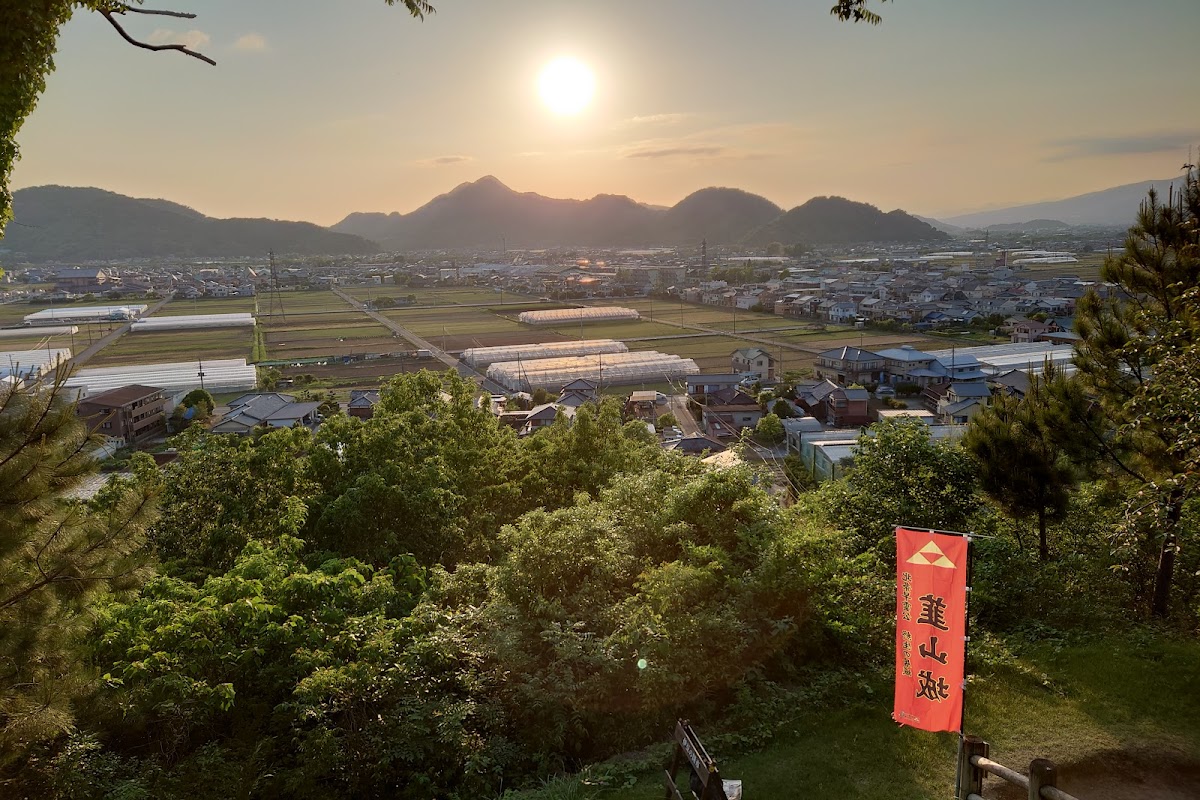
The view of the castle ruins is particularly magnificent, and the panoramic view of Shimoda Bay and Washimoda Port is also impressive. In the sunny day of Hikori, as far as Izu Islands, you can see the scenery of the castle lords and generals of Japan.
Protection activity
In recent years, the “Shimoda Castle Protection Promotion Association” has become a representative group of citizens working together to utilize the castle fort for protection. The company’s self-organized archaeological research, clean-up activities, and other activities are in place.
Over the years, there have been small activities, Shimoda Castle’s historical past has been reviewed, and people have also come to Vietnam and hope to travel there.
Visitor Guide
Transportation
Sitting fire car
- From the Izu Express Line to Izukyu Shimoda Station, the journey takes approximately 20 minutes.
- The bus station is located at Shimoda Park.
Jizabaji
- Take the Izukyu Shimoda Station to Shimoda Marine Water Tribe Station and the Shimoda Park Station.
- The annual flower festival is held on a regular basis.
Self-driving route
- Departs from Numazu IC on the Numazu Expressway, closes on National Route 414, approximately 2 hours and 30 minutes.
- Shimoda Park has a parking lot (approximately 140 regular cars).
- Public transportation tools during the flower season, construction and seating.
Learn about the game
Costume time
- Walking tour park schedule demand 1-2 minutes.
- As a result of thinking about the site, it took about 2-3 hours to visit the site.
Wearing and carrying items
- The walking path is in good condition, but the steps are not very good, and there is a platform, and the construction is suitable for walking shoes.
- The sun shines brightly in summer, and the construction hat is protected against frost.
- Drinking water before construction.
Best season
- June is the best time to watch global flowers, and participate in the recommended “global flowers”.
- Autumn to spring is the best time to visit the fortress from a distance, and there are fewer visitors at this time.
- Due to the strong winter sea winds, the structure is suitable for wearing thermal clothing.
Zhoukan Scenic Spot
Shimoda Port
- Entrance to the natural harbor below Shimoda Castle.
- Brigadier General Inari was here, and his name was also known, as was the history of Japan’s overseas expansion.
Shimoda Marine Aquarium
- Just a short walk away from Shimoda Park, you can easily reach the water park.
- Brilliant content including a performance by Yukai Xin Hai Hai Pig.
Kiri Road
- Ichijo Mitsuhiro’s charming road, the road to the end of Golin, and the plaster mound decorated with sea ginseng molding.
- Highway 2 and 3rd edition store.
Longsenji Temple
- The Temple of the Shimoda Articles (Appendix to the Peace and Friendship Articles of Japan-Yomi-Kuni)
- Exhibition items from Japan and other countries.
Shimoda Castle’s cultural scene
Typical coastal fort during the war period
Shimoda Castle was built as a coastal fort in the post-war period, and holds an important position in the history of castles in Japan. The station was fully utilized to achieve the geographical advantage of the sea, and the construction of shoji moat (folding wind-style castle river), Japanese-style castle river, etc. defense construction, after its completion, the Hojo clan’s special expedition, and the representative reached the pinnacle of fort construction technology at the time.
The design of Shimoda Castle combines the functionality of a coastal fort and the defensive ability of a mountain fort, which is a rare example of the modern country’s construction of a fort.
Indication of the Battle of the Castle
In 1590, when Shimoda Castle was conquered, the ultimate inability to overcome the military’s complete inferiority, however, the development of the castle’s historical record, the development of the best castle fort design, and the importance of the soldiers since the selection of the generals to defend the castle.
Shimizu Yasuhide rate 600 Tama no kami castle commander, resistance exceeded 10,000 army chief 50 Many heavenly attacks, the strength of Shimoda Castle has been fully confirmed, and the indomitable spirit of the military commanders of the era of the country has been revealed, and the fierceness of their lives is now fierce.
Local history history
The site of Shimoda Castle is an important historical site in Shimoda City. Shimoda City was honored to be the stage for Japan’s international development, and it was a rare investment in the history of the country, not to mention the history of the country’s history, and the creation of cultural recognition in the area.
Shimoda Castle is not known because it is a flower in the world, attracts a lot of visitors, visits the castle grounds, protects and utilizes the castle grounds, and donates to the local history, education, and culture promotion.
overview
Shimoda Castle was located in Shimoda City, which was a coastal fort in the post-war period. Built in 1588 by the Hojo clan, it was originally the naval base of the Odawara Hojo clan. In 1590, when the vassal Hideyoshi attacked Odawara, Shimoda Castle was the site of a fierce battle. Yasuhide Shimizu’s army numbered 600 warriors and warriors, and over 10,000 vassals fought fierce battles for over 50 days.
Nowadays, Shimoda Castle remains in ruins, Shimoda Park, perfectly preserved monuments from the era of war, examples of which include the shoji moat (paper castle river) and the Japanese Horikiri (dried castle river), etc., have been preserved in a great way. In June, during the flowering season, 150,000 flowers were released, attracting many visitors. Convenient transportation (20 minute walk from Izukyu Shimoda Station), ideal for history lovers, and a perfect choice for natural scenery.
Shimoda Castle was built as a coastal fort, and after its completion, it was the pinnacle of Hojo clan castle pond construction techniques, and at the same time was an important military location at the end of the War period, and an important position in the history of castle forts in Japan. Traveling around Shimoda, visiting Shimoda Park, experiencing the romantic atmosphere of the country’s time, and the beautiful natural scenery.