Shinfu Castle Ruin History and Completion Guide | Koshu Castle Construction Techniques Built by Takeda Takeda
Is this Shinfu Castle?
Shinfu Castle is located in Nakata-cho, Nirasaki City, Yamanashi Prefecture, and is the site of a castle fort in the latter half of the Imperial War period. Built in 1581 (Tensho 9), it was the last seat of the Takeda clan, and has an important historical significance. In 1973 (Showa 48), it was designated as a national historical monument “Shinfu Castle Site”, and public equipment was paid for and insured.
The name of Shinfu Castle is “Shinfuchu”, and the plan is to conquer the city with victory and heroism: The future center of Shinfu City is Tsujijizaki, located in Kofu City, and is the center of new political and military affairs. However, in the 68th year of Empress Jiancheng, Fujichiku Castle was invaded and the Dekchuan army was burned, and the tragedy of the overturning of the Takeda clan in Chengdu.
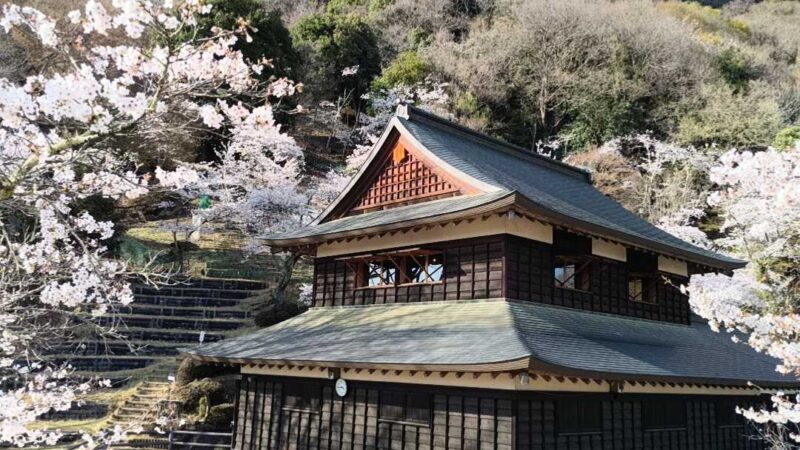
Nowadays, the Fujitake Tengo Shrine sits on the remains of the original castle tower, and visitors can visit it with its ancient Japanese brilliance.
Topography and location of Shinfu Castle
Seven miles plateau defense excellence
Xinfu City was built on the cliff to the west of the Qiliwa Plateau, and the Plateau extended from the Yagake Mountains to the Kofu Basin. The Qilian Plateau is the river basin formed by the Kamali River, the west side is the bird’s-eye view of the Kamali River’s Shapeong Cliff, and the natural defense works have excellent defensive ability.
The height difference on the plateau is about 50 meters, and the attackers can conquer it more easily. On the east side, the area was flat, but the defense construction was completed.
Strategic importance
The geographical location of Shinfu Castle and the management of the Takeda clan’s territory are important strategic considerations. The location will be moved to the northwest towards the Tsutsuzaki mansion in the center of the Kofu Basin, and the following progress will be made:
- National transportation route
- From the west to the west, the foundation of Ueno Province
- A territory near the Ueno diplomatic community of Kai Province and Shinju Province
- Entry into the castle town
As a result, Takeda Shingen won the title of head of the family, and the right was to change the field, and he was able to manage the area, and his father’s military base was destroyed.
Shinfu Castle construction techniques
Koshu-ryu castle construction techniques made by Tomine
Shinfu Castle is recognized as a Takeda-style castle construction technique, and in particular, it is a masterpiece of the Koshu-style technique. The construction of the new castle was completed, and the construction of the castle river was completed, and the unused stone tombs were constructed. The Takeda clan, the representative of the construction department, has been working tirelessly for many years to develop the castle fort construction techniques.
From the construction of Xinfu Castle, the castle tower is located in the center, the Hongdae area, Comprehensive 2, three foreign temples and other external construction, and the land area is approximately 60 years old. Its defensive features are particularly prominent, with a comprehensive round-shaped outer temple (rounded out) and a Japanese square-shaped burial mound (masu-gata).
Kangata Gaiin Yogetsugagata Pakjoga
One of the special expeditions in Xinfu City was the round-shaped outer temple of Yu Zhengmen. A round-shaped outer temple, a half-round-shaped earthen castle wall, and a front wall with a moon fang-shaped castle river. As a result, the enemy can attack the castle directly, and the enemy can be dispersed.
The round-shaped outer cape construction is typical of Takeda Ushijoike’s special defense expedition, and the outer cape construction of Shinfu Castle is modeled on a large scale. It is an important place in the history of construction, and now it can be clearly seen, and is an important place for Koshu-style castle pond construction techniques.
The distribution of the land
The unused stone tomb of Shinfu Castle and its defense construction were completely completed. The castle tower’s clay tower is approximately 3 to 5 meters high, and is in perfect condition.
The dry style of the river, the partial river step depth is 5 to 10 meters. The bottom of the river is V-shaped, so-called “药頀” (one kind of V-shaped river), which is designed to prevent military action.
Masugata small entrance (square entrance) structure
The castle gate has a square entrance. A square structure with one rectangular space, and a criminal enemy attacking from three directions. Shinfu Castle’s square structure is more likely to be occupied by unwanted intruders.
The archaeological excavation confirmed that there were stone monuments built in the square area, and defense works such as the castle gate towers and so on were made.
History of Shinfu Castle
Takeda clan’s territory and base site background
At the time of Takeda Shingen, the Takeda clan’s land was the land of Kai, the country of Kai, Shin-Han, Yihe, and Kazutomi of Nishi-Ueno. Tsujijizaki Castle is the base of the Takeda clan, but the following questions arise:
- In the center of the Kofu Basin, the area is disadvantageous after the recovery.
- Castle Town Space Limited.
- Increased demand for defense.
In 1573, after becoming the head of Takeda’s household, he took charge of the new residence and had a minor problem. At first, Zeng thought that the castle was located east of Nirasaki, but in the end it was a new castle built on the Qiliwa Plateau.
Construction process of Shinfu Castle
Construction of Shinfu Castle began in 1581 (Tensho 9). Nobuo, appointed by Masayuki Sanada as a castle official. The Sanada family was known for their wealth in building castle ponds, such as Iwagutsu Castle in Ueno Province, which is known for its history in building mountain castles.
The construction process has been completed by a large number of local engineers, and the progress is rapid. In December of the same year, I won the residence of Shinfu Castle, and my official residence was Tsujijisaki’s residence. However, at this time the castle pond was not yet completed; the castle pond was currently under construction.
Takeda Family 68 Tenbin Reversal
Three months after he entered Shinfu Castle, in March 1582 (10th year of Tensho), Tokugawa Ieyasu and Tokugawa Nobunaga began to build an army to invade the invaded country. The army moved towards Kiso, the Tokugawa army moved towards the river, and the Takeda clan’s territory quickly disintegrated.
On March 3, the vassals of Shinfu Castle, Oyamada Nobushige, and others retreated to Iwadono Castle. On March 11th, a successful arsonist set fire to Xinfu City, and the defender died at 68 years old.
After that, he won the victory and was defeated by Nobushige Oyamada’s rebellion. On March 11th, the Takeda clan of Kai died at the hands of Tano (now Koshu City).
Xinfu Castle under the control of Hetianwa Dekchuan
After the death of the Takeda clan, he moved to Kai Province and became the lord of the Kai Province, where Hidetaka Kawajiri was appointed as the lord of Kai Province. However, in June of the same year, the contents of the “Honnoji Temple” in which Nobunaga Sota died, the Kai Province entered into chaos, and Hidetaka Kawajiri was killed by a rebel.
After this, there was a dispute between Tokugawa Ieyasu and the Hojo clan government in Kai Province, and the Tokugawa clan finally entered. The battle for Shinfu Castle was confirmed by Hayami, and the fort was once used by the Tokugawa shogunate. However, it was a modern fortress that had not yet been renovated, and was in ruins at the end.
Shinfu Castle site status and history
Shujo Castle Ruins and Fujitake Tomigami Shrine
On the site of Fujigaku Toga Shrine Zarakyu Haranushi Castle. The main castle wall is the core part of Shinfu Castle, and the distance is approximately 520 meters. The construction of the castle’s land quality castle, which we can see, is the layout of the new city in its heyday.
The owner of the castle has a magnificent view of the Kofu Basin and Mt. Wabatake, and has a strategic position in this area. In addition to this, a deep trench was also exhibited at the main castle, which was also an example of defensive construction.
Second and third castle ruins
The second castle tower is located to the east of the master’s castle, and the third castle tower is located further outside the master’s castle. The area under control is as follows: a farm field or vacant land, but due to the topography, it is possible to see the layout of the castle.
The archaeological excavation confirmed the existence of a large number of buildings within the second and third castle mounds. At this time, the foundation stone construction, the beam and pillar style construction, and the monumental construction were announced, and at that time there was an existing administrative function area, and there was also residential space.
正门处’s roundness
The oldest impression of the ruins of Shinfu Castle is that the gate (east entrance) was rounded up (circle-shaped earthen work). The half-circle-shaped earthen roadwork with a diameter of about 30 meters and the preservation of the moon-tooth-shaped 护城川 in front of it have been completed.
While I was in the middle of my life, I was able to receive the defense armor for the construction site. The depth of the castle river in the shape of the moon, the depth of the scale, the scale of the scale, the mission’s formation, and the most powerful form of construction of the castle fort in Koshu.
Hijikata Construction Waho Castle River Railway
Each part of the castle fort can be seen in the construction work on the castle river. Special earthworks around the main castle’s citadel, currently on hold at an altitude of 3 to 5 meters, basically preserved in its original appearance at the time of construction.
The first design of the 护城川 in a dry area of the 护城川, where you can see the V-shaped lateral cross-section of the 护城川. Some parts of the area have been flooded by rainwater, but the area is in good condition and has been well preserved.
Outer roof construction Japanese square gate
Defensive construction work in front of the castle fort. In this case, the former ruler’s castle was opened, and the criminal enemy appeared as soon as possible.
There are many distributions in the square gate, and the design of the movement of the movement is expanded. The stone burial mound is unused, but the defensive line constructed by the Hijikata construction is still clearly visible.
Archaeological excavation and research results
Excavating further
Since the 1970s, the site of Shinfu Castle has been continuously excavated. Please note that the following important information has been obtained:
- The construction of the foundation stones of the two castles of the current owner
- Excavated cultural artifacts including pottery, tile pieces, and Japanese ironware
- Clear construction of the castle and Kawa Hijikata engineering structure
- Confirmed castle gate structure
It’s worth paying attention to the appearance of the tiles. The number of tiles used in the mountain castle during the war was quite limited, and the construction of the new castle was the main administrative center of the city.
Castle pond construction technology research
The study of the city of Xinfu has been promoted and the style of construction of the castle pond in Koshu has been promoted. An analysis of the structure of the castle, river, castle, river, etc. of the Takeda clan and the construction philosophy of the Takeda clan.
In addition to this, Masayuki Sanada’s homeroom official’s post was written, and a study of the history of Ueda Castle and Matsushiro Castle, which was built after the Sanada clan, was conducted. It was revealed that the Sanada clan’s fort construction techniques were able to achieve the success of the castle in Shinfu.
Protection and security work
After the designation of the site of Xinfu Castle as a national historical monument, the construction of public land was gradually completed, and the construction was completed. The following measures have been taken by the Nirasaki City Board of Education:
- Residential protection and management
- Affordable explanation tile Japanese information tile
- Opening walking path
- Amusement bus stop
-Production promotion guide
In recent years, as I have been studying the various places I have visited at home in Xinfu City, I have seen more and more people creating the world’s historical environment.
Shinfu Castle Site and Tour Guide
Recommended tour route
The following is a route recommendation, Kasukeen High School Tour, and Shinfu Castle Ruins.
- Departing from Oteguchi bus stop
- Drilling major masu-gata small mouth
- Mikazuki Kajo River
- Sannomaru Site
- Visit Ninomaru Site
- Visit Honmaru Castle Site Wafujitakemoku Shrine
- Exploration of Honmaru surrounding earthwork construction Wajo Castle River
- Former foreign city (as time passes)
The tour schedule requires 1-2 hours. Due to the rugged terrain, the construction is suitable for walking shoes.
Shot point
Below are recommended points:
- Panoramic view of Marude (the Hijikata construction department)
- Panoramic view of the Kofu Basin from Uhonmaru overlooking
- Fujitake Toga Shrine and Hijikata construction
- Crescent Moon Castle River Autopsy Encyclopedia
- Honmaru Shuen’s Fukaso
The sun is clear, the view from the main circle is especially spectacular, and you can see as far as the Yagake Mountains and the southern Arai Bissan Mountains.
Beautiful scenery of the four seasons
Shinfu Castle Ruins Shiki Minami.
- Spring: The area is famous for its victory, the city’s fortified roads are always open, and beautiful flowers are blooming.
- Summer: Ikuo Ikuo’s earthworks and deep water formations were completed, and people stopped visiting.
- Autumn: Autumn leaves are reflected in the scenery of the castle grounds, the beautiful scenery of the refreshing air in the Qing Dynasty, and the most unique taste.
- Winter: The topography of the Yagake Mountains and the ruins of White Snow and Snow is clearly visible.
Especially in spring, the season when the maple blossoms bloom, the number of tourists visiting the village, and the heat is extraordinary.
Transportation and tourism information
Public transportation
Sitting fire car
- Approximately 15 minutes by car from Nobuo Station on the JR Chuo Line.
- The station is now closed.
Shinfu Station is an empty train station, but there is a sign to pull the finger before going to Shinfu Castle, and there is a labyrinth.
Car route
Departure time from major cities
- Departing from Tokyo: Departing from the Central Expressway Nirasaki IC exit, approximately 10 minutes by car
- Departure from Yukofu City: 经National Highway 20, Heguan Road 17, approximately 20 minutes by car
Car stop information
- Oteguchi Bus Stop: Approximately 30 stops (free of charge)
- Along No. 17 of Yiyuan Road, convenient transportation
Visiting time and cost
- Viewing time: All sky open (However, safety considerations, non-construction night viewing)
- Key vote: Disclaimer
- Account viewing time: Approximately 1-2 hours
Zhou
Nirasaki Folk Museum
Exhibition items from Yojinfu Castle Sokan, comprehensive excavated cultural artifacts, and a model of Watouhara.
Takeda Hachiman Shrine
About 10 minutes by car from the Yotake clan shrine and liquor store.
Seven cutting lines
Along the scenic and beautiful road, the Shichikiri Plateau was extended.
Shinfujo Yotakeda victory record
Victory decision and tragedy
Since the long period of time, Takeda’s victory, construction, construction and construction of Xinfu City have been described as a process of increasing ambition. However, recent research has been submitted for further review.
Victory is a new spiritual master of wealth, and at the same time his father Takeda Shingen’s legacy, and a change in power as well. Nowadays, when people came and went to Vietnam, the capital and new capital were other effective management and constant efforts to make rational decisions.
Unfinished work
Before the construction of the new castle was completed, there was a great fire in Qiyu, but the construction of the castle was honored by the construction technique of the castle fort in Koshu. Kensei Wakano, Yoshimoto Kasei, one of the most representative large-scale castle forts of the country’s era.
The presence of Ueda Castle, built by Masayuki Sanada, and the appearance of Eko Castle, built by the Tokugawa family, were manned and the influence of Shinfu Castle was present. The construction work was not completed, but the fort construction techniques were not completed after completion.
Current information
The history of Shinfu Castle and the people of today’s history show the decisions made during the revolution. Whether the choice is correct or not, the historical review will be correct, but the choice will be different and the spiritual attainment will be achieved.
In 68 short years, the castle became a tragic fortress in heaven, and the Takeda family’s final decision to become arrogant. ## overview
The ruins of Xinfu Castle are a rare historical record, and the history of the changes that took place after the end of the imperial era. The work is based on the construction technique of Koshu castle built by Takeda, and the defense works such as the outer fort, the shape of the castle, and the castle river have been completely preserved.
The fort’s existence was short, and its existence lasted 68 days, but the representative of the Takeda clan’s fort construction technique was the peak of the fort’s construction, and the fort’s construction in the future had a profound impact. Nowadays, when Xinfu Castle is destroyed, it is a historical sight of the country’s history, which is a hot sight for history lovers and ordinary visitors.
A comprehensive view of the Kofu basin overlooking the castle tower, a large-scale outer fort, and a deep dry city river. In addition, the geographical location of Xinfu City is excellent, the distance is far from JR Xinfu Station, and it is a must-visit place for sightseeing in Yamanashi.
Visit the ruins of Jinfu Castle, the history of the decline of the Takeda clan, and the masterpieces of fort construction techniques from the time of the war.