Jofukuji Castle (Tokyo) Complete Guide: The Full Picture of a Medieval Mountain Castle, a Culmination of the Moats Built by the Oishi Clan
Basic Information on Jofukuji Castle
Jofukuji Castle was a Japanese castle (mountain castle) that once existed in Shimo-Ongata-cho, Hachioji City, Tokyo. Built along the ridge of Mt. Senju, at an elevation of 356.4 meters and a relative height of 160 meters, it was a multi-bailey mountain castle and was designated a Hachioji City Historic Site on January 27, 1972 (Showa 47).
Basic Data
- Location: Shimo-Ongata-cho, Hachioji City, Tokyo
- Former Province: Musashi Province
- Common Names/Alternate Names: Shinjo, Anshita-jo, Matsutake-jo, Senjuyama-jo, Yui-jo
- Castle Structure: Renka-shiki Yamajo (mountain castle)
- Builder: Oishi Nobushige (estimated)
- Year of Construction: Shitoku 1 (1384) (estimated)
- Main Renovators: Hojo clan
- Main Lords: Oishi clan, Hojo clan
- Year of Abandonment: Tensho 18 (1590)
- Designated Cultural Property: Hachioji City Designated Historic Site (Jofukuji Castle Ruins, Shinjo Ruins)
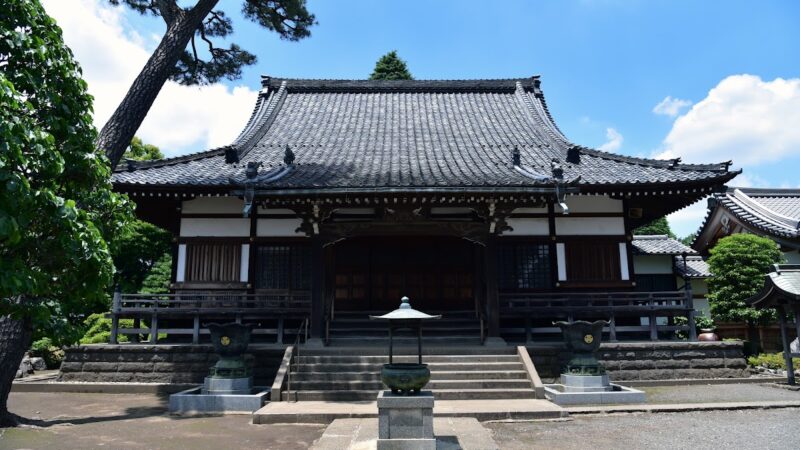
The name Jofukuji Castle originates from Jofukuji Temple, located at the foot of the castle. This temple was formerly called “Senjuzan Fumon-in Jofukuji,” but was renamed Jofukuji in the late Edo period. ## Overview
Jofukuji Castle is a valuable historical site near Tokyo where the remains of a medieval mountain castle can be viewed in excellent condition. Its most distinctive feature is its defensive system, often described as a “culmination of moat construction,” with multiple layers of massive moats positioned along the ridges extending in all directions.
More than 36 baileys (enclosures) have been identified within the castle grounds, and remains such as earthworks, moats, and gates are well-preserved. The group of baileys, mainly spread along the ridges, provides valuable historical evidence of the typical structure of a medieval mountain castle.
The castle’s location was strategically important, and it is believed to have functioned as a subsidiary castle (outpost) of Hachioji Castle. Especially during the Later Hojo period, it was renovated and strengthened as an important base playing a key role in the defense network of Hachioji Castle.
History
Background of the Castle’s Construction and the Era of the Oishi Clan
The construction of Jofukuji Castle is believed to have taken place around 1384 (Shitoku 1), and the builder is said to have been Oishi Nobushige, the lord of Ninomiya Castle (Ninomiya Manor), who served Uesugi Noriaki, the Kanto Kanrei (governor of the Kanto region).
The Oishi clan were powerful local lords in Musashi Province and held considerable influence in the Tama region from the Muromachi period to the Sengoku period. It is thought that Oishi Nobushige’s construction of Jofukuji Castle was driven by a strategic intention to establish a base within the Uesugi clan’s sphere of influence.
The Oishi clan used Jofukuji Castle as one of their bases to solidify their control over the surrounding area. It is presumed that Jofukuji Castle functioned as an important military base in the Oishi clan’s territorial management during this period.
“Yui Territory” and “Yui Group” and Jofukuji Castle
The area where Jofukuji Castle is located was known as “Yui Territory” or “Yui Territory” during the medieval period. In this region, there was a group of local samurai collectively known as the “Yui-shu,” who are believed to have served under the Oishi clan.
One of the alternative names for Jofukuji Castle, “Yui Castle,” derives from this region’s name. The Yui-shu were an important support group for the Oishi clan’s military power, and Jofukuji Castle also served as their base.
The Yui territory was also a strategic transportation hub, located on a route connecting Kai Province and Musashi Province. Therefore, it is presumed that Jofukuji Castle served not only as a military defensive base but also as a means of monitoring and managing transportation routes.
Renovations by the Hojo Clan and its Relationship to Hachioji Castle
In the late Sengoku period, after the unification of the Kanto region by the Hojo clan (Odawara Hojo clan), Jofukuji Castle underwent extensive renovations. These renovations by the Hojo clan are believed to have focused particularly on strengthening its defensive capabilities.
In the 1580s, when Hojo Ujiteru built Hachioji Castle, Jofukuji Castle was positioned as a subsidiary castle (outpost) of Hachioji Castle. Within the defense network centered on Hachioji Castle, Jofukuji Castle became a crucial base responsible for the defense of the western side.
Many of the massive moats and complex layouts visible today are thought to have been constructed during this period of renovation by the Hojo clan. The sheer scale and number of the moats, in particular, are overwhelming and serve as evidence of the Hojo clan’s advanced castle-building techniques.
Fall and Abandonment in 1590
In 1590, when Toyotomi Hideyoshi launched his siege of Odawara, Jofukuji Castle was also caught in the fighting. When Hachioji Castle was attacked and fell to the forces of Maeda Toshiie and Uesugi Kagekatsu, Jofukuji Castle is believed to have shared the same fate.
While Hachioji Castle fell on June 23rd, there are no clear records of when or how Jofukuji Castle fell. However, given its function as a subsidiary castle of Hachioji Castle, it is presumed to have been abandoned around the time of Hachioji Castle’s fall.
After the Siege of Odawara, when Tokugawa Ieyasu entered the Kanto region, this area came under the control of the Tokugawa clan. However, Jofukuji Castle was never used again as a military base and remained abandoned.
Remains
Arrangement of Enclosures (Kuruwa)
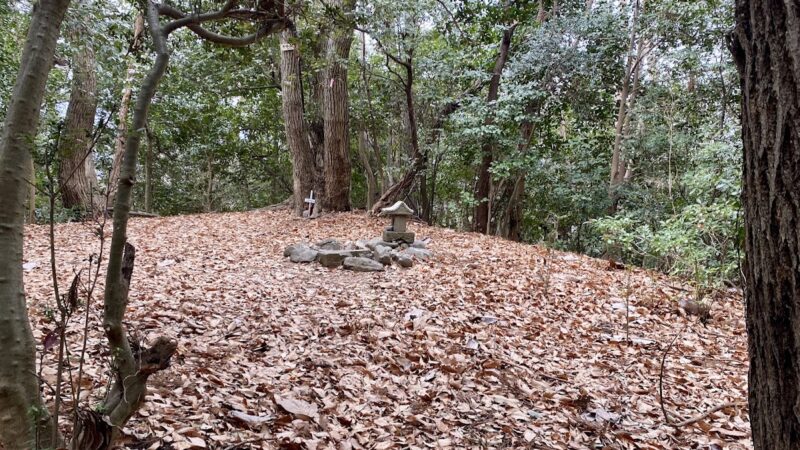
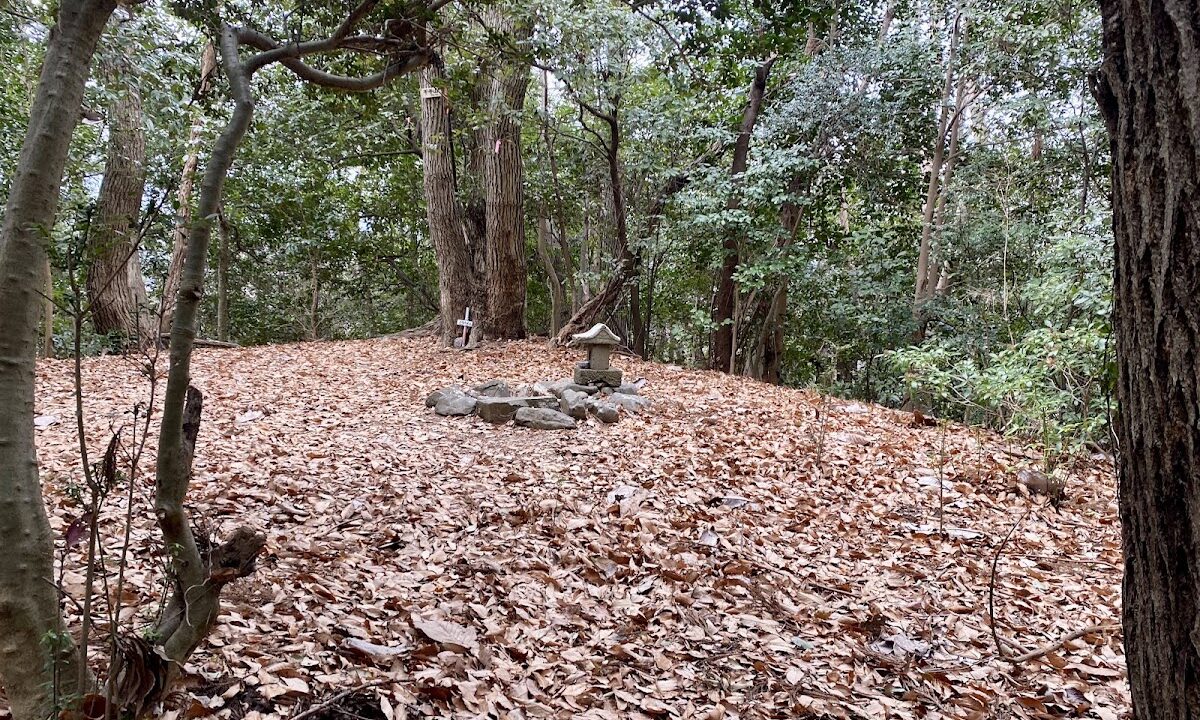
More than 36 enclosures have been identified at Jofukuji Castle, arranged in a linear fashion mainly along the ridge. The structure, with the main enclosure at the center and the enclosures extending east, west, north, and south along the ridge, is a typical layout for medieval mountain castles.
The main enclosure is located at the highest point of the castle and is surrounded by earthen ramparts. The main enclosure offers excellent views of the surrounding area, suggesting it functioned as a military command post.
Each enclosure was relatively small, and it is believed that each functioned as an independent defensive unit. The enclosures were separated by moats and steep slopes, demonstrating ingenuity in preventing enemy intrusion.
Characteristics of the Moats
The greatest highlight of Jofukuji Castle is its massive group of moats, often described as the “culmination of moat design.” Multiple moats are constructed along the ridges extending in all directions, their scale and number unmatched among medieval mountain castles near Tokyo.
Many of the moats are approximately 10 meters deep and over 10 meters wide, completely cutting across the ridges. These moats are not single, but are arranged in double and triple layers, enhancing their defensive effectiveness.
In particular, the largest moats are located along the ridge leading to the main enclosure, functioning as the final line of defense against enemy intrusion. The bottom of the moats is still clearly visible today, demonstrating the high level of excavation technology of the time.
Earthworks and Entrances
Earthworks were built around each enclosure, and the earthworks of the main enclosure, in particular, are relatively well-preserved, reaching a height of approximately 2 meters. These earthworks are thought to have served both to defend the interior of the enclosures and as foundations for buildings.
Entrances (koguchi) were provided in each enclosure, and many of them had a flanking fire structure. They were designed to allow attacks from the flanks against enemies passing through the entrances, demonstrating careful defensive measures.
Some entrances show traces of stonework, suggesting the possibility that stone walls were used during renovations by the Hojo clan. However, no large-scale stone walls have been confirmed, indicating that it was fundamentally an earthen castle.
Vertical Moats and Slopes
Vertical moats were constructed on the slopes of the ridges, serving to hinder enemies attempting to climb the slopes. These vertical moats extended downwards from trenches, forming a defensive line.
A “kirigishi” (cliff) is a steep slope carved into the perimeter of a fortified enclosure (kuruma), and at Jofukuji Castle, clear kirigishi can be seen in many of the enclosures. The kirigishi are mostly 3 to 5 meters high, skillfully utilizing the natural terrain to create artificial steep slopes.
Archaeological Materials
While no systematic excavation has been conducted at the Jofukuji Castle site, some artifacts have been identified through surface collection.
The unearthed artifacts include fragments of medieval pottery and ceramics, estimated to date from the 14th to 16th centuries. These artifacts provide important evidence indicating the period when the castle was actually in use.
Furthermore, fragments of a five-tiered pagoda and stone steles have been discovered around the castle site, suggesting the existence of religious facilities and burial grounds related to the castle. Further research is needed regarding the complex functions of the castle and temple, including its relationship with Jofukuji Temple.
An information board, installed by the Hachioji City Board of Education, is located on-site, providing basic information about the castle’s history and structure. The board also includes a layout map, which is helpful for visitors.
History
The main history of Jofukuji Castle is summarized below in a timeline.
- Around 1384 (Shitoku 1): Said to have been built by Oishi Nobushige
- Muromachi period: Functioned as a base for the Oishi clan
- Mid-Sengoku period: Continued rule by the Oishi clan
- Tensho era (1573-1592): Came under the control of the Hojo clan and underwent large-scale renovations
- 1580s (Tensho 10s): Positioned as a branch castle of Hachioji Castle
- 1590 (Tensho 18): Abandoned due to the Siege of Odawara
- Edo period: Remained abandoned
- 1972 (Showa 47): Designated a Hachioji City Historic Site on January 27th
- Present: Preserved as a historic site, with a well-maintained access path
Sightseeing
Points to Note
Jofukuji Castle Ruins is a valuable spot near Tokyo where you can experience the remains of a medieval mountain castle. When visiting, paying attention to the following points will help you understand the castle’s structure more deeply:
Around the Main Enclosure: Explore the main enclosure, the central part of the castle, and the surrounding baileys. The earthworks and gate structures are well-preserved.
Moat System: The massive moats built along each ridge are a must-see. The moats on the main enclosure side are particularly large, showcasing the advanced civil engineering techniques of the medieval period.
View: From near the main enclosure, you can see the city of Hachioji and the surrounding mountains, demonstrating the castle’s strategic location.
Notes for Visitors
Jofukuji Castle is a mountain castle, so appropriate preparation is necessary for a visit.
- Clothing: Wear appropriate clothing and shoes for hiking. Be especially careful after rain, as the ground can be slippery.
- Estimated Time: Allow approximately 20-30 minutes on foot from the entrance to the main enclosure, and 1-2 hours including a tour of the castle grounds.
- Season: During summer, the vegetation becomes overgrown, making the ruins difficult to see. Therefore, visiting from late autumn to early spring is recommended.
- Insect Repellent: Bringing insect repellent spray is recommended from spring to autumn.
- Drinking Water: There are no vending machines within the castle grounds, so please be sure to bring your own drinking water.
Access
Using Public Transportation
The following routes are convenient for accessing Jofukuji Castle using public transportation.
From JR Takao Station North Exit:
- Take the Nishi-Tokyo Bus “Mi22” route.
- Get off at the “Kawaharajuku Ohashi” bus stop.
- From the bus stop, it’s about a 1-kilometer (approx. 15-minute) walk to Jofuku-ji Temple (the castle entrance).
From JR Hachioji Station:
- Some Nishi-Tokyo Buses operate to the vicinity of Jofuku-ji Temple (routes vary).
- Please check the Nishi-Tokyo Bus website for details.
If using a private car
If using a private car, aim for Jofuku-ji Temple. However, Jofuku-ji Temple does not have its own parking lot, so please avoid street parking and use nearby public parking lots or public transportation.
Address: Shimo-Ongata-cho, Hachioji City, Tokyo
Car Navigation Settings: Search for “Jofuku-ji Temple” or “Shimo-Ongata-cho, Hachioji City”
Castle Ascent Route
Jofuku-ji Temple is the castle entrance. The castle ruins are on the hill behind the temple, and the ascent route is well-maintained. The path to the castle is relatively clear, but please be careful of your footing as it is a mountain trail.
The climb from the entrance to the main keep takes approximately 20-30 minutes. Along the way, you will pass several baileys and moats, gradually gaining altitude.
Nearby Historical Sites and Tourist Attractions
Hachioji Castle Ruins
Hachioji Castle Ruins, considered the main castle of Jofukuji Castle, is a magnificent mountain castle built by Hojo Ujiteru and is designated a national historic site. Visiting it together with Jofukuji Castle will give you a deeper understanding of the Hojo clan’s castle network.
Hachioji Castle Ruins can be accessed by bus from Takao Station. A guidance facility is also available, where you can learn more about the history of the Hojo clan and the castle’s structure.
Takiyama Castle Ruins
Takiyama Castle Ruins, built by the Oishi clan and later the residence of Hojo Ujiteru, also has deep historical ties to Jofukuji Castle. It is now maintained as Tokyo Metropolitan Takiyama Park, where you can explore the vast castle grounds and magnificent remains.
Mount Takao
Mount Takao, accessible from Takao Station, is one of Tokyo’s most representative tourist destinations. It’s a good place to visit before or after a tour of Jofukuji Castle. Cable cars and chairlifts are available, making it easy to enjoy nature.
Summary
Jofukuji Castle (Hachioji City, Tokyo) is a medieval mountain castle built by the Oishi clan and renovated by the Hojo clan. It boasts magnificent remains, often described as the “culmination of moat construction.” With over 36 baileys, massive moat systems, earthworks, and gates well-preserved, it’s a valuable historical site where you can experience a medieval mountain castle near Tokyo.
This castle, believed to have been built around 1384 by Oishi Nobushige, functioned as a base for the Oishi clan from the Muromachi period to the Sengoku period, and later played an important role as a branch castle of Hachioji Castle under the control of the Hojo clan. Although it was abandoned during the Siege of Odawara in 1590, its remains are still clearly visible more than 400 years later.
Designated a Hachioji City historical site in 1972, the Jofukuji Castle ruins are a must-see spot for history buffs and castle enthusiasts. It’s easily accessible by public transport, and the approach to the castle is well-maintained, making it relatively easy to visit. Why not experience the structure of a medieval mountain castle firsthand at Jofukuji Castle and reflect on the historical stage where warlords of the Sengoku period once fought?