Tamatsukuri Castle (Tako Town, Chiba Prefecture) Complete Guide | History, Highlights, and Access Explained in Detail
What is Tamatsukuri Castle?
Tamatsukuri Castle is a medieval hilltop castle located in Minami-Tamatsukuri, Tako Town, Katori District, Chiba Prefecture. Also known as Minami-Tamatsukuri Castle or Minami-Tamatsukuri Fort, it is known as a castle built by the Nodaira clan, a branch of the Chiba clan.
Currently, the castle ruins, with their well-preserved remains, attract attention from castle enthusiasts and history buffs. The castle’s layout, cleverly utilizing the terrain at the tip of a dendritic plateau on the east bank of the Kuriyama River, holds significant value as a typical example of a medieval castle.
History of Tamatsukuri Castle
Construction and the Nodaira Clan
There are various theories regarding the construction period of Tamatsukuri Castle, but records indicate that Nodaira Tsunehiro became the lord of the castle during the Kōan era (1278-1287). The Nodaira clan was a branch of the Chiba clan, and it is clear that Tamatsukuri Castle served as an important base during the expansion of this clan’s power in Shimosa Province.
The Kenmu Rebellion and Tamatsukuri Castle
An important document that proves the existence of Tamatsukuri Castle is the “Kanazawa Bunko Documents.” These documents describe the situation when Chiba Tanetsada’s (Lord of Chiba Castle) forces attacked Tamatsukuri Castle during an internal conflict within the Chiba clan in 1336.
This record is a valuable historical source that shows Tamatsukuri Castle functioned as a militarily important base in the first half of the 14th century. The fact that battles for Tamatsukuri Castle unfolded during the power struggles within the Chiba clan speaks to the castle’s high strategic value.
From the Muromachi Period to the Sengoku Period
Throughout the Muromachi period, Tamatsukuri Castle was maintained as the residence of the Nodaira clan. During this period, Tamatsukuri Castle is believed to have functioned as an important base controlling the Kuriyama River basin within the Chiba clan’s sphere of influence.
Towards the end of the Sengoku period, Nodaira Tsuneyoshi served as the castle lord. Nodaira Tsuneyoshi was a vassal of the Odawara Hojo clan and played a key role in the Hojo clan’s sphere of influence in the Kanto region.
Ruined Castle and Legend of its Fall
When the Hojo clan was destroyed in the Siege of Odawara in 1590, Nodaira Tsuneyoshi, a vassal of the Hojo clan, is believed to have shared the same fate, and Tamatsukuri Castle was abandoned.
Legends of the castle’s fall during the Sengoku period remain in this region, and various stories about the castle’s final moments are passed down locally. These legends indicate that Tamatsukuri Castle was not merely a military facility, but a place deeply etched in the memories of the local people.
Structure and Layout of Tamatsukuri Castle
Location and Topographical Features
Tamatsukuri Castle is located on the east bank of the Kuriyama River, built on the tip of a dendritic plateau overlooking the confluence with its tributary, the Tokiwa River, to the north. This location possesses ideal conditions for a medieval castle, and has the following characteristics:
Natural Fortress
Although a small hill, it is a natural fortress surrounded on three sides by steep cliffs. This terrain allowed for effective defense even with a small force. The area below the cliffs was a wetland, acting as a natural moat that made it difficult for enemies to approach.
Advantages of Water Transport
Its proximity to two rivers, the Kuriyama River and the Tokiwa River, made it advantageous for the transport of goods and communication using water transport. In the medieval period, river transport was an important route, and Tamatsukuri Castle was built in a location that could maximize this advantage.
Castle Structure
Tamatsukuri Castle has a renkukaki-shiki (concentric castle) structure. From the two remaining enclosures, one can infer the layout of a linear, connected series of enclosures.
Main Enclosure (Honkuruwa)
The main enclosure, the center of the castle, was constructed as the most strongly defended section. It is believed to have been surrounded by earthen ramparts, and housed the lord’s residence and other important facilities.
Second Enclosure
Adjacent to the main enclosure, the second enclosure is separated from it by a moat. This moat served not only as a defensive structure but also as a clear demarcation between the enclosures.
Lower Enclosures
Lower enclosures are positioned around the main enclosures. These served both to provide multiple layers of defense and to ensure movement within the castle.
Details of the Remains
The following remains are well-preserved at the current Tamatsukuri Castle site:
Earthen Ramparts
The earthen ramparts surrounding the enclosures are still clearly visible. Their height varies depending on the location, but the best-preserved sections maintain a height of over 1.5 meters. Observing the structure of the earthworks allows you to appreciate the castle-building techniques of the medieval period.
Dry Moats (Horikiri)
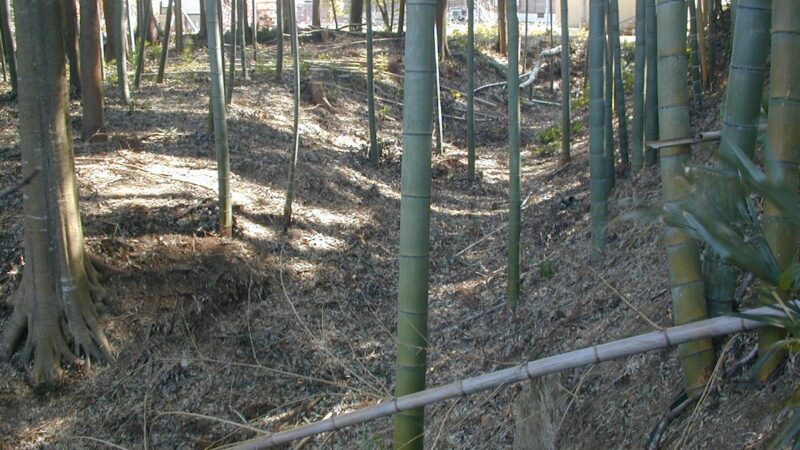
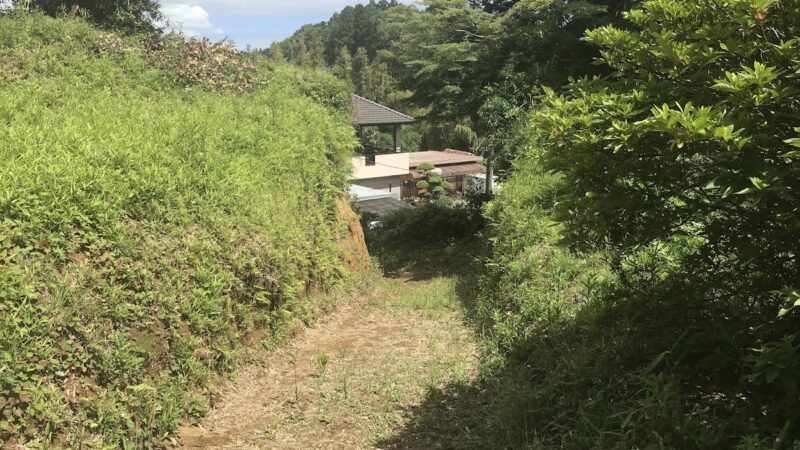
The horikiri, which separates the baileys, are a key feature of Tamatsukuri Castle’s defensive system. Approximately 3 meters deep, they functioned as a strong barrier to prevent enemy intrusion. Walking along the bottom of the moat allows you to experience its immense scale.
Bailey Remains
Multiple bailey remains are preserved, and their flat surfaces can be observed. The arrangement of the baileys allows you to decipher the overall structure and defensive plan of the castle.
Cut Slopes
Cut slopes, which are artificially carved steep slopes, remain in various places. It is evident that the castle’s defensive capabilities were enhanced by further modifying natural cliffs.
Highlights of Tamatsukuri Castle
Structure of a Concentric Castle
The greatest highlight of Tamatsukuri Castle is the clearly preserved structure of its concentric castle layout. The linear arrangement of the baileys is a typical form of medieval castles, and walking around the site allows you to understand its defensive philosophy.
Exploring the baileys arranged on either side of the moat allows you to observe the castle’s structure from both the attacking and defending perspectives, which is a unique charm of Tamatsukuri Castle.
Well-Preserved Earthworks and Moats
Among the medieval castles in Chiba Prefecture, the earthworks and moats of Tamatsukuri Castle are remarkably well-preserved. Having escaped the tide of development, they retain their original appearance relatively well, and their value as castle remains is highly regarded.
The moats, in particular, are deep, and are one of the few remains that allow you to truly appreciate their scale. Standing at the bottom of the moat, you can feel the power of the cliffs on both sides, and be amazed by the high level of medieval castle construction technology.
Views and Location
From Tamatsukuri Castle, built on a plateau, you can enjoy a panoramic view of the Kuriyama River basin. This view makes you realize that the castle was intended for monitoring and controlling river traffic.
On a clear day, you can see far into the distance, and the topography helps you understand why the castle was built in this location.
A Tranquil Atmosphere
Tamatsukuri Castle Ruins, which have not been commercialized for tourism, are enveloped in a quiet and peaceful atmosphere. Because there are few visitors, it is an environment where you can carefully observe the remains and reflect on the history of the Middle Ages.
Castle Stamps and a Tour of Tako Town’s Castles
Tamatsukuri Castle Stamp
Tamatsukuri Castle’s castle stamp can be purchased at “Junkodo,” a castle stamp specialty shop in Chiba Prefecture. The stamp reflects the characteristics and history of the castle and is popular as a souvenir of your visit.
A Tour of 15 Castles in Tako Town
Tako Town is known as “Japan’s No. 1 Castle Stamp Town,” and is developing a project to tour the 15 castle ruins remaining in the town. Tamatsukuri Castle is one of them, and visiting it along with other castle ruins will allow you to gain a deeper understanding of the medieval history of this region.
Other major castle ruins within Tako Town include the Tako Domain’s Jinya (fortified residence) site, each possessing different historical periods and characteristics. Visiting multiple castles allows you to learn about the development and transformation of castles in the region.
Access Information
Location
Address: 1349-2 (or 1345) Minami-Tamatsukuri, Tako-machi, Katori-gun, Chiba Prefecture
Access by Car
Access to Tamatsukuri Castle is most convenient by car.
- From the Higashi-Kanto Expressway:
- Approximately 30 minutes from Narita IC
- Approximately 25 minutes from Daiei IC
- Take National Route 296 towards Tako Town
Regarding parking, you will often have to park on the roadside around the castle ruins, so please be careful not to obstruct other vehicles.
Access by Public Transportation
Public transportation access is limited.
- Take a bus from Narita Station or Sawara Station on the JR Narita Line.
- Access on foot from a bus stop in Tako Town.
Since buses are infrequent, it is recommended to check the timetable in advance.
Points to Note When Visiting
- As there are few signs, it is important to check a map or GPS function in advance.
- The ruins are located in a forest, so please wear comfortable shoes and clothing.
- Insect repellent is necessary during the summer.
- Please observe proper etiquette as the site may be adjacent to private property.
Estimated Visit Time and Points to Note
Standard Visit Time
A visit to Tamatsukuri Castle typically takes 20-30 minutes. If you want to observe the ruins in detail, it is recommended to allow 45 minutes to 1 hour.
Best Season for Visiting
Spring (March-May): The season of fresh greenery and mild weather makes it ideal for visiting. However, early spring, before the vegetation grows thick, is a better time to observe the ruins.
Autumn (October-November): The fallen leaves make the ruins easier to see, and the weather is pleasant. The surrounding scenery is also beautiful during the autumn foliage season.
Winter (December-February): The vegetation has withered, making this the best season to view the ruins. While cold weather precautions are necessary, this is an ideal time for castle observation.
Summer (June-September): The vegetation is dense, and there are many insects, making it unsuitable for serious sightseeing. Thorough preparation is necessary if visiting during this time.
Photography Tips
- Earthworks: Photographing from the side makes their height and structure easier to understand.
- Moat: An angle looking up at the cliffs on both sides from the bottom of the moat creates a powerful photograph.
- Panoramic View of the Enclosure: Photograph the flat surface of the enclosure with a wide-angle lens to convey a sense of scale.
- View: A view from the plateau demonstrates the importance of the castle’s location.
Nearby Attractions
Historical Spots in Tako Town
We recommend visiting other historical spots in Tako Town in conjunction with your visit to Tamatsukuri Castle.
Tako Domain Jinya Ruins: The site of the Tako Domain’s administrative office during the Edo period, where you can learn about early modern history.
Other Castle Ruins in Tako Town: A castle tour course visiting 15 castles allows you to systematically understand the region’s medieval history.
Related Castles in Chiba Prefecture
Many other medieval castles remain in Chiba Prefecture.
Kururi Castle: A representative mountain castle of Chiba Prefecture, with a reconstructed keep. While different in scale from Tamatsukuri Castle, comparing them as castles of the same era is interesting.
Hon-Sakura Castle: A castle that flourished as the base of the Chiba clan, designated as a National Historic Site. As a castle of the Chiba clan, its connection to Tamatsukuri Castle can be examined.
Research and Preservation of Tamatsukuri Castle
Academic Value
Tamatsukuri Castle holds significant academic value as a castle of the Chiba clan and as a typical example of a multi-bailey castle. As a castle mentioned in the “Kanazawa Bunko Documents,” it is a valuable case that allows for research from both documentary and archaeological perspectives.
Current Status and Challenges of Preservation
Currently, the Tamatsukuri Castle site is not specifically designated as a historic site, but its value is being re-evaluated thanks to the efforts of local history enthusiasts and the town of Tako.
Preservation Challenges:
- Management of vegetation and visualization of the remains
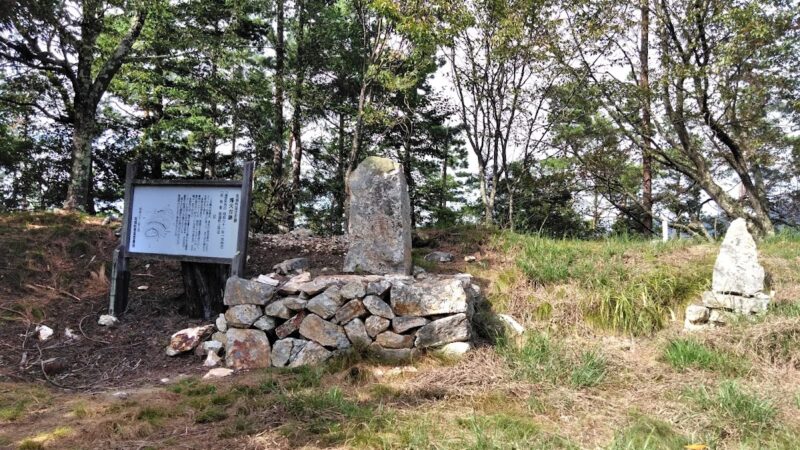
- Development of guide signs and explanatory panels
- Formal evaluation and protection as a historical site
Future Prospects:
Tako Town’s “Japan’s No. 1 Castle Stamp Town” project has increased interest in castle ruins within the town, including Tamatsukuri Castle. It is hoped that this will lead to appropriate preservation and utilization.
Significance of Visiting Tamatsukuri Castle
A Learning Material for Medieval Castles
Tamatsukuri Castle is a valuable place to learn about the original form of medieval castles precisely because it has not been commercialized as a tourist destination. While there are no flashy reconstructed buildings, basic castle elements such as earthworks, moats, and baileys remain well-preserved, allowing visitors to directly learn about castle construction techniques and defensive philosophies.
Understanding Local History
Visiting Tamatsukuri Castle is an entry point to understanding the medieval history of the Katori District region of Chiba Prefecture. Visitors can learn about history from multiple perspectives, including the sphere of influence of the Chiba clan, the importance of river transportation, and the regional situation during the Sengoku period.
A Quiet Historical Stroll
In today’s society, the opportunity to immerse oneself in history in a peaceful environment, away from the hustle and bustle, is a precious experience. Visiting the Tamatsukuri Castle ruins allows you to enjoy a dialogue that transcends time.
Summary
Tamatsukuri Castle is a valuable medieval castle ruin remaining in Tako-machi, Katori-gun, Chiba Prefecture. Built as the residence of the Nodaira clan, it disappeared from the historical stage after the Kenmu War and the turmoil of the Sengoku period, with the fall of the Hojo clan.
Currently, the remains such as earthworks, moats, and baileys are well-preserved, making it an important historical site where one can learn about the structure of a multi-bailey castle. Tamatsukuri Castle, where you can feel the history of the Middle Ages firsthand in a quiet environment untouched by tourism, is a place worth visiting for castle enthusiasts.
As part of Tako-machi’s “Japan’s No. 1 Castle Stamp Town” project, Tamatsukuri Castle is expected to attract even more attention in the future. If you are interested in the medieval history of Chiba Prefecture, why not visit it at least once?