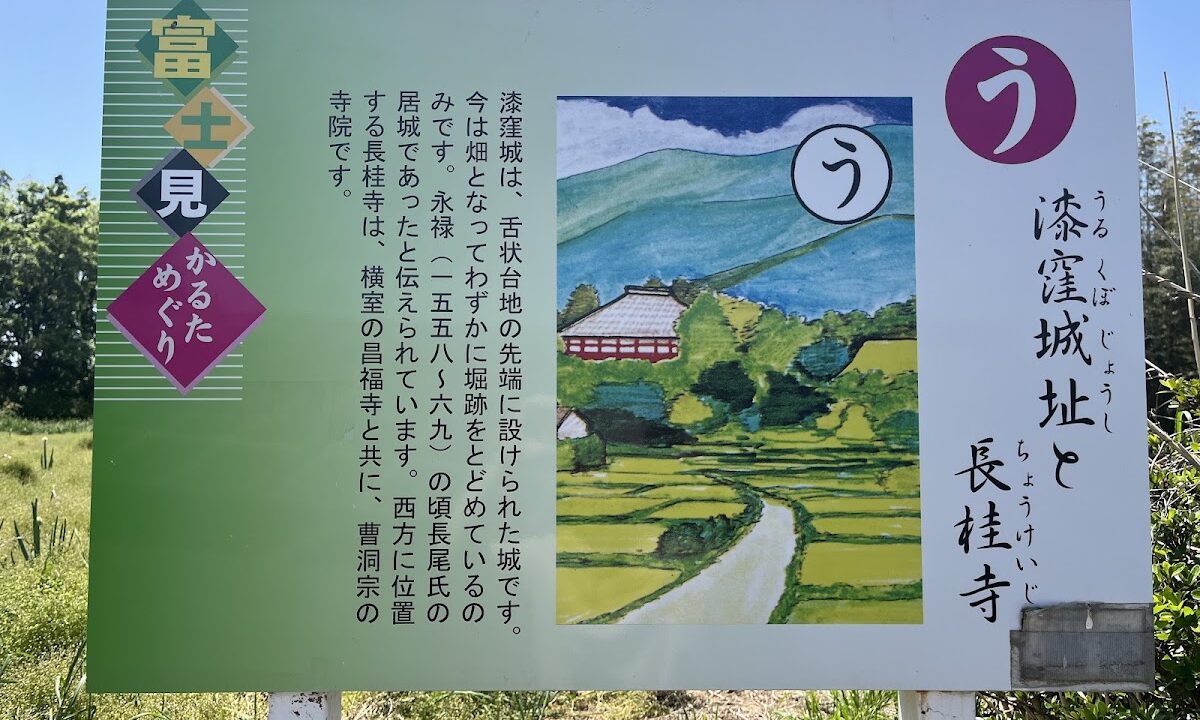
Urukubo Castle (Maebashi City, Gunma Prefecture) Complete Guide: A Thorough Explanation of the Nagao Clan’s Mountain Castle Remains and History
What is Urukubo Castle?
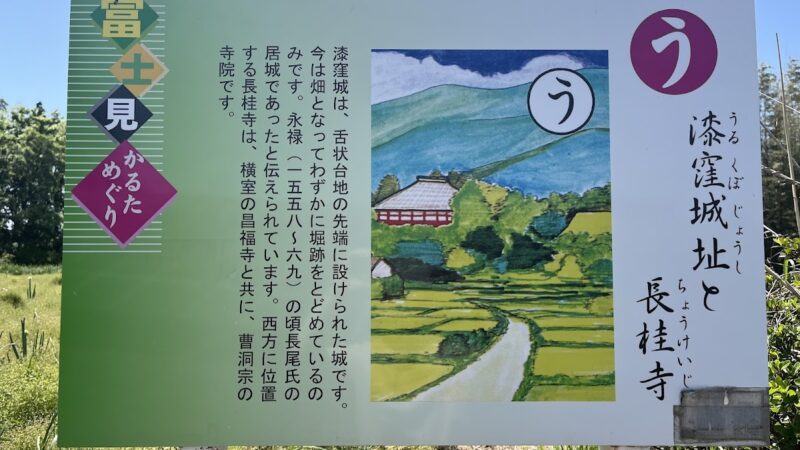
Urukubo Castle is a medieval mountain castle located in Urukubo, Fujimi-cho, Maebashi City, Gunma Prefecture. Built on the tip of a tongue-shaped plateau at the southern foot of Mount Akagi, this castle is known as the residence of the Nagao clan, who wielded considerable power in Kozuke Province during the Sengoku period.
The current site of Urukubo Castle is located in an area called “Kami-no-jo,” with remains preserved on a plateau approximately 15 meters high. It features a distinctive layout of interconnected baileys separated by three trenches, making it a valuable historical site that preserves the typical structure of a medieval castle.
Basic Information on Urushikubo Castle
- Location: Urushikubo, Fujimi-cho, Maebashi City, Gunma Prefecture
- Castle Classification: Hill Castle (Hilltop Castle)
- Construction Period: Kakitsu-Eiroku Period (circa 1441-1570)
- Builder: Nagao Daizen Nagakage
- Main Remains: Moats, baileys, earthworks
- Designated Cultural Property: Not designated
- Average Visiting Time: Approximately 15-30 minutes
History of Urushikubo Castle
The Nagao Clan and Kozuke Province
Indispensable to understanding the history of Urushikubo Castle is the existence of the Nagao clan, who established their power in Kozuke Province. While the Nagao clan is known as a family based in Echigo Province (Niigata Prefecture), they also expanded into Kozuke Province, establishing a system of control based in multiple castles.
The Urushikubo district of Seta County, Kōzuke Province, was under the control of the Nagao clan from around the Kakitsu era (1441-1444) to around the Eiroku era (1558-1570). This region is located in the mountainous area at the southern foot of Mount Akagi and is considered to have been a strategically important base.
Nagao Daizen Nagakage and the Construction of Urushikubo Castle
According to the “Maebashi Fudoki” (a local gazetteer), Urushikubo Castle was the residence of Nagao Daizen. This Nagao Daizen was the younger brother of Nagao Kageyoshi, the lord of Ishikura Castle. It is said that he was adopted into the Nagao Daizen family, moved from Ishikura Castle to Urushikubo, and inherited the name Daizen.
Nagao Daizen Nagakage is also known for founding Chōkei-ji Temple on land adjacent to Urushikubo Castle in the first year of Chōkyō (1487). This temple, founded by inviting the imperial-appointed Zen master Hōkō Chishō Don’ei Suio Daiohshō from the largest mountain temple, Sōrinji, also functioned as a center of faith for the Nagao clan. This fact indicates that Urushikubo Castle was not merely a military base, but also functioned as a center of regional control.
Urushikubo Castle in the Sengoku Period
During the Sengoku period, Kōzuke Province was a fierce battleground where forces such as the Kantō Kanrei Yamauchi Uesugi clan, the Later Hōjō clan, and the Takeda clan were vying for power. It is believed that the Nagao clan, based at Urushikubo Castle, was also caught up in these turmoil of the Sengoku period.
From the Eiroku era onward, the Nagao clan’s power in Kōzuke Province gradually declined. It is presumed that Urushikubo Castle was eventually abandoned due to Takeda Shingen’s invasion of Kōzuke and the expansion of the Later Hōjō clan’s power.
Structure and Layout of Urushikubo Castle
Topographical Features
Urushikubo Castle is built on the end of a tongue-shaped plateau that juts out from north to south. The castle’s location, skillfully utilizing the natural terrain eroded by streams on the east and west sides, demonstrates typical construction techniques of medieval mountain castles.
The plateau’s relative elevation is only about 15 meters, not particularly high, but the surrounding streams act as natural moats, enhancing its defensive capabilities. Furthermore, the interconnected layout, taking advantage of the long, narrow shape of the plateau, is a design that maximizes the use of limited terrain.
Three Moats and Enclosure Arrangement
The most distinctive feature of Urushikubo Castle is its structure, which divides the plateau with three moats and creates three enclosures (kuruwa). According to the “Castle System” description, there were four moats running north-south, and it seems there were also moats between each enclosure, as well as at the tip.
Main Enclosure (Honmaru)
The main enclosure, located in the innermost part on the north side, was the central area where the lord’s residence and important facilities were located. Although its original form has been lost due to topographical changes, it is believed to have been located at the highest point of the plateau.
Second and Third Enclosures
South of the main enclosure, the second and third enclosures, separated by moats, were arranged in succession. These enclosures functioned as a defensive line to prevent enemy incursions in stages.
Structure of the Moats
The three moats were excavated to traverse the plateau from east to west, clearly demarcating each enclosure. While detailed records of the moats’ depth and width are not available, based on the general scale of medieval mountain castles, it is estimated that they were approximately 3-5 meters deep and 5-10 meters wide.
Current Status of the Remains
Unfortunately, much of the remains of Urushikubo Castle have been altered by later development and cultivation, and only a limited portion retains its original form. The area around the main enclosure on the north side, in particular, has undergone significant topography changes due to residential and agricultural development.
However, the southern tip of the plateau still retains some of the original topography, allowing for the identification of traces of moats and the elevation differences of the enclosures. While the castle ruins are not in the best state of preservation, they are a valuable example for understanding the basic structure of a medieval mountain castle.
Highlights of Urushikubo Castle
Topography of the Plateau Tip
The plateau tip, located north of the Urushikubo Community Center, is the best place to observe the remains of Urushikubo Castle. From the plateau, which is about 15 meters high, you can see the surrounding terrain and truly understand why the castle was built in this location.
By observing the shape of the tongue-shaped plateau and the natural defensive lines created by the east-west valleys, you can understand how skillfully the medieval castle builders utilized the terrain.
Traces of a Moat
On the southern tip of the plateau, you can partially see traces of a moat. While not a clear structure, the elevation changes and depressions in the terrain allow you to infer the location where the moat once existed.
Those interested in castles will be able to understand the remains more deeply by bringing a topographic map or layout map with them.
Relationship with Chokei-ji Temple
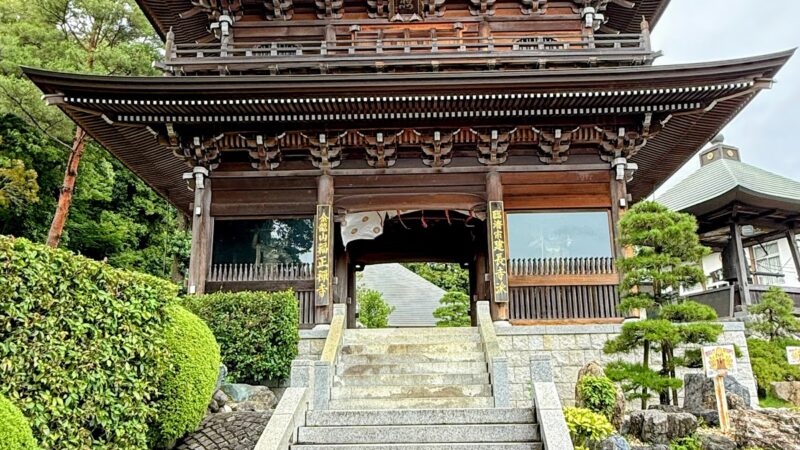
Located next to Urushikubo Castle, Chokei-ji Temple was founded by Nagao Daizen Nagakage. When visiting the castle ruins, we recommend also visiting this temple. It is an important historical site for understanding the relationship between medieval castles and temples, and the nature of the lord’s faith.
Chokei-ji Temple may contain documents and legends related to the Nagao clan, providing clues to a deeper understanding of Urushikubo Castle’s history.
Access and Visiting Guide
Location and Map
Address: Kamijo, Urushikubo, Fujimi-cho, Maebashi City, Gunma Prefecture
Landmark: North of Urushikubo Community Center
Transportation Access
Access by Car
- From Maebashi IC on the Kan-Etsu Expressway: Approximately 20 minutes
- From Isesaki IC on the Kita-Kanto Expressway: Approximately 30 minutes
Take National Route 17 and then a prefectural road to the Urushikubo area. Aiming for the Urushikubo Community Center will make it easier to find. Parking may be available at the community center’s parking area, but consideration is required when using it.
Access by Public Transportation
Access by public transportation is not easy. The nearest station is Maebashi Station on the JR Ryomo Line, but you will need to take a bus or taxi from there. If your purpose is to visit the castle ruins, access by car is the most practical option.
Precautions for Visiting
- Consideration for Private Property: The area around the castle ruins includes private property and farmland. Please be careful not to enter areas where entry is prohibited.
- Safety Precautions: Some slopes on the plateau can be slippery. We recommend wearing comfortable shoes.
- Season: In summer, vegetation grows thick, making it difficult to observe the remains. Spring and autumn are more suitable seasons for visiting.
- Estimated Time Required: While visiting the castle ruins itself takes about 15-30 minutes, it’s advisable to allow about an hour if you also visit surrounding historical sites.
Nearby Sightseeing Spots
When visiting Urushikubo Castle, visiting the surrounding historical sites will allow you to gain a deeper understanding of the region’s history.
Ishikura Castle Ruins
Ishikura Castle, the residence of Nagao Kageyoshi, is a castle closely related to Urushikubo Castle. There is a legend that Nagao Daizen Nagakage moved from Ishikura Castle to Urushikubo Castle, and visiting both castles allows you to experience the Nagao clan’s sphere of influence.
Ogikubo Castle Ruins
Located in Ogikubo-cho, Maebashi City, Ogikubo Castle is currently maintained as Ogikubo Castle Park. Like Urushikubo Castle, it is a medieval mountain castle, but the remains are relatively well-preserved, and the dry moats and vertical moats running east-west are clearly visible.
Castles on the Southern Foot of Mt. Akagi
Besides Urushikubo Castle, numerous medieval castles are scattered on the southern foot of Mt. Akagi. Those with ample time can enjoy a “castle tour” of the castles in this region.
Evaluation and Current Status of Urushikubo Castle
Evaluation as a Castle
Urushikubo Castle is recognized among castle enthusiasts as a “medieval mountain castle with somewhat poorly preserved remains.” According to Kojodan’s data, the average rating is only 2.00 stars, which is not particularly high, mainly due to the limited state of remaining remains.
On the other hand, its historical value, its relationship with the Nagao clan, and its value as a learning tool for understanding the basic structure of medieval mountain castles are not low. Rather, it could be argued that there is room for re-evaluation as a “not-so-famous castle, but important for understanding local history.”
Visitor Numbers and Awareness
According to Kojodan’s data, the number of visitors (attackers) to Urushikubo Castle is only around 32-34, which is not particularly high. This is likely due to factors such as the state of preservation of the remains, transportation access issues, and a lack of information dissemination.
However, there are people who have registered as “want to visit,” indicating a certain level of potential interest. In the future, if appropriate information dissemination and preservation activities are carried out, an increase in visitor numbers can be expected. ### Challenges in Preservation and Utilization
The biggest challenge for Urushikubo Castle is the deterioration of the remains and the resulting loss of historical value. Currently, it has not been designated a cultural property, and there appear to be no organized preservation activities.
In order to preserve and utilize Urushikubo Castle as a regional historical heritage site in the future, the following initiatives are considered necessary:
- Detailed surveying and record-keeping: To create accurate records of the existing remains
- Awareness-raising activities for local residents: To share the value of the castle as a local historical heritage site
- Installation of information boards and explanatory signs: To create a system to convey the history and structure to visitors
- Coordination with surrounding castles: To preserve and utilize the castle as an integrated part of the castle group at the southern foot of Mt. Akagi
Castle Culture of Gunma Prefecture and Urushikubo Castle
Characteristics of Medieval Castles in Gunma Prefecture
Gunma Prefecture is a region where numerous castles were built from the medieval period to the Sengoku period. It is said that there are over 1,000 castles, making it known as a region with a high density of castles nationwide. This is due to the fact that Gunma Prefecture is a crucial transportation hub connecting Kanto and Shin’etsu, and that geographical factors such as the Tone River system and Usui Pass have always created military tension.
Urushikubo Castle also plays a part in Gunma Prefecture’s castle culture and is an indispensable historical site for understanding the region’s history.
The Nagao Clan’s Castle Network
The Nagao clan established a system of rule based in multiple castles in Kōzuke Province. Urushikubo Castle was one of them, forming part of the Nagao clan’s sphere of influence along with Ishikura Castle and others.
This castle network enabled a system of mutual cooperation in defense against enemy invasions that could not be defended by a single castle. It is important to understand Urushikubo Castle not in isolation, but in relation to the surrounding castles.
Current Status and Challenges of Urushikubo Castle Research
Limitations of Historical Sources
Historical sources concerning Urushikubo Castle are extremely limited. While there are descriptions in basic historical documents such as the “Maebashi Fudoki” and “Jōkaku Taikei,” detailed information regarding the castle’s construction date, changes in its lords, and specific battle records remains unclear.
This limitation of historical sources is a common challenge not only for Urushikubo Castle but for many small and medium-sized castles in rural areas. Further research into local historical documents and archaeological investigations may reveal new facts.
The Need for Archaeological Investigation
It appears that no comprehensive archaeological investigation has been conducted at Urushikubo Castle to date. Excavation could provide a more accurate understanding of the castle’s age and characteristics based on unearthed artifacts.
Furthermore, creating an accurate layout map through surveying is crucial as a foundation for castle research. Reconstructing the castle’s structure in its original form based on the current topography would provide a clearer overall picture of Urushikubo Castle.
Summary: Historical Significance of Urushikubo Castle
Although the preservation of the remains of Urushikubo Castle is not ideal, it is an important historical site for understanding the medieval history of Gunma Prefecture, particularly the sphere of influence of the Nagao clan.
This site is a valuable example of medieval castles, offering insights into diverse aspects of the landscape, including its construction techniques that utilized the tongue-shaped plateau, its multi-bailey layout with three trenches, and its relationship with Chokei-ji Temple.
In the future, with proper preservation and utilization as a regional historical heritage site, the value of Urushikubo Castle will likely become more widely recognized. It is a historical site worth visiting not only for castle enthusiasts but for anyone interested in local history.
If you have the opportunity to visit Maebashi City in Gunma Prefecture, be sure to stop by the Urushikubo Castle ruins and reflect on medieval history. Walking across the plateau while imagining the castle’s appearance in its heyday, you’ll feel the tension of the Sengoku period and the presence of the Nagao clan who ruled this land.