

A Complete Guide to the History and Highlights of Senbon Castle | A Thorough Explanation of the Three Castles in Shimotsuke, Kazusa, and Sado Provinces
What is Senbon Castle? | Multiple Castle Ruins in Japan
Senbon Castle (Senbon-jo) is the name of several castles located in Japan. The three most well-known are those in Shimotsuke Province (Motegi-machi, Haga-gun, Tochigi Prefecture), Kazusa Province (Kimitsu City, Chiba Prefecture), and Sado Province (Sado City, Niigata Prefecture). Each has a different historical background and role, and the builders and lords were completely different.
This article provides a detailed explanation of these three Senbon Castles, including their historical background, castle structure, existing remains, and highlights and access methods for visitors. This information will be useful for castle enthusiasts and anyone who enjoys historical walks.
Senbon Castle, Shimotsuke Province (Motegi Town, Tochigi Prefecture) | The Site of the Nasu Takasuke Assassination Incident
The Construction of Senbon Castle and the Senbon Clan
Senbon Castle in Shimotsuke Province is a mountain castle located in Machida, Motegi Town, Haga District, Tochigi Prefecture. Also known as Sudo Castle and Kyogaoka Castle, it is designated as a Tochigi Prefecture Historic Site.
Construction is believed to have begun in Kenkyu 6 (1195), when Senbon Juro Tametaka, the tenth son of Nasu Suketaka, acquired the land of Senbon and built the castle. Senbon Tametaka was the elder brother of Nasu Yoichi Munetaka, a renowned archer who distinguished himself in the Genpei War, and founded the Senbon clan as a branch of the Nasu clan.
The Senbon clan used this castle as their residence for generations, maintaining their power as a powerful samurai family in Shimotsuke Province. The castle was built on a hilly area called Kyogaoka and functioned as a base for governing the surrounding region.
The Assassination of Nasu Takasuke | A Tragedy of the Sengoku Period
The most significant event that cemented Senbon Castle’s place in history was the assassination of Nasu Takasuke which occurred in Tenbun 20 (1551).
At the time, Nasu Takasuke, the head of the Nasu clan, was in conflict with his retainers. Senbon Suketoshi, the lord of Senbon Castle, conspired with the Utsunomiya clan and other Nasu retainers to lure Takasuke to Senbon Castle and assassinate him. This incident decisively exacerbated the internal conflict within the Nasu clan and significantly impacted the power dynamics in Shimotsuke Province during the Sengoku period.
This assassination led to Senbon Castle being recorded as an important stage in Sengoku history.
Castle Structure and Remains
The main enclosure of Senbon Castle is located on the mountaintop, where Haguro Shrine is currently situated. Clear earthworks remain around the main enclosure, conveying the appearance of the defensive structures of the time.
The second enclosure is located southwest of the main enclosure, surrounding it. The castle’s structure exhibits the typical form of a medieval mountain castle, with a layout that skillfully utilizes the natural terrain.
The following remains have been confirmed:
- Earthworks of the main enclosure: Remains in good condition within the grounds of Haguro Shrine
- Tiger’s mouth: Traces of an entrance to the castle
- Moat: A defensive structure cutting off the ridge
- Enclosure: Multiple flat areas can be identified
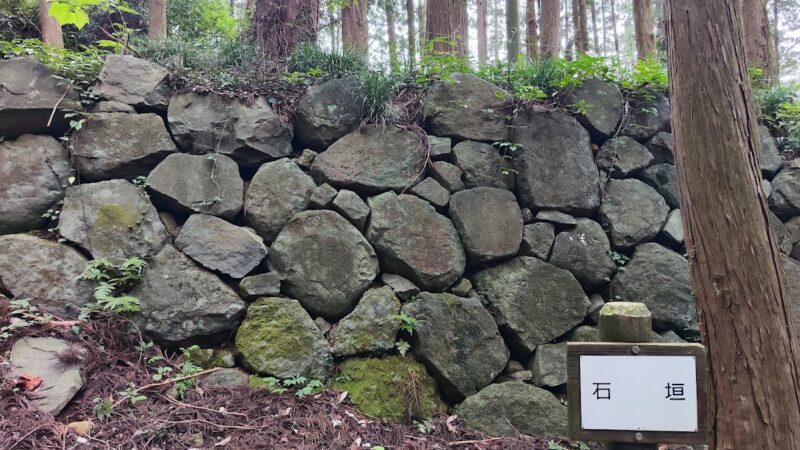
- Information board: An explanatory board describing the castle’s history has been installed.
A radio tower also stands in the main enclosure, creating a landscape where modern facilities and historical remains coexist.
Relationship with Senbon Jinya
In the Edo period, the Senbon clan of the Mogi lineage established the Senbon Jinya. This was a residence located separately from Senbon Castle, and it functioned as a center of government during the Edo period. Senbon Castle itself had ceased its role as a medieval castle, and this residence became the new base of operations.
Access and Visiting Information
Location: Machida, Motegi-machi, Haga-gun, Tochigi Prefecture
Access Method:
- Convenient access by car
- Approximately 5km from the center of Motegi-machi
- Easy to find if you aim for Haguro Shrine
- Parking: Limited parking available in the shrine’s visitor parking area
Points to Note When Visiting:
- The Haguro Shrine grounds are the site of the main citadel, so you can visit while paying your respects
- The earthworks are well-preserved, allowing you to experience the defensive structures
- Learn about the historical background from the information boards
- As it is a mountain castle, comfortable walking shoes are recommended
Senbon Castle, Kazusa Province (Kimitsu City, Chiba Prefecture) | Branch Castle of the Satomi Clan
Role as a Branch Castle of Kururi Castle
Senbon Castle in Kazusa Province was a flatland castle located in Hirooka, Kimitsu City, Chiba Prefecture. This castle was built as a sub-castle defending the southern side of Kururi Castle and was an important military base within the Satomi clan’s sphere of influence.
The castle lords were Higashihei Aki-no-kami, a vassal of the Satomi clan, and his family. Within the main enclosure is the Kitano Shrine, which is said to have been donated by Satomi Yoshizane in 1488. The existence of this shrine indicates that the castle was not merely a military facility but also a center of local faith.
Satomi Clan Internal Conflict and the Battle of Senbon Castle
Senbon Castle first appears on the historical stage during the Satomi Clan Internal Conflict that occurred in 1578.
A succession dispute arose between Satomi Yoshiyori, the head of the Satomi clan at the time, and his nephew, Umeomaru. Higashihei Aki-no-kami and his son supported Umeomaru and holed up in Senbon Castle, making it a base for anti-Yoshiyori forces. This internal conflict resulted in the Satomi clan’s territory being divided in two.
In 1580 (Tensho 8), Satomi Yoshiyori attacked Senbon Castle and Kururi Castle, forcing both castles to surrender. This battle ended the internal conflict in Yoshiyori’s favor, with the Umeomaru faction suffering defeat.
Subsequently, in 1590 (Tensho 18), following Toyotomi Hideyoshi’s siege of Odawara, Senbon Castle was abandoned.
Castle Structure and Characteristic Remains
The greatest highlight of Senbon Castle in Kazusa Province is the ditch excavated from bedrock. This trench is a valuable relic that conveys the traces of the labor involved in manually digging through hard bedrock, demonstrating the high level of castle-building technology at the time.
The castle’s structure has the following characteristics:
- Main Enclosure: The central area where Kitano Shrine is located
- Bedrock Moat: A moat excavated from bedrock for defensive purposes
- Earthwork: Earthen defensive walls surrounding each enclosure
- Group of Enclosures: Multiple flat areas arranged in a stepped pattern
- Tiger’s Mouth Entrance: Remains of the entrance to the castle
Due to its nature as a subsidiary castle of Kururi Castle, it is relatively small, but possesses a solid structure that fortifies key points.
Access and Visiting Information
Location: Hirooka, Kimitsu City, Chiba Prefecture
Access Method:
- Approximately 10 minutes by car from JR Kururi Line “Kururi Station”
- Approximately 3 km south of Kururi Castle
- Parking: Limited space available near Kitano Shrine
Points to Note:
- The bedrock moat is a must-see historical site
- Kitano Shrine also has high historical value
- Visiting in conjunction with Kururi Castle is recommended
- As there are mountain paths, please wear appropriate clothing for climbing the castle.
Senbon Castle, Sado Province (Sado City, Niigata Prefecture) | Castle Ruins with Limited Information
Senbon Castle on Sado Island
Senbon Castle in Sado Province is believed to have been located at Shiro-no-koshi, Takachi, Sado City, Niigata Prefecture. Compared to Senbon Castles in Shimotsuke Province and Kazusa Province, information regarding historical records and remains is limited.
Sado Island was under the rule of the Honma and Uesugi clans from the medieval period to the Sengoku period, and many castles and fortifications were built there. Senbon Castle is thought to be one of them, but there are no clear records regarding its specific construction date or its lord.
Current Situation and Need for Further Investigation
Regarding Senbon Castle in Sado Province, new facts may be revealed through future archaeological investigations and documentary research. Many other medieval castle ruins are scattered throughout Sado Island, making them important subjects for regional history research.
Comparison of Three Senbon Castles
Construction Period and Background
- Senbon Castle, Shimotsuke Province: Built in 1195 by the Senbon clan, a branch of the Nasu clan.
- Senbon Castle, Kazusa Province: Details unknown, but functioned as a branch castle of the Satomi clan around the Muromachi period.
- Senbon Castle, Sado Province: Construction period and background are both unknown.
Historical Role
- Senbon Castle, Shimotsuke Province: The site of the assassination of Nasu Takasuke, central to political events of the Sengoku period.
- Senbon Castle, Kazusa Province: A military base during the internal conflicts of the Satomi clan.
- Senbon Castle, Sado Province: Further research is needed regarding its role.
Status of Existing Remains
- Senbon Castle, Shimotsuke Province: Earthworks, gates, and moats remain in good condition; Haguro Shrine is located on the site.
- Senbon Castle, Kazusa Province: Characterized by its bedrock trenches, Kitano Shrine remains.
- Senbon Castle, Sado Province: Details of the remains are unknown.
Practical Guide to Visiting Senbon Castle
Visiting Senbon Castle, Shimotsuke Province
Estimated Time: 30 minutes to 1 hour
Visit Flow:
- Park your car in the parking space at Haguro Shrine.
- Visit the main enclosure while paying respects at the shrine.
- Check the earthworks and information boards.
- Explore the surrounding enclosures and gates.
Points to Note:
- As it is a mountain castle, be careful of your footing in rainy weather.
- Take precautions against insects in summer.
- Observe proper etiquette when visiting a shrine.
Visiting Senbon Castle, Kazusa Province
Estimated Time: 40 minutes to 1 hour
Visit Flow:
- Head towards Kitano Shrine.
- Focus on the bedrock trenches.
- Check the main enclosure and each enclosure.
- If possible, also visit Kururi Castle.
Points to Note:
- The bedrock trenches are slippery, so proceed with caution.
- Parking space is limited, so please be considerate of others.
- This is also a local road, so please be considerate.
Points for Photography
Senbon Castle, Shimotsuke Province:
- The combination of Haguro Shrine and the earthworks.
- The view from the main enclosure.
- The relationship between the information board and the ruins.
Senbon Castle, Kazusa Province:
- The texture and depth of the bedrock trenches.
- The historical building of Kitano Shrine.
- The elevation and structure of the enclosures.
Current Status and Challenges of Senbon Castle Research
Historical Evaluation
Senbon Castles (especially in Shimotsuke and Kazusa Provinces) are important historical sites for understanding the regional history from the medieval period to the Sengoku period. Senbon Castle in Shimotsuke Province was the stage for an internal conflict within the Nasu clan, and Senbon Castle in Kazusa Province was the stage for an internal conflict within the Satomi clan, both power struggles in their respective regions.
These castles are valuable examples demonstrating how local samurai groups made their own political and military decisions independently of the central government’s actions.
Efforts for Preservation and Utilization
Senbon Castle in Shimotsuke Province is protected as a Tochigi Prefecture designated historical site, and efforts are underway to utilize it as a historical heritage site, including the installation of information boards. However, challenges remain, such as balancing the preservation and maintenance of the remains and ensuring visitor safety.
Regarding Senbon Castle in Kazusa Province, while it possesses distinctive remains such as a bedrock moat, increasing its recognition and promoting preservation activities remain future challenges.
Future Research Directions
- Detailed clarification of remains through archaeological excavations
- Excavation and analysis of historical documents
- Research on relationships with surrounding castles
- Clarification of the actual state of Senbon Castle in Sado Province
- Restoration research using digital technology
Related Historical Sites around Senbon Castle
Around Senbon Castle in Shimotsuke Province
- Motegi Castle: The main castle of the Motegi clan, also closely related to the Senbon clan
- Karasuyama Castle: An important base for the Nasu clan
- Utsunomiya Castle: The central castle of Shimotsuke Province
Around Senbon Castle in Kazusa Province
- Kururi Castle: The main castle of the Satomi clan, and the main castle of Senbon Castle
- Sanuki Castle: An important branch castle of the Satomi clan
- Tsukumi Castle: A major castle of Kazusa Province
Visiting these castles together will deepen your understanding of the regional castle network.
Summary | Historical Value of Senbon Castle
The three castle ruins bearing the name “Senbon Castle” each possess their own unique history and characteristics.
Senbon Castle in Shimotsuke Province was the site of a significant Sengoku period event—the assassination of Nasu Takasuke—and its well-preserved remains, such as earthworks, make it a valuable resource for medieval castle research. The main enclosure, where the Haguro Shrine is located, forms a unique space where history and faith are intertwined.
Senbon Castle in Kazusa Province served as a military base during the internal conflicts of the Satomi clan, and its distinctive remains, such as moats excavated from bedrock, convey the castle-building techniques of the Sengoku period to the present day. Its position as a branch castle of Kururi Castle is also highly insightful for understanding the castle network of the Sengoku period.
Senbon Castle in Sado Province is expected to reveal new historical facts through future research.
Visiting these Senbon Castles offers a valuable opportunity to experience the local history and castle history of Japan from the medieval to the Sengoku period. Walking through the ruins, learning about history from the information boards, and documenting it with photographs allows for a truly immersive historical experience that textbooks cannot provide.
For castle enthusiasts, we highly recommend visiting the three Senbon Castles and comparing their unique features and charms. Checking parking and access route conditions beforehand, and visiting in appropriate clothing and equipment, will ensure a safe and fulfilling castle exploration.
--765x450.png)