Complete Guide to Soja Castle (Gunma Prefecture): The History and Remains of the Phantom Soja Domain’s Government Office Built by Akimoto Nagatomo
Soja Castle, located in Soja-machi, Maebashi City, Gunma Prefecture, is a “phantom castle” that disappeared from the historical stage after only a little over 30 years, despite being built in the early Edo period. Also known as Soja Castle or Ueno Castle, this castle, a modern flatland castle built on a cliff on the right bank of the Tone River, played an important role as the government office of the Soja Domain, albeit for a short period. This article provides a detailed explanation of Soja Castle’s history from its construction to its abandonment, the current state of its remains, points of interest, and access methods.
History of Soja Castle: From the Battle of Sekigahara to its Abandonment
The Construction Process by Akimoto Nagatomo
Construction of Soja Castle began in 1601 (Keicho 6) by Akimoto Nagatomo. Akimoto Nagatomo was a samurai who served under Tokugawa Ieyasu in the Battle of Sekigahara in 1600, distinguishing himself on the Eastern Army side. For his service, he was granted 10,000 koku of land in Soja, Kozuke Province (present-day Gunma Prefecture), becoming the first lord of the Soja Domain.
The chosen site for the castle was a place called “Ueno Katsuyama,” a natural stronghold on a cliff on the right bank of the Tone River. Part of the Katsuyama Castle, built in the Middle Ages, already existed on this site, and Akimoto Nagatomo incorporated it into the construction of the new castle.
Castle Construction and Town Development
Construction of Soja Castle began in 1601 and was completed in 1607. It was a massive construction project that took approximately six years. Akimoto Nagatomo not only built a castle, but also undertook irrigation projects through the development of the Ueno Weir and the construction of a castle town, developing the Soja area as the center of the domain.
The completed Soja Castle was a vast structure, measuring approximately 800 meters east-west and 750 meters north-south, and was a full-fledged early modern castle with baileys such as the main keep, second bailey, and third bailey. The cliffs of the Tone River were utilized as a natural moat, and defensive facilities such as dry moats and earthen ramparts were constructed on other sides.
Establishment and Development of the Soja Domain
The Soja Domain, with Soja Castle as its administrative center, focused on improving agricultural production and developing commerce under the rule of Akimoto Nagatomo. The development of the Ueno Weir led to the development of new rice fields, and the domain’s rice yield also increased. Furthermore, merchants and artisans gathered in the castle town, giving it the function of a post town.
Akimoto Nagatomo served as the lord of the Sōja Domain until 1633, a reign that lasted for over 30 years. During this time, Sōja Castle functioned as one of the important strategic points in Kōzuke Province.
Transfer to Tanimura, Kai Province and Abandonment of the Castle
In 1633, Akimoto Nagatomo was ordered to transfer to Tanimura, Kai Province (present-day Tsuru City, Yamanashi Prefecture). Consequently, Sōja Castle was abandoned. It was a short-lived castle, lasting only 32 years from construction to abandonment, or 26 years from completion.
After its abandonment, Sōja Castle rapidly fell into disrepair, with buildings being demolished or relocated elsewhere. A gate believed to have been relocated from Sōja Castle remains at Kōgenji Temple in Sōja-machi, Maebashi City. However, Kōgenji Temple denies that it was relocated from Sōja Castle, and the Board of Education’s information board lists its origin as unknown. As such, many aspects of the remains of Sōja Castle remain unclear.
Structure and Layout of Sōja Castle
Castle Arrangement and Scale
Sōja Castle was a cliffside castle built on a river terrace on the right bank of the Tone River. It had a vast site, approximately 800 meters east-west and 750 meters north-south, with the main keep (Honmaru) at the center, surrounded by the second and third baileys (Ninmaru).
The Honmaru was located in the center of the castle and housed the lord’s residence and administrative buildings. However, parts of the Honmaru and Ninmaru collapsed due to later flooding and erosion of the Tone River and no longer exist. This was an inevitable problem for castles along the Tone River.
Characteristics of Defensive Facilities
Sōja Castle’s defenses were designed to make maximum use of the Tone River as a natural moat. The cliffs of the Tone River on the east side served as a natural barrier, creating a difficult terrain to attack.
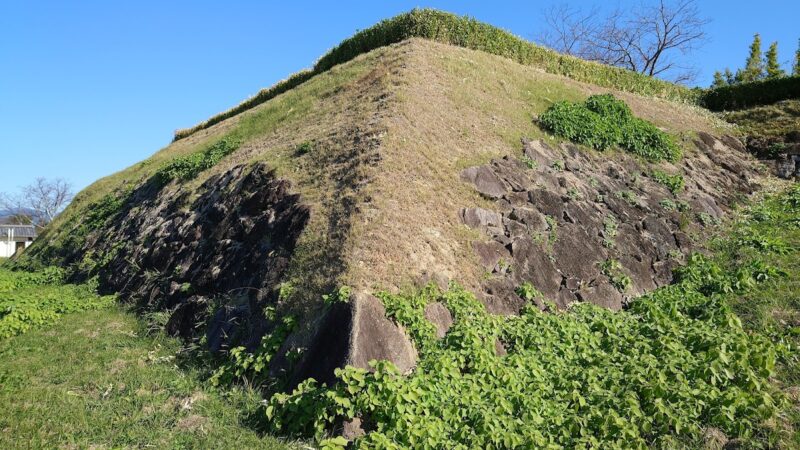
In other areas, dry moats were dug and earthen ramparts were constructed. Stone walls were also partially used, giving it the appearance of a modern castle. However, the stone walls of Soja Castle were not large-scale and are thought to have been used only in the main sections.
Relationship with the Medieval Katsuyama Castle
Soja Castle was built in “Ueno Katsuyama,” where the medieval Katsuyama Castle already existed. When Akimoto Nagatomo built a new castle, he incorporated a part of this Katsuyama Castle into Soja Castle. It is thought that he aimed to shorten the construction period and reduce costs by utilizing the remains of the medieval castle.
Therefore, Soja Castle exhibits a mixture of features from both medieval and modern castles, making it an interesting case study in castle history research.
Current Status and Remains of Soja Castle
Current Soja Castle Site
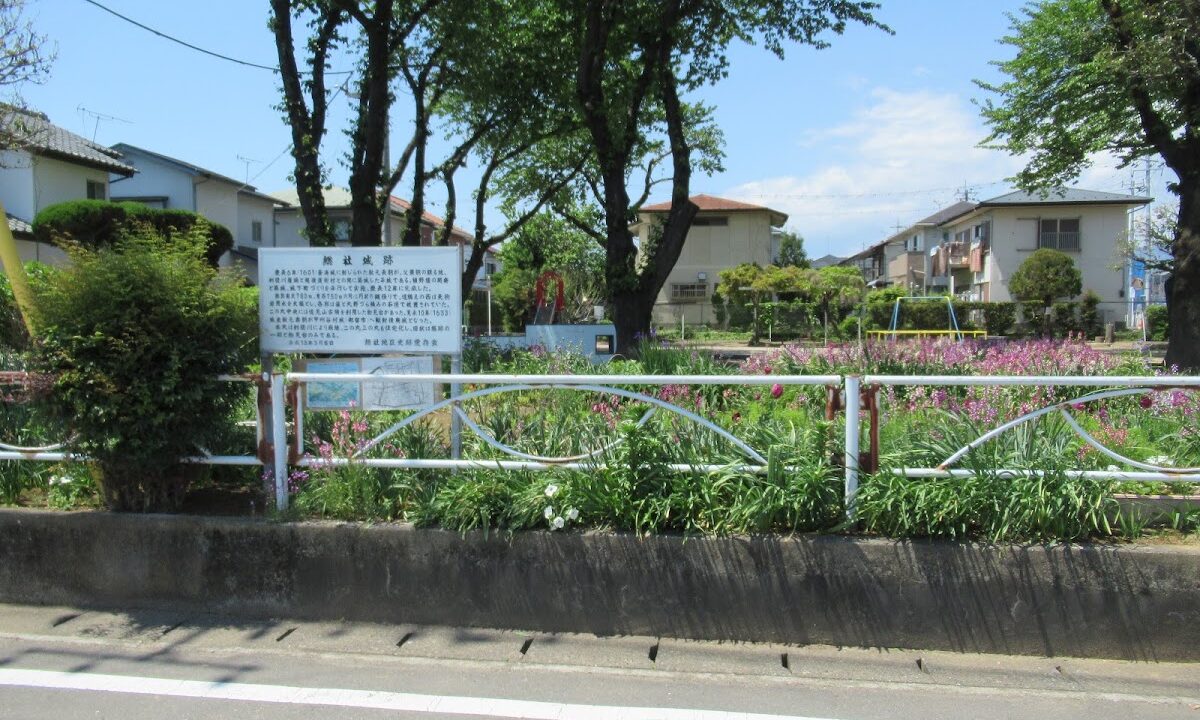
The Soja Castle site is currently located in the Soja and Ueno areas of Soja-machi, Maebashi City, Gunma Prefecture. The central part of the castle grounds was located in the area southeast of Katsuyama Elementary School, and the area around Shirokawa Park was also included within the castle grounds.
Unfortunately, the Soja Castle ruins have been completely developed, and there are almost no clear remains that can be observed on the surface. Due to residential and agricultural development, the shape of the baileys and traces of the moats have also been lost. Furthermore, as mentioned above, parts of the main bailey and the second bailey have collapsed due to erosion by the Tone River and no longer exist.
Remaining Remains
Although observation on the surface is difficult, the following remains have been partially confirmed:
Traces of Baileys: The former layout of the baileys can be inferred from the differences in topography. In particular, the area around Katsuyama Elementary School is thought to be the location of the main bailey, and a slightly higher terrain remains compared to the surrounding area.
Parts of Stone Walls: Parts of stone walls are said to remain in very limited locations, but few can be clearly identified as belonging to Soja Castle, and they may have been altered in later periods.
Traces of Earthworks: While some earthen mounds, believed to be remnants of earthworks, can be seen along the boundaries of residential areas, only a limited number can be definitively identified as castle remains.
Traces of Dry Moats: It has been suggested that traces of former dry moats may remain in areas currently used as roads and waterways.
Legends of Relocated Structures
At Kogenji Temple, located at 1607 Soja-cho, Maebashi City, there remains a gate said to have been relocated from Soja Castle. However, as mentioned above, Kogenji Temple denies that it was relocated from Soja Castle, and the Maebashi City Board of Education’s information board also treats it as having an unknown origin. Thus, there are few reliable historical records regarding the whereabouts of Soja Castle’s structures, and much remains in the realm of legend.
Soja Castle Highlights and Visiting Guide
Around Shirokawa Park
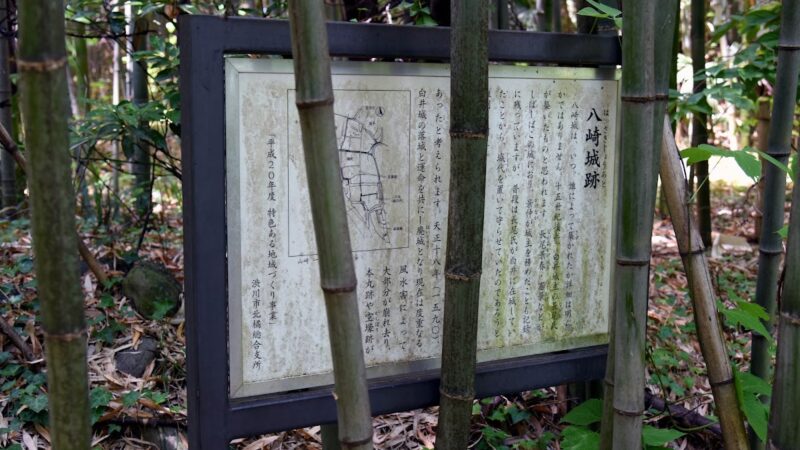
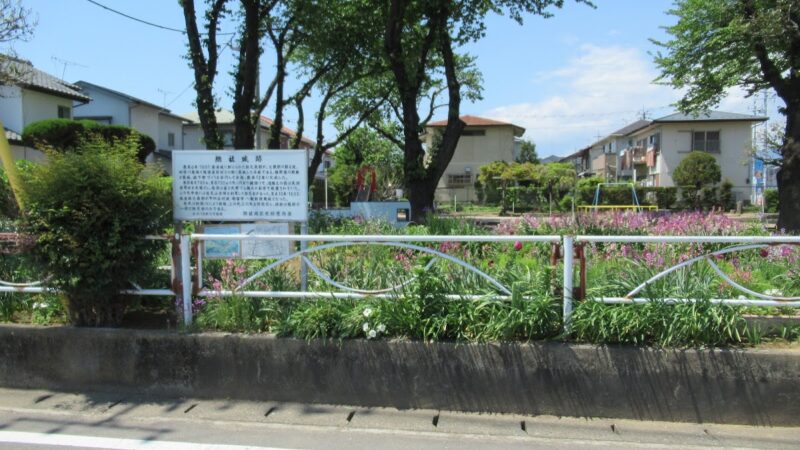
Shirokawa Park, formerly part of Soja Castle’s grounds, is now a place of relaxation for citizens. Within the park, there are information boards about Soja Castle, allowing visitors to learn that a castle once stood on this site. From the park, you can see the Tone River, giving you a real sense of Soja Castle’s location on a cliff overlooking the river.
Around Katsuyama Elementary School
The area southeast of Katsuyama Elementary School corresponds to the central part of Soja Castle. Although it is now a residential area, the topography allows you to imagine the layout of the castle. When exploring the area, be careful not to trespass on private property.
Estimated Reconstruction Drawings of Soja Castle
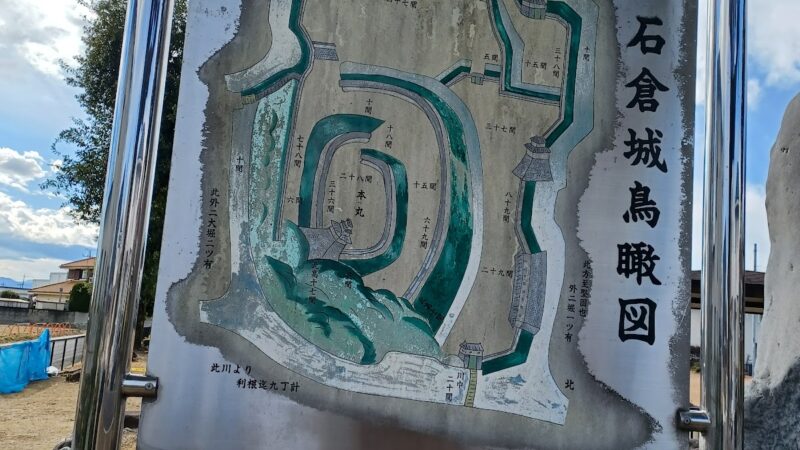
To understand the overall layout of Soja Castle, estimated reconstruction drawings created by researchers are helpful. Websites such as Kojodan (Castle Enthusiasts’ Group) publish reconstruction drawings created by castle enthusiasts, allowing for a visual understanding of the former appearance of Soja Castle. These reconstruction drawings are based on historical documents, archaeological excavation results, and topographical analysis, and are important resources for Soja Castle research.
Average Visit Time and Rating
According to Kojodan, a community of castle enthusiasts, the average visit time to Soja Castle is approximately 30 minutes. Because very few remains are left, the visit style is more about visiting the site where the castle once stood and reflecting on its history, rather than a thorough sightseeing tour.
The rating from 72 castle enthusiasts nationwide is a relatively low 2.00 (out of 5), which reflects the state of the remaining structures. However, visiting with knowledge of the historical background and the achievements of the castle’s builder, Akimoto Nagatomo, will likely lead to a deeper understanding and appreciation.
Access Information
Location
Soja Castle Ruins are located in the Soja and Ueno districts of Soja-machi, Maebashi City, Gunma Prefecture. Specifically, the area surrounding the following facilities is considered part of the castle grounds:
- Shirokawa Park (Ueno, Soja-machi, Maebashi City)
- The area southeast of Katsuyama Elementary School (Soja, Soja-machi, Maebashi City)
- Kogenji Temple (1607 Soja, Soja-machi, Maebashi City)
Access by Public Transportation
Shirokawa Park is approximately a 15-20 minute walk from Gunma-Soja Station on the JR Joetsu Line. Head northeast from the station towards the Tone River.
Access by Car
It’s approximately a 15-minute drive from the Maebashi Interchange on the Kan-Etsu Expressway. Take National Route 17 towards Soja-machi. While Shirokawa Park has a parking lot, the number of spaces is limited, so it is recommended to use nearby paid parking lots during peak hours.
Points to Note When Visiting
Since most of the Soja Castle ruins are now residential areas and school grounds, please observe the following points when visiting:
- Do not trespass on private property
- Unauthorized entry into school grounds is strictly prohibited
- Please refrain from making loud noises or staying for extended periods in residential areas
- Please take all your trash with you
The Aftermath of Soja Castle and the Akimoto Clan
After the Akimoto Clan’s Transfer
The Akimoto clan, who were transferred to Tanimura in Kai Province in 1633 (Kanei 10), continued to exist as a hereditary daimyo of the Tokugawa shogunate. Their stipend was increased to 18,000 koku in the Tanimura Domain (later the Tsuru Domain), and they were later transferred to the Kawagoe Domain in Musashi Province, continuing as a daimyo family until the end of the Edo period.
Akimoto Nagatomo’s achievements in developing the Ueno Weir and new rice fields in Soja continued to benefit the Soja area even after his transfer. Even today, Soja Town honors Akimoto Nagatomo as a contributor to the region’s development.
After the Abolition of the Soja Domain
After the abolition of the Soja Domain, the Soja area was divided among the shogunate’s territory and the territories of the hatamoto (direct retainers of the shogun). Throughout the Edo period, Soja was often under the influence of the Maebashi Domain, and after the Meiji Restoration, it was incorporated into Gunma Prefecture via Maebashi Prefecture.
Soja Town, which developed as a castle town of Soja Castle, continued to prosper as a water transport town on the Tone River and a post town on the Nakasendo road, forming the foundation of present-day Soja Town in Maebashi City.
Historical Significance of Soja Castle
Value as an Early Modern Castle
Soja Castle, as an early modern castle built during the Keicho period, holds value in the study of castle history. It is one example illustrating how the Tokugawa shogunate proceeded with the new daimyo (feudal lord) assignments and castle development in the context of the period immediately following the Battle of Sekigahara.
Furthermore, the method of incorporating medieval castles (Katsuyama Castle) into the construction of early modern castles is an interesting subject of research as it represents a transitional period in castle construction technology.
Role as a Hub for Regional Development
Soja Castle was not merely a military facility; it also functioned as a hub for regional development. Akimoto Nagatomo’s development of the Ueno Weir dramatically improved agricultural production around Soja, laying the foundation for the irrigation system that continues to this day.
The development of the castle town also formed the framework of Soja, promoting its development as a center of commerce and culture. Although its existence lasted only a little over 30 years, the impact Soja Castle had on the region was long-lasting.
Relationship between the Tone River and Castles
The fact that the main keep of Soja Castle was lost due to erosion by the Tone River is an important case study when considering the relationship between rivers and castles. While the Tone River protected the castle as a natural moat, it also posed a threat of destruction through flooding and erosion.
This lesson highlights the importance of subsequent river improvement and flood control projects, and provides valuable data for the study of castles in the Tone River basin.
Things to Know Before Visiting Soja Castle
Combining with Related Historical Sites
When visiting Soja Castle ruins, we recommend combining your visit with the surrounding related historical sites:
Maebashi Castle Ruins: Located approximately 8 kilometers north of Soja Castle, Maebashi Castle was the central castle of Kozuke Province throughout the Edo period. Currently, the Gunma Prefectural Government building stands on the site, although some remains, such as stone walls, still exist.
Sanno Temple Ruins: An ancient temple site located within Soja Town, designated as a National Historic Site. This site demonstrates that Soja was an important area from ancient times.
Kozuke Kokubunji Temple Ruins: An ancient temple site located south of Soja Town, designated as a Special Historic Site. An important historical site related to the origin of the place name Soja.
Facilities where you can learn about the history of Soja
Maebashi City Soja Historical Museum: This museum allows you to learn about the history and culture of Soja town, and also features exhibits related to Soja Castle. Visiting before your trip will give you a deeper understanding.
Gunma Prefectural Museum of History: This prefectural museum, located in Maebashi City, allows you to learn about the history of Gunma Prefecture in general. It also houses materials related to castles within the prefecture, including Soja Castle.
Photography Tips
Since there are few clearly identifiable remains at the Soja Castle site, keep the following points in mind when taking photographs:
- View of the Tone River from Shirokawa Park (allows you to appreciate the location of Soja Castle)
- Angles that utilize the topography (evoke the layout of the former baileys)
- Information boards and explanatory signs (record the historical background)
- Gate of Kogenji Temple (the authenticity of its relocation is unknown, but it evokes the era of Soja Castle)
Summary: The Charm of the Phantom Soja Castle
Soja Castle is a “phantom castle” that existed for only a short period of a little over 30 years. Because there are almost no clearly identifiable remains, it is not necessarily highly regarded among castle enthusiasts. However, its historical significance is undeniable; it was built during the turbulent period immediately following the Battle of Sekigahara and became a center of regional development under the capable lord Akimoto Nagatomo.
Soja Castle embodies the characteristics of early modern castles and regional development, with its location on a cliff overlooking the Tone River, its construction methods incorporating medieval castle architecture, and its integrated development of a castle town alongside the Ueno Weir. When visiting the site, instead of being discouraged by the scarcity of visible remains, we hope you will use your imagination to fill in the gaps and feel the romance of history as you contemplate the castle and castle town that once stood here.
Soja Castle ruins are a valuable historical site that allows us to consider Japanese history from multiple perspectives, not only as a military facility like a “castle,” but also as a center of the local community and its relationship with the natural environment.