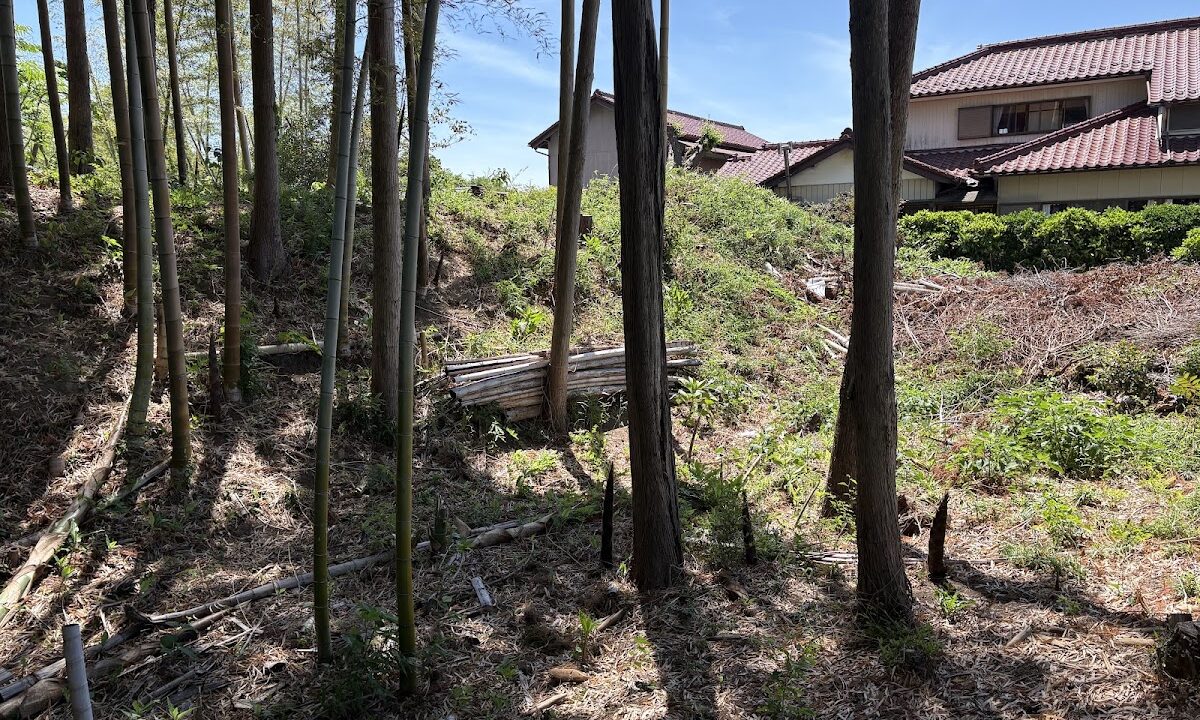
Complete Guide to the Yada Jinya Ruins (Takasaki City, Gunma Prefecture) | History, Remains, and Access Information
Located in Yoshii-cho, Takasaki City, Gunma Prefecture, the Yada Jinya Ruins are the remains of a jinya (fortified residence) that functioned as the administrative center of the Yada Domain (also known as the Yoshii Domain) during the Edo period. As one of the few remaining jinya ruins in the Kanto region, it is an important historical site that tells the story of Japan’s early modern history. Defensive structures such as earthworks and dry moats still remain, making it a valuable place where you can feel the atmosphere of that time.
What is the Yada Jinya?
The Yada Jinya was a facility used as the administrative center of the Yada Domain, which existed in Kozuke Province (present-day Gunma Prefecture) during the Edo period. A jinya was a facility where daimyo and hatamoto (high-ranking samurai) resided and conducted government affairs. While not as large as a castle, it was a more prestigious administrative center than a magistrate’s office.
The Yada Jinya measured approximately 130 meters north-south and 100 meters east-west, and was surrounded by high earthworks and dry moats. On the west side, there was an entrance called a “koguchi,” and it is presumed that the main gate (Otemon) was located there.
Characteristics and Structure of the Jinya
The most distinctive feature of the Yada Jinya is its defensive function. It possessed relatively robust defensive facilities for a jinya, and exhibits the following structural characteristics:
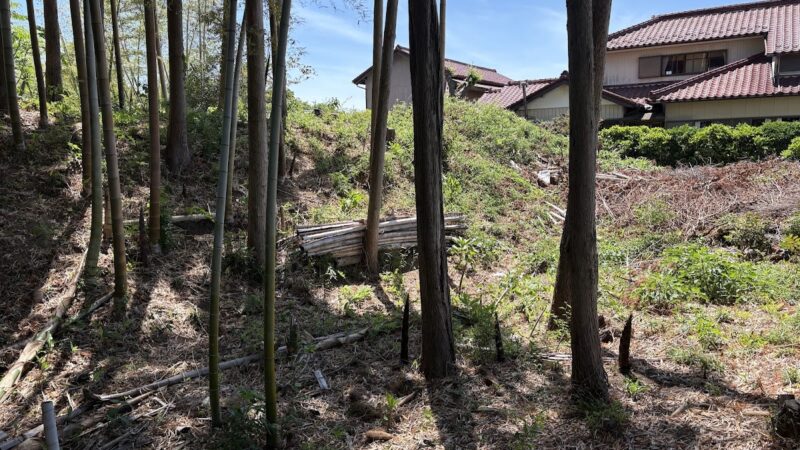
Earthworks: The high earthworks surrounding the perimeter prevented enemy intrusion and also made it difficult to see inside the jinya from the outside. Parts of these remain in good condition today, allowing us to confirm their original height and shape.
Dry Moat: A dry moat surrounded the outside of the earthworks. Unlike water-filled moats, dry moats are common defensive structures found in jinya and castles in the Kanto region.
Koguchi and Otemon: The koguchi on the west side was the formal entrance to the jinya. It is believed that the Otemon was located there, monitoring and managing those entering and leaving.
The History of Yada Jinya
To understand the history of Yada Jinya, it is necessary to explain its predecessor, Yada Castle.
Yada Castle Era (Medieval Period)
The construction date of Yada Castle, considered the predecessor of Yada Jinya, is unclear, but it is believed to have been built in the medieval period by the Kobayashi clan, a local powerful family in this area, as their residence. The Kobayashi clan ruled this region as local lords of Kōzuke Province.
Yada Castle, as a medieval flatland castle, is thought to have served as a defensive base for the surrounding area. During the Sengoku period, it may have held an important position in the conflicts between the Takeda, Uesugi, and Hojo clans over Kōzuke Province.
The Arrival of the Matsudaira Clan and the Establishment of the Jinya
In the Edo period, significant changes occurred at the site of Yada Castle. When Matsudaira Nobuhira moved to the area, he established a jinya (fortified residence) on the castle site. Matsudaira Nobuhira was a descendant of Matsudaira Yasumoto, the half-brother of Tokugawa Ieyasu, and belonged to a family with close ties to the Tokugawa family. Initially a relatively small fiefdom, in 1709 (Hōei 6), Matsudaira Nobukiyo, the grandson of Nobuhira, received an additional 3,000 koku, bringing the total to 10,000 koku, officially establishing the Yada Domain. 10,000 koku was the minimum for a daimyo, thus recognizing the Matsudaira family as daimyo.
Development of the Yada Domain (Yoshii Domain)
The Yada Domain, also known as the Yoshii Domain, was ruled by the Matsudaira family for generations. The domain’s territory was centered in Tago District, Kōzuke Province, and dispersed to surrounding areas.
Records from the Hōreki era (1751-1764) show that the domain’s finances and territorial management were well-established, suggesting that, despite its small size, it had a proper domain structure. It governed the region while maintaining relationships with neighboring magistrates and other lords.
From the End of the Edo Period to the Meiji Restoration
During the end of the Edo period, the Yada Domain, like other small domains, faced a turbulent era. During the Boshin War, the Yada Domain sided with the new government and remained so until the Meiji Restoration. With the abolition of the feudal domains in 1871, the Yada Domain was abolished, and its administrative headquarters ceased to function.
Subsequently, the buildings of the administrative headquarters were demolished, and the land was sold off to private individuals. However, parts of the earthworks and dry moats escaped destruction and remain to this day.
Current Site of the Yada Administrative Headquarters
Remaining Structures
Several remains that convey the appearance of the Edo-period administrative headquarters remain at the current site of the Yada Administrative Headquarters.
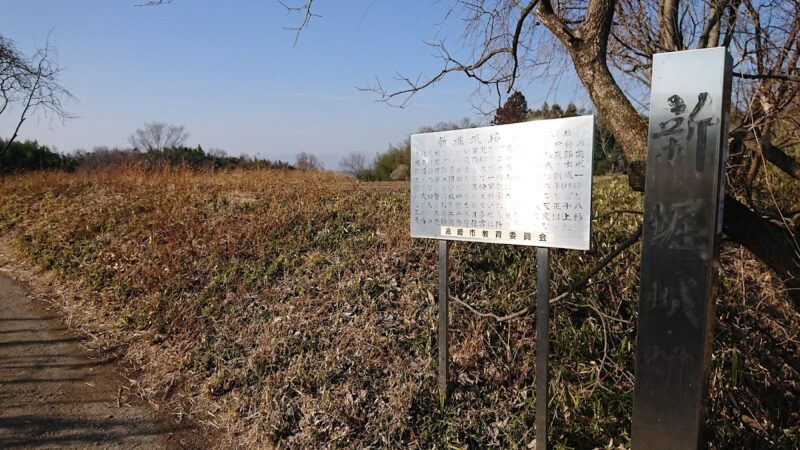
Remains of Earthworks: Parts of the earthworks that surrounded the administrative headquarters are still well-preserved. The height varies depending on the location, but the best-preserved sections are thought to have almost retained their original height. Walking along the top of the earthworks allows one to experience the scale and structure of the administrative headquarters.
Traces of Dry Moats: Parts of the dry moats that surrounded the outside of the earthworks can also be seen. Although not preserved in its complete form, the topography allows us to infer the location and size of the moat at the time.
Remnants of the Land Division: While the buildings within the jinya (fortified residence) no longer remain, the current land divisions and road layouts show remnants of the original land division. The location of the central part of the jinya and its main facilities can be estimated from the topography.
Value as a Historic Site
The Yada Jinya Site is one of the valuable jinya sites remaining in Gunma Prefecture. While many castle ruins remain in the Kanto region, examples of jinya sites with well-preserved remains are limited.
In particular, the fact that the earthworks and dry moats remain together is extremely important for understanding the structure of Edo-period jinya. It is also highly valuable as a resource for castle research and Japanese history research, attracting many castle enthusiasts and history researchers.
Highlights of the Yada Jinya Site
Walking on the Earthworks
When visiting the Yada Jinya Site, we recommend walking along the top of the earthworks. From atop the earthen rampart, you can grasp the overall layout of the encampment and imagine the view seen by the castle lord and samurai of that time.
You can appreciate its function as a defensive structure from its height and width. Furthermore, by observing the structure of the rampart and the way the earth was piled, you can learn about the advanced civil engineering techniques of the Edo period.
Observing the Dry Moat
Searching for traces of the dry moat is another enjoyable aspect of visiting the Yada Encampment site. While some parts are now filled in, the location of the moat can be estimated from the topography.
Since the dry moat does not hold water, it is sometimes possible to walk along its bottom. Looking up at the earthen rampart from the bottom of the moat, you can experience the imposing presence of this defensive structure.
Estimating the Site of the Main Gate
Searching for the site of the main gate (Otemon), believed to have been located on the west side, is also an interesting experience. The location of the main gate can be estimated from sections where the earthen rampart is interrupted and from changes in the topography.
The main gate was the formal entrance to the encampment and the most heavily guarded area. Imagine the people of that time passing through here to enter and exit the encampment.
Surrounding Landscape
The area surrounding the Yada Encampment Ruins is a peaceful rural landscape. During the Edo period, this area was part of the Yada Domain’s territory, and agriculture was practiced here. By strolling through the area while imagining the rural scenery of that time, you can feel the history more deeply.
Access to the Yada Encampment Ruins
Location
370-2107 Yada, Yoshii-machi, Takasaki City, Gunma Prefecture
Access by Public Transportation
By Train/Bus:
- Approximately 20 minutes on foot from Joshin Electric Railway “Yoshii Station”
- Approximately 5 minutes by taxi from Yoshii Station
The Joshin Electric Railway departs from Takasaki Station, and the journey to Yoshii Station takes approximately 30 minutes. While it is possible to access the site on foot from the station, it is a bit of a distance, so it is recommended to allow ample time for your visit.
Access by Car
Using the Kan-Etsu Expressway:
- Approximately 30 minutes from the Maebashi IC on the Kan-Etsu Expressway
- Approximately 20 minutes from the Fujioka IC
Using National Highways:
- Accessible via National Highway 254 and a prefectural road.
There is no designated parking area, so you will need to use nearby public facilities or roadside rest areas, or find a place to park on the street. Please park respectfully and avoid inconveniencing local residents.
Precautions When Visiting
The Yada Jinya Ruins are not a specially developed tourist facility. Please pay attention to the following points when visiting:
- Respect for Private Property: Some areas may be private property. Do not enter areas marked “No Entry.”
- Safety Management: Some parts of the earthworks and moat remains are not maintained. Please watch your step.
- Consideration for Weather: The earthworks can become slippery in rainy weather. We recommend visiting on a day with good weather.
- Seasonal Selection: In summer, vegetation can be overgrown, making the ruins difficult to see. Visiting from autumn to spring is recommended.
Nearby Tourist Attractions
When visiting the Yada Jinya Ruins, combining your visit with a tour of nearby tourist attractions will enhance your historical exploration.
Historical Sites in Yoshii-cho, Takasaki City
Yoshii Castle Ruins: Besides the Yada Jinya, Yoshii-cho also has the Yoshii Castle Ruins. This is also a castle ruin from the medieval to early modern period, and visiting it along with the Yada Jinya will provide a deeper understanding of the region’s history.
Tago Monument: This ancient stone monument, designated a National Special Historic Site, is a valuable epigraphic work from the Nara period. Known as one of Japan’s three oldest monuments, it is a representative cultural asset of Yoshii-cho.
Tourist Attractions in Takasaki City
Takasaki Castle Ruins: Located in the center of Takasaki City, the Takasaki Castle Ruins were built by Ii Naomasa, one of the Four Heavenly Kings of Tokugawa. Currently, the site is maintained as Takasaki Castle Ruins Park, where you can see the moat, stone walls, and the reconstructed Inui Turret.
Shorinzan Daruma-ji Temple: A famous temple known as the birthplace of Takasaki Daruma dolls. Numerous Daruma dolls are dedicated within the temple grounds, allowing visitors to experience Takasaki’s traditional culture.
Haruna Shrine and Mount Haruna: Located in the western part of Takasaki City, Mount Haruna is one of the three famous mountains of Joshu (present-day Gunma Prefecture). Haruna Shrine is known for its unique landscape integrated with giant rocks and is a popular power spot.
The Significance of Visiting the Yada Jinya Ruins
The Yada Jinya Ruins are not a flashy tourist destination, but they are a place that quietly speaks of Japanese history. By standing on the site, you can experience the appearance of a small Edo-period domain, the reality of a Jinya (fortified residence), and the true nature of local governance.
As a Place for Historical Learning
School education tends to focus on the history of large castles and famous daimyo (feudal lords), but in reality, Edo-period Japan had many small domains like the Yada Domain. Learning how even the smallest daimyo family, with a 10,000 koku (unit of rice production) domain, governed their territory, and what role facilities like jinya (fortified residences) played, leads to a more realistic understanding of history.
As a Resource for Castle Research
For castle enthusiasts and researchers, the Yada Jinya site is a valuable research resource. There are limited places where one can observe the structure and defensive methods of jinya, which differ from large castles with keeps and stone walls, in person.
It allows for consideration of how basic defensive facilities such as earthworks and dry moats were arranged and what level of defensive power they provided, based on the actual topography.
Understanding Local History
Visiting the Yada Jinya site also allows you to learn about the history of the Yoshii-cho area in Takasaki City, Gunma Prefecture. Imagining the role this area played during the Edo period and the lives of its people deepens our understanding of the region today.
Cherishing and passing on local history to future generations is a responsibility of us modern people. Visiting historical sites like the Yada Jinya Ruins and recognizing their value contributes to the preservation of historical heritage.
Preservation and Future of the Yada Jinya Ruins
While the Yada Jinya Ruins are not currently designated as a special historical site, they are recognized as a valuable historical heritage of the region. Appropriate preservation and utilization are expected in the future.
Challenges of Preservation
Earth structures such as earthworks and dry moats are more susceptible to weathering and collapse compared to stone walls. Furthermore, in areas on private land, there is a risk of loss due to changes in land use.
Diverse efforts are needed, including historical site designation and preservation measures by the government, as well as preservation activities by local residents and history enthusiasts.
Potential for Utilization
With proper development, the Yada Jinya Ruins have the potential to become an excellent site for historical learning. Installing explanatory signs, developing walking paths, and conducting guided tours can create an environment that is more accessible to a wider audience.
Furthermore, providing restored images using digital technologies such as VR (Virtual Reality) and AR (Augmented Reality) is another potential future application. Being able to view the appearance of the encampment at the time on a smartphone or tablet would significantly enhance visitors’ understanding and interest.
Summary
The Yada Encampment Site, located in Yoshii-cho, Takasaki City, Gunma Prefecture, is the remains of an encampment that functioned as the administrative center of the Yada Domain (Yoshii Domain) during the Edo period. It originated from the medieval Yada Castle, and after Matsudaira Nobuhira took control, the encampment was established. During the time of Matsudaira Nobukiyo, the Yada Domain was established as a 10,000-koku daimyo domain.
Even today, parts of the earthworks and dry moats remain, making it a valuable historical site that allows us to understand the structure of an Edo-period encampment. While not a flashy tourist spot, it is a place that quietly speaks of Japanese history, making it a valuable destination for history buffs and castle enthusiasts.
When visiting the Kanto region, why not visit the Yada Encampment Site and reflect on the appearance of this small Edo-period domain? By walking along the earthen ramparts, searching for traces of dry moats, and imagining the lives of the people who lived there in the past, you can experience living history that you can’t learn from textbooks.