Manago Castle (Tochigi City, Tochigi Prefecture) Complete Guide | Detailed Explanation of History, Remains, and Access
What is Manago Castle?
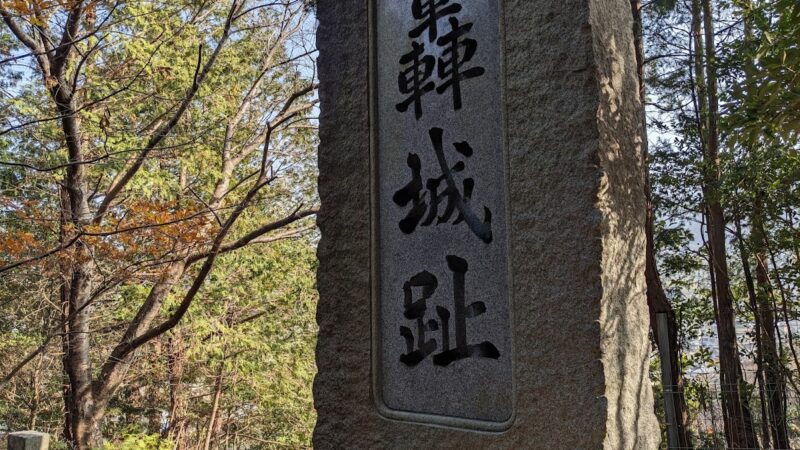
Manago Castle is a medieval mountain castle located in Manago, Nishikata-machi, Tochigi City, Tochigi Prefecture (formerly Tsuga District, Shimotsuke Province). Also known as Akabe Castle, Takaya Castle, and Manago Castle, it is known as a strong mountain castle built around the summit of Mt. Akabe (Akabeyama), which is 193 meters above sea level.
Constructed during the Eisho era (1504-1521), this castle was situated on the front lines of the power struggle between the Utsunomiya and Minagawa clans during the Sengoku period, functioning as an important border castle. Even today, well-preserved remains remain, and it is highly regarded by castle enthusiasts and history buffs.
Basic Information on Manako Castle
- Location: Manako, Nishikata-machi, Tochigi City, Tochigi Prefecture
- Other Names: Akakabe Castle, Akakameyama Castle, Takaya Castle, Manako Castle
- Castle Structure: Mountain Castle
- Year of Construction: Eisho era (1504-1521)
- Builder: Okamoto Mototsuna (Utsunomiya Mototsuna), illegitimate son of Utsunomiya Tadatsuna
- Main Lords: Utsunomiya clan, Okamoto clan
- Elevation: Approximately 193 meters
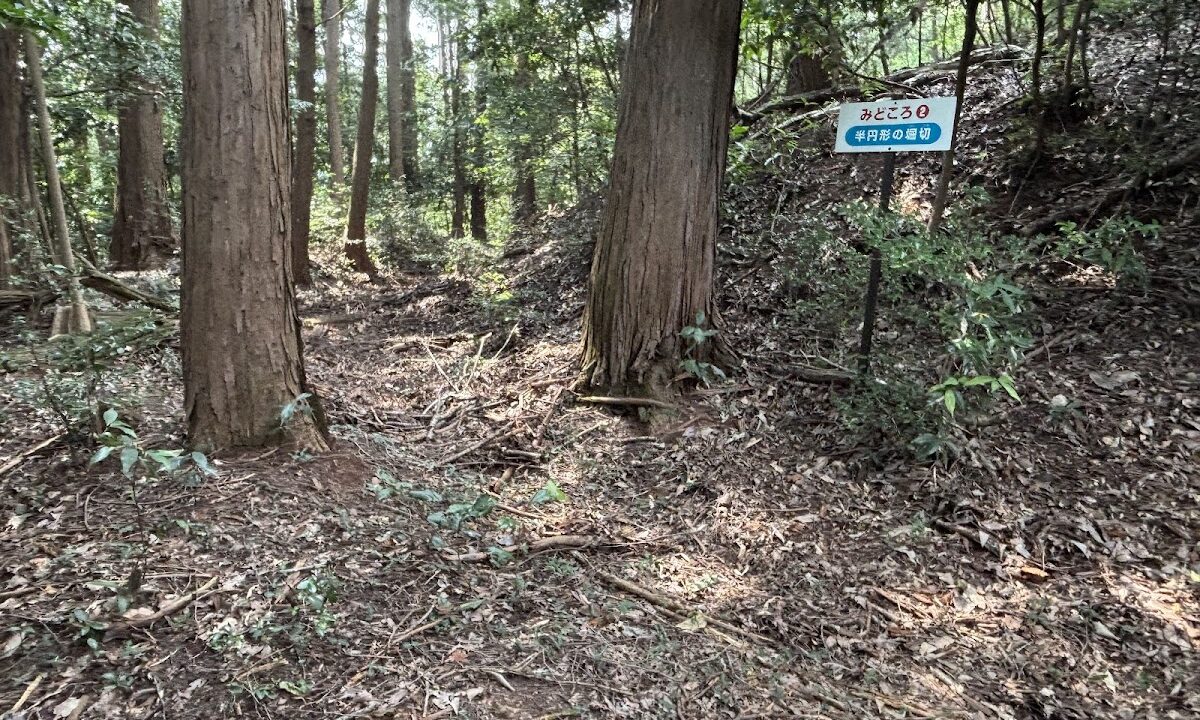
- Existing Remains: Enclosures, moats, earthworks, vertical moats
History of Manako Castle
Background of Construction and the Eisho Era
The Eisho era, when Manako Castle was built, was a turbulent period in the Kanto region, marking the beginning of the Sengoku period (Warring States period). The Utsunomiya clan was expanding its power as a powerful daimyo in Shimotsuke Province, but a constant tension existed between them and the Minagawa clan to the south.
Utsunomiya Tadatsuna decided to build a castle on Akabeyama, a strategic point along the road leading from Kanuma to Tochigi, as a defense against the Minagawa clan. The castle was built by Tadatsuna’s illegitimate son, Okamoto Mototsuna (also known as Utsunomiya Mototsuna), with his retainer, Okamoto Hidetaka, appointed as the castle lord.
A Border Castle Between the Utsunomiya and Minagawa Clans
Manako Castle held extremely important strategic value as a “border castle” located at the boundary between the Utsunomiya and Minagawa territories. Situated on the left bank of the Akatsugawa River, it is believed to have served to monitor the Minagawa territory to the south and to prepare for invasions from the Kanuma area.
The castle’s location, on high ground that allowed for easy monitoring of enemy movements and its position controlling the road, made it a strategically important base both militarily and logistically. It is presumed that the Utsunomiya clan formed a defensive line centered around this castle, along with a group of branch castles belonging to the Nishikata clan and others.
Changes in the Sengoku Period
Throughout the 16th century, Manako Castle was under the control of the Utsunomiya clan. However, in the later Sengoku period, the situation in Shimotsuke Province became complicated due to the expansion of the Hojo clan’s power. While the Utsunomiya clan sought to align itself with the Hojo clan, the Minagawa clan also pursued its own independent diplomatic policies.
During Toyotomi Hideyoshi’s siege of Odawara in 1590, Minagawa Hiroteru initially sided with the Hojo clan, but escaped Odawara Castle and secretly allied himself with the Toyotomi through Tokugawa Ieyasu, thus securing his territory. While there are no clear records of the role Manako Castle played during this period, it is thought that its strategic importance changed as the relationship between the Utsunomiya and Minagawa clans shifted.
Abandonment of the Castle and its Aftermath
During the Edo period, many branch castles were abandoned due to the shogunate’s policies, such as the “One Castle Per Province” decree. It is presumed that Manako Castle was also abandoned during this period, but the exact date of its abandonment is unclear due to a lack of historical records.
After its abandonment, the castle site was left as a forest for a long time. Fortunately, it avoided large-scale development, resulting in the preservation of its Sengoku period layout in good condition.
Layout and Structure of Manako Castle
Overall Layout
Manako Castle is a mountain castle with a complex layout, centered on the summit of Mt. Akabe, with multiple baileys and trenches arranged on the north, west, and south ridges. Defensive facilities are arranged radially from the main bailey, designed to withstand attacks from multiple directions.
The castle area covers a relatively wide area, and numerous trenches and vertical moats blocking the ridgelines can be observed, in addition to the main baileys. These remains demonstrate the advanced castle-building techniques of the time and indicate that this castle was not merely a lookout post, but a full-fledged mountain castle designed for actual combat.
Main Enclosure and Surroundings
The main enclosure, located at the mountaintop, is the core of the castle. It has a relatively large, flat area, and it is presumed to have been the residence of the castle lord or castellan. Traces of earthworks are found around the main enclosure, indicating measures taken to enhance its defensive capabilities.
From the main enclosure, there are expansive views of the surrounding area, overlooking the Minagawa area to the south and the roads to the east and west. This excellent view indicates its character as a border castle that emphasized surveillance.
Arrangement of Enclosures
Several enclosures are arranged in a stepped pattern surrounding the main enclosure. These enclosures form a defensive line to prevent approach to the main enclosure, creating multiple barriers before the enemy could reach it.
The size of each enclosure varies; larger enclosures were likely used for troop garrisons and supply storage, while smaller enclosures functioned as watchtowers and defensive positions. The elevation differences between enclosures were also utilized as defensive elements, demonstrating ingenuity in making it difficult for attackers to advance.
Moats and Vertical Moats
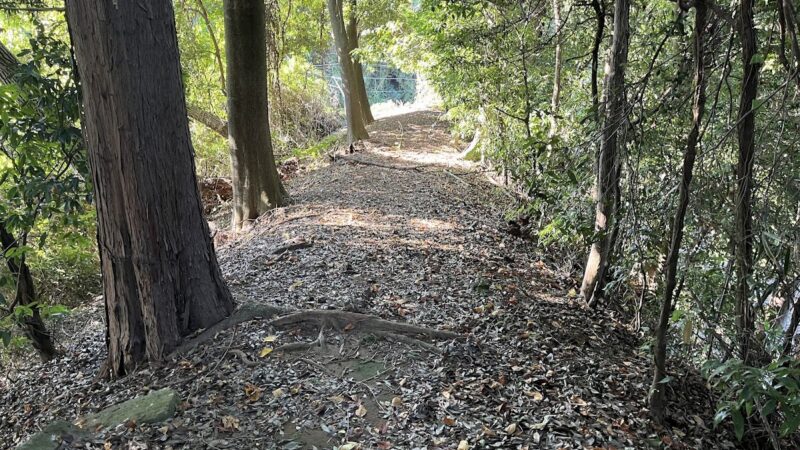
One of the greatest highlights of Manako Castle is its well-preserved group of moats. Deep moats completely blocking the ridges on the north, west, and south sides served to physically prevent enemy incursions.
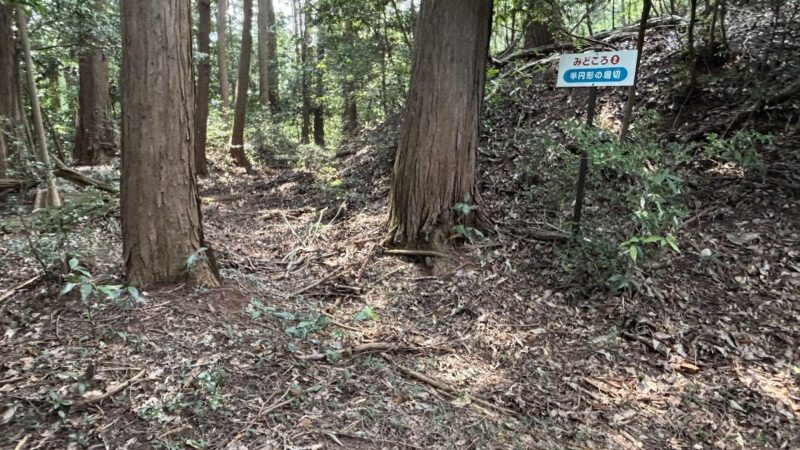
The moat on the northern ridge, in particular, is large and sufficiently deep, making it easy to imagine its original appearance. Furthermore, several vertical moats extending from the moats down the slopes can be observed, indicating ingenuity in restricting lateral movement.
These moats and vertical moats are valuable relics demonstrating the castle-building techniques of the mid-Sengoku period and hold high value from the perspective of castle research.
Features of the Defensive System
The defensive system of Manako Castle exhibits the typical style of a Sengoku period mountain castle, skillfully utilizing the terrain. The steep slopes themselves act as natural barriers, and the defensive capabilities are further enhanced by artificial moats and earthworks.
The main approach routes to the castle are limited, forcing attackers to pass through moats and baileys. This “depth defense” concept is a rational design for defending against a large number of enemies with a small number of defending forces.
Highlights of Manako Castle
Well-Preserved Remains
The greatest attraction of Manako Castle is undoubtedly its well-preserved remains. Having escaped large-scale development, the original layout remains almost entirely intact, making it a valuable historical site where one can experience the appearance of a Sengoku period mountain castle.
The depth of the moats and the elevation differences of the baileys are particularly clear, making it a popular spot for photography. Among castle enthusiasts, it is highly regarded as a “castle that conveys magnificent remains.”
Scenic Viewpoints
The views from near the main enclosure are not to be missed. On a clear day, you can enjoy a panoramic view of Minagawa to the south and the city of Tochigi, allowing you to imagine what the castle lords once saw from this spot.
In spring, the fresh greenery, and in autumn, the surrounding mountains are beautifully colored, allowing you to enjoy both historical exploration and nature appreciation.
The Charm of the Ascent and Mountain Hiking
The ascent to Manako Castle offers the unique enjoyment of a mountain castle. The elevation difference is approximately 150 meters, making it a relatively easy course even for those without much physical stamina.
Along the ascent, you can observe remains such as vertical moats and lower enclosures, gaining a firsthand understanding of the castle’s defensive system. The round trip takes approximately 1 to 1.5 hours.
Seasonal Expressions
Manako Castle displays different expressions throughout the four seasons. Each season offers different discoveries when visiting: spring brings fresh greenery and wildflowers, summer offers deep green, autumn brings vibrant autumn leaves, and winter, with fallen leaves making the ruins easier to see.
In particular, winter is the best time to observe the shapes of moats and earthworks because the leaves have fallen from the trees. For those studying castles or taking photographs, a winter visit is recommended.
Access Information
Access by Car
The most convenient way to access Manako Castle is by car.
- From Tohoku Expressway, Tochigi IC: Approximately 15 minutes
- From Tohoku Expressway, Kanuma IC: Approximately 20 minutes
- From Kita-Kanto Expressway, Tsuga IC: Approximately 20 minutes
Take National Route 293 towards Manako, Nishikata-cho, Tochigi City. There is parking space near the castle ruins, but the number of spaces is limited, so caution is advised if visiting with multiple vehicles.
Access by Public Transportation
The following routes are possible when using public transportation.
- From JR Ryomo Line, Tochigi Station: Approximately 20 minutes by taxi
- From Tobu Nikko Line, Shin-Tochigi Station: Approximately 25 minutes by taxi
Bus service is infrequent, and the nearest bus stop is a considerable distance away, making public transport somewhat inconvenient. We recommend using a car if possible.
Parking Information
While there are no designated parking areas around the castle ruins, there are a few parking spaces along the road near the entrance to the castle. Since this is street parking, please park with consideration for local residents and avoid obstructing their passage.
Precautions When Visiting the Castle
- Attire: As it is a mountain castle, comfortable clothing and non-slip shoes (trekking shoes recommended) are necessary.
- Equipment: Please bring drinking water, insect repellent, a towel, etc.
- Season: Due to the abundance of insects and lush vegetation in summer, visiting from autumn to spring is recommended.
- Time Required: The visit itself takes about 30 minutes to 1 hour; including the round trip to the castle, please allow 1 to 2 hours.
- Safety: Avoid visiting alone; it is recommended to visit with multiple people if possible.
- Weather: Due to the slippery conditions during rainy weather or immediately after rain, it is recommended to refrain from visiting.
Nearby Tourist Attractions
Nishikata Castle
Nishikata Castle, located about 10 minutes by car from Manako Castle, was the residence of the Nishikata clan, a branch of the Utsunomiya clan. Along with Manako Castle, it was an important fortress forming the southern defense line of the Utsunomiya clan.
Nishikata Castle also boasts well-preserved remains, and visiting it together with Manako Castle will provide a deeper understanding of the Utsunomiya clan’s castle network.
Minagawa Castle
Located about 15 minutes by car south of Manako Castle, Minagawa Castle was the base of the Minagawa clan, who opposed Manako Castle. It has been developed into Minagawa Castle Ruins Park, making it easily accessible.
Visiting both Manako Castle and Minagawa Castle will give you a better understanding of the relationship between these border castles and the tensions of the Sengoku period.
Sightseeing in Tochigi City
Tochigi City retains a historical townscape known as the “town of storehouses.” Strolls along the Tomoe River, the Tochigi City Local History Museum, and the Tochigi Storehouse Town Museum are just some of the many historical and cultural facilities available.
Enjoying historical sightseeing in Tochigi City in conjunction with a visit to Manako Castle is highly recommended.
Tourist Attractions in Kanuma City
Manako Castle is located near the border with Kanuma City, making it easily accessible to tourist attractions in Kanuma City. Kanuma City boasts numerous attractions, including the Kanuma Castle Ruins and the Kanuma Autumn Festival, a UNESCO Intangible Cultural Heritage site.
Reviews and Ratings of Manako Castle
Ratings from Castle Enthusiasts
Manako Castle receives high praise from castle enthusiasts nationwide. On castle information websites such as Kojodan, it consistently achieves an average rating of around 3.00, with many comments praising its “excellent preservation of remains” and “magnificent moats.”
The average visit time is approximately 53 minutes, suggesting that many visitors take their time to carefully observe the remains. Numerous photos have also been posted, allowing visitors to preview the various enclosures and moats.
Visitor Feedback
The following are some comments from visitors who have actually visited the castle:
- “I was overwhelmed by the scale of the moat. It really shows the high level of technology during the Sengoku period.”
- “The fact that it’s not overly maintained is actually a good thing. It’s easy to imagine what it looked like in its heyday.”
- “Access is somewhat inconvenient, but it’s definitely worth visiting.”
- “The view from the main enclosure is magnificent, and the importance of its location as a border castle is clearly evident.”
On the other hand, there have been criticisms such as “there are few information boards and explanatory signs” and “the path to the castle is difficult to find,” and further improvements are hoped for in the future.
Research and Preservation of Manako Castle
Academic Value
Manako Castle, as a typical example of a mountain castle from the mid-Sengoku period, has high academic value. Research topics are diverse, including its position within the Utsunomiya clan’s castle system and its function as a border castle.
In particular, the arrangement patterns of the moats and vertical trenches have been the subject of comparative research with other castles of the same period, making it an important historical source for understanding the development of castle construction technology in Shimotsuke Province.
Current Status of Preservation Activities
Regarding the preservation of Manako Castle, local history enthusiasts and castle researchers are conducting surveys. However, it has not received official historical site designation, and organized preservation activities are limited.
In order to pass on these valuable remains to future generations, establishing an appropriate preservation and management system is a challenge. At the same time, a balanced approach to preservation and utilization is required to prevent the value of the remains from being diminished by excessive development.
Positioning in the Region
In the local history of Nishikata-cho, Tochigi City, Manako Castle is an important historical heritage site. It is expected to be utilized for local history education and as a tourist resource, and efforts are being made to increase local awareness and foster preservation consciousness.
Summary
Manako Castle (Akakabe Castle) is a valuable Sengoku period mountain castle remaining in Tochigi City, Tochigi Prefecture. Built by the Utsunomiya clan during the Eisho era, it played an important role as a border castle with the Minagawa clan.
The well-preserved moats and baileys of Manako Castle are valuable historical remains that convey the castle-building techniques of the Sengoku period, making it a highly worthwhile historical site to visit for castle enthusiasts and history buffs. While access is somewhat inconvenient, this has allowed it to escape development and retain its original appearance.
When planning a castle tour in Tochigi Prefecture, be sure to add Manako Castle to your list. The view from the summit of Mt. Akabe and the remains that evoke the spirit of the Sengoku period are sure to provide an unforgettable experience.
From both a castle research and tourism perspective, Manako Castle is one of Tochigi Prefecture’s representative mountain castles and is sure to attract even more attention in the future.