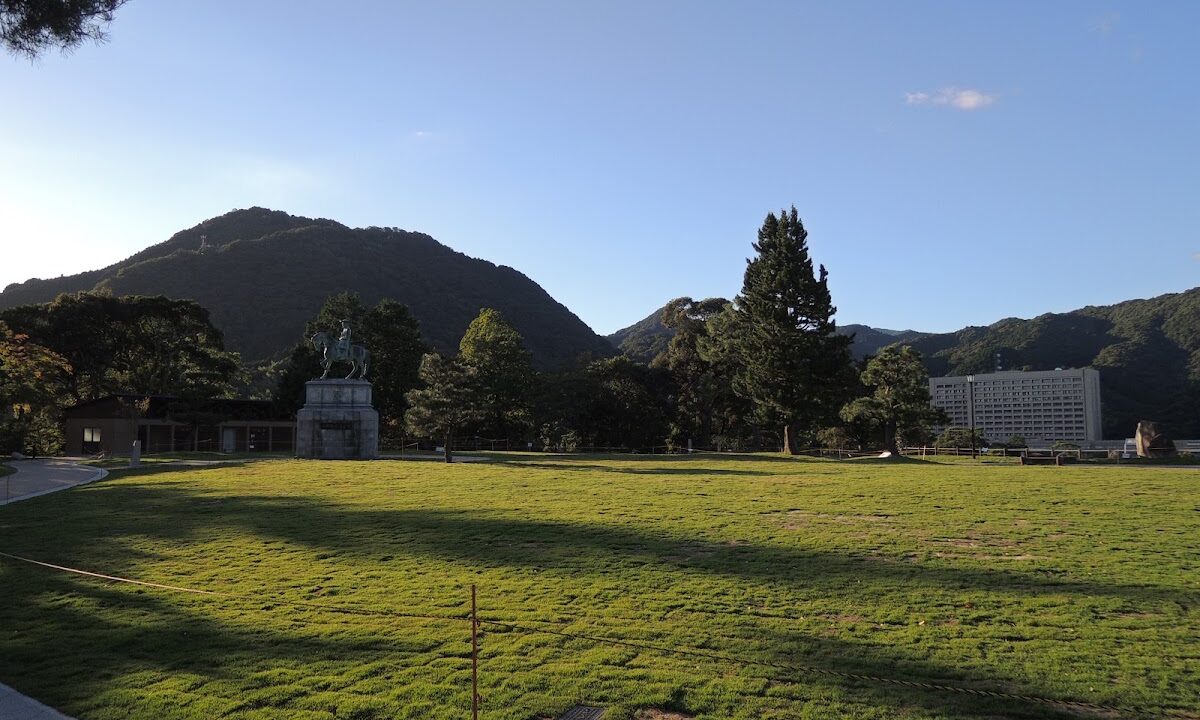
Nagayama Castle (Itako City, Ibaraki Prefecture): A Complete Guide to its History and Highlights | Castle Ruins of the Hitachi Daijo Clan
Nagayama Castle, also known as Nagayama Castle, is a medieval castle located in Nagayama, Itako City, Ibaraki Prefecture. Built on a hill approximately 20 meters high, south of Kasumi-no-Sato Park, it served as the residence of the Nagayama clan (also known as the Nagayama family), a branch of the Hitachi Daijo clan, from the Kamakura period to the Sengoku period. Even today, remnants such as earthworks and dry moats remain well-preserved, making it a valuable historical site that conveys the appearance of a medieval castle.
History and Lords of Nagayama Castle
Construction in the Kamakura Period and the Establishment of the Nagayama Clan
Nagayama Castle was built in the mid-Kamakura period. It is believed to have originated when Tomotomo, the second son of Kodaka Mikihira, a member of the Hitachi Daijo clan, established a castle on this site. Tomomoto ruled the Nagayama area and adopted the name Nagayama (or Nagayama clan), and this family subsequently used this castle as their base for generations.
The Hitachi Daijo clan was a powerful family in Hitachi Province (present-day Ibaraki Prefecture), and its branches scattered throughout the region, developing independently in each area. The Nagayama clan was one of these branches, playing an important role in controlling the water transport and transportation hubs around Itako.
The Turmoil of the Sengoku Period and the Conflict with the Shimazaki Clan
The most important turning point in the history of Nagayama Castle occurred in 1522 (Daiei 2) during the Sengoku period. In that year, Shimazaki Toshimoto, the lord of Shimazaki Castle and a member of the same clan, attacked Nagayama Castle, besieging and destroying the then-lord, Nagayama Mototsuna. It is said that Mototsuna was forced to commit suicide in this battle, and Nagayama Castle fell.
Shimazaki Toshiki and Nagayama Mototsuna, both members of the Hitachi Daijō clan, became rivals amidst territorial expansion and power struggles, ultimately leading to armed conflict. During this period, Hitachi Province was dominated by powerful clans such as the Oda and Satake, and infighting among relatives was frequent under their influence.
While detailed records of Nagayama Castle’s fate after its conquest by the Shimazaki clan are scarce, it’s possible it either came under Shimazaki control or was abandoned. Amidst the turmoil of the subsequent Sengoku period, Nagayama Castle gradually faded from historical records.
Changes After the Edo Period
With the end of the Sengoku period, Nagayama Castle ceased its military role. During the Edo period, it lost its function as a castle, and the site was used for farmland and forest. However, some topographical features and remnants of the castle remained, preserving the memory of the local people as “the place where a castle once stood.”
Since the modern era, particularly due to post-war development, parts of the castle grounds have been altered, but the remains in the central area are preserved in relatively good condition.
Layout and Structure of Nagayama Castle
Location and Topographical Characteristics
Nagayama Castle is built on an island-like plateau floating in a marshy area south of the Yogoshi River. With a relative elevation of approximately 15-20 meters, it is a natural stronghold surrounded by low-lying wetlands. This terrain is typical of castles in water-rich areas, often seen around Lake Kasumigaura, and was strategically located, combining the convenience of water transport with defensive capabilities.
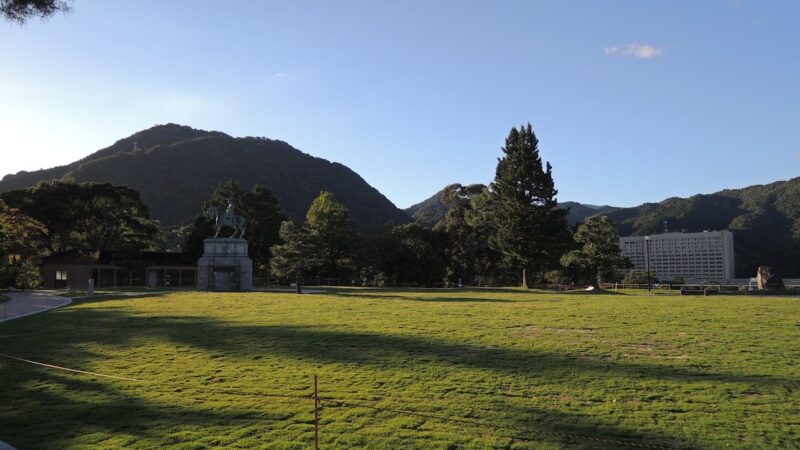
Currently, the northern part of the castle grounds is developed as Kasumi-no-Sato Park. While it is believed that the third bailey once stood in this area, it was significantly altered during the park’s construction, and very few remains survive. However, the main part remaining on the south side of the park retains a strong sense of its medieval castle past.
Arrangement of the Main Enclosure and Baileys
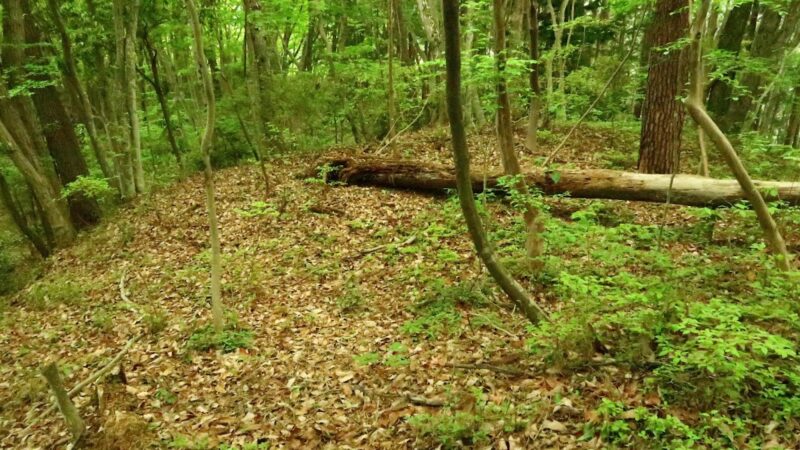
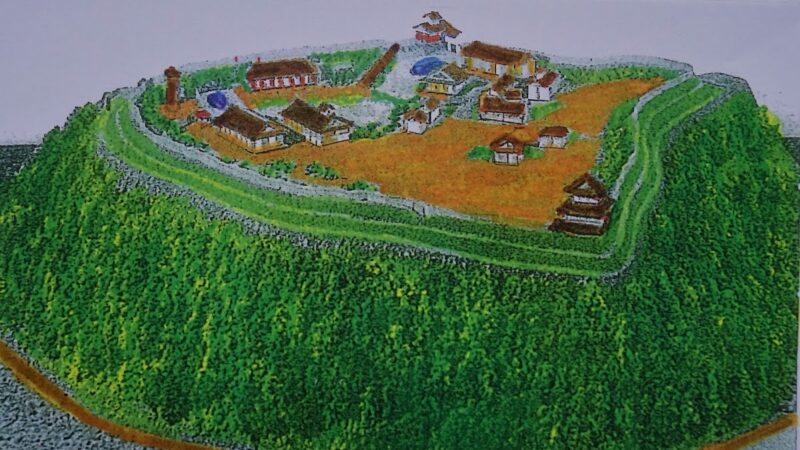
The main enclosure, the center of Nagayama Castle, is located at the highest point of the plateau. The main enclosure is a relatively flat space, and it is thought that buildings such as residences and warehouses were built there. Earthen ramparts surrounded the main enclosure, and parts of them can still be clearly seen today.
Several smaller enclosures (kuruwa) are arranged around the main enclosure. These enclosures are arranged on different levels, strengthening the defenses and presumably housing the residences of retainers and barracks. The enclosures are separated by dry moats and steep slopes, showcasing defensive structures characteristic of medieval castles.
Remains of Earthen Ramparts and Dry Moats
The most distinctive remains of Nagayama Castle are the well-preserved earthen ramparts and dry moats. The earthen ramparts surrounding the main enclosure are about 2-3 meters high and were built for defense. Walking on top of the ramparts allows you to experience the scale and structure of the castle at that time.
The dry moats are clearly visible on the east and south sides of the castle grounds. They are about 3-5 meters deep and sufficiently wide, serving as important defensive structures to prevent enemy intrusion. Walking along the bottom of the dry moat, you’ll be amazed by its depth and scale. Furthermore, the moat walls are cut into steep slopes, demonstrating the high level of civil engineering technology of the medieval period.
Entrance and Passageway
You can also see traces of the entrance (koguchi) to the castle. Since the entrance is a weak point in defense, earthworks and moats were skillfully placed to make enemy intrusion difficult. The passageway from the entrance to the main enclosure has a complex structure, passing through baileys, further enhancing its defensive capabilities.
A road runs near the eastern entrance, and although it’s used as a modern road, it may be a continuation of an older passageway.
Highlights and Current Conditions of Nagayama Castle
Access and Entrance to the Castle Ruins
The easiest route to the Nagayama Castle ruins is to head towards Kasumi-no-Sato Park. You can park your car in the park’s parking lot and walk to the castle ruins from there. The entrance to the castle ruins is on the south side of the park, and since there are stone monuments and information boards, even first-time visitors are unlikely to get lost.
It’s about a 20-minute drive from Itako Station on the JR Kashima Line. If using public transportation, it’s recommended to take a taxi from the station or rent a bicycle. The terrain in Itako is relatively flat, making cycling a comfortable option.
Stone Monuments and Information Boards
Near the entrance to the castle ruins, there is a stone monument marking “Nagayama Castle Ruins,” indicating that this is a historical site. Information boards are also installed, providing brief explanations about the castle’s history and structure. These facilities were maintained by local historical preservation groups and the local government, and play an important role in conveying the castle’s history to visitors.
Points to Note When Visiting the Ruins
When visiting the castle ruins, we recommend focusing on the following points:
Main Enclosure Earthworks: The earthworks surrounding the center of the castle are one of the best-preserved remains. Walking along the earthen ramparts and observing the surrounding terrain, you can understand how this castle was built to take advantage of the unique topography of the waterside region.
Eastern Dry Moat: The dry moat remaining on the east side is impressive in both depth and width. Looking up from the bottom of the moat, you can truly appreciate its defensive strength.
Elevation Differences in the Enclosures: The arrangement of multiple enclosures with varying elevations is crucial for understanding the castle’s three-dimensional structure. Try to visualize the overall layout of the castle as you explore each enclosure.
Surrounding Landscape
From the Nagayama Castle ruins, you can overlook Lake Kasumigaura and the surrounding rice paddies. During the Sengoku period, this landscape was filled with swamps and waterways, and the castle functioned as a key point for water transport. While the landscape has changed significantly due to land reclamation and development, you can still feel the unique atmosphere of this waterside region.
Nagayama Castle and Surrounding Castles
Relationship with Shimazaki Castle
Shimazaki Castle is located approximately 2.4 km northeast of Nagayama Castle. As mentioned earlier, Shimazaki Toshimoto attacked and captured Nagayama Castle in 1522, and the two castles are deeply intertwined. Like Nagayama Castle, Shimazaki Castle was built by a branch of the Hitachi Daijo clan, and remains still exist today. When visiting Nagayama Castle, visiting Shimazaki Castle as well will provide a deeper understanding of the conflicts between the same clan and the history of the region.
Medieval Castles Around Itako
In addition to Nagayama Castle and Shimazaki Castle, many other medieval castles are scattered around Itako City, including Horinouchi Odai Castle, Kashima Castle, Aso Castle, and Odaka Castle. These castles were built by the Hitachi Daijo clan, its branches, or other forces such as the Satake clan, reflecting the complex political situation in southern Hitachi Province. Visiting these castles will give you a more comprehensive understanding of the history and castle culture of medieval Hitachi Province. Especially for castle enthusiasts, it’s possible to create a “castle tour course” visiting multiple castles in one day.
Practical Information for Visiting Nagayama Castle
Access Details
Access by Car: Approximately 10 minutes from the Itako Interchange on the Higashi-Kanto Expressway. Parking is available at Kasumi-no-Sato Park. Parking is free and there is ample space.
Public Transportation: Approximately 20 minutes by taxi from Itako Station on the JR Kashima Line. There is a taxi stand in front of the station. Rental bicycles are also available around Itako Station.
Precautions During Visit
The castle ruins are not a developed park, but a place where the natural terrain remains. Please pay attention to the following points when visiting:
- Clothing: Comfortable walking shoes and clothing are essential. Particular caution is needed after rain, as the ground can become slippery.
- Season: In summer, vegetation grows thick, making it difficult to see the remains. Visiting from autumn to spring is recommended.
- Insect Repellent: As it is a place rich in nature, insect repellent spray is recommended for a more comfortable experience in summer.
- Safety Management: Some parts of the dry moats and earthworks have steep slopes. Please pay attention to your footing and avoid unnecessary actions.
Estimated Visiting Time
If you want to thoroughly explore the castle ruins, allow about 1 to 1.5 hours. While it’s possible to see the main remains in about 30 minutes, if you want to enjoy taking photos and detailed observation, it’s recommended to allow ample time.
Historical Value and Preservation Status of Nagayama Castle
Significance in Medieval Castle Research
Nagayama Castle holds significant historical value as a typical example of a medieval castle in Hitachi Province. Its location, utilizing the topography of a waterside area, its defensive structure centered on earthworks and dry moats, and its history as a battleground for conflicts between clans, offer many research topics. In particular, as a castle built by a branch of the Hitachi Daijō clan, it is a valuable historical site for understanding the expansion of the clan’s power and the realities of internal conflicts. It also serves as a good example of the scale and structure of castles built by local powerful families during the Sengoku period.
Current Preservation Status and Challenges
Although part of the castle grounds have been lost due to the development of Kasumi-no-Sato Park, the main parts of Nagayama Castle are preserved in relatively good condition. Remains such as earthworks and dry moats are clearly visible, conveying the appearance of a medieval castle to the present day.
However, comprehensive development and protective measures as a historical site are not yet sufficient, and future preservation activities remain a challenge. Local history enthusiasts and researchers continue their surveys and awareness-raising activities, and more comprehensive historical site development is expected in the future.
Summary
Nagayama Castle (Nagayama Castle) in Itako City, Ibaraki Prefecture, is a medieval castle built by the Nagayama clan, a branch of the Hitachi Daijō clan, from the Kamakura period to the Sengoku period. Built on a hill 20 meters above sea level, this castle is characterized by its cleverly utilized location in the waterside region and its defensive structure centered on earthworks and dry moats.
This castle, which has a tragic history of being captured in 1522 by Shimazaki Toshimoto, a member of the same clan, is a valuable historical site that tells the story of the rise and fall of local powerful families during the Sengoku period. Even today, well-preserved remains such as the earthworks of the main enclosure and the dry moat on the east side remain, making it a worthwhile place for medieval castle enthusiasts.
Its location is also attractive, being easily accessible from Kasumi-no-Sato Park and about a 20-minute drive from Itako Station. Since many medieval castles, including Shimazaki Castle, are scattered in the surrounding area, it is recommended to visit as part of a castle tour. Those interested in history and castle enthusiasts should definitely visit this place and reflect on the history of medieval Hitachi Province.