Complete Guide to the Yamakawa Clan Residence Ruins (Ibaraki Prefecture) | A Thorough Explanation of the History and Highlights of a Medieval Samurai Residence
The Yamakawa Clan Residence Ruins, located in Yuki City, Ibaraki Prefecture, are the remains of a medieval samurai residence known as the base of the Yamakawa clan, who were active in the Kanto region from the Kamakura period to the Sengoku period. Although now part of the grounds of Toji-ji Temple, the surrounding earthworks and moats are well-preserved, making it a valuable historical site that conveys the structure of a samurai residence from that time.
This article provides a thorough explanation of this valuable medieval samurai residence site, from its historical background to the details of the currently visible remains and highlights for visitors.
Historical Background of the Yamakawa Clan Residence Ruins
The Founding of the Yamakawa Clan and Yuki Tomomitsu
To understand the history of the Yamakawa Clan Residence, it is necessary to first understand the founding of the Yamakawa clan. The ancestor of the Yamakawa clan was Yamakawa Shigemitsu, born as the third son of Yuki Tomomitsu, a samurai general in the early Kamakura period.
Yuki Tomomitsu was the second son of Oyama Tomomasa, who served as a close confidant of Minamoto no Yoritomo. He ruled Yuki County in Shimosa Province (present-day Yuki City, Ibaraki Prefecture) and founded the Yuki clan. Tomomitsu’s third son, Shigemitsu, was given the land of Yamakawa, separate from his brothers, and established a branch family there, becoming the ancestor of the Yamakawa clan. This is believed to have occurred in the early 13th century.
Construction of the Yamakawa Clan Residence
After establishing the branch family, Yamakawa Shigemitsu built his residence in what is now Kamiyamakawa, Yuki City, Ibaraki Prefecture. This is the Yamakawa Clan Residence (also known as Yamakawa Castle or Jito Yashiki). It adopted the typical square-shaped mansion form for a samurai residence of the Kamakura period, surrounded by earthen ramparts and a moat.
Samurai residences of this era did not prioritize defensiveness as much as castles of the Sengoku period; rather, they emphasized livability and function as a base for governing the territory. The Yamakawa Clan Residence was similar, and is thought to have functioned as both a residence during peacetime and a center for governing the surrounding area. ### The Development of the Yamakawa Clan and the Four Heavenly Kings of Yuki
The Yamakawa clan, as a branch of the Yuki clan, grew into a powerful samurai family in the Yuki region. Especially during the Sengoku period, they became so influential that they were counted among the “Four Heavenly Kings of Yuki.” The Four Heavenly Kings of Yuki refer to four powerful vassals who served the Yuki clan, including the Mizutani clan in addition to the Yamakawa clan.
The Yamakawa clan used this residence as their base for generations, governing the surrounding area. The 11th head of the family, Yamakawa Tomosada, is said to have founded Suwayama Toji-ji Temple on the grounds of the residence, which is the beginning of Toji-ji Temple as it exists today.
Relocation to Yamakawa Ayato Castle
The Yamakawa clan residence, which served as their base for approximately 300 years, underwent a major turning point during the time of the 14th head of the family, Yamakawa Ujishige (Yamakawa Suruga-no-kami Ujishige).
In 1565 (Eiroku 8), Ujishige built a new castle, Yamakawa Ayato Castle, about 2 km north, and moved his base there. This is thought to be because a more defensible castle was needed amidst the tensions of the Sengoku period (Warring States period).
In fact, even looking at the remains of the Yamakawa clan residence today, the depth of the moats and the height of the earthworks are not sufficient to withstand the fierce battles of the Sengoku period. It was a residence designed for peacetime from the Kamakura to Muromachi periods, and was unsuitable for the warfare of the Sengoku period.
From Yamakawa Clan Residence to Toji-ji Temple
Even after the Yamakawa clan moved to Yamakawa Ayato Castle, the site of the Yamakawa clan residence was maintained as Toji-ji Temple. Toji-ji Temple also served as the Yamakawa clan’s family temple, maintaining relationships with successive heads of the family.
The fact that the residence site has been preserved as part of the Toji-ji Temple grounds to this day is extremely fortunate from the perspective of preserving the remains. Because it continued to be used as a temple, it was spared from residential development and other such developments, allowing it to preserve the appearance of a medieval samurai residence to this day.
Structure and Remains of the Yamakawa Clan Residence Site
Basic Structure of a Square Residence
The Yamakawa Clan Residence Site exhibits the typical form of a medieval square residence. The current grounds of Toji-ji Temple roughly correspond to the site of the residence, and it is surrounded on all four sides by earthen ramparts and a moat.
A square residence, as the name suggests, is a residence with a square (quadrilateral) area surrounded by earthen ramparts and a moat. It is a typical form of samurai residence widely seen in the Kanto region from the Kamakura period to the Muromachi period. The Yamakawa Clan Residence is an important historical site in Ibaraki Prefecture due to its excellent preservation.
Current State of the Earthen Ramp
The earthen ramparts surrounding the Yamakawa Clan Residence Site are still clearly visible around the grounds of Toji-ji Temple. However, it is thought that their height is considerably lower than when they were built. It is presumed that the ground level gradually decreased over long periods due to erosion from wind and rain, as well as human-made alterations.
Nevertheless, a walk around the temple grounds clearly reveals the surrounding earthen ramparts. The ramparts on the south and west sides, in particular, remain in relatively good condition, giving a sense of the atmosphere of a medieval samurai residence.
Trees now grow on some parts of the ramparts, further clarifying their outlines. While the area inside the ramparts has been leveled as part of the temple grounds, traces of the moat remain outside.
Remains of the Moat
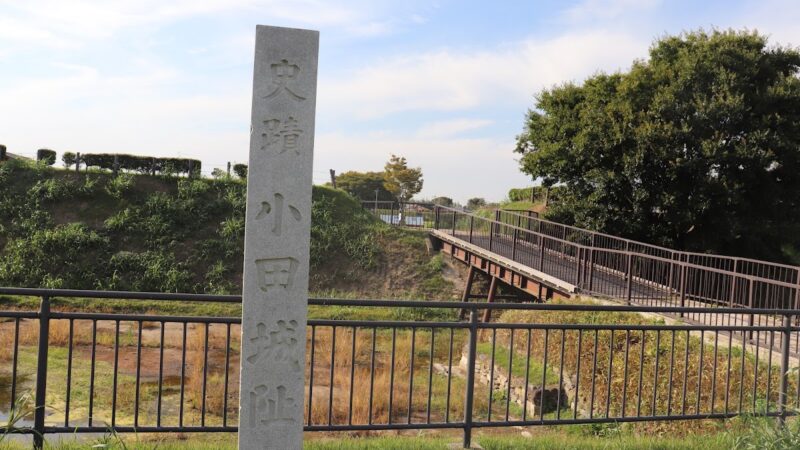
The moat of the Yamakawa Clan Residence site is still well-preserved along the road surrounding the temple. The dry moats on the south and west sides, in particular, retain much of their original appearance and are a highlight.
A “dry moat” is a moat that does not hold water, a common type of moat in flatland castles in the Kanto region. While the current depth of the moat is considerably less than when it was built, its shape is still clearly discernible.
The width of the moat varies depending on the location, but it is estimated to be approximately 5 to 8 meters. The current depth is about 2 to 3 meters, but it is highly likely that it was deeper when it was built.
The moats on the east and north sides are somewhat less distinct compared to those on the south and west sides, but traces of the moats can still be seen. By observing the entire perimeter, one can understand how the moat surrounded the entire rectangular manor.
Internal Structure of the Manor
Currently, the interior of the manor is the grounds of Toji-ji Temple, with buildings such as the main hall and the priest’s quarters. It is thought that when the manor existed in the medieval period, buildings such as the main hall, vassal quarters, and warehouses were located there, but there are few historical records regarding the specific building layout, so the details are unknown.
Considering the size of the manor, it is presumed not to be a particularly large facility, but rather a residence for the lord, his family, and a small number of vassals. This is standard for the residences of local samurai from the Kamakura to Muromachi periods.
Sign for “Medieval Samurai Residence Site”
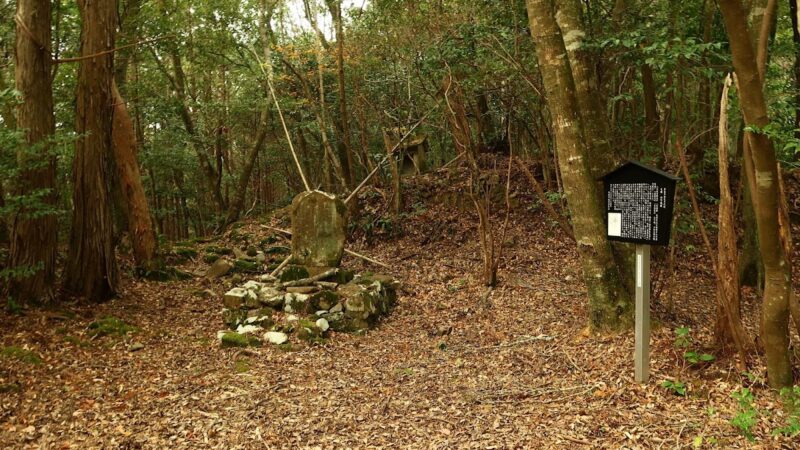
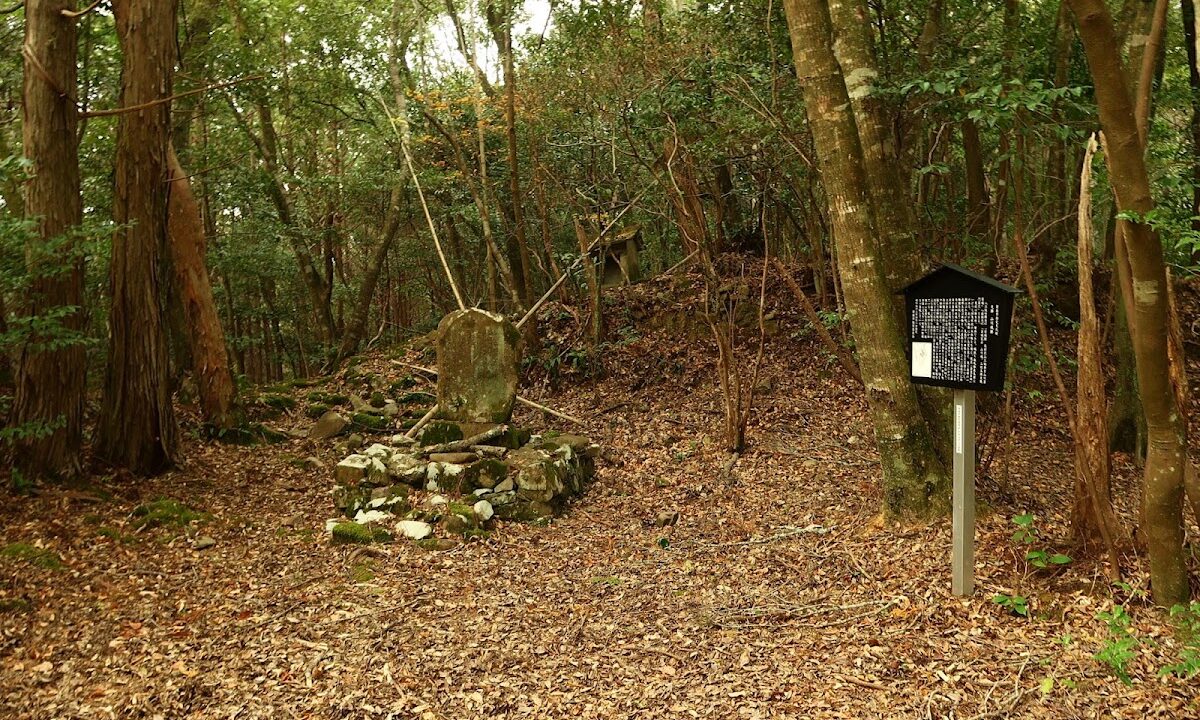
Within the grounds of Toji-ji Temple, there is a sign that reads “Designated Cultural Property: Medieval Samurai Residence Site.” A stone monument has also been erected, indicating that this is the site of the Yamakawa clan residence.
These signs serve as clear landmarks for visitors and play an important role in recognizing the site’s historical value.
Highlights of the Yamakawa Clan Residence Site
Well-Preserved Earthworks and Moat
The greatest highlight of the Yamakawa clan residence site is undoubtedly the well-preserved earthworks and moat. While medieval samurai residence sites exist throughout Japan, many have lost their remains due to residential or agricultural development.
In contrast, because the Yamakawa clan residence site has been preserved within the grounds of Toji-ji Temple, the earthworks and moat remain clearly visible, making it an extremely valuable example for understanding the structure of a medieval samurai residence.
The dry moat on the south side, in particular, is deep, and walking along its bottom allows visitors to experience the defensive structures of the time. The western moat is also in good condition, and there are many places where you can observe the earthworks and moats together.
Understanding the Overall Structure of the Square Mansion
Another attraction of the Yamakawa Clan Mansion Site is that you can walk all the way around the mansion. By walking around the perimeter of Toji-ji Temple, you can understand the scale and shape of the entire square mansion.
At many castle sites, only parts of the remains remain, or access is restricted due to private property, but at the Yamakawa Clan Mansion Site, it is possible to observe the earthworks and moats on all four sides.
The time it takes to walk around is about 10-15 minutes. If you walk slowly and observe carefully, you will be able to understand what kind of structure a medieval square mansion had.
Historical Buildings of Toji-ji Temple
When visiting the Yamakawa Clan Mansion Site, the buildings of Toji-ji Temple, such as the main hall, are also worth seeing. Toji-ji Temple is a historical temple said to have been founded by Asasada, the 11th head of the Yamakawa clan, and has deep ties to the Yamakawa clan.
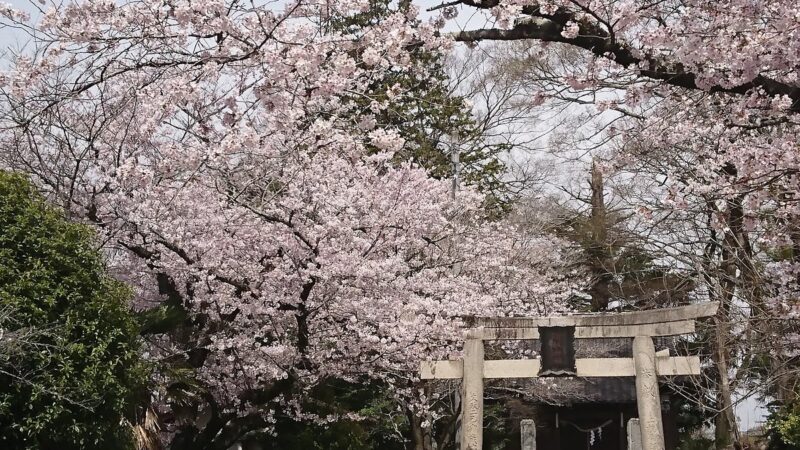
The temple grounds, in addition to the main hall, include a bell tower and a cemetery, creating a tranquil atmosphere. When visiting, it is important to respect Higashiji Temple as a temple and observe proper worship etiquette.
Stone Monuments and Information Signs
The stone monuments and signs for the “Medieval Samurai Residence Site” located within the temple grounds are also important points to note during your visit. These demonstrate the historical value of the Yamakawa Clan Residence Site and serve to convey the importance of the historical site to visitors.
The signs provide concise explanations of the history and structure of the Yamakawa Clan Residence, allowing even those without prior knowledge to understand the overview of the historical site.
Surrounding Historical Landscape
The area surrounding the Yamakawa Clan Residence Site is a relatively quiet rural area within Yuki City. Even today, a rural landscape stretches out, making it easy to imagine the atmosphere of the time when a medieval samurai residence stood there.
As you stroll around the area, you will find old houses and farmlands scattered about, allowing you to discover traces of history amidst the peaceful rural scenery.
Access to the Yamakawa Clan Residence Ruins
Location
The location of the Yamakawa Clan Residence Ruins (Tojiji Temple) is as follows:
Address: Kamiyamakawa, Yuki City, Ibaraki Prefecture
Access by Public Transportation
Nearest Station: JR Mito Line, Yuki Station
The distance from Yuki Station to the Yamakawa Clan Residence Ruins is approximately 6 km.
- Walking: Approximately 40-50 minutes
- Taxi: Approximately 15 minutes
- Bus: While there are local buses from Yuki Station, the number of services is limited, so it is recommended to check the timetable in advance.
Access by Car
Access by car is the most convenient.
- Approximately 40 minutes from Joban Expressway, Tanihara IC
- Approximately 30 minutes from Kita-Kanto Expressway, Sakuragawa-Chikusei IC
Tojiji Temple has parking spaces for visitors, but large buses should check in advance.
Points to Note When Visiting
The Yamakawa Clan Residence Site is located within the grounds of Higashiji Temple, an active religious facility. Therefore, please observe the following points when visiting:
- Observe Proper Visiting Etiquette: Please refrain from making loud noises or entering buildings without permission.
- Photography: Photography is generally permitted within the temple grounds, but please refrain from photographing the interior of the main hall or the cemetery.
- Take Your Trash Home: To maintain the cleanliness of the temple grounds, please be sure to take your trash with you.
- Visiting Hours: Please avoid visiting early in the morning or late at night, and visit during reasonable hours.
Related Historical Sites in the Surrounding Area
Yamakawa Ayato Castle Ruins
Located approximately 2km north of the Yamakawa Clan Residence Site are the Yamakawa Ayato Castle Ruins. This castle was built in 1565 by the 14th Yamakawa Shigeaki, and was the site where the Yamakawa clan moved their base from the Yamakawa Clan Residence.
Yamakawa Ayato Castle, typical of Sengoku period castles, features a structure that prioritizes defense over that of the Yamakawa clan residence. Currently, only a portion of the remains survive, and visiting both the Yamakawa clan residence ruins and the Yuki Castle ruins together provides a deeper understanding of the Yamakawa clan’s history.
Yuki Castle Ruins
Located in the heart of Yuki City, the Yuki Castle ruins were the base of the Yuki clan, the lords of the Yamakawa clan. Currently, the site is maintained as a castle park, with some earthworks and moats remaining.
Yuki Castle is an important castle that played a role in numerous historical events, including the Eikyo Rebellion (1438-1439) during the Muromachi period and the Siege of Odawara during the Sengoku period. It is approximately a 15-minute drive from the Yamakawa clan residence ruins and is worth visiting for understanding the relationship between the Yuki and Yamakawa clans.
Sanwa Museum
The Sanwa Museum in Koga City exhibits materials related to the Yamakawa clan. Publications from Koga City (formerly Sanwa Town), such as “The Yamakawa Clan: A Powerful Local Family of the Medieval Period,” are also available, allowing you to learn more about the history of the Yamakawa clan.
Located about 30 minutes by car from the Yamakawa Clan Residence Ruins, it would be a good place to visit as part of a historical site tour.
The Later Life of the Yamakawa Clan
The Yamakawa Clan in the Sengoku Period
After moving their base to Yamakawa Ayato Castle, the Yamakawa clan acted alongside the Yuki clan during the turmoil of the Sengoku period. The Yuki clan was allied with the Odawara Hojo clan, and it is believed that the Yamakawa clan was also active as part of this alliance.
During Toyotomi Hideyoshi’s siege of Odawara in 1590, the Yuki clan, who sided with the Hojo clan, faced the risk of confiscation of their territory. However, thanks to the diplomatic efforts of Yuki Harutomo, their landholdings were secured. It is believed that the Yamakawa clan also survived this period.
After the Edo Period
At the start of the Edo period, the Yuki clan left Yuki when Yuki Hideyasu was transferred to Kitano-sho in Echizen (Fukui). There are few detailed records of the Yamakawa clan’s subsequent fate; it is believed that some returned to farming or served other daimyo families.
Meanwhile, the Mizuno clan took control of the Yamakawa region, establishing the Yamakawa Domain. The Mizuno clan is known as the family of Oda-no-kata, the mother of Tokugawa Ieyasu, and the lineage continued from Mizuno Tadamoto, the first lord of the Yamakawa Domain, to the 11th lord, Mizuno Tadakuni. The 11th lord, Mizuno Tadakuni, is particularly famous for leading the Tenpo Reforms as a senior councilor of the Edo shogunate.
The Yamakawa Mizuno family cemetery still remains in Yuki City, preserving 11 graves from the first lord, Tadamoto, to the 11th lord, Tadakuni. Although Banshoji Temple, the family temple, was destroyed by fire in 1855, the burial grounds, surrounded by a stone fence, remain well-preserved along with the stone gate and lanterns.
Cultural Value of the Yamakawa Clan Residence Site
A Typical Example of a Medieval Samurai Residence
The Yamakawa Clan Residence Site is a valuable historical site that preserves a typical form of a medieval samurai residence from the Kamakura to Muromachi periods. While many square-shaped residence sites exist in the Kanto region, examples with well-preserved earthworks and moats are limited, and the Yamakawa Clan Residence Site is particularly valued as a well-preserved example.
Important Resource for Regional History Research
The Yamakawa Clan Residence Site is also an important resource for studying the medieval history of the Yuki region. As the base of the Yamakawa clan, a branch of the Yuki clan, it provides clues to understanding the structure of the samurai society in this region and the relationship between the lord and the local community.
Importance of Preservation
Currently, the Yamakawa Clan Residence Site is maintained as Tojiji Temple, but proper preservation and management are necessary going forward. If left unattended, the remains such as earthworks and moats will gradually collapse and become buried.
To pass on the Yamakawa Clan Residence Site as a regional historical heritage and cultural property to future generations, cooperation from the administration, local residents, and visitors is essential.
Significance of Visiting the Yamakawa Clan Residence Site
Experiencing Medieval Samurai Society
Visiting the Yamakawa Clan Residence Site allows you to experience what medieval samurai society was like. While learning history from textbooks and documents is important, actually visiting the site and seeing the earthworks and moats firsthand provides a deeper understanding.
Learning Local History
Yuki City in Ibaraki Prefecture was an important historical stage from the medieval to the early modern period. Starting from the Yamakawa Clan Residence Site, visiting surrounding historical sites such as Yuki Castle and Yamakawa Ayato Castle allows you to learn about the rich history of this region.
Spending a Quiet Time
The Yamakawa Clan Residence Ruins (Tōji-ji Temple) are a place enveloped in a tranquil atmosphere. Away from the hustle and bustle, you can spend a quiet time reflecting on history. Strolling through the temple grounds, observing the earthworks and moats, and contemplating the lives of medieval samurai is one of the pleasures of visiting this historical site.
Summary
The Yamakawa Clan Residence Ruins, located in Yuki City, Ibaraki Prefecture, are the remains of a medieval samurai residence built during the Kamakura period by Yamakawa Shigemitsu, the third son of Yuki Tomomitsu. It is now well-preserved as part of the Tōji-ji Temple grounds.
It has the typical form of a square residence, surrounded on all four sides by earthworks and moats, with the dry moats on the south and west sides being particularly noteworthy. It functioned as the Yamakawa clan’s base for approximately 300 years until the 14th head of the clan, Yamakawa Shigeshige, built and moved to Yamakawa Ayato Castle in 1565.
Even today, signs and monuments marking the site as a “Medieval Samurai Residence Site” are erected to convey its historical value to visitors. Located approximately 15 minutes by car or 40 minutes on foot from JR Mito Line Yuki Station, the site is surrounded by other related historical sites, including the ruins of Yamakawa Ayato Castle and Yuki Castle.
The Yamakawa Clan Residence Site, a valuable historical site for understanding medieval samurai society, is worth visiting not only for history enthusiasts but also for anyone interested in the history and culture of the region. While respecting its status as an active religious institution (Tomochi-ji Temple), it is our responsibility to pass on this valuable historical heritage to future generations.