Complete Guide to Shimo-Te-Watari Jinya Ruins (Date City, Fukushima Prefecture) | History, Highlights, and Access Information
The Shimo-Te-Watari Jinya Ruins, located in Shimo-Te-Watari, Tsukidate-cho, Date City, Fukushima Prefecture, are the remains of the jinya (fortified residence) of a small domain ruled by the Tachibana clan, who were transferred from Kyushu during the late Edo period. Even today, remnants such as the Jinya Cherry Tree and the Gozen Well remain, conveying the history of this small domain that was tossed about during the turbulent Bakumatsu period. This article provides a thorough explanation of the Shimo-Te-Watari Jinya Ruins, including its detailed history, highlights, access methods, and surrounding tourist information.
What are the Shimo-Te-Watari Jinya Ruins?
The Shimo-Te-Watari Jinya Ruins are the remains of the domain office of the Shimo-Te-Watari Domain, which existed for approximately 63 years, from 1806 (Bunka 3) to 1868 (Meiji 1). Jinya were administrative facilities established by small domains with a stipend of 30,000 koku or less, and unlike castles, they are characterized by the absence of large-scale defensive structures such as keeps.
Located on a hill in the present-day Shimo-Te-Wataru Tenpei area of Tsukidate-machi, Date City, Fukushima Prefecture, the castle was built on a small hill on the east bank of the Hirose River. Although much of the site is now residential and farmland, information boards and monuments have been erected, and valuable remains such as the Jinya Cherry Tree and the Gozen Well are preserved.
The Establishment of the Shimo-Te-Wataru Domain and the Relocation of the Tachibana Clan
The Downfall and Relocation of Tachibana Tanekane
The history of the Shimo-Te-Wataru Domain begins with the political downfall of Tachibana Izumo-no-kami Tanekane, the lord of the Miike Domain in Chikugo Province. Tachibana Tanekane held the important position of Wakadoshiyori (Junior Councilor) in the Edo Shogunate, but in 1805 (Bunka 2), he fell from power for political reasons, was relieved of his duties, and ordered to retire and live in seclusion.
The following year, 1806 (Bunka 3), the Tachibana clan was relocated from Yanagawa City in Kyushu (then Miike District, Chikugo Province) to Shimo-Te-Wataru in Oshu Province. The family headship was passed on to his second son, Junnosuke (13 years old, later known as Tachibana Taneyoshi), and he was granted a new territory of 10 villages in Date County with a total yield of 10,000 koku.
Territorial Composition of the Shimoteda Domain
The territory of the Shimoteda Domain consisted of the following 10 villages in the Shimoteda area of Date County:
- Shimoteda Village
- Miyota Village
- Kojima Village
- Kogami Village
- Haneda Village
- Nishi-Iino Village
- Ishida Village
- Ushisaka Village
- Iida Village
- Yamanogawa Village
These were all small villages nestled in the mountains, forming a small domain totaling 10,000 koku. This transfer was essentially a demotion, and the move from the warm climate of Kyushu to the harsh environment of Tohoku was a great ordeal for the Tachibana clan.
Structure and Characteristics of the Shimoteda Jinya
Location and Arrangement of the Jinya
The Shimoteda Jinya was built on a hill in Tenpyo, Shimoteda Village. The encampment was strategically located on a small hill on the east bank of the Hirose River, offering a vantage point overlooking the surrounding area. While it lacked the large-scale defensive structures of a castle, it is believed to have been demarcated by small moats and earthworks.
Architectural Style of the Encampment
As the encampment of a small 10,000-koku domain, the Shimo-Te-Watari encampment, though simple, possessed the necessary functions for a lord’s residence. It housed a palace, offices, and storehouses, functioning as the center of domain administration. There were no large-scale stone structures such as stone walls; it is presumed to have been primarily wooden architecture.
The Boshin War and the Destruction of the Encampment
The Ouetsu Reppan Alliance and Changes in Position
In 1868 (Keio 4, Meiji 1), when the Boshin War broke out, the Shimo-Te-Watari domain found itself in a complex position. Initially, it sided with the Ouetsu Reppan Alliance, resisting pressure from the new government. However, due to its small domain status and changing circumstances, it decided to side with the Imperial army midway through the conflict.
This change of stance angered the surrounding allied domains, especially the powerful Sendai domain.
Burning of the Shimo-Te-Watari Tenpyo Camp
The Shimo-Te-Watari domain, having sided with the Imperial army, came under attack from the Sendai domain, which was part of the Ouetsu Reppan Alliance. The Shimo-Te-Watari Tenpyo Camp was burned down as a result of the Sendai domain’s attack. Thus, the Shimo-Te-Watari domain’s camp, which had existed for approximately 63 years since 1806 (Bunka 3), was lost amidst the chaos of the Meiji Restoration.
Highlights of the Shimo-Te-Watari Camp Site
Jinya Cherry Tree
The most famous remaining structure at the current Shimo-Te-Watari camp site is the “Jinya Cherry Tree.” This cherry tree, said to have been planted when the camp stood, blooms beautifully in spring. The Jinya Cherry Tree is cherished by the local people as a living witness to the former presence of the domain’s administrative office.
During cherry blossom season, locals and history enthusiasts visit the site, reflecting on the former appearance of the jinya (fortified residence).
Gozen-ido Well
A well called “Gozen-ido” remains a short distance from the jinya site. This well was used at the jinya and is said to have been used to draw water for the lord and his family.
Gozen-ido is a valuable historical site for understanding how water was secured for daily life at the time, providing clues to imagining the daily life at the jinya. Water still flows from it today, attesting to the abundance of water sources at that time.
Information Boards and Stone Monuments
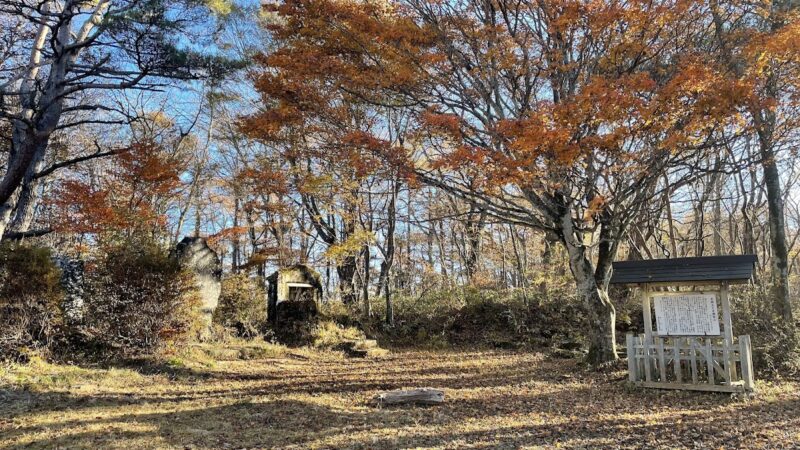
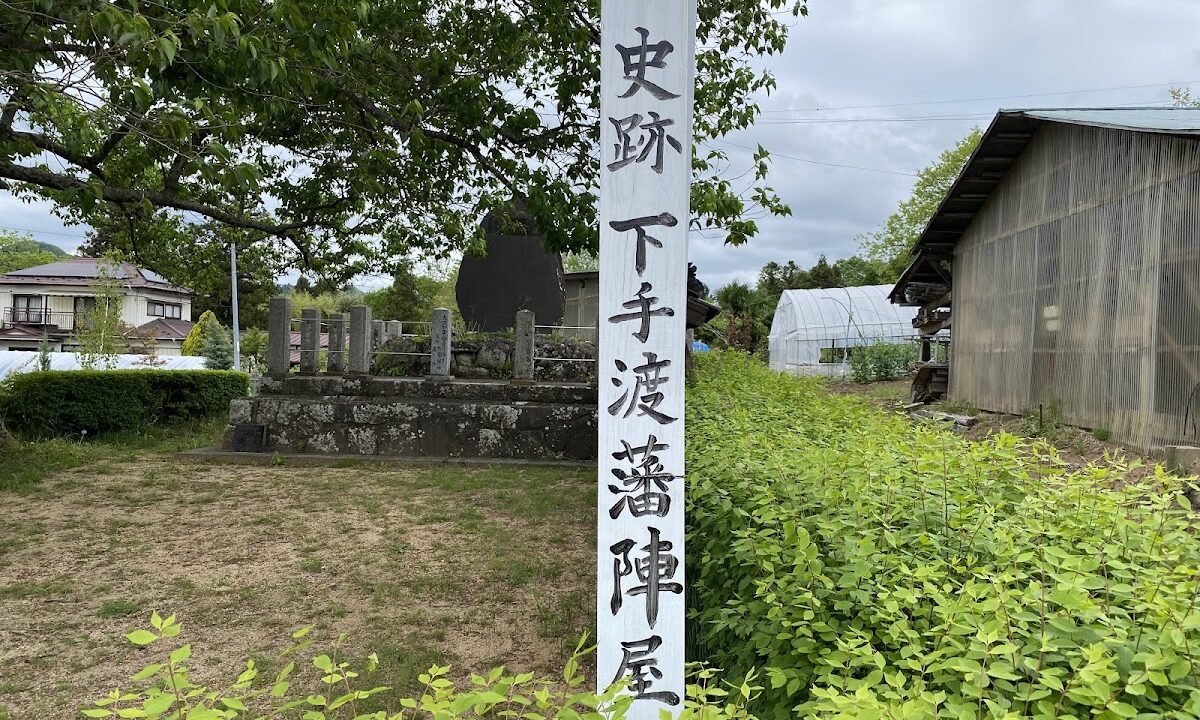
In a corner of the jinya site, there are information boards and stone monuments explaining the history of the Shimo-Te-Watari Domain jinya. These displays allow visitors to learn about the historical background of the jinya, the circumstances of the Tachibana clan’s relocation, and its destruction during the Boshin War.
The information boards include detailed maps of the jinya’s layout and historical context, making them important sources of information for learning about history on-site.
Topography and Views
The Jinya (fortified residence) site is located on a hill, offering panoramic views of the surrounding terrain. While gazing at the flow of the Hirose River and the surrounding mountains, one can imagine what the former feudal lords thought and how they governed their territory.
Although much of the area is now residential or farmland, the topography allows for inferences about the layout and size of the Jinya.
Access Information
Location
Address: Around 30 Shimodate Tenpei, Tsukidate-machi, Date City, Fukushima Prefecture
Access by Car
- Approximately 20 minutes from the Tohoku Expressway “Kunimi IC”
- Approximately 30 minutes from the Tohoku Expressway “Fukushima Nishi IC”
- Approximately 40 minutes from central Fukushima City via National Route 349
There is no dedicated parking lot around the Jinya site, but there is space to park on the roadside. Please be considerate of local residents when visiting.
Access by Public Transportation
Access by public transportation is not easy. The most practical option is to take a taxi from the nearest JR Tohoku Main Line stations, “Date Station” or “Koori Station.” The journey takes approximately 20-30 minutes.
Estimated Visiting Time
The estimated visiting time for the Shimo-Te-Watari Jinya Ruins is 15-30 minutes. This is sufficient time to read the information boards and monuments, and to see the Jinya cherry tree and the Gozen-ido well. Those familiar with history or who wish to take ample time photographing should allow about an hour.
Points to Note During Your Visit
Visiting Etiquette
The area surrounding the Jinya Ruins is currently residential and farmland. Please note the following when visiting:
- Do not trespass on private property
- Do not speak loudly or make noise
- Always take your trash with you
- Be considerate and avoid interfering with farm work
- When taking photographs, be mindful of the privacy of local residents
Seasonal Highlights
Spring (Late March to Early April): The Jinya cherry blossoms are in bloom, making this the most beautiful time. You can enjoy both the cherry blossoms and the historical background.
Summer (June to August): The greenery is lush, allowing you to enjoy the surrounding nature. However, the vegetation may obscure the view of the ruins.
Autumn (October to November): The surrounding mountains are ablaze with autumn colors. The weather is mild, making it ideal for walks.
Winter (December to February): If there is snow, be careful of your footing. However, the Jinya ruins in a snowy landscape also have a unique charm.
Nearby Tourist Attractions
Ryōzen (Ryōzen Mountain)
Located south of Date City, Ryōzen is known as a historical site from the Nanboku-chō period (Northern and Southern Courts period). It is home to the ruins of Ryōzen Castle, and history enthusiasts are recommended to visit it in conjunction with the Shimo-Te-Watari Jinya (fortified residence) ruins. It’s approximately a 30-minute drive.
Date City Hobara Historical and Cultural Museum
This museum offers insights into the history and culture of Date City. You can learn about materials related to the Shimo-Te-Watari Domain and the history of the Date region. It’s approximately a 15-minute drive.
Roadside Station “Date no Sato Ryōzen”
This roadside station offers local specialties and fresh agricultural products. There is also a restaurant where you can enjoy local Date cuisine. It’s approximately a 20-minute drive.
The Aftermath of the Shimo-Te-Watari Domain and the Tachibana Clan
After the Meiji Restoration, the Shimo-Te-Watari Domain ceased to exist due to the return of land and people to the Emperor. The Tachibana clan lived through the Meiji era as nobility, and their lineage continued afterward. The Shimo-Te-Watari Domain, which was relocated to the Tohoku region far from the Miike area of Kyushu and ended after only 63 years, has a history that conveys the difficulties faced by small domains during the late Edo period and the plight of people tossed about by the turbulent times.
Historical Significance of the Shimo-Te-Watari Jinya Ruins
A Valuable Historical Site for Understanding the Realities of Small Domains
The Shimo-Te-Watari Jinya Ruins are a valuable historical site for understanding the realities of small domains during the Edo period. Unlike the castles of large domains, it provides clues to how a small domain of 10,000 koku governed and what kind of facilities it possessed.
An Example of Local History during the Late Edo and Meiji Restoration Periods
The history of the Shimo-Te-Watari Domain, which wavered between the Ouetsu Reppan Alliance and the Imperial Army during the Boshin War, symbolizes the dilemma faced by small local domains during the late Edo and Meiji Restoration periods. We can learn about the struggles of small domains forced to conform to the majority and the consequences of their choices.
Importance in Local History
The existence of the Shimo-Te-Watari Domain occupies an important chapter in the history of Date City, Fukushima Prefecture. How the Tachibana clan, who were transferred from Kyushu, managed their territory and interacted with the local community is a crucial theme in local history research.
Related Historical Materials and Research
Historical materials concerning the Shimo-Te-Watari Domain are held in the Date City Local History Museum and the Fukushima Prefectural Library, among others. Records concerning the Shimo-Te-Watari Domain also remain in the historical records of the Yanagawa Domain (Yanagawa City, Fukuoka Prefecture), the main branch of the Tachibana clan.
The local history research society conducts ongoing research on the history of the Shimo-Te-Watari Domain, and new historical facts are sometimes revealed. Those interested in history will gain a deeper understanding by paying attention to these research findings.
Current Status of Preservation and Utilization
Currently, the Shimo-Te-Watari Jinya (fortified residence) site is recognized as a historical site by Date City, and information boards and stone monuments have been erected. However, no large-scale archaeological excavations or restoration work have been carried out, making it difficult to accurately understand its appearance in its heyday.
Locally, efforts are being made to protect the Jinya cherry tree and maintain the Gozen-ido well, cherishing it as a regional historical heritage site. Further research, preservation, and utilization efforts are expected in the future.
Summary
The Shimo-Te-Watari Jinya site is the remains of a small Edo period domain located in Tsukidate-cho, Date City, Fukushima Prefecture. It was a 10,000-koku domain ruled by the Tachibana clan, who were transferred from Kyushu, and existed for approximately 63 years, from 1806 to 1868.
Although the Jinya was destroyed in the Boshin War, remnants such as the Jinya cherry tree and the Gozen-ido well remain, conveying the atmosphere of that time. It is a valuable historical site for understanding the realities of a small domain and local history during the late Edo period, making it a worthwhile place to visit for history enthusiasts.
When exploring the history of Fukushima Prefecture, be sure to visit the Shimo-Te-Watari Jin’ya Ruins and reflect on the turbulent times from the late Edo period to the end of the shogunate. The spring cherry blossom season is especially recommended.
Frequently Asked Questions (FAQ)
Q1: Is it free to visit the Shimo-Te-Watari Jin’ya Ruins?
A1: Yes, visiting the Shimo-Te-Watari Jin’ya Ruins is free. There is no entrance fee. However, please be respectful of the surrounding residential and agricultural areas.
Q2: Is there parking at the Shimo-Te-Watari Jin’ya Ruins?
A2: There is no dedicated parking lot, but there is space to park on the roadside around the ruins. However, please park in an appropriate location so as not to inconvenience local residents.
Q3: When is the best time to see the Jin’ya cherry blossoms?
A3: The best time to see the Jin’ya cherry blossoms is usually from late March to early April. Visiting Fukushima Prefecture during cherry blossom season allows you to enjoy both beautiful cherry blossoms and a historical atmosphere.
Q4: How many koku (units of rice production) was the Shimo-Te-Watari Domain?
A4: The Shimo-Te-Watari Domain was a small domain with 10,000 koku. Its territory comprised 10 villages within Date County.
Q5: Why was the Shimo-Te-Watari Jinya (fortified residence) destroyed by fire?
A5: During the Boshin War, the Shimo-Te-Watari Domain initially sided with the Ouetsu Reppan Alliance, but later switched allegiance to the Imperial Army. This change of stance led to an attack by the Sendai Domain, also part of the alliance, and the Jinya was destroyed by fire.
Q6: Is it accessible by public transport?
A6: Access by public transport is not easy. Taking a taxi from the nearest JR Date Station or Kuwori Station is the most practical option. Visiting by car is recommended.
Q7: How long does a visit take?
A7: A typical visit takes about 15 to 30 minutes. Those who want to explore thoroughly or enjoy taking photos should allow about an hour.
Q8: What remains can be seen at the Jinya site?
A8: The main remains include the Jinya cherry tree, the Gozen well, an information board, and a stone monument. While no buildings remain, the topography allows us to infer the original layout.