Complete Guide to Moriyama Jinya Ruins (Fukushima Prefecture): History, Remains, and Access Information
Overview
Moriyama Jinya was a fortified residence (jinya) that served as the administrative center of the Moriyama Domain, located in Moriyama, Tamura-cho, Koriyama City, Fukushima Prefecture. It was situated near the current JR Suigun Line Iwaki-Moriyama Station, northwest of the intersection of Fukushima Prefectural Road 182 (Iwaki-Moriyama Station Line) and Fukushima Prefectural Road 54 (Sukagawa-Miharu Line).
A jinya refers to a facility established during the Edo period as the residence of a daimyo (feudal lord) or the administrative center of a domain, lacking the scale and defensive capabilities of a castle. Moriyama Jinya was established in the early 18th century on the west side of Moriyama Castle, which was abandoned in 1615 due to the “One Castle Per Province” decree.
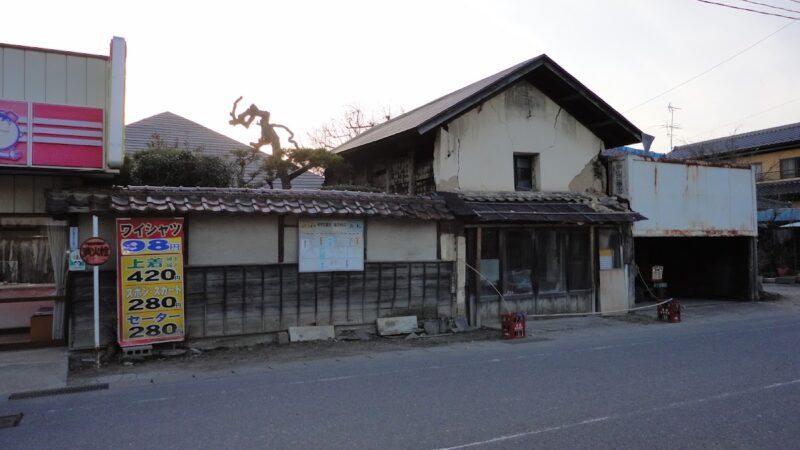
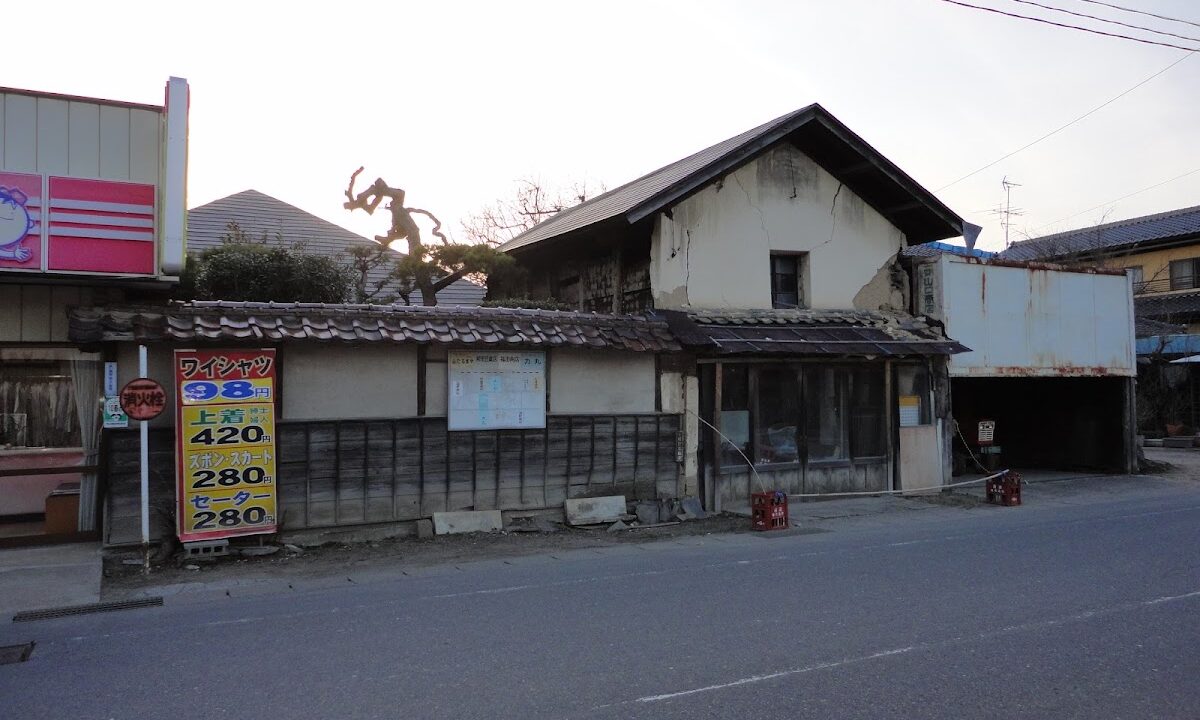
Although the area is now a residential area and no buildings or other remains exist, several pine trees planted along the road evoke the atmosphere of the time, reminding us of its former status as the center of domain administration.
History of Moriyama Jinya
Background of the Establishment of the Moriyama Domain and the Establishment of the Jinya
The Moriyama Domain began in 1700 (Genroku 13) when Matsudaira Yorisada established a jinya (fortified residence) in Moriyama. Matsudaira Yorisada was a member of the Echizen Matsudaira family, descended from Yuki Hideyasu, the second son of Tokugawa Ieyasu, and had close blood ties to the Shogunate.
Before the establishment of the Moriyama Domain, this region had a complex history. In the Middle Ages, the Tamura clan ruled from Moriyama Castle, and during the Sengoku period, it came under the influence of the Date clan and Gamo Ujisato. When Gamo Ujisato entered Aizu in 1590 (Tensho 18), Moriyama Castle functioned as a branch castle of Aizu-Wakamatsu Castle (Tsuruga Castle).
Subsequently, in 1598, Uesugi Kagekatsu entered Aizu, and a branch lord was appointed to Moriyama Castle. However, with the “One Castle Per Province” decree of 1615, Moriyama Castle was officially abandoned. This decree was a policy by the Tokugawa shogunate that limited the military power of daimyo by allowing each domain to have only one castle and forcing them to demolish other castles.
Establishment of the Jinya and the Territory of the Moriyama Domain
Approximately 85 years after the castle’s abandonment, in 1700, Matsudaira Yorishige established a jinya (fortified residence) in Moriyama, and the Moriyama Domain was officially established. The Moriyama Domain’s territory was dispersed across multiple regions, encompassing 26 villages in Tamura District of Mutsu Province, 11 villages in Namegata District of Hitachi Province, 15 villages in Kashima District, and 8 villages in Ibaraki District. Its assessed yield was 20,000 koku, and despite being a small domain, its close relationship with the Tokugawa family allowed it to maintain a certain political status. The Moriyama Jinya (fortified residence) was located west of the Moriyama Castle ruins, near the present-day Iwaki-Moriyama Station. While smaller in scale compared to the castle, it housed the lord’s residence, government offices, and samurai residences, functioning as the center of the domain’s administration.
Moriyama Domain’s Administration and the End of the Edo Period
Throughout the Edo period, the Matsudaira family continuously ruled the Moriyama Domain. Although a small domain, some lords held important positions in the shogunate due to their blood ties with the Tokugawa family, giving the domain a certain degree of influence over shogunate politics.
During the end of the Edo period, the domain was affected by the Boshin War. Initially, like the Aizu Domain, the Moriyama Domain participated in the Ouetsu Reppan Alliance, but later switched sides to the new government. After the Meiji Restoration, the Moriyama Domain was abolished with the abolition of the feudal domains and the establishment of prefectures, and the Moriyama Jinya ceased to function.
Following the abolition of the feudal domains and establishment of prefectures in 1871 (Meiji 4), the Moriyama Domain became Moriyama Prefecture, and was later incorporated into Fukushima Prefecture. The buildings of the jinya (fortified residence) were gradually demolished, and the land was sold off to private individuals, leading to residential development.
Relationship between Moriyama Castle and Moriyama Jinya
History of Moriyama Castle
Understanding the history of Moriyama Castle is essential to understanding Moriyama Jinya. Moriyama Castle was a hilltop castle located in Moriyama, Tamura-cho, Koriyama City, Fukushima Prefecture, and is a designated historical site of Koriyama City.
According to tradition, Sakanoue no Tamuramaro built a castle in this area during his campaign against the Emishi people. Later, the Tamura Shoji clan, who claimed descent from Sakanoue no Tamuramaro, made this their base and ruled the region until the Nanboku-cho period (Northern and Southern Courts period).
During the Sengoku period, the Tamura clan expanded their power using Moriyama Castle as their base. However, when Gamo Ujisato became the lord of Aizu with a domain of 420,000 koku in 1590, Moriyama Castle became a branch castle of Aizu-Wakamatsu Castle. Gamo Ujisato stationed a branch castle lord at Moriyama Castle, making it an important base for protecting the eastern part of the Aizu territory.
In 1598, Uesugi Kagekatsu entered Aizu, and a branch castle lord continued to be stationed at Moriyama Castle. However, it was abandoned in 1615 due to the “One Castle Per Province” decree.
Remains of Moriyama Castle
Valuable remains still exist at the Moriyama Castle site. In particular, a 25-meter-wide moat remains between the second and third baileys, and a stone wall 70 meters long and 6 meters high has been built along the moat.
This stone wall was constructed using a method called “nozurazumi,” which involves stacking large and small natural stones without processing them. Nozurazumi is a common method of stone wall construction seen from the Sengoku period to the early Edo period, and it provides important evidence regarding the construction date of Moriyama Castle.
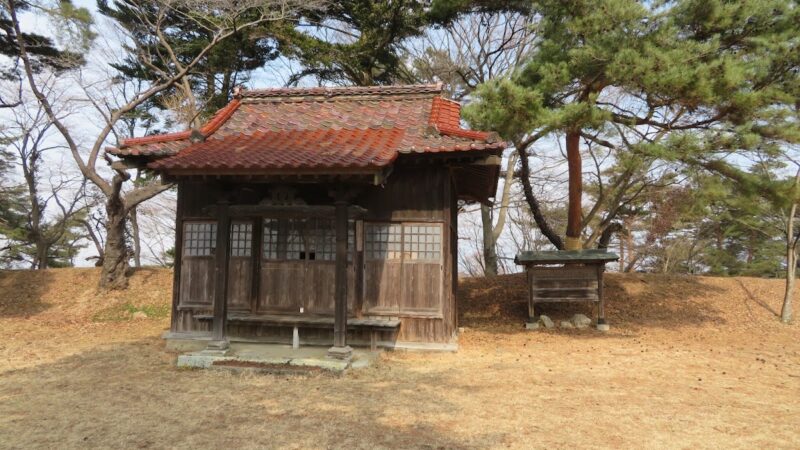
Part of the Moriyama Castle site is now the grounds of Moriyama Elementary School, with the school built on the site of the third bailey. Furthermore, the Hachiman Shrine is located on the castle site, serving as a center of local faith.
Location of the Jinya and Castle
The Moriyama Jinya (fortified residence) was located west of Moriyama Castle, near the current Iwaki-Moriyama Station. The reason the castle and Jinya were located in different places was due to the “One Castle Per Province” decree, which prohibited the reconstruction of castles.
Jinya generally lacked the high defensive capabilities of castles and were typically built on flat land. Moriyama Jinya, like Moriyama Castle, was located on flat land with convenient transportation access, rather than on a mountain. A natural river flows around the Jinya, which may have served as a moat.
The Current State of the Moriyama Jinya Site
Current Status and Remains
Currently, the Moriyama Jinya site is entirely a residential area, and no buildings or other remains are left. The area around the intersection of the road extending east from Iwaki-Moriyama Station on the JR Suigun Line is considered to be the site of the Jinya, but there are few clear boundaries or signs, making it difficult for visitors to pinpoint its exact location.
However, several pine trees planted along the road evoke the atmosphere of the time, reminding us that this was once the center of the domain’s administration. Furthermore, the Moriyama Kaikan, located a short distance to the south, displays the Aoi no Gomon (hollyhock crest), conveying the history of the Moriyama domain, which had close ties to the Tokugawa family.
The Position of the Moriyama Jinya Site in the Region
Compared to the Moriyama Castle site, the Moriyama Jinya site is less well-known, and development as a tourist destination has not progressed. However, it is an important historical site for understanding the region’s history, and visiting it together with the Moriyama Castle site allows one to experience the flow of history in this region from the medieval to the early modern period.
In Koriyama City, the Moriyama Castle ruins are protected as a city-designated historical site, and archaeological excavations are continuously being conducted. The Moriyama Jinya (fortified residence) ruins may also be re-evaluated in future historical research and regional development efforts.
Nearby Historical Spots
Several historical spots are scattered around the Moriyama Jinya ruins.
Moriyama Castle Ruins: Located within walking distance of the Jinya ruins, you can see remains such as the rough-hewn stone walls and moat traces. Since it is located on the grounds of Moriyama Elementary School, consideration is required when visiting.
Hachiman Shrine: A shrine located within the Moriyama Castle ruins, it is a center of local faith. The surrounding scenery can be seen from the shrine grounds.
Moriyama Kaikan: Featuring the Aoi crest, this facility tells the history of the Moriyama Domain.
Iwaki-Moriyama Station: A station on the JR Suigun Line, and the closest station to the Jinya ruins. The Jinya ruins can be seen from the station area.
Location and Access
Location
Moriyama Jinya Ruins
- Location: Moriyama, Tamura-cho, Koriyama City, Fukushima Prefecture
- Former Province: Mutsu Province (later Iwaki Province), Tamura District
- Classification/Structure: Jinya (fortified residence)
- Current Status: Residential area, no remains
Access Methods
Using Public Transportation
- Using the JR Suigun Line
- Take the JR Suigun Line from Koriyama Station and get off at Iwaki-Moriyama Station (approx. 20 minutes)
- Approximately 5 minutes on foot from Iwaki-Moriyama Station to the vicinity of the Jinya Ruins
- Using the Bus
- Take the Fukushima Kotsu bus bound for “Moriyama” from Koriyama Station
- Get off at the “Moriyama” bus stop and walk for approximately 5 minutes
Using a Car
- From the Tohoku Expressway
- Approximately 30 minutes from Koriyama IC via National Route 49 and prefectural roads
- Approximately 25 minutes from Koriyama East IC via the prefectural road.
- Parking
- There is no dedicated parking lot for the Jinya ruins.
- If using parking lots of nearby public or commercial facilities, please check the facility’s usage rules.
Precautions for Visiting
The Moriyama Jinya ruins are currently a residential area and include private property. Please note the following points when visiting:
- As it is a residential area, please be considerate of the privacy of residents and visit quietly.
- Do not trespass on private property.
- Please take all your trash with you.
- When taking photographs, please be careful not to include houses or residents in your shots.
If you are visiting Moriyama Castle ruins, please note that it is located on the grounds of Moriyama Elementary School. It is recommended to check in advance to avoid disrupting school classes or events.
Historical Significance of Moriyama Jinya Ruins
Characteristics of Edo Period Jinya
The Moriyama Jinya is historically significant as a typical example of an Edo period Jinya. After the “One Castle Per Province” decree, many small domains used Jinya, rather than castles, as their administrative offices. Compared to castles, jinya (fortified residences) have the following characteristics:
- Small scale: They lack the vast grounds and multiple layers of defensive structures found in castles.
- Limited defensive capabilities: They lack defensive structures such as keeps, high stone walls, and complex moats.
- Located on flat land: Unlike mountain castles and hill castles, they are often located on flat land with convenient transportation.
- Emphasis on administrative functions: They prioritize administrative functions, such as the operation of the domain’s government, over military functions.
The Moriyama Jinya was a typical jinya possessing these characteristics. It can be said to be a symbolic facility of the Edo period’s governing system, which, under the policies of the Tokugawa shogunate, limited the military power of daimyo while allowing them to operate their domains.
The Role of the Moriyama Domain in the Region
The Moriyama Domain was a small domain with a rice yield of 20,000 koku, but due to its close blood ties with the Tokugawa family, it wielded a certain political influence in the region. The jinya also symbolized the authority of the shogunate in this region.
Furthermore, the Moriyama Domain’s territory was dispersed across Mutsu and Hitachi Provinces, and the Moriyama Jinya (fortified residence) also functioned as a base for governing these exclaves. The Moriyama Jinya is an important case study for understanding the complex territorial arrangements and governance systems of the Edo period.
Challenges of Preservation and Utilization in Modern Times
Since no remains of the Moriyama Jinya exist today, preserving and utilizing it as a historical site is difficult. However, as an important place for conveying the region’s history, the following initiatives are expected:
- Installation of Information Boards and Explanation Boards: Installing information boards that show the location and history of the Jinya (fortified residence) site will make it easier for visitors to understand the history.
- Construction of a Digital Archive: Digitizing historical documents, maps, and other materials and making them available online will allow more people to learn about the history of Moriyama Jinya.
- Utilization in Local History Education: Incorporating the history of Moriyama Jinya into school education and lifelong learning programs can foster a sense of attachment to the region.
- Utilization as a Tourism Resource: Developing it as a historical walking route in conjunction with Moriyama Castle ruins will contribute to tourism promotion.
Summary
The Moriyama Jinya site is the former administrative center of the Moriyama Domain, located in Moriyama, Tamura-cho, Koriyama City, Fukushima Prefecture. Established in 1700 by Matsudaira Yorishige, the Jinya functioned as the center of domain administration until the Meiji Restoration.
Although the area is now a residential district and no buildings or other historical remains are left, the pine trees along the road and the Aoi-no-Gomon gate of the Moriyama Kaikan evoke the history of the former feudal domain. Visiting this site along with the Moriyama Castle ruins allows you to experience the flow of history in this region from the medieval to the early modern period.
Located in a convenient location, about a 5-minute walk from Iwaki-Moriyama Station on the JR Suigun Line, it’s a worthwhile spot for history enthusiasts. When visiting, please be mindful that it is a residential area, respect the local history and culture, and try to imagine what the Edo-period jinya (feudal lord’s residence) looked like.