Otori Castle (Fukushima Prefecture) Complete Guide: A Late Heian Period Mountain Castle Built by the Father of the Sato Brothers, Retainers of Minamoto no Yoshitsune
Located in Iizaka-machi, Fukushima City, Fukushima Prefecture, Otori Castle is a late Heian period mountain castle built by Sato Motoharu, the father of the Sato brothers, Tsugunobu and Tadanobu, known as loyal retainers of Minamoto no Yoshitsune. Currently developed as Tateyama Park, it serves as a place of relaxation for citizens while also being an important historical site that preserves valuable remains of a medieval castle.
Basic Information on Otori Castle
Location: Tateyama, Iizaka-machi, Fukushima City, Fukushima Prefecture
Common Name/Alternate Name: Maruyama Castle, Hojo Castle
Former Province: Mutsu Province
Builder: Sato Motoharu (Sato Motoharu)
Year of Construction: Hogen 2 (1157)
Main Lords: Sato clan (Shinobu Shoji)
Classification/Structure: Mountain Castle
Remains: Enclosures, earthworks, dry moats, stone walls, remains of outer baileys, remains of residences
Elevation: Approximately 300 meters
Relative Height: Approximately 100 meters
Current Status: Tateyama Park
History and Overview of Otori Castle
Construction History and the Sato Clan
Otori Castle is said to have been built in Hogen 2 (1157) by Sato Motoharu (also known as Sato Motoharu). The Sato family was a branch of the Oshu Fujiwara clan and a powerful local family that ruled the Shinobu-sho (present-day Fukushima City area) as its steward.
There is a legend that when the castle was built, a crane was buried in the center to pray for the castle’s prosperity, and this is the origin of the name “Ootori Castle.” Similarly, its alternative name, “Hōjō Castle,” is an auspicious name meaning a large bird.
Relationship with the Sato Brothers, Tsugunobu and Tadanobu
The lord of Ootori Castle, Sato Motoharu, had two sons, Sato Tsugunobu and Sato Tadanobu, who are remembered in history as retainers of Minamoto no Yoshitsune. The elder brother, Tsugunobu, died in the Battle of Yashima, sacrificing himself for Yoshitsune, while the younger brother, Tadanobu, met his end protecting Yoshitsune’s beloved concubine, Shizuka Gozen.
The story of these brothers’ loyalty has been the subject of Noh and Kabuki plays and is deeply etched in the hearts of the Japanese people. Otori Castle is a historically significant fortress, serving as the base of the Sato clan, who nurtured such loyal retainers.
The Turmoil of the Late Heian Period and the Fall of Otori Castle
At the end of the Heian period, amidst the intensifying Genpei War, the Sato clan supported Minamoto no Yoshitsune and contributed to the defeat of the Taira clan. However, as the conflict between Yoshitsune and his brother, Minamoto no Yoritomo, deepened, the Sato clan was also caught in the vortex of fate.
In 1185, forces ordered by Minamoto no Yoritomo attacked Otori Castle, leading to the downfall of the Sato clan. This attack resulted in the abandonment of Otori Castle, marking the end of the era of powerful local clans in Shinobu-sho during the late Heian period.
The Layout and Structure of Otori Castle
Arrangement of the Main Enclosure and Baileys
Otori Castle is a mountain castle built on Tateyama, a mountain approximately 300 meters above sea level, located west of Iizaka Onsen. The elevation difference is approximately 100 meters, and multiple enclosures are arranged around the mountaintop.
The main enclosure at the mountaintop is a flat space and is currently developed as a park. Defensive structures were positioned along the east and west ridges, centered around this main enclosure.
Fortifications on the East Ridge
Three enclosures, known as Fort 1, Fort 2, and Fort 3, are arranged in succession on the east ridge. These functioned as defensive strongholds to prevent intrusion into the main enclosure. Moats were constructed between each enclosure, a design intended to hinder enemy advances.
Arrow Storage Site on the West Ridge
On the west ridge is an enclosure called the “Arrow Storage Site.” As the name suggests, it is believed to have been a place where arrows used in battle were stored. This enclosure offers a panoramic view of the town of Iizaka, and it is presumed to have also served as a lookout point.
Characteristics of Defensive Structures
The following defensive structures remain at Otori Castle:
Earthworks: Earthen walls surrounding the baileys, preventing enemy intrusion and providing a foothold for attacks from within the castle.
Dry Moats: Moats that do not hold water, constructed between baileys or to divide ridges. An important defensive structure that made enemy movement difficult.
Stone Walls: Traces of stone walls have been confirmed in some baileys, indicating that relatively advanced castle construction techniques were used for a castle from the late Heian period.
Outpost Remains: Small baileys located away from the main bailey, functioning as frontline defensive bases.
Current Otori Castle Ruins (Tateyama Park)
Development as a Park
The Otori Castle ruins are currently developed as Tateyama Park, a place of relaxation for local residents. Walking paths are maintained within the park, allowing visitors to enjoy exploring the castle ruins.
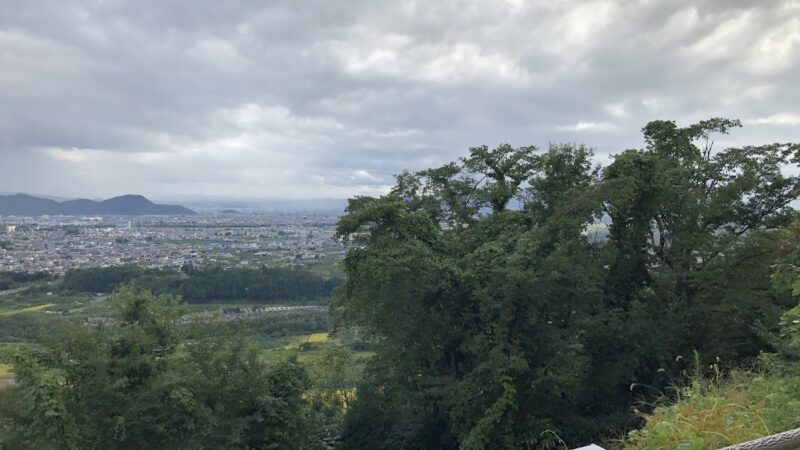
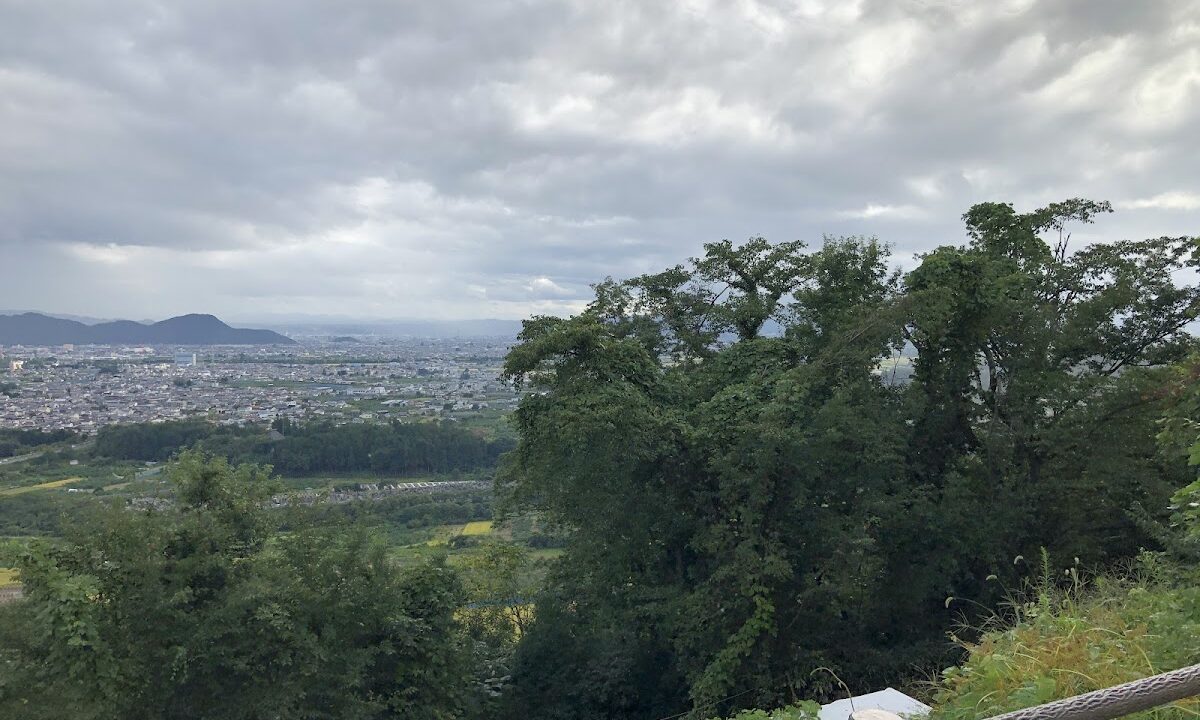
From the summit, you can enjoy panoramic views of Fukushima city and the Iizaka Onsen hot spring resort area, and on clear days, you can admire the magnificent scenery of the Azuma mountain range. It’s a popular spot to enjoy the changing seasons, with cherry blossoms in spring and beautiful autumn foliage.
Preservation Status of the Ruins
Although it’s maintained as a park, the remains of the medieval castle are relatively well-preserved. In particular, the dry moats and earthworks remain clearly visible, allowing for an understanding of the castle’s structure at the time.
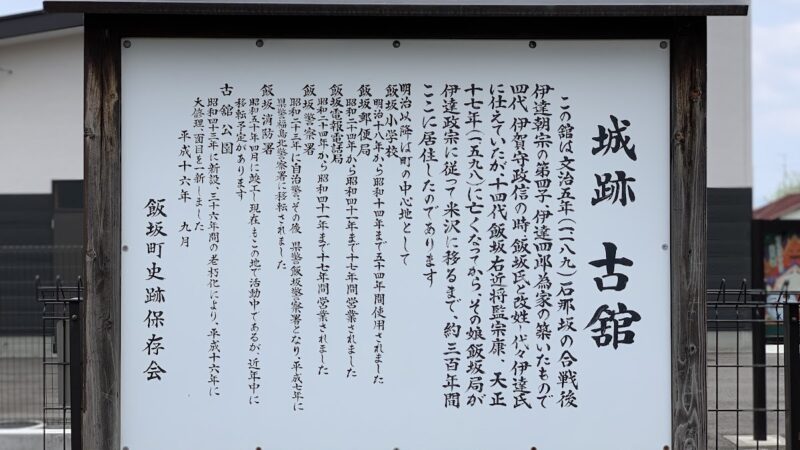
The flat areas of the baileys are also clearly visible, making it a worthwhile historical site for castle enthusiasts. However, since explanatory signs and other facilities are limited, researching the history beforehand will allow for a deeper understanding.
Access to Otori Castle
Access by Car
It’s approximately 10 minutes from the Fukushima-Iizaka Interchange on the Tohoku Expressway. Head towards the Tateyama Water Treatment Plant of the Fukushima City Waterworks Bureau, and from there, follow the road climbing west; you can drive almost to the summit.
There is parking available near the water treatment plant, and it is possible to hike to the summit from there. The hiking trail is well-maintained and relatively easy to climb.
Access by Public Transportation
From JR Fukushima Station, take a Fukushima Kotsu bus towards Iizaka Onsen and get off at the “Iizaka Onsen” bus stop. From there, it’s about a 30-minute walk to the Otori Castle ruins.
It is also possible to access the castle on foot from Iizaka Onsen Station (Fukushima Kotsu Iizaka Line), taking a route that goes through the hot spring town and heads west.
Nearest Landmark
Located west of Iizaka Baseball Stadium, the “Fukushima City Waterworks Bureau Tateyama Water Treatment Plant” is an important landmark. If you head towards the water treatment plant sign, you should arrive without getting lost.
Tourist Attractions Around Otori Castle
Iizaka Onsen
Located about 2 kilometers east of Otori Castle, Iizaka Onsen is a historic hot spring resort, counted as one of the three most famous hot springs in Oshu. This hot spring, said to have been visited by Matsuo Basho, flourished as a therapeutic hot spring resort since the time of the Sato clan.
A course that combines a stroll around Otori Castle with a relaxing soak in the hot springs is an ideal plan for enjoying both historical exploration and hot springs.
Io-ji Temple
Io-ji Temple, located near Iizaka Onsen, is known as the family temple of the Sato brothers, Tsugunobu and Tadanobu. The brothers’ graves are located on the temple grounds, and visiting it along with Otori Castle allows for a deeper understanding of the Sato family’s history.
The temple also displays materials related to the Sato brothers, allowing visitors to learn about the story of Minamoto no Yoshitsune and the Sato brothers.
Daifuku-ji Temple
Daifuku-ji Temple, located in the Iizaka Onsen area, is also a temple associated with the Sato clan. Its quiet grounds are suitable for historical walks, making it a must-visit spot when visiting Otori Castle.
Shirawase Shrine
Shirawase Shrine, revered as the local guardian shrine, is also an important place for understanding the history around Otori Castle. As a place of worship that has continued since the time of the Sato clan, it conveys the history of the region to the present day. ## Points to Note When Visiting Otori Castle
Clothing and Equipment
As it is a mountain castle, we recommend wearing comfortable walking shoes. Especially after rain, the ground can become slippery, so trekking shoes are recommended.
Prepare insect repellent in the summer and warm clothing in the winter. Bringing drinking water is also recommended.
Visiting Hours
Since it is open as a park, it is generally possible to visit at any time, but visiting during daylight hours is safer. Especially for first-time visitors, the morning to early afternoon is ideal.
If you want to thoroughly explore the ruins, allow about 1 to 1.5 hours.
Photography Tips
The view from the mountaintop is spectacular, allowing you to take photos with Fukushima city and the Azuma mountain range in the background. The view at sunset is particularly beautiful and is a popular spot for photography enthusiasts.
By adjusting the angle, you can take photos that capture the atmosphere of the castle in its time, even of the ruins such as the dry moats and earthworks.
Historical Significance of Otori Castle
Base of a Local Powerful Family in the Late Heian Period
Otori Castle is an important historical site for understanding the political and military situation of the late Heian period, serving as the residence of a local powerful family. As a base for controlling Shinobu-sho, which was under the influence of the Oshu Fujiwara clan, it occupies an important position in regional history.
Connection to the Legend of Minamoto no Yoshitsune
The story of Minamoto no Yoshitsune and the Sato brothers holds a special place in Japanese history and culture. Otori Castle is one of the settings for this story, and is valuable as a precious historical site that conveys the legend of Yoshitsune to the present day.
Resource for Medieval Castle Research
Otori Castle, which retains the castle structure from the late Heian period to the early Kamakura period, is also an important resource for studying the development process of medieval castles. Remains such as earthworks and dry moats provide clues to the castle construction techniques of the time.
The Charm and Highlights of Otori Castle
A Castle Ruin Evoking Historical Romance
The historical background of this castle, built by the father of the Sato brothers who served Minamoto no Yoshitsune, deeply moves visitors. Walking through the castle ruins while reflecting on the turbulent times of the late Heian period will allow you to truly feel the weight of history.
Well-Preserved Medieval Castle Remains
While developed as a park, the well-preserved remains of the baileys, earthworks, and dry moats are a major attraction of Otori Castle. For castle enthusiasts, it is a valuable historical site that allows you to concretely imagine the structure of the time.
Spectacular Views
The view from the mountaintop is magnificent, offering a panoramic view of the Fukushima Basin. Seeing the actual scenery will help you understand why the Sato family chose this location. It is a place where you can truly appreciate its value as a strategic stronghold.
Natural Beauty in Every Season
Otori Castle ruins show different expressions in each of the four seasons: cherry blossoms in spring, fresh greenery in summer, autumn leaves, and snowscapes in winter. One of its greatest attractions is the opportunity to enjoy both historical exploration and nature walks simultaneously.
Summary
Otori Castle (Fukushima City, Fukushima Prefecture) is a historically significant site, a mountain castle built in the late Heian period by the father of the Sato brothers, Tsugunobu and Tadanobu, loyal retainers of Minamoto no Yoshitsune. Built in 1157, it functioned as the center of Shinobu-sho until its destruction by Minamoto no Yoritomo in 1185.
Currently, it is maintained as Tateyama Park, and the remains such as baileys, earthworks, and dry moats are well preserved. The view from the mountaintop is magnificent, making it an attractive spot where you can enjoy both historical exploration and nature walks.
By visiting nearby tourist spots such as Iizaka Onsen and Io-ji Temple, you can gain a deeper understanding of the story of the Sato family and Minamoto no Yoshitsune. When you visit Fukushima, be sure to visit the Otori Castle ruins and experience the historical romance of the late Heian period.