Aizu Shingu Castle (Fukushima Prefecture) Complete Guide: A Thorough Explanation of the Castle Ruins of the Powerful Local Lord Shingu Clan of Medieval Aizu
What is Aizu Shingu Castle?
Aizu Shingu Castle is a medieval castle site located in Shingu, Keitoku-cho, Kitakata City, Fukushima Prefecture. Situated in the northwestern part of the Aizu Basin, it is known as the residence of the powerful local lord Shingu clan, who ruled Shingu Manor in Yama District, Mutsu Province, from the Kamakura period to the early Muromachi period.
On July 23, 2009 (Heisei 21), it was designated a National Historic Site as “Aizu Shingu Castle Ruins,” and is recognized for its high historical and academic value as a valuable archaeological site that shows the reality of regional rule in medieval Aizu.
Basic Information
- Location: Shingu, Keitoku-cho, Kitakata City, Fukushima Prefecture
- Alternate Name: Shingu Castle
- Castle Structure: Flatland Castle (Square Residence)
- Construction Date: Around 1212 (Kenryaku 2)
- Builder: Yokosuka Tokitsura (Shingu Tokitsura)
- Main Lord: Shingu Clan
- Year of Abandonment: Around 1415 (Oei 22)
- Designated Cultural Property: National Historic Site (Designated in 2009)
History and Background of Aizu Shingu Castle
Construction and the Establishment of the Shingu Clan
Aizu Shingu Castle is said to have been built in 1212 (Kenryaku 2) by Yokosuka Tokitsura (later Shingu Tokitsura), the grandson of Sahara Yoshitsura. Sahara Yoshitsura was a powerful retainer of the Kamakura Shogunate, and his family extended their influence widely throughout the Aizu region.
Shingu Tokitsura, born as the sixth son of Sahara Moritsura, settled in Shingu Manor as its jitō (land steward) and adopted the name Shingu. Shingu Manor encompassed a vast area stretching from the northern part of present-day Kitakata City to Higashikanbara District in Niigata Prefecture, and the Shingu clan grew into a powerful local family in this region.
Conflict with the Ashina Clan
The most important element in the history of the Shingu clan is their conflict with the Ashina clan, a related family. The Ashina clan was the main branch of the family, inherited by Sahara Moritsura’s fourth son, Mitsumori, and was originally part of the same Sahara clan as the Shingu clan.
From the end of the 14th century onward, the Shingu and Ashina clans frequently clashed over hegemony in the Aizu region. Their conflict was not merely a dispute over territory, but also a struggle for legitimacy in control of Aizu. The Ashina clan, as the main branch of the Ashina family, aimed to expand their influence throughout Aizu, while the Shingu clan sought to maintain their own independent sphere of influence.
Fall of the Castle in the Ōei Era
The conflict between the Shingu and Ashina clans concluded around 1415 (Ōei 22). Aizu Shingu Castle fell to an attack by the Ashina clan, and the Shingu clan was destroyed. While historical records detailing this battle are limited, archaeological excavations have confirmed evidence of intense fighting.
After the castle’s fall, the Shingu clan’s territory came under the control of the Ashina clan, who used this as a foothold to expand their power from northern Aizu into Echigo. The Ashina clan subsequently grew into a powerful Sengoku daimyo (feudal lord) and became the rulers of the Aizu region.
Structure and Scale of the Castle
Overall Composition
Aizu Shingu Castle is a square-shaped flatland castle consisting of the Honmaru (main enclosure), Ninomaru (second enclosure), and Sannomaru (third enclosure). Its scale is comparable to that of Oda Castle in Hitachi Province, making it an extremely large castle for a local powerful family in the medieval period.
The Shingu Kumano Shrine is located in the southwestern part of the castle, indicating that the Shingu clan deeply believed in Kumano faith. This shrine still remains today, conveying the appearance of a religious space integrated with the castle.
Structure of the Main Enclosure (Honmaru)
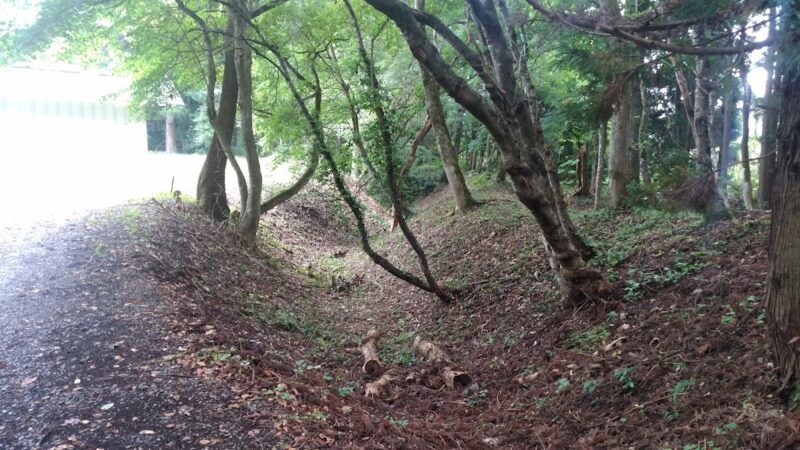
The main enclosure is a square area measuring approximately 120 meters east-west and 100 meters north-south. It is surrounded by earthen ramparts, some of which remain in good condition. The height of the ramparts varies depending on the location, but the highest point reaches approximately 2 meters.
Excavation surveys have confirmed the remains of foundation stone buildings and post-and-beam buildings within the main enclosure, revealing the existence of a facility that combined residential space and administrative functions. ### Second and Third Baileys
The second bailey (Ninokuruwa) surrounded the main enclosure (Sannomaru), and the third bailey (Sannomaru) was located further outside of it. These areas are thought to have served not only to defend the main enclosure but also as living quarters for retainers and storage facilities for supplies.
Moats and earthworks were constructed at the boundary between the second and third baileys, creating a layered defensive system. This structure is a typical layout for medieval castles.
Moats and Water Management
While a moat surrounded the castle, given its location in the northwestern part of the Aizu Basin, it is highly likely that it was a dry moat rather than a water-filled one. However, traces of natural defensive lines utilizing wetlands can be seen in some areas.
Archaeological Findings
Largest Square Wooden Structure in Japan
One of the most important discoveries at the Aizu Shingu Castle site is the largest square wooden structure in Japan. This structure was discovered in a corner of the main enclosure and is enormous, measuring approximately 15 meters on each side.
While there are various theories regarding the purpose of the wooden structure, it has been suggested that it may have been a water storage facility or a ceremonial space. It is extremely rare for a structure dating from the 14th to 15th centuries, and provides valuable evidence of the Shingu clan’s economic power and technological prowess.
Excavated Artifacts
The excavation has yielded a diverse range of artifacts, including pottery and porcelain. Of particular note are the high-quality ceramics, such as celadon and white porcelain, of Chinese origin. These are 14th to 15th-century products, suggesting that the Shingu clan participated in trade with the continent via the Sea of Japan trade route.
Domestic pottery, such as Tokoname ware and Seto ware, has also been unearthed, confirming exchange with the Tokai region. Furthermore, numerous earthenware pieces (kawarake), iron products, and wooden artifacts have been discovered, providing concrete insights into the lifestyle of the time.
Traces of Fire
Evidence of a large-scale fire has been confirmed in part of the main enclosure. Burnt soil, carbonized wood, and molten metal artifacts have been unearthed, believed to be from the fighting during the castle’s fall in 1415.
This archaeological evidence provides important physical corroboration regarding the demise of the Shingu clan, for which written records are limited.
Current Situation and Visiting
Preservation Status of the Historic Site
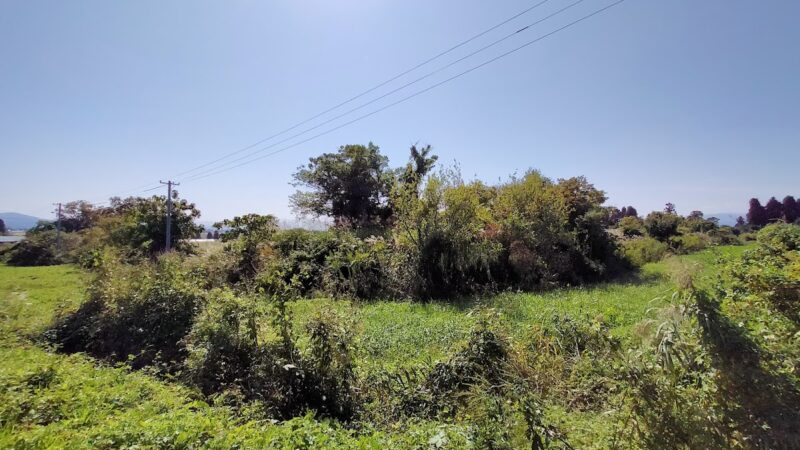
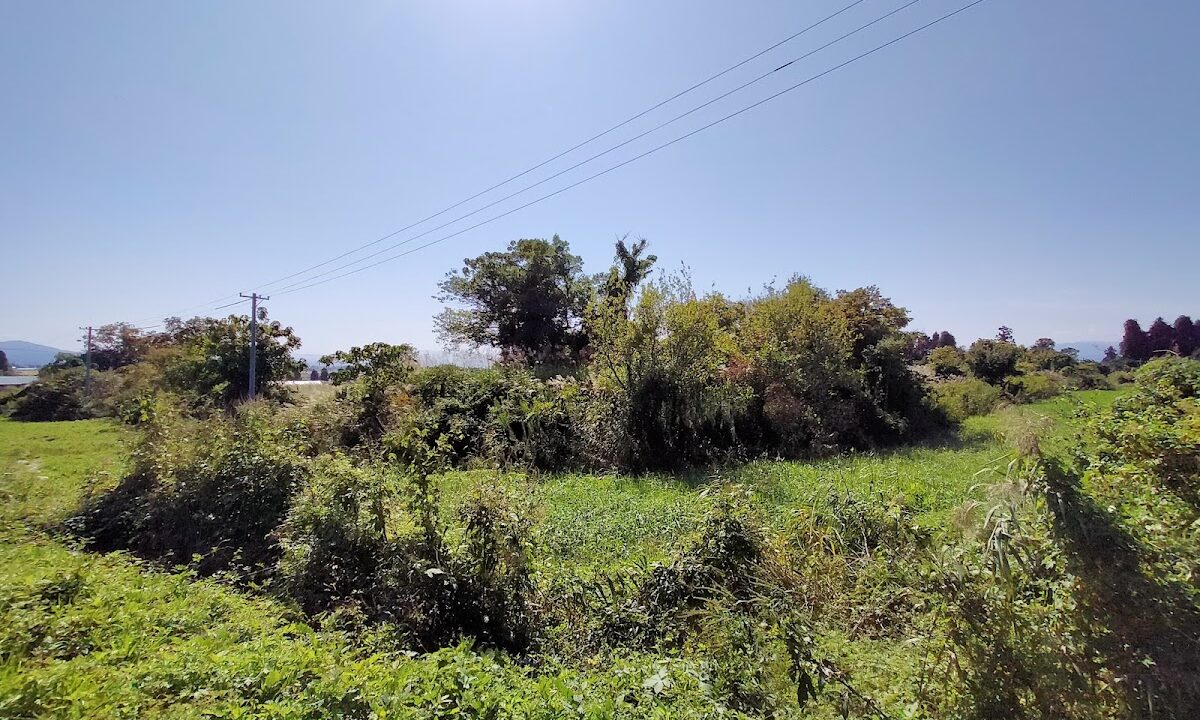
The Aizu Shingu Castle ruins are designated as a National Historic Site, and appropriate preservation and management are being carried out. The area centered around the main enclosure is designated as a historic site, and parts of the earthworks and moats are preserved in good condition.
Information boards are installed on-site, allowing visitors to learn about the castle’s history and structure. However, since most of the remains are buried underground, visible remains above ground are limited.
Access Information
Public Transportation:
- Approximately 15 minutes by car from Kitakata Station on the JR Ban’etsu West Line
- Due to the limited number of local buses, using a taxi is recommended.
By Car:
- Approximately 30 minutes via National Route 49 from Aizu-Wakamatsu Interchange on the Ban’etsu Expressway
- Parking space is limited, so please be aware of the surrounding conditions when visiting.
Related Historical Sites in the Surrounding Area
The following are historical sites in the surrounding area that you may want to visit in conjunction with the Aizu-Shingu Castle Ruins:
- Shingu Kumano Shrine: A shrine adjacent to the southwest of the castle, and the center of worship for the Shingu clan.
- Kurokawa Castle (Aizu-Wakamatsu Castle): The central castle of Aizu, which served as the base of the Ashina clan.
- Mukaihaguroyama Castle: A mountain castle built by the Ashina clan, designated as a National Historic Site.
Historical Significance of the Shingu Clan
Regional Control in Aizu
The Shingu clan was a powerful local lord that controlled a vast area from northern Aizu to eastern Echigo from the Kamakura period to the early Muromachi period. Based in Shingu Manor, they performed diverse functions as medieval lords, including managing agricultural production, controlling trade, and maintaining military power.
The Shingu clan’s rule was not merely based on military force, but was supported by multiple layers of factors, such as spiritual bonds mediated by Kumano faith and the distribution of economic profits from trade.
Connection to the Sea of Japan Trade
As evidenced by excavated artifacts, the Shingu clan was deeply involved in the trade network via the Sea of Japan. The Aizu region was a crucial transportation hub connecting the Pacific and Sea of Japan coasts, and it is believed that the Shingu clan utilized this geographical advantage to accumulate economic power.
The discovery of Chinese ceramics indicates that the Shingu clan indirectly participated in trade with the continent via port cities in Echigo. Such trading activities enhanced the cultural sophistication of the Shingu clan and strengthened their economic base.
Political Structure of Medieval Aizu
The relationship between the Shingu and Ashina clans illustrates the complexity of the political structure in medieval Aizu. Although related, their differing positions as the main family and a branch family led to conflict, ultimately resulting in armed clashes.
This conflict is also important as an example of how the Kamakura-era samurai system transformed during the Muromachi period. The weakening of the main family system and the increase in regional independence, a nationwide trend in the late medieval period, were also observed in the Aizu region.
Archaeological Value of Aizu Shingu Castle
Contribution to Medieval Castle Research
The Aizu Shingu Castle site is an extremely important archaeological site for understanding the reality of castles of local powerful families in the medieval period. In the medieval period, where documentary sources are limited, information obtained through archaeological excavations provides valuable clues for concretizing historical images.
In particular, the existence of large-scale structures such as the square wooden frame remains indicates that local powerful families possessed more advanced civil engineering skills than previously thought.
Basic Materials for Regional History Research
The results of the Aizu Shingu Castle ruins have become fundamental materials for the study of medieval history in the Aizu region. They are being used in research on a variety of themes, including the actual activities of the Shingu clan, their relationship with the Ashina clan, and the characteristics of the local community in northern Aizu.
Furthermore, through the analysis of excavated artifacts, the realities of logistics and cultural exchange in medieval Aizu are also becoming clearer. These research results are of significant importance in deepening our understanding of medieval history throughout the Tohoku region.
Summary
Aizu Shingu Castle (Fukushima Prefecture) is the site of the castle of the Shingu clan, who ruled northern Aizu from the Kamakura period to the early Muromachi period, and is an important cultural heritage site designated as a National Historic Site in 2009.
Located in the northwestern part of the Aizu Basin, this castle was a large flatland castle consisting of the main keep, second bailey, and third bailey, with a sturdy structure surrounded by earthen ramparts and moats. It served as the base of the Shingu clan until it was captured by the Ashina clan, a related family, in 1415 (Oei 22).
Archaeological excavations have unearthed one of the largest square wooden structures in Japan, as well as valuable artifacts including Chinese ceramics, revealing the Shingu clan’s economic power and high level of cultural sophistication. These archaeological findings provide important evidence of the realities of regional control in medieval Aizu and its connection to trade along the Sea of Japan.
Currently, the castle ruins are well-preserved and are attracting attention from history enthusiasts and researchers as a valuable historical site for understanding the castles and residences of local powerful families in the medieval period. It is a historical spot that you should definitely visit when traveling to the Aizu region.