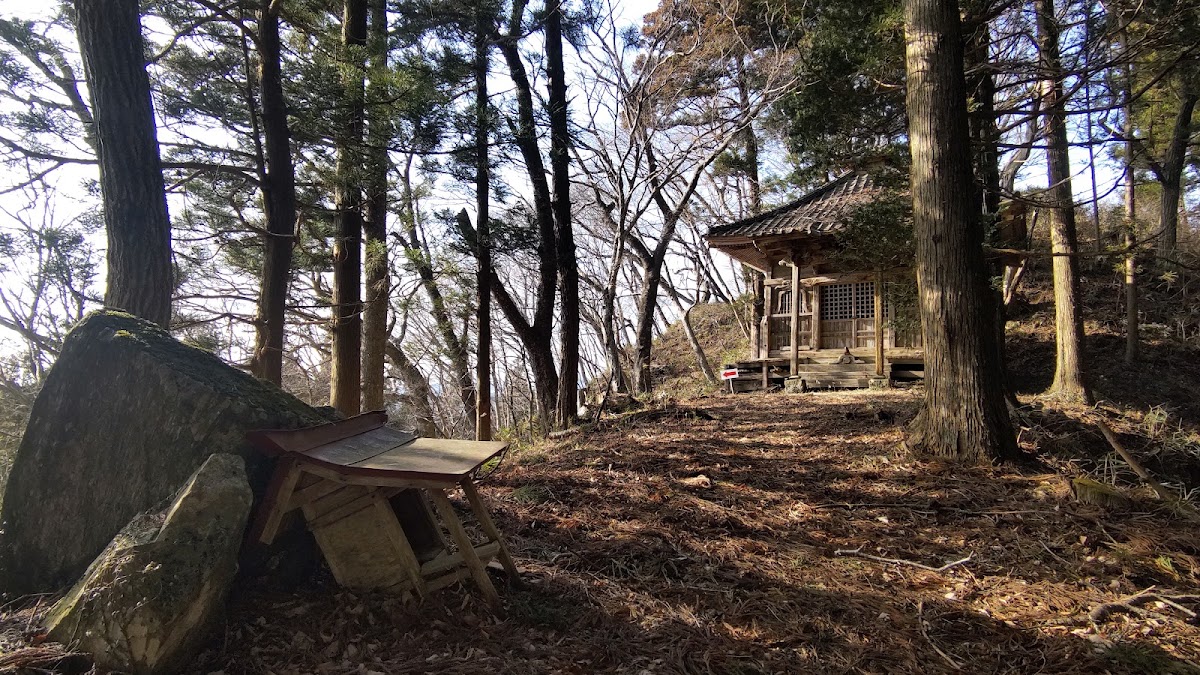
Misaka Castle (Iwaki City, Fukushima Prefecture) Complete Guide: A Thorough Explanation of its Important Branch Castle, Highlights, and History during the Sengoku Period
Located in Kamimisaka, Miwa-cho, Iwaki City, Fukushima Prefecture, Misaka Castle is a mountain castle that functioned as an important branch castle of the Iwaki clan during the Sengoku period. The castle ruins, spread across the entire mountain ridge at an altitude of approximately 120 meters, convey the construction techniques and strategic importance of the time. This article provides detailed information useful for castle enthusiasts and history buffs, from the historical background of Misaka Castle to existing ruins and access methods.
Basic Information on Misaka Castle
Misaka Castle is a medieval mountain castle located in Kamimisaka Nakamachi, Miwa-cho, Iwaki City, Fukushima Prefecture. Built on a mountain ridge southeast of the intersection where National Routes 349 and 49 meet, it features a layout that skillfully utilizes the terrain with a relative elevation of approximately 120 meters.
Location: Kamimisaka Nakamachi, Miwa-machi, Iwaki City, Fukushima Prefecture
Castle Classification: Mountain Castle
Construction Period: Bun’an era (1444-1449)
Main Lords: Misaka Tadanobu, Ogawa Echizen-no-kami Takakage
Existing Remains: Earthworks, moats, cliffs, flat areas, main enclosure, small gate (koguchi), lookout, etc.
Designated Cultural Property: Not designated
The castle site is currently a cedar forest, but the undergrowth is relatively sparse, and guide arrows are installed along the route around the main enclosures, making it easy to view the castle remains.
History of Misaka Castle and Changes in Lords
Misaka Clan Era (Bun’an Era -)
The construction of Misaka Castle dates back to the Bun’an era (1444-1449), and it is said that Misaka Tadanobu was the first lord. The Misaka clan ruled this region as local feudal lords. During its time as the Misaka clan’s residence, Misaka Castle is believed to have served as a central hub for regional control.
As a Branch Castle under the Iwaki Clan (Sengoku Period)
With the arrival of the Sengoku period, Misaka Castle came under the control of the Iwaki clan, significantly changing its character. The Iwaki clan was a Sengoku daimyo based at Iwaki-Taira Castle (present-day Taira, Iwaki City), expanding its power from northern Hitachi Province to southern Mutsu Province.
For the Iwaki clan, Misaka Castle held an extremely important position as a frontline fortress to prepare for the powerful northern enemy, the Date clan. The Date clan, based in Yonezawa, was pursuing a southward expansion policy, making the Misaka region, bordering the Iwaki clan’s territory, a highly militarily tense area.
The Era of Ogawa Echizen-no-kami Takakage (Tensho-Bunroku Period)
Records indicate that Ogawa Echizen-no-kami Takakage was the lord of Misaka Castle from the Tensho to Bunroku periods (approximately 1573-1596). Ogawa Takakage was a member of the Ogawa Gyobu-no-taifu family, a senior retainer of the Iwaki clan, and a highly trusted warrior of the Iwaki clan.
During this period, Date Masamune rapidly expanded his power, aiming for hegemony over the Tohoku region. Misaka Castle, as a frontline fortress protecting the Iwaki clan’s territory, is believed to have functioned as an important military base under the command of Ogawa Takakage, preparing for Date invasions.
Changes After the Early Modern Period
After Toyotomi Hideyoshi’s pacification of Oshu, the political situation in the Tohoku region changed dramatically. As the positions of the Tohoku daimyo, including the Iwaki clan, were reorganized, it is presumed that the military importance of Misaka Castle gradually declined. During the Edo period, Misaka Castle was abandoned and reverted to forest.
Misaka Castle’s Layout and Structure
Layout Utilizing the Entire Mountain Ridge
The most distinctive feature of Misaka Castle is its utilization of the entire mountain ridge as the castle grounds. Multiple enclosures are arranged across the mountain, which has a relative elevation of approximately 120 meters, creating defensive lines that utilize the ridges and valleys. This layout is typical of mountain castles from the Sengoku period, demonstrating castle-building techniques that maximize the use of the terrain.
The main enclosure is located at the highest point of the mountain ridge, and from there, multiple flat areas (enclosures) are connected along the ridge. Each enclosure is clearly demarcated by steep slopes, making it difficult for enemies to invade.
Structure of the Main Enclosure
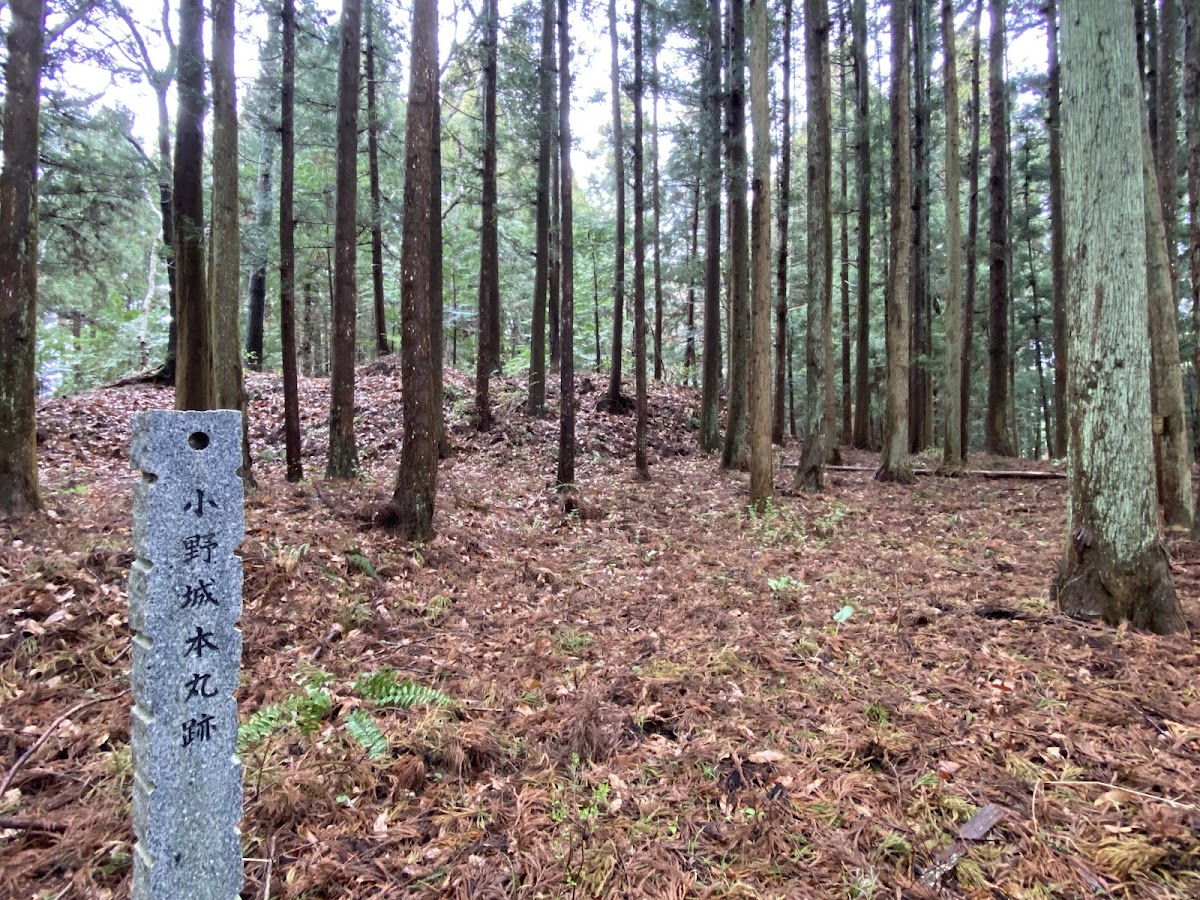
The main enclosure, the heart of Misaka Castle, is located at the highest point of the mountain ridge. The main enclosure occupies a relatively large flat area, and it is thought to have housed the lord’s residence and command post. Earthen ramparts surround the main enclosure, enhancing its defensive capabilities.
From the main enclosure, one could overlook the surrounding terrain, and it is presumed that it also served as a lookout point for monitoring enemy movements. In particular, the view towards the northern territory of the Date clan was unobstructed, clearly indicating its role as a military surveillance base.
Arrangement of Flat Areas (Enclosures)
Several flat areas are arranged around the main enclosure. These flat areas are thought to have been used as garrisons for soldiers and storage areas for supplies. Each flat area was constructed by leveling the natural terrain, making them valuable remains that demonstrate the level of civil engineering technology during the Sengoku period.
The flat areas vary in size, from large to small. This suggests that they were used differently depending on the function of the castle.
Small Entrances (Koguchi) and Defensive Facilities
The small entrances (koguchi) of the castle are crucial facilities for castle defense. The small entrances of Misaka Castle have structures designed to prevent enemy intrusion. A koguchi utilizing a slope, known as a “saka-koguchi,” has also been identified, creating terrain that forced attackers to climb in a single file.
Around the main gate, there are sections with earthen ramparts, allowing for attacks on invading enemies from the flanks. These defensive structures are strategically placed to effectively defend even with a small force.
Earthen Ramparts and Moats
Earthen ramparts remain in various locations at Misaka Castle. These ramparts surrounded the enclosures, functioning as defensive walls and also obstructing enemy lines of sight. While the existing ramparts are likely lower than their original height, their arrangement allows us to understand the original defensive lines.
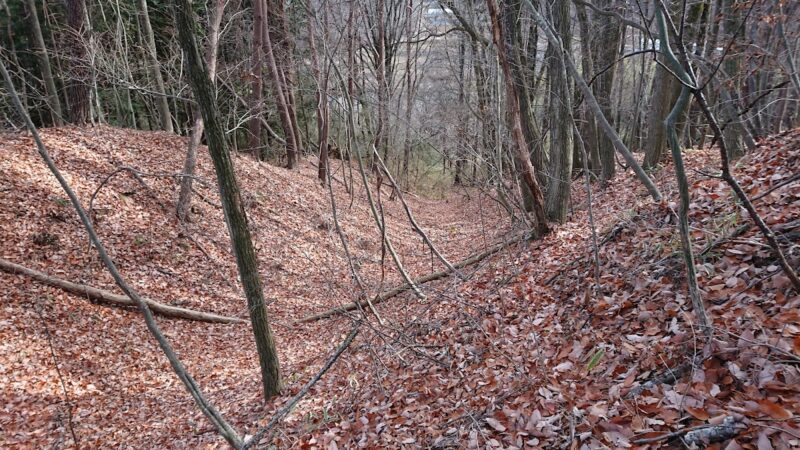
Moats are dry moats dug to cut across ridgelines, serving as crucial defensive structures to prevent enemy incursions. Misaka Castle has multiple moats, with particularly clear ones remaining along the ridge leading to the main enclosure. These moats served to divide enemy advances and create terrain advantageous to the defenders.
The Technique of Cut Cliffs
Cut cliffs are artificial cliffs created by further carving steeper slopes into natural inclines, serving as defensive structures to make ascent difficult for enemies. At Misaka Castle, clear cut cliffs can be seen around each enclosure, demonstrating the advanced castle-building techniques of the Sengoku period.
The height of the cut cliffs varies depending on the location, but some reach several meters, illustrating the scale of the civil engineering work at the time.
The Placement of Watchtowers
Watchtowers were facilities for monitoring enemy movements and were established in locations with good visibility. At Misaka Castle, it is believed that several enclosures, in addition to the main enclosure, functioned as watchtowers.
Particular emphasis was placed on visibility towards the northern territory of the Date clan, indicating a surveillance system in place to detect enemy invasions early.
Highlights and Walking Points of Misaka Castle
Preservation of the Remains
The remains of Misaka Castle remain in relatively good condition, even several hundred years after its abandonment. The castle ruins, now surrounded by a cedar forest, offer a relatively easy environment for observing the remains due to the lack of dense undergrowth, making it a popular destination for castle enthusiasts.
The main remains, such as earthworks, moats, cliffs, and flat areas, are clearly preserved, making it a valuable historical site where visitors can experience the structure of a Sengoku period mountain castle.
Route and Signage
The castle ruins have a well-maintained route that circles the main enclosures, with directional arrows. Following these signs allows for efficient viewing of the main remains.
Even first-time visitors can easily navigate the castle ruins by following the signs, ensuring a safe and enjoyable visit.
Photo Spots
At Misaka Castle, you can observe and photograph remains such as earthworks and moats up close. The cross-sections of the moats and the elevation differences of the cliffs are particularly photogenic.
The view from the main enclosure is also a highlight; photographing the surrounding terrain and distant views allows for a visual understanding of the castle’s strategic location.
Seasonal Attractions
From spring to summer, the greenery is lush, making it possible to enjoy a walk while taking in the forest. In autumn, the autumn foliage is beautiful, and in winter, the snow cover can make the outlines of the ruins even clearer.
However, in winter, the ground can be slippery, so appropriate footwear is necessary when visiting.
Access and Visiting Information for Misaka Castle
Access by Car
Misaka Castle is easily accessible by car. It is located southeast of the intersection where National Routes 349 and 49 meet, and is easily accessible from major roads.
Nearest Interchange: Approximately 10 minutes from the Iwaki-Sanwa Interchange on the Joban Expressway
Parking: There is parking space near the castle ruins, but it is not a properly maintained parking lot, so please be careful not to obstruct other traffic when parking on the street.
Access by Public Transportation
If using public transportation, the nearest station is JR Ban’etsu East Line “Eda Station.” However, the castle ruins are a considerable distance from the station on foot, so we recommend taking a taxi.
Nearest Station: JR Ban’etsu East Line “Eda Station”
Distance from Station: Approximately 5km
Taxi Travel Time: Approximately 10 minutes
Notes for Visitors
Misaka Castle is not a well-maintained tourist facility, but a historical site located in a forest. Please note the following points when visiting.
- Attire: Long-sleeved shirt and long pants, comfortable walking shoes (trekking shoes recommended)
- Items to Bring: Drinks, insect repellent, map or smartphone
- Safety: Avoid visiting alone; it is recommended to visit with others if possible.
- Weather: The ground can be slippery during rainy weather or after rain, so either refrain from visiting or exercise extreme caution.
- Time: Plan your visit with ample time to descend before sunset.
Estimated Visit Time
To see all the main remains of Misaka Castle, allow approximately 1 to 1.5 hours. If you want to carefully observe the remains or enjoy taking photographs, it is recommended to allocate about 2 hours.
Related Historical Sites in the Surrounding Area
Mikura Castle
Near Misaka Castle is the site of Mikura Castle. It is also thought to have functioned as a branch castle of the Iwaki clan, and visiting both together will help you understand the castle network in this region.
Negoya Castle
Negoya Castle is another medieval castle site located near Misaka Castle. The place name “Negoya” often refers to a castle town, suggesting a connection to Misaka Castle.
Iwaki-Taira Castle
Iwaki-Taira Castle (present-day Taira, Iwaki City), the base of the Iwaki clan, is a historical site you should definitely visit when visiting Misaka Castle. In the early modern period, it housed the administrative center of the Iwaki-Taira Domain, and you can now see reconstructed turrets and other structures.
Iwaki-Taira Castle is about a 30-minute drive from Misaka Castle, allowing you to see firsthand the relationship between the Iwaki clan’s base and its subsidiary castles.
Historical Significance of Misaka Castle
Positioning in the Iwaki Clan’s Defense Strategy
Misaka Castle played a crucial role as a key point in the Iwaki clan’s territorial management, particularly in northern defense. To confront the powerful Date clan, Misaka Castle was a vital military base as a frontline fortress.
For daimyo during the Sengoku period, establishing branch castles along the borders of their territories and building defensive lines was a fundamental strategy. Misaka Castle is a prime example of this, and can be considered a historical site that concretely demonstrates the Iwaki clan’s territorial defense strategy.
Position in the History of Castles in the Tohoku Region during the Sengoku Period
Misaka Castle is valuable as a surviving example of a typical mountain castle in the Tohoku region during the Sengoku period. The arrangement of defensive facilities such as earthworks, moats, and steep slopes reflects the level of castle-building technology at the time, as well as regional characteristics.
Mountain castles in the Tohoku region during the Sengoku period were primarily constructed of earth rather than stone, and Misaka Castle exhibits this characteristic. Such earthen castles are less susceptible to later alterations compared to stone-walled castles, making them valuable for retaining their original appearance.
Importance in Regional History
In the medieval history of the Iwaki region, Misaka Castle is an important historical site that illustrates the reality of regional governance. The history of Misaka Castle, which transformed from a local lord’s residence to a branch castle of the Sengoku-period daimyo Iwaki clan, tells the story of the changes in regional society from the medieval period to the Sengoku period.
When studying regional history, local castles like Misaka Castle offer clues to understanding history from a different perspective than large, famous castles.
Current Status of Research and Preservation of Misaka Castle
Academic Research
Research on Misaka Castle has been conducted by local castle researchers and history enthusiasts. Basic research results, such as the creation of layout maps and records of remains, have been accumulated.
However, full-scale academic research, such as archaeological excavations, has not been conducted, and many aspects of the castle’s detailed structure and age remain unknown. It is hoped that further research will reveal more information.
Preservation Status and Challenges
Misaka Castle is an undesignated historical site, not a designated cultural property. Therefore, it is not under official preservation management. Fortunately, however, the remains have survived without significant destruction.
In the future, there is a possibility that the remains may be lost due to development, so it is desirable to recognize their value as cultural properties and take appropriate preservation measures.
Utilization in the Region
Misaka Castle is expected to be utilized as a local historical resource for local history education and as a tourist attraction. By improving signage and creating an environment where visitors can safely explore, more people will be able to learn about the value of Misaka Castle.
It is important for local residents, government officials, and researchers to cooperate in promoting the preservation and utilization of Misaka Castle.
Summary: The Charm of Misaka Castle and the Significance of Visiting
Misaka Castle (Iwaki City, Fukushima Prefecture) is an important branch castle built by the Iwaki clan during the Sengoku period to prepare for attacks from the Date clan. Its abundant remains, including earthworks, moats, main enclosures, and flat areas, are well-preserved. The layout, which utilizes the entire mountain ridge, is a valuable historical site that concretely demonstrates the castle-building techniques and defensive strategies of the Sengoku period.
Built during the Bun’an era by Misaka Tadanobu, Misaka Castle served as the castle lord during the Tensho and Bunroku periods, playing a crucial role in the northern defenses of the Iwaki clan. Although now a cedar forest, visitors can explore the main remains by following the directional arrows, making it a highly worthwhile castle site for castle enthusiasts and history buffs.
Easily accessible from the national highway, it can be visited as part of a historical walk through Iwaki City, or in conjunction with other nearby historical sites such as Iwaki-Taira Castle, to gain a deeper understanding of the Sengoku period history of the Iwaki region.
Misaka Castle holds value from multiple perspectives, including the history of castles in the Tohoku region during the Sengoku period, the Iwaki clan’s territorial management, and regional history research. The remains, nestled in a quiet mountain forest, convey the spirit of the Sengoku samurai of centuries ago. When visiting Iwaki City in Fukushima Prefecture, be sure to visit Misaka Castle and experience the historical romance of the Sengoku period.