Kurama Castle (Koriyama City, Fukushima Prefecture) Complete Guide: History, Remains, Access, and Highlights
Located in Konan-cho, Koriyama City, Fukushima Prefecture, Kurama Castle is an important mountain castle that tells the history of the Aizu region during the Sengoku period. Currently maintained as Tateyama Park, the remains such as earthworks and moats are well-preserved. This article comprehensively covers all information about Kurama Castle, from its detailed history and construction to its abandonment, the characteristics of the existing remains, and access methods.
Overview and Basic Information of Kurama Castle
Kurama Castle (Kurama-jo) is a medieval mountain castle located in Akatsu, Konan-cho, Koriyama City, Fukushima Prefecture. Also known as “Kurama-kan,” it was built on a hilly area near the southern shore of Lake Inawashiro.
Basic Data
- Location: Akatsu Reiyamae, Konan-cho, Koriyama City, Fukushima Prefecture (within Tateyama Park)
- Castle Structure: Hill Castle (Mountain Castle)
- Construction Period: Mid-16th Century (Estimated)
- Builder: Akatsu Danjo Tokitsuna (A member of the Ito clan)
- Main Lords: Akatsu clan (A member of the Ito clan)
- Year of Abandonment: Around 1589 (Tensho 17) (Estimated)
- Elevation: Approximately 550m
- Relative Height: Approximately 40m
- Remains: Earthworks, moats, bailey remains
- Current Status: Developed as Tateyama Park
History and Construction Background of Kurama Castle
Relationship between the Ito and Akatsu Clans
Kurama Castle is believed to have been built by Akatsu Danjo Tokitsuna, a member of the Ito clan, whose base was Ogura Castle (Konan-cho, Koriyama City). The Ito clan were powerful local lords in the southern part of the Aizu region, and they had strengthened their defenses by establishing multiple branch castles.
The Akatsu clan, a branch of the Ito clan, ruled the Akatsu region, and Kurama Castle is thought to have functioned as their base. While the exact construction date of the castle is unclear due to a lack of historical records, it is estimated to have been built in the mid-16th century, during the Sengoku period.
Subordination to the Ashina Clan and Political Position
From 1559 onward, the Ito clan became subordinate to the Ashina clan, a powerful daimyo of Aizu. During this period, the Ashina clan flourished as the largest Sengoku daimyo in the Aizu region, bringing surrounding local lords under their control.
The following factors are thought to have contributed to the Ito clan’s submission to the Ashina clan:
- Military Pressure: The Ashina clan’s increasing military power made it difficult to maintain independence.
- Dealing with External Enemies: The Ashina clan’s protection was necessary as a countermeasure against the Date clan’s expansion from the east.
- Economic Benefits: Economic stability was achieved by being incorporated into the Ashina clan’s distribution network.
It is presumed that Kurama Castle also played a role as a defensive base in southern Aizu, as part of the Ashina clan’s network of branch castles.
The Battle of Suriagehara and the Path to Abandonment
The Battle of Suriagehara, which took place on June 5, 1589 (Tensho 17), determined the fate of Kurama Castle. This battle was a decisive clash between the Ashina clan and Date Masamune for supremacy in Oshu.
The Battle of Suriagehara:
- Ashina Yoshihiro (adopted from the Satake clan), head of the Ashina clan, and Date Masamune confronted each other.
- The two armies clashed at Suriagehara at the foot of Mount Bandai.
- The Date army achieved a decisive victory, annihilating the Ashina clan.
- Ashina Yoshihiro abandoned Aizu Kurokawa Castle and fled to Hitachi Province.
- Date Masamune seized control of the entire Aizu region.
With the downfall of the Ashina clan in this battle, it is believed that the Ito clan, who were under their control, also declined. Kurama Castle lost its strategic value and is estimated to have been abandoned around 1589.
Some historical sources suggest that some members of the Ito clan pledged allegiance to the Date clan, but Kurama Castle itself was never reused and disappeared from the stage of history.
Kurama Castle’s Layout and Defensive Structure
Castle Construction Techniques Utilizing the Topography
Kurama Castle is a hill castle built on a hill approximately 550m above sea level, about 40m higher than the surrounding area. This location offered the following strategic advantages:
- Secure Visibility: Provides a wide view of the southern shore of Lake Inawashiro.
- Natural Fortress: Steep slopes act as natural defensive walls.
- Secure Water Source: Nearby springs made it suitable for sieges.
Characteristics of Major Remains
The following castle remains can be confirmed within the current Tateyama Park:
Enclosures (Kuruwa)
Multiple flat areas (enclosures) are arranged in the center of the castle. The largest flat area, considered the main enclosure, measures approximately 30m east-west and 20m north-south. Sub-enclosures are arranged in stages around this main enclosure, demonstrating a typical medieval mountain castle structure.
Earthworks
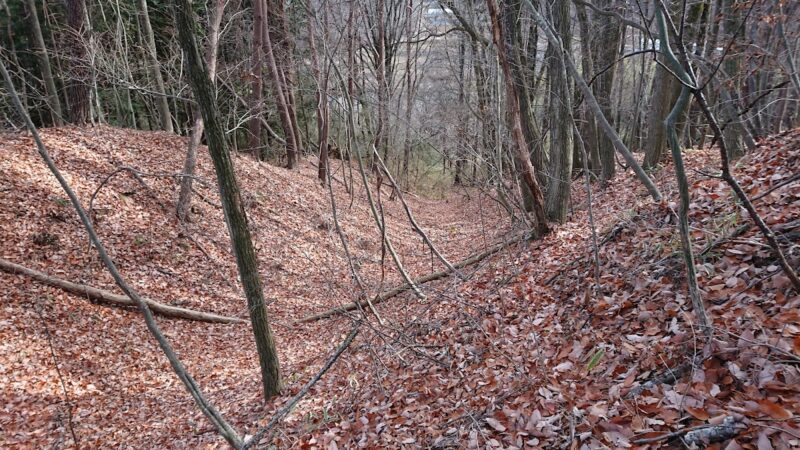
Earthworks surround the perimeter of the enclosure, and particularly well-preserved earthworks, approximately 1-2 meters high, remain on the north and west sides of the main enclosure. These earthworks served to prevent enemy intrusion and also functioned as foundations for fences and walls.
Moats
Multiple moats, excavated to cut off the ridge, can be seen. Clear moats are particularly present on the north and south sides of the castle grounds, reaching depths of approximately 3-5 meters. These were important facilities that limited enemy entry routes and enhanced defensive effectiveness.
Gate Entrances
Traces of gate entrances to the enclosures remain, and these are not simple openings, but rather curved structures designed with flanking fire in mind. This is a characteristic feature demonstrating the development of castle construction techniques in the 16th century.
Relationship with Kokura Castle
Kokura Castle, the base of the Ito clan, is located approximately 2 km northeast of Kurama Castle. The two castles were within visually accessible distance, suggesting that communication methods such as smoke signals may have been used.
Within the Ito clan’s castle network centered around Kokura Castle, Kurama Castle is thought to have played the following roles:
- Southern Observation Post: Monitoring the southern shore route of Lake Inawashiro
- Frontline Defense Base: Preventing attacks on Kokura Castle in advance
- Evacuation Site: A shelter for the local population in times of emergency
Current Status of Tateyama Park and Points of Interest
Park Development Status
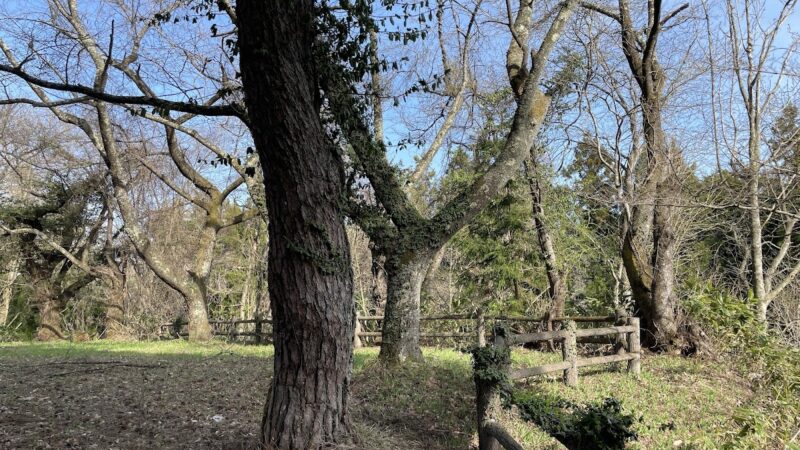
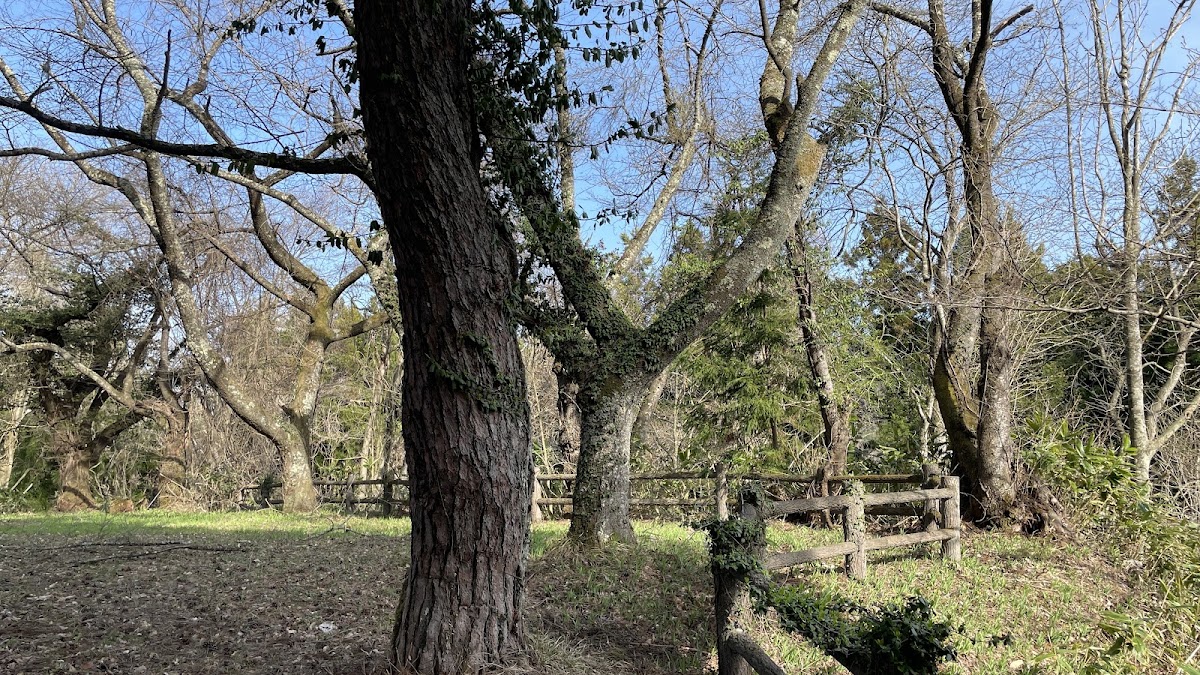
The Kurama Castle ruins are currently developed and managed by Koriyama City as “Tateyama Park.” Walking paths are provided within the park, allowing visitors to enjoy strolling while viewing the castle remains.
Park Facilities:
- Parking Space (several spaces)
- Information Boards/Information Boards
- Walking Paths/Trails
- Observation Space
In spring, cherry blossoms bloom, and the park is also used as a place of relaxation for local residents.
Sightseeing Points for Castle Enthusiasts
Here are some points to note when visiting Kurama Castle:
1. Earthworks around the Main Enclosure
These are the best-preserved remains. The earthworks on the northwest side, in particular, are quite high, allowing you to truly appreciate the defensive structure of the time. Observing the cross-section of the earthworks reveals the careful construction using the rammed earth method.
2. Clear Moat
The moat on the south side is deep and clearly visible. Excavated in a way that completely blocks the ridge, it offers a glimpse into the typical defensive techniques of medieval mountain castles.
3. Arrangement of Terraced Enclosures
The arrangement of multiple enclosures, gradually descending from the main enclosure, demonstrates a design that maximizes the use of the limited terrain. Walking while imagining the role of each enclosure reveals the overall picture of the castle.
4. View
From near the main enclosure, there are panoramic views towards Lake Inawashiro, highlighting the castle’s excellent location. On clear days, Mount Bandai can also be seen.
Photo Spots
Recommended points for taking castle photos:
- Beauty of the continuous earthworks: Photographing the earthworks vertically from the north side of the main enclosure expresses the continuity of the defensive line.
- Depth of the moat: Emphasizing the depth by looking up from the bottom of the moat.
- Expansion of the enclosure: Photographing the flat surface of the main enclosure with a wide-angle lens conveys the scale of the castle.
- Seasonal scenery: The seasonal expressions, such as cherry blossoms in spring, fresh greenery, and autumn leaves, are also attractive.
Access and Surrounding Information
Access by Car
Kurama Castle (Tateyama Park) is easily accessible by car.
Main Routes:
- Approximately 20 minutes from the Inawashiro Bandai Kogen Interchange on the Ban-etsu Expressway
- Approximately 25 minutes from the Bandai Atami Interchange on the Ban-etsu Expressway
- Approximately 40 minutes from central Koriyama City via National Route 49
Car Navigation Settings:
- Address: Akatsu Reiyamae, Konan-machi, Koriyama City, Fukushima Prefecture
- Facility Name: Tateyama Park
There are several parking spaces near the park entrance.
Access by Public Transportation
Public transportation access is limited:
- Approximately 15 minutes by taxi from Kawageta Station on the JR Ban-etsu West Line
- Approximately 20 minutes on foot from the nearest bus stop after taking a bus towards Konan from Koriyama Station
Since there are few buses, it is recommended to check the timetable in advance.
Points to Note When Visiting
- Attire: Since you will be walking on mountain trails, comfortable walking shoes and clothing are essential.
- Season: Due to snow in winter, spring to autumn is the best time to visit.
- Time: The visit takes approximately 30 minutes to 1 hour.
- Facilities: Facilities such as toilets and vending machines are limited, so advance preparation is necessary.
- Insect Repellent: Bringing insect repellent spray is recommended during the summer.
Nearby Tourist Attractions
Nearby tourist attractions that can be enjoyed in conjunction with a visit to Kurama Castle:
Kokura Castle Ruins (approx. 5 minutes by car)
Visiting the Kokura Castle Ruins, the base of the Ito clan, will give you a deeper understanding of the Ito clan’s castle network.
Lake Inawashiro (approx. 10 minutes by car)
The fourth largest lake in Japan, where you can enjoy sightseeing boats and marine sports. There are many tourist facilities along the lakeside.
Mount Bandai (approx. 30 minutes by car)
One of Japan’s 100 Famous Mountains, where you can enjoy mountain climbing and trekking. Aizu-Wakamatsu City (approximately 40 minutes by car)
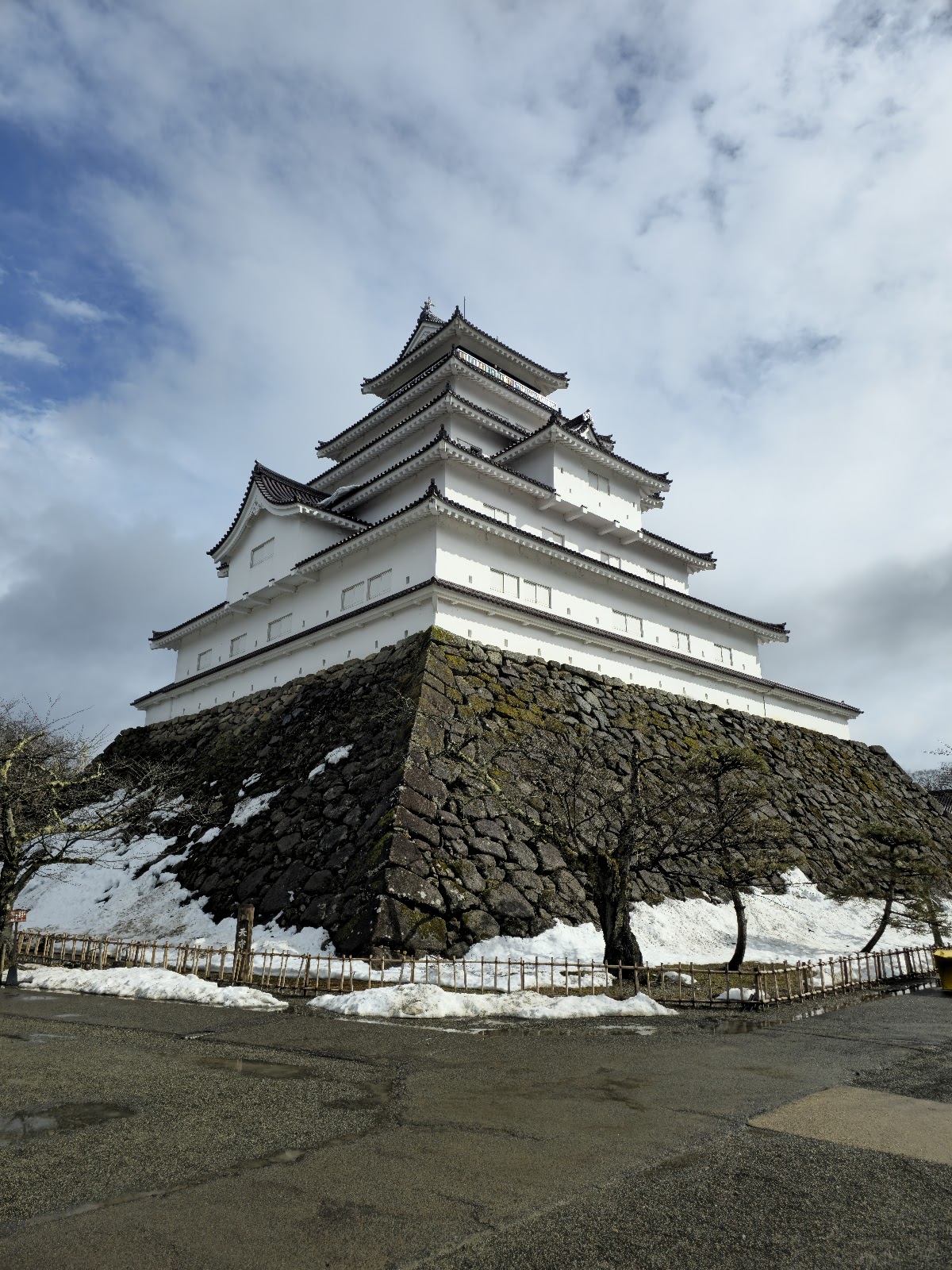
This area is home to many tourist attractions where you can experience the history of Aizu, such as Tsuruga Castle (Aizu-Wakamatsu Castle) and samurai residences.
Comparison with other castles in Fukushima Prefecture
While Fukushima Prefecture has many castles, Kurama Castle is distinctive in the following respects:
Differences from Japan’s Top 100 Castles and the Continued Top 100 Castles
Fukushima Prefecture’s Top 100 Castles include Aizu-Wakamatsu Castle (Tsuruga Castle) and Shirakawa-Komine Castle, while Mukaihaguroyama Castle is included in the Continued Top 100 Castles. In comparison to these:
Aizu-Wakamatsu Castle: A flatland castle with a keep and stone walls, characteristic of early modern castles.
Shirakawa-Komine Castle: A flatland castle with restored stone walls and turrets.
Mukai-Haguroyama Castle: A massive mountain castle of the Ashina clan, one of the largest in the country.
On the other hand, Kurama Castle:
- Retains the typical form of a medieval mountain castle.
- Clearly exhibits characteristics of an earthen castle.
- A practical castle for a local lord.
- Small in scale, but the remains are well-preserved.
Similarities with Nihonmatsu Castle
Nihonmatsu Castle, one of Fukushima Prefecture’s representative castles, also functioned as the residence of the Hatakeyama clan during the Sengoku period. Kurama Castle and Nihonmatsu Castle share the following similarities:
- Both were castles of regional lords during the Sengoku period
- Both have a history related to Date Masamune’s invasion of Aizu
- Both retain medieval structures such as earthworks and moats
However, Nihonmatsu Castle underwent extensive renovations as a modern castle during the Edo period, while Kurama Castle was abandoned in its medieval form, which is a significant difference.
Current Status and Challenges of Kurama Castle Research
Limitations of Historical Sources
Historical sources concerning Kurama Castle are extremely limited, leaving many points unclear, such as the construction date, details of the castle lord, and records of specific battles. Main Historical Challenges:
- Date of Construction: Lack of documentary evidence; estimation is limited to the style of the remains.
- Genealogy of the Akatsu Clan: The relationship with the Ito clan is only at the level of tradition; no reliable genealogy remains.
- Date of Abandonment: Estimated to be after the Battle of Suriagehara, but no clear records exist.
- Size and Structure of the Castle: Detailed excavation surveys have not been conducted, so the underground remains are unknown.
Potential for Future Research
To further clarify the history of Kurama Castle, the following research approaches are expected:
Archaeological Investigation: Excavation surveys may allow for the identification of the castle’s age and function from unearthed artifacts. Artifacts such as ceramic fragments and iron products, in particular, provide important clues to the period of the castle’s use.
Fortification Survey: Detailed surveying and creation of fortification maps by experts will allow for a more accurate understanding of the castle’s overall structure and defensive system.
Re-examining Historical Documents
By re-examining historical documents concerning the Ito and Ashina clans, it may be possible to indirectly shed light on the history of Kurama Castle.
Collaboration with Local History Research
By collaborating with local history research in the Akatsu area of Konan Town, it will be possible to clarify the relationship between the castle and the local community.
Reasons Why Castle Enthusiasts Should Visit Kurama Castle
While many castle ruins exist throughout Japan, Kurama Castle possesses the following unique attractions:
1. Experience the Prototype of a Medieval Mountain Castle
Unlike early modern castles, it has not undergone later alterations, preserving the appearance of a Sengoku period mountain castle. While it lacks the flamboyant elements of stone walls and keeps, you can purely observe the practical defensive system of earthworks and moats.
2. Enjoy the Ruins in a Quiet Environment
Without the crowds of famous tourist spots, you can carefully observe the ruins in a quiet environment. It is an ideal environment for those who want to concentrate on castle research and photography.
3. Experience the Sengoku Period History of the Aizu Region
You can experience the rise and fall of Sengoku daimyo and local lords such as the Ashina, Date, and Ito clans at the actual castle ruins. It is also related to the Battle of Suriagehara, a crucial turning point in the Sengoku period history of Tohoku, giving it great historical significance.
4. Learn about the Regional Castle Network
This is an excellent example of how local lords defended their territories by strategically placing multiple castles, including its relationship with Kokura Castle. It fosters a perspective that considers not just a single castle, but the entire castle network.
Summary: The Historical Value of Kurama Castle
Kurama Castle is a Sengoku period mountain castle remaining in Konan-machi, Koriyama City, Fukushima Prefecture. Built by Akatsu Danjo Tokitsuna, a member of the Ito clan, it functioned as a branch castle of the Ashina clan. However, after the Ashina clan’s downfall in the Battle of Suriagehara in 1589, its role ended and it was abandoned.
Currently developed as Tateyama Park, the remains of the castle, including earthworks, moats, and baileys, are well-preserved. While not large in scale, it is a valuable historical site showcasing the typical structure of a medieval mountain castle, and is important for understanding the Sengoku period history of the Aizu region.
Although not widely known nationwide, it is an attractive spot for castle enthusiasts and history buffs, offering a tranquil environment to experience the reality of a Sengoku period mountain castle. When visiting Fukushima Prefecture, visiting smaller castles like this one, along with famous castles such as Aizu-Wakamatsu Castle and Nihonmatsu Castle, will provide a more comprehensive understanding of the region’s history.
If you have the opportunity to visit the Lake Inawashiro area, be sure to stop by Kurama Castle ruins and experience the atmosphere of the Sengoku period.