Complete Guide to Domeki Castle (Nihonmatsu City, Fukushima Prefecture): Ishikawa Danjo’s Mountain Castle and the Rise and Fall of the Sengoku Period
What is Domeki Castle?
Domeki Castle is a Sengoku period mountain castle located in Domeki, Nihonmatsu City, Fukushima Prefecture. Built on an isolated hill approximately 451 meters above sea level, it is known as the residence of Ishikawa Danjo Mitsumasa, a senior retainer of the Ishibashi clan, lords of Nihonmatsu Castle. Even today, the remains of earthworks and moats are well-preserved, making it a historically valuable site as a medieval castle site in Fukushima Prefecture.
Located north of the settlement in the Domeki area, this mountain castle was built in a strategically important location surrounded by mountains on all sides, and was an important military base in Adachi County during the Sengoku period. Accessible from along National Route 459, it is attracting attention from castle enthusiasts and history buffs as a valuable historical site where castle remains can still be seen.
History and Lords of Hyakumegi Castle
Ishikawa Danjo Mitsumasa and the Ishibashi Clan of Shihonmatsu Castle
Hyakumegi Castle is believed to have been built during the Tenbun era (1532-1555), and the builder was Ishikawa Danjo Mitsumasa. The Ishikawa clan were important retainers who served the Ishibashi clan, whose base was Shihonmatsu Castle (present-day Adachigahara, Nihonmatsu City), and were powerful warriors counted as one of the Ishibashi clan’s “Four Heavenly Kings.”
Ishikawa Danjo Mitsumasa initially served his lord, the Ishibashi clan, faithfully, but amidst the complex political situation of the Sengoku period, he would eventually face a turning point in his fate.
The Fall of the Ishibashi Clan in 1580
In 1580 (Tensho 8), Ishikawa Mitsumasa, along with Ouchi Sadatsuna, the lord of Obama Castle, made the momentous decision to destroy their lord, the Ishibashi clan. This is believed to be due to the decline of the Ishibashi clan’s power and the shift in the balance of power with surrounding forces.
After the fall of the Ishibashi clan, the Adachi district came under the control of Ouchi Sadatsuna, but the relationship between Ishikawa Mitsumasa and Ouchi Sadatsuna gradually deteriorated. This led to a power struggle typical of the Sengoku period, where former allies became rivals.
Relationship with Date Masamune and the Acquisition of Koteshimori Castle
In 1585 (Tensho 13), Ishikawa Mitsumasa opposed Ouchi Sadatsuna and chose to side with Date Masamune, who was rising to power. This decision would drastically change the fate of the Ishikawa clan.
Fighting on the Date side, Ishikawa Mitsumasa distinguished himself in numerous battles, and for his achievements, Masamune granted him Koteshimori Castle. Koteshimori Castle was one of the important strongholds in Adachi district, and the Ishikawa clan moved their base from Hyakumegi Castle to Koteshimori Castle.
Rebellion and Downfall under Date Masamune’s Rule
After coming under Date Masamune’s rule, Ishikawa Mitsumasa is said to have become dissatisfied with Masamune’s rule. While the detailed circumstances vary depending on the historical source, it is generally believed that the Ishikawa clan ultimately rebelled against Masamune.
This rebellion was suppressed, and the Ishikawa clan fled. Some theories suggest they then fled to the Uesugi clan in Aizu, but this marked the end of the Ishikawa clan’s rule over Hyakumegi Castle.
Relationship with the Soma Clan
The relationship with the Soma clan is also an important element in the history of Hyakumegi Castle. Adachi County is located on the border between the spheres of influence of the Date and Soma clans, and became a stage for conflict between the two forces. It is believed that the Ishikawa clan also engaged in complex diplomatic and military actions within this regional situation.
Layout and Structure of Hyakumegi Castle
Overall Structure and Location
Hyakumegi Castle is a mountain castle utilizing the entire isolated hill in the Hyakumegi area. The area behind the current city hall branch office was the site of the castle, and it features a defensive structure that skillfully utilizes the natural terrain.
The castle’s layout places the main enclosure (honmaru) at the highest point of the hill, with the second enclosure (ninomaru), third enclosure (sannomaru), outwork (demaru), and eastern outwork (demaru) arranged in a horseshoe shape from there. This arrangement is a clever design to effectively defend against enemy attacks and clearly demonstrates the characteristics of mountain castle construction techniques from the Sengoku period.
Features of the Main Enclosure (Honmaru)
The main enclosure is a wide, flat area with a bent shape, and it is presumed that the lord’s residence and important facilities were located there. Elevations were created on the west and south sides of the main enclosure, enhancing its defensiveness and securing spaces with multiple functions.
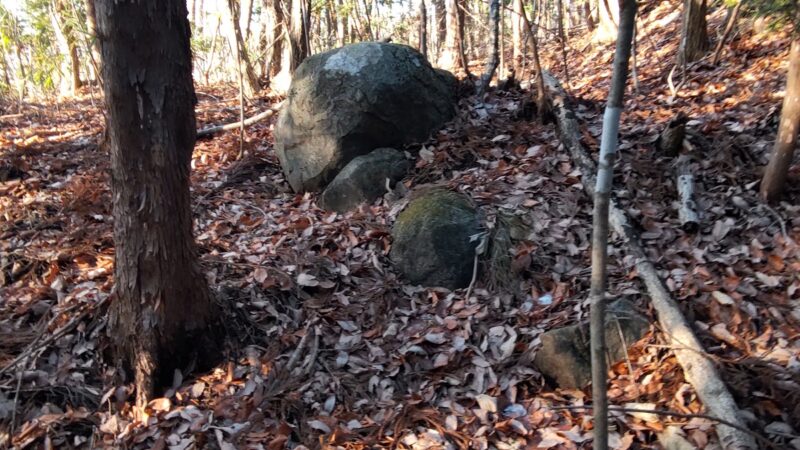
Earthworks remain well-preserved around the main enclosure, allowing us to still see the appearance of the defensive facilities from that time.
Moats and Large Moats
The greatest highlight of Hyakumegi Castle is its well-preserved moats. A moat is a dry moat dug to cut across a ridge, serving as an important defensive structure to prevent enemy intrusion.
The large moat, in particular, is noteworthy for its scale and as a testament to the advanced civil engineering techniques of the time. These moats served to demarcate the various enclosures of the castle and to restrict the movements of attacking enemies.
Arrangement of Enclosures
Hyakumegi Castle has multiple enclosures, each functioning as an independent defensive unit. The enclosures, such as the second enclosure, third enclosure, outwork, and eastern outwork, are arranged around the main enclosure, forming a multi-layered defensive structure.
Each enclosure is separated by elevation differences, allowing for defense utilizing the difference in height. This is a construction technique unique to mountain castles, reflecting a different defensive philosophy than that of castles on flat ground.
Remains of Earthworks
Earthworks remain in various places within the castle. These earthworks are defensive walls constructed by piling up earth, protecting against enemy arrows and firearms, and also obstructing visibility within the castle.
The earthworks of Hyakumegi Castle remain in relatively good condition, making them a valuable historical site that allows us to estimate their height and shape at the time.
Evaluation and Current Status of Hyakumegi Castle Remains
Preservation Status of Remains
The remains of Hyakumegi Castle are rated as C-rank among medieval castle sites in Fukushima Prefecture. This indicates that while some remains are preserved, they are not in a complete state.
However, the main defensive structures, such as the moats and earthworks, are clearly visible, providing sufficient information for understanding the overall structure of the castle. Despite the effects of natural weathering and vegetation, it is an important historical site that conveys the appearance of a Sengoku period mountain castle.
Current Site Conditions
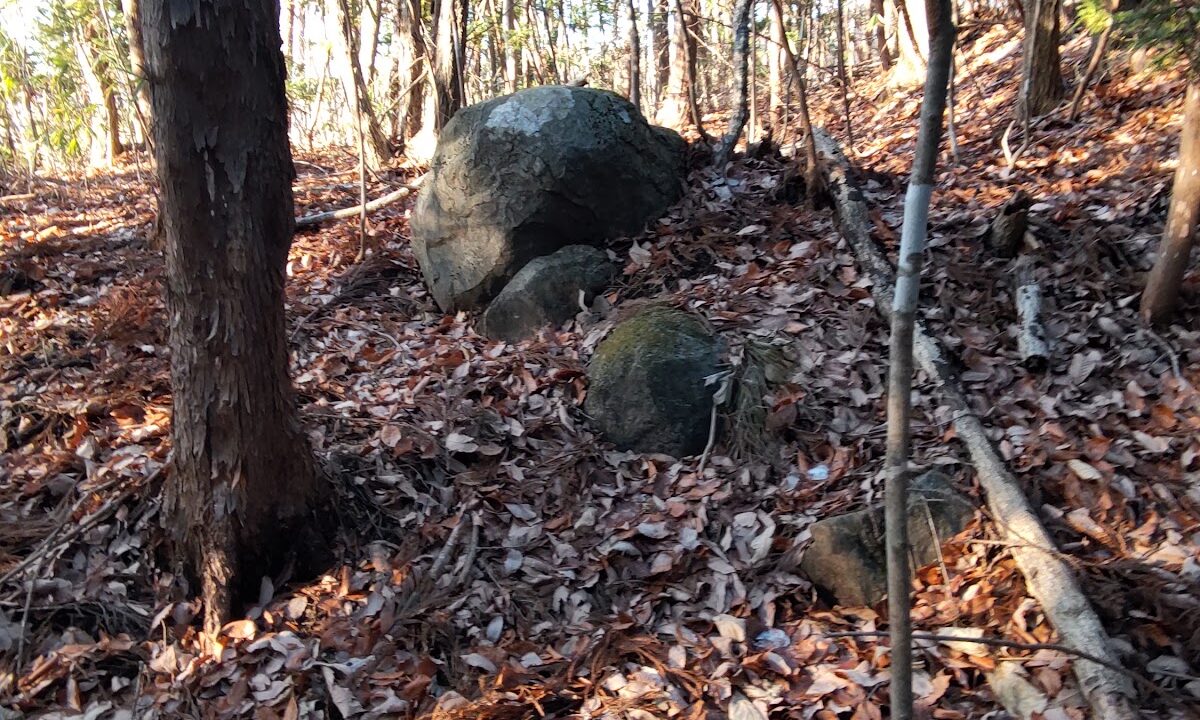
The current Hyakumegi Castle site is covered with trees across the entire hillside, and in summer, the vegetation can be so dense that it can be difficult to see the remains. Visiting in spring or autumn would be more suitable for observing the remains.
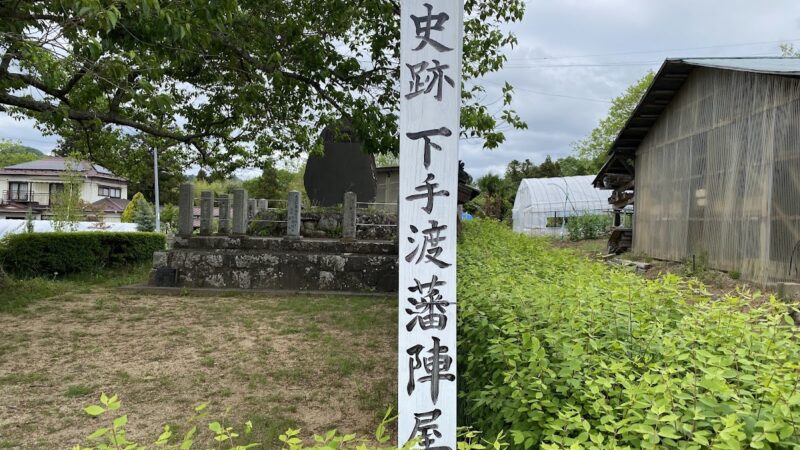
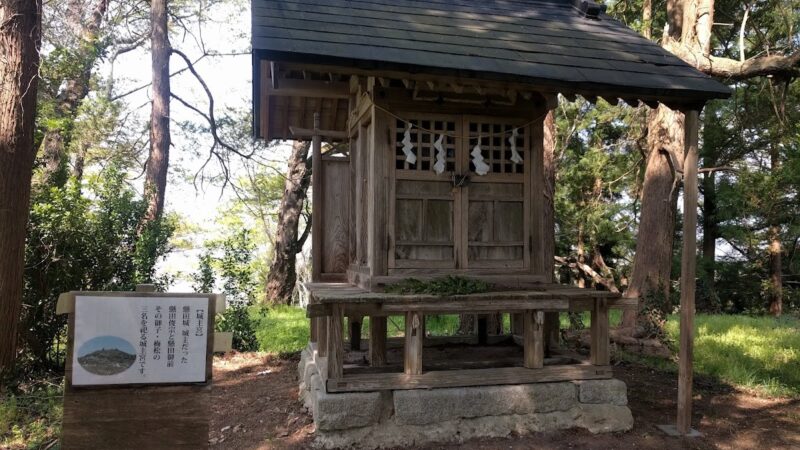
An information board is installed near the entrance to the castle along National Route 459, where you can obtain basic information about the castle’s history and structure. The explanatory sign erected on the cliff at the site of the former nursery school is a valuable source of information for visitors.
Access and Visiting Information
Location
Location: Honkan, Hyakumegi, Nihonmatsu City, Fukushima Prefecture
Hyakumegi Castle is located northeast of the center of Nihonmatsu City, within the Hyakumegi settlement.
Access by Car
The most convenient route is via National Route 459. From Nihonmatsu city center, head north on National Route 459 towards the Hyakumegi area. There is an entrance to the castle along the national highway, from which you can access the castle ruins on foot.
Parking space is limited, so please be considerate of local residents.
Access by Public Transportation
Public transportation access is limited. Nihonmatsu Station on the JR Tohoku Main Line is the nearest station, but you will need to take a bus or taxi from there.
Precautions When Visiting the Castle
- As it is a mountain castle, comfortable shoes and clothing are essential.
- Insect repellent is necessary during the summer months.
- Be careful of your footing as there are steep slopes and trenches.
- Visiting with multiple people is safer than visiting alone.
- Avoid visiting during or after rain, as the ground can become slippery.
Estimated Visiting Time
If you want to thoroughly explore the entire castle site, allow approximately 1 to 1.5 hours. If you only want to see the main remains, 30 minutes should suffice.
Related Historical Sites in the Surrounding Area
Nihonmatsu Castle
A representative castle of Nihonmatsu City, it served as the administrative center of the Nihonmatsu Domain during the Edo period. Although it dates from a different era than Hyakumegi Castle, it is an important historical castle site within Nihonmatsu City and is worth visiting together.
Obama Castle
This castle was the residence of Ouchi Sadatsuna and has deep connections with Ishikawa Mitsumasa. To understand the history of Hyakumegi Castle, a visit to Obama Castle is also worthwhile.
Shihonmatsu Castle
This castle was the base of the Ishibashi clan and the residence of the lord served by Ishikawa Mitsumasa, the lord of Hyakumegi Castle. It was located in present-day Adachigahara, Nihonmatsu City.
Kotemori Castle
This castle was given to Ishikawa Mitsumasa by Date Masamune. It was the location where he moved his base from Hyakumegi Castle and is an important historical site for tracing the history of the Ishikawa clan.
Historical Significance of Hyakumegi Castle
Position in Adachi County during the Sengoku Period
Hyakumegi Castle played an important role as a base for regional control in Adachi County during the Sengoku period. Caught between powerful forces such as the Date, Soma, and Ashina clans, the local smaller lords engaged in complex diplomacy and military operations, and Hyakumegi Castle was one of the stages for these activities.
The Expansion of Date Masamune’s Power and Hyakumegi Castle
Hyakumegi Castle and its lord, Ishikawa Mitsumasa, played a crucial role in Date Masamune’s rise to power as the ruler of Oshu. The Ishikawa clan’s cooperation was indispensable when Masamune brought Adachi County under his control, and the fact that they were given Koteshimori Castle in return is a prime example of the political dynamics of the time.
An Example of Changing Lord-Vassal Relationships
Ishikawa Mitsumasa’s career symbolizes the complex situation faced by warlords during the Sengoku period. His loyalty to the Ishibashi clan, his involvement in the downfall of his lord’s family, his conflict with Ouchi Sadatsuna, his allegiance to Date Masamune, and his eventual rebellion and downfall are classic examples of the fluidity of lord-vassal relationships during the Sengoku period.
Points to Note When Visiting Hyakumegi Castle
Points to Note When Observing the Remains
- Scale and Depth of the Moats: The moats, the main highlight, remain in multiple locations. The large moat is a must-see.
- Height and Shape of Earthworks: Observe the earthworks remaining in each enclosure and imagine the defensive structure of the time.
- Arrangement of Enclosures: Confirm the arrangement of each enclosure from the main enclosure to understand the overall layout of the castle.
- View: The view from the mountain castle is a valuable opportunity to relive the scenery seen by the castle lord at the time.
Photo Spots
- Panoramic view of the large moat
- Flat area of the main enclosure
- Cross-section of the earthworks
- View from the castle ruins
To Feel the History
When visiting Hyakumegi Castle, learning about figures such as Ishikawa Mitsumasa, Date Masamune, and Ouchi Sadatsuna beforehand will allow you to feel the history more deeply. Understanding the situation in Adachi County during the Sengoku period and the process of the Date clan’s expansion will make the historical significance of the castle ruins clearer.
Mountain Castle Culture of Fukushima Prefecture and Momomegi Castle
Medieval Castle Sites in Fukushima Prefecture
Fukushima Prefecture has numerous medieval castle sites. The “Medieval Castle Sites of Fukushima Prefecture” (Fukushima Prefecture Cultural Property Survey Report 197), published by the Fukushima Prefectural Board of Education in 1988, provides detailed records of castle sites within the prefecture. Momomegi Castle was included in this survey and is positioned as one of the important historical sites in the study of medieval history in Fukushima Prefecture.
Mountain Castle Construction Techniques
The construction techniques seen at Momomegi Castle share characteristics common to mountain castles in the Tohoku region. The method of maximizing the use of natural terrain and enhancing defensive capabilities through civil engineering techniques such as moats and earthworks differs from the castles of western Japan, which frequently utilize stone walls.
While there are slight differences in characteristics among the mountain castles of Fukushima Prefecture in the Aizu, Nakadori, and Hamadori regions, Momomegi Castle, as a typical mountain castle of the Nakadori region, is an important example for understanding the regional castle culture.
Summary
Hyakumegi Castle (Nihonmatsu City, Fukushima Prefecture) was an important mountain castle in Adachi District during the Sengoku period, and is known as the residence of Ishikawa Danjo Mitsumasa. Ishikawa Mitsumasa’s turbulent life, which saw him shift from being a senior retainer of the Ishibashi clan to a vassal of Date Masamune, symbolizes the complex political situation of the Sengoku period.
Built on an isolated hill 451 meters above sea level, the castle retains well-preserved structures such as moats, earthworks, and baileys, making it a valuable historical site that conveys the structure of a mountain castle from that era. Accessible from National Route 459, it is a worthwhile place to visit for castle enthusiasts and history buffs.
The history surrounding Hyakumegi Castle—including the expansion of Date Masamune’s power, conflicts with Ouchi Sadatsuna, and relations with the Soma clan—provides important clues to understanding the complex political situation in the Tohoku region during the Sengoku period. As one of Fukushima Prefecture’s medieval castle sites and a historical heritage of Nihonmatsu City, Hyakumegi Castle is a historical site that is expected to continue to be preserved and researched. With its defensive structures that take advantage of the unique terrain of a mountain castle, the machinations of Sengoku warlords, and the story of the Ishikawa clan tossed about by the turbulent times, Hyakumeji Castle still retains the spirit of the Sengoku period. When you visit Fukushima Prefecture, why not take a trip to this historic mountain castle and reflect on the Sengoku era?