Moriyama Castle (Koriyama City, Fukushima Prefecture): History and Highlights | A Complete Guide from the Legend of Sakanoue no Tamuramaro to the Stone Walls of the Gamo Clan Era
What is Moriyama Castle?
Moriyama Castle (Moriyama-jo) is a Japanese castle located in Moriyama, Tamura-cho, Koriyama City, Fukushima Prefecture, and is classified as a hilltop castle. Currently designated as a Koriyama City Historic Site, the remains, such as stone walls and earthworks, are well-preserved, mainly within the grounds of the Shiroyama Hachimangu Shrine.
Located in a convenient location about a 10-minute walk from Iwaki-Moriyama Station, it is known as a historical site easily accessible not only to castle enthusiasts but also to those who enjoy historical walks. This article will introduce in detail the charm of Moriyama Castle, which has been deeply involved with warlords who colored the history of the Tohoku region, starting with the legend of Sakanoue no Tamuramaro, and continuing with the Tamura clan and Gamo Ujisato.
Basic Information on Moriyama Castle
Location and Former Province
Location: 52 San-no-maru, Moriyama, Tamura-cho, Koriyama City, Fukushima Prefecture
Former Province: Mutsu Province
Designation: Koriyama City Designated Historic Site (Designated December 1, 2016)
Classification and Structure
Castle Classification: Hilltop Castle
Builder: Tamura Shoji clan (Tradition says Sakanoue no Tamuramaro)
Year of Construction: Early Heian period (Tradition), effectively medieval period
Main Lords: Tamura Shoji clan, Miharu Tamura clan, Gamo clan, various generals under the Date clan
Year of Abandonment: Genna 1 (1615)
Remains: Stone walls, earthworks, moat remains, bailey remains
Keep Structure: None (No keep was built)
Common Name/Alternate Name
Moriyama Castle has not had any particular alternative name and has consistently been called “Moriyama Castle.” However, it is sometimes called “Shiroyama” (Castle Mountain) locally.
History of Moriyama Castle
Early Heian Period: Legend of Sakanoue no Tamuramaro
Regarding the origin of Moriyama Castle, there is a legend that Sakanoue no Tamuramaro, the Shogun of the early Heian period, built a castle in this area during his campaign against the Emishi people. Sakanoue no Tamuramaro was active in the Tohoku region from 801 to 811, playing an important role in the battles against the Emishi.
While there is debate as to whether this legend is historically accurate, the fact that legends related to Sakanoue no Tamuramaro remain throughout the Tohoku region suggests that this area was a strategically important military location from ancient times. The place name Moriyama itself means “mountain to protect,” suggesting its character as a defensive base.
Medieval Period: The Base of the Tamura-Shoji Clan
The Tamura-Shoji clan, claiming descent from Sakanoue no Tamuramaro, ruled this area from the late Heian period through the Nanboku-cho period. They established their power as estate officials of Tamura-sho (present-day Tamura-cho, Koriyama City) and controlled the region centered around Moriyama Castle.
The Tamura-Shoji clan continued until the Nanboku-cho period, but were attacked by the Kamakura Shogunate forces during the Eikyo Rebellion (1438-1439) and fell from power. This rebellion, centered in the Kanto region, also affected the Tohoku region, significantly weakening the Tamura-Shoji clan.
Sengoku Period: The Castle of the Miharu-Tamura Clan
After the fall of the Tamura-Shoji clan, this region came under the control of the Miharu-Tamura clan during the Sengoku period. The Miharu Tamura clan is said to have descended from the Tamura Shoji clan. While Miharu Castle (present-day Miharu Town) was their main castle, they also utilized Moriyama Castle as an important subsidiary castle.
Particularly during the time of Tamura Kiyoaki, Moriyama Castle played a crucial role in the Tamura clan’s territorial management. Despite being surrounded by powerful neighboring daimyo such as the Date, Ashina, and Soma clans, the Tamura clan maintained their independence through skillful diplomacy.
Tensho Era: Under the Control of Date Masamune
In 1588 (Tensho 16), upon the death of Tamura Kiyoaki, his successor, Tamura Muneaki, became a vassal of Date Masamune. Masamune recognized the strategic importance of Moriyama Castle and appointed senior retainers such as Shiraishi Munemitsu and Katakura Kagetuna as castle lords.
Katakura Kagetuna was a renowned general known as Date Masamune’s right-hand man, and his appointment as lord of Moriyama Castle indicates its importance as a key base for the Date clan. During this period, Moriyama Castle functioned as a key point in the Date clan’s southern defenses.
Gamo Ujisato Era: Renovation into a Modern Castle
In 1591, following Toyotomi Hideyoshi’s pacification of Oshu, the Aizu region came under the control of Gamo Ujisato. Entering Aizu-Wakamatsu Castle (Tsuruga Castle), Ujisato strengthened his control over his territory by stationing vassals throughout and establishing a network of branch castles.
Tamaru Tomonao was dispatched to the Tamura region, and a large-scale renovation of Moriyama Castle was carried out. The rough-hewn stone walls built during this period still remain today and are the castle’s greatest highlight. Gamo Ujisato was from Hino in Omi Province and is known for bringing Omi stonemasonry techniques to the Tohoku region; it is believed that the stone walls of Moriyama Castle were influenced by these techniques.
During the Gamo clan’s rule, Moriyama Castle played a vital role as part of the branch castle system centered around Aizu-Wakamatsu Castle, serving as a crucial defense against attacks from the south towards Sukagawa.
Abolition of the Castle: The One Castle Per Province Decree of the Genna Era
After Gamo Ujisato’s death in 1598, the Gamo clan was transferred to Utsunomiya, and Uesugi Kagekatsu took over Aizu. Following the Battle of Sekigahara, Aizu once again became Gamo territory, and then, in 1627, it became Kato territory, resulting in a rapid succession of lords.
Amidst these changes, Moriyama Castle was abolished in 1615 due to the One Castle Per Province Decree issued by the Tokugawa Shogunate. This decree aimed to limit the military power of daimyo by restricting each domain to retain only one castle and abolishing other branch castles. In the Aizu Domain, only Aizu-Wakamatsu Castle remained, while many branch castles, including Moriyama Castle, were demolished.
After the castle’s abandonment, the Shiroyama Hachimangu Shrine was built on the site, and it remains a place of worship for the local community to this day.
Remains and Highlights of Moriyama Castle
Rough-Wooded Stone Walls
The greatest highlight of Moriyama Castle is the rough-woodened stone walls built during the Gamo clan’s era. Rough-woodened stonework is a technique of stacking natural stones with minimal processing, and it was widely used from the Sengoku period to the early Edo period.
The stone walls of Moriyama Castle remain in good condition around the main keep, and the stone wall on the south side of the main keep, in particular, continues for approximately 3-4 meters in height. The stones used in the walls are thought to be locally sourced andesite, and the skillful combination of stones of various sizes is evident.
Rough-woodened stone walls have excellent drainage due to the many gaps between them and are also resistant to earthquakes. The fact that it remains intact even after more than 400 years demonstrates the excellence of this technique.
Earthworks and Moat Remains
Along with the stone walls, earthworks and moat remains also remain at Moriyama Castle. Excavations conducted from 2000 to 2003 confirmed the remains of a moat, revealing its scale and structure.
The earthworks were built around the main keep and the second bailey, and some sections remain over 2 meters high. The tops of the earthworks are flat, suggesting that fences or walls were once erected there.
Bailey Structure
Moriyama Castle has a structure with the main keep at the center, surrounded by the second and third baileys. The main keep is located at the highest point, and currently the shrine of Shiroyama Hachimangu stands there. The main keep measures approximately 50 meters east-west and 60 meters north-south, a standard size for a medium-sized hilltop castle.
The second bailey was located north and east of the main bailey, and the third bailey formed the outer perimeter of the castle. The current place name “San-no-maru” (third bailey) is a remnant of this.
Archaeological Excavation Results
Excavations conducted from 2000 to 2003 confirmed the remains of stone walls and moats, as well as the foundation stones of buildings. Furthermore, numerous ceramic artifacts produced from the late 16th to early 17th centuries were unearthed, providing valuable insights into the state of Moriyama Castle during the Gamo clan’s rule.
The unearthed ceramics include Tenmoku tea bowls and plates from Seto and Mino ware, as well as celadon and white porcelain from China, suggesting a high standard of living for the castle lord and his retainers.
Shiroyama Hachimangu Shrine
Shiroyama Hachimangu Shrine, built on the site of the main bailey, continues to be revered as the guardian deity of the region. The shrine building utilizes the flat area of the main bailey, and from the grounds, one can enjoy a panoramic view of Koriyama city.
Every September, the annual festival is held, serving as a gathering place for local people. When visiting the castle ruins, combining it with a visit to the shrine will allow you to experience the history of Moriyama Castle more deeply.
Moriyama Castle Today
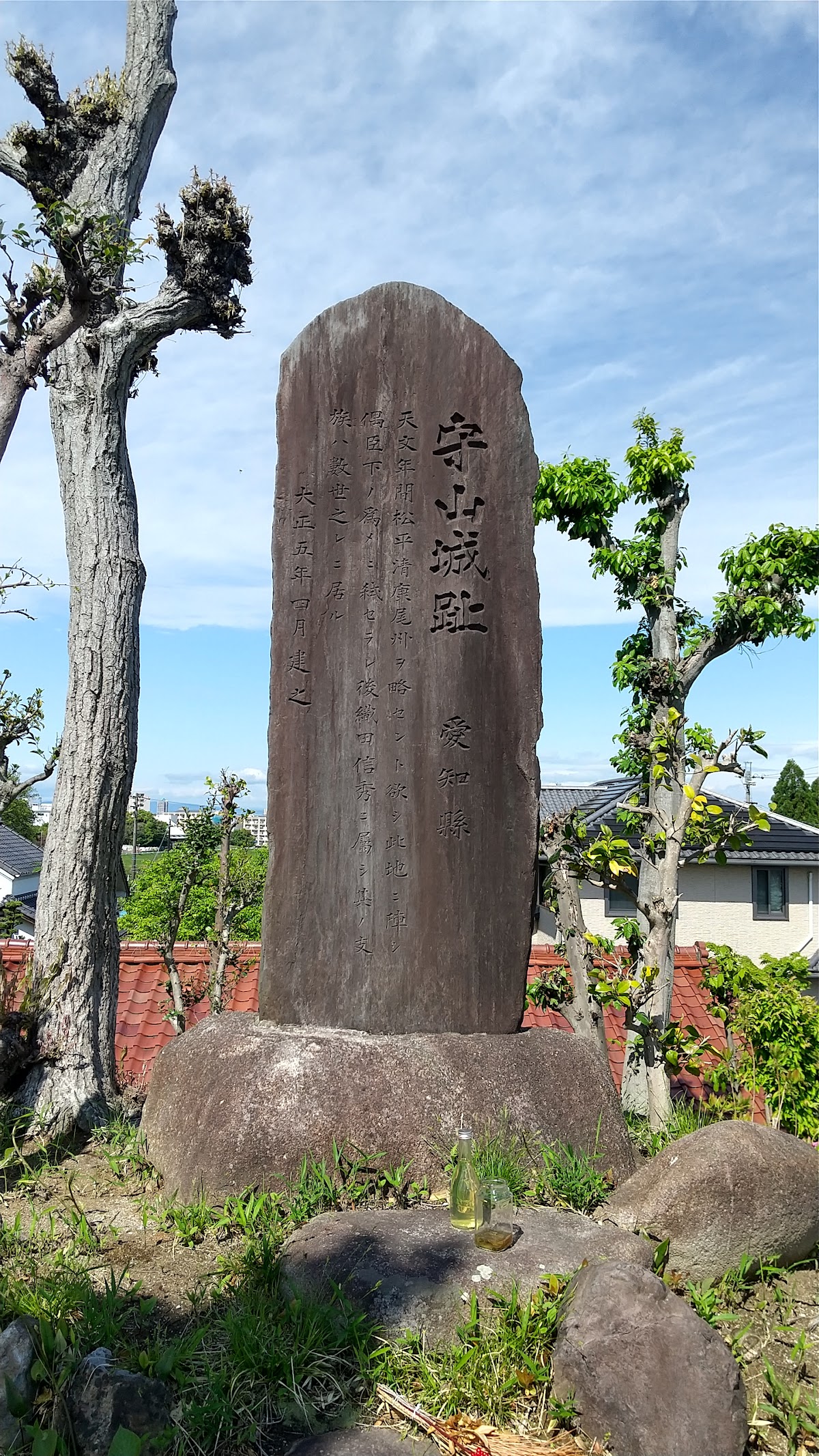
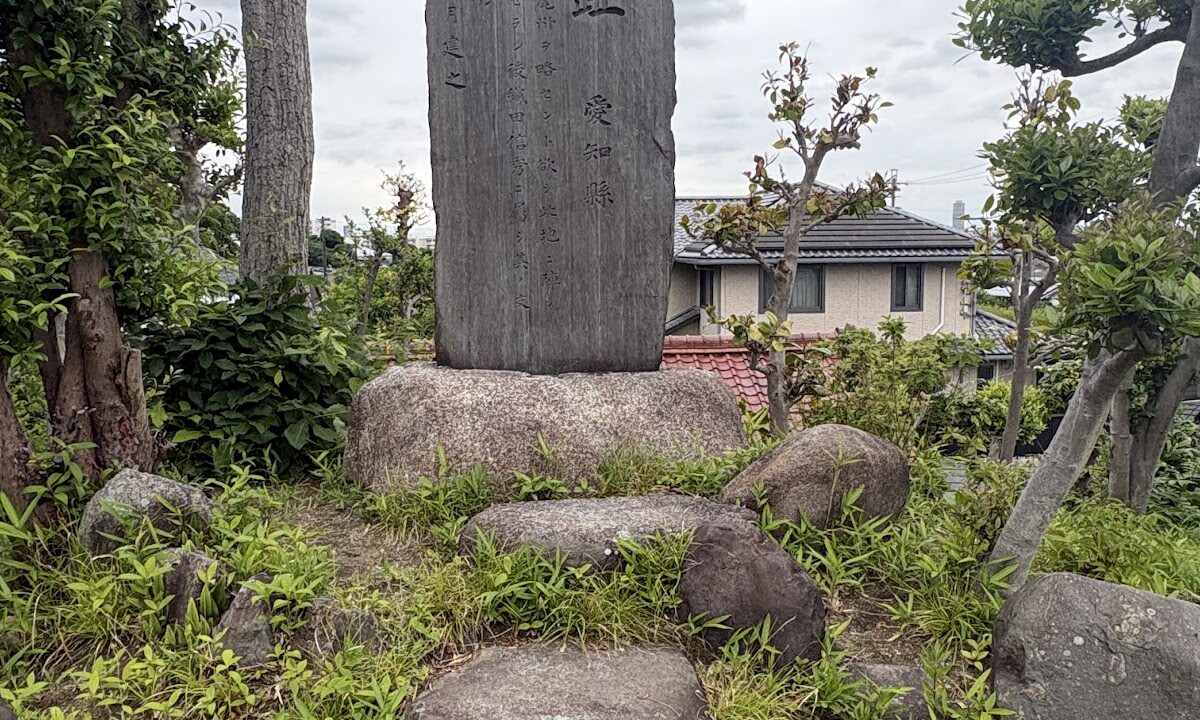
The current Moriyama Castle ruins are well-preserved, centered around the grounds of Shiroyama Hachimangu Shrine. The city of Koriyama is also working on historical site preservation, and explanatory signs have been installed, making it easy for first-time visitors to understand the castle’s history and structure.
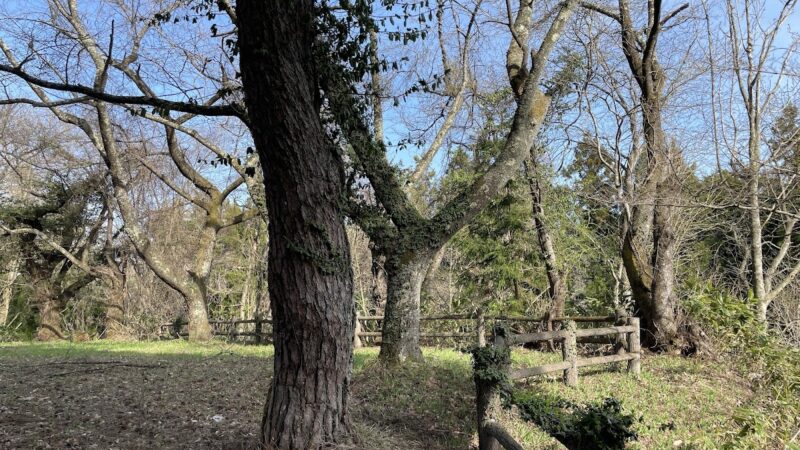
While the area surrounding the castle ruins is now residential, the area around the main keep is covered with trees, allowing visitors to feel the atmosphere of the past. Especially during the fresh greenery of spring and the vibrant autumn foliage, you can enjoy a beautiful landscape where nature and history harmonize.
Many local history enthusiasts and castle fans visit the site, and on weekends, visitors from both within and outside the prefecture can be seen. Although not widely known nationwide, it is a historical site that attracts attention from castle researchers due to the well-preserved stone walls from the time of Gamo Ujisato.
Access Information
Access by Public Transportation
Approximately 10 minutes on foot from JR Suigun Line “Iwaki-Moriyama Station”
Iwaki-Moriyama Station is on the Suigun Line, approximately 20 minutes from Koriyama Station, and one station before Asaka-Nagamori Station. The castle ruins are within walking distance from the station, and the route is relatively easy to follow, making public transportation convenient.
Travel time from Koriyama Station:
- Approximately 20 minutes on the JR Suigun Line, alight at Iwaki-Moriyama Station, then approximately 10 minutes on foot
- Total travel time: Approximately 30 minutes
Access by Car
Approximately 15 minutes from Tohoku Expressway “Koriyama IC”
After exiting the Koriyama IC, take National Route 49 and then a prefectural road for approximately 15 minutes. There is no dedicated parking lot around the castle ruins, but you can use the parking space for visitors to Shiroyama Hachimangu Shrine (a limited number of spaces).
Car Navigation Settings: Search for “Shiroyama Hachimangu Shrine” or “Moriyama, Tamura-cho, Koriyama City, Fukushima Prefecture”
Nearby Castles and Historical Sites
When visiting Moriyama Castle, we recommend also visiting the surrounding historical sites.
Miharu Castle (Miharu-machi, Fukushima Prefecture)
Approximately 20 minutes by car from Moriyama Castle. The main castle of the Tamura clan, and famous for its cherry blossoms.
Sukagawa Castle (Sukagawa City, Fukushima Prefecture)
Approximately 30 minutes by car from Moriyama Castle. The residence of the Nikaido clan, and the site of fierce battles with Date Masamune.
Koriyama City Historical Museum
Approximately 15 minutes by car from Moriyama Castle. A facility where you can learn about the history of the Koriyama region, and there are also exhibits related to Moriyama Castle.
Moriyama Castle and the History of Tohoku
The history of Moriyama Castle symbolizes the transition period from the medieval to the early modern period in the Tohoku region, especially in southern Mutsu Province. The legend of Sakanoue no Tamuramaro indicates that this region was a strategically important military location since ancient times, and the rule of the Tamura clan is a typical example of regional rule by medieval samurai groups.
Furthermore, the involvement of famous generals from the Sengoku period to the early modern period, such as Date Masamune and Gamo Ujisato, made Moriyama Castle a stage not only for local history but also for Japanese history. In particular, Gamo Ujisato’s renovation of the castle into a modern fortress is an important example of the development of castle construction technology in the Tohoku region.
The abolition of the castle due to the “One Castle Per Province” decree symbolized the establishment of nationwide unification by the Tokugawa shogunate, and the history of Moriyama Castle tells the story of a major turning point from the medieval to the early modern period in Japan.
Summary
Moriyama Castle, beginning with the legend of Sakanoue no Tamuramaro, is a castle deeply intertwined with the history of Tohoku, including the Tamura, Date, and Gamo clans. The remaining stone walls and earthworks, constructed using the nozura-zumi (rough-stone masonry) method, are valuable relics that convey the advanced castle-building techniques of the Gamo clan era, making it a historical site that castle enthusiasts should definitely visit.
Its convenient location, within walking distance of Iwaki-Moriyama Station, is also a major draw, making it a must-visit spot when visiting Fukushima Prefecture. Why not combine a visit to Shiroyama Hachimangu Shrine with an experience of Moriyama Castle’s approximately 800-year history?
The Moriyama Castle ruins, protected as a Koriyama City designated historical site, are carefully preserved as a regional historical heritage. While castle ruins throughout Japan are being lost due to development, castle ruins like Moriyama Castle, with their well-preserved remains, are a rare find. To ensure this historical heritage is passed on to future generations, please observe proper etiquette and treat the remains with care when visiting.