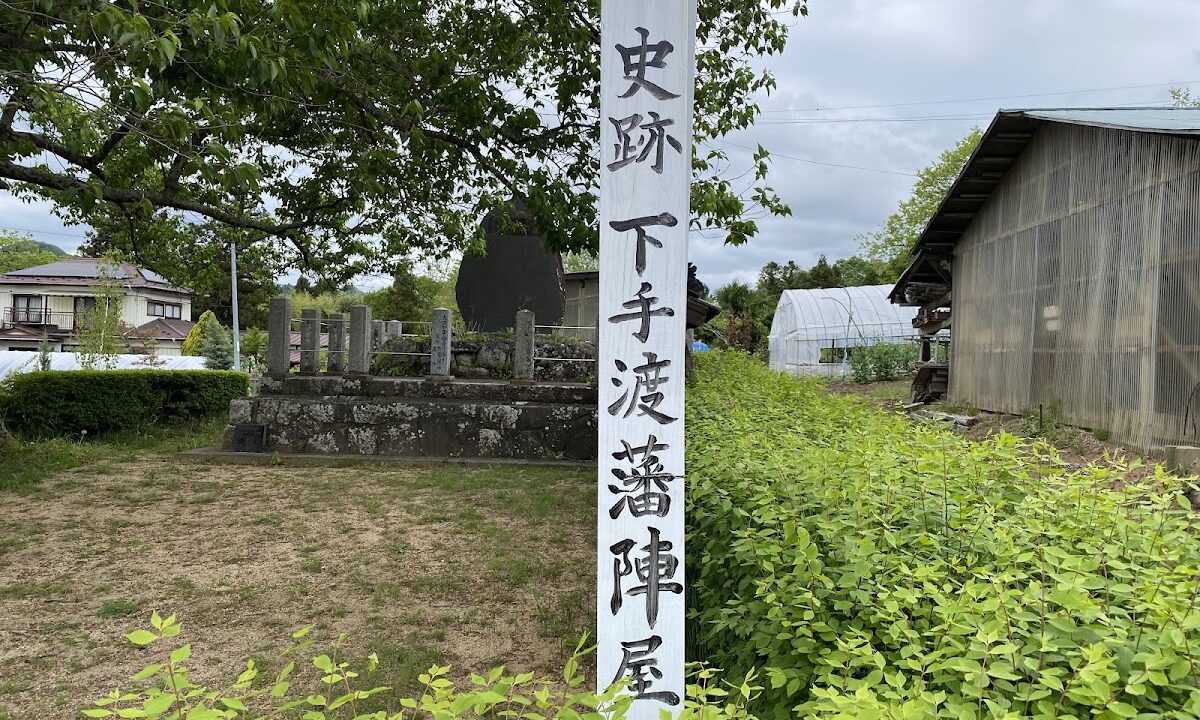
Complete Guide to Shimomura Jinya Ruins (Fukushima Prefecture) | A Thorough Explanation of the Legendary Jinya Built by Tanuma Okitsugu’s Grandson
Located in Sakurashita, Fukushima City, Fukushima Prefecture, the Shimomura Jinya Ruins were the central facility of the Mutsu Shimomura Domain, which existed for only 34 years during the late Edo period. Built after the downfall of Tanuma Okitsugu, who wielded great power as a senior councilor, the jinya was constructed when his grandson, Tanuma Okimasa, was transferred and his domain was drastically reduced from 57,000 koku to 10,000 koku. It is a valuable historical site that tells the story of the political ups and downs of the Edo shogunate.
Although it is now a quiet place with an Inari shrine, it was once lined with jinya buildings and served as a base for samurai hoping for the restoration of the Tanuma family. This article comprehensively explains everything you need to know to visit the Shimomura Jinya Ruins, from its historical background to local highlights and access methods.
What is the Shimomura Jinya Site? | Basic Information and Historical Significance
Overview of the Jinya
The Shimomura Jinya was a fortified residence located in Shimomura, Shinobu District, Mutsu Province (present-day Sakurashita, Fukushima City, Fukushima Prefecture). A “jinya” was an office and residence established by daimyo or hatamoto (high-ranking samurai) without castles to conduct their affairs. It was a common form for small domains with around 10,000 koku (a unit of rice production).
The distinguishing feature of the Shimomura Jinya lies in its location. Situated along the old Yonezawa Highway, it was close to a key transportation hub connecting Fukushima Castle town and Yonezawa. Its location, very close to the current Fukushima West Interchange, indicates its high level of transportation convenience even during the Edo period.
Background of the Establishment of the Shimomura Domain
The establishment of the Shimomura Domain is deeply connected to the “Tenmei Coup,” a major event in the political history of the Edo shogunate. In 1787 (Tenmei 7), Tanuma Okitsugu, who had led the shogunate’s administration as a senior councilor for over 10 years, fell from power. Tanuma Okitsugu’s politics were known for their commercial and pragmatic reforms, but he was criticized for rampant bribery and his slow response to the Tenmei Great Famine, and ultimately fell from power due to the rise of anti-Tanuma factions led by Matsudaira Sadanobu.
Adding insult to injury, Okitsugu’s eldest son, Tanuma Okitomo, suffered a tragedy in 1784 when he was assassinated by Sano Masanobu within Edo Castle. This incident, a rare instance of a sword attack within the castle throughout the Edo period, sent shockwaves through the shogunate.
Reduction of Tanuma Okimasa’s Domain and Establishment of a New Domain
After Okitsugu’s downfall, in 1788, Tanuma Okimasa, the son of the assassinated Okitomo, succeeded to the family headship. The shogunate imposed a harsh punishment on Okimasa, who inherited the family headship at only his mid-teens. He was transferred from the large Enshu Sagara Domain with 57,000 koku to Shimomura with a mere 10,000 koku. The drastic reduction in land holdings, amounting to less than one-fifth of the original, demonstrated the shogunate’s harsh stance towards the Tanuma family.
The following year, in 1789 (Kansei 1), Okimasa established a fortified residence in Shimomura and formally founded the domain. This marked the beginning of the Mutsu Shimomura Domain. Having gone from the glory of the Okitsugu era to becoming the lord of a small domain in Tohoku, Okimasa dedicated himself to the domain’s administration with the aim of restoring the family name.
History of the Shimomura Domain | 34 Years of History
Development and Difficulties in Domain Administration
With a land holding of 10,000 koku, it was among the smallest for a daimyo. The domain’s finances were constantly strained, and Okimasa had to manage the domain’s administration with limited resources. Because the Tanuma family had retained many of their vassals from their time as the Sagara family of Enshu when they were transferred and their territory was reduced, paying their stipends became a significant burden.
The Shimomura Domain’s territory consisted of about 10 villages scattered within Shinobu County, making concentrated territorial management difficult. In addition to maintaining the domain’s finances based on agricultural production, the small domain faced numerous challenges, including the maintenance of the jinya (fortified residence) and samurai residences, as well as various duties to the shogunate.
The Tanuma Family’s Restoration Movement
Throughout his tenure as lord, Okimasa consistently desired the return of the domain to its former territory. The Tanuma family utilized the connections built during the time of Okitsugu to continue lobbying the shogunate’s central government. Especially during the reign of the 11th Shogun, Tokugawa Ienari, Mizuno Tadanari, a powerful senior councilor who wielded considerable influence as a close confidant of Ienari, began to take a sympathetic stance towards the Tanuma family.
Mizuno Tadanari himself partially appreciated Tanuma Okitsugu’s political methods, and Ienari, given his grandfather, the 10th Shogun Tokugawa Ieharu, had favored Okitsugu, was also receptive to a review of the Tanuma family’s treatment. These changes in the political environment paved the way for the Tanuma family’s restoration.
Return to Sagara and Abolition of Shimomura Domain
In 1823 (Bunsei 6), the Tanuma family’s long-cherished wish was finally realized. Through the efforts of Shogun Tokugawa Ienari and Senior Councilor Mizuno Tadanari, the then-lord of the domain, Tanuma Okimasa (son of Okimasa), was granted permission to return to Sagara in Enshu Province. His stipend increased from 10,000 koku to 15,000 koku, and the Tanuma family set foot on their former territory for the first time in approximately 35 years.
Consequently, the Shimomura Domain was abolished. From its establishment in 1789 (Kansei 1) to its abolition in 1823 (Bunsei 6), it was a short-lived domain, lasting only 34 years. However, for the Tanuma family, it was a period of trial and a crucial time that provided a stepping stone for their resurgence.
After leaving Shimomura, the territory became a direct shogunate territory or a custodial territory of neighboring domains, and the domain’s headquarters were gradually dismantled. The Tanuma family continued as lords of the Sagara Domain until the Meiji Restoration, and were eventually granted the status of nobility.
Structure and Scale of the Shimomura Jinya
Layout and Architecture of the Jinya
Unfortunately, detailed drawings and records of the Shimomura Jinya do not exist, and much of its full structure remains unknown. However, by comparing it to other 10,000-koku class jinya of the same period, some estimations are possible.
Generally, a 10,000-koku class jinya consisted of the main headquarters (lord’s residence), offices, vassal quarters, and storehouses. The standard site area was around 1,000 to 2,000 tsubo (approximately 3,300 to 6,600 square meters), and while earthen ramparts and moats sometimes surrounded it, it did not possess full-fledged defensive facilities like a castle.
The Shimomura Jinya is thought to have had a similar configuration, and given its location facing the old Yonezawa Road, it is presumed to have served the function of monitoring the road and controlling entry and exit to the domain.
Surrounding Facilities and the Jinya Town
The residences of samurai were located around the Jinya (fortified residence). However, because the Shimomura Domain had a small rice yield and a limited number of samurai, a large-scale samurai residential area did not form. Rather, it is thought that the samurai were scattered throughout the existing Shimomura settlement.
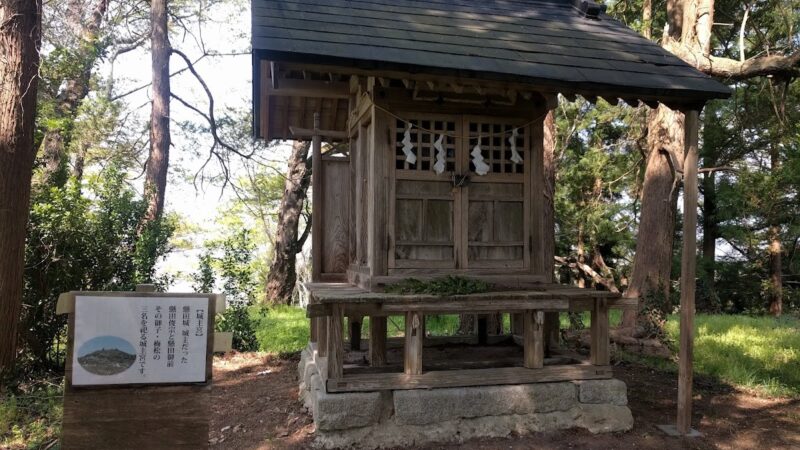
Adjacent to the Jinya was an Inari Shrine. This shrine played an important role as the guardian deity of the domain and as an object of worship for the people. This Inari Shrine, which still remains today, is a valuable clue to the location of the Shimomura Jinya.
Current Status and Highlights of the Shimomura Jinya Site
Current Situation
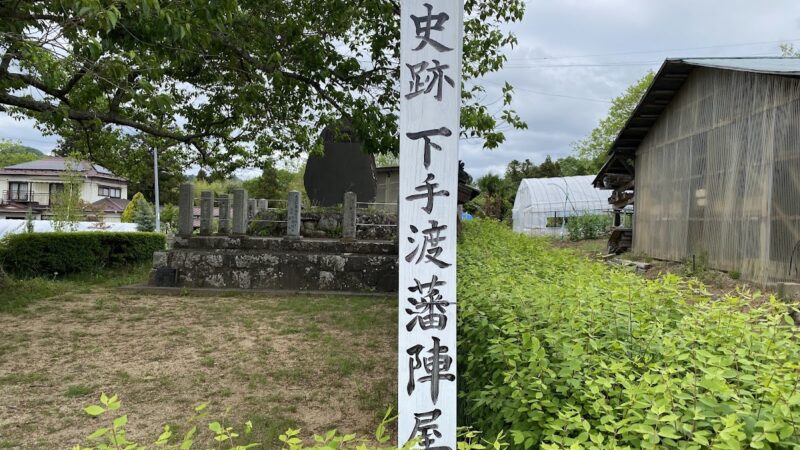
The current site of the Shimomura Jinya is the grounds of the Inari Shrine. The Jinya buildings have completely disappeared, and there are almost no remains of earthworks or moats. However, the topography of the elevated area where the shrine is located and the layout of the surrounding roads allow us to estimate the former boundaries of the Jinya to some extent.
Until a few years ago, a signpost for “Shimomura Castle Ruins” was confirmed to be installed, but it appears to have been removed. However, it is still recognized locally as the “Jinya (fortified residence) Ruins,” and its location can be confirmed on Google Maps, etc.
Inari Shrine
The Inari Shrine, located at the Shimomura Jinya Ruins, is a historical shrine that has existed since the Edo period. Even after the Tanuma family left Shimomura, it has been protected by the local people. Although small, the well-maintained grounds have a quiet and peaceful atmosphere.
The topography around the shrine is slightly higher than the surrounding area, suggesting that the Jinya was chosen for its defensive position. Furthermore, its location overlooking the old Yonezawa Road suggests that monitoring the road was also an important function.
Surrounding Historical Environment
Several castle-related ruins, including Fukushima Castle Ruins and Shimomura Castle Ruins, are scattered around the Shimomura Jinya Ruins. Shimomura Castle Ruins, in particular, is a castle built in the Middle Ages and is located in a different place from the Shimomura Jinya, but it is an important historical site for understanding the region’s history. Fukushima Castle was the location of the Fukushima Domain’s administrative office and existed at the same time as the Shimomura Jinya (fortified residence). Fukushima Castle, like other castles, lacked a main keep and was a fortified residence style castle; only remnants of earthworks remain today. Visiting both the Shimomura Jinya ruins and Fukushima Castle together provides a deeper understanding of the political structure of the Fukushima region during the Edo period.
Visiting Guide | Access and Surrounding Information
Access Methods
Access by Car
The most convenient way to access the Shimomura Jinya ruins is by car. It’s conveniently located about 5 minutes from the Tohoku Expressway’s Fukushima-Nishi Interchange. Take National Route 115 or a prefectural road, heading towards Inari Shrine along the old Yonezawa Highway.
You can confirm the location by searching for “Shimomura Jinya Ruins” or “Inari Shrine (Sakurashita, Fukushima City)” on your car navigation system or smartphone map app. Parking space is limited, so please observe proper shrine etiquette when visiting.
Access by Public Transportation
If using public transportation, you will need to take a bus or taxi from JR Fukushima Station. It takes about 20 minutes by bus from the west exit of Fukushima Station, but you may need to walk from the nearest bus stop. By taxi, it’s about 15 minutes from Fukushima Station.
Notes for Visitors
The Shimomura Jinya Ruins are not a developed historical park, but rather the grounds of an Inari Shrine. Please note the following points when visiting:
- Observe proper shrine etiquette and visit quietly.
- Do not enter private property or houses.
- Take all your trash with you.
- Cooperate in the preservation of the remains.
Since there are no detailed explanatory signs at the site, learning about the historical background beforehand will allow for a deeper understanding.
Nearby Tourist Spots
When visiting the Shimomura Jinya Ruins, we recommend also visiting nearby historical spots.
Fukushima Castle Ruins
Located in the heart of Fukushima City, the Fukushima Castle Ruins were the site of the Fukushima Domain’s administrative office. Currently, the remains of the earthworks remain behind the prefectural office, and an information board has been installed. It’s about a 15-minute drive from the Shimomura Jinya Ruins.
Mount Shinobu
Mount Shinobu, a symbol of Fukushima City, has long been known as a sacred mountain, and from its summit you can enjoy a panoramic view of the Fukushima Basin. It’s also famous for its cherry blossoms, and in spring it’s bustling with many visitors.
Iizaka Onsen
Located in the northern part of Fukushima City, Iizaka Onsen is a historic hot spring resort, counted as one of the three most famous hot springs in Oshu. It’s about a 30-minute drive from the Shimomura Jinya Ruins, making it ideal for relaxing after a historical walk.
Historical Value of the Shimomura Jinya Ruins
A Historic Site Conveying the Light and Shadow of Tanuma’s Politics
The Shimomura Jinya Ruins are a valuable historical site that tells the story of the political history of the mid-Edo period. Tanuma Okitsugu’s politics promoted progressive reforms such as economic policies emphasizing commerce, the recognition of merchant guilds, and the promotion of Nagasaki trade. On the other hand, negative aspects such as the rampant corruption and the rise of privileged merchants have also been pointed out. The downfall of Okitsugu and the reduction in the Tanuma family’s territory were consequences of this political assessment. However, the history of his grandson, Okimasa, who maintained the domain’s administration amidst hardship and ultimately achieved the restoration of their former territory, is noteworthy as an example of honor restoration within the Edo shogunate.
An Example illustrating the Reality of Small Domains
Small domains like the Shimomura Domain, with a scale of 10,000 koku, belonged to the smallest class of daimyo during the Edo period. Historical records are scarce, and details of such small domains are often unclear. However, in the case of the Shimomura Domain, because it belonged to the prominent Tanuma family, a relatively large number of records remain.
The history of the Shimomura Domain, which survived while facing challenges different from those of large domains, such as the difficulties of financial management, maintaining a vassal system, and the burden of various duties to the shogunate, is an important example for understanding the Edo period domain system from multiple perspectives.
Significance in Regional History
Throughout the Edo period, the Fukushima region had a complex political geography with multiple domains and shogunate-controlled territories intertwined. The Shimomura Domain is one such example, leaving its mark on the region’s history.
Although its existence was short, lasting only 34 years, the Shimomura Domain influenced the local community. From a regional history perspective, there is still room for further research into its development, including its administration, its relationship with its people, and its interactions with neighboring domains.
Related Historical Heritage and Jinya Sites
Jinya Sites in Fukushima Prefecture
In addition to the Shimomura Jinya site, several other Jinya sites remain in Fukushima Prefecture.
Shimo-Te-Watari Domain Jinya Site
Located in Tsukidate-machi, Date City, Fukushima Prefecture, the Shimo-Te-Watari Domain Jinya site is the remains of a 10,000-koku domain ruled by the Tachibana family, who were demoted from Miike in Chikugo Province in 1806. Like the Shimomura Domain, it is an example of a daimyo who was demoted after losing a political struggle, and remnants such as the Jinya Cherry Tree and the Omae Well remain.
Kuwori Daikan Jinya
This is the site of a magistrate’s office directly controlled by the shogunate, located in Kuwori Town. It is now maintained as “Jinya no Mori Park.” It was a large-scale magistrate’s office, consisting of a main headquarters, foot soldier barracks, and other facilities, including those for silver mine officials and metalworkers.
Former Nakahata Jinya
The former Nakahata Jinya, relocated and restored to the Aizu Samurai Residence in Aizuwakamatsu City, was an Edo period magistrate’s office located in Nakahata, Yabuki Town, Nishishirakawa District. It is designated as an important cultural property of Fukushima Prefecture and is a valuable facility where visitors can see an example of magistrate’s office architecture.
Historical Sites Related to the Tanuma Family Nationwide
Sagara Castle Ruins (Makinohara City, Shizuoka Prefecture)
This is the site of the domain office of the Enshu Sagara Domain, ruled by Tanuma Okitsugu with a 57,000 koku (unit of rice production) yield. Okitsugu promoted domain reforms here, working on the development of the castle town and industrial promotion. Currently, you can learn about the history of the Tanuma family at the Sagara Historical Museum and other locations.
After the abolition of the Shimomura Domain, Tanuma Okimasa returned to Sagara. The Tanuma family continued as lords of the Sagara Domain until the Meiji Restoration, contributing to the region’s development despite being a small domain of 15,000 koku.
Summary | The Significance of Visiting the Shimomura Jinya Ruins
The Shimomura Jinya Ruins, located in Fukushima City, Fukushima Prefecture, are a valuable historical site that tells the story of the turbulent political history of the Edo period. Beginning with the political incident of the downfall of Senior Councilor Tanuma Okitsugu, and continuing through the 34-year history of his grandson, Tanuma Okimasa, who maintained the domain’s administration amidst hardship and ultimately achieved the restoration of the former territory, this history is fascinating as a story of political ups and downs and restoration of honor within the Edo shogunate.
While no prominent remains such as buildings remain at the site, standing in the quiet grounds of the Inari Shrine, one can sense the history of the time when a jinya (fortified residence) stood here and when people who hoped for the restoration of the Tanuma family lived here.
The Shimomura Jinya Ruins are close to the Fukushima West Interchange and easily accessible. Visiting the Fukushima Castle ruins and surrounding historical sites will allow you to gain a deeper understanding of the history of the Fukushima region during the Edo period. It’s a historical site worth visiting not only for history enthusiasts, but also for those interested in Tanuma’s politics and those who want to learn about the realities of small Edo-period domains.
The Shimomura Jinya ruins, quietly remaining in a peaceful residential area, may not be flashy, but it is an important place that etched a page in Japanese history. If you have the opportunity to visit Fukushima, be sure to stop by.