
Narusawa Castle (Yamagata Prefecture) Complete Guide: History and Highlights of a Strategic Defense Point Protecting the South of Yamagata Castle
What is Narusawa Castle?
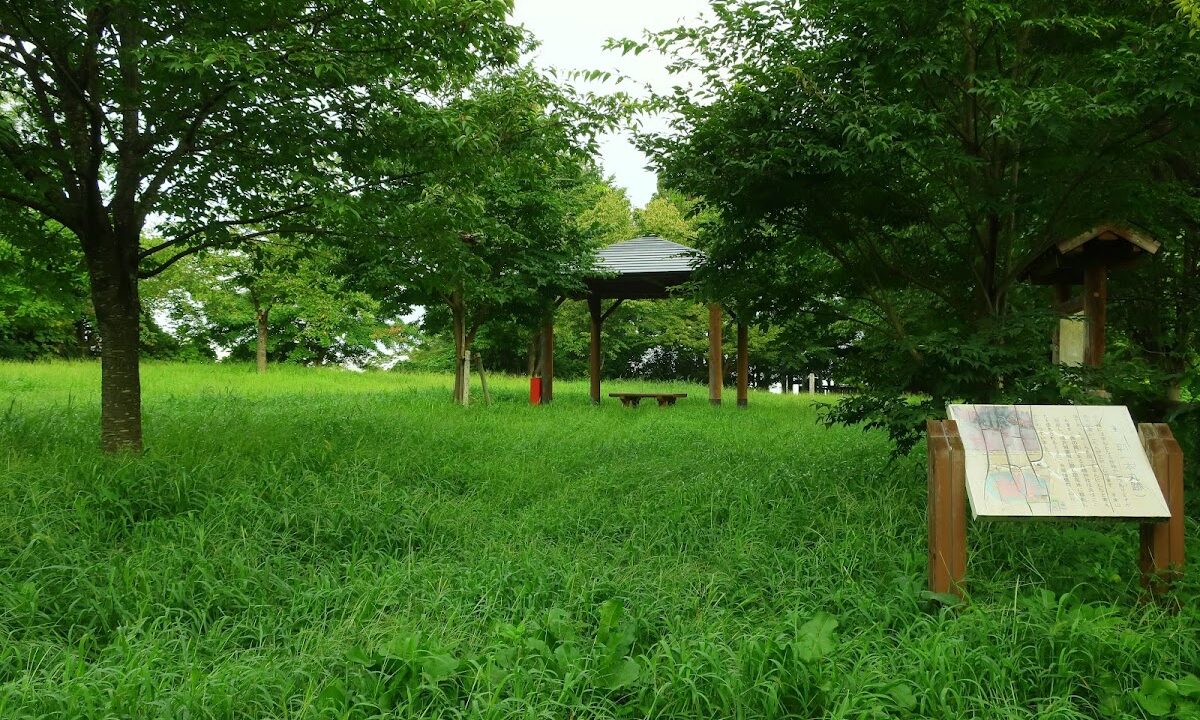
Narisawa Castle (Narisawa-jo) is a mountain castle located in Zaō Narusawa, Yamagata City, Yamagata Prefecture, dating from the medieval to early modern period. Also known as Narusawa Castle, Narusawa Manor, Narusawa Shield, Narusawa Manor, and Narusawa Beacon Tower, it functioned as an important military base protecting the south of Yamagata Castle. Currently, it is maintained as Narusawa Castle Ruins Park, where remains such as earthworks and moats can be seen.
Located in the southeastern part of the Yamagata Plain, at the foot of the Ōu Mountains, Narusawa Castle, built on a hill with a relative elevation difference of approximately 57 meters, served as a frontline base to prepare for invasions from the Date clan from the Okitama region and Kaminoyama, and, along with Hasedō Castle, played a crucial role in the southern defense of Yamagata Castle.
Basic Information on Narusawa Castle
Location and Classification
- Location: Zaō Narusawa, Yamagata City, Yamagata Prefecture (Narusawa Castle Ruins Park)
- Former Province: Dewa Province
- Classification/Structure: Mountain castle, multi-bailey style
- Keep Structure: None (As it is a medieval mountain castle, there is no keep)
- Builder: Shiba Kaneyoshi
- Year of Construction: There are theories that it was built in Eitoku 1 (1381) or Enbun 2 (1357)
- Main Lords: Shiba clan, Narusawa clan
- Renovators: Successive heads of the Narusawa clan
- Year of Abandonment: Keichō 6 (1601), after the Mogami clan was dispossessed
Access Information
- Nearest Station: Approximately 2km east from Zaō Station on the JR Ōu Main Line
- Access by Car: Approximately 15 minutes from Yamagata Zao IC on the Yamagata Expressway
- Parking: Free parking available at Narusawa Castle Ruins Park
- Visiting Hours: 24 hours (open as a park)
- Admission Fee: Free
History of Narusawa Castle
Construction History and the Shiba Clan Era
The history of Narusawa Castle dates back to the Nanboku-cho period. In 1356, Shiba Kaneyori entered Yamagata, and the following year he built Yamagata Castle. Later, in 1381, Shiba Kaneyoshi, Kaneyori’s grandson, built a castle at Izumiide in Narusawa, which is considered the beginning of Narusawa Castle.
One theory suggests that the castle, initially built on low-lying Izumiide, was moved to the mountaintop according to a divine oracle. This relocation completed the castle as a mountain castle, taking advantage of the terrain more suitable for defense.
Rule by the Narusawa Clan
After the Shiba clan, the Narusawa clan defended this castle for generations. As important retainers of the lord of Yamagata Castle, the Narusawa clan played a crucial role in the defense of the south. The Kurosawa-Watanabe Kyuemon family documents state, “The castle is on a mountaintop, with a moat to the west and narrow trenches to the north and south. There are no gaps to the west of the castle, and the fences are very strong; Narusawa Castle is a formidable stronghold.” This describes the castle’s robust defensive structure at the time.
The Turbulent Sengoku Period
During the Sengoku period, Narusawa Castle became increasingly important as a frontline base for the southern defense of Yamagata Castle. In particular, during the Tensho era (1573-1592), it was the site of repeated battles against Date Terumune and Kaminoyama Mitsukane.
In 1584, when a combined force of Kamiyama Mitsukane, lord of Kamiyama Castle, and Date Terumune, lord of Yonezawa Castle, invaded Yamagata territory, Narusawa Michitada, lord of Narusawa Castle, repelled them at the Battle of Kashiwagiyama. This victory demonstrated the strategic importance of Narusawa Castle and the military prowess of the Narusawa clan.
During the era of Mogami Yoshiaki
During the era of Mogami Yoshiaki, Narusawa Castle was positioned as the core of Yamagata Castle’s defense network. Along with Hasedo Castle, it functioned as one of the two major bases to prepare for invasions from the south, greatly contributing to the security of the Mogami territory.
In the Keicho Dewa Campaign of 1600, which was linked to the Battle of Sekigahara, it is believed to have played a part in the defense of Yamagata Castle against the Uesugi army’s invasion.
Abandonment of the Castle
In 1601, following the downfall of the Mogami family, Narusawa Castle was abandoned. The history of Narusawa Castle, which served as a defense for the south of Yamagata Castle for approximately 240 years since its construction, has now come to an end.
Structure and Remains of Narusawa Castle
Layout and Structure
Nariusawa Castle was a mountain castle with a series of enclosures, skillfully utilizing the hilly terrain. Multiple enclosures were arranged in a series around the main enclosure (Honmaru).
The current location of the Hachiman Shrine is thought to be the site of the main enclosure, offering an excellent vantage point for overlooking the surrounding area. Historical documents confirm that there was a moat to the west of the castle, and narrow trenches were dug to the north and south.
Existing Remains
Even today, as Narusawa Castle Ruins Park, the following remains can be observed:
Earthworks
Earthworks built as defensive structures for the castle remain in relatively good condition. In particular, the earthworks around the main enclosure retain a certain degree of their original height, making them valuable remains for understanding the defensive structure of medieval mountain castles.
Moat
A moat, designed to cut off the ridge and prevent enemy intrusion, can also be observed. This moat is a defensive structure unique to mountain castles and is an important remains that demonstrates the military character of Narusawa Castle.
Enclosure Remains
Multiple enclosure remains can be identified, and their respective roles and arrangements allow us to infer the overall structure of the castle. The hierarchical arrangement centered on the main enclosure shows a typical structure of a medieval mountain castle.
Entrance and Viewing Route
There are several entrances to Narusawa Castle Ruins Park.
Hachiman Shrine Entrance (Main Entrance)
The entrance from Hachiman Shrine, with its impressive stone torii gate, is the easiest route to follow. Climbing this path leads to the main enclosure ruins where the inner shrine is located. The path is relatively gentle and suitable for beginners.
Hishita Entrance
There is also a route that circles half of Tateyama and ascends from the Hishita entrance. This route allows observation of the castle’s structure from a different angle than the Hachiman Shrine entrance, making it an interesting route for castle enthusiasts.
Highlights of Narusawa Castle
Main Enclosure Ruins and Hachiman Shrine
The inner shrine of Hachiman Shrine is located on the site of the main enclosure. From here, you can enjoy a panoramic view of the Yamagata Basin, allowing you to imagine how the former castle lords surveyed their territory from this spot. It’s a place where you can truly appreciate its importance not only as a defensive point but also as a base for surveillance and intelligence gathering.
Information Boards and Guide Signs
Information boards are installed throughout the park, allowing you to learn about the history and structure of Narusawa Castle. Maps are also displayed, making it easy for first-time visitors to understand the layout of the remains.
Batō Kannon (Horse-Headed Kannon)
A Batō Kannon (Horse-Headed Kannon) is also enshrined within the castle ruins, serving as an object of local worship. This is evidence that the castle was cherished by the local people even after its abandonment, demonstrating that Narusawa Castle continues to live on as a part of the region’s history.
Natural Environment
Narusawa Castle Ruins Park is planted with various plants, including the Ōyamazakura cherry tree, and is known as a famous cherry blossom viewing spot in spring. It’s a place where you can enjoy both historical exploration and nature appreciation.
Related Historical Sites in the Surrounding Area
Yamagata Castle
Yamagata Castle, the main castle of Narusawa Castle, is currently maintained as Kajo Park. Known as the residence of Mogami Yoshiaki, it is one of the largest flatland castles in Tohoku. Visiting it in conjunction with Narusawa Castle will allow you to gain a deeper understanding of the relationship between the main castle and its subsidiary castles.
Hasedo Castle
Hasedo Castle, which defended the south side of Yamagata Castle along with Narusawa Castle, is also a historical site worth visiting. During the Keicho Dewa Campaign, it was the site of fierce battles against the Uesugi army, and the battle between Naoe Kanetsugu and Mogami Yoshiaki took place there.
Kaminoyama Castle
Kaminoyama Castle, which sometimes faced Narusawa Castle, now has a replica keep and is open to the public as a local history museum. It has deep ties to the Date clan and is an important related historical site for understanding the history of Narusawa Castle.
When Visiting Narusawa Castle
Clothing and Equipment
As it is a mountain castle, comfortable shoes and clothing suitable for walking are recommended. Please be especially careful after rain, as the ground can become slippery. Bringing insect repellent during the summer months is recommended.
Estimated Visiting Time
If you plan to stroll through the park and observe the ruins at a leisurely pace, allow approximately 1 to 1.5 hours. If you plan to take photographs or conduct detailed observations, it is recommended to allocate more time.
Best Time to Visit
The cherry blossom season in spring is particularly beautiful, allowing you to enjoy both history and nature. The autumn foliage season also offers a unique charm. Summer brings lush greenery, and winter offers a snowy landscape that evokes the atmosphere of a medieval mountain castle, but please be extremely careful of your footing when there is snow.
Historical Significance of Narusawa Castle
Nariusawa Castle is an important historical site for understanding the military history of the Yamagata region from the medieval to the early modern period. Its 240-year history of continuously defending the southern flank of Yamagata Castle reflects the political and military situation of the region.
This castle site is of high academic value, particularly as a historical site that reveals aspects of the conflict with the Date clan during the Sengoku period and the domain management during the time of Mogami Yoshiaki. Furthermore, because the remains are relatively well-preserved, it serves as valuable educational material for learning about the structure of medieval mountain castles.
Narusawa Castle in the Region
Nariusawa Castle functions not only as a historical site but also as a place of relaxation for local residents. The development of Narusawa Castle Ruins Park has made it a place that can be easily visited not only by history enthusiasts but also by local residents and tourists.
It is also used as a place for local history education, playing an important role as a site for local history studies for elementary and junior high school students. As a source of local pride and a place to pass on history, Narusawa Castle continues to hold significant importance even today.
Summary
Nariusawa Castle is a medieval mountain castle located in Zaō Narusawa, Yamagata City, Yamagata Prefecture, and was an important military base responsible for the southern defense of Yamagata Castle. From its construction by Shiba Kaneyoshi to its abandonment following the downfall of the Mogami clan, Narusawa Castle played a crucial role in the region’s history for approximately 240 years.
Currently, it is maintained as Narusawa Castle Ruins Park, where you can see remnants such as earthworks and moats. Its location overlooking the Yamagata Plain, relatively well-preserved remains, and rich natural environment harmonize to create a fascinating historical site.
Visiting it along with other nearby historical sites such as Yamagata Castle and Hasedo Castle will allow you to gain a deeper understanding of the history of the Yamagata region from the Sengoku period to the early Edo period. It’s a recommended spot not only for history buffs but also for those who enjoy hiking and nature observation.
When you visit Yamagata, be sure to visit Narusawa Castle Ruins Park and experience the history of this strategic point that once protected the south of Yamagata Castle, and the lingering traces of the medieval era.


